Conversation with Gmail's Founder: How to Go from 0 to 10 Billion?
TechFlow Selected TechFlow Selected
Conversation with Gmail's Founder: How to Go from 0 to 10 Billion?
A company's success comes not only from building amazing products, but also from the founders' attitudes and beliefs.
 Navigating Web3 tides with focused insights
Compiled by TechFlow
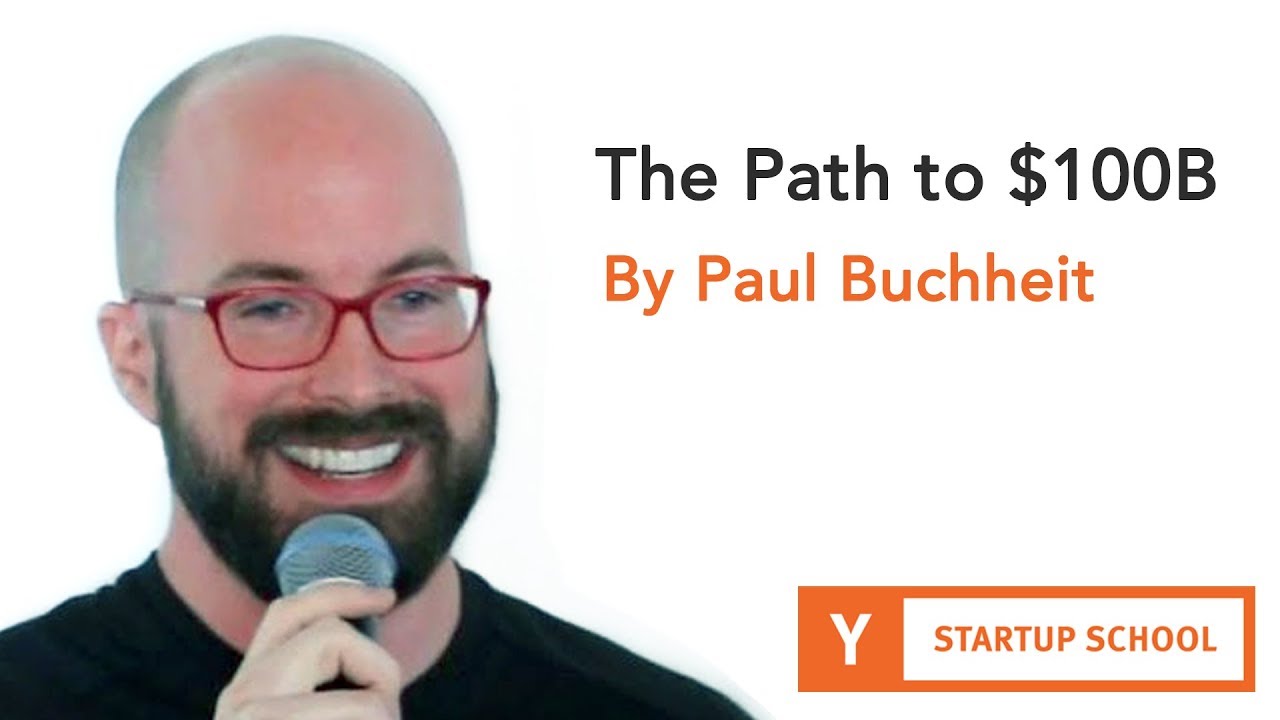
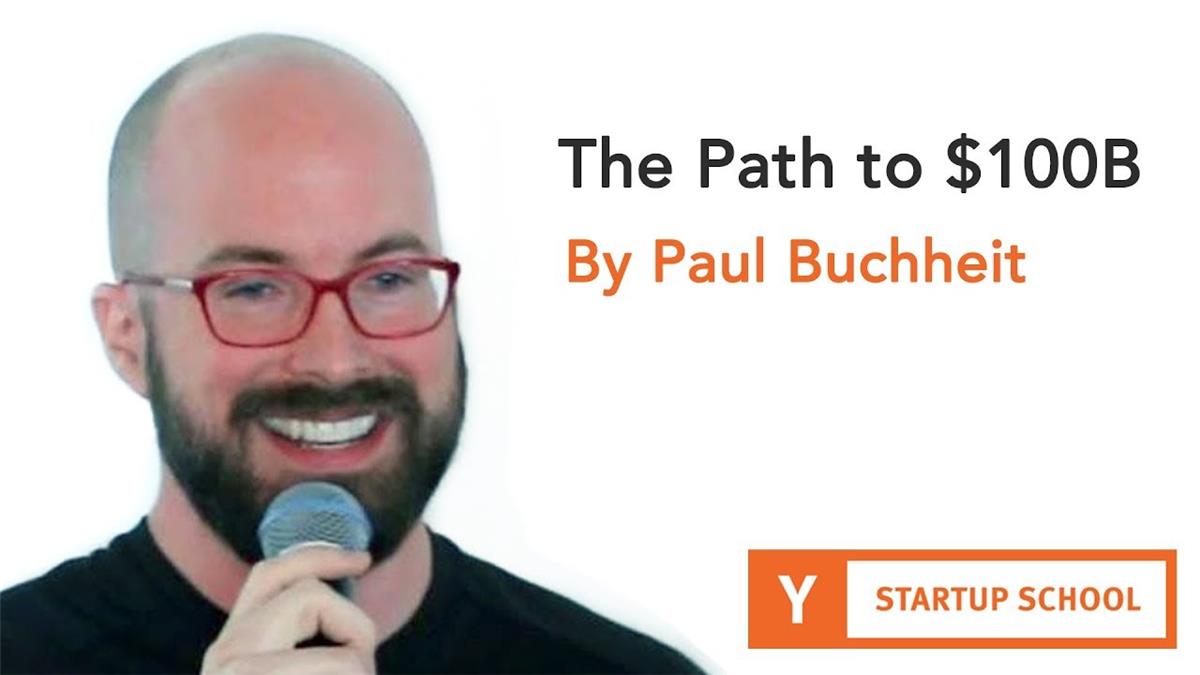
Note: This article is part of the TechFlow series "YC Startup Class Chinese Notes" (updated daily), dedicated to collecting and organizing Chinese translations of YC courses. The eighteenth entry features Paul Buchheit, Y Combinator partner and Gmail founder, in his online lecture titled "The $100 Billion Path."
Finding and Pursuing Startups in the 1990s
In the 1990s, everything was different from today. I was deeply interested in startups even back then. Since childhood, I never liked working for others. I dreamed of becoming an inventor like Nikola Tesla and making a fortune.
In 1998, there were no startup schools or Y Combinator—resources were extremely limited. The internet was still small, I had no connections, and I didn’t know anyone working at a startup, though I suspected they were mostly in California. Aside from Amazon in Seattle, most companies—including eBay, Netscape, and early Yahoo—were based in California.
Startups were everywhere, and I hoped to land a job at a big company like Intel. Although I did work there, it didn’t give me what I wanted, so I started looking elsewhere. I remember one particular moment clearly. A group of young colleagues—around 21 or 22 years old—gathered together. An Intel coworker told me: “They have a great retirement plan here. If you work long enough, your age plus years of service lets you retire around 55.” When I heard that, I realized it wasn't for me. I didn’t want to waste my time just chasing a pension. Instead, I wanted to become a successful entrepreneur and fulfill my dreams.
Seeking Opportunities to Build on Linux
I loved Linux and actively looked for startup opportunities around it. As early as 1993, I became deeply interested in Linux, but at the time, the business world dismissed it, believing Windows was the proper enterprise OS while Linux was just a hobbyist’s toy. So I began searching for startups working on Linux. I sent my resume to six startups, but due to a misconfigured mail server, most never replied.
My Entrepreneurial Journey
Working at Google was incredibly exciting because we were building large systems, creating great products, and shaping the future. Even though Google is now a giant, its potential was greatly underestimated in the beginning.
Back in the 90s, email was downloaded to personal computers via POP3, which confused me—information should be accessible anywhere. During college, I kept thinking about putting everything online so it could be accessed anytime.
In the summer of 1996, I tried to build a web-based email service, but I approached it incorrectly. That experience taught me that building email required teamwork.
Fast forward to 2001, Google underwent a major reorganization and tasked us with building an email system. Though I was passionate about email, we weren’t sure how to proceed. So I created a simple design: store all emails in a database and add search functionality. I shared it with my engineering team, gathered feedback, iterated, and eventually reached 100 users. Through this process, we learned the key wasn’t who sent the email, but making email easily searchable and manageable.
Overall, my lesson was clear: identify the core value of your product and continuously iterate toward your goal. Always prioritize user experience, understand user needs and feedback, and adapt quickly. When creating something new, define its core value early and relentlessly improve through iteration. Keep user experience central, listen to users, and respond promptly.
On my entrepreneurial journey, I tried reaching people through an Outlook email issue and turned them into Gmail users. Though we started with very few users, constant iteration led us to success. History can hinder innovation—start with deep but narrow appeal, then expand over time.
How to Find Something Truly Compelling?
After leaving Google, I saw information about Y Combinator’s Summer Founders Program on Slashdot and was drawn to its open-minded approach. I sent a self-introduction email and attended a dinner.
My philosophy aligns with what we aim for all startups: discover something truly compelling—even if only for a small group of people.
For those unfamiliar with social networks, we actually created buttons similar to today’s “like” button. The first such button appeared on FriendFeed, and months later mysteriously showed up on Facebook.
Social products are really hard. Many come through YC, and Google has also tried entering this space—it's one of the toughest product categories. Platforms like Twitter or Facebook succeeded by capturing something essential that others missed. But sometimes these stories may be real, sometimes fabricated.
While striving to make FriendFeed successful, we constantly ran into Facebook. In truth, Facebook knew what they were doing—they excelled in this domain, outperforming competitors like Twitter, Google, and MySpace.
With FriendFeed, we simply wanted the best solution. I believe Facebook had a crucial insight: their ultimate customer wasn’t the end user, but the network itself. The most important feature is that your friends are there. There’s often tension between what benefits individuals versus what strengthens the network. Facebook always chooses what’s good for the network. Similarly, businesses must satisfy buyers, not just end users.
For Google, people use its search engine—if users go elsewhere, Google must please them. In business, regardless of who the buyer is, Facebook’s subtlety lies in owning a massive network, which is why people love it. You must determine whose happiness leads to your success.
Why Startups Succeed
Google has many employees, and while there are similarities and differences, one thing that made me glad to work there was this: like my own experience, people often overgeneralize reasons for success—like saying Google succeeded because of colorful balls. While you can invent many explanations, in hindsight, things are clearly more complex. Most of these explanations are probably wrong.
Yet some things matter. When I entered the office, I sensed it was meaningful—a strong signal that made me feel comfortable. It’s subtle, perhaps even metaphysical, but everyone has their own feeling. When you walk in, ask yourself: “What’s the atmosphere like? How do I feel? Is my energy rising or falling?” That feeling excited me.
I believe company success comes not just from amazing products like Gmail and Google Maps, but from founders’ attitudes and beliefs. Founders like Sergey, Larry, and Eric gave you a manic sense that you could take over the world. Employees need to understand what the company is truly doing—not just chasing trends. If you're just waiting for a paycheck and eventual collapse, your mindset will reflect that.
Perhaps the most challenging person is Mark Zuckerberg. He faces constant criticism but remains convinced he’s right. This conviction echoes in internal company myths.
Here’s an interesting story: when Facebook was still a college network with about 10 million users, Yahoo offered $1 billion to acquire it. Everyone urged Mark to accept—but he refused and replaced the entire management team. Everyone around him pressured him to take the deal. Ultimately, he didn’t—and proved correct.
Another story: when Facebook launched News Feed, people were furious. Despite having 10 million users, 8 million joined an opposition group. No matter what you want users to do, you can’t force them. This often creates widespread dissatisfaction. Yet Facebook believed people would change their minds—and they were proven right.
I think there are several critical points for startups.
First, you need strong belief—even when all users are angry, trust they’ll eventually come around. Second, focus is paramount. As a startup, concentrate all resources on one point. Compared to large companies doing 1,000 different things, you lack resources across the board. Only by focusing can you become strong enough to compete.
Google won in search partly because we focused entirely on search early on, while others wanted to be portals doing many unrelated things. Therefore, startups must be extremely frugal. ROI is one of the best metrics—you must do more with less. Yet many startups achieve low returns, burning money without results. You must generate high output with minimal time and money, maximizing capital efficiency.
Solving problems in the absolute minimal way is also crucial. Cut costs aggressively—use frugal tactics like reducing email volume. If you’re not embarrassed by your product, you’ve launched too late. For startups, ship fast, spend as little time and money as possible.
Having a Big Budget Doesn’t Guarantee Success
Maybe you built too many emails and lost sight of what you were actually building. One of the most surprising lessons I’ve learned is that many startups fail precisely because they raised too much money. Some might have succeeded *without* such strong financial backing.
Juicero sold a $700 juice pack press. I consider it a massive failure—they raised $120 million before talking to any customers. Had Juicero gone through YC’s program and raised $120K, they’d have been forced to talk to customers: “Hey, we want to sell you this $700 juice press—interested?” That’s how startup selling works—you must engage customers directly.
In this blind funding frenzy, it’s easy to drift away from reality and real market needs. The problem with abundant funding is losing control before you’re ready. No matter how much you raise, focus on amplifying its value. If you raise $5 million, don’t feel satisfied creating only $150K in value—you must create $50 million in value.
In media, conferences, and talks, it’s easy to detach from reality—because you’re not selling a product, you’re crafting something people genuinely want. To build an epic company, balance future vision with past lessons. There are far more ways to fail than succeed.
So maintain both vision for the future and attention to present problems. Spend too much, and you’ll live in the land of promised dreams, ignoring immediate issues.
Why Did Google, Netflix, and Amazon Become Giants?
These companies became leaders not because their employees were smarter or worked harder. Intelligence and effort have limits. To lead, you must ride atop fundamental shifts in reality or exponential changes in the world.
Early Intel, Microsoft, and Apple sat on this wave—the rise of microcomputers. Microsoft became huge by dominating microcomputer operating systems. Likewise, Google grew because it recognized the internet’s trajectory early and made the right moves.
Others failed because they ignored the fact that online information grows exponentially. We must organize ourselves better to handle this growth.
Google’s founding mission was to organize and leverage all the world’s information. People are often surprised by Google’s aggressive data collection—but it’s clearly stated in their mission.
To become a leader, anticipate future changes and prepare. Ask yourself: if I jumped into a time machine to 2028, what fundamental changes would distinguish it from 2018? Identify those shifts and position your company accordingly.
Even if Facebook didn’t exist, someone would eventually build a massive social network—just as Google did. Consider your startup: others may emerge to capture the market. You must move faster or deliver higher quality to seize it first.
How to Identify the Tipping Point?
I think overthinking this is unnecessary.
If someone is willing to pay $40 for a cup of coffee, I start selling $40 coffee. The real issue arises when you can’t keep up with demand. Don’t solve this through theory—talk to the market and let it answer. When you’re scrambling to meet demand, that’s the most effective signal.
In high-growth companies, your job is to follow market demand. For example, one of Google’s biggest internal challenges was building data centers fast enough. Things moved so quickly that scaling became the main issue. During hypergrowth, you don’t need instructions—you know where you are.
In short, during growth, staying aligned with market demand and engaging directly with the market is most important.
How to Find Customers Facing Urgent Problems
I’m wary of many startups because they ultimately don’t solve urgent problems. You talk to someone, and they say, “Oh yes, that solution would be nice.” You spend years building it. Then you return and say it’s ready, and they reply: “We’re swamped this quarter—let’s push it to next year’s budget. Can we talk again in nine months?” For startups, this is fatal.
You must find customers facing truly urgent problems. Imagine your arm is pinned under a boulder—you either bite it off or sign a term sheet with a promising young startup. Seek out desperate people; they’ll tolerate a flawed product and invest time working with you.
Founders can use a powerful method: enter the customer’s organization and work alongside them, like early Stripe installations. Patrick Collison would show up and integrate Stripe into the code himself. If they won’t let you into their system or talk to their team, they likely don’t feel enough pain. Look for customers with deeper pain points.
In a large enough market, desperate customers exist. Founders should seek those with urgent problems and actively engage and collaborate with them.
The Driving Force Behind Founder Success
Founder energy comes from focus, frugality, obsession, and love—an intense concentration that seems almost irrational to some. The craziest example is Elon Musk. Before launching SpaceX, he gave a tech talk at Google. Someone asked, “If your rocket explodes on launch, what will you do?” He replied: “I have enough money for three launches.” In reality, he invested his entire fortune. After three failures, he somehow raised funds for a fourth rocket. Had that failed, there would be no SpaceX or Tesla—this was an utterly irrational decision.
While this may sound insane, it also shows founders’ deep belief and commitment to their ideas. The rational path is careful spending and logical decisions—but for some founders, this irrational obsession powerfully drives progress.
Why Did Okrut Fail While Twitter and Facebook Succeed?
Okrut was hugely popular in Brazil and actually thriving. While many reasons can be invented for why it didn’t become *the* social network, it was growing fast and achieving great success. Yet at least in the U.S., it died because it was too slow.
Mainly, there was no internal resonance among employees—no shared crisis mentality like “Oh my god, we must make this succeed.” In contrast, Google deeply values solving interesting computer science problems, which truly inspires passion.
Take Twitter’s founders—likely two of the three wouldn’t have built it at Google. Because if they had, people would ask: “What is this thing?” Technically, Twitter wasn’t interesting, so it wasn’t in Google’s DNA.
When Google tried entering social media, it wasn’t because Larry deeply loved social networking, but because they wanted to compete with Facebook. By then, Facebook was already far ahead and had superior understanding of the market. If you’re behind and not executing well, failure is certain.
Join TechFlow official community to stay tuned
Telegram:https://t.me/TechFlowDaily
X (Twitter):https://x.com/TechFlowPost
X (Twitter) EN:https://x.com/BlockFlow_News
 深潮TechFlow