Deep Dive into Crypto Airdrops: History, Processes, and Categories, Plus 6 Top Opportunities to Participate in Right Now
TechFlow Selected TechFlow Selected
Deep Dive into Crypto Airdrops: History, Processes, and Categories, Plus 6 Top Opportunities to Participate in Right Now
For project teams, crypto airdrops are a marketing strategy aimed at promoting new projects and their tokens, raising awareness, and driving adoption.
 Navigating Web3 tides with focused insights
Author: veDAO
Crypto airdrops are a popular method for Web3 projects to distribute tokens and generate buzz around their platforms, especially among startups. Airdrops are also one of the most favored marketing strategies for users, who can gain early access to promising new projects through careful research and smart participation, while potentially earning significant financial returns.
In this article, veDAO provides an in-depth analysis of crypto airdrops, covering their definition, history, processes, classifications, and offering practical tips and precautions for safe participation. Finally, veDAO recommends six of the most promising airdrop opportunities currently worth participating in.
1. Definition of Airdrops
An airdrop refers to the act in the blockchain space of sending free cryptocurrency tokens directly to specific digital wallet addresses. In essence, airdrops are when project teams give away crypto assets to users. For projects, airdrops serve as a marketing strategy designed to promote new initiatives and their associated tokens, increase awareness, and drive adoption. For users, airdropped tokens are distributed at no cost, although they may sometimes be required to complete certain tasks. By participating in airdrops, users can potentially earn substantial economic rewards. Airdrops are not limited to new crypto projects; established Web3 projects also use this strategy to refine token distribution and reward loyal community members.
2. History of Airdrops
Airdrops ("airdrop") have long been a cultural phenomenon within the cryptocurrency community. The first known crypto airdrop occurred in June 2010, when Gavin Andresen—a software engineer who once collaborated with Satoshi Nakamoto on Bitcoin’s development—launched a website called Free Bitcoins. Users could receive 5 BTC by simply posting their Bitcoin receiving address on the site. At that time, each bitcoin was worth only one cent (approximately NT$0.3). Airdrops became a key operational tool for projects starting around 2014. To understand the nature of crypto airdrops, it is essential to trace their historical evolution.
-
2014: The first crypto airdrop was launched by a project called "Auroracoin," which distributed free tokens to all citizens of Iceland as a strategy to encourage adoption of its new cryptocurrency. Ultimately, both the project and its token failed. These early airdrops had no interaction requirements—users simply needed to verify community membership.
-
2017: Amid the ICO boom, airdrops grew increasingly popular, with numerous new Web3 projects adopting them to attract potential investors and users. Electroneum was one successful example from this period, distributing over 5,000 free tokens per user. The campaign was highly effective, with more than 120,000 users downloading the app and creating accounts within the first two weeks.
-
2018–2019: Airdrops became more sophisticated and targeted, used by projects to reward early adopters, active community members, and loyal users. Steemit was one major project that successfully built a strong community through airdrops, distributing "Steem" tokens based on users’ level of engagement on the platform.
-
2020: The rise of DeFi introduced a new form of airdrop—tokens distributed to liquidity providers or users participating in liquidity mining activities. A notable example was the Uniswap project's UNI airdrop in September 2020. It was one of the largest and most well-known airdrops in crypto history and inspired countless imitators.
-
In 2020, airdrops also began being used as a fair and transparent way to distribute tokens, leveraging mechanisms like "snapshot" airdrops to reward users based on prior interactions or levels of participation. The DeFi project 1INCH was among the first to experiment with snapshot-based airdrops to ensure equitable token distribution.
-
2021: Regulatory clarity around airdrops began to emerge, with some jurisdictions requiring airdrops to be registered as securities offerings.
-
2022: More projects adopted selective airdrops. Influential campaigns included BAYC’s ApeCoin airdrop to NFT holders, Optimism’s OP token distribution, and Aptos’ airdrop to early adopters. That year, airdrop eligibility criteria became stricter, incorporating Sybil attack detection and multi-dimensional requirements, meaning users needed to meet multiple conditions to qualify.
-
2023: Today, airdrops are one of the most important components of the crypto market. So far this year, both the number of projects conducting airdrops and the frequency of such events have surged dramatically. The Arbitrum airdrop, which saw over 42 million ARB claimed within the first hour, was the most sensational drop of the year.
-
Summary: Crypto airdrops have continuously evolved and are now a core part of the crypto ecosystem. Based on difficulty of participation, airdrop history can be divided into several phases: verification of community membership, simple registration or zero-transfer, basic interaction ("sunshine") type, Sybil-checked filtering, and multi-dimensional requirements targeting heavily engaged users.
3. Airdrop Process
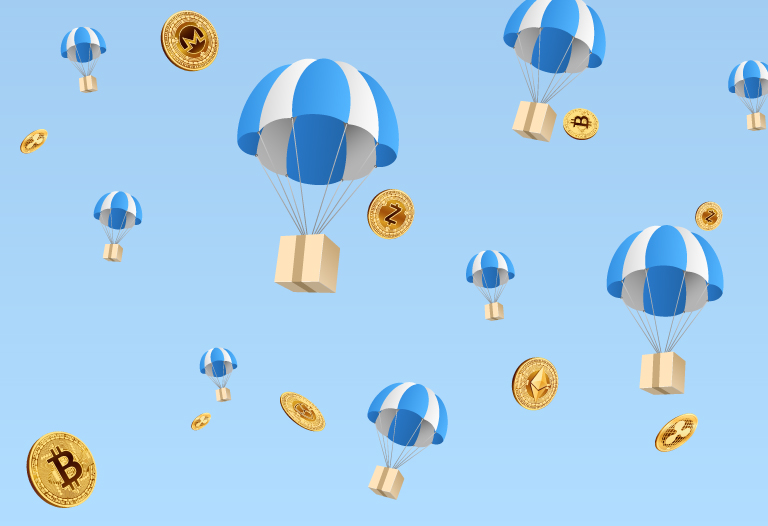
As a marketing tool, each project selects the type of crypto airdrop that best suits its specific goals, and each type operates differently. However, the general airdrop process typically follows these steps:
-
The team behind the project decides how many tokens to distribute via airdrop. They then select the target audience and platforms for distribution, setting eligibility criteria for users to qualify.
-
Users identify and select high-potential Web3 projects they are interested in from ongoing airdrop campaigns.
-
Most airdrops require users to fulfill specific conditions to become eligible for free tokens. These may include following the project on social media, sharing posts, joining Discord or Telegram groups, completing surveys, or performing interactive tasks. Some projects require KYC verification, while others only ask for registration. Requirements vary depending on the project’s preferences, but the main goal is always to maximize publicity and adoption for the project or its new token.
-
After meeting the requirements, users submit their details to register for the airdrop.
-
Once registration is complete, users wait for token distribution.
-
Projects typically execute airdrops using smart contracts, enabling automatic token distribution to user wallets.
-
After distribution, users receive the tokens in their wallets. Once received, users can choose to hold the tokens or trade them on cryptocurrency exchanges.
4. Types of Airdrops
Each airdrop type has unique characteristics and objectives. Understanding the different types of crypto airdrops is crucial. Below are the most common types:
Holder Airdrops
Holder airdrops distribute free tokens to individuals holding a specified amount of a particular cryptocurrency in their wallets. Project teams often take a snapshot of users’ balances at a specific date and time. If the wallet balance meets the minimum threshold, recipients receive tokens proportionally based on their holdings at the time of the snapshot.
Many new projects conduct airdrops to holders of major cryptocurrencies like Bitcoin (BTC), Ethereum (ETH), or other successful tokens due to their large existing communities.
Standard Airdrops
The most basic form of airdrop, where users receive free tokens simply by registering a wallet or contract address, without providing additional information. These are fast and easy but usually come with limits on the number of tokens per user, operating on a first-come, first-served basis.
Bounty Airdrops
Bounty airdrops are publicly announced with predefined tasks users must complete to qualify. Tasks may include sharing project-related posts on Twitter, joining the project’s official Telegram group, or creating Instagram posts tagging friends. To claim the bounty, users must fill out a form with their wallet address and provide proof of completed tasks.
Exclusive Airdrops
Exclusive airdrops send tokens only to selected wallet addresses. Recipients are typically those who have previously interacted with the project—either active community members or early supporters. These airdrops are often used to reward loyal users and strengthen community engagement. In September 2020, the decentralized exchange (DEX) Uniswap airdropped 400 UNI tokens to every wallet that had interacted with its protocol before a specific date. Holding governance tokens grants users voting rights on future project decisions.
Faucet Airdrops
Faucet airdrops distribute small amounts of tokens periodically—usually daily or weekly—to encourage consistent user engagement with the project. These tokens typically have low individual value but aim to foster long-term interaction.
Hard Fork Airdrops
This type differs slightly. When a cryptocurrency undergoes a hard fork, a new token is created, and holders of the original token automatically receive an equivalent amount of the new token in their wallets. The most famous example is the creation of Bitcoin Cash (BCH) in 2017: Bitcoin (BTC) holders received an equal amount of BCH.
Summary
Crypto airdrops can be broadly categorized based on when eligibility is announced: pre-announced or retroactive. Bounty and faucet airdrops are typically pre-announced, while others are often retroactive, though they may also be pre-announced. Projects choose their airdrop type based on strategic goals and user acquisition plans.
5. Tips and Precautions
When participating in crypto airdrop campaigns, veDAO has compiled the following tips and precautions for users to consider:
-
Do Your Research: Thoroughly investigate the project and its team before deciding to participate.
-
Don’t Treat Airdrops as Investments: View airdrops as bonuses rather than primary investment strategies.
-
Use Separate Email and Wallet Addresses: This helps protect your personal information from being exposed.
-
Stay Updated: Airdrops often have strict deadlines. Missing the window means forfeiting eligibility. Keeping up with project updates also helps avoid scams.
-
Be Patient: Token distribution can take time and may be delayed due to various factors.
-
Beware of Scams: Airdrop frauds are common. Avoid untrustworthy projects and never share your private keys or personal information. The MyEtherWallet phishing scam is a recent high-profile example, where attackers created a fake website and promoted a fraudulent airdrop requiring users to enter their private keys to claim tokens.
Dedicated Airdrop Tools:
http://dropsearn.com/airdrops/
6. Recommended Airdrop Opportunities
After extensive screening and research, veDAO highlights six promising upcoming or potential airdrop opportunities worth participating in.
LayerZero
LayerZero (ZRO) is a cross-chain interoperability protocol enabling configurable, trustless, guaranteed message delivery across chains. It currently operates on most major blockchains, including Ethereum, Avalanche, Polygon, BNB Chain, Aptos, Fantom, Arbitrum, and Optimism. LayerZero has not yet launched its token, but the team has referenced the ZRO token in documentation. It is widely expected that the project will airdrop tokens to its dApp users.
Below are suggested actions to increase chances of qualifying for a potential airdrop:
-
Stake STG and vote on Stargate Finance
-
Use bridges such as Stargate, USDC, Aptos, and LiquidSwap
-
Perform cross-chain swaps on SushiSwap
-
Use the Bitcoin bridge
-
Interact with other dApps on LayerZero
-
Earn roles in Stargate Guild
Note: The LayerZero team has made no official announcement regarding an airdrop. Any suggested participation methods are speculative.
zkSync
zkSync is a ZK Rollup that offers scalable and low-cost transactions on the Ethereum blockchain by submitting validity proofs along with bundled transactions to an Ethereum smart contract. zkSync Era Mainnet Alpha is now publicly accessible. The team has indicated plans to launch a native token in the future, fueling speculation about a potential airdrop. To potentially qualify for a zkSync airdrop, users should:
-
Add zkSync Era Alpha Mainnet to MetaMask
-
Interact with zkSync Lite and zkSync Era Mainnet Alpha
-
Complete tasks on zkSync’s Crew3 platform
-
Engage with the zkSync ecosystem, e.g., Orbiter Finance or ZigZag
Note: Some zkSync dApps may not have launched their own tokens yet, giving participants a chance at dual airdrops.
StarkNet
StarkNet is a decentralized Validity-Rollup ("ZK-Rollup") running atop Ethereum, offering unlimited computational power for decentralized applications without compromising security or compatibility. It leverages the secure and scalable STARK cryptographic proof system to ensure transaction integrity. StarkNet is permissionless, allowing anyone to use it without third-party approval. Its alpha v0.11.0 recently launched on testnet, with a mainnet upgrade expected soon.
The best way to position yourself for a potential STRK token airdrop is to interact with the StarkNet testnet. Additionally, several protocols on StarkNet have not yet issued tokens. Using their dApps could earn you future airdrops, potentially doubling your rewards.
Polygon zkEVM
Polygon zkEVM (MATIC) is a Layer 2 scaling solution for Ethereum that uses zero-knowledge proofs to scale while maintaining Ethereum compatibility. Polygon co-founder Sandeep Nailwal strongly hinted on Twitter that zkEVM users would receive a significant MATIC airdrop. The best way to qualify is to interact with the Polygon zkEVM mainnet: add Polygon zkEVM to MetaMask, connect via the native bridge or third-party options like Orbiter Finance, and interact with QuickSwap—the only active dApp currently deployed on Polygon zkEVM.
Vela Exchange Airdrop
Vela Exchange is a decentralized perpetual contract platform that uses a hybrid model combining off-chain order books with on-chain settlement to enhance trading speed and security in DeFi derivatives. According to official documentation, Vela users can open positions on synthetic assets with up to 100x leverage. Vela is scheduled to launch its mainnet and conduct an airdrop on June 26, 2023. The project’s official Twitter has suggested that maximizing trading volume is key to receiving a larger airdrop. Participating in their flash trading competitions not only offers prize-winning opportunities but also increases airdrop allocation. The first competition concluded with a prize pool of $10,000 USDC and $2,000 eVELA. A second flash event will be held with adjusted rules to accommodate traders of all sizes. However, the highlight will be the Grand Beta Trading Competition, which Vela promises will feature major rewards.
Blur NFT Marketplace
Blur’s (BLUR) Season 1 airdrop ended on February 14, 2023. Blur announced that Season 2 would distribute over $300 million in BLUR tokens, originally planned for April 2023 but now postponed.
To participate in Blur’s Season 2 airdrop, users can connect their wallets to the Blur platform and place bids on NFPs. Blur has confirmed that over $300 million in tokens will be distributed during Q2. The airdrop operates on a points-based system, rewarding bids on NFT collections based on 24-hour trading volume. Participants can further maximize their BLUR airdrop by earning loyalty points. For Season 2, Blur also launched Blend (short for Blur Lending), a peer-to-peer perpetual lending protocol for NFTs that allows NFT holders to borrow ETH against their NFTs without selling them. With the introduction of Blend, the team added lending points, with double points awarded for certain NFT collections. However, the delay in the airdrop has led to point devaluation and widespread community dissatisfaction. As token prices decline, the profitability of engaging in Season 2 interactions may fall short of expectations.
Join TechFlow official community to stay tuned
Telegram:https://t.me/TechFlowDaily
X (Twitter):https://x.com/TechFlowPost
X (Twitter) EN:https://x.com/BlockFlow_News
 @TrendX_official