YC Partners and Marketing Director: How Can Startups Use PR and Content to Build a Brand?
TechFlow Selected TechFlow Selected
YC Partners and Marketing Director: How Can Startups Use PR and Content to Build a Brand?
As a founder, telling your startup story is one of your primary responsibilities.
 Navigating Web3 tides with focused insights
Compiled by: TechFlow
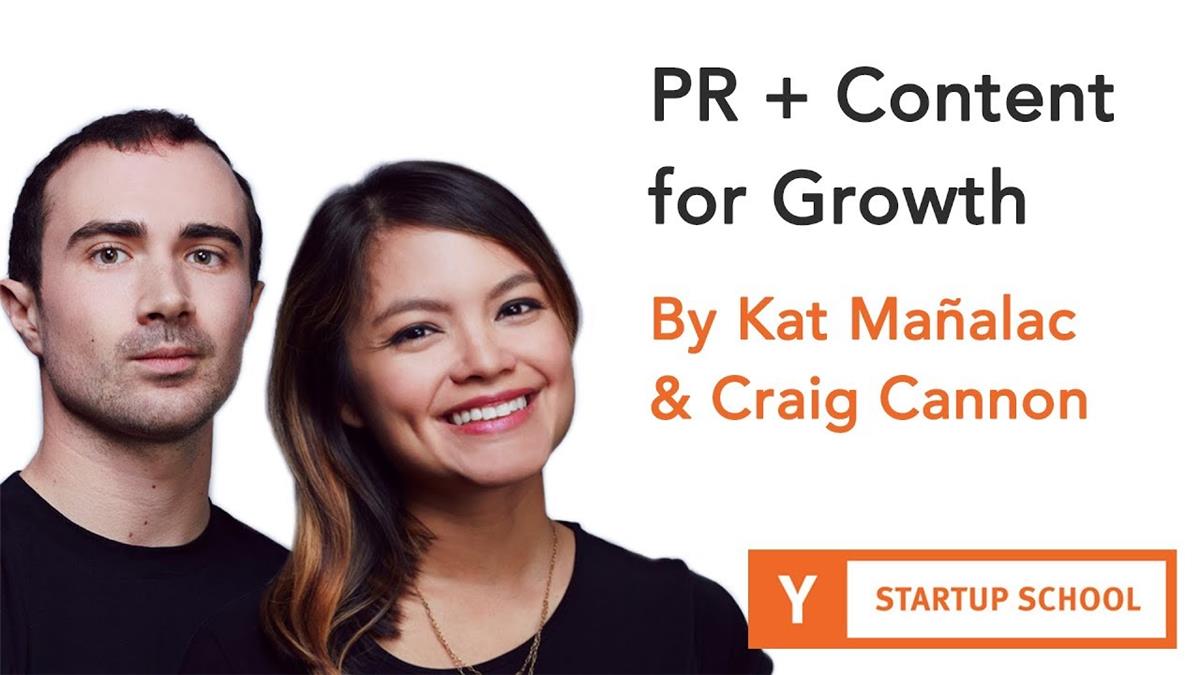
Note: This article is part of the TechFlow special series "YC Startup School Chinese Notes" (updated daily), dedicated to collecting and organizing Chinese versions of YC courses. The tenth installment features an online course by YC partners Kat Manalac and Craig Cannon titled "Public Relations and Content Growth."
About Kat Manalac
Hi everyone, I'm Kat Manalac, a partner at Y Combinator. During my time at YC, I've helped hundreds of startups with launches, outreach, and initial media interactions. Now I’m joining Craig Cannon, who has created much of the content for YC. As early founders, we’ll provide you with a framework for thinking about content marketing and media.
Before we begin, let’s define some terms.
Content vs. PR
-
When we talk about content, we mean any material you create and publish on your own channels to attract a specific audience or users. This includes blogs, YouTube videos, podcasts, and anything else you produce and distribute yourself.
-
PR, or press, refers to coverage of an early-stage startup in independent third-party publications—news outlets, blogs, etc.—outside your own channels.
The Importance of Narrative
Telling your startup story is one of your primary responsibilities as a founder. You need to tell this story to investors, the media, users, and potential employees—and repeat it throughout your company’s lifecycle. So it's best to start practicing early. Your narrative should be clear and concise so others can easily repeat it and help spread the word. That’s how virality works.
Creating strong content is crucial because it helps shape your story and present it to a global audience. Even more importantly, you can use that story to pitch media platforms and reach even more potential users.
However, producing high-quality content and building a PR practice takes significant effort and time. Therefore, at the outset, you must carefully consider your decisions. I can help guide you through the decision tree to make informed choices at your current stage.
In this article, we'll cover when and why to consider content marketing, how to think about content like a product, and how to measure its success. We’ll also explore how to conduct PR campaigns and offer key questions for reflection. With these insights, you should be able to make the right strategic decisions.
Key Considerations
A few things to keep in mind before we dive in.
First, focus on the right priorities. Most people spend considerable time and energy understanding what they’re building before starting. But it's critical to ensure that what you're building actually meets real user needs.
That means while writing code, you should constantly engage with users to understand what they truly need.
If your product or service doesn’t solve a real problem for users, no amount of media exposure or content marketing will save it. So how do you know if you’re meeting user needs? Through consistent user conversations.
Moreover, talking to users not only deepens your understanding of their pain points but also inspires better content and supports targeted messaging.
Second, press is not a scalable user acquisition strategy. While it can generate inbound interest and visibility among early adopters, it shouldn't be relied upon long-term.
Press is something you don't fully control and may not even be the best way to communicate with your earliest users. Therefore, before diving into content and marketing, prioritize direct user communication.
Introduction to Craig Cannon
Hello, I'm Craig Cannon. I currently work at YC alongside Kat Manalac, primarily on podcasting and related content. Before joining YC, I worked at The Onion, where we published satirical news—including one infamous image placing Joe Biden’s head on the body of a fat man in front of the White House—for comedic effect.
*TechFlow Note: The Onion is a U.S.-based satirical news outlet known for publishing fictional, absurdly humorous articles covering politics, society, culture, and entertainment.
After leaving The Onion, I launched Comedy Hack Day (CHD), a creative event bringing together developers and comedians to build funny tech applications—a space for inventing and showcasing humorous technology projects. Now, I'm at YC.
Today, I’ll be discussing content marketing.
This field goes by many names—editorial, brand publishing, social content, and sometimes even “I don’t know.” Regardless of terminology, it broadly encompasses everything you create across channels like podcasts, YouTube, blogs, video, and social media.
We could go deeper into each channel, but here we’ll focus on broad, actionable advice you can apply immediately.
When Should You Start Content Marketing?
The first question to ask is timing. According to Kat Manalac, you should consider growth strategies only after you’ve built something people truly want and are confident competitors won’t easily replicate it. If someone else can quickly copy it, you risk wasting energy and money.
Assuming you’ve reached that point, content marketing becomes a viable path. Many startups begin content efforts early simply because they can’t afford paid acquisition.
Treating Content as a Product
If you apply everything you’ve learned in product development lectures to content, the only shift needed is following YC’s core advice: build what people want—including what your customers want.
When you treat content as a product, you’re no longer constrained. You have a clear market—your users—and you aim to create things they genuinely care about.
I once spoke with Wade Foster from Zapier, whose blog offers extensive content marketing tips. They created content tailored to Hacker News’ audience—but later realized that HN readers weren’t always their ideal customers. Despite heavy investment, much of that content didn’t reach the right people.
Choosing a Goal
Early-stage companies typically have two main goals: engagement and conversion. If you're a social company like Instagram, time spent on site matters greatly.
Brand perception is also important—it shapes how people see you—and requires deliberate cultivation. Obviously, you don’t want negative publicity or backlash, but understanding and managing brand goals is challenging.
Setting Up Analytics
To improve conversion rates, track user behavior and analyze traffic data promptly.
Start by setting up a tracking tool like Mixpanel, which is more powerful than Google Analytics. It allows you to monitor where users come from and every action they take on your site—clicks, session duration, navigation paths, etc.
Next, install a Facebook Pixel. While it may seem less valuable initially, many YC startups launch without one. The pixel captures data from users logged into Facebook, enabling cost-effective retargeting. Compared to other Facebook users, these are cheaper to reach.
For example, if you get 10,000 visitors from a Hacker News post but lack a Facebook Pixel, you won’t know who they are. Installing these foundational tools is essential.
How to Find Your Target Audience and Create Unique, Creative Content?
One common question is about choosing platforms. It’s simpler than you think: just ask your target customers, “Where do you hang out?”—Reddit, Instagram, etc. Study trending content in those spaces.
For instance, Paul Graham’s essays are popular on Hacker News; makeup tutorials thrive on YouTube and vlogging sites. Mimicking successful formats increases your chances of resonance.
There are two reasons: distribution is hard for most companies, and many rely solely on paid acquisition. Assuming that’s true, you must identify where your customers are and what kind of content performs well there.
-
Take Scentbird, a YC company offering fragrance and beauty subscription boxes. They run influencer campaigns on Instagram and maintain an active blog—all publicly available.
-
Another example is YC itself. Though PG, Jessica, Robert, and Trevor might not say so, YC has practiced content marketing from day one. Paul’s essays and Hacker News itself are prime examples—content that builds star audiences. YC just keeps iterating.
If you know where you’re going and what you want to achieve, I believe too few people invest enough time in brainstorming. It sounds silly, but most content feels mediocre because creators don’t spend enough time ideating. Their output ends up being derivative averages—indistinguishable from others—because inspiration comes from competitor blogs or generic templates. We need to rethink content creation with more originality and creativity.
How to Consistently Produce High-Quality Content and Become a Successful Company? — Lessons from The Onion
The Onion, a headline-driven satire site operating for over 30 years with hundreds of staff, receives 10–15 headlines weekly from each of its 10 writers. Editors strip names and select favorites—eliminating bias and treating all ideas equally, unlike typical corporate blogging.
Producing consistently great content demands immense effort. Brainstorming sessions can last days; writing a single blog post might take a full day or more.
In media, precision in language is vital—audiences have little patience. Edit ruthlessly.
Also, expect to discard most of your work—most content won’t make the cut. You’re competing against everything on the internet, not just similar offerings. So your content must stand out as valuable and compelling.
To succeed, involve people with genuine domain expertise—co-founders, lead engineers—who can share unique insights with the world.
At The Onion, most submitted headlines are rejected. To become a successful company, you must be willing to cut most of what you create—only the best survives.
How to Effectively Promote Your Brand Across Social Media Platforms?
Promotion is extremely important. Share articles on Twitter, experiment with novel ways to promote your content. Many suggest tailoring content per platform, but equally important is optimizing for where your customers actually spend time.
For example, clipping a podcast for Instagram might look cool, but podcast downloads still far exceed Instagram views.
Not everything works everywhere. Know your target audience and tailor your outreach accordingly.
SEO and influencer marketing are excellent ways to boost visibility. For example, Airbnb publishes detailed city guides that can be promoted via Facebook Pixel to increase brand exposure. Using Zapier for API integrations enables non-technical teams to automate workflows, saving time and effort.
Text-based interviews are effective for attracting potential customers—they require less production than video or audio and are ideal for SEO and indexing.
Industry insights and tools are also key to improving efficiency and quality.
TripleByte helps companies hire engineers, while Intercom is a well-known lightweight chat tool. Des Traynor from Intercom has written outstanding pieces on product and content marketing.
Haseeb from TripleByte, formerly at YC, wrote a highly regarded article on engineering hiring.
But remember: you must truly understand what you're saying, or your message remains superficial.
Here are some practical tools:
Front, a YC company, runs a site called “good email copy” (or similar). Matil curates favorite emails and labels templates like “how we shut down the company during onboarding.” You can search and reuse these. If you have extra coding time, such tools are incredibly useful.
Building community is also vital. Y Combinator is a powerful entity. While Hacker News and Product Hunt were built by them, merely posting products isn’t enough. If you’re seen as a valued contributor—engaged, personable—you’ll benefit from understanding how these communities function. This doesn’t mean hiding or avoiding comments, but recognizing how central they are to reaching your users.
Finally, publishing books matters. Stripe is launching its own book line; 37signals does too. As influential figures, authors can amplify their reach through books. Tracking impact is difficult, but since few do it, it offers real differentiation.
Why Pitch the Media?
As mentioned earlier, press isn’t scalable for user acquisition, but it can bring early attention and signal credibility to investors or potential hires. It also supports SEO.
Many ask when to start pitching media. Ideally, wait until you’re building something people desire—something that enables meaningful interaction with your target audience. For most startups, it’s worth waiting until you have a call-to-action ready.
Is there a product people can try, buy, or sign up for?
Most YC companies wait until after product launch and gaining early users before pitching. Of course, exceptions exist.
If your company has something uniquely newsworthy, pre-product announcements can work—especially in biotech or hard sciences where development cycles span years and competitors won’t release similar work anytime soon.
Note: most media outlets no longer cover early-stage startups. Don’t waste journalists’ time with trivial updates. Objectively assess what investors care about and why it matters now.
That’s why many startups announce funding rounds in their first press release—it’s timely news. That’s why you see so many funding announcements. It’s simply a moment—a timely pitch opportunity.
How to Do PR Yourself and Build Media Relationships?
Next, we’ll discuss how to conduct PR, including checklists and processes for pitching. But first, a note on PR agencies: we recommend not hiring them. They’re expensive and often out of budget for startups. More importantly, building media relationships is like BD—it requires ongoing cultivation. Until you have more capital, handle PR personally. While agencies have journalist contacts, you can build those yourself.
We view PR as critically important—as vital as business development—so founders should lead it. Building relationships with reporters takes time and consistency.
We suggest spending at least 30 minutes weekly reading industry news. Maintain lists of relevant publications, media outlets your users read, and specific journalists covering your niche.
Another key is pitching. If you plan to pitch, think ahead three to six months. Create a calendar mapping milestones. For example, in January, announce seed funding targeting engineers. In March, pitch CTOs with a trend story on AI boosting physical retail sales.
Once you decide to pitch a story, define your goal and audience. Prepare a one-sentence pitch, a 3–5 sentence summary, and answers to common questions.
One-Sentence Pitch
Your one-sentence pitch should state what you do and for whom. Express it in plain language anyone can understand and repeat.
Here are two compelling examples:
-
Orby: Orby is building flying robots to help businesses monitor inventory.
-
The Box Company: Smart, eco-friendly food delivery containers.
These convey what each company builds and for whom. A one-liner doesn’t capture everything—but it doesn’t need to. Its purpose is clarity and persuasion: spark curiosity, prompt follow-up questions, invite deeper conversation.
3–5 Sentence Summary
With 3–5 sentences, you add context and depth.
Discuss not only what your company does and who your customers are, but also why it’s better than existing solutions.
Also include notable aspects about the founders, story, or market.
This format is commonly used at YC when pitching companies to media for product launches or funding news.
Let’s look at two examples: Orby and The Box Company.
"Orby is developing flying robots to help businesses monitor inventory. These robots are designed to be safe and lightweight, equipped with light visual sensors, capable of autonomous navigation and collaboration with retail or warehouse staff. Orby’s robots will significantly reduce employee workload per shift, freeing them to serve and assist customers. The company is currently running pilot programs across several U.S. states."
From this, we learn Orby’s robots aid inventory monitoring, offering enhanced safety and portability. They’re already in pilot programs. When we spoke with Orby’s founders, they emphasized the robots’ light weight and safety—capable of flying indoors alongside humans, truly serving people. We also revealed talks with major retailers—potentially interesting to journalists.
Now consider The Box Company.
“Box is developing smart, eco-friendly food transport containers. The food delivery market is growing rapidly, projected to increase by 79% by 2022. Yet challenges remain in ordering food, scheduling deliveries, and receiving meals of restaurant-quality freshness. Packaging is often non-recyclable and non-compostable, creating massive waste. Box’s solution is a patented container that improves the entire delivery process. Stackable and easy to assemble, these containers prevent soggy or dirty food.”
Customization based on client needs is possible. Sharing progress is fine, but focus on highlighting the problem’s urgency and how you solve it—now that you’ve provided more context.
Answers to Common Questions

As a startup co-founder, prepare answers to frequently asked questions. Draft concise responses and practice them—but avoid over-rehearsing to the point of sounding robotic. Be ready with answers, but during interviews, focus on naturally delivering 3–5 key messages, letting others flow organically. Prepare thoroughly, but don’t recite lines like marketing scripts—otherwise, you’ll sound like a bot.
How to Capture Media Attention and Secure Coverage Through Pitching?

In today’s competitive funding environment, capturing media attention is crucial.
TechCrunch used to publish nearly every funding announcement, but as startup volume grew—with dozens or hundreds of pitches daily—they became selective.
To stand out, you need a news hook—like closing a funding round or riding a major trend. This makes journalists more likely to respond. For example, Orby successfully tied itself to the Amazon competition narrative, positioning itself within a broader trend to gain traction.
Note: avoid timing conflicts. Pitching during major events like Apple’s WWDC drastically reduces response odds.
After identifying timing and target outlets, carefully consider your audience and their content preferences. Identify three realistic, relevant publications. You can’t expect The New York Times to cover a brand-new startup. Focus on media that cover startups, and consider granting an exclusive. An exclusive means pitching only one reporter—if they accept, you commit not to brief others until their story publishes. Exclusives increase the likelihood and quality of coverage, as reporters value breaking news. In early stages, give your top choice first dibs.
So, how do you contact reporters? Warm intros are best. Create a ranked list of your top three journalist targets and use networks—social media, mutual connections—to find someone who knows them. Request a warm introduction. If you find a connector, draft the intro email for them to make forwarding easy.
Also, give it time. Don’t rush journalists. Allow at least two weeks. And never lie, fabricate numbers, promise the impossible, act entitled, suggest headlines, or plagiarize. Reporters resent these behaviors and may blacklist you. Follow up politely once or twice, but don’t spam.
Additionally, don’t ask to review drafts. Those from life sciences may think this is standard peer-review practice, but journalists find it offensive—it undermines their journalistic integrity. If needed, they’ll share fact-checks voluntarily.
And speak humanely—don’t sound like a marketing bot. You don’t need to memorize every detail—just know key facts and answers. If all goes well, you’ll have a published piece to share across social channels and activate Plan B. If no one picks up your story, don’t despair—it won’t make or break you. Focus on publishing on your own platform and integrating it into your content workflow.
Finally, reflect post-campaign: Did this article help achieve your goals? Did it drive new users or inbound investor interest?
Q&A Session
What should you do if a journalist reaches out before you have a product?
Engaging with journalists can build relationships, but if you lack a viable product, prioritize product development over promotion. Avoid spending excessive time on PR. Share your vision: “I’d love to keep you updated on our progress,” and maintain periodic contact. Once your product advances, seek support. This nurtures media relationships and sets the stage for future visibility.
How to optimize blog content on your own website?
People often see effective tactics in blogs or podcasts—like keyword-rich titles.
While staying connected matters, ultimately, you want SEO-friendly content hosted on your site. I disagree with publishing content on third-party platforms or early-stage sites. For companies like Stripe with strong internal blogs, this works—but each article ties to a specific author, and people want to connect with individuals.
Is paying influencers worth it in marketing?
A major challenge in marketing is that influencers often charge high fees. Even if a popular figure agrees to promote you, they may charge heavily—and it’s rarely worth it unless they solve real problems for you.
Still, the tactic can work—but cautiously. As Kat said, don’t bet everything on it, as it’s not always the most effective method. That said, it can eventually pay off.
In some cases, sending product samples or demos to media or influencers is effective. For example, vlogger Casey Neistat boosted board game sales through targeted discussions. But generally, paying influencers isn’t worthwhile—especially in early stages.
How to establish and communicate a clear vision in a startup?
In startups, defining and communicating a clear vision is critical. It informs others of your current status and future direction. Adjustments happen during exploration and experimentation, but clarity evolves through iteration.
Take Orby: they had a prototype and solid theoretical foundation, yet faced risks. They’re actively addressing these. While they could downplay larger ambitions, clearly showing their current state is better.
Thus, building and sharing a clear vision helps people understand your company and support your journey. Adjustments will occur, but continuous communication keeps stakeholders aligned with your progress and direction.
Are clickbait tactics worth using in marketing?
Clickbait performs poorly in marketing and often leads to low-quality visuals. I generally don’t recommend it.
Instead, name campaigns based on customer needs and genuine interests. Knowing where your customers are and what they want lets you craft compelling, authentic messaging. That’s the real goal.
While clickbait may boost short-term exposure, it’s unsustainable. Occasionally, an engaging title is necessary—but avoid exaggeration or deception. Ultimately, a strong, honest headline wins.
How to prepare content before achieving product-market fit?
You should prepare content in advance of product-market fit. While high-quality content takes time, doing something valuable monthly is key. Many companies take long to find PMF—early preparation accelerates market entry.
The key is providing value. Valuable content attracts interest and builds connections. Platform choice and frequency matter—e.g., Mary Meeker’s annual report gets wide downloads. A single short post may require frequent updates to stay visible.
So before PMF, prepare content proactively and deliver value to engage your audience. Regardless of platform or cadence, prioritize value and sustained engagement.
If you lack product-market fit, should you write nothing?
Building your brand helps, but alone it won’t solve core problems. It’s like selling on a busy street—no matter how clear the path, you can’t control traffic volume.
The Importance of Optionality in Business Negotiations and How to Handle It
In business negotiations, optionality is crucial. If the other party has choices, they control pricing and terms. Sometimes this imbalance occurs beyond your control—but it’s rare. I don’t think it’s worth excessive worry, as most companies never face this issue.
It’s akin to architect-client dynamics. If clients are excited about the design, that’s a good problem. If new constraints arise—e.g., “We like the new balance”—but it doesn’t meet needs, we adapt. But such cases are uncommon.
In emergencies—say, a PR crisis—the founding team must respond swiftly. I fully agree with Kat. But if you elevate someone like Alex Jones as a brand ambassador without preparing for the backlash, you’re naive.
How often should you send product and progress updates to journalists?
Sending updates to journalists is delicate. Many struggle to balance frequency and effectiveness. So: how often should you update them?
Generally, journalists don’t want constant updates. But if you have real news, they’ll listen.
In some cases—e.g., long-standing relationships—journalists may request inclusion in your email list. Then regular updates are acceptable. But don’t bombard them monthly. It quickly backfires and breeds resentment.
Overall, aim for a clear communication plan—context-dependent, avoiding overexposure that harms your reputation.
How to Use Twitter and 'Help a Reporter' Tools to Connect with Media?
As someone in marketing, I’d like to share some lessons. Over the years, I’ve noticed journalists are very active on Twitter—making it a great channel for outreach. If you’re building a product, identify reporters and outlets you’d like coverage from, follow them on Twitter, and study their recent work and interests.
Also, use the “Hero” tool on Help a Reporter Out (HARO). Journalists post requests for expert sources across fields—biotech, machine learning, healthcare, etc. If you’re an expert, reply with your insights. This builds relationships—not by pitching your product, but by offering value.
In short, successful media engagement means using the right tools, understanding journalist needs, and delivering meaningful perspectives.
Join TechFlow official community to stay tuned
Telegram:https://t.me/TechFlowDaily
X (Twitter):https://x.com/TechFlowPost
X (Twitter) EN:https://x.com/BlockFlow_News
 深潮TechFlow