TechFlow Logo
Login/ Sign up
ETH Gas
Gwei
Fear
gas
Avalanche DeFi Head: In the L2 era, what is the role of L1?

Avalanche DeFi Head: In the L2 era, what is the role of L1?

2023.06.02
Share

TechFlow Selected TechFlow Selected

techFlow

Avalanche DeFi Head: In the L2 era, what is the role of L1?

The C-Chain is Avalanche's hub for liquidity. As subnets grow, all native assets on the C-Chain and exchange integrations will be leveraged through Avalanche Warp Messaging.

2023.06.02 - 06:26:51
AvalancheDeFiL1L2
The C-Chain is Avalanche's hub for liquidity. As subnets grow, all native assets on the C-Chain and exchange integrations will be leveraged through Avalanche Warp Messaging.

Written by: Ignas | DeFi Research

Compiled by: TechFlow

Crypto researcher Ignas interviewed Luigi D'Onorio DeMeo, Head of DeFi/DevRel at Avalanche, to share his views on the role of L1s in the era of L2s, as well as our exploration of Avalanche's ultimate vision.

Here are his insights:
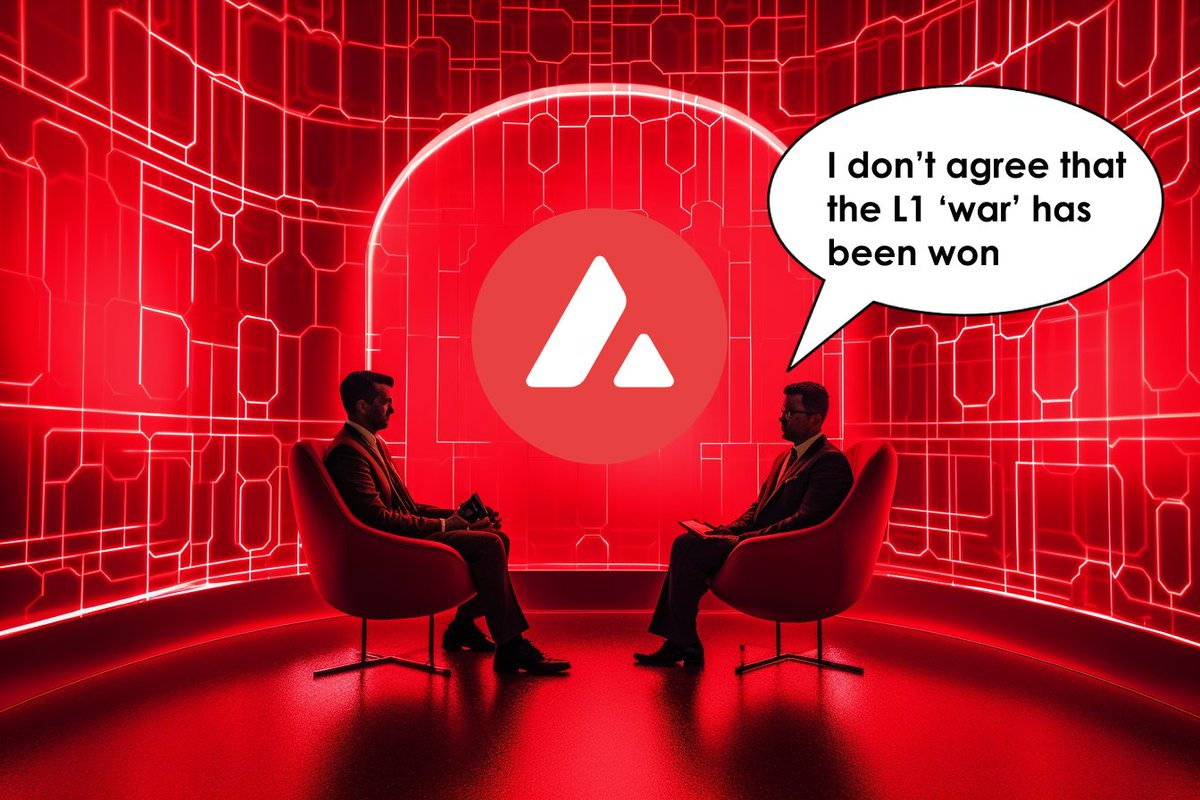
Both solutions promise to scale Ethereum with faster transactions and lower fees—functions originally meant for L1s. So what role do alternative L1s play now?

Will they disappear, evolve, or continue offering unique capabilities?

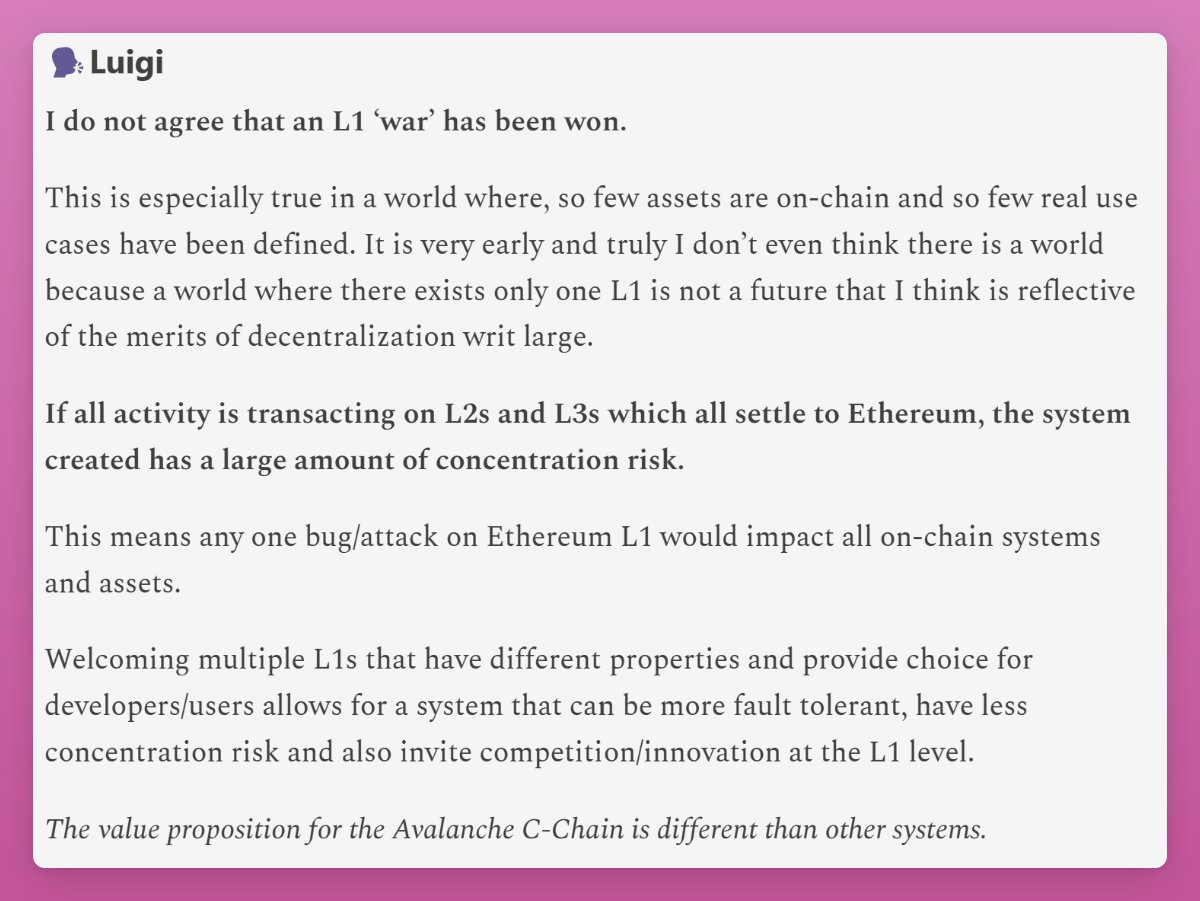
Luigi disagrees that Ethereum has already won the L1 "war." He warns that concentrating all activity on Ethereum creates centralization risks. He advocates for multiple L1s to provide choice, greater fault tolerance, and to foster competition and innovation at the L1 layer.
Interestingly, this contrasts directly with the view shared by Sanket, Polygon’s Head of Growth, during our AMA—he believes Ethereum has already won the L1 war.

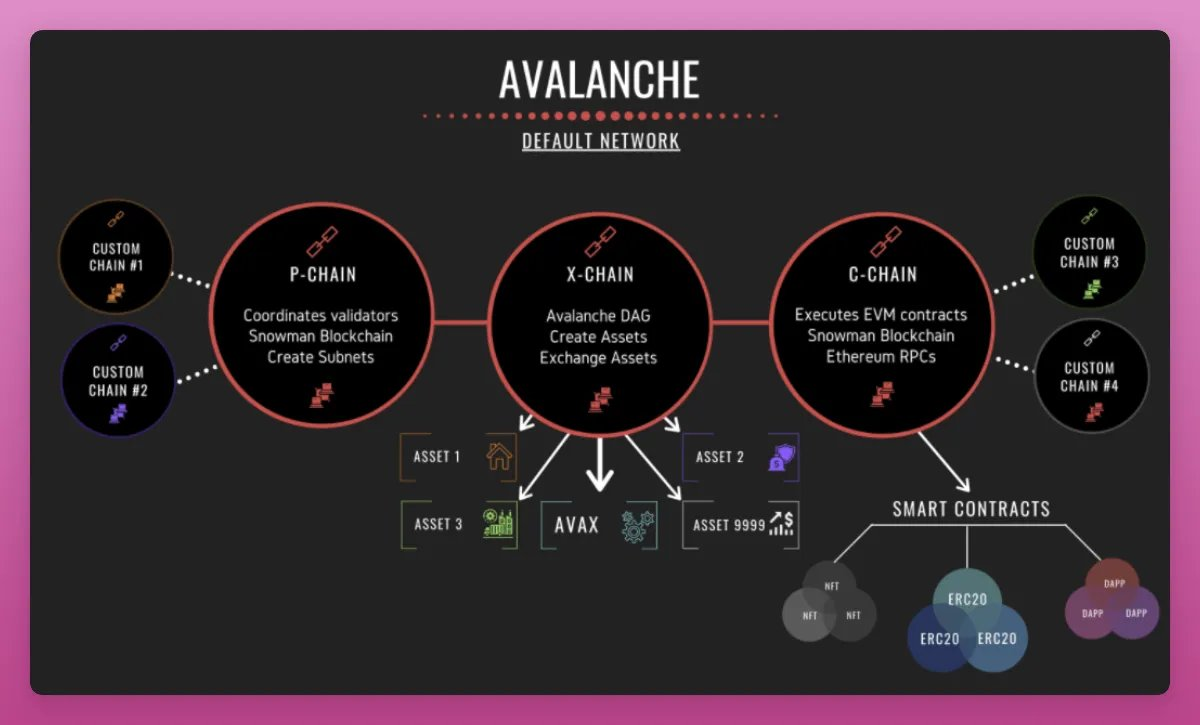
Why does Avalanche have a three-chain architecture plus subnets? Luigi explains:

• The C-Chain is EVM-compatible and optimized for smart contracts with fast finality;

• The P-Chain is where validators coordinate;

• The X-Chain is a UTXO-based chain designed for asset transfers.
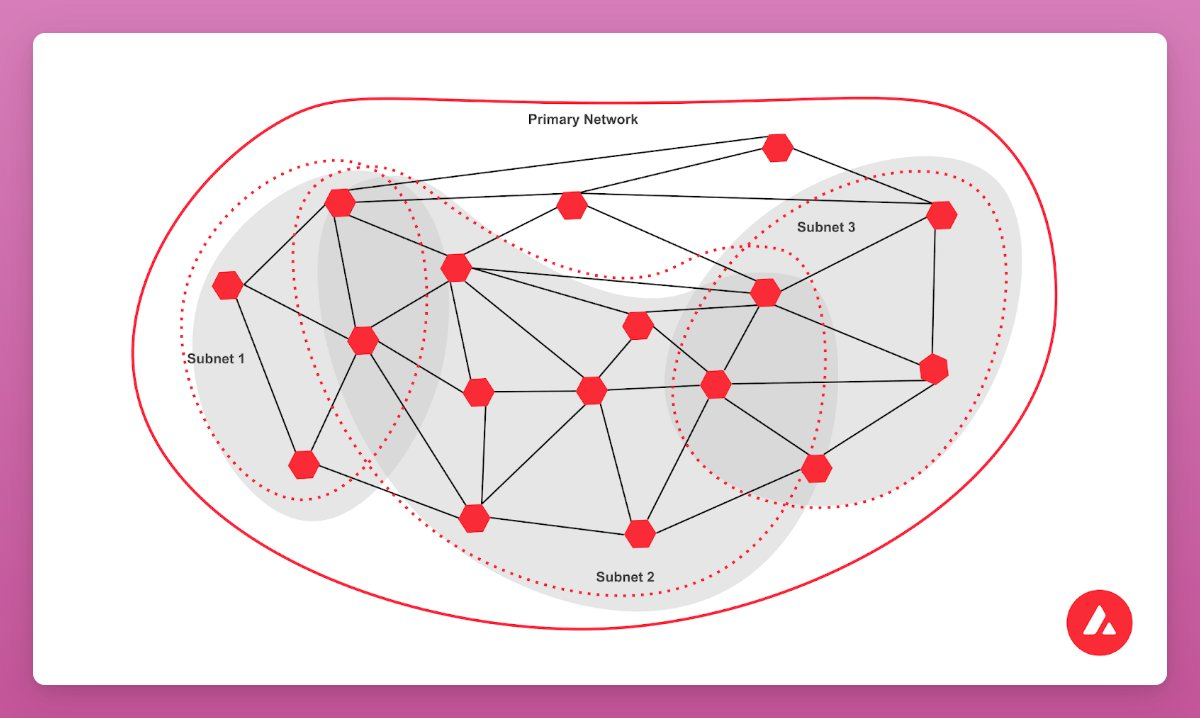
The vision for Avalanche subnets: “Subnets enable anyone to build their own blockchain. They can be customized in terms of validator permissions, virtual machines, and more. Many projects will want their own chains—such as TSM, Dexalot, dYdX, and others.”

Why build on a subnet instead of building on an L2 or L3?

“L2s and L3s often lack composability. With subnets, there’s no reason you couldn’t deploy an L2 as a subnet, have validators run sequencers, and use Avalanche Warp Messaging to communicate across subnets.”

The future of the Avalanche C-Chain: “The C-Chain is Avalanche’s liquidity hub. As subnets grow, all native assets on the C-Chain, exchange integrations, and more will be leveraged via Avalanche Warp Messaging.”
“As subnets expand, the C-Chain will thrive.”

Luigi introduced Ava Labs’ AvaCloud: “AvaCloud simplifies no-code Web3 blockchain deployment, enabling faster, cheaper, and lower-risk market entry. We’re continuously striving toward a world where deploying application-specific chains is as simple as possible.”

On the Avalanche blockchain ecosystem: “The value proposition of the Avalanche C-Chain differs from other systems. The primary network itself is a ‘special subnet.’ The C-Chain enables smart contract deployment with fast finality.”

Luigi spoke about Avalanche’s ultimate goal: “Our aim is to provide infrastructure that allows anyone to seamlessly build their own blockchain. We already have subnets deployed by numerous enterprise and institutional clients such as SK Planet, TSM, Bowlero, Gunzilla, and more.”

Join TechFlow official community to stay tuned

Add to Favorites
Share to Social Media

Related Articles

2026.07.15

a16z: Traditional finance doesn't want DeFi, only wants the blockchain infrastructure layer

If both succeed, fusion will happen naturally.

a16z: Traditional finance doesn't want DeFi, only wants the blockchain infrastructure layer
2026.06.26

From zkSync to Building and Then Rapidly Shutting Down a Chain: A Year in the Life of an L2 Founder

Seeking blood transfusions, cutting costs, banding together for warmth, and waiting for a turning point.

From zkSync to Building and Then Rapidly Shutting Down a Chain: A Year in the Life of an L2 Founder
2026.06.23

Why Isn’t Anyone Buying DeFi Insurance?

Revenue is drained by premiums; underwriting capital is severely insufficient; and systemic risk remains unresolved.

Why Isn’t Anyone Buying DeFi Insurance?
2026.06.22

With channel-based growth opportunities exhausted, what can DeFi protocols rely on to fend off encroachment by tech giants?

When giants move downward to harvest, DeFi can only break out laterally.

With channel-based growth opportunities exhausted, what can DeFi protocols rely on to fend off encroachment by tech giants?
2026.06.22

AC Exits Sonic’s Board of Directors; “DeFi Patriarch” Once Again Pulls Off a Strategic Exit

DeFi’s “Godfather” is confident, but the token price lacks momentum.

AC Exits Sonic’s Board of Directors; “DeFi Patriarch” Once Again Pulls Off a Strategic Exit
2026.06.05

Breaking the DeFi Cascading Liquidation Curse: Vitalik Proposes a New Solution

Vitalik Proposes an Options-Based Synthetic Asset Scheme to Tackle a Major DeFi Pain Point

Breaking the DeFi Cascading Liquidation Curse: Vitalik Proposes a New Solution
2026.05.29

Kelp DAO Vulnerability Triggers $10B Exodus, Two Major DeFi Lending Approaches Clash Head-On

Shared-pool models reveal shortcomings—why are institutions collectively shifting to Morpho’s isolated markets?

Kelp DAO Vulnerability Triggers $10B Exodus, Two Major DeFi Lending Approaches Clash Head-On
2026.05.27

After the on-chain treasury net TVL halved to $120 billion, these 3 types of treasuries are booming

The Wave of DeFi Treasuryization: A Comprehensive Breakdown of 8 Major DeFi Treasuries

After the on-chain treasury net TVL halved to $120 billion, these 3 types of treasuries are booming
2026.05.26

IOSG: DeFi Is at Its Most Dangerous Moment—The Real Vulnerabilities Are Not in the Code

The greatest threat to DeFi has shifted from code vulnerabilities to operational-layer failures—such as compromised keys and validators.

IOSG: DeFi Is at Its Most Dangerous Moment—The Real Vulnerabilities Are Not in the Code
2026.05.21

$147 Trillion vs. $7 Billion: On-Chain “Risk Managers” Emerge, Ushering in a New Era of DeFi Asset Management

From Protocol to Risk Manager: The Shift of Power in DeFi Lending—Three Pathways Determine Who Captures Institutional Benefits.

$147 Trillion vs. $7 Billion: On-Chain “Risk Managers” Emerge, Ushering in a New Era of DeFi Asset Management
TechFlow Logo

Navigating Web3 tides with focused insights

Contribute An Articleemail
Media Requestsmsg

Risk Disclosure: This website's content is not investment advice and offers no trading guidance or related services. Per regulations from the PBOC and other authorities, users must be aware of virtual currency risks. Contact us / [email protected] ICP License: 琼ICP备2022009338号