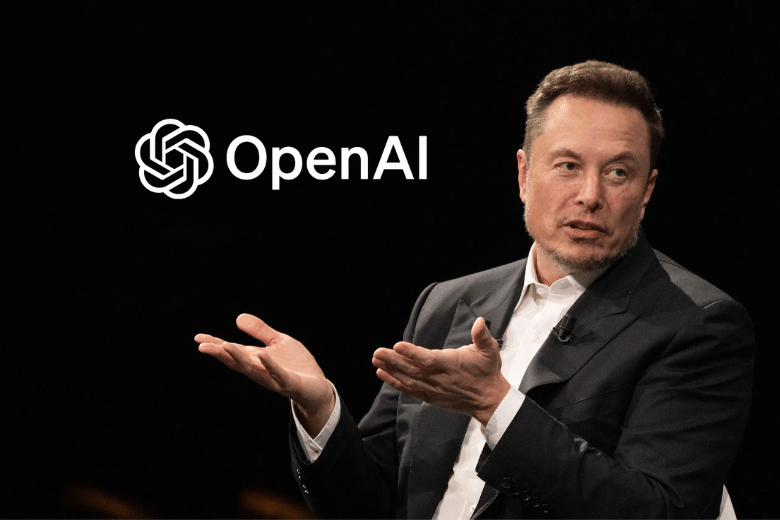
Sam Altman, Founder of OpenAI: How to Successfully Start a Startup?
TechFlow Selected TechFlow Selected
Sam Altman, Founder of OpenAI: How to Successfully Start a Startup?
If you're a startup, you can go to YC Demo Day.
 Navigating Web3 tides with focused insights
Note: This article is included in the TechFlow special series "Chinese Notes on YC Startup Class" (updated daily), dedicated to collecting and organizing Chinese versions of YC courses. The first entry covers the online course "How to Start a Startup" by Sam Altman, founder of OpenAI and former president of YC.

Key Product and Word-of-Mouth Marketing
In today's discussion, I will share how to successfully run a startup. While this is a broad and complex topic, I'll do my best to convey the most important lessons.
First, we must recognize that a company’s success depends entirely on the quality of its product. If you can create an outstanding product, people will naturally tell their friends about it and recommend it—this is one of the keys to success.
For startups, success often seems especially difficult. They are always searching for the secret formula—a simple way to achieve success. But in reality, real success requires hard work and patience.
If we look at the most successful companies like Google and Facebook, we find they all originated from word-of-mouth referrals among users. This is precisely one reason for their success. If you build a truly impressive product, people will naturally introduce it to their friends and colleagues.
Finally, I want to emphasize that word-of-mouth marketing is extremely important. People love sharing things they enjoy and recommending products they find valuable to their friends. This phenomenon is as natural as meeting and chatting in a bar.
Therefore, the key to startup success lies in delivering a high-quality product and enabling strong word-of-mouth marketing. If you can achieve this, you've already completed most of the work required for success.
Easy to Understand
From a product standpoint, being easy to understand is a critical metric. If you cannot clearly explain what your product does in a brief sentence, or if no one finds your product interesting or fun, then you're likely doing something wrong. This usually reflects unclear thinking or insufficient market demand.
Exponential Market Growth
One key to startup success is identifying a market that is either already experiencing or is about to undergo exponential growth. However, when evaluating startups, investors often focus solely on revenue growth and overlook the market's true potential.
In fact, many successful startups began in small markets and achieved extremely rapid growth. For example, 11 years ago, the iPhone app market was worth zero dollars; today, it has become enormous.
If you only care about TAM (Total Addressable Market), you may make a big mistake. What truly matters is identifying a market that grows significantly each year—one where you can ride the upward momentum. Investors need to realize that while revenue growth rate is crucial, so too is explosive market demand and the trend toward exponential expansion.
Real Trends vs. Fake Trends
Learning how to distinguish real trends from fake ones is critically important. A real trend is something that actually happens; a fake trend does not. So before you place a big bet, make sure it’s real. Here's a simple trick to help you judge:
- A real trend emerges when a new technology platform appears and early adopters become obsessed with using it, telling their friends how much they love it;
- A fake trend occurs when people may buy a product but don't use it—or at least not enough.
The iPhone is an example of a real trend. When it first launched, many dismissed it, but those who owned one used it for hours every day. It became central to their lives—they loved it and told others, “You have to get one.” This signaled a fundamental shift: a new computing platform had emerged, capable of generating massive businesses. It was the perfect time to bet on mobile apps.
On the other hand, virtual reality has been viewed as a fake trend—or at least it was through August 2018. While many talked about it and purchased headsets, actual usage rates among early adopters were low.
Therefore, before placing any major bets, check whether it's truly a lasting trend rather than just a passing fad.
Evangelist Founders
In addition to talent in recruitment, sales, media engagement, fundraising, etc., a startup also needs at least one evangelist-type founder serving as CEO to lead the team.
This chief evangelist must possess the ability to passionately inspire the world and spread awareness of the company’s mission. Without someone driving the company forward, achieving success becomes extremely difficult.
Moreover, lacking the ability to build a strong team puts the startup at great risk.
Ambitious Vision
An ambitious vision is essential for achieving goals. While none of us wants to come across as obnoxiously boastful, over time, we should aim to grow more ambitious. As long as these ambitions are reasonable and backed by a plan, people respond positively.
After all, an ambitious vision is exciting—it makes our work more engaging and challenging.
In 2018, at least in Silicon Valley, starting up didn’t seem easy. Although raising money has become easier than before, attracting top talent and gaining mindshare has grown harder.
There are now many startups. Starting an organization might be easy, but assembling sufficient talent within it is very difficult. It may be relatively easy to attract initial employees when tackling a compelling problem. But once early enthusiasm fades, bringing in more people becomes extremely tough.
Why should they join your company? Why does it matter to the world?
If you're working on something important, you’re far more likely to attract top talent and intellectual contributions. Therefore, thinking early about how your vision evolves and how to draw more people in is vital.
We also observe that the most successful founders typically have a confident and clear vision. Even if they turn out to be wrong, they boldly stand by their beliefs and act as decisive leaders saying, “This is how we’ll do it.” This confidence and clarity instill trust and drive success, even amid widespread skepticism. Hence, having an ambitious vision is crucial.
In summary, the entire startup ecosystem is best suited to support ventures with low probabilities of success—but massive scale if they win. Pursuing big goals and bold visions attracts the best talent and ideas. Beyond intelligence, hard work, and communication skills, we must pay attention to less obvious factors that are equally key to success.
Team
Building a great company involves more than choosing the right market and creating a great product—the most important thing is building a great team.
Although I’ve only met a few founders personally, I believe they all spent ample time on hiring—Mark Zuckerberg being a prime example.
All founders go through a transition—from building the product to building the company—and successful founders realize that the core of building a company lies in the team.
Within a team, you’ll likely need several types of people:
Optimists
As a startup founder, the whole world will tell you why you’ll fail. That’s why you need optimists on your side. They ignite inner belief and spread that spirit throughout the team. Even in the face of naysayers and challenges, they say, “You know what? We’ll figure it out, no matter how big the obstacle.” Without such a team and mindset, it will be hard to succeed when the world keeps knocking you down.
Idea Generators
In any company, there are always a few individuals who truly move the needle. These people excel at generating novel ideas and turning them into viable solutions. Not every company needs too many of them—too many ideas can cause confusion. But every team should include some members who consistently generate new concepts, even if most end up being wrong. Because only through experimentation and failure can a team gradually discover the right path to ultimate success. Thus, having creative thinkers is vital.
Doers
In a startup team, my favorite phrase embodies the “we’ll solve it” attitude. Despite everything that could go wrong, the key to startup victory is incredible energy. Even if my idea seems unrealistic, even if I’ve never solved such a problem before, even if it threatens to destroy the company—I still believe most problems can be solved. This belief is critical. It defines the team’s spirit: “You know what? We have the right people. We’ll find a way. We’re betting this will work.”
I feel especially encouraged when early team members say, “I got it.” In large companies, many tend to deflect responsibility, saying, “That’s not my department,” or complaining, “Someone else will handle it.” They say, “Oh, this is really bad, this will hurt us,” instead of stepping up and saying, “I’m the one who’ll do it. I got it. Don’t worry.” In startups—especially in the early stages—action wins. You’ll never have enough data, nor time to deliberate. You need people willing to act with far less information and certainty than they’d prefer. And if their actions fail, they quickly adapt and try another approach.
Inexperienced but High-Potential Individuals
Often, startups achieve remarkable results precisely because they don’t know how hard something is—or that it’s supposedly impossible.
Steve Wozniak once said his greatest achievements came from having no experience and no money.
Of course, this isn’t always true. There’s a magical phenomenon in startups, particularly in the early stage—before they realize they “shouldn’t” be doing certain things. So while you can’t hire everyone inexperienced, you can confidently give opportunities to those rare, highly promising individuals lacking experience.
Company Momentum
One of the most important jobs for a founder is to never lose momentum. This can be frustrating, because it means that during the first few years, you’ll never truly step off the gas pedal—you’ll never fully rest. In fact, startups are hardly the best choice for work-life balance, especially in the early days.
Startups survive on momentum. With momentum, people deliver results beyond what they thought possible. Without it, recovery is difficult. Therefore, founders must ensure the startup maintains rhythm—achieving small wins at regular, predictable intervals.
This is extremely important—and relies heavily on the founder’s personal effort to maintain motivation. Only sustained high energy can keep the startup moving forward and succeeding in a competitive market. So no matter where or when, remember: stay motivated and relentlessly push your startup ahead.
Competitive Advantage
Beyond addressing obvious customer needs, a startup must develop a sustainable competitive advantage over time. Though this sounds obvious, sometimes we hesitate to prioritize it.
Yet, among today’s increasing number of YC-style startups, this has become a key discussion point. When we ask them, “What’s your plan for long-term monopoly effects? What’s your enduring competitive advantage? Where do you see network effects in this industry?”—they often stare back as if hearing the question for the first time.
Notably, every truly great venture has an answer to this question—and the more successful they are, the more likely they are to pretend they don’t need one. But if you want to build a sustainable business, this is a critical factor you must consider.
Smart Business Model
First, having a sound business model is crucial for any startup. You don’t need to know every detail from day one, but when asked how you’ll make money, scale the company, or acquire users, founders shouldn’t react as if they’ve never heard the question before. That’s a common but negative signal.
To help startups build successful business models, VC partner Paul Buchheit believes frugality, focus, obsession, and love are the best traits. These qualities are vital, and founders should clearly articulate what they’re doing and their role in the journey.
Keys to Startup Success
When evaluating startup ideas, several trends are worth considering. It’s hard for startups to beat big companies—but if they align with these trends, their chances of success increase.
Winning Through Trends and Differences
If you’re a product manager at a large company and want to pursue an idea that sounds unappealing, you’ll need approval from everyone—including your boss and CEO—for it to happen. But if you succeed, nothing can stop you.
For startups, however, they can attend YC Demo Day and pitch to thousands of investors—all of whom can say “yes” and fund the startup. This mindset and process are completely different from big companies.
Ultimately, I believe startups can win with ideas that sound bad but are actually good. Because of this, startups often beat big companies in pursuing such ideas. So if you have an idea that seems bad but is actually great, you may find it easier to gain investor support than a big company would.
Adapting to Rapidly Changing Markets
In fast-changing markets, startups usually outperform large companies. This is because startups have massive advantages in flexibility and speed. As market changes accelerate, more decisions are needed to adjust products and strategies. On average, large companies make worse decisions and execute them far slower than startups. Thus, in terms of pace, startups can compound their advantages and win the competition.
Platform Shifts
Additionally, startups often win during major platform transitions. When platforms shift dramatically, many new companies emerge in these clusters. Most large companies operate on annual cycles and struggle to make strategic pivots when platforms change. They move slowly. In contrast, startups can rapidly adapt, devise new strategies, and gain significant advantages.
Summary
In conclusion, startups have huge advantages in flexibility, speed, and adaptability, giving them better odds of winning in fast-moving markets. Moreover, startups typically thrive during major platform shifts, as they can quickly adapt to new conditions and formulate responsive strategies.
Join TechFlow official community to stay tuned
Telegram:https://t.me/TechFlowDaily
X (Twitter):https://x.com/TechFlowPost
X (Twitter) EN:https://x.com/BlockFlow_News
 深潮TechFlow