Bankless: Will the "Digital Dollar" Become the Next Hot Political Issue?
TechFlow Selected TechFlow Selected
Bankless: Will the "Digital Dollar" Become the Next Hot Political Issue?
Maintaining the freedom for taxpayers to enter and exit will ultimately be the greatest safeguard against the decline of the "digital dollar."
 Navigating Web3 tides with focused insights
Author: Donovan Choy, Bankless
Translation: TechFlow
Introduction: Countries around the world are considering issuing official digital currencies, and in the United States, the prospect of a digital dollar has sparked debates across political lines. Central bank digital currencies (CBDCs) could have significant implications—not only becoming a political flashpoint but also raising concerns about economic freedom and privacy rights. This article explores the political dilemmas surrounding CBDCs, their differences from cryptocurrencies, and analyzes the potential consequences of maximalist and minimalist CBDC models. We will also examine the possible benefits and hidden costs of CBDCs, and why preserving cash and cryptocurrencies as alternative payment methods remains crucial.
Today, we’re diving into U.S. central bank digital currency and how you should think about it.
Will the “digital dollar” become the next hot political issue?

Although Republican politicians in the U.S. tend to be more supportive of cryptocurrency than Democrats, they are growing increasingly hostile toward the idea of creating a central bank digital currency in America.
This week, Florida’s Republican governor—and potential future presidential candidate—Ron DeSantis effectively banned the use of CBDCs within the state. While DeSantis’ political stature makes this particularly notable, he is far from the only politician voicing such views.
North Carolina likewise voted in May to prohibit government agencies from accepting CBDC payments. South Dakota Governor Kristi Noem recently blocked a bill supporting CBDCs, and similar calls have emerged urging North Dakota’s governor to take comparable action. Meanwhile, Texas Senator Ted Cruz stated he wants to completely block the Federal Reserve from creating a CBDC—the situation is rapidly evolving.
A digital dollar is undoubtedly on the Federal Reserve’s radar, but it doesn’t appear imminent… though expectations that a major foreign power might act before the U.S. could accelerate progress toward a digital dollar.
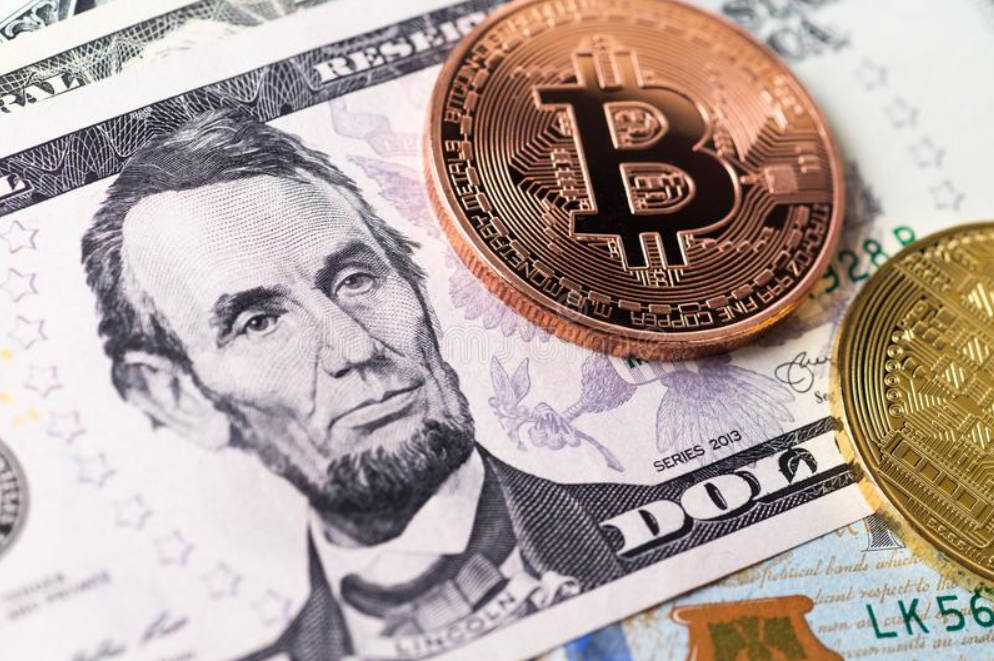
U.S. central bank digital currencies are sometimes conflated with cryptocurrencies like Bitcoin (BTC) and Ethereum (ETH), but despite some technological similarities, the philosophies of decentralization and CBDCs are fundamentally opposed. CBDCs will not be fully decentralized; instead, they will exist on centralized ledgers controlled by a small number of decision-makers.
CBDCs can be broadly divided into two main types: maximalist and minimalist. (maximalist or minimalist)
A maximalist CBDC is issued directly to the public and held in deposit accounts managed by the central bank. A minimalist CBDC is issued to
select private-sector intermediaries, who then distribute it to the public.

For a maximalist CBDC, the potential Orwellian consequences require little explanation. It would become extremely easy for the government to restrict Americans’ financial freedoms for any reason. Canceling transactions deemed politically undesirable would be as simple as clicking an “undo” button on a federal account.
You don’t need to be a paranoid conspiracy theorist to believe a U.S. CBDC could be used for improper political purposes. This year, we’ve already seen how state actors can bypass legal procedures to suppress politically disfavored activities in the private sector—just look at Gary Gensler’s so-called “regulatory enforcement” during Operation Choke Point 2.0.
What about a minimalist CBDC?
Since deposit accounts under a minimalist CBDC model belong to private-sector firms, this may help prevent some potential political abuses. Private companies could resist central bank overreach through litigation, legal appeals, or whistleblowing. But this offers limited assurance.
A minimalist CBDC entangles the central bank and private banks in a larger rent-seeking monster than exists today. The central bank could require banks to block CBDC flows to “undesirable” adult websites or censor transactions going to gambling or firearms companies. No court order would be needed to verify compliance—everything would be transparently visible on the Fed’s blockchain ledger, down to every last dollar. Non-compliance could mean erasure of a bank’s CBDC capital, or worse, revocation of its regulatory license. To stay competitive—or simply survive—banks might go to great lengths to comply at all costs.
The features that make cryptocurrencies exciting or revolutionary today—immutability, privacy, transparency, decentralization, scarcity—are precisely what CBDCs lack.
That’s not to say CBDCs wouldn’t bring many non-malevolent benefits to the U.S. government. Many CBDC supporters genuinely believe it could help integrate the 7.1 million unbanked Americans into the traditional financial system. They argue it could reduce crime, since the government could easily track the flow and origin of every dollar. It might also improve the current unsatisfactory cross-border payment system, which extracts repeated fees from poor immigrants sending remittances. These are entirely plausible benefits.
But good public policy should result from careful cost-benefit analysis, and most arguments in favor of CBDCs lack this rigor. They focus excessively on potential benefits while deliberately ignoring potential costs, adopting a blindly optimistic view that public servants and technocrats will use their powers solely for clearly defined policy goals and nothing else.
In reality, a CBDC would be more like a wrecking ball. You might get what you wanted—but along with a host of other unintended problems.
While CBDCs may offer several improvements over paper money, a broader and more accessible cryptocurrency ecosystem can still achieve the desired efficiency gains—without the trouble of launching a privacy-unfriendly digital dollar and triggering a political firestorm.
First, the existing $130 billion stablecoin market is already helping address issues faced by unbanked Americans and cross-border payments. Meanwhile, crypto firms like Chainalysis and Coinbase appear highly cooperative in assisting law enforcement to curb criminal activity in the crypto space.
Ultimately, some form of CBDC may be inevitable, but if the government must create one, it should stand on its own technological merits.
Alternative payment methods like cash and cryptocurrencies should be allowed to coexist with federally issued currency. Americans should never be forced to adopt a CBDC. Preserving taxpayers’ freedom to opt in or out will ultimately be the strongest safeguard against the digital dollar’s potential downfall.
Join TechFlow official community to stay tuned
Telegram:https://t.me/TechFlowDaily
X (Twitter):https://x.com/TechFlowPost
X (Twitter) EN:https://x.com/BlockFlow_News
 Bankless