Besides making money, don't overthink—30 trading insights from crypto trader GCR
TechFlow Selected TechFlow Selected
Besides making money, don't overthink—30 trading insights from crypto trader GCR
The strong remain strong, and vice versa. Reducing winning positions while increasing losing ones is a poor strategy—you're better off doing the exact opposite.
 Navigating Web3 tides with focused insights
Author: VIKTOR
Translation: Peng SUN, Foresight News
GCR is an anonymous trader who rose to fame during the 2021 bull market for seemingly having perfect foresight on market movements. As a well-known master of large-scale shorting, his trading cases are impressive: he publicly shorted DOGE at its top in May 2021, SHIB and metaverse tokens at their peaks in November 2021 (during the height of the bull run), and LUNA before its collapse in 2022 (even making a $10 million bet with Do Kwon). Although he now speaks far less frequently on social media than during the last bull cycle, we can still revisit his past tweets—many of which are worth saving and rereading.
Before diving into GCR’s tweets, here’s a summary of key insights from his views that are worth learning:
-
Round number levels are Schelling points—they either act as potential support or resistance, especially when there's no fundamental valuation rationale.
-
Low unit bias attracts retail: When you can own millions of dogcoins (10,000x a dollar), why would you buy less than a tenth of a Bitcoin?
-
Never short low-market-cap projects: If GCR follows this rule, so should you.
-
The strong keep getting stronger, and vice versa. Reducing winning positions while adding to losing ones is a terrible strategy—do the opposite instead.
-
Based on SNL and Musk’s performances, shorting every DOGE pump has been one of the highest-probability trades available.
-
GCR’s edge has nothing to do with chart analysis or complex strategies—he relies purely on intuition.
-
New tokens have one advantage over old ones: hope and lack of existing holders.
-
How the market reacts to news reveals more about participants’ biases (bullish or bearish) and sentiment than the truthfulness of the news itself.
-
Don’t overthink—just focus on making money.
-
During altcoin cycles, you should maximize risk early and gradually reduce it over time—but most people do the exact opposite.
-
Asia/China will drive the next bull market.
-
BTC and ETH are both at their bottoms. After the FTX collapse, GCR turned bullish.
-
Most people with long-term conviction are better off holding BTC and ETH rather than trading.
-
ETH will reach $10,000.
Note: GCR originally tweeted via @GiganticRebirth, now uses @GCRClassic, and also posted a few tweets from his temporary account "MingXMecca".
-
Longstanding observation: Every panic sell-off caused by DeFi exploits doesn't matter—the market never cares beyond a few hours anyway.

-
Market reaction to news is highly informative:
When news impacts price, market participants often obsess over whether it's true or false. But more often than not, the actual truth behind headlines doesn’t matter. What matters is how the market reacts—and how quickly.
-
"Inverse Sell the News":
When 95% of traders expect “sell the news,” I almost always buy—in other words, “inverse sell the news,” as I’ve said before. Many who were forced out due to fear end up re-entering. “Selling the news” happens when least expected.
-
Never short low-market-cap projects:
This is why we’ve never, and will never, short low-cap projects. It’s one of the hard rules I teach—especially when sellers are exhausted after four years and supply is desperate.
-
Intuition is the greatest edge:
The best traders always prioritize intuition over apophenia. Don’t like this answer? Is intuition not satisfying enough for your curiosity? This is the truth—there is no other. I can’t teach it to you, but you can find the edge.
-
Low unit bias strongly appeals to retail investors:
No matter how many times people see it, they still underestimate how powerfully low unit bias attracts retail. It’s the strongest magnet in crypto. Why would any sane person buy 100 CONE when retail owns millions? Because it’s the cheapest token on Coinbase.
-
Don’t overthink—just focus on making money.
-
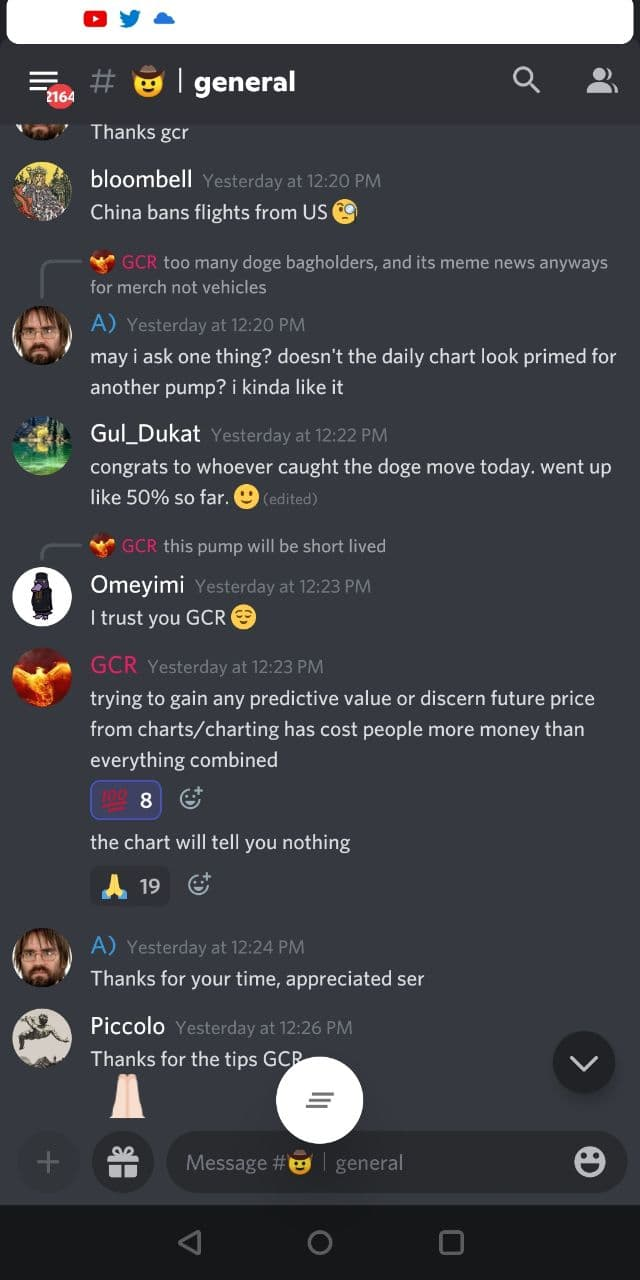
DOGE is the easiest coin to trade by fading catalyst-driven rallies:
Completely detached from fundamentals, DOGE turns out to be the easiest coin to trade. DOGE Day on April 20th, Musk on SNL, TSLA accepting DOGE payments—I shorted all those tops. The enthusiasm never meets expectations (a meme coin shouldn’t chase fundamentals), and likely won’t form a cyclical bottom.

-
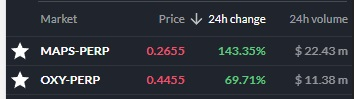
Why take profit on shorts?
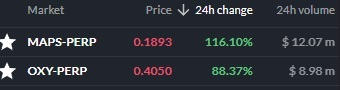
The third most common question I get: If you still believe prices will go lower long-term, why take profit on your short? If you’re shorting an altcoin and have already captured 70–90% of the downside move but still hold 10%, reconsider your approach. This is what happens if you blindly copy my bearish thesis months later.
-
Shorting can be either a trade or a contrarian investment:
There are two ways to short: as a trade or as a contrarian investment. If the one-year price confidence interval > 95% (i.e., 95% chance price will be lower a year from now), then “invest” regardless of short-term volatility. That’s why I “invested” PEOPLE at 0.09 USDT; a squeeze to ATH is possible, but my thesis is on a great company.
-
The future of NFTs:
Compare NFT project market caps to famous meme coins: SHIBA peaked at $60B; no NFT except BAYC has reached a $1B cap. Compared to NFT growth, Altcoin 2.0 seems overvalued; I predict tokenized NFTs will eat into Altcoin 2.0 trading volume.
-
Hard round numbers are Schelling points:
As expected, bounced off 10 memetic supports—but not just memes. Hard round numbers are natural convergence points for reflexive assets with fuzzy valuations. Respect Schelling points.
-
Sector rotation and imitation:
I’ve been saying for weeks: the biggest threat to any successful project is its own success. Success breeds imitation, and this industry is ruthless—it will shift mercilessly toward derivatives of the original to chase higher returns (from VCs to traders to retail).
DeFi Summer, Food Farms, Original Seigniorage [ESD, DSD], OHM (Olympus DAO), and countless other trend rotations.
-
Shorting Elon Musk-fueled DOGE pumps:
Over the past year, has there been an easier, higher-probability (>100%?), simpler trade than shorting DOGE pumps driven by Elon Musk? A trade requiring less edge, less foresight, less talent—yet consistently profitable? SNL, Doge Day, TSLA payments, Super Bowl ad, space mission, etc.
-
Don’t try to catch the bottom:
If I’ve ever helped you before, please listen: don’t try to catch the bottom. You might lose big thinking you’re buying cheap and recovering losses. It’s nearly impossible—you’ll likely panic-sell amid drawdowns, or the coin goes to zero.
-
Master airdrop chart patterns:
Capturing high volatility at both ends offers some of the best returns, though markets are increasingly efficient at pricing these events. Still, airdrops often follow predictable chart patterns the market hasn’t fully caught on to—study every case since 2018.
Timing the “bottom” of an airdrop is actually a crucial art form to master in this space; I started seriously studying this after UNI. On-chain metrics sometimes help, but it’s mostly exchange-based; once price flattens and starts consolidating, sellers are usually “exhausted.”
-
Go all-in on networking:
If you're not good at trading, go all-in on building connections. Attend every conference. Show up at every meetup. People are more accessible in bear markets. You wouldn’t believe how many people succeeded simply by knowing the right people.
-
The famous "Decentralized Casino" paper:
Just as “digital gold” became Bitcoin’s winning narrative and use case in the last cycle, the “decentralized casino” argument is becoming consensus across crypto (filling the void left by “Web3”).
For average people, flying to Macau or Las Vegas is too expensive. When windfalls and macro risks appear, decentralized casinos—and/or decentralized Ponzi schemes—always move fastest. I’ve always believed humans are desperate, greedy, fallen, lonely, and trapped in the metaverse.
-
News trading:
If you feel sidelined, I suggest trading news rather than relying on others’ information. News trading is increasingly competitive, so you must build fast-response infrastructure and watch projects whose announcements have been delayed for months.
Crucially, if you’re trading meme coins, when the market shows it doesn’t care about the “news,” cut your losers quickly. Any trader with market intuition can sense this catalytic exhaustion and should take partial profits at the first sign.
-
Relative strength in stocks is often a lagging effect:
Traders often ask me why crypto shows relative strength or weakness versus stocks. I usually tell them to wait before concluding—it’s usually just a lagging effect we’re observing.
-
GCR has shorted several coins:
Publicly shorted SHIB, DOGE, GAL, SAND, MANA, original Luna, LUNC, and more broadly, the entire 2020–2021 crypto bubble, plus the decade-long macro asset bubble in Q4 2021.
Frankly, retail-heavy tokens are often hyped for months due to some “future catalyst”; as the event nears, explosive buying surges occur. Just as retail imagines memes will make them millionaires, market makers use final liquidity cascades to distribute.
-
Bet on unit bias:
What drove XRP to $3? Above all, low unit bias. BTC was already $10K, ETH $1K. Retail felt they missed the boat, but XRP at $0.10 could go to $1? $10? What about $100? Massive speculation around imminent Coinbase listing (incorrect), betting on unit bias in the next cycle.
What truly drives retail in alt seasons? (1) I got in too late on “legit assets” (BTC/ETH); (2) Other coins seem institutional too (XRP will be used by banks, Garling seems certified, ADA created by an ETH “co-founder,” Musk endorsing DOGE).
In mid-to-late cycle, they start chasing more degenerate plays without needing much social proof (as the retail pool opens up). These cycles only begin after major assets have risen significantly, creating (1) wealth effect; (2) FOMO—people feel they’ve missed out and jump into alts.
For most, thinking about the next “institutional” coin is still premature. Doing research in bear markets gives you an edge, but real deployment comes after major markets have surged. Sentiment shifts—from “crypto is a scam” to “I need to buy the next ETH, ETH is too high.”
-
Advantages of new coins:
Full of hope; lacking holders; teams aren’t rich yet, so less incentive to hype.
-
China and Asia will drive the next bull market:
I believe China (and Asia broadly) will power the next bull market. It’ll take time for the West to digest its cynicism toward this space, but the East is rising and eager to prove itself. You should browse WeChat—many future high-growth tokens will be unknown in your circle.
-
The strong keep getting stronger (MingXMecca):
Within narrative cycles, we cognitively bias toward buying tokens that haven’t pumped yet—but more often than not, the strong keep getting stronger, and weak ones lag persistently. Until the music stops—then manufactured strength collapses rapidly.
-
"Low Float Theory" (MingXMecca):
Think about incentives: some projects have massive unvested floats/future supply that can be hedged. Market makers intentionally pump to lure traders into joining the “narrative”—to distribute, rather than selling later at zero in a deep bear. They’ve been waiting for GCR’s echo.
-
Reverse Super Cycle (MingXMecca):
Nothing real has changed in Web3—people talk narratives at tops and bottoms. I’ve always said the claim that “all tokens will go to zero” is just a reverse super cycle—“this time is different.” It’s always the same game, and people love tokens.
-
Best-performing tokens often have the worst tokenomics:
Some top-performing tokens have the worst token economics—issued by the most predatory teams. Many teams launching at peak bear markets are desperately waiting for better conditions to deploy tactics and manipulate markets.
-
Winner takes all, loser loses everything:
Try to view your Ponzi scheme as a pro boxer, not a token; winner takes all, loser gets nothing. People really cut winners and add losers instead of seeking therapy.
-
Increase risk early in alt season:
General principle when trading meme coin pumps: during alt season, increase risk when the trend first reverses, then gradually protect capital over time. People lose because they do the opposite—start slow, then grow greedier.
I continue holding large spot positions in BTC and ETH because I believe we bottomed in November and remain optimistic about the future—with a 2030 target of $10,000 ETH. 90% of holders will be better off. This advice applies only to degen traders playing shitcoins.
-
Best indicator of remaining juice in an alt season:
After years of trading alt seasons, one of the best indicators of remaining momentum is: How do alts react to news, announcements, listings, scams? When the alt season is about to rug, traders still buy news but dump immediately afterward.
-
Hold spot long-term:
I bought tokens around $16k–$18k in 2022 and have little interest in trading. I plan to offload them to institutions / TradFi funds in the late stage of the next cycle. I’ve scaled up some contrarian investments, picking select shitcoins where narratives/rotations have already played out.
-
Study 2019 and 2020:
Don’t expect too much—the entire banking system won’t collapse overnight, leading instantly to hyper-bitcoinization and pushing BTC to $1M. But don’t expect too little either; when correction comes, it’s not a scam designed by CZ to exit liquidity—it goes back to zero. Stay balanced. Study 2019 and 2020.
-
ETH will hit $10,000 one day:
This might be my last crypto tweet. As I often say, if you have long-term conviction in BTC and ETH, just holding—not trading—will serve you well. They just keep printing more money; you’re unlikely to time every local move. ETH will reach $10,000 one day.
[Disclaimer] Markets are risky. Invest with caution. This article does not constitute investment advice. Readers should consider whether any opinion, view, or conclusion herein aligns with their individual circumstances. Investment decisions based on this content are at the reader’s own risk.
Join TechFlow official community to stay tuned
Telegram:https://t.me/TechFlowDaily
X (Twitter):https://x.com/TechFlowPost
X (Twitter) EN:https://x.com/BlockFlow_News
 Foresight News