Decentralized Stablecoin Competition Landscape: Who Will Win Among GHO, crvUSD, Dinero, and dpxUSD?
TechFlow Selected TechFlow Selected
Decentralized Stablecoin Competition Landscape: Who Will Win Among GHO, crvUSD, Dinero, and dpxUSD?
Stablecoins are one of the greatest innovations in cryptocurrency. But as the new year begins, how will the stablecoin landscape evolve?
 Navigating Web3 tides with focused insights
Written by: Chinchilla
Compiled by: TechFlow
Stablecoins are one of the greatest innovations in cryptocurrency. But how will the stablecoin landscape evolve as the new year unfolds?
- GHO
- crvUSD
- Dinero
- dpxUSD
Stablecoins can be used to attract users into DeFi and bring liquidity to their native protocols. In fact, achieving dominance in native stablecoin issuance may be critical for boosting protocol revenue (and perhaps also token price).
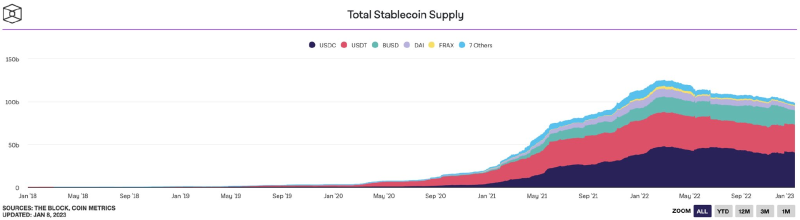
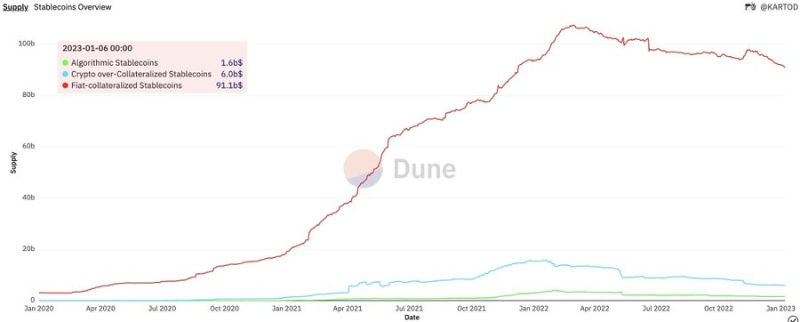
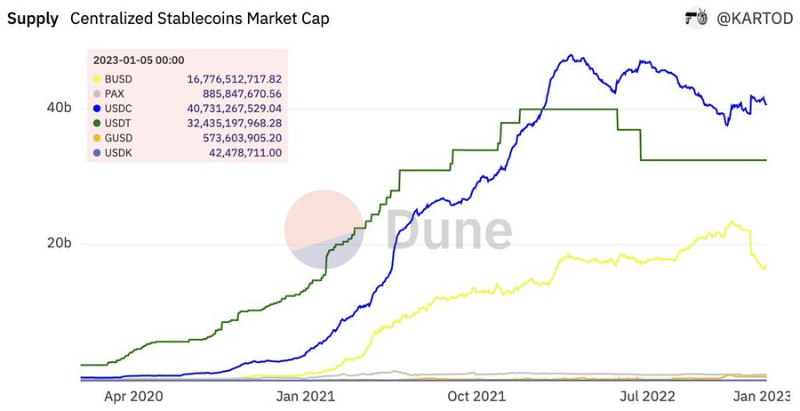
First, let’s briefly review the current state of affairs. As data analytics on Dune show, fiat-collateralized stablecoins have so far been the most widely used compared to overcollateralized and algorithmic crypto-backed stablecoins.
However, even they took a hit during the bear market.
More specifically, while BUSD saw significant growth in 2022, USDT and USDC showed declining trends, and recent FUD targeting Binance caused it to lose billions of dollars in total supply.
Nevertheless, approximately 92% of dollar-pegged coins are backed by centralized entities.
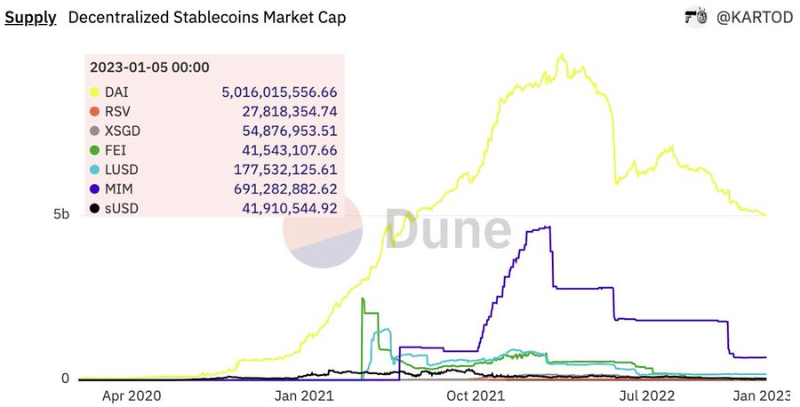
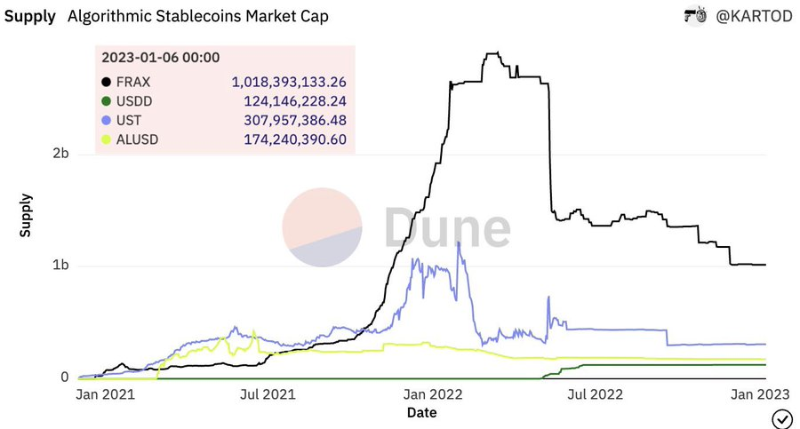
Furthermore, after the collapse of Luna, decentralized and algorithmic stablecoins suffered a severe blow to trust. While their market capitalization cannot match that of centralized counterparts, coins like DAI, LUSD, FRAX, and MIM have struggled to keep pace.
We must not forget other failures such as:
-
Waves' Neutrino USD (USDN);
-
Near Protocol's USN;
-
Tron's USDD.
Now that we’ve reviewed the current situation, let’s examine the protocols aiming to capture market share and challenge centralized stablecoins.
Aave's $GHO
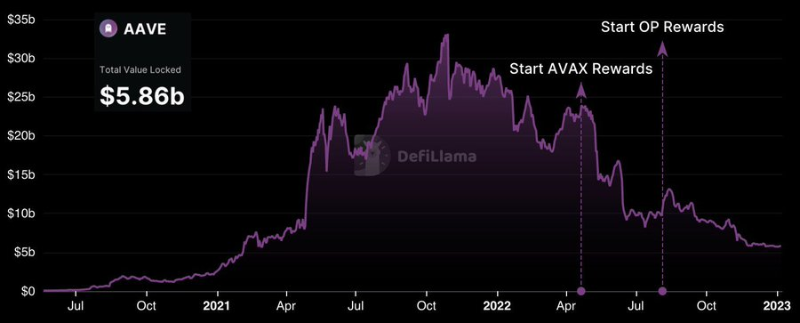
Aave is one of the foundational pillars of DeFi. Even at this stage of the bear market, its TVL remains around $5.86 billion. Last summer, Aave announced it would launch a governance-managed, overcollateralized stablecoin called GHO.
"Facilitators" will be able to mint and burn GHO, managed by Aave governance. Additionally, users holding Aave tokens will be able to mint GHO at discounted rates. The protocol will rely on arbitrage mechanisms to maintain GHO’s price stability.
Moreover, it does not depend on external price oracles. I know this sounds alarming after the UST crash, but the mechanism is quite different.
UST's arbitrage relied on its own volatile balancing asset (Luna), whereas GHO will be overcollateralized by a basket of tokens.
Curve's $crvUSD
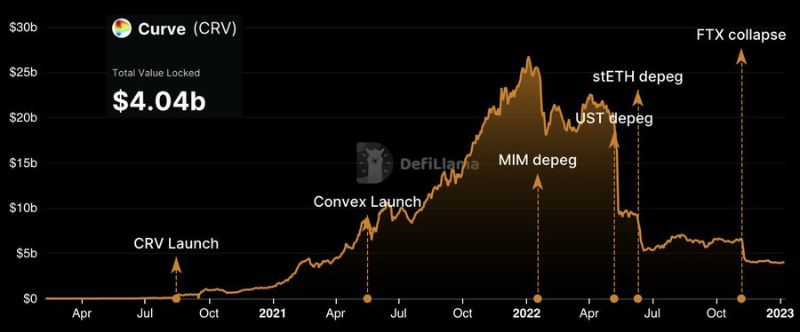
Curve is another milestone in the cryptocurrency ecosystem. In terms of trading volume, it ranks second among all DeFi platforms, reaching $1.36 billion over seven days—accounting for 22% of the total market.
Similar to Aave, Curve announced last summer a new stablecoin named crvUSD.
The founder confirmed that crvUSD will be overcollateralized. However, the Curve team has introduced two impressive innovations—one detailed in the whitepaper and another still speculative:
- LLAMA (Lending-Liquidating AMM Algorithm);
- Backed by liquidity pools (LPs).
LLAMA enables a continuous liquidation mechanism for debt positions (stablecoins). This means that, unlike Dai, collateral positions will be gradually unwound during shock events. This smoothing process helps prevent losses amid market volatility.
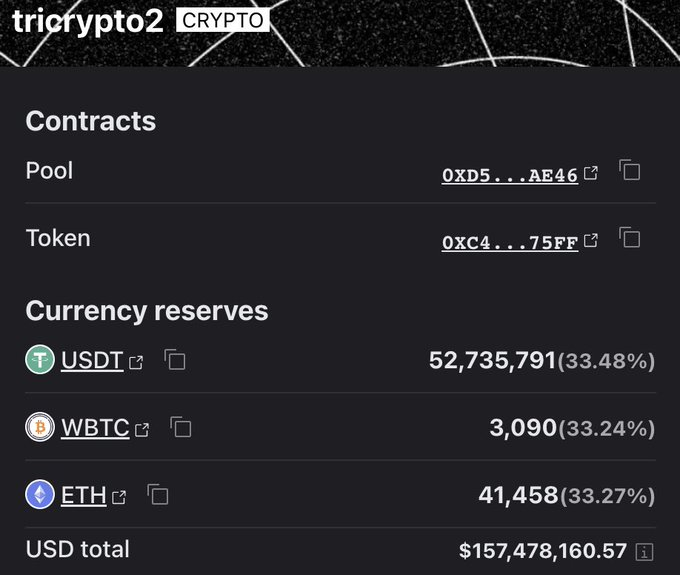
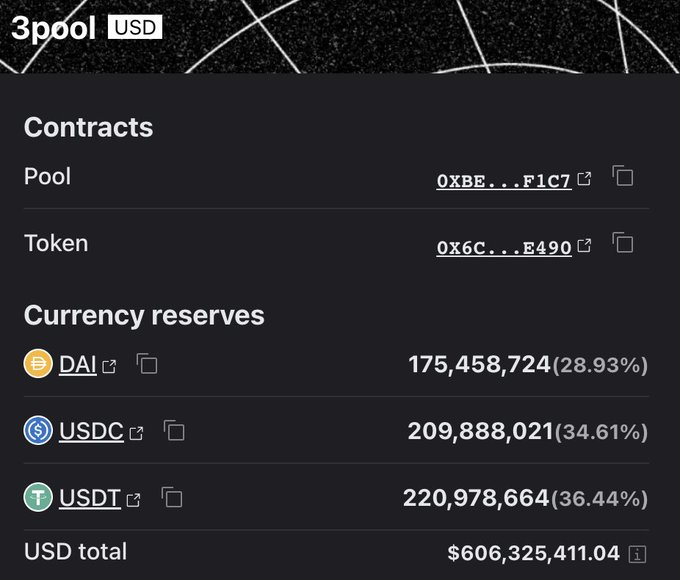
crvUSD is overcollateralized by tricrypto2 and 3pool. While unconfirmed, there is growing speculation that crvUSD will be supported by Curve’s liquidity pools:
-
tricrypto2: Composed of USDT, wBTC, and ETH.
-
3pool: Composed of DAI, USDC, and USDT.
Redacted Cartel's $Dinero
Several months ago, the Redacted Cartel team announced they would launch their first stablecoin—a fully Ethereum-overcollateralized stablecoin.
They stated it would roll out in phases, with the first phase launching in Q1 2023.

As you may know, the Redacted ecosystem provides on-chain liquidity, governance, and cash flow to DeFi protocols. Therefore, incentives may be key to this stablecoin’s success.
Dopex's $dpxUSD
Dopex is one of the most interesting options protocols in cryptocurrency. Based on Arbitrum, it has continuously innovated. Although the exact timeline is unknown, the team has announced plans to launch dpxUSD in the future.
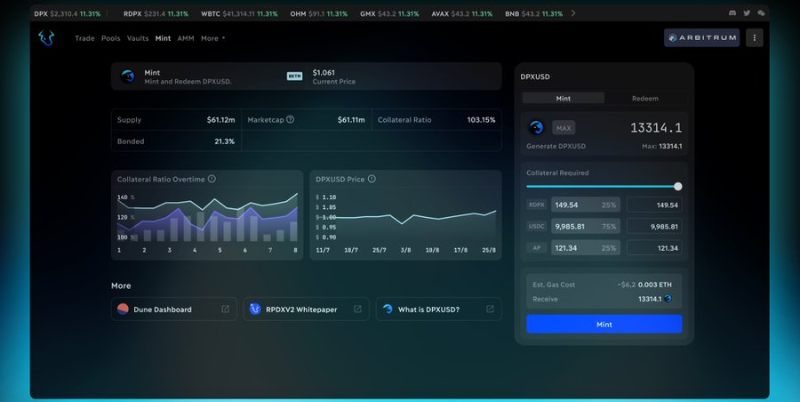
dpxUSD will be backed by:
- 75% USDC
- 25% rDPX
This stablecoin is minted by combining rDPX with USDC into a liquidity pair, incentivizing mints through discounts.
But what happens if a depegging event occurs? There are three possibilities:
-
The protocol removes dpxUSD from the LP, forcing the pool to rebalance its peg.
-
Whales intervene by buying dpxUSD, although this relies on trust.
-
In extreme cases, dpxUSD can be redeemed at a discount against underlying assets (0.75 USDC + 0.25 rDPX).
The final strategy creates an arbitrage opportunity, since the underlying collateral continuously earns yield and should be worth more than its dpxUSD dollar value.
Summary
Above is an overview of upcoming stablecoins. But we shouldn’t overlook recently launched projects such as Frax Finance (FRAX) and Liquity (LUSD):
-
Frax is a partially collateralized, partially algorithmic stablecoin;
-
LUSD is backed by ETH.
In summary, history shows that decentralized stablecoins often fail or are forced to change their mechanisms. Consider MakerDAO’s DAI breaking its peg during the March 2020 crash, prompting the shift from 100% ETH backing to roughly 50% USDC.
Therefore, despite some protocols having a long track record of deploying innovative solutions in DeFi, we must always remember that innovation inherently carries risk. Moreover, regulatory scrutiny on this asset class will undoubtedly arrive in the coming years.
Still, all the protocols I’ve listed aim to fundamentally innovate within cryptocurrency. We've never before seen a major token emission from a stablecoin or a lending/borrowing dApp with billions in TVL launching its own stablecoin. All these innovations are attempting to revolutionize the industry.
We’re already familiar with the Curve wars for liquidity and voting power. But the stablecoin wars may represent the next phase in capturing market share and real-world utility. Our goal is to reclaim power from centralized entities and return it to decentralization.
Join TechFlow official community to stay tuned
Telegram:https://t.me/TechFlowDaily
X (Twitter):https://x.com/TechFlowPost
X (Twitter) EN:https://x.com/BlockFlow_News