A Deep Dive into Three Major Modular Blockchain Solutions: Celestia, Dymension, and Fuel
TechFlow Selected TechFlow Selected
A Deep Dive into Three Major Modular Blockchain Solutions: Celestia, Dymension, and Fuel
What advantages can modular blockchains bring?
 Navigating Web3 tides with focused insights
Written by: Kadeem Clarke
Compiled by: TechFlow
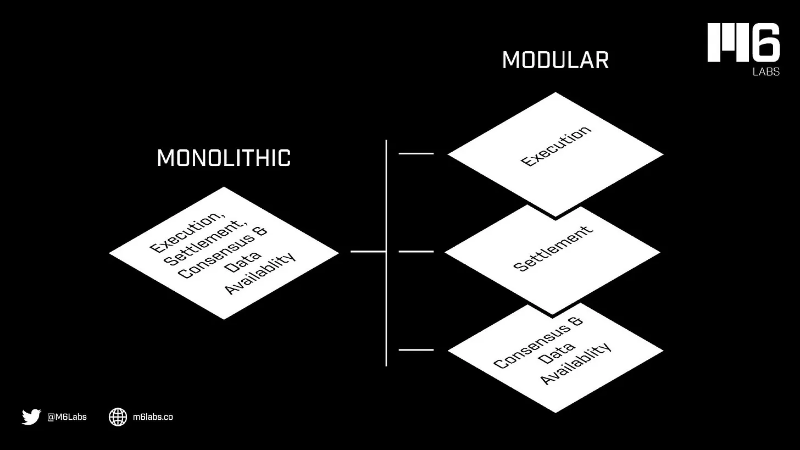
Blockchain has been evolving, with each iteration attempting to solve the trilemma of decentralization, scalability, and security. Blockchains like Bitcoin, Ethereum, and Solana have a monolithic structure encompassing four core functions: data availability, consensus, settlement, and execution.
Because these functions compete for the same resources, monolithic blockchains inevitably encounter scalability issues.
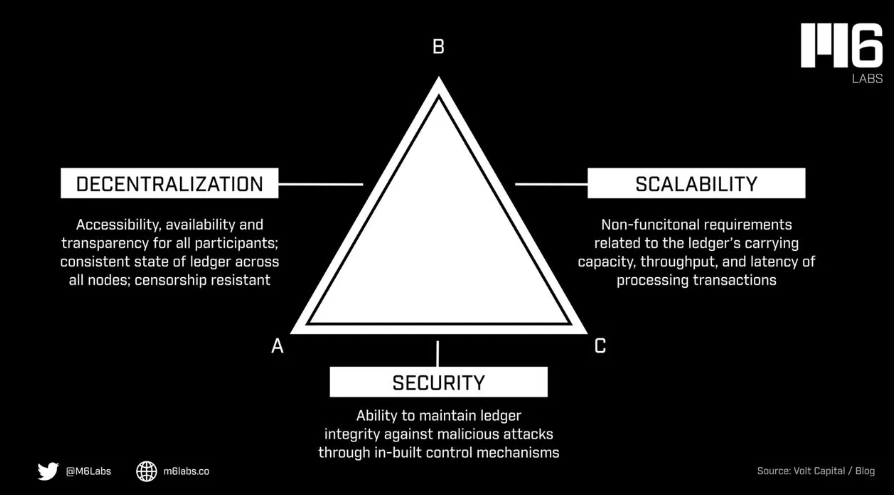
Modular blockchain solutions such as Celestia, Dymension, and Fuel offer developers a wide range of choices—not only to scale blockchains but also to achieve cross-chain interoperability.
The concept of building modular blockchains is still relatively new, so it will be interesting to observe how existing chains begin adopting similar approaches.
Modular blockchains improve efficiency by focusing validators on shards, thereby increasing the throughput of the blockchain.
Here are some advantages of modular blockchains:
-
Sovereignty
-
Scalability
-
Ease of project development
Celestia
Focusing on blockchain scalability, Celestia has raised $55 million to fund its expansion plans. Celestia is developing a unique modular blockchain architecture designed to address scaling and deployment challenges.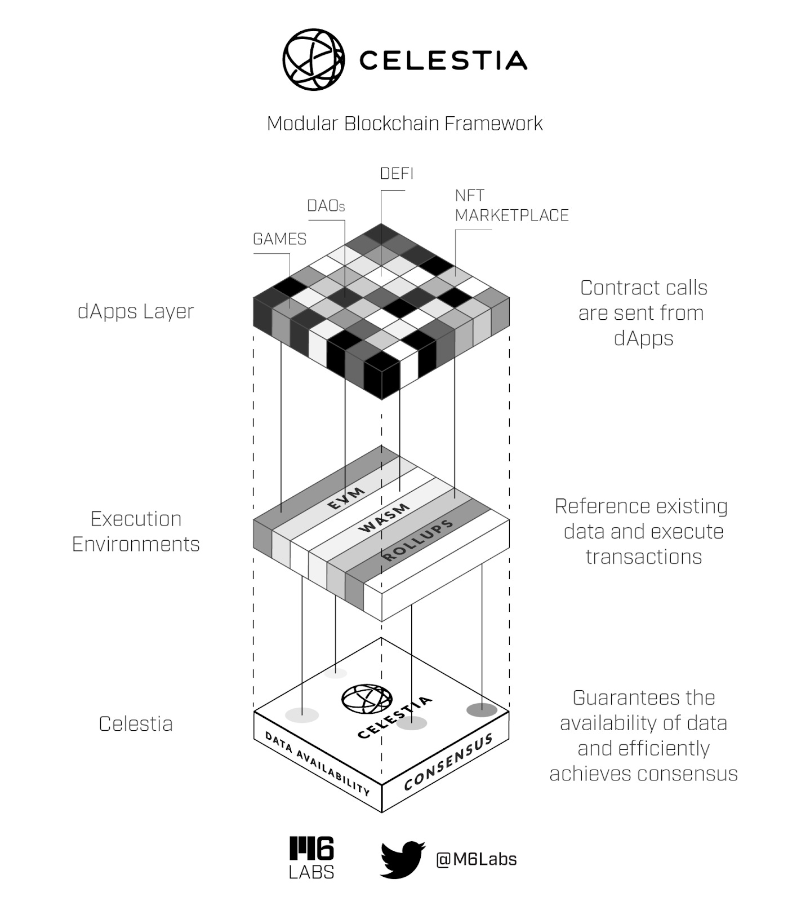
The Celestia team aims to make blockchain deployment simple for everyone. As such, their modular blockchain architecture prioritizes the following aspects:
-
Improved scalability
-
Shared security
-
Sovereignty
Developers can choose their own execution environments, such as Solana VM or EVM. Celestia also offers scholarships for modular builders. In their recent funding announcement, they listed three blockchain projects as users of their data availability layer:
-
Eclipse
-
Constellation
-
Dymension
The project also provides monthly grants of $3,000 for three months to 26 members of its "Modular Research Fellowship." Scott Sunarto, who previously worked at the Ethereum Foundation and Uniswap Labs, is among the recipients.
Celestia is still in the early stages of development. The team released an MVP announcement in 2021 and launched a devnet in November 2021. 2022 was more significant, as the project launched its testnet and progressively built toward mainnet.
Dymension
As part of the Cosmos ecosystem, this modular settlement layer enables the launch of Enshrined Rollups—rollups with logic embedded in the protocol—unlocking decentralized use cases.
Dymension is a sovereign rollup built on Cosmos, designed to simplify the development of RollApps (application-specific rollups) through the Dymension Chain (settlement layer), RDK (RollApp Development Kit), and IRC (Inter-Rollup Communication).
Optimized for maintaining rollup state, validation, and fraud proofs, Dymension accepts only rollup transactions and basic transfers.
On Dymension, developers can focus on business logic requirements and quickly deploy application-specific rollups using the RDK and a dedicated settlement layer, while benefiting from IRC, shared security, and data availability.
Like Cosmos, Dymension RollApps aim to create application-specific blockchains to reduce consensus overhead. Built on the Cosmos-SDK, the RDK adds new modules and modifies existing ones to ensure RollApp compatibility with the Dymension protocol while remaining compatible with other Cosmos ecosystem tools. RollApps can communicate with any IBC-enabled chain via the Dymension Hub.
Fuel Labs
Fuel Labs is building a fast execution layer for the modular blockchain stack. Fuel has seen significant growth, attracting some of the industry's top engineers.
Fuel’s technology is built on three core pillars:
-
Parallel transaction execution: Fuel delivers top-tier processing power through parallel transaction execution
-
Fuel Virtual Machine (FuelVM): FuelVM expands the design space for developers
-
Superior developer experience (using Sway and Forc): Sway, Fuel’s domain-specific language, offers a unique and streamlined developer experience. Fuel also features a supporting toolchain called Forc.
Fuel aims to become the engine of autonomy, enabling developers to build without intermediaries. It offers a modular alternative to Ethereum’s future. While Ethereum is moving toward a rollup-centric roadmap, Fuel claims it can scale the execution layer beyond standard rollups—doing so securely and cost-effectively.
Because Fuel is designed for fraud proofs, full node resource requirements may be higher than usual, increasing bandwidth capacity while allowing users to verify the chain via trust-minimized light clients.
Benefits of Modular Blockchains
Scalability
Monolithic blockchains allow users to place all intended blockchain functions within a single monolithic layer known as Layer 1. This makes creating blockchains difficult, as the system attempts to handle all functions simultaneously within one layer. In contrast, modular blockchains distribute different functions across separate layers, improving scalability and preventing network congestion.
Simplified Blockchain Creation
To launch a new blockchain, miners must address security and decentralization, which can deter some from optimizing off-chain hash rate opportunities. When miners focus less on specific functions (such as consensus), they can leverage the modular layout to create new blockchains faster, regardless of underlying architecture.
Flexibility
The architecture of modular blockchains is significantly more flexible than that of monolithic blockchains, aiming to provide functionalities not available on traditional monolithic systems.
Conclusion
With the rise of Layer 2s and rollups, Ethereum’s ecosystem is shifting toward a modular architecture.
One of the biggest obstacles to the widespread adoption of blockchain technology is scalability.
Layer 1 scaling solutions focus on block production rather than block verification. Modular blockchain infrastructure aims to accelerate Web3 adoption by emphasizing scalability, security, and decentralization, while prioritizing ease of integration, rapid delivery, and user experience.
Join TechFlow official community to stay tuned
Telegram:https://t.me/TechFlowDaily
X (Twitter):https://x.com/TechFlowPost
X (Twitter) EN:https://x.com/BlockFlow_News
 M6 Labs