Web3 social platform Comm: Allows users to control their accounts, aiming to solve Discord's complexity
TechFlow Selected TechFlow Selected
Web3 social platform Comm: Allows users to control their accounts, aiming to solve Discord's complexity
Comm is a crypto-native chat protocol designed to replace centralized platforms like Discord.
 Navigating Web3 tides with focused insights
Author: Paul Veradittakit, Partner at Pantera Capital
Translation: TechFlow
Comm is a crypto-native chat protocol designed to replace centralized platforms like Discord.
Comm: The Web3 Chat Platform
Comm is tackling one of the biggest fragmentation challenges in the cryptocurrency space: collaboration.
Since Web3 communities are often scattered and unable to communicate face-to-face, a social technology capable of bringing all Web3 participants together is critical. In crypto, these communication platforms are used for brainstorming, nurturing communities, governance, and generally advancing projects.
While crypto natives largely rely on Discord, its notification system is extremely noisy and difficult to navigate for both new and existing users. Most experienced Discord users manage several different servers to stay updated, but frequent bot spam makes it easy to miss important information.
Newcomers have no idea how to navigate Discord’s non-intuitive and cluttered user interface. Nonetheless, Discord remains highly popular among top crypto projects, partly because no one else has yet introduced a good (and less centralized) alternative.
Comm combines features from Discord and Slack, with a primary focus on Web3-native communities. The app streamlines messaging by reducing noise while preserving strong community functionalities.
Architecture: Experience Controlled by Users
Currently, end-to-end (E2E) encryption is mostly limited to basic chat apps (like Signal), as implementing a server layer on mobile devices is impractical. Comm’s key server architecture helps address this scalability challenge with E2E encryption. The company develops software for key servers—user-operated backends that allow plaintext access—and operates cloud services that provide a framework for running and communicating between key servers.
Because users operate their own key servers, they gain greater control over their data and digital identities. Initially, Comm will allow individuals to deploy key servers either in the cloud or on personal laptops, requiring only hosting within the application for communities. In the future, Comm plans to offer dedicated hardware so users can deploy key servers for even greater control over their experience.
So why are key servers important? How does this architecture differ from current chat app designs?
Key servers enable several capabilities distinct from conventional approaches:
-
They can automatically back up data—while keeping the data encrypted during backup;
-
They offer more flexibility in handling forward secrecy compared to traditional iOS apps;
-
Key servers can continuously process ranked content and are more powerful than smartphones;
-
With plaintext access, key servers enable traditional search functionality without exposing data to app developers or service providers;
A clear drawback of Comm: It currently cannot run on mobile phones—but in exchange, the platform offers substantial security and autonomy. Comm’s key server design uniquely achieves sovereignty: users can install local applications knowing the data stored there won’t escape its hosting environment. The data sandbox includes your device, your Comm friends’ devices, and the key servers—data is never exploited as many Web2 companies do with user information. Users can verify this through Comm’s open-source technical documentation.
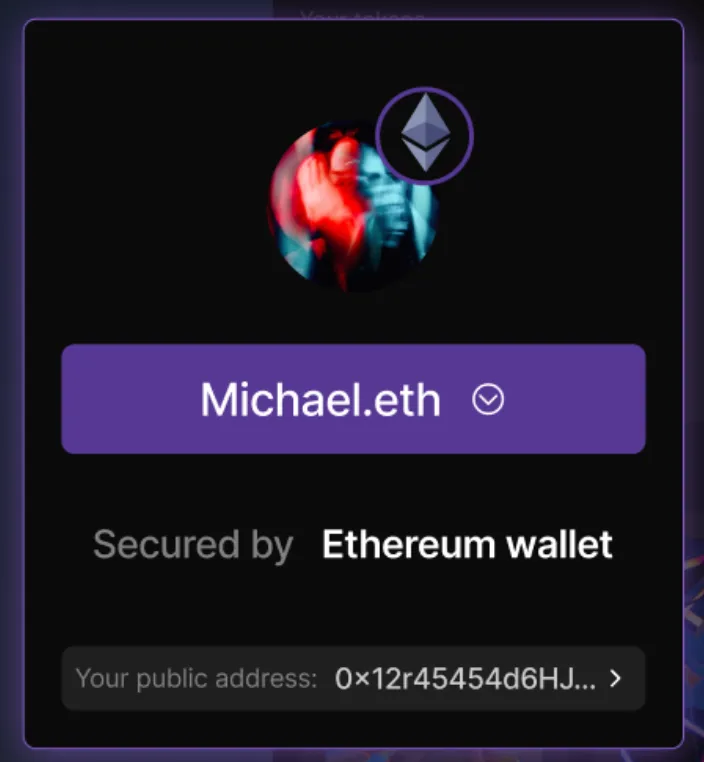
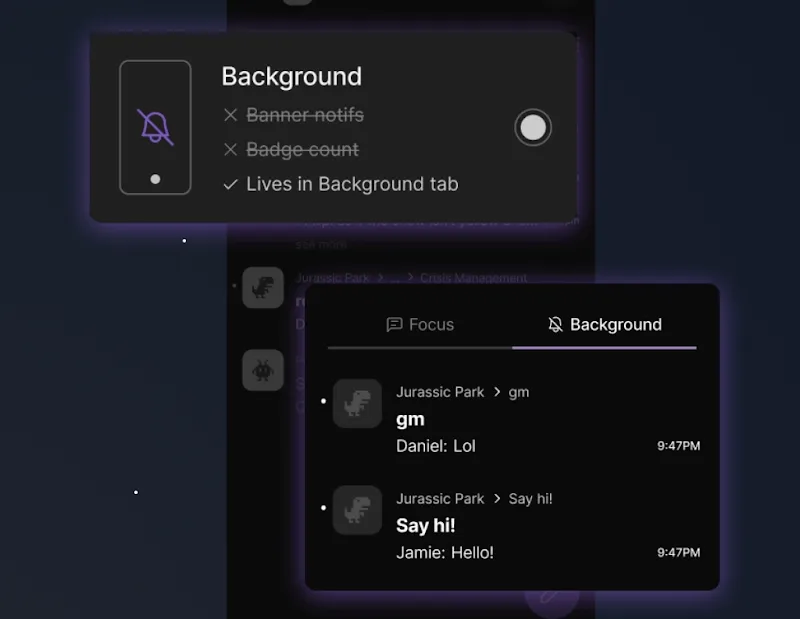
Comm’s chat interface separates messages into priority and background categories, enabling users to quickly check important notifications. It also displays user profiles showing owned tokens and NFTs, along with public addresses. The app further includes tools such as file sharing, calendars, governance platforms, and community NFT wallets.
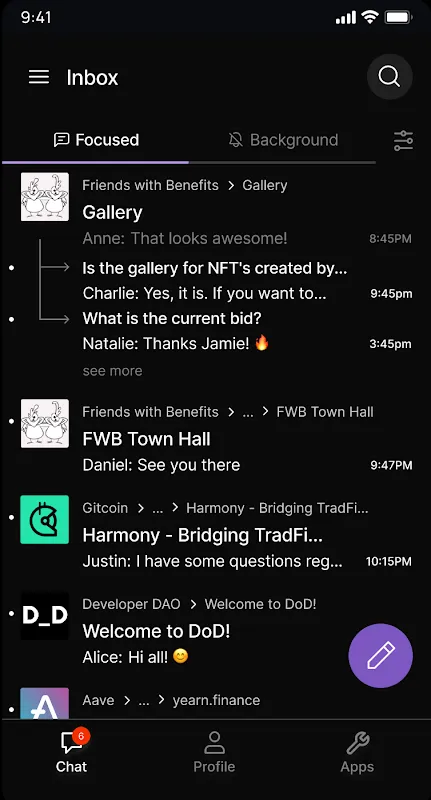
Team: Engineering-Focused Self-Starters
Comm’s founder, Ashoat Tevosyan, is an engineer who dropped out at age 20 to join Facebook, initially working on the search engine team and later moving to the social team in a leadership role. During his time at Facebook, he gained insights into the network effects of social apps and the complex ways traditional Web2 companies handle data. Impressively, he single-handedly founded Comm. The team now spans New York City and Poland, comprising 15 members—including 9 engineers.
Product Expansion + Vision
Comm believes that, due to its support for user autonomy and privacy, key servers will eventually replace centralized services like Dropbox, Gmail, and Facebook. Applications built atop key servers give users direct control over their data instead of handing it over to data-centric corporations that wield immense influence over today’s society. Currently, users interact with apps via securely stored passwords that authorize actions on their behalf.
Comm’s broader vision is that users should eventually be able to log in to services one-click directly using their Comm account.
As Web3 communities grow, so will the need for less centralized, encrypted, and intuitive communication platforms. I believe Comm is exceptionally well-positioned to build the urgently needed crypto communication infrastructure and disrupt existing centralized players.
Join TechFlow official community to stay tuned
Telegram:https://t.me/TechFlowDaily
X (Twitter):https://x.com/TechFlowPost
X (Twitter) EN:https://x.com/BlockFlow_News
 Pantera Capital