Web3 Gaming Reflection: Not Games, Only DeFi
TechFlow Selected TechFlow Selected
Web3 Gaming Reflection: Not Games, Only DeFi
Why has the Web3 gaming sector attracted substantial funding but not yet taken off?
 Navigating Web3 tides with focused insights
Written by: Brick
Compiled by: TechFlow
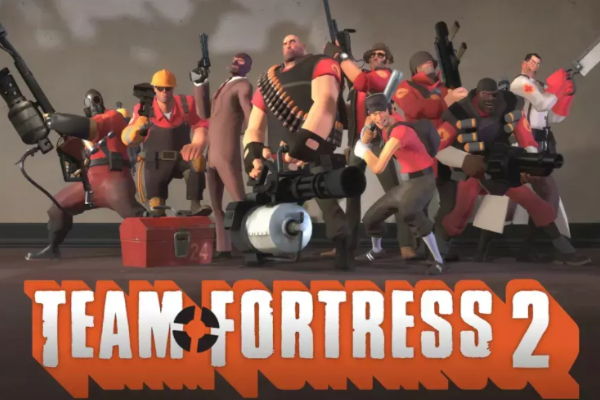
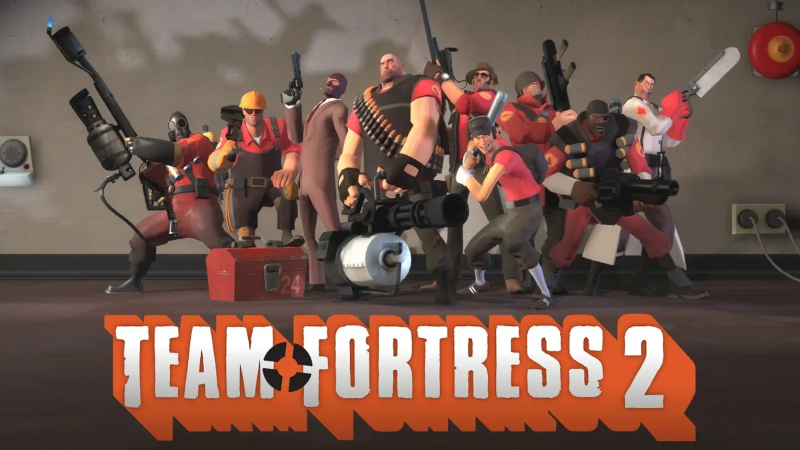
Recently, I've spent a lot of time thinking about why Web3 gaming hasn't taken off despite the massive influx of capital into the space. When I ask myself what makes a game fun and keeps me coming back, one of my all-time favorite games always comes to mind: Team Fortress 2 (TF2).
What made this first-person shooter enjoyable for me was its integration of diverse skills, support for various playstyles, strong community, and continuous map and weapon updates. Additionally, in 2010 it introduced an in-game economy where players could trade with each other—yet items available on the market never truly affected gameplay balance. All weapons could be obtained through random drops, while the most expensive items on the market were purely cosmetic skins. Released in 2007, TF2 remains the seventh most-played game on Steam, averaging nearly 100,000 monthly players, even though it has seen little to no updates since 2017.
Clearly, compared to TF2, Web3 games have the potential to achieve similar or even greater success—and such a game could become the next major gateway for mass crypto adoption.
However, unless significant changes are made to the mechanisms currently deployed by many GameFi protocols, player bases may never grow meaningfully.
Introduction
Web3 games struggle with player retention. The narrative has centered around "P2E," making games more like DeFi products, while projects still claim, “This is a game”.
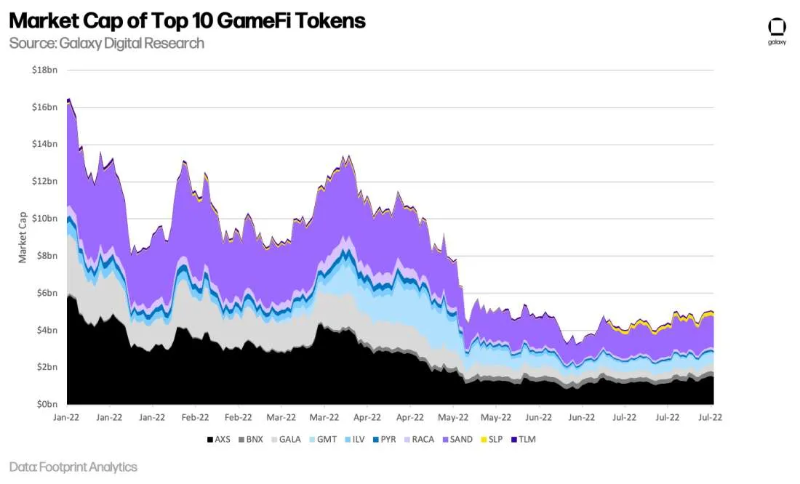
P2E can be summarized as purchasing an in-game asset to gain access to gameplay. With that asset, you earn tokens, which are used to buy more yield-generating assets or upgrade existing ones to earn even more tokens. This model is fundamentally flawed because it primarily attracts players solely interested in making money, who will leave once rewards start to decline. Evidence of this phenomenon is seen in top GameFi tokens losing approximately 75% of their market cap—even during a bear market.
Moreover, ordinary people don’t understand finance, but they do know what it feels like to play an engaging game.
Therefore, for mass adoption, Web3 games should focus on the following:
-
Focus on core gameplay mechanics, optionally layering on a thin financial component.
-
Lowering entry barriers is crucial—this requires a user-friendly interface and minimizing required actions before players can start playing.
-
Players should not need to purchase the game’s token or NFTs to interact with the game.
- As a result of blockchain technology, good games don’t necessarily need to follow the same structure as AAA PC releases or mobile apps.
Web3 enables game developers to explore new frontiers. The key is creating novel social and gameplay structures—not focusing on monetization. Games that are creatively original and genuinely fun will naturally generate revenue for their creators.
Not every game needs full blockchain integration. For example, a multiplayer game’s economy could be separated from core gameplay and reside on-chain, while the game itself doesn’t need to directly interact with the blockchain. This minimizes friction for new players, and once users become engaged, they’ll be incentivized to migrate onto the chain.
Take a first-person shooter as an example: all players instantly receive common gear and can unlock or customize weapons through gameplay. When a player connects their wallet, they gain access to additional character and weapon features (such as rarity tiers, kill counters, special effects, etc.) via crafting, loot boxes, random drops, and trading.
Market Control
Market control refers to the degree of authority game developers hold over economic activity within the game. Full market control means players can only buy items from the game, whereas a free market allows unrestricted trading and selling of assets. The highest-earning traditional games typically enforce tightly controlled markets to extract value via microtransactions. In my view, developers should avoid implementing such models in Web3 games, as they severely undermine interoperability, user experience, and the spirit of cryptocurrency.
Developers should aim to create a freely operating economy where users can effortlessly obtain common and essential items. However, there's no historical precedent for this in gaming, as such systems are easily exploited by savvy players who manipulate digital asset supply at the expense of others—eventually triggering an economic death spiral.
Therefore, it may be wise for a game to retain some regulatory power over its economy. Players should be able to trade low-value, high-utility items within the game, improving user experience, while rarer items are obtainable only through in-game effort or peer-to-peer purchases. This fosters a liquid market with organic price discovery.
With high liquidity, games can generate revenue by charging small fees on transactions rather than forcing microtransactions.
This revenue model incentivizes the game to:
-
a) Continue developing the game to maintain or grow the player base;
-
b) Introduce new and interesting in-game assets to keep trading activity strong;
-
c) Maintain a healthy economy.
In-Game Assets
For most game types, economies should primarily consist of limited-impact items like cosmetics that do not grant gameplay advantages.
-
First, this helps maintain game balance;
-
Second, limited-impact items are excellent tools for building community.
Since cosmetic value stems from personal preference and social status, they serve as powerful tools to bring players together. This phenomenon can be observed in communities like Moonbirds, where holders of similar-looking Moonbirds form exclusive subgroups, ultimately increasing the value of their NFTs. Similar effects are likely to emerge within gaming communities, enhancing player retention.
To further encourage participation and content creation, community members should always be able to submit their own item designs, maps, and MODs. If a design is adopted by the game, the creator could receive a share of the revenue generated by that asset. Compared to traditional gaming, blockchain technology and smart contracts offer a distinct advantage: agreements between designers and developers should be relatively easy to create and enforce. Thus, community creators won’t need to worry about unfair value extraction.
Tokenomics
Due to the prevailing P2E narrative, tokenomics in gaming protocols has been widely debated. The primary reason for introducing tokens in crypto games should be to improve the in-game economy in ways that wouldn’t be possible without them.
I believe improvements mainly come from enabling players to easily and reliably:
1.) Move value within the game ecosystem and withdraw it when needed,
2.) Earn a share of the revenue generated by the game, and
3.) Influence the game’s development. So far, most projects have opted for a dual-token model.
However, I believe that to achieve these improvements, games should consider adopting a three-token model.
1. Currency Token
This token acts as the game’s native currency, used to purchase items from the marketplace, open loot boxes, acquire passes, or trade with other players—but is not required to play the game.
To maintain price stability, players receive currency tokens at a fixed price from the game and can redeem unused tokens at any time.
The sole purpose of this token is to establish a standardized unit of exchange within the game’s ecosystem. This design also prevents speculators from crashing the economy and stops the game from endlessly inflating the token supply.
2. Equity Token
To give players a stake in the game and allow them to benefit from its growth, a fixed-supply equity token can be created. Stakers receive a portion of the game’s revenue. These tokens can also incentivize developers and community initiatives and help fund the game’s development.
3. Governance Token
Governance tokens are equally important. For example, holders can vote on which community-created skins, events (like Christmas-themed quests), or game balance adjustments get implemented. By involving players in the creative process, their preferences are better met, increasing engagement and investment in the game.
The above three-token model aligns incentives across all stakeholders, allowing players to accumulate value while preventing economic exploitation by speculators. By decoupling core gameplay from the economy, developers can build the games they envision without excessive compromise, as these decisions won’t directly impact monetary policy. Moreover, even if all token values drop to zero due to external factors, players can still enjoy the game unaffected.
Liquidity Control
Liquidity control is essential for a well-functioning game economy and must be carefully designed. This is something many existing Web3 games have struggled with. Liquidity design still appears underdeveloped, and several projects have already failed.
Historically, organic liquidity—that is, liquidity driven voluntarily by players—has proven effective in creating active and sustainable economic systems. A great example is crafting: by letting players combine and burn surplus items for a chance to obtain rare ones, inflation is effectively managed by market forces.
Conversely, if developers are forced to abruptly introduce new liquidity mechanisms like taxes, the economy may expand too rapidly. It also places extra pressure on developers, who must constantly adjust parameters. You end up needing to act like a central bank—an approach known to sometimes destabilize financial systems.
Introducing multiple rarity tiers—such as common, rare, legendary—helps manage the complexity required to curb inflation. Common items are easy to obtain, so even high inflation doesn’t disrupt baseline pricing. Instead, inflation merely increases accessibility to these items.
Outlook and Summary
The traditional gaming industry is driven by hit titles—multiplayer games have become standard and are largely powered by network effects, meaning players flock to a few dominant titles and stay for long periods. I don’t expect this narrative to change until Web3 introduces genuinely novel ideas that unify gaming experiences and more established studios enter the space.
However, an exciting development is the accelerating shift from free-to-play to player-owned games. I suspect this could become the next major narrative and a key factor in moving away from game studios’ reliance on extractive microtransactions. Instead, independent creators can monetize their ability to produce content on existing platforms, while players benefit from increased freedom and potential profits by selling assets they fully own.
In summary, GameFi has struggled to sustain its player base because it hasn’t yet found solid footing. I believe the path forward is clear—but requires high-quality execution. Looking ahead, the top priority for Web3 game developers should be creating compelling and enjoyable games, while building economic structures separate from core gameplay. This is key to attracting broader audiences and moving beyond the cycle of P2E clones.
So far, the most successful games have built massive communities by enabling players to embark on new adventures through innovative ideas and mechanics. There’s no reason to believe this path to success will change—especially given the infinite possibilities unlocked by blockchain technology.
Join TechFlow official community to stay tuned
Telegram:https://t.me/TechFlowDaily
X (Twitter):https://x.com/TechFlowPost
X (Twitter) EN:https://x.com/BlockFlow_News