








Bankless: What Crypto Trends Are Worth Watching in the Second Half of 2022?
TechFlow Selected TechFlow Selected
Bankless: What Crypto Trends Are Worth Watching in the Second Half of 2022?
The Ethereum merge, Layer-2 scaling, the rise of Cosmos, ERC-4626, and greater macro uncertainty—all of these will have significant impacts on the second half of 2022.
 Navigating Web3 tides with focused insights
Author: Ben Giove
Translation: TechFlow intern
With price collapses, protocol failures, and CeFi bankruptcies, crypto has experienced incredible turbulence this year. Across both the metaverse and the real world, numerous emerging trends and themes are shaping up to define the remainder of 2022 and beyond. Getting ahead of them represents a generational opportunity for wealth creation—let’s dive into what investors should keep in mind as we enter the second half of the year.
Impacts of The ETH Merge
For Ethereum, the key event to watch in the second half is The Merge. Its launch, timing, and execution will have some short-term effects, but the substantial impacts will follow thereafter.
The long-awaited Ethereum 2.0 upgrade will transition the network from PoW to a PoS consensus mechanism—a shift that will affect every aspect of the Ethereum ecosystem.
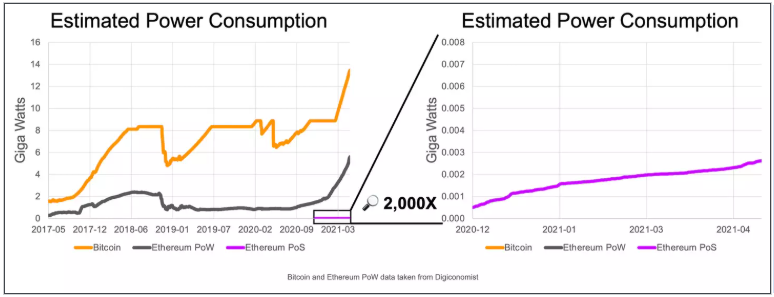
First: transitioning to PoS will drastically reduce Ethereum’s energy consumption, alleviating concerns about the network's environmental impact—particularly easing worries among ESG-conscious investors.
Note: ESG investing refers to integrating ESG principles into investment research. Beyond traditional financial analysis, it evaluates companies’ medium- to long-term potential through three dimensions—E (Environment), S (Society), and G (Governance)—seeking investment targets that create both shareholder and social value with sustainable growth potential.
This change also paves the way for many protocols to more easily implement upgrades on PoS networks. These include scalability improvements such as Danksharding, Proto-danksharding, and reduced Layer 2 call data costs via EIP-4488.
It complements changes aimed at mitigating the negative externalities of MEV, such as PBS (Proposer-Builder Separation), which separates block building from proposal.
After the merge, these upgrades will accelerate, as more core development resources will be freed up to focus on delivering these enhancements instead of being consumed by the merge itself.
The Ethereum 2.0 upgrade is also a major bullish catalyst for the ETH asset. The transition to PoS will significantly reduce the issuance required to secure the network. Combined with fee burning already implemented via EIP-1559, this could very likely result in deflationary ETH supply.
Eliminating PoW will also relieve severe structural selling pressure, as PoS validators’ operating costs will be far lower than those of PoW miners.
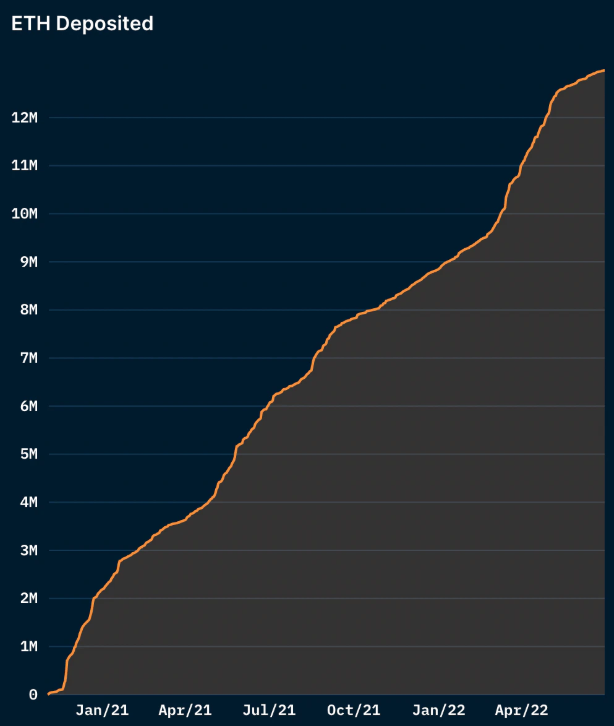
Finally, the merge will serve as a significant driver for Ethereum’s staking economy. Currently, over 12.97 million ETH have been staked—approximately 10.8% of total ETH supply—and completion of the merge may trigger an influx of new stakers and restore confidence in liquid staking derivatives (LSD).
Protocols like Lido, RocketPool, and Stakewise—which have traded below ETH during periods of heightened market volatility and liquidity crunches—will rebalance and then rapidly take off. Withdrawals from the Beacon Chain will not be activated until after Ethereum’s Shanghai upgrade.
How to participate:
-
Ethereum itself
-
Various liquid staking protocols
Thriving Layer 2s
Layer 2 solutions are poised to continue their growth throughout the second half of 2022—L2s represent the present and future of Ethereum scaling. Optimistic and zero-knowledge (ZK) rollups act as execution layers, offering users fast and cheap transaction experiences while maintaining the security of the underlying Ethereum L1.
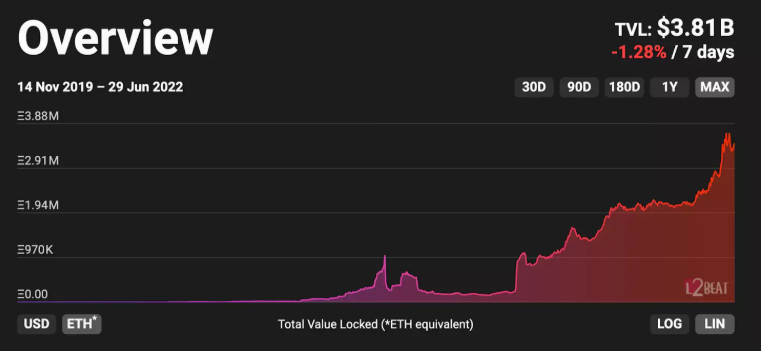
Despite some growing pains, user and developer adoption of L2s continues to rise steadily. Currently, Ethereum L2s hold over $3.81 billion in value locked, with TVL denominated in ETH approaching all-time highs.
Moreover, many L2-native applications leveraging their strong scalability have gained significant traction—for example, perpetual exchanges like dYdX, GMX, and Perpetual Protocol are now moving toward billions in trading volume.
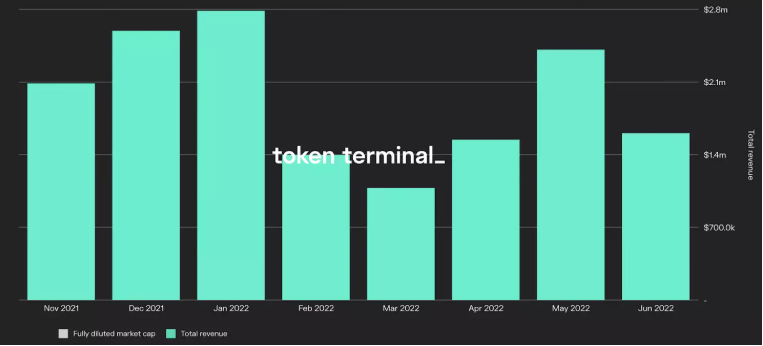
Even as on-chain economic activity broadly slows, the L2 ecosystem continues to grow. Optimism is expected to see a 5.5% quarter-over-quarter increase in network revenue in Q2, while Ethereum L1 revenue declined by 46.3%.
This growth may be attributed to Optimism’s launch of its native token OP in May. It was the first of the “Big Four” L2s (which also include Arbitrum, zkSync, and Starkware) to issue a token.
At least one of the “Big Four” L2s is likely to launch its token in Q3 or Q4, serving as a major catalyst for developers, users, and applications within their respective ecosystems.
How to participate:
-
Invest in or farm individual L2 token airdrops
-
Invest in or farm airdrops of governance tokens from L2-native projects
The Rise of Cosmos and Appchains
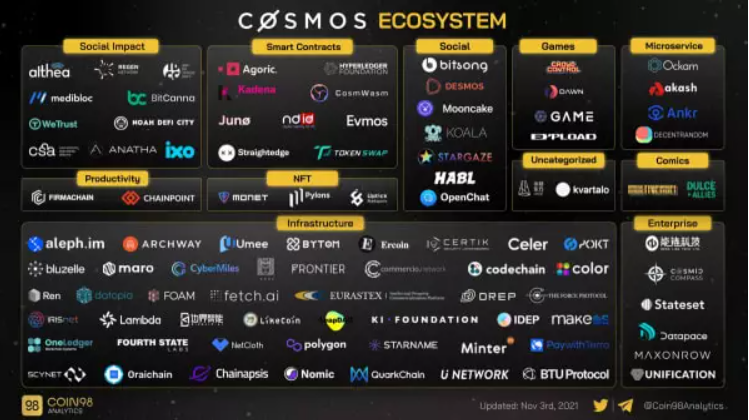
Another theme to watch in the second half is the Cosmos ecosystem. Cosmos aims to create the “Internet of Blockchains.” Through the Cosmos SDK, developers can build sovereign, highly customizable blockchains dedicated to single applications—known as application-specific chains, or appchains.
These networks can either bootstrap their own validator sets or leverage shared security via Interchain Security—an upcoming upgrade that will allow chains to outsource their validator set to the Cosmos Hub.
Cosmos chains can also interconnect via the Inter-Blockchain Communication (IBC) protocol—a trust-minimized bridging and communication standard. IBC is currently enabled across more than 30 Cosmos chains, allowing frictionless asset transfers between supported networks.
This novel tech stack has attracted increasing attention and interest from developers. For instance, dYdX—the largest decentralized perpetual exchange by trading volume—recently announced plans to develop its V4 protocol as a Cosmos appchain.
Given the protocol’s history of early adoption of new technologies—it was one of the first to deploy on Starkware—this signals that more high-profile applications might follow suit and begin building on Cosmos. Projects may find appchains particularly appealing since native tokens can earn an “L1 premium” through validation and staking.
Like all Layer 1s, Cosmos is experiencing its own growing pains. A vulnerability recently forced the decentralized exchange Osmosis to halt, and accessing the ecosystem through traditional means such as cross-chain bridges or centralized exchanges remains difficult.
However, after dYdX crosses the chasm, the influx of users, capital, and attention should help catalyze and drive ecosystem growth in the remaining months of 2022 and beyond.
How to participate:
-
Invest in L1 tokens of Cosmos appchains
-
Invest in governance tokens of native projects built on these chains
The ERC-4626 Revolution
With on-chain activity, borrowing demand, and speculative appetite all sharply declining, DeFi yields have been heavily compressed in 2022. Nevertheless, single-token staking is on the verge of its next growth phase, thanks to the adoption of ERC-4626.
ERC-4626, pioneered by a group of prominent EVM developers, is a new standardized vault interface for tokenized yield strategies. Just as standards like ERC-20 and ERC-721 made it easy to create and integrate fungible and non-fungible assets on Ethereum, ERC-4626 promises to streamline DeFi innovation by providing a template that allows developers to easily create their own yield-bearing vaults.
ERC-4626 extends ERC-20, meaning these tokenized strategies are just as composable as assets like USDC, DAI, or UNI. Widespread adoption of this standard could have a transformative impact on risk-adjusted returns in DeFi.
ERC-4626 can enhance the DeFi user experience by improving capital efficiency. Users will be able to trade, provide liquidity, and use these new tokens as collateral—earning rewards from participation while also capturing yield generated by the underlying strategy operated by the vault.
Developers and users alike will save gas and manage risk more easily, as 4626 strategies—like traditional DeFi vaults—can automate position management and compounding. These factors should make deploying capital into DeFi more attractive by reducing risk and amplifying returns.
A variety of protocols have already begun leveraging ERC-4626 functionality. Examples include:
-
Structured products on Aave using recursive leveraged stETH/ETH strategies,
-
icETH and ETHMAXY from Index Coop and Galleon DAO, both compatible with 4626,
-
Yield protocol Timeless Finance, upcoming NFT lending protocol Astaria, and many others that will adopt the standard.
Given the immense benefits of 4626 products, future staking will likely involve users minting or purchasing and holding these tokenized yield strategies, rather than simply depositing across multiple separate protocols.
Early adopters of the standard—protocols and DAOs alike—should see massive user growth, as DeFi users realize the advantages offered by these new types of tokens.
How to participate:
-
Invest in governance tokens of DAOs managing assets via 4626
-
Utilize ERC-4626 in staking strategies
Macro Uncertainty

Weakness in traditional markets throughout the first half of 2022 has spilled over into crypto, and this shadow is expected to linger over the market in Q3 and Q4. As the Federal Reserve is forced to aggressively raise interest rates and shrink its balance sheet to combat runaway inflation, both bond and stock markets have experienced their worst start in decades.
Rising interest rates, flattening yield curves, soaring commodity prices, and persistent supply chain disruptions—leading to falling asset prices and trillions in wealth destruction—have begun fueling fears of recession and stagflation.
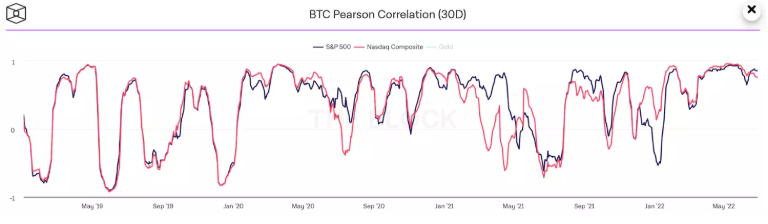
Crypto has been deeply affected as well. Major assets like BTC and ETH are down approximately 71.1% and 78.9% from their all-time highs, respectively, while many small-cap assets have fallen more than 85% from their peaks.
This massive selloff reinforces the idea that crypto no longer operates in isolation, as there is now a strong correlation between BTC and the S&P 500 index—currently at 0.85.
While this may have little bearing on blockchain’s long-term adoption or Web3’s ultimate impact, ongoing macro uncertainty will undoubtedly weigh on crypto prices in the foreseeable future.
How to participate:
-
Create a dollar-cost averaging (DCA) or lump-sum strategy to build long-term positions
-
Hedge downside risk via options, perpetual contracts, or other derivatives (this is risky—proceed with caution!)
Conclusion
The Ethereum Merge, Layer-2 scaling, the rise of Cosmos, ERC-4626, and continued macro uncertainty—all of these will significantly impact the second half of 2022.
Most importantly, prices may take time to reflect the fundamental shifts brought by the first four themes, especially given the headwinds posed by the fifth. Savvy investors willing to ride out the volatility may be richly rewarded for paying attention to this space and strategically seizing the opportunities it presents at the right time.
Join TechFlow official community to stay tuned
Telegram:https://t.me/TechFlowDaily
X (Twitter):https://x.com/TechFlowPost
X (Twitter) EN:https://x.com/BlockFlow_News






