








NFT Investment Logic: How to Assess the IP Potential of PFPs?
TechFlow Selected TechFlow Selected
NFT Investment Logic: How to Assess the IP Potential of PFPs?
Who has the potential to become an IP in the metaverse?
 Navigating Web3 tides with focused insights
Author: Shrimpwen.eth
TechFlow authorized release
This article outlines my personal NFT investment logic. I aim to express my thoughts using the simplest possible language.
The article is divided into four parts:
I. Outlook on the NFT Market
II. PFP: A New Paradigm for IP
III. Assessing the IP Potential of PFPs
IV. Investment Logic for NFT Platforms
Total length: 3,655 words; reading time: 8 minutes.
I. Outlook on the NFT Market
Let's start with data: as of April 20, 2022, OpenSea had over 1.59 million unique interacting addresses. Its highest monthly trading volume was in January 2022 at $4.96 billion. No one could have imagined that just a year earlier, in January 2021, OpenSea’s monthly trading volume was only $8.07 million.
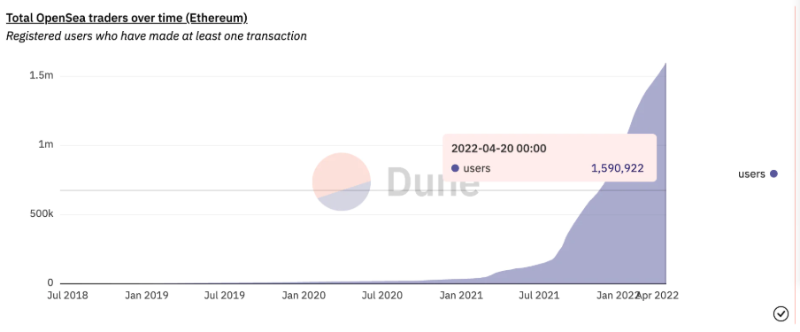
Total OpenSea traders
The NFT market’s popularity needs no further elaboration. Let's compare it with MetaMask data. MetaMask has over 30 million monthly active addresses—up from 21 million just four months ago.
From a data perspective, many blockchain users haven't yet entered the NFT space. And we all know Web3 is just beginning, with countless Web2 users expected to join.
I believe billions will eventually live in the Metaverse. What will be their gateway into this world? I believe it will be NFTs—and specifically, PFPs.
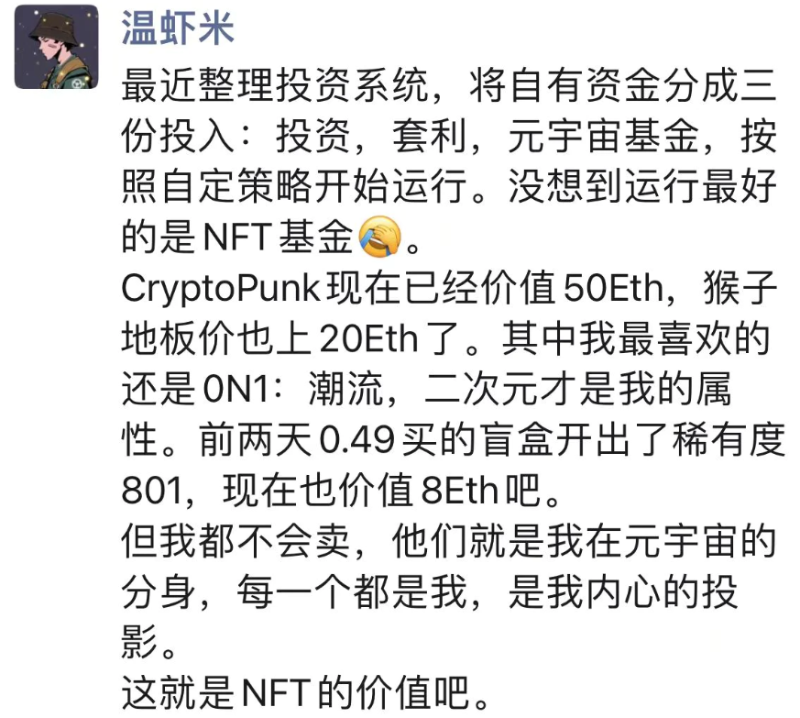
A WeChat Moment I posted last August
People are constrained by many things in the real world, but in the Metaverse you are free—you can become whoever you want. You can be a Bored Ape, an Mxx Fxx, a Robot, or even something non-biological.
As shown above: I own BAYC, Punk, and Azuki—they are my avatars in the Metaverse. Each one represents me, a projection of my inner self.
Human spiritual needs far outweigh physical ones. Without spiritual pursuit, humanity would cease to be human. The Metaverse is inevitable, and the first step for hundreds of millions entering it will be purchasing or minting a PFP they love. That PFP will become their avatar in exploring the Metaverse.
This explains why the rise of PFPs has driven the entire NFT market forward: humans have a strong desire to express cultural identity. We need to tell others, “Who I am,” and PFPs perfectly satisfy this need.
Based on this, I believe the NFT market will be worth at least tens of billions of dollars. As the market grows from billions to hundreds of billions, countless promising projects will emerge.
There’s enough beta here, and more than enough alpha—catching just one opportunity is sufficient.
II. PFP: A New Paradigm for IP
NFTs encompass much more than PFPs—they include community passes, artist collections, land, POAPs, and more. Here, I focus specifically on my views about PFP NFTs.
PFPs represent a new paradigm for intellectual property (IP): they are IPs born in the Metaverse, forming new brands of the digital world.
In the Web2 world, the most profitable IP is undoubtedly Pokémon, which has generated over $110 billion since its inception in 1996. The top 10 are household names: Hello Kitty, Mickey Mouse, Winnie the Pooh, Star Wars, Disney Princesses, Anpanman, Marvel, Mario, and Harry Potter.
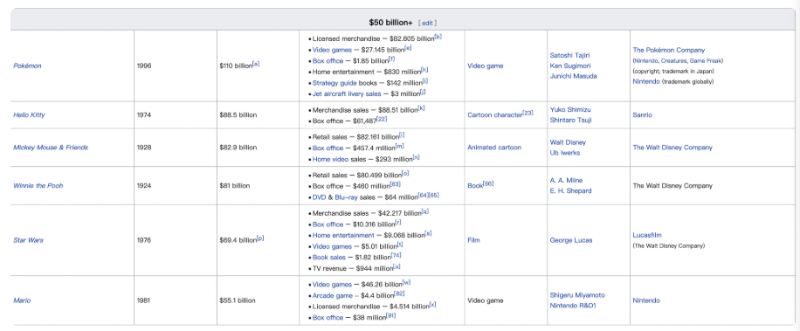
Top 10
In Web2, IPs typically begin with stories—comics, animations, games, novels, etc. In contrast, PFPs build their IP starting with visual design—their appearance.
A unique art style naturally reflects the culture of the PFP’s community. (BAYC stands for Bored Ape Yacht Club—a group of apes who’ve made money in the crypto world, feel bored with reality, and enjoy yacht parties.) Just by looking at an avatar, you understand what kind of person someone is. That’s the magic of PFPs.
In the age of attention, whoever consistently captures attention can build enduring IP.
In Web2, companies create IPs. Why did Pokémon become the number one IP? Because new game generations appeared every few years, annual anime episodes kept airing, and movies were nearly continuous—all thanks to relentless efforts by Nintendo, Game Freak, and The Pokémon Company. If the games disappointed or the anime lost appeal, Pokémon’s IP value would fade. We’ve seen many such faded IPs simply because they failed to retain public attention.
Now consider IPs not controlled solely by corporations—take Touhou Project and Hatsune Miku. Touhou originated from a bullet-hell game, while Hatsune Miku came from a music software. Countless fans created derivative works—fan fiction, songs—that gave characters depth and propelled them globally. Who among veteran anime fans doesn’t know the "Princess of the World"? Beyond corporate backing, it was fan passion that gave these IPs lasting vitality.
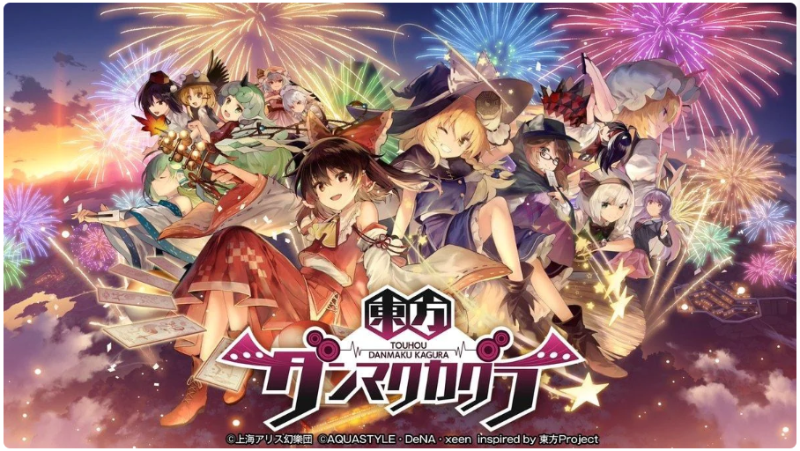
Touhou Project
Metaverse IPs differ from traditional ones through value redistribution. In Web2, if I love Pikachu, I can only express it by playing Pokémon games, watching anime, or buying merchandise. My expression of love is purely consumptive. Even if my fan creations help spread the IP, I gain nothing financially. All profits go to the IP owner—the company.
Metaverse IPs work differently. When BAYC gains wider attention, its rising value is reflected directly in NFT prices. Holders benefit from the growing IP value—rising floor prices signal increasing overall IP worth.
Isn’t this the essence of Web3? Web3 liberates human creativity. As a result, every PFP holder has strong incentives to contribute creatively. This is no longer just “for the love”—the value we create belongs to us.
Azuki clearly recognizes this path, explicitly stating so on their website:
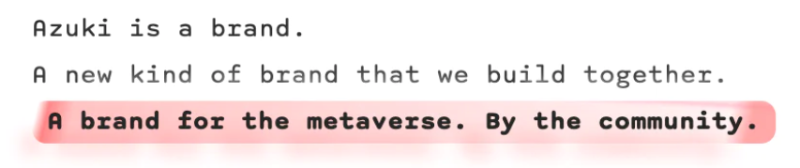
Azuki’s vision
As an Azuki holder, let me digress slightly. Actions by project teams like BAYC and Azuki increase their overall valuation, reflected in rising floor prices. Due to the inherent nature of PFPs, greater consensus leads to higher prices. Consider Alien Punks, Laser-Eye Monkeys, or Spirit Azukis.
But have you ever thought—why is Pikachu the most valuable among thousands of Pokémon? Why is Greninja so beloved? Is it due to special stats? No—it’s because Pikachu is the main character in all media. Greninja gained fame by nearly winning the Pokémon League Championship alongside Ash.
Stories give IP meaning. The more compelling the story, the more alive the IP becomes.
Every Azuki character has the potential to become a major IP—even without elemental powers or fantasy traits. Below is my Azuki team. At a glance, each one already tells a story.
We can write stories for them, turning my Azuki from a mere Caterpie into a Pikachu in the hearts of millions.
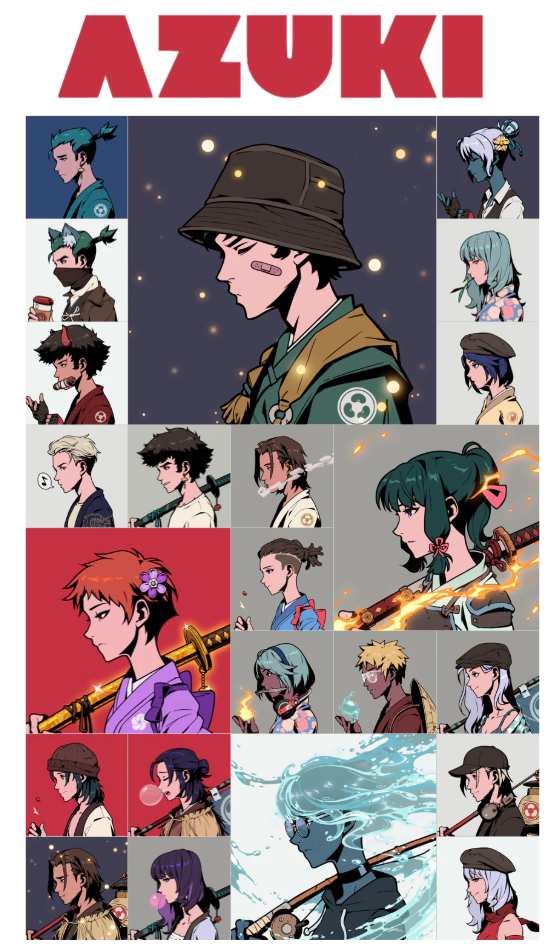
My Azuki Team
III. Assessing the IP Potential of PFPs
To assess which PFPs have the potential to become Metaverse IPs, consider three dimensions: art style, community culture, and team capability.
1. Art Style
A top-tier IP must have a unique yet widely appealing art style. It doesn’t require technically perfect artwork or flashy techniques. Are the art styles of Web2’s top 10 IPs truly the best? Is Pikachu hard to draw? Or Winnie the Pooh? Mario began as pixel art; Mickey Mouse is just three circles combined.
But it must have distinctiveness. ABDC—Azuki, BAYC, Coolcat, Doodles—each shows potential for becoming a top IP based on art style alone. Another way to verify this is through copycats: after each of these launched, numerous clones emerged, proving the strength and influence of their aesthetics.
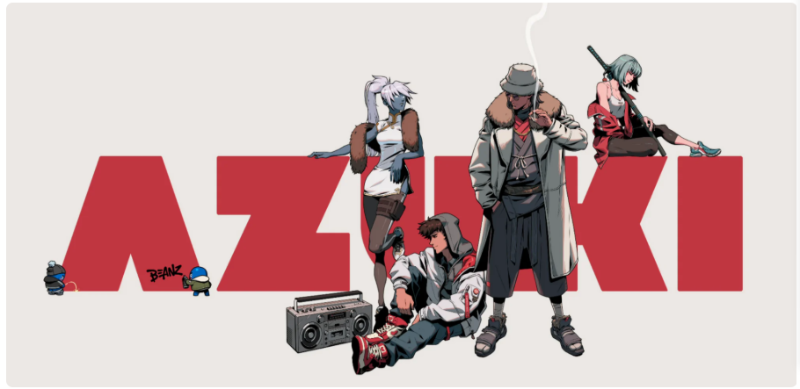
Azuki
2. Community Culture
Art style and community culture reinforce each other.
As mentioned earlier, art style reflects underlying cultural identity. mfer’s minimalist line drawings perfectly match the “Mother Fxxx” persona—simple strokes that resonate deeply with every mfer.
Community culture forms the foundation of identity. We’re all lonely individuals, yet inherently social—we crave belonging. Being a Pokémon fan is a label. Meeting another fan brings excitement and comfort. That’s the power of IP: regardless of your real-life status, if you own or love BAYC, we’re family.
A strong, unique community culture has innate appeal, attracting like-minded people to join.
PFPs provide both a sense of belonging and individuality through diverse traits, enabling unique self-expression in the Metaverse. I believe this is the fundamental reason behind their popularity.
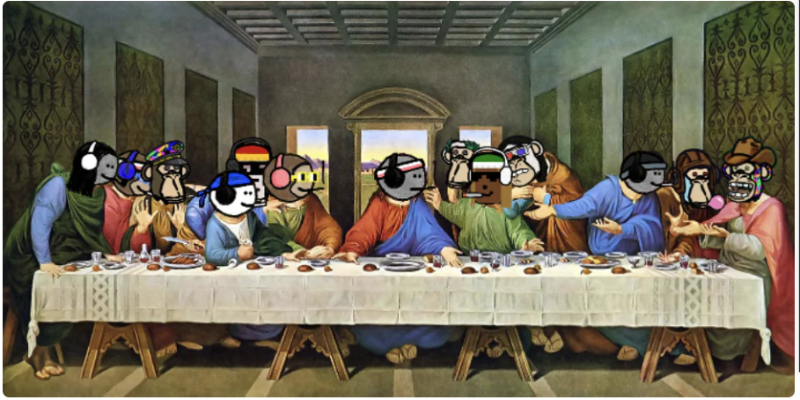
mfer
3. Project Team
How do we judge a team’s competence? Beyond their track record, I evaluate based on execution. The BAYC team is undeniably exceptional. They shared their roadmap early, and every subsequent delivery exceeded expectations.
We shouldn’t just listen to what they say (roadmap), but watch what they do (delivery). Dog and Mutant Ape airdrops, ApeCoin launch, virtual land in the Ape metaverse—every move surpassed expectations. Few teams achieve this consistency (looking at you, Doodles and Coolcat). Exceeding expectations naturally attracts attention. Once again: in the attention economy, sustained visibility defines the winner.
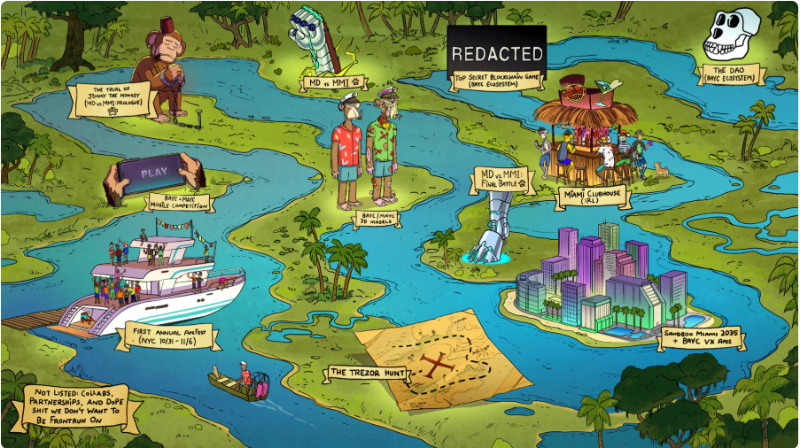
BAYC Roadmap
Truly high-level IPs require elite teams. Put differently, without Disney, could Mickey Mouse have become a global icon?
People will inevitably live in the Metaverse, and iconic IPs will emerge. There won’t be just one Punk or one BAYC. Every domain will see high-potential projects rise—and based on this reasoning, I chose Azuki.
IV. Investment Logic for NFT Platforms
Given that the NFT market could reach hundreds of billions, NFT platforms deserve close attention. Take OpenSea: with 10 days left in April, its transaction fees for the month already hit $200 million.
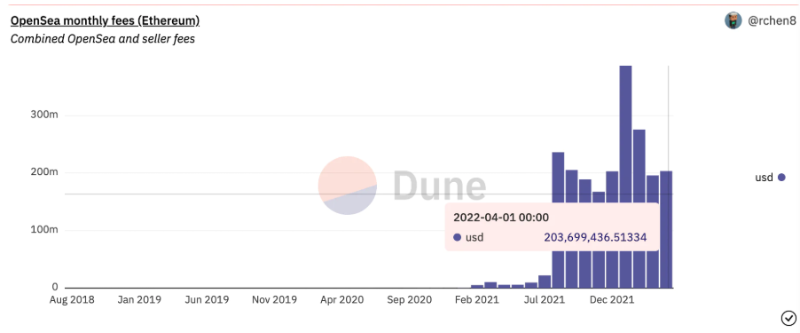
OpenSea Monthly Fees
NFT marketplaces are fiercely competitive. Looksrare and X2Y2 fired the first shots. Although Looksrare captured some of OpenSea’s market share, I’m not bullish long-term. Order-book mining isn’t innovative enough to fully dethrone OpenSea (though I may be proven wrong).

Data as of April 20
Many criticize OpenSea: too centralized, self-defined listing rules, poor UX (no bulk-buy function), and no token—hardly Web3 at all. Therefore, a superior marketplace will inevitably emerge.
I agree—but currently, OpenSea remains unmatched in usability. Notice how wallets and apps like MetaMask and Rainbow Wallet integrate OpenSea’s API. This is due not only to OpenSea’s dominant liquidity but also to its foundational smart contracts developed over four years, setting standards like floor price display.
However, OpenSea has only 1.59 million total users—even fewer when considering multi-address users like myself. If hundreds of millions want to buy NFTs, will they still use OpenSea? From this angle, simplifying the NFT purchase process is essential. Mobile usage dominates over PCs, so user-friendly NFT trading apps will inevitably arise. This might be the path to surpassing OpenSea—any platform achieving this could be valued at tens of billions.
PS: The same logic applies to wallets.
PPS: MoonPay recently partnered with OpenSea, enabling credit card purchases. Will OpenSea itself end up simplifying the NFT buying experience?
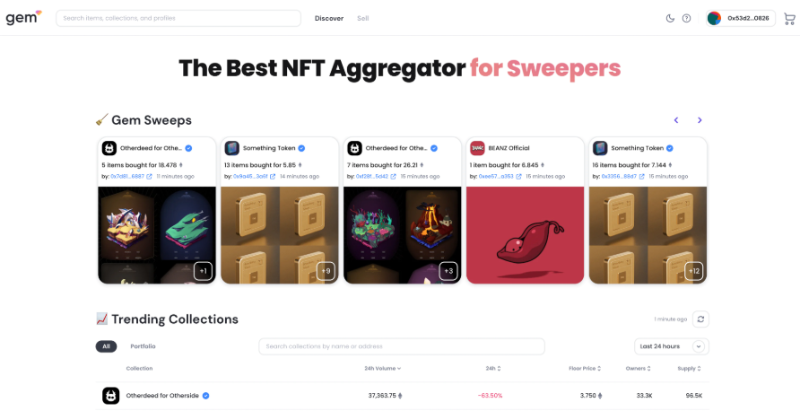
Gem.xyz
Lately, I’ve been paying more attention to sites like Genie and Gem. Starting with niche features like bulk buying ("sweeping the floor"), they’ve gradually become go-to tools for NFT purchases. Recent news says Genie is now valued at $1 billion.
As more users adopt Gem and Genie, both have integrated existing platforms—OpenSea, Looksrare, X2Y2. Once users get used to them, it matters less which platform lists the NFT. If I want a BAYC listed on X2Y2, it’ll still appear on Gem or Genie’s “shopping page.” This is how aggregators drive traffic to smaller exchanges.
Gem was acquired by OpenSea; rumors suggest Genie may launch a token. For anyone buying NFTs, I recommend using these platforms—they offer potential airdrop opportunities if tokens are issued.
PS: Investment Logic for Metaverse Land
-
Billions will enter the Metaverse
-
The Metaverse will host countless universes
-
Metaverse Land should not be capped
-
The value of Metaverse Land lies in development
-
Web2 companies will enter the Metaverse
-
Who will be the entry point for Web2 companies into the Metaverse?
Join TechFlow official community to stay tuned
Telegram:https://t.me/TechFlowDaily
X (Twitter):https://x.com/TechFlowPost
X (Twitter) EN:https://x.com/BlockFlow_News


