From Crypto Coven to the Female PFP Market: Consumer Products and Community Totems
TechFlow Selected TechFlow Selected
From Crypto Coven to the Female PFP Market: Consumer Products and Community Totems
Female-oriented NFTs are becoming an increasingly significant direction in the NFT market.
 Navigating Web3 tides with focused insights
Author: yikiiiii.eth
Editor: Sloth Run
Recently, I came across the Crypto Coven community. This became my entry point for observing female-oriented NFTs, and this article will share some of my thoughts on women-focused NFTs through the lens of Crypto Coven.
01 About Crypto Coven
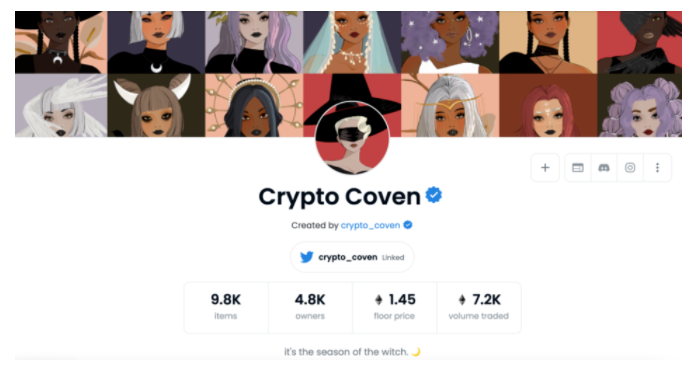
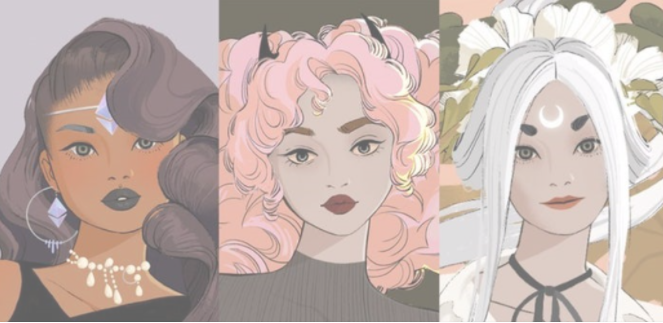
Crypto Coven (the "witches") is a collection of NFTs launched on Halloween night in 2021. Comprising nearly ten thousand unique witch avatars, they feature diverse traits—some with cat-like eyes, veils, or prophetic visions, others appearing as sorcerers—forming a rich variety of feminine archetypes.
The creators behind the witches are two amateur artists from the tech industry. Since its launch in November last year, the team has done almost no marketing for Coven, nor have they collaborated with celebrities for exposure.
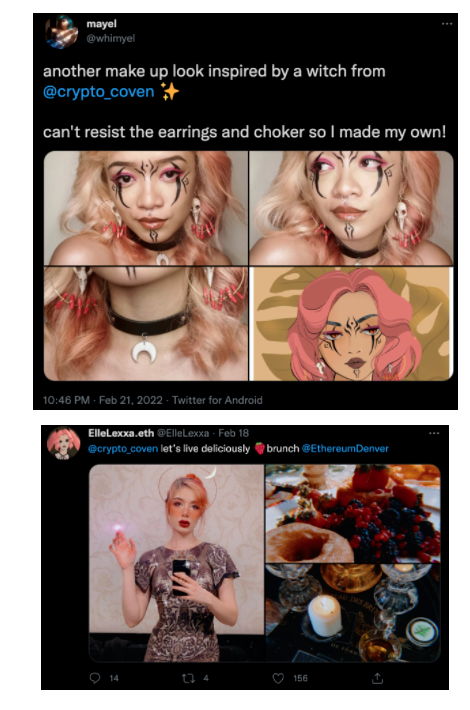
Yet this laid-back project has gradually attracted more and more members, now boasting over 6,000 people in its Discord community. Many fans describe it on Twitter as “the best community vibe I’ve ever seen,” while others love the witches so much that they spontaneously mimic their hairstyles and accessories, create fan merchandise, and promote them across social media...
Numerous celebrities and influencers from both East and West have also joined the coven, including Kat Dennings from *2 Broke Girls* and Randi Zuckerberg, sister of Mark Zuckerberg, who both briefly adopted witch avatars.
The witches have increasingly gone viral, gaining attention and coverage from major outlets like Business Insider in mid-February. This surge in popularity naturally drove up the price of Crypto Coven NFTs. Initially priced at just 0.07 ETH (about $200), the floor price peaked above 2 ETH and currently hovers around 1 ETH. In just over three months, the collection has achieved a trading volume of 7,500 ETH on OpenSea.
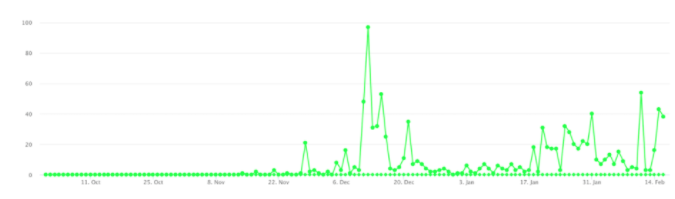
Trend of the term “crypto coven” on social media over time
Crypto Coven
02 Minority Group: The Women’s Market in Crypto
Coven's most striking artistic trait is its distinctly feminine aesthetic—an identity rooted in its two female founders.
Last summer, designers Aletheia and Nyx discovered NFT digital art. They were intrigued but couldn't find any NFT projects that represented women like themselves—women working in tech. So they decided to create one—and thus the Witch series was born.
This gap in the market reflects the gender imbalance prevalent in the crypto space.
Across the entire cryptocurrency market, men dominate. According to a Business Insider report from October 2021, only 15% of Bitcoin traders are women, and female Ethereum investors make up just 12%.
The NFT market mirrors this disparity: far fewer women participate than men, whether as buyers or creators. A November 2021 survey by art market research firm ArtTactic found that only 15% of users on the digital art marketplace Nifty Gateway are women. As creators, male artists accounted for 77% of transaction value in both primary and secondary NFT markets.
“There’s a kind of bro culture,” says art collector Danielle Davis about the NFT market. “Women in business don’t have access to many resources.”
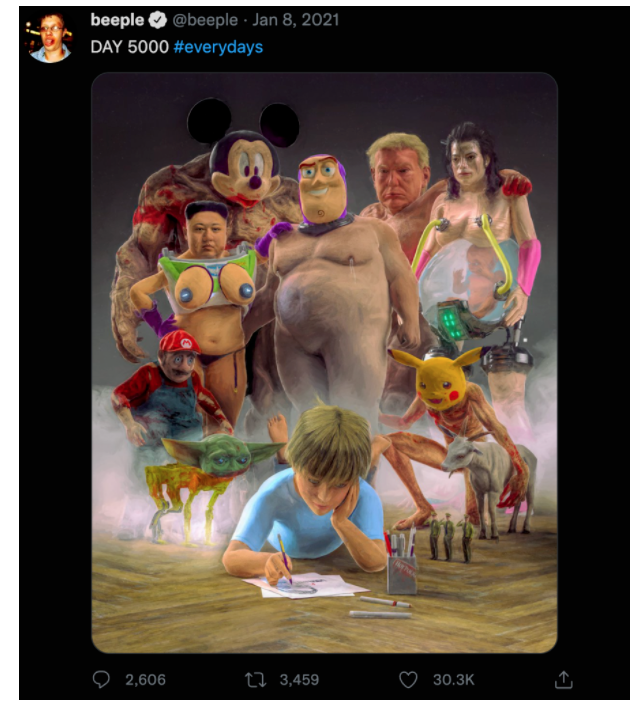
Beeple’s artistic style
Indeed, whether profile picture NFTs like BAYC or art-focused NFTs like Beeple’s works, the target audience is predominantly male, reflecting clear masculine tastes.
If NFT prices directly reflect popularity among audiences, then the investment logic once shared by Eric Wan, co-founder of F2Pool—“buy male not female, buy white not black, buy monster not human”—is a telling reflection of the dominance and financial power of white men in crypto. NFTs depicting women or Black individuals consistently trade below those of comparable male or white figures.
However, as more women enter the crypto space, this investment logic is beginning to break down.
The more marginalized a group feels, the stronger their desire to change the status quo—and the clearer and more powerful their collective goals become.
The first project targeting the female NFT niche was Fame Lady Squad (FLS). In July 2021, FLS entered the NFT market under the banner of being the “first virtual woman project,” selling out $1.5 million worth of NFT avatars within weeks. But soon after, online sleuths revealed that the three founders—named after women—were actually Russian male programmers. The feminist credibility of FLS instantly collapsed, and NFT prices plummeted.
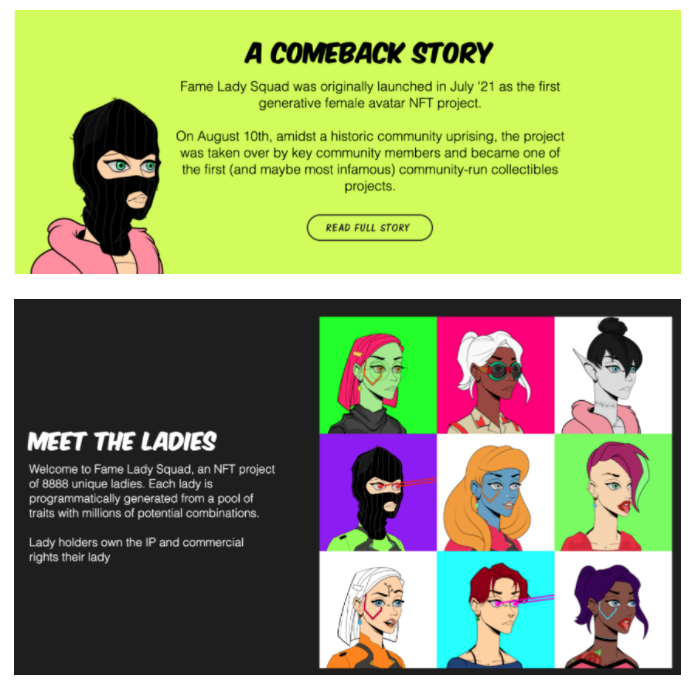
Nevertheless, the female NFT niche had been uncovered, and a wave of projects began emerging, claiming feminist ideals to fill the void.
Launched in November 2021, the Women Rise project tells a story of challenging male authority in Web3. When its founder, Pakistani-American artist Maliha Abidi, attended an NFT event in New York, the first thing someone asked her was: “Are you sure you’re in the right place?” That moment made her acutely aware of gender inequality in crypto, sparking her mission to elevate women’s presence and participation in Web3. NFTs, with their blend of fashion and art, offered a clever gateway for women to enter the crypto world.
Women Rise aims to build an NFT community that unites and represents women in tech and blockchain, pledging to donate 7.5% of revenue to organizations supporting gender equality, girls’ education, and mental health—including the Malala Fund. Abidi even dreams of opening a school for girls in the metaverse one day.

Beyond Women Rise, other notable female-led NFT projects include World of Women, Boss Beauties, and Women and Weapons—names alone convey their strong feminist tone and political stance, attracting NFT enthusiasts committed to addressing gender bias and inequality.
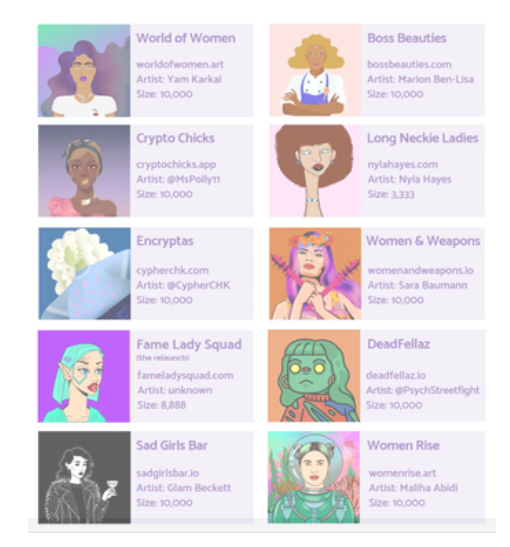
Artistically, these projects emphasize female strength rather than conforming to stereotypical notions of femininity such as softness or fashionability. Crypto Chicks sneer with curled lips, Women and Weapons brandish swords and glare down at you, Boss Beauties stand arms crossed like men, radiating defensive impatience—all visual cues reflecting their cultural struggle for power in a male-dominated world.
03 Coven: Depoliticized Femininity
In contrast, Crypto Coven takes a markedly different artistic approach—the most immediate difference being that they are simply more beautiful. The witches resemble fashion magazine cover stars—with refined makeup, elegant accessories, and an aura of confidence and allure.
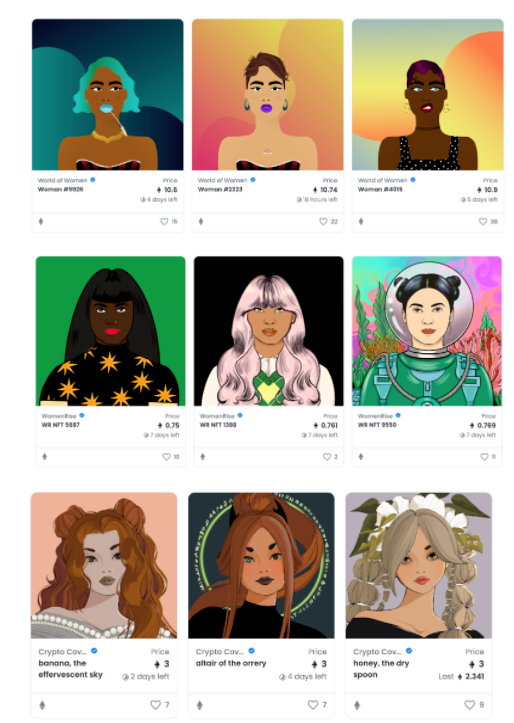
This reflects Crypto Coven’s choice to take a depoliticized path. Rather than rallying women under feminist banners, it opens the female consumer market through aesthetic appeal.
In overall appearance, the witches align with typical female consumer aesthetics—wavy hair, colorful eyeshadow, delicate features—images designed to be conventionally attractive, even to men. Yet beyond beauty, they exude a magical, mysterious charm, embodying a rebellious spirit that defies authority.
This strong sense of rebellion stems from meticulous artistic and narrative details that together define the unique character of Crypto Coven’s witches. Heads tilted slightly in disdain, eyes confidently staring forward—cool, direct, never subservient. Random features like facial tattoos, black lips, knife scars at the corners of the eyes, nose rings, veils, crescent moon jewelry, and small horns—these aren’t looks a city woman would wear in real life, but bold, rule-breaking punk statements.
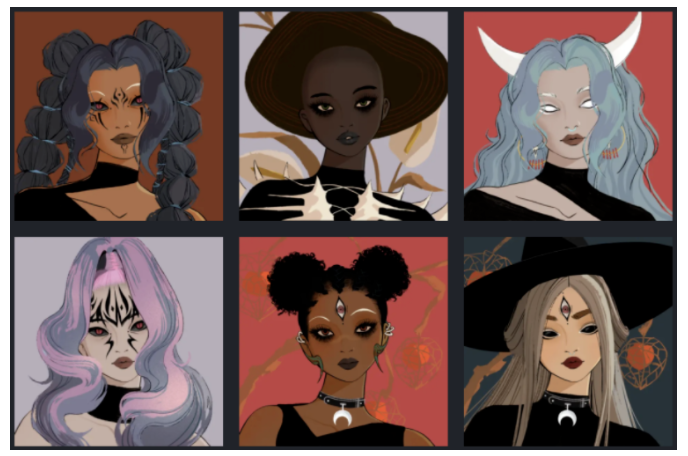
Beauty combined with transgressive details allows women to project both their desire for attractiveness and their suppressed emotions of defiance—perhaps expressing the side of themselves that resists mainstream values, or perhaps awakening feminist consciousness against male authority. Together, these form the unique spirituality of the witches.
The witches’ persona perfectly captures the conflicted psychology of Web3 women.
As products with high financial and knowledge barriers, NFTs attract female participants who are typically well-educated and financially capable. In real life, they may succeed within existing societal structures and fulfill expected social roles, yet simultaneously suppress inner impulses to rebel against those very rules.
In terms of NFT consumption, they may admire conventional beauty while resisting externally imposed standards. The witches’ alluring yet defiant aura perfectly satisfies this psychological duality.
This is what makes Crypto Coven unique. It not only timely fills a gap in the female NFT market but also stands apart from overtly ideological feminist projects by embracing a depoliticized stance—one that doesn’t shy away from beauty and self-expression, blending attractiveness with rebellion and nonconformity to unlock female consumer power. It appeals not only to female NFT collectors who want to own it as they would a designer handbag, but also to male buyers drawn in by their striking visuals.
04 Building Emotional Connection in Female Communities
The witches subtly satisfy Web3 women’s consumer psychology and enable deep self-projection. But without strong feminist ideology to unite them, building this nuanced culture relies even more heavily on community management and brand development.
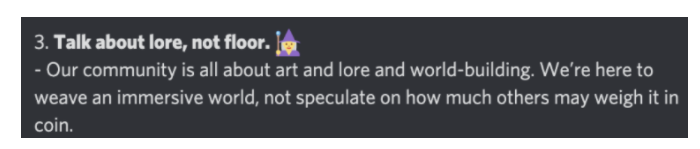
“Lore, not floor” (focus on lore, not floor price) is one of the core principles in the witch community, inspired by another wizard-themed NFT project, Forgotten Runes Wizards Cult.
Although NFT communities are inevitably tied to money, the team behind Coven actively suppresses speculative chatter, focusing instead on cultivating a rich cultural atmosphere. Examples include organizing sci-fi book clubs for witches and gifting exclusive Valentine’s Day NFTs to community members.
In their roadmap, the team plans to mint additional witches on Layer 2, allowing more people to join—but beyond that, the future remains open-ended, awaiting co-creation by the community itself.
Witches gather based on shared tastes and interests. They spontaneously imitate witch aesthetics online, participate in community events and rituals, and sometimes become real-life friends, meeting up for meals and conversation.
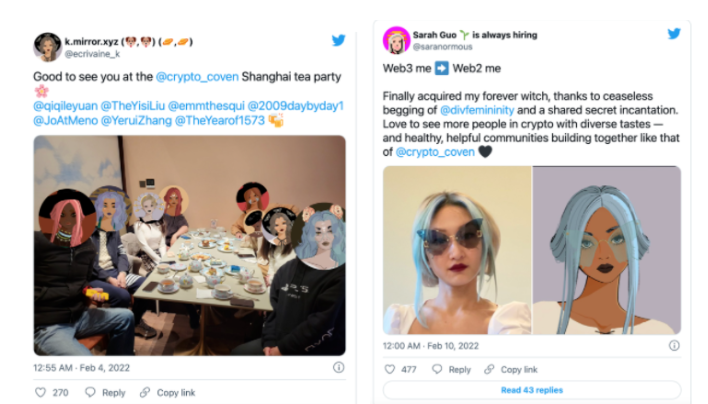
One of the lead creators, xuannu.eth, explained her community-building philosophy: avoiding traditional marketing can itself be a form of marketing. She favors “brand building” over “growth hacking”: growth hacking means farming whitelists, chasing trends, and inflating volume; branding means investing in creative event design and cultural direction to genuinely reach the target audience.
Especially given that women tend to be more risk-averse and cautious investors, a female-targeted NFT project cannot attract its ideal audience through mere hype or growth tactics. Instead, success hinges on robust community and brand development—backed by strong culture and communal support.
05 Consumer Goods and Community Totems: The Source of NFT Valuation
With its feminine aesthetic and strong community foundation, Crypto Coven exemplifies the fusion of consumer product and community totem. From this perspective, I want to explore why NFTs can be so “expensive,” analyzing the deeper sources of their valuation.
For the female-focused NFT space, Coven proves there’s an alternative to overtly ideological feminism: NFTs can succeed through aesthetics and consumer appeal. Some female holders in the Coven community even say: “Since buying Coven, I don’t even feel like buying handbags anymore.” To some extent, this reveals a key motivation—viewing Coven as a substitute for luxury goods.
While today’s NFT market remains highly speculative, we can envision a future where NFTs become more mainstream and widespread, revealing their inherent product characteristics. Sports fans might collect sports-themed NFTs, anime lovers might buy anime NFTs, feminists might purchase female-oriented NFTs… In fact, such collectors already exist—they only collect specific types of NFTs they love, treating them like any other cherished consumer item.
Typically, consumption is driven by self-projection—people use objects symbolically to express their values. Meanwhile, within an NFT collection, each image is algorithmically generated and unique, creating subtle personalization. These differences encourage deeper self-identification: the more you look at an avatar, the more it starts to resemble you, prompting you to emulate the virtual figure.
If offline consumption centers on the self using symbols for expression, online avatars represent a process of building identity from scratch. The consumed object shifts from a symbolic token to the self itself—symbols and their associated cultures gradually internalized as part of one’s identity. Further blurring the line between real and virtual, consumer goods evolve from outward expressions into tools for self-construction. Humans and digital consumer goods begin to imitate and shape each other.
This helps explain why a JPG file could be valued higher than a luxury handbag. NFT valuations stem not just from financial speculation, but from deep cultural meaning and the intrinsic mechanics of digital identity. —When it comes to constructing the “self,” we will always spend.
Therefore, how to visually craft NFTs that inspire user self-identification and fuel identity imagination in virtual worlds will be critical for all future NFT projects. This is also why access to top-tier artistic talent will become a key battleground.
Beyond art, operations are equally vital to a project’s success. Nearly every NFT team wants holders to keep their NFTs long-term. To achieve this, they must build a community worth staying in—transforming their NFTs into effective identity signals, totems, and forms of cultural and reputational capital.
Under blockchain’s promise of decentralization, trust in technology replaces traditional interpersonal trust. Strangers worldwide develop intimate bonds through shared narratives around a single NFT set. With proper management, teams can cultivate community culture through sustained interaction, rituals, and exchanges—drawing in deeply engaged individuals and forming distinct subcultures. Once matured, such a culture turns the NFT into a clear cultural symbol.
NFTs make consensus and social hierarchies visible and monetized. They clearly reflect holders’ wealth levels and personal tastes. The social and distinguishing nature of NFTs may explain why their hype cycles are often shorter and more prone to FOMO (fear of missing out) than FTs (fungible tokens). Because not just economic capital, but cultural and social capital too, are concretely displayed across decentralized, infinite spaces.
In short, while an NFT avatar appears to be just a small image, its true value lies in community and culture. The visual design of a PFP artwork sparks self-projection and identity imagination among members, while ongoing project operations sustain long-term community building. Beyond speculation, these are the authentic sources of NFT value.
And precisely because of this, the more speculators a project attracts, the weaker the communal illusion becomes—and in a community devoid of imagination, a small image truly holds only the value of a small image.
Join TechFlow official community to stay tuned
Telegram:https://t.me/TechFlowDaily
X (Twitter):https://x.com/TechFlowPost
X (Twitter) EN:https://x.com/BlockFlow_News