Nansen: What is an NFT? What are its specific applications?
TechFlow Selected TechFlow Selected
Nansen: What is an NFT? What are its specific applications?
NFTs are sweeping the globe. In this article, we’ll look beyond the hype to cover everything you need to know about NFTs.
 Navigating Web3 tides with focused insights
Author: Nansen
Translation: Alex, TechFlow Friends
Introduction
NFTs are taking the world by storm. Celebrities like Steve Aoki and Jay-Z proudly display their NFT profile pictures on Twitter. Mainstream brands such as Adidas and Nike have entered the space. Adidas raised $23 million by launching an NFT collection that serves as tokens for exclusive physical and digital products. Nike acquired RTFKT, an NFT-based virtual design studio, to expand into the metaverse. NFT artworks have sold for millions at Sotheby's and Christie's.
With growing mainstream acceptance of NFTs, it’s becoming increasingly difficult to ignore this rising trend. In this article, we’ll look beyond the hype and cover everything you need to know about NFTs.

What is an NFT?
Non-Fungible Tokens (NFTs) are unique cryptographic tokens representing a set of non-interchangeable metadata stored on a blockchain. In contrast, fungible tokens are interchangeable. Examples include Bitcoin and Ethereum—1 Bitcoin equals 1 Bitcoin, and users don’t care which specific coin they receive or purchase. Each NFT, however, is uniquely identifiable, and in most cases, users do care about the specific NFT they’re buying or receiving.
Blockchains are distributed and decentralized digital ledgers composed of data blocks chained together chronologically. The most commonly used blockchain for NFTs today is Ethereum. We're also seeing the rise of niche blockchains like Flow and Ronin, which were developed specifically for NFTs and gaming.
An NFT's metadata resides within a smart contract, which is stored on blocks in the blockchain. A common misconception about NFTs is that the image or JPEG associated with the NFT is stored directly on the blockchain. While this is true for a small number of projects (e.g., Anonymice, Chain Runners), most store images externally (e.g., IPFS, Arweave), with the blockchain metadata simply containing a link to the image. Due to the large file size of images, storing them fully on-chain is prohibitively expensive and economically unviable for most projects.
What problem does the NFT solve?
The internet solved physical-world problems by digitizing everything. It’s now easier than ever to scale infinitely and connect with a global audience. Distribution costs have dropped dramatically—compare web publishing to print newspapers. However, the digital world lacks some advantages of the physical world. Ownership and scarcity barely exist, and verifying digital assets is far more difficult than verifying physical ones. The meme “right-click save” reflects the current state of the internet: digital assets lack ownership and inherent value appreciation.
At its core, NFTs provide proof of ownership that today’s digital economy lacks. They enable a fusion of the digital world’s strengths—global reach, scalability, and distribution—with the physical world’s benefits—ownership and authenticity.
Before the rise of NFTs, digital assets struggled to accumulate value or capture economic upside. This made user acquisition extremely cheap but disadvantaged creators. Today, it’s hard to track and verify true ownership on the internet, but NFTs solve this. Creators are compensated more accurately and can claim a larger share of the value they generate. Users benefit by gaining verifiable ownership of digital assets and the ability to trade and value them easily. Right now, being an early fan of the world’s biggest band doesn’t bring extra rewards—but with NFTs, consumers could be rewarded simply for doing what they already do.
What are NFTs used for?
Art
The most widespread use case for NFTs is collectible digital art. NFTs give artists a way to easily sell their work to a global audience while ensuring ownership. Art NFTs fall broadly into two categories: non-generative art and generative art.
Non-Generative Art
Non-generative art refers to what we typically think of as art—created by individuals without assistance from automated computer systems. Digital artists can list their work on NFT marketplaces, accessible to anyone worldwide. In traditional markets, artists earn only from the initial sale of their work. NFTs allow artists to embed royalties into smart contracts, enabling them to claim a fairer share of ongoing value. NFTs also make verifying authenticity and ownership straightforward—a major benefit. Leading names in this space include Beeple, pplpleasr, ferocious, and Pak.
Photography NFTs are an emerging use case. Photographers are selling their work as NFTs and enjoying similar benefits. Justin Aversano became historic when one piece from his “Twin Flames” series was auctioned at Christie’s. Popular marketplaces for such NFTs include OpenSea, SuperRare, Foundation, Rarible, and Nifty Gateway.
Generative Art
Beyond individually created artworks, the rise of art NFTs has largely been driven by generative art—art created using automated computer systems, typically algorithmic programs. Profile picture (PFP) collections like CryptoPunks and Bored Ape Yacht Club (BAYC) were generated this way. Creators define traits, and the program randomly combines them to create unique characters. Some collections are entirely computer-generated, with no human input beyond the initial algorithm. The most popular examples are sub-collections from Art Blocks, such as Snowfro’s "Chromie Squiggle" and Tyler Hobbs’ "Fidenza." OpenSea leads as the primary marketplace for generative art NFTs, with LooksRare emerging as a popular newcomer.
Types of Art NFTs

Copyright belongs to the respected artists Justin Aversano, Beeple, 309 Labs, Tyler Hobbs
Gaming
While art NFTs have gained mainstream attention, one series has outperformed all art NFTs in sales volume: Axie Infinity, an NFT-based game, currently holds the top spot (excluding wash trading on LooksRare). The integration of NFT technology into gaming has given rise to new models: Play-to-Earn, Play-and-Earn, and GameFi.

Top NFT Series by Sales Volume. Source: https://dappradar.com/nft, as of February 3, 2022
Axie Infinity exploded in popularity in 2021 and launched the Play-to-Earn (P2E) sector. The game generated over $1.3 billion in revenue in 2021 and had over 2.5 million daily active users. Unlike traditional games where publishers profit by selling in-game assets, Axie Infinity earns through transaction fees and breeding costs. Breeding involves players creating new Axies. The team is incentivized to build the best game to grow the user base, not to push asset sales.
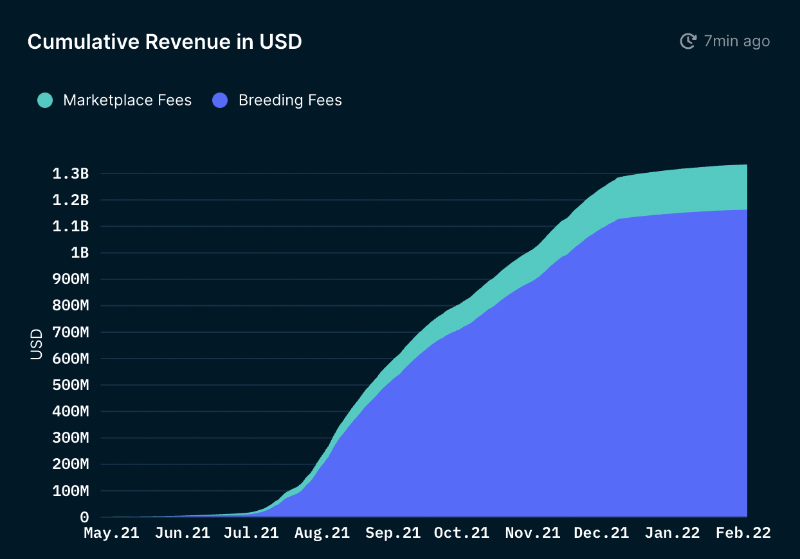
Axie Infinity Cumulative Revenue. Source: https://pro.nansen.ai/axie , as of February 3, 2022
Integrating NFTs into gaming provides benefits similar to art NFTs—players gain true ownership of in-game assets. Items, even characters themselves, can be NFTs. In Axie Infinity, the Axies required to play are NFTs, and in-game currency is cryptocurrency. In traditional games, money flowing into the game often gets trapped because players can't extract value. NFT games give players control and ownership—they can sell and cash out if they choose.

Traditional Game Value Flow vs Blockchain Game Value Flow
Music
Music NFTs are an emerging use case. Like art NFTs, music NFTs are key for artists to capture a larger portion of the value they create. Artists typically receive only around 12% of the revenue they generate in the music industry. Producer/artist Daniel Allan sold a music NFT on OpenSea for 1.1 ETH—an amount equivalent to 1.2 million streams on Spotify.
True fans are empowered by this trend too. They can support and directly own copies of works created by their favorite musicians. This creates new channels for artists to engage with fans at levels previously difficult to achieve. By owning original copies of an artist’s work, fans can share in the artist’s future success. Artists get fairer compensation, and as a fan, you can benefit from supporting artists early. Projects like Sound.xyz and Catalog offer platforms where artists can sell their work directly to fans.

Sound.xyz homepage, as of January 27, 2022
Sports Collectibles
Sports NFTs represent a growing and thriving use case. Similar to baseball trading cards, sports NFTs allow fans to build collections of their favorite teams and athletes. The two most popular projects are NBA Top Shot and Sorare. Both have official partnerships and licensing from relevant organizations.
NBA Top Shot creates highlight clips from NBA games and packages them randomly into digital card packs. Each moment is an NFT. Moments are assigned different rarity levels based on player, significance, and popularity. The rarer the moment, the lower the supply. A pack of common cards starts at $9, while legendary packs go up to $999. Users can trade NFTs on NBA Top Shot’s official marketplace. LeBron James’ championship-winning dunk in the 2020 Finals sold for $230,000—the highest sale to date.
Sorare combines fantasy football with NFTs. Player cards are NFTs, and rewards are paid in ETH. Users can trade player cards on Sorare’s marketplace. Sorare shares similar advantages with NFT games: ownership of in-game assets and the freedom to extract value by cashing out.
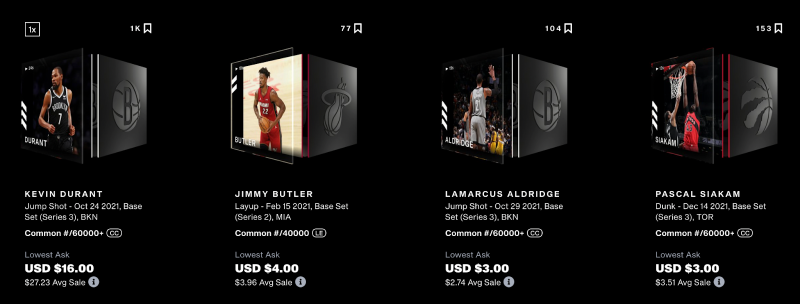
NBA Top Shot Marketplace, as of January 28, 2022
Tickets & Access Passes
Due to ease of authentication and verifiable ownership, NFTs can serve as access passes. Examples include Flyfish Club, a membership pass for a private dining club, and Adidas’ NFT series, which grants holders exclusive access to the brand’s physical and virtual goods. Some collections exist solely as membership cards. This use case is central to many projects, and all forms of NFTs can function as some kind of pass.
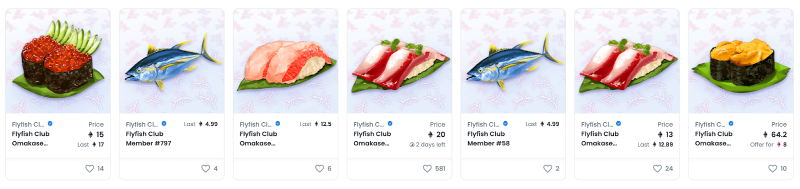
Gary Vaynerchuk’s Flyfish Club NFT, as of January 28, 2022
A key driver behind the rise of art NFTs is the community supporting the project. NFT holders gain access to exclusive Discord channels and experience a sense of camaraderie. Major projects (e.g., BAYC) host real-world meetups and exclusive parties for NFT owners. Holding certain NFTs may grant early access to new NFT series from the same team or through collaborations. Like Adidas NFTs, some projects (e.g., BAYC, Creature World) release physical merchandise available exclusively or early to NFT holders. Musicians and game developers offer similar perks to their NFT holders.
Decentralized Autonomous Organizations (DAOs) and gaming guilds are another area where NFTs act as access passes. Owning relevant NFTs grants exclusive membership rights and voting power. Yield Guild Games is an example of a gaming guild using NFTs this way. NFT holders gain access to exclusive website features and can sign up for various guild initiatives.
How to Create an NFT
There are numerous ways to create an NFT—you can do it manually or use systems provided by NFT marketplaces like OpenSea and Rarible. Beyond technical aspects, a crucial consideration is choosing which blockchain to launch your NFT on: Ethereum, Solana, Avalanche, Polygon, and others. Different blockchains involve trade-offs and cater to distinct communities, significantly impacting your project’s success.
OpenSea offers a helpful guide on how to easily create your own NFT on Ethereum via their platform, available here.
How to Buy an NFT
In terms of trading volume, OpenSea is the largest marketplace and likely where your NFT journey will begin. While most popular NFT collections today are built on Ethereum, thriving projects also exist on other blockchains like Solana, Terra, and Polygon. Other popular marketplaces include LooksRare and Rarible (Ethereum/Polygon), Magic Eden and Solanart (Solana), and Random Earth (Terra).
You’ll need a cryptocurrency wallet compatible with the blockchain the NFT project uses. Most popular wallets include MetaMask (Ethereum), Phantom (Solana), and Terra Station (Terra). Once you’ve created a wallet, transfer ETH/SOL/LUNA from your preferred centralized exchange to your wallet, and you’re ready to go!
How to Invest in NFTs
When buying an NFT as an investment, it’s essential to evaluate the project holistically rather than relying solely on aesthetics. As with selecting crypto projects, factors like team quality, proven execution ability, and project roadmap matter. Perhaps the most important—and hardest to measure—is the team’s ability to build and manage a strong community. NFT value stems largely from their communities; projects with robust communities can survive bear markets. We’ve even seen cases where communities rallied to revive projects after founding teams failed—Pudgy Penguins being a recent example.
The only real way to assess a community’s strength is to join it. Member quality matters more than quantity. Join discussion groups, hang out in channels, and gauge the atmosphere. If conversations revolve mostly around floor price and the vibe feels toxic, it’s likely not a project worth betting on.
With new NFT projects launching daily, it’s nearly impossible to keep up. One strategy is to follow smart money—tracking projects attracting early interest from experienced investors. Nansen’s NFT dashboard helps with this. You can view transaction data for specific projects in "NFT God Mode," minting data on "Mint Master," and a summary of smart money activity over the past 24 hours on "NFT Smart Money."

BAYC's NFT God Mode Dashboard. Source: https://pro.nansen.ai/token-god-mode, as of February 3, 2022
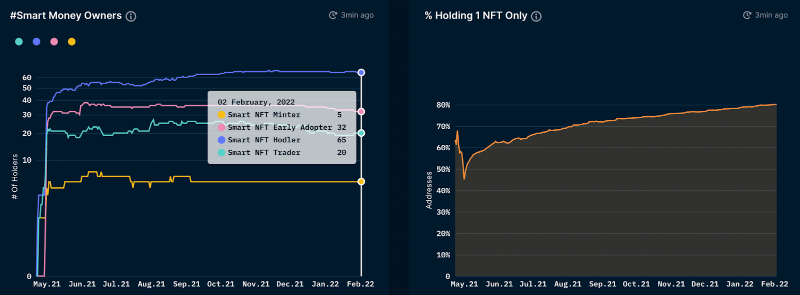
Source: https://pro.nansen.ai/token-god-mode, as of February 3, 2022
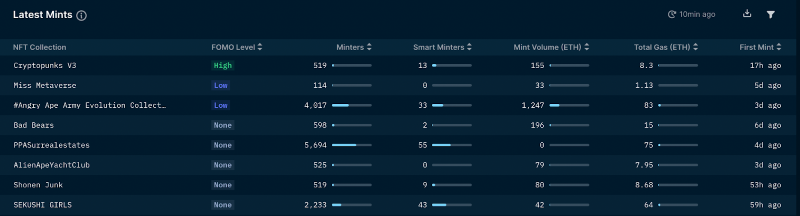
Latest Mint Data on Mint Master. Source: https://pro.nansen.ai/nft-paradise/mint, as of February 3, 2022

NFT Smart Money 24-Hour Buy/Sell Activity. Source: https://pro.nansen.ai/nft-paradise/smart, as of February 3, 2022
Common Criticisms of NFTs
“Why pay thousands for a JPEG I can just right-click and save?”
Yes, you can obtain a copy of the artwork by doing so, but that doesn’t equate to owning the authentic NFT. Just as counterfeit luxury goods never match the value of originals—even with identical materials and craftsmanship—the “right-click saved” version of an NFT won’t hold the same value. Counterfeits, or in this case “right-click saves,” actually enhance the original’s value. They create a feedback loop: original work gets copied → goes viral and gains attention → value rises → gets copied more. The more a particular image is seen globally, the more iconic and representative it becomes, increasing the value of the original. It wasn’t Leonardo da Vinci painting the Mona Lisa that made it famous—it was the media frenzy when it was stolen. Headlines across the world turned it into a globally recognized household name.
One might argue that physical counterfeits differ from originals because they aren’t the exact same item. This is true for physical goods—and equally true for NFTs. The concept is harder to grasp because NFTs are fully digital. At first glance, a copied JPEG appears 100% identical to the original. But just like physical goods, what truly matters is what lies beneath. A “right-click saved” version lacks the underlying blockchain data. It doesn’t grant the same benefits or rights as owning the real NFT—no access to events, exclusive communities, resale rights, or special game experiences.
NFT implementation doesn’t mean users must pay more—it simply gives them a choice. Don’t want to pay thousands for a JPEG? Fine, download and use it freely. Those who wish to support their favorite creators by purchasing and owning their work now have a fairer mechanism to do so. Looking at OpenSea’s trading volume (around $17 billion in sales in 2021), it’s clear there’s significant capital willing to participate.
“NFTs are bad for the environment”
While proof-of-work (PoW) blockchains like Ethereum are indeed energy-intensive, many newer blockchains—and Ethereum itself—are transitioning to proof-of-stake (PoS). PoS chains like Solana consume drastically less energy and may even be carbon neutral. Moreover, NFTs are unlikely to cause additional energy usage, as idle blockchain capacity would be used by other applications like DeFi even if NFTs didn’t exist.
The Future of NFTs
Future NFTs may look nothing like what we see today. While NFTs have established themselves as viable tools for creator monetization, we’re only at the beginning of leveraging this technology.
Given their core function as ownership tokens, NFTs can represent tokenized credentials for any asset—physical or digital. Property deeds, academic certificates, and ID documents are just a few examples that could be improved through tokenization. Since blockchains are immutable and data is easily verifiable, institutions could seamlessly validate someone’s academic records or employment history if stored on-chain.
NFTs won’t exist in isolation but will integrate with DeFi protocols, creating a fluid crypto ecosystem. Imagine a world where you can use an NFT as collateral to take out loans from DeFi protocols like Aave or JPEG'd. Currently, NFTs are relatively illiquid assets, and high prices prevent retail participation in certain collections’ upside. Fractionalization of NFTs will improve liquidity and allow smaller investors to share in appreciation. NFT indexes tracking total market cap could open new investment avenues and make the space accessible to investors who want exposure without holding specific NFTs.
Popular NFT collections may become highly valuable assets in the metaverse, and demand may arise for advertising via NFTs. In the physical world, brands partner with celebrities to leverage their influence. Specific NFTs could become influential figures in the metaverse, with brands renting them for promotions.
Successful projects could evolve into major brands over time. Once a project secures cultural relevance and psychological ownership, it might rival traditional giants like LVMH. Owning an NFT from such a project becomes a strong social signal of wealth—just as coveted as owning a Rolex watch.
Conclusion
NFTs offer a way to combine the strengths of both physical and digital worlds, creating new distribution channels and monetization models for creators. They provide new methods to engage passionate communities and could transform how we organize social groups. They enable better attribution and valuation of digital assets, allowing creators to capture a larger share of the value they generate. “Right-click saving” will always be part of the internet, but NFTs give creators and users the option to assert ownership and exert greater control over value distribution. Right-clicking and saving can increase the original’s value—not diminish it.
Current implementations of the technology are limited and imperfect. Yet this doesn’t undermine its long-term potential and future applications yet to emerge. We’re only in the first inning of the virtual economy’s rise—we should explore new and exciting ways to harness the advantages of NFTs.
Original link:
https://www.nansen.ai/research/everything-you-need-to-know-about-nfts
Join TechFlow official community to stay tuned
Telegram:https://t.me/TechFlowDaily
X (Twitter):https://x.com/TechFlowPost
X (Twitter) EN:https://x.com/BlockFlow_News
 Nansen