








A Comprehensive Overview of the NFT Sector: Origins, Development, and Popular Projects
TechFlow Selected TechFlow Selected
A Comprehensive Overview of the NFT Sector: Origins, Development, and Popular Projects
The continuous entry of major institutions and celebrities has brought a steady influx of new money into the NFT market. Given how hot the NFT market has become, how should ordinary insiders view this phenomenon?
 Navigating Web3 tides with focused insights
Authors: Anthony; Maxwell; Diamond; Diane; Evelyn; Carole; Zoe
Original Title: {From JPGs to Profile Pictures Priced at $2 Million Each: Analysis of Hot Projects in the NFT Space}
Preface
In recent years, the NFT sector has attracted immense attention from investors. The sale prices of some NFTs are unimaginable and incomprehensible to many people. Among them, popular NFT collectible series—especially profile picture (PFP) collections—have evoked both love and frustration. Most users immediately mention CryptoPunks and BAYC, NFT series that have seen price increases of dozens or even hundreds of times. Cold Rabbit NFT skyrocketed 70-fold within hours of launch, while Jay Chou’s PhantaBear sparked sustained excitement among Chinese-speaking NFT investors for over a week. With major institutions and celebrities entering the space, new capital continues to flood into the NFT market. Given such explosive growth, how should we ordinary participants view this phenomenon?
This article will begin by discussing the origin and development of NFTs, summarize key historical milestones in the NFT space, and analyze the value and risks of current popular NFT collectible projects.
1. Concept, Origin, and Development of NFTs
1.1 Concept
Non-Fungible Token (NFT), abbreviated as NFT, refers to a unit of data on a blockchain digital ledger and is also a type of cryptocurrency. Earlier, the term "NFT" was mainly used within the ERC-721 standard, first proposed via Ethereum's GitHub in 2017. Each NFT can represent a unique digital asset and serve as electronic certification or proof of ownership for virtual goods.
Due to their uniqueness, indivisibility, and non-interchangeability, NFTs can represent digital files (such as artworks, audio, video, in-game items) or other forms of creative works. While the underlying digital content of an NFT can be infinitely copied, the NFT data itself can be tracked on its underlying blockchain, providing verifiable proof of ownership.
1.2 Origin
When discussing NFTs, most people recognize their close ties to Ethereum’s development. However, the concept of NFTs actually predates the July 2015 launch of Ethereum's mainnet.
In 1993, Hal Finney—the first person to receive Bitcoin through a transaction—introduced the idea of “Crypto Trading Cards,” stating: “Digital assets can demonstrate their collectible value to others.” Based on cryptography and mathematics, Finney randomly arranged a series of cards and defined them as cryptographic cards.
Later, this concept materialized with the emergence of Colored Coins—the first-generation NFT dApp—in 2012. Colored Coins were mining and trading protocols built atop existing Bitcoin blocks, composed of small denominations of Bitcoin, with the smallest unit being one satoshi (1/100,000,000 of a Bitcoin). They represented various assets—including stocks, bonds, and cryptocurrencies—in a decentralized manner. Despite numerous flaws, Colored Coins demonstrated the potential for tokenizing real-world assets, laying the foundation for early NFT development.
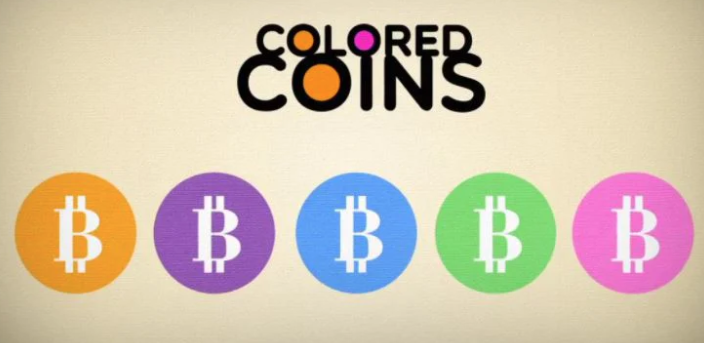
Figure 1-1 Promotional image of Colored Coins, source: Google Images
In 2014, the “RarePepes” campaign on Counterparty—a peer-to-peer trading platform—aimed to collect all variations of the Pepe the Frog meme (one of the most popular virtual characters in 2015). Built on Bitcoin’s CounterParty protocol, each Pepe meme was tied to a unique token. Users could exchange tokens or use Bitcoin to purchase different versions. Each created meme became a distinct NFT. Through widespread sharing across online communities, Pepe memes gradually evolved into an intellectual property (IP), gaining public recognition with their iconic “sad” expression and demonstrating for the first time that virtual NFT items could hold tangible value.
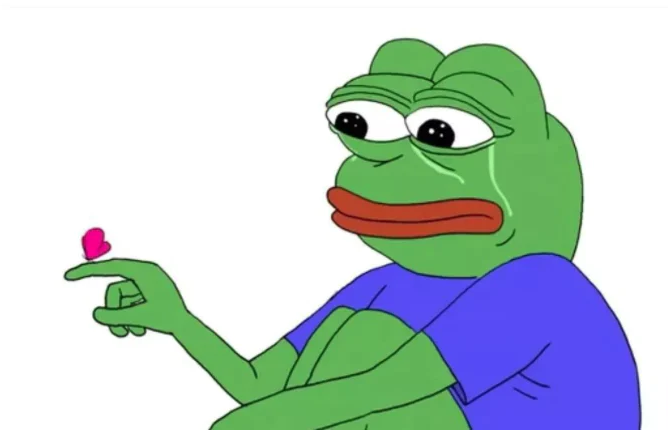
Figure 1-2 One of the Pepe the Frog memes, source: Google Images
1.3 Development
NFTs formally entered public awareness in 2017, introduced by the creators of CryptoKitties. Following Bitcoin’s surge in popularity, the CryptoKitties game emerged. As CryptoKitties gained traction, the concept of NFTs quickly entered mainstream consciousness. From then on, digital assets no longer referred solely to cryptocurrencies but included a combination of fungible cryptocurrencies and non-fungible NFTs.
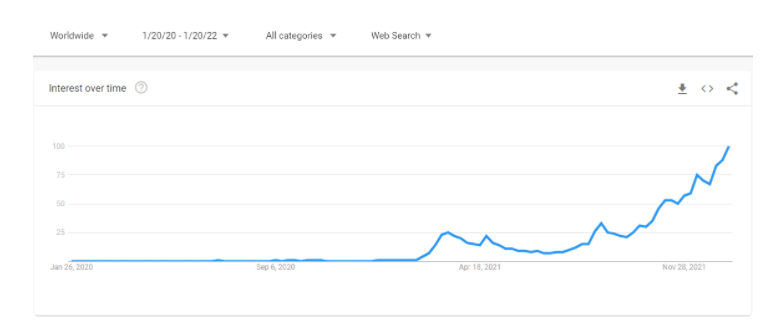
Figure 1-3 Google Search Volume Trend for "NFT"
According to Google Trends, searches for "NFT" remained relatively low before 2020 but surged dramatically starting in 2021 and continue to rise, indicating growing public interest and expanding market size.
Current Status Since August 2021, the NFT market has exploded. Facebook executives have indicated plans to develop digital wallets with integrated NFT functionality. Global payment giant Visa announced it purchased and collected a CryptoPunk NFT artwork for $150,000. Meanwhile, NFT transaction prices keep breaking records: On August 23, a virtual rock portrait sold for 400 ETH (approximately $1.3 million), setting a new price record for the EtherRock NFT art series.

Figure 1-4 EtherRock NFT Art Series
There remains significant controversy regarding the impact of NFTs. Some argue that NFTs inherently possess no intrinsic value and that high prices stem purely from “value consensus.” Others believe NFTs hold tremendous potential—for instance, enabling identity construction and social interaction in virtual worlds, effectively replicating the uniqueness and scarcity of physical objects within the metaverse. As the crypto market evolves, NFTs have carved out their own niche, emerging as one of today’s hottest sectors.
As increasingly creative NFT projects enter the market, enthusiasm for these digital artworks will likely grow further, increasing market share. Overall, the supply-demand dynamics of the NFT market depend on future project inflows driving capital investment, ensuring NFTs maintain a lasting presence.
2. From Niche to Mainstream
2.1 Timeline of Key Events
In 1993, Hal Finney introduced the first NFT concept and defined it as Crypto Trading Cards.
In 2012, the first NFT-like token—Colored Coin—was born.
Between 2014 and 2017 marked the developmental phase of NFTs, during which the “RarePepes” campaign brought NFTs into broader user awareness.
In 2017, CryptoPunks and CryptoKitties triggered the first wave of NFT mania, raising public awareness of NFTs.
In 2018, with gradual improvements in protocols like ERC721, ERC1155, and ERC998, NFTs matured.
In 2020, the breakout product NBA Top Shot emerged and rapidly captured the market, alongside the proliferation of NFT marketplaces.
In 2021, a series of landmark events propelled NFTs into headlines worldwide, reshaping users’ understanding of blockchain technology. Some media outlets dubbed it the “Year of NFT.”
In March 2021, Beeple sold an NFT for $69.034 million—the most iconic moment in NFT history. Artist Beeple sold his NFT artwork to Metakovan for $69 million. This decisive moment affirmed the future of crypto art and declared globally that NFTs are a force to be reckoned with.
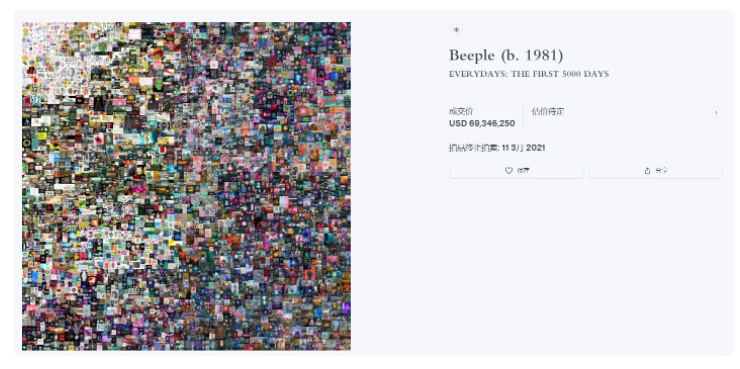
Figure 3-1 Beeple’s auction artwork, source: Christie’s Auction
In the same month, Sandbox launched its Beta NFT marketplace, advancing toward building the metaverse. Users earned $SAND by selling assets through the gaming platform.
In April 2021, Christie’s auctioned nine CryptoPunks NFTs, fetching a total of $16,962,500.
In June 2021, a parcel of digital land in Decentraland sold for $913,000 to virtual real estate developer Republic Realm. Representing 259 plots of digital land, the deal settled in 1.295 million MANA (Decentraland’s native token).
In July 2021, OpenSea raised $100 million in a Series B round led by a16z. According to Dune Analytics, OpenSea achieved a record-breaking $149 million in trading volume and 210,000 transactions in June alone. Additionally, OpenSea surpassed 140,000 total users, marking a 19% month-on-month increase.
In August 2021, renowned NBA star Stephen Curry spent $180,000 purchasing a BAYC NFT avatar. A string of celebrity endorsements fueled intense speculation, making the NFT sector red-hot.
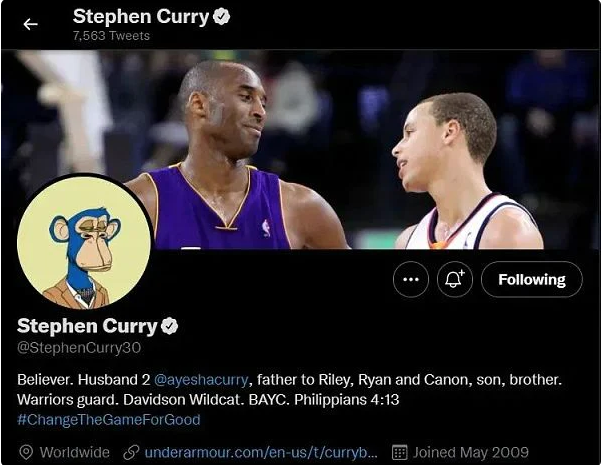
Figure 3-2 NBA Star Stephen Curry’s Twitter
In September 2021, DC Comics partnered with Palm NFT Studio to release its first official NFT series.
Figure 3-3 Example from Palm NFT Studio
In November 2021, another astronomical NFT sale occurred—Beeple’s new work sold for $25 million. On November 10, artist Beeple sold a piece at Christie’s for 6,103 ETH (approximately $28.985 million), ranking as the second-most expensive NFT artwork in history according to CryptoArt.Ai.
2.2 Summary of Milestone Projects
2.2.1 CryptoPunks – CryptoPunks
CryptoPunks is one of the earliest JPEG-style NFT projects built on Ethereum. These pixelated avatars with strong “punk aesthetics” were algorithmically generated in 2017 by U.S.-based mobile game company Larva Labs using computer code. No two images are identical. Thus, only 10,000 irregular 24×24, 8-bit pixel NFT avatars were ever minted, with no possibility of creating new ones. Each NFT vividly captures the distinctive “punk style” once popular around the world through simplified pixel blocks.
In the early days, users with Ethereum wallets could claim a CryptoPunk for free. Today, they can only be purchased on secondary NFT marketplaces like Larva Labs and OpenSea. On August 19, 2017, Larva Labs announced that CryptoPunks had fully migrated onto the Ethereum blockchain, allowing users to freely check attributes (hairstyle, glasses, beard, hat, etc.) on Etherscan and trade on NFT platforms.

Figure 3-4 CryptoPunks Price Ranking, source: Larva Labs Official Website
In July 2021, an anonymous collector bought 102 CryptoPunks consecutively within one hour, spending a staggering 2,650 ETH (about $6.57 million). When this whale made moves, other players followed suit. In August, “CryptoPunk 3100” was listed for 4,200 ETH (around $7.58 million), becoming the most expensive single NFT in the world at the time. Through continuous marketing and hype, CryptoPunks quickly gained fame, shattering perceptions with its mosaic-like retro aesthetic and sky-high transaction prices. Users gradually embraced NFTs as a trending sector and enthusiastically joined in, becoming part of the “crazy” NFT collectors.
2.2.2 CryptoKitties – CryptoKitties / Cryptokitties
Recognizing the vast potential of the NFT market and inspired by predecessors like CryptoPunks, the Dapper Labs team quickly launched a game called CryptoKitties. Developer Dieter used NFT images to represent each cat’s unique patterns, genes, generations, and other traits.
Launched on November 28, 2017, CryptoKitties is a smart contract-based game on the Ethereum blockchain, developed by Venture Studio under Vancouver’s Axiom Zen. It resembles a collectible card game where each kitten is unique. Players can buy, sell, and breed offspring. Once a player purchases a kitten, it belongs entirely to them. Its popularity once caused the entire Ethereum network to slow down and successfully ignited a global craze for digital cat collecting, bringing NFTs into public view with adorable, quirky designs.

Figure 3-5 Examples of CryptoKitties, source: CryptoKitties Official Website
At the time, the most popular token standard on Ethereum was ERC-20. Particularly during summer 2017, ERC-20 tokens were booming. Many users asked how CryptoKitties interacted with ERC-20 (which represents fungible tokens, or FTs). In response, Dieter introduced NFTs—non-fungible tokens. Fungible tokens are interchangeable and divisible—each unit is identical and can be split or combined. For example, BTC and ETH are fungible; every Bitcoin is essentially the same and interchangeable. Dieter innovatively introduced scarcity into cryptocurrency concepts. The defining features of NFTs are uniqueness and indivisibility—each token is distinct, standalone, and irreplaceable.
Both CryptoPunks and CryptoKitties formally introduced the NFT concept to the masses and brought it into the market. Their hyped-up prices revealed the limitless potential of such NFTs. Moreover, CryptoPunks pioneered the cultural significance of profile-picture NFTs, establishing a consensus around using NFTs as symbols of identity and social status.
3. Breakout NFT Project Review
This section analyzes 15 currently popular NFT profile picture collectible projects and provides background research and热度 ratings (maximum ★★★★★) for six of them.
Note: This review reflects our team’s objective analysis only and does not constitute investment advice!
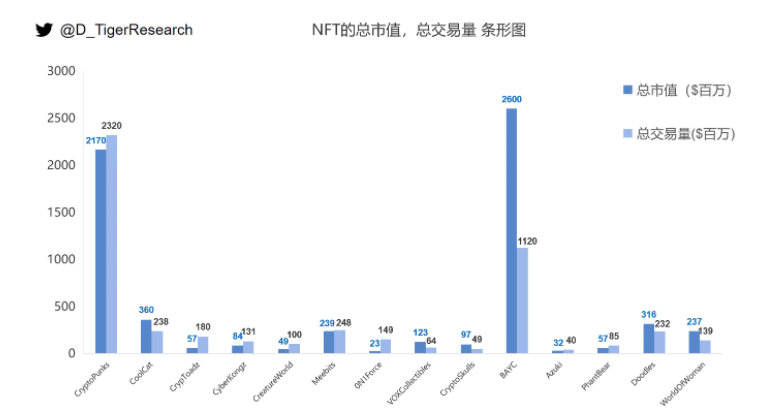
Figure 4-1 Bar Chart Showing Total Market Cap and Trading Volume of 15 NFTs, as of 2022-01-19
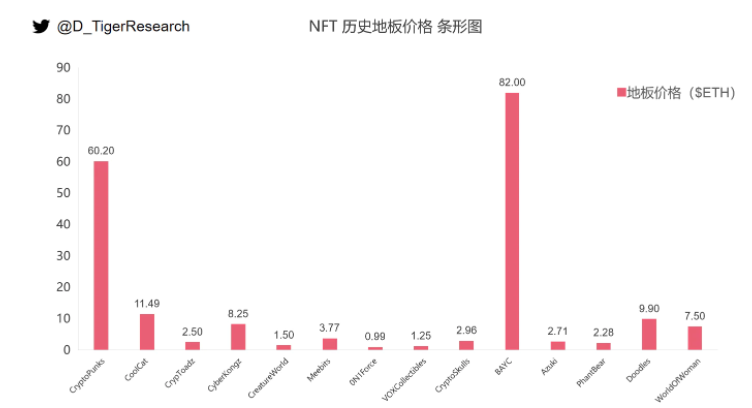
Figure 4-2 Bar Chart Showing Historical Lowest Prices ($ETH) of 15 NFTs, as of 2022-01-19
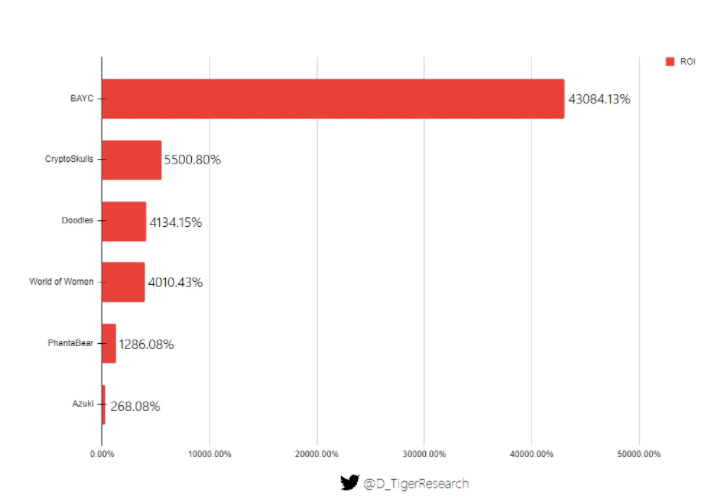
Figure 4-3 Price Growth Multiplier Statistics for 6 Projects, as of 2022-01-20
3.1 CryptoSkulls – ★★★☆☆

Figure 4-4 CryptoSkulls Basic Information, as of 2022-01-19
CryptoSkulls consists of 10,000 collectible ERC-721 tokens stored on the blockchain. Each CryptoSkull character is a unique piece of pixel art. An OG NFT project since 2019, each CryptoSkull has a unique index attribute expressed through distinctive pixel artwork.
The cheapest CryptoSkulls initially cost just 0.05 ETH, but now the floor price stands at 2.75 ETH. Trading volume surged dramatically, even surpassing Bored Ape Yacht Club to become a top-tier NFT. Both trading volume and appreciation rate are astonishing, making it a hot topic in the NFT community recently.
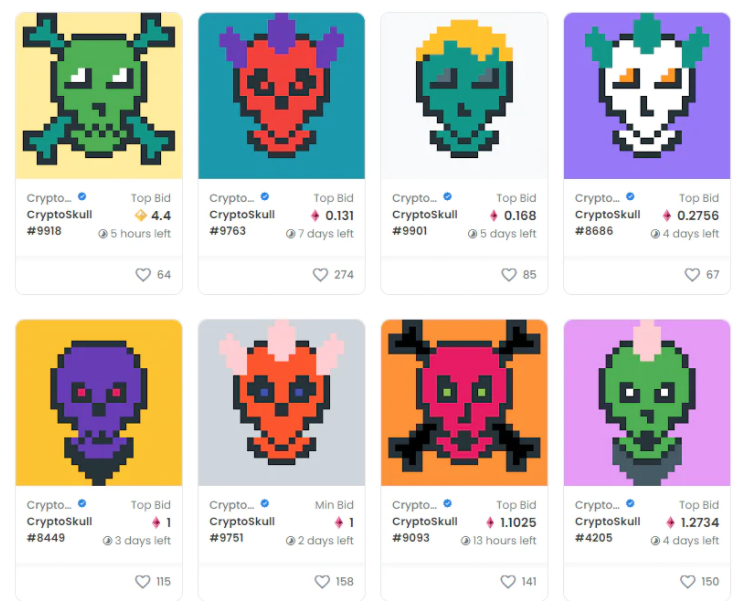
Figure 4-5 Sample Transaction Interface of CryptoSkulls NFTs
CryptoSkulls shares similarities with successful projects like CryptoPunks and Bored Ape in terms of large communities and celebrity investors. The project also grants full commercial rights to holders—a common trait among successful NFT projects. Today, some NFT traders are selling their CryptoPunks to acquire CryptoSkulls.
Many predict the NFT space will become a daily consumer destination, with concert tickets, digital goods, and collectibles sold as NFTs, adopting instant authentication and consumer rewards as primary incentives for mass adoption.
3.2 Bored Ape Yacht Club – ★★★★★

Figure 4-6 BAYC Basic Information, as of 2022-01-19
Bored Ape Yacht Club, humorously known as “Bored Apes,” is a club collecting 10,000 unique Bored Ape NFTs. Not only are these unique digital collectibles built on the Ethereum blockchain, but BAYC has also become the second most popular project after CryptoPunks.
Launched on April 29, 2021, by U.S.-based Web3 company Yuga Labs, BAYC used algorithms to mix and match ape characteristics, generating 10,000 distinct ape images. These algorithmically generated apes appear against colorful backgrounds, wear quirky outfits, or sport cute accessories. Their bold colors, unique design sense, and high prices have driven many NFT users wild.

Figure 4-7 Sample Transaction Interface of BAYC Images
Celebrity endorsement has always been integral to NFT sales, and BAYC exemplifies this perfectly. After prominent NFT collector Pranksy acquired several, the “Bored Ape” trend intensified. Loved by celebrities, rappers, athletes, hosts, and more, news of sales poured in continuously. Waves of NFT users flocked in, proud to own a “Bored Ape” profile picture. When demand far exceeds supply, BAYC prices soared—from an initial mint price of 0.08 ETH to a current OpenSea floor price of 82 ETH (tens of thousands of dollars)—evolving into a trendy IP brand.
The evolution of BAYC is truly astonishing:
1) Initially, the founders aimed to foster a positive open community.
2) The Bored Ape NFT serves as a membership pass to the club, granting access to exclusive benefits, unlocking future areas, and privileges.
3) Celebrity influence turned it into a scarce, high-priced VIP symbol—a status display.
4) Now criticized as a “hollow” fashion brand without practical utility.
Despite criticism, during subsequent drops, massive numbers of users still scramble fiercely for them. Conversely, as a successful product in the NFT space, BAYC’s explosive power within just nine months forces acknowledgment of its immense influence. In the NFT space, projects like CryptoPunks and BAYC consistently challenge user perceptions and showcase the potential of NFTs.
3.3 PhantaBear – ★★★☆☆

Figure 4-8 PhantaBear Basic Information, as of 2022-01-19
The PhantaBear project was jointly initiated by Jay Chou’s PHANTACi and Ezek. PhantaBear is a collection of 10,000 algorithmically generated digital collectibles, doubling as membership cards for the Ezek club. It launched on January 1, 2022, at 11:00 AM on the Ezek platform. The presale price was 0.26 ETH. Each PhantaBear has unique traits and unlocks different access levels and privileges for its owner.
As an NFT indirectly endorsed by Jay Chou, PhantaBear naturally attracted fan attention from the start.
However, its journey wasn’t smooth. High launch prices initially deterred buyers. Later, when Jay Chou’s management publicly clarified he did not participate in NFT creation or sales, prices plummeted and sales stalled.
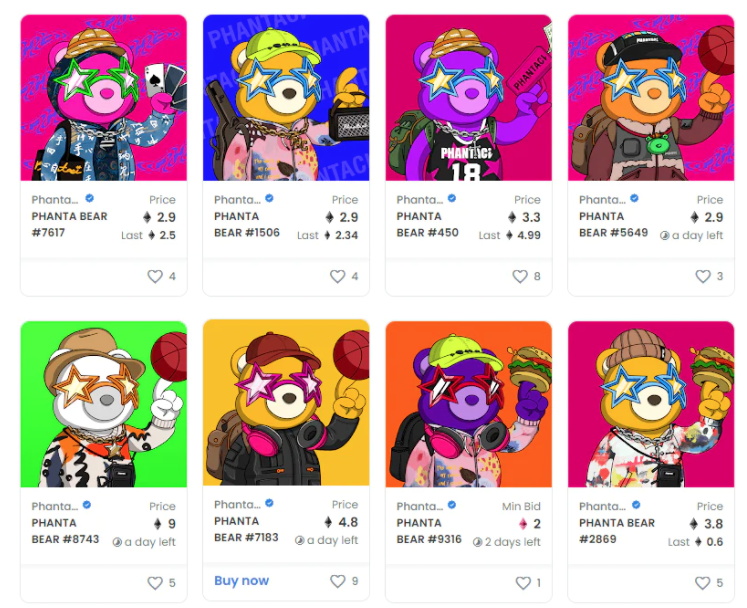
Figure 4-9 Sample Transaction Interface of PhantaBear Images
Its turning point came when Jay Chou continued supporting Liu Genghong—the founder of Ezek and PhantaBear’s issuing platform—by adopting the NFT as his profile picture and launching extensive overseas social media promotion.
Other celebrities like林俊杰 (JJ Lin) and Edison Chen also showcased their PhantaBears, igniting domestic player enthusiasm. Despite Chinese users’ disadvantaged position in the NFT space, PhantaBear prices skyrocketed, reaching a situation where “one bear is hard to get.” This showcases the power of fan economies and celebrity influence.
Fan traffic and celebrity effects are crucial in the NFT space. No project can thrive without accumulating popularity, and stars fulfill this condition exceptionally well.
But over time, short-lived celebrity effects fade, especially since there’s no technological advancement involved—proving this isn't sustainable. As of January 21, 2022, amid rising competition from other hot NFT projects, PhantaBear’s热度 and trading volume continue declining. Its floor price dropped from a peak of 10 ETH back down to [2–3 ETH]. Recently, however, the team announced a series of airdrops for PhantaBear holders, indicating ongoing consensus. Future developments remain to be observed patiently.
3.4 Azuki – ★★★★☆
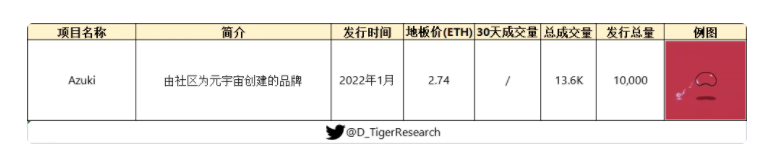
Figure 4-10 Azuki Basic Information, as of 2022-01-19
Azuki is a metaverse brand built by the community—a very new NFT project. Azuki offers 10,000 character avatars. Beyond NFT sales, it plans to expand into offline streetwear stores, host meetups, music festivals, and live events.
Behind Azuki is a doxxed team whose social accounts are disclosed on the official website. Members come from major tech companies including Facebook, Google, YC, and Blizzard. Future plans include launching a $BEANS token and experimenting with DAO governance to build an enduring brand.
Azuki revealed its specific avatar designs at 4:00 AM Beijing Time on January 21, 2022—featuring anime-inspired Japanese-style character portraits.
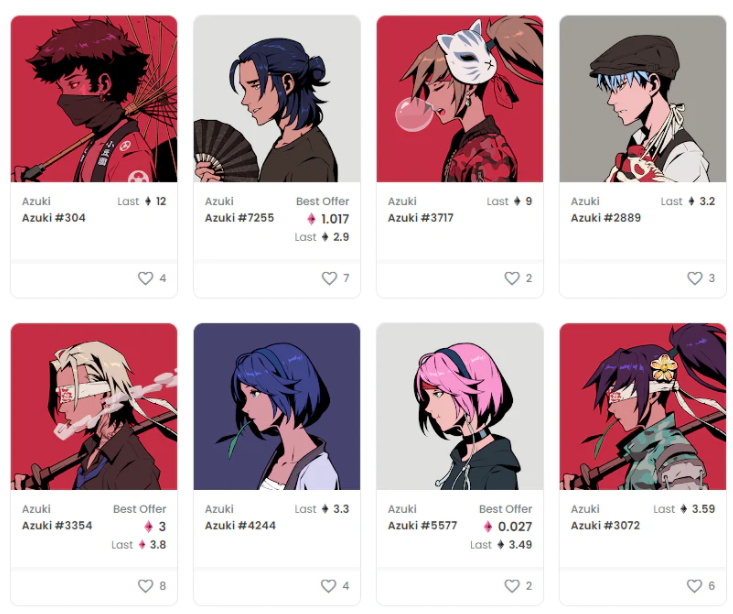
Figure 4-11 Sample Transaction Interface of Azuki Images
According to PANews, Azuki’s popularity stems from three innovative NFT “mechanics.”
1) New NFT Minting Standard. Azuki uses batch minting, allowing users to mint multiple NFTs with a single gas fee, reducing minting costs.
2) New Whitelist Selection Mechanism. Abandoning random whitelist draws common in the market, Azuki combines social media engagement and internal criteria to select whitelisted users, rewarding genuine long-term community builders instead of opportunistic “snipers.”
3) New NFT Sales Model. Azuki rolled out sales in three phases: Dutch auction, whitelist mint, and public sale—ensuring fair acquisition costs for authentic community members.
Compared to current NFT projects, Azuki introduced novel standards in minting, whitelist filtering, and sales models, offering greater benefits to those committed to long-term community building. Post-launch market data shows Azuki’s热度 is rising. However, the current NFT sector is highly speculative with evident bubbles, and many of Azuki’s disclosed plans haven’t yet materialized—requiring cautious observation.
3.5 Doodles – ★★★★★

Figure 4-12 Doodles Basic Information, as of 2022-01-19
Launched in January 2021, Doodles NFT features artwork designed by Canadian illustrator Burnt Toast (Scott Martin). Combining vibrant colors with playful character designs, the artist’s chubby, lovable style stands out visually. Even amidst the fiercely competitive NFT landscape of 2021, it remains a truly unique series.
Doodles NFT had an initial sale price of 0.123 ETH, rose to 1.5 ETH during public sale, and now commands a floor price of around 10.5 ETH. During public sale, Ethereum gas fees briefly spiked to 7,000 gwei—an intense peak reflecting its explosive energy, prompting users to exclaim it was “a breath of fresh air in today’s NFT space.”
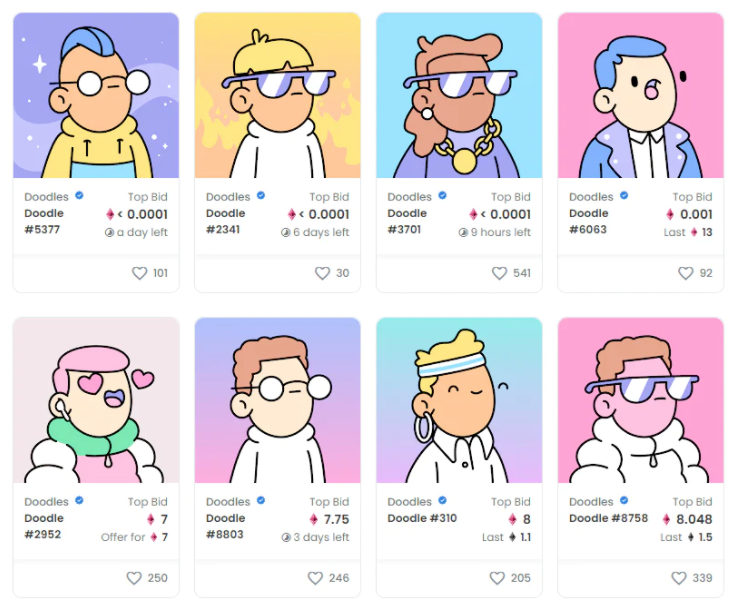
Figure 4-13 Sample Transaction Interface of Doodles Images
Why did Doodles make users feel so exhilarated despite rampant NFT speculation?
Due to the illustrator’s design, professional-grade marketing, and support from collectors and fans. The Doodles team is dedicated to building a decentralized, open community.
Unlike other NFT communities that exploit fan loyalty (pushing supporters to pay higher prices), Doodles early on launched whitelist applications, inviting contributors to join the Discord community—greatly enhancing participant identity and filtering out bulk-buying speculators, thus preserving NFT value.
Evan Keast and Poopie from the Doodles team previously worked on the early NFT game CryptoKitties. Now handling marketing and development for Doodles, their deep understanding of NFTs and market sentiment attracted considerable user participation.
Doodles demonstrates how vital a skilled, professional team is to an NFT project—where aesthetics, marketing strategy, and community are all indispensable. Today, the success of an NFT collection depends not on a single factor but on leveraging team and community strengths to drive collective growth.
3.6 Worlds of Women – ★★★★☆

Figure 4-14 Worlds of Women Basic Information, as of 2022-01-19
Technology-driven markets are typically male-dominated, and the NFT space is no exception. Shen Yu, co-founder of F2Pool, shared his NFT investment logic: “Buy male, not female; buy white, not black; buy weird, not human.” Many insiders believe such NFTs are not only more valuable but easier to resell.
According to research firm Art Tactic, over the past 21 months, at least 77% of funds from NFT art sales went to male artists, while only 5% reached female artists. This highlights the male-dominated nature of the current NFT market. Worlds of Women (WOW) challenges this norm, signaling a quiet rise of the female NFT market.

Figure 4-15 Sample Transaction Interface of Worlds of Women Images
Worlds of Women (hereafter WOW) launched in July 2021. Featuring exclusively female portraits, it was among the first NFT art projects genuinely targeting women. With a total supply of 10,000, it launched at 0.07 ETH, created by female artist Yam Karkai. The project aims to empower women through art and promote diversity.
WOW sold out within 10 hours of its release on July 27, 2021. It subsequently received coverage from prominent media outlets including CoinDesk, Le Monde, and Yahoo Finance. Yam was interviewed by Randy Zuckerberg and METACITZN, a decentralized media outlet. Notable buyers include internet entrepreneur Gary Vaynerchuk, actress Reese Witherspoon, renowned NFT collector Pranksy, and YouTuber Logan Paul.
According to official transaction data, two collectors dominate holdings: Jaft ranks first with 474 WOWs. Besides WOW, Jaft owns numerous Bored Apes and Doodles, totaling over 900 collectibles. The second-largest holder owns 200 WOWs.
Currently, the highest-selling WOW NFT is #6025 (shown below), purchased by The Sandbox for 200 ETH.
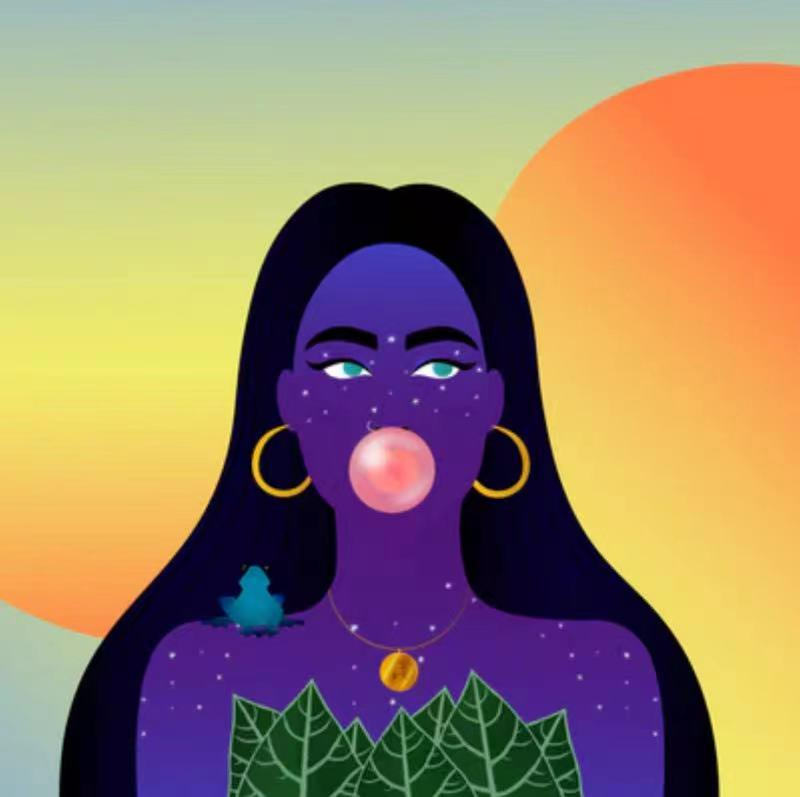
Figure 4-16 Worlds of Women #6025 Display
Why did WOW stand out among countless NFTs?
First, its focus on women attracted many buyers from the outset. Yam emphasized inclusivity in her designs, treating women equally regardless of race or skin tone. She also considered religious sensitivities and regional differences, removing potentially controversial elements like African braids and Muslim veils.
The WOW team also excelled in marketing: offering giveaways of well-known or highly hyped NFTs as promotional tools boosted social media visibility. To date, their social platforms remain highly active, with 90,000 Twitter followers and engaged community members.
Since launch, WOW has taken concrete actions to convey its brand values and mission. Judging from its trajectory and roadmap, its ambitions extend far beyond NFTs—not merely empowering women, but aiming to expand the brand globally. Other similar female-targeted NFT projects include Boss Beauties, Sad Girls Bar, Fatales, ENCRYPTAS, and Women and Weapons.
The rise of WOW and similar female-market NFTs breaks the stereotype of male dominance in NFTs. WOW is not just another female-focused NFT—it has established foundations, charity initiatives, and various women-centered activities, revealing values beyond digital assets. It holds profound significance for gender equality, global inclusivity, and female empowerment.
3.7 Other Popular Projects

Figure 4-17 Basic Info of Selected Popular NFT Projects, as of 2022-01-19
4. Value Proposition of NFTs
4.1 Characteristics of NFT Value
Unlike traditional industries in the physical world, blockchain technology based on the internet has clearly and efficiently transformed information transmission and dissemination methods. As both a major development area within blockchain and a category of non-essential goods in economics, NFTs derive their value from the perceived attributes assigned by the public.
For non-essentials, total value can be enhanced either by expanding the user base (increasing demand) or by intensifying scarcity (reducing supply) and adding value—thereby reinforcing identity and authority recognition. NFTs inherently possess these characteristics:
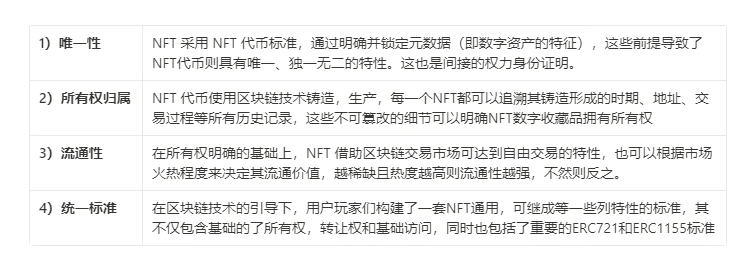
Beyond core NFT features, additional dimensions often empower certain NFT collections uniquely:
1) Intrinsic Value
NFT collectibles carry inherent collectible and aesthetic value, offering psychological satisfaction and external vanity fulfillment. A team’s unique vision and carefully crafted NFT series form the foundation of its success. However, for utility-oriented NFTs—such as access passes or property certificates—artistic appeal becomes less relevant.
2) Utility Value
Some NFT collectibles go beyond mere collecting. To ensure sustainability, project teams continuously add utility, giving NFTs special functions in specific contexts. Fundamentally, teams aim to build IP brands with radiating influence from center to periphery.
1) Game Participation. Card-based or metaverse asset NFTs may act as “tickets” to play games. Others offer complex functionalities, enhancing gameplay experience and interactivity—e.g., land in SANDBOX can host official or private events.
2) Membership Privileges. For example, in the CryptoPunks project, enthusiasts naturally form a community. Anyone can join, but NFT holders receive periodic benefits (raffles, airdrops, etc.).
3) Digital Identity Symbolism. With the growth of digital society and increased online interaction, symbolic identities and personas have found broader applications, becoming real and expanding needs. This is best embodied in PFP NFTs. Today, owning a CryptoPunk signifies status and identity—like a “ticket” to elite circles, granting access to interactions with fellow owners.
5) Derivative Activities. The Bored Ape Yacht Club community has spawned animated productions, games, and more. Although unanticipated initially, organic community-led development has expanded into new directions, simultaneously promoting a range of branded products and events.
3) Historical Value
The historical context behind an NFT’s creation reflects its era and embedded historical meaning. Development usually progresses from community formation to cognitive accumulation, culminating in consensus—becoming part of the NFT’s reflected historical value.
4.2 Challenges to NFT Value
Since NFTs began exploding in 2021, the overall market cap reached $12.7 billion in the first half of the year—nearly 310 times higher than in 2018. At the same time, major NFT platforms like OpenSea, SuperRare, Bitski, and Rarible completed Series A funding rounds exceeding tens of millions of dollars. Leveraging NFT-based economic systems, large internet firms globally began positioning themselves in the NFT space. For example, Tencent and Alibaba developed AntChain and Tencent Zhixin Chain, seeking relevance and functionality within regulatory frameworks. While the global NFT market appears thriving on the surface, latent crises persist beneath.
1) The current NFT space suffers from rampant speculation—excessive hype, blind追捧, and frenzied creation of short-term trends—resulting in massive market bubbles. When the market cools, most NFTs reveal near-zero liquidity.
The buyer of the record-setting NFT auction Everydays: The First 5000 Days was not a traditional art collector but Metakovan, a seasoned crypto investor and founder of NFT fund Metapurse. Under the slogan “democratizing art collecting,” he issued 10 million tokens. These tokens surged from $0.36 to $28. In this auction, he gained publicity and substantial profit after deducting fees.
Given the current speculative climate and FOMO mentality, most NFTs rely on “hype-driven pricing,” celebrity endorsements, self-dealing trades (“wash trading”), or inflated valuations far exceeding intrinsic worth. Once the bubble bursts, NFT asset values could collapse dramatically, rendering over 90% of collectibles illiquid and worthless.
2) To date, no global regulations govern NFTs, making them breeding grounds for legal violations.
Globally, the tangible nature of NFTs remains ambiguous. The classification of NFTs serving as economic backbones in the metaverse is equally unclear. There is still no consensus on what property rights apply to NFTs and other digital assets. Due to the lack of official guidance, Ponzi schemes and fraud inevitably flourish. Some influencers fail to responsibly guide the public, instead exaggerating value and misleading audiences by packaging valueless NFTs as “art investments” or “crowdfunded collectibles,” exploiting blockchain technology to perpetrate scams.
3) NFT Security. As digital products, NFTs are pieces of standardized software code executed on blockchains, heavily dependent on the underlying blockchain protocol.
NFT minting relies on the Ethereum network, which currently faces scalability issues—inevitably affecting derivative NFT development. Furthermore, the NFT creation process is not seamless. While blockchain technology is rapidly evolving, security and privacy protections remain inadequate, leaving no absolute guarantee. This increases the risk of NFT assets being attacked or stolen by hackers and malicious actors.
Beyond external threats, do NFT marketplaces meet adequate security standards? For example, OpenSea’s recent direct freezing of stolen NFT assets sparked community backlash. Does the trading process achieve sufficient decentralization, traceability, and integrity? Though no large-scale breaches have occurred yet, we must remain vigilant about hidden vulnerabilities.
5. Summary and Warnings for the NFT Space
At the micro level, studies of individual NFT sales reveal striking similarities between the crypto art market and the traditional art market, despite fundamental differences (e.g., transaction transparency, absence of intermediaries).
A recent study by Canadian conceptual artist Kimberly Parker analyzed OpenSea and other market data, finding that nearly 80% of NFTs sell for under $500, and only 1.8% of primary sales (first-time sales) exceed 0.5 ETH (approximately $894 at the time). Top-tier scarce assets never lack demand, but the vast long-tail inventory remains unsold. This mirrors the notorious “top-heavy,” “winner-takes-all” structure of the traditional art market. Decentralization does not imply equal opportunity.
Macroscopically, the rise of the entire NFT sector is undeniable.
Yet, their long-term value remains uncertain. Ultimately, the value assigned to these NFTs hinges on their connection to the physical world. That link might simply be a community supporting creation and interaction. If that community lacks engagement, much of the associated value dissipates. Thus, NFTs may evolve into stores of value, but first, we’ll pass through a phase where real-world social relationships and community values transfer or reflect onto the blockchain.
We are currently in the infancy of NFT development—we cannot yet predict how NFTs will transform economic behaviors and models on the blockchain.
By enabling verifiable ownership of digital assets and offering easy storage and protection, NFTs have changed how many artists and creators earn a living, bringing wealth and opportunity. Yet, along the path of NFT development, greater uncertainty and risk loom compared to other crypto assets. Most NFT projects have extremely short lifespans. After the hype fades, liquidity deteriorates, and they risk becoming mere JPGs sitting idle in wallets.
Today’s NFT market harbors significant security risks, requiring vigilance against Ponzi schemes and behind-the-scenes manipulation. We must recognize: while NFTs may bring immense wealth, the risks stemming from uncertainties cannot be ignored!
NFT Sector FAQ
Q1: How to Determine the Scarcity and Value of an NFT?
An NFT’s value depends on what it represents. For digital art, valuation resembles traditional art—consider the creator, artistic merit, and collector demand. If an NFT is limited-edition or part of a series, specific-numbered editions generally hold higher collectible value.
Q2: Where Can I Acquire NFTs?
Common ways to obtain NFTs include marketplace purchases, project giveaways, and self-minting. NFT marketplaces host tokens from both renowned artists and hobbyists. The largest platform is OpenSea, built on Ethereum. New platforms emerge constantly. When buying famous artists’ works, always verify marketplace authenticity.
Q3: How to Verify the Authenticity of an NFT?
Authenticity checks typically require a blockchain explorer. Key details include mint date and the wallet address that minted the NFT. You can also cross-check transaction history IDs to confirm alignment. This method is more reliable than merely reviewing photos or documents related to the collectible. When dealing with assets, never trust blindly—always verify personally.
Join TechFlow official community to stay tuned
Telegram:https://t.me/TechFlowDaily
X (Twitter):https://x.com/TechFlowPost
X (Twitter) EN:https://x.com/BlockFlow_News






