








Footprint Analytics: Looking Back at the Rise of NFTs in 2021
TechFlow Selected TechFlow Selected
Footprint Analytics: Looking Back at the Rise of NFTs in 2021
2021 was the year people became deeply fascinated and obsessed with NFTs. Now, 2022 has quietly arrived—how will the NFT market evolve?
 Navigating Web3 tides with focused insights
Written by: lynn, Footprint Analytics Analyst
Data Source: Footprint Analytics - 2021 NFT Annual Report Dashboard
This article is part of our annual review series.
Introduction: If DeFi brought capital into the crypto space, then NFTs brought people into it.
2021 was dubbed the "Year One" of NFTs. From industry giants to individuals—artists and celebrities across various fields—all began entering the NFT space. Although the concept of NFTs had already been introduced as early as 2014, it wasn't until 2021, with record-breaking NFT prices continuously raising public awareness and interest, that NFTs truly went mainstream.
What is an NFT?
NFT stands for Non-Fungible Token—a unique, indivisible digital asset. At its core, an NFT is a token based on blockchain technology representing ownership, proving you are the sole holder of a one-of-a-kind digital item.
The innovation of NFTs lies in their use of decentralized methods to establish ownership of native digital assets. Their inherent anti-counterfeiting nature, combined with transparent transaction processes, has made them popular among diverse groups.
NFT Overview & Review: 2021 in Numbers
2021 was a year of celebration for NFTs, drawing massive investor attention. Which projects stood out the most? Let’s take a look at key NFT data from 2021.
According to data from Footprint Analytics, cumulative NFT trading volume reached $21.5 billion by the end of 2021—up from just $120 million prior to 2021, marking a 200-fold increase within a single year. The number of unique traders surged from under 1.3 million to 65.4 million, a 50-fold growth.
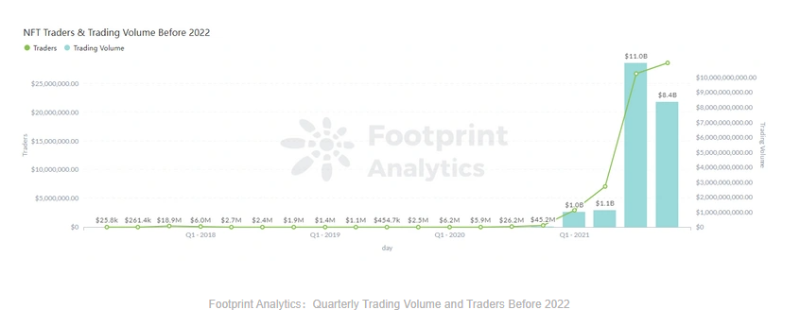
From relative obscurity to global fame, NFTs became a cultural phenomenon through a series of breakout events and transformations. Let's examine their development path using data.
Q1–Q2: NFTs Begin to Shine – Endorsements from Sports, Art, and Celebrities
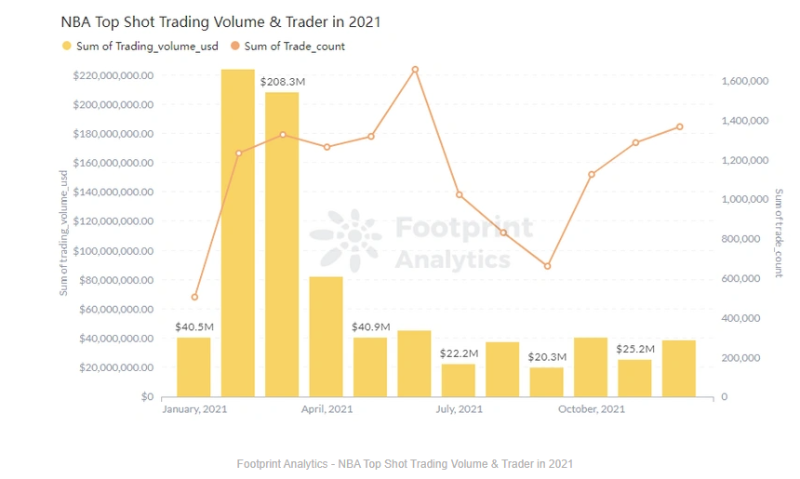
In February 2021, Dapper Labs' NBA Top Shot sold highlight clips of basketball stars as NFTs, turning them into digital collectibles. It generated $226 million in sales—surpassing the entire NFT market's transaction volume from the previous year—and quietly captured the attention of more crypto users.
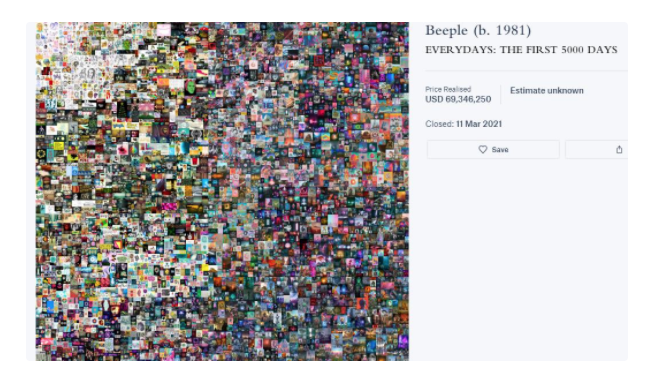
Artists and celebrities also stirred waves in the NFT space. Notably, on March 11, Christie's auctioned digital artwork *First 5000 Days* by crypto artist Beeple for $69 million—the third-highest auction price ever for a living artist—shaking the entire crypto world.
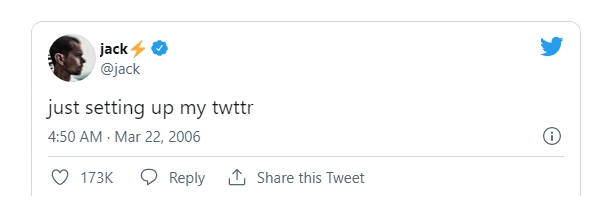
On March 23, Twitter CEO Jack Dorsey sold his first-ever tweet from 2006 as an NFT for over $2.9 million, further fueling the NFT craze.
Other profile picture (PFP) projects like Larva Labs’ 2D CryptoPunks and 3D Meebits also started gaining recognition and popularity.
Q3: NFT Momentum Builds – GameFi Emerges Strongly, More Celebrities Join In
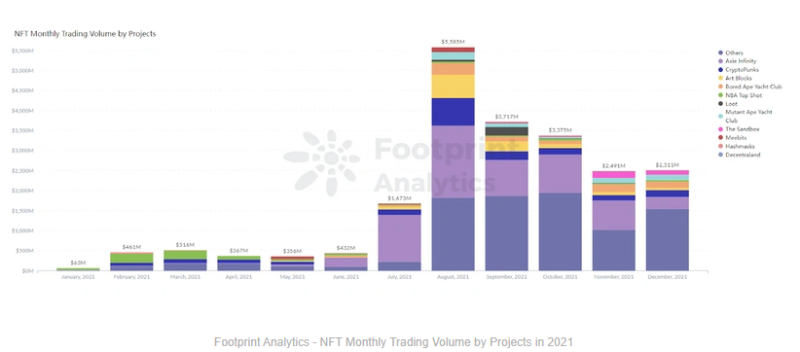
NFT trading volume in Q3 alone accounted for nearly half of the total 2021 volume, asserting its influence in the crypto world with $10 billion in transactions.
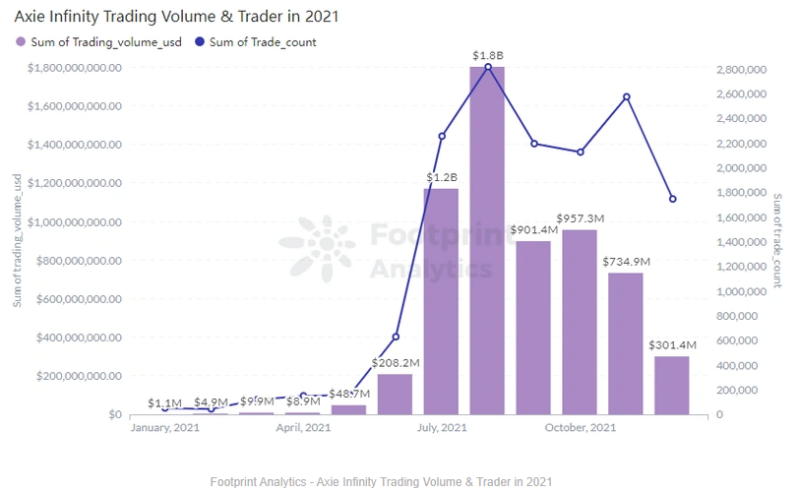
Axie Infinity, the pioneer of "Play-to-Earn" gaming in blockchain, ignited the NFT and GameFi boom, propelling blockchain games into a phase of frenzied growth. In August alone, it achieved $1.8 billion in trading volume—1,500% higher than January 2021—with 2.8 million active traders.
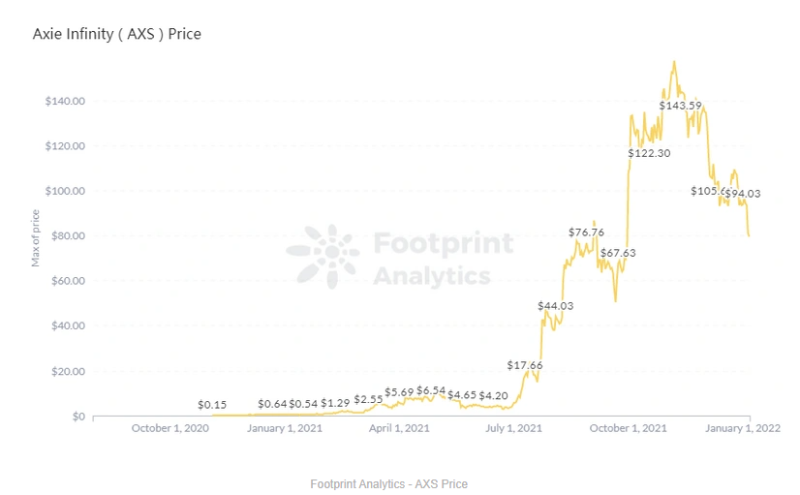
Rapid user growth drove up token prices. While the broader crypto market suffered during May–July, AXS rose against the trend, breaking the traditional pattern where altcoins followed BTC and ETH movements.
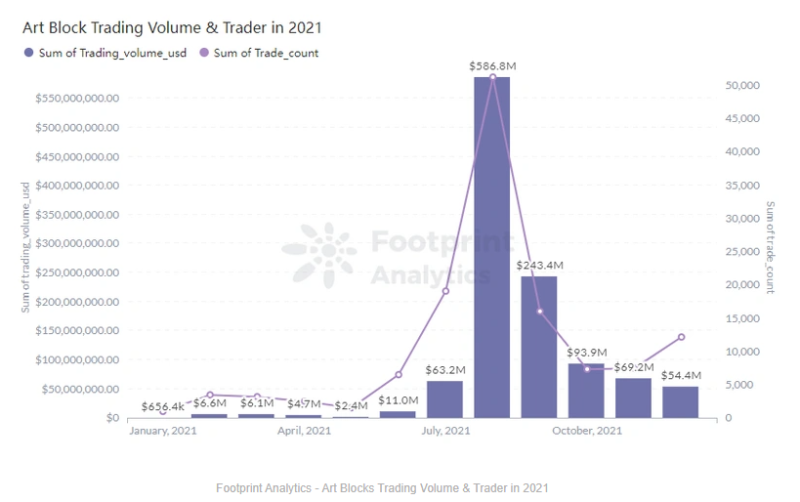
Generative art project Art Blocks hit a historic high of $587 million in trading volume in August, with over 20,000 unique buyers—solidifying its status as the leading NFT art project in both sales and popularity.
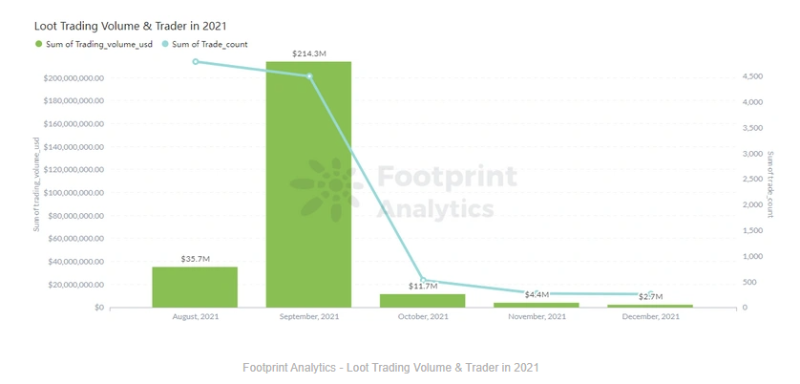
Another notable NFT project—Loot—was unlike typical JPEG or GIF formats. It consisted only of a TXT file containing eight randomly generated adventurer gear items. With collective imagination as its limit, Loot sparked a paradigm shift in NFT thinking and became a hot topic in September.
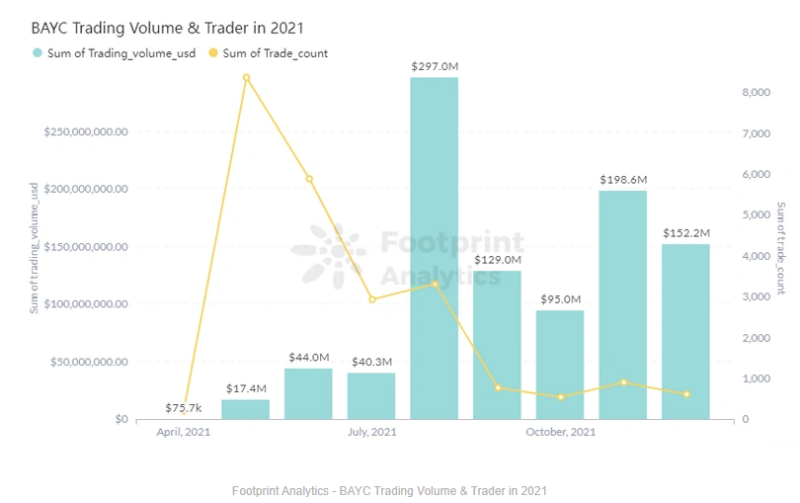
While ordinary people getting involved might be seen as speculation, celebrity adoption sent the strongest bullish signal. Profile picture NFTs such as Bored Ape Yacht Club (BAYC) gained immense popularity among celebrities. In August, NBA star Stephen Curry spent $180,000 on a Bored Ape NFT avatar. Other celebrities like Jimmy Fallon, Logan Paul, and Shaquille O'Neal also joined the BAYC community.
Q4: Real Estate Speculators Enter the Metaverse – Virtual Land Thrives
On October 28, Facebook—boasting over 3 billion monthly active users—officially rebranded to Meta and announced it would go “all in” on the metaverse, pushing the concept once again into the mainstream spotlight.
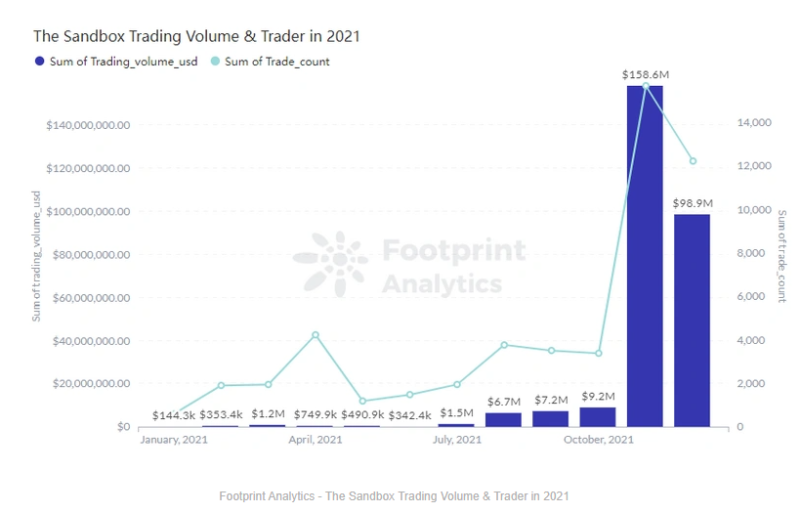
As attention grew, the metaverse continued to challenge people’s imaginations, eventually spreading into real estate. Over the past two months, increasing numbers of investment firms began snapping up land in virtual worlds like The Sandbox and Decentraland. On November 23 (Eastern Time Tuesday), a plot of digital land in Decentraland sold for $2.43 million (approximately RMB 15.52 million), reshaping perceptions of virtual assets.
Summary of 2021: All Glamour and Hype, But Weak Project Longevity
Looking back at 2021, NFTs experienced rapid growth and became a new frontier in the crypto world—even being named Collins Dictionary’s Word of the Year 2021. Starting strong in early 2021, they exploded in Q3 with GameFi momentum, followed by surging interest in virtual real estate. Each quarter brought fresh headlines, keeping NFTs in the public eye.
However, upon closer inspection of individual projects, many saw only short-lived popularity before being overtaken by newer trends. Post-hype drops in trading volume and user count became commonplace.
Outlook for 2022: Where Will NFTs Go?
2021 was the year people were captivated and swept up by NFTs. Now that 2022 has quietly arrived, how will the NFT market evolve?
1) More Industries and Brands Will Join
We observed that starting in the second half of 2021, many brands began engaging with NFTs. Companies like Nike, Adidas, Budweiser, and Disney launched their own NFT initiatives. More brands and enterprises are expected to follow, adopting NFTs as a new medium to drive business innovation.
2) NFT Ecosystem Matures to Solve Practical Problems
NFTs remain a relatively young sector within the crypto industry. Over time, trading volume, asset liquidity, and new user counts continue to grow rapidly. The ecosystem will mature, developing infrastructure to address real-world challenges such as copyright protection and digital asset ownership verification.
3) More Traditional Non-Fungible Assets Move On-Chain
In daily life, game accounts, original music, videos, figurines, and even physical real estate can all be classified as non-fungible assets. Many innovative companies and creative individuals are already leveraging blockchain technology to tokenize these tangible assets, enabling easier transfer and circulation.
If NFTs are indeed the cornerstone of the next-generation internet, they may eventually become mundane—so seamlessly integrated into our digital lives that representing ownership feels entirely natural.
Join TechFlow official community to stay tuned
Telegram:https://t.me/TechFlowDaily
X (Twitter):https://x.com/TechFlowPost
X (Twitter) EN:https://x.com/BlockFlow_News






