HTX DAO Ambassador Molly: How Mature Investors Are Made
Author: HTX DAO
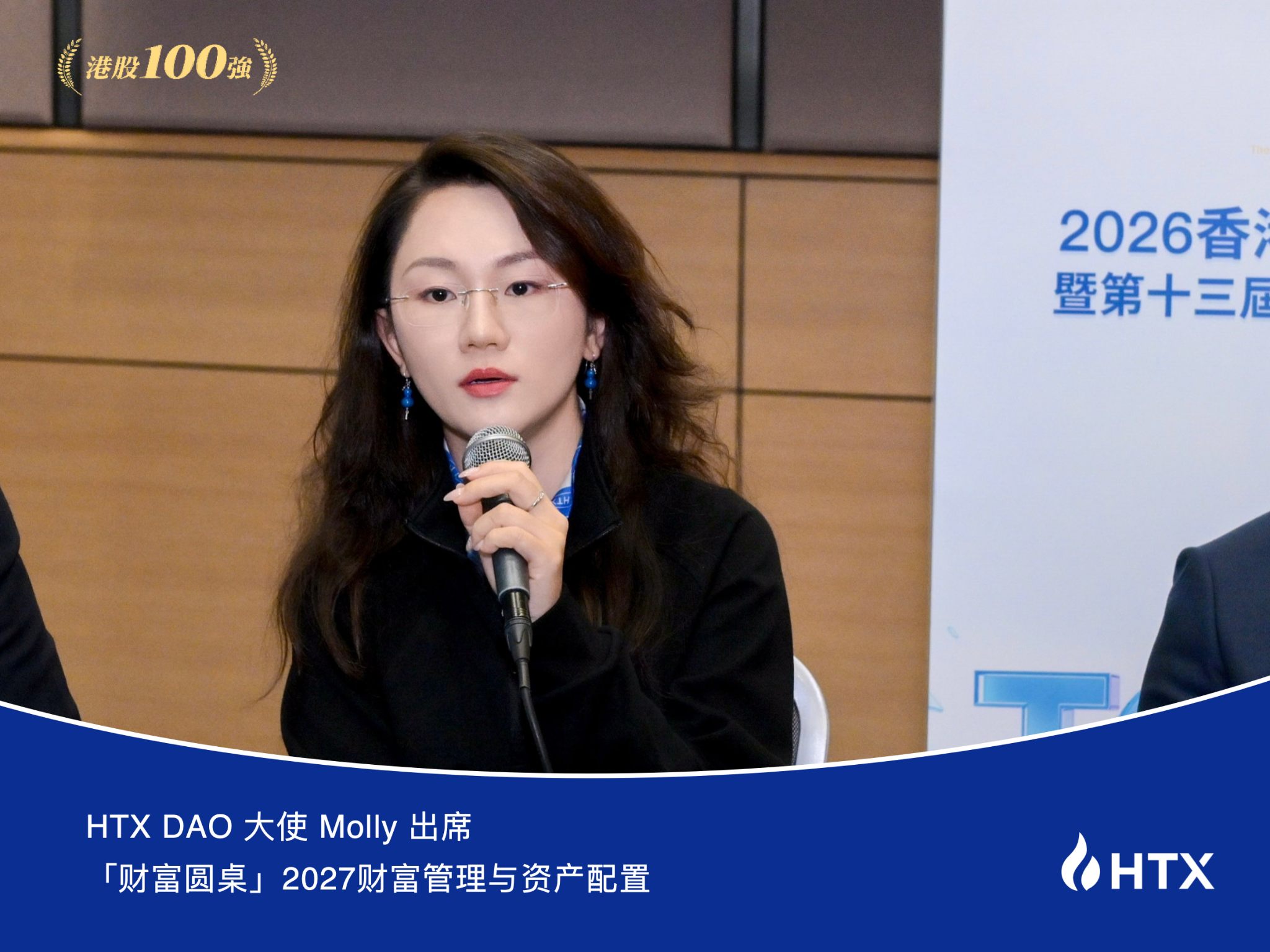
On November 26, the 2026 Hong Kong Wealth Management Summit and the 13th "Top 100 Hong Kong Stocks" Awards Ceremony were held at the Hong Kong Convention and Exhibition Center. Molly, an HTX DAO Ambassador, was invited to attend and participated in the roundtable discussion on the theme of "2027 Wealth Management and Asset Allocation." As a seasoned Web3 practitioner, Molly shared her insights on investing based on her long-term firsthand experience and observations of the industry.
With continuous technological advancements, traditional finance and Web3 are accelerating their integration, giving rise to increasingly diverse investment options. Molly pointed out that for investors, regardless of which market they enter, building a mature investment mindset is a mandatory course. She bluntly stated, "Without a mature and systematic investment strategy and mindset, whether you choose the A-share market, gold, US stocks, or blockchain, you are simply adding another channel for losing money."
After Experiencing Market Cycles, Rethinking the Fear of Missing Out
Molly began by examining Bitcoin's performance over the past few years. During Bitcoin's surge from $20,000 to $120,000, there were multiple significant pullbacks. Some investors who once regretted missing out on the rally later discovered that the market gave them another opportunity to reassess.
She noted that after experiencing several waves of volatility, one's perception of missing out also changes. If an investor believes this current rally is the last chance, they are likely to risk too much capital all at once out of fear of missing out. When market conditions shift and more familiar, confident opportunities arise, they may find themselves without enough room to act. Molly said, "What cycles teach us is not just risk management, but also the belief that the market always offers opportunities. By always keeping some chips on the table, we remain capable of participating when the next opportunity arrives."
Knowing "Buy Low, Sell High," Why Do We Still Chase Gains and Panic Sell?
The fluctuations in Bitcoin have also shown Molly that the hardest thing to change in trading is often investors' behavioral inertia. Originally intending to observe for a while, seeing prices continuously rise makes investors worry that waiting any longer will mean missing out. When the trend suddenly reverses sharply, even if the original reasons for buying still hold true, panic may lead to hasty selling. "Buy low, sell high" is a principle almost everyone understands, but the real challenge is maintaining discipline and executing according to one's strategy during periods of extreme price volatility and amplified emotions. As Molly puts it, "Emotional control is itself part of investment competence."
How does one develop this ability? Molly draws an analogy to academic pursuits. To gain admission to an ideal university, people are willing to spend over a decade studying systematically, fully aware that hard work does not guarantee success. Yet in financial markets, people easily fall into the trap of believing that with just a few news updates, some experience, and intuition, they can generate consistent profits.
Molly believes that investing is likewise a professional skill requiring long-term training. Analyzing assets and assessing value can be gradually improved through learning and practice, while patience and execution must be honed through repeated transactions. Furthermore, one must continuously review and adjust past investment strategies.
"Rather than searching for the next profitable market, we should focus on how to become mature investors ourselves," Molly remarked.
Note: The content of this article does not constitute investment advice, nor does it offer, solicit, or recommend any investment products.
Join TechFlow official community to stay tuned
Telegram:https://t.me/TechFlowDaily
X (Twitter):https://x.com/TechFlowPost
X (Twitter) EN:https://x.com/BlockFlow_News
 @HTX_DAO