DeFi Weekly Report: Derive Enters RWA Options, EtherFi Doubles Down on Consumer Finance, USDS Loses $2 Billion
Author: Castle Labs
Compiled by: TechFlow
TechFlow: This week, the crypto market returned to consolidation after Nvidia's catalyst was fully priced in, while on-chain core protocols are accelerating their efforts to widen their moats. Derive broke new ground by launching options on US stocks and gold, fully entering the incremental market for RWA derivatives; meanwhile, EtherFi has aggregated lending, payments, and perpetual contracts, transforming itself into an all-in-one consumer finance application.
Meanwhile, the on-chain liquidity landscape is being reshaped. Affected by compliance controversies over illicit funds and Justin Sun's massive withdrawal of over $1 billion, USDS under Sky experienced a net outflow of more than $2 billion, moving to Aave; in the liquidity provisioning space, Metric's innovative mechanism provides tokenized asset holders with a new high-yield paradigm for hedging against unilateral price fluctuations.
This week, the market finally saw a substantive positive catalyst: Jensen Huang reaffirmed Nvidia's robust growth momentum. If you held long positions previously, congratulations on your gains. The crypto market briefly rebounded on this news, but appears to be gradually retracing these gains, with Bitcoin now falling back below $60,000.
Despite the lackluster secondary market performance, leading on-chain protocols have never stopped evolving and expanding: Derive officially launched RWA options, fundamentally unlocking a broader incremental market; EtherFi deeply integrated the Lighter perpetual contract module, further diversifying protocol revenue streams. While dissecting these two major developments, this report will also focus on:
how to earn high yields from liquidity provisioning on Metric via three strategies recommended by DeFi Dad while maintaining exposure to $PEARL; where the $2 billion capital flight from USDS actually went—in short, most was absorbed by Aave; what potential solvency risks Tether faces regarding an $870 million funding gap if gold and bitcoin drop 16% from current levels; the liquidity distribution of tokenized stock $ANT across major issuers, exchanges, and public chains; and the real tug-of-war between token buybacks and inflation following Venice surpassing $200 million in annualized revenue.
Derive Expands into RWA Options: Significantly Increasing Potential Market Space
The on-chain options protocol Derive has recently officially expanded its business footprint into the realm of Real World Asset (RWA) options.
In its initial launch, Derive listed multiple core asset classes including NVDA, ANT, WTI crude oil, S&P 500 index, Nasdaq 100 index, and gold options. This move substantially broadens Derive's Total Addressable Market (TAM), as the protocol's future growth trajectory is no longer solely constrained by native crypto cycles, but deeply anchored to the dual flywheel of trillion-dollar traditional real-world assets and the crypto market.
In the perpetual swaps space, the genuine market demand for these asset classes has already been validated. Last month, RWA perpetual trading volume exceeded $120 billion, fully demonstrating on-chain investors' strong preference for trading traditional commodities and US equity derivatives.
Looking at the broader market, the total on-chain RWA asset size has quickly risen from $25 billion earlier this year to $40 billion. McKinsey predicts that the global on-chain RWA scale will reach $2 trillion by 2030, making it one of the fastest-compounding sectors in the crypto world.
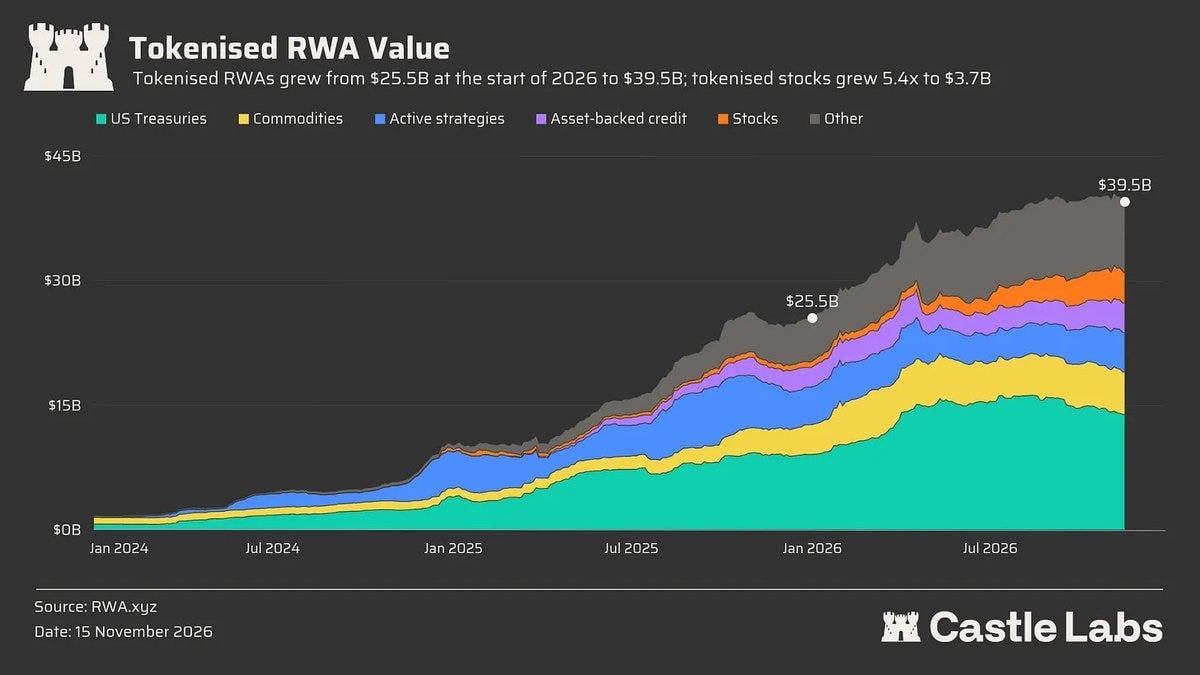
Fig: RWA options assets currently live on Derive
With Derive taking the lead in listing diversified RWA underlying assets, the protocol has secured an optimal position to capture the exploding demand for on-chain RWA derivatives.
We have previously detailed in our research reports the incremental development space Derive is targeting, and through revenue scenario modeling concluded that as Derive gradually builds a comprehensive options product matrix spanning traditional RWA and native crypto assets, it is developing the comprehensive strength to compete directly with centralized options leader Deribit.
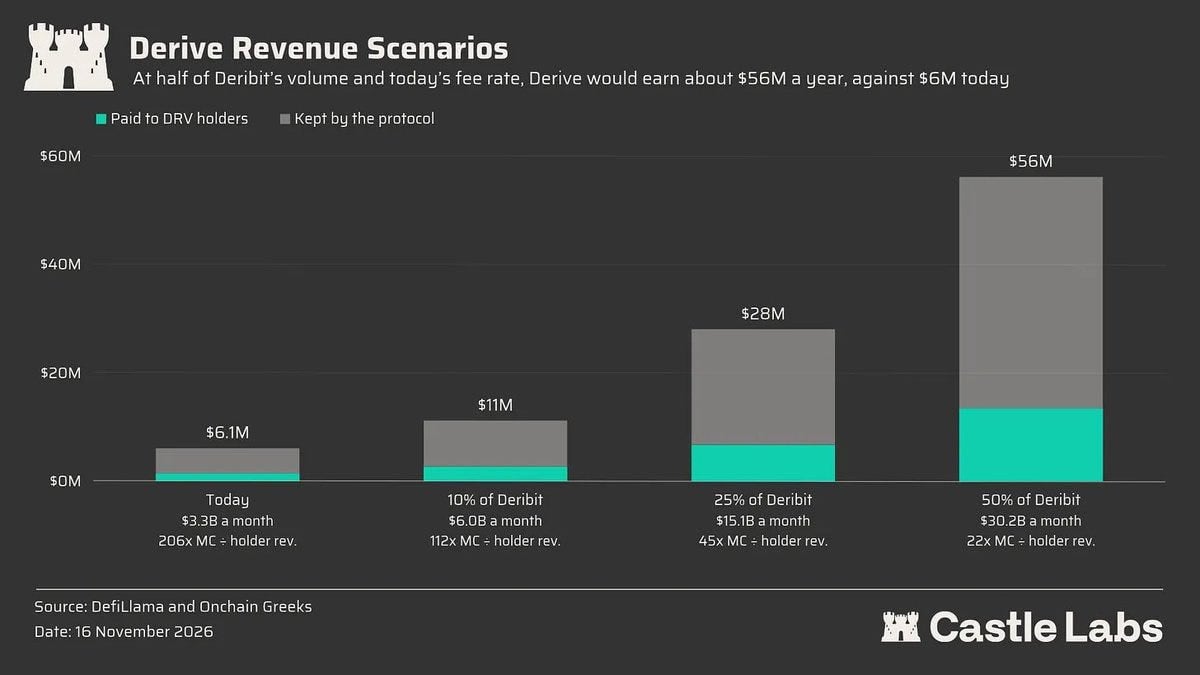
Fig: Projected protocol revenue scenarios for Derive after expanding into RWA and crypto options businesses
EtherFi: Stepping Towards the "Everything App" in Crypto
EtherFi's Neobank, a new-generation crypto banking product, is increasingly evolving into the crypto world's "Everything App".
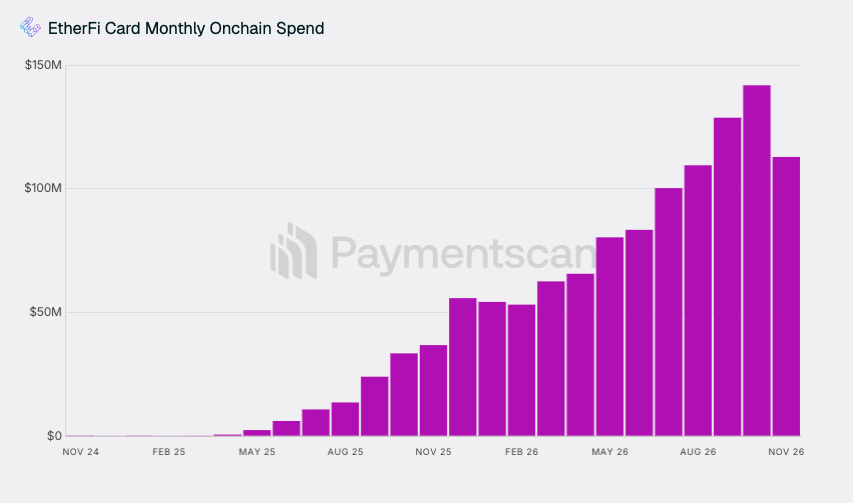
Fig: EtherFi Neobank mobile app interface
First and foremost, the core feature allows users to spend crypto assets anytime globally using the crypto bank cards issued by the platform. Meanwhile, funds deposited into the platform can continuously generate steady returns through borrowing via the Aave V4 liquidity hub, liquid staking, and the EtherFi Earn yield vaults. Furthermore, users can directly borrow against their holdings within the same app, satisfying immediate liquidity needs while maintaining long-term price exposure to their base assets.
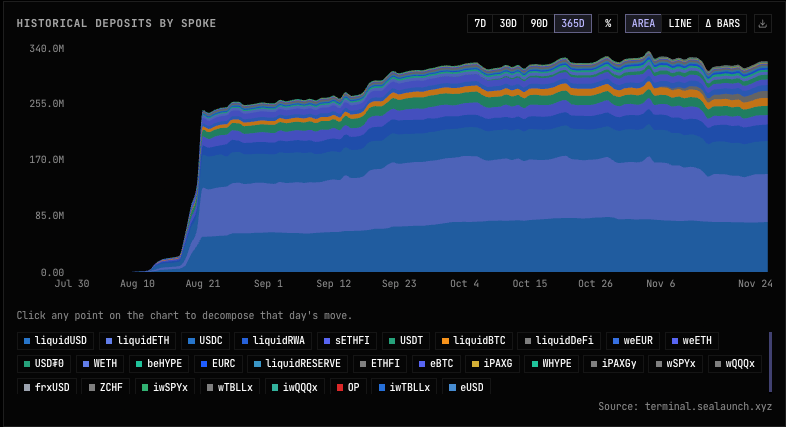
Fig: EtherFi lending and yield vault interface
Now, EtherFi has taken a crucial step in product iteration: formally integrating the Lighter perpetual swap functionality deep into its platform. Lighter allows ecosystem partners to take up to 10 basis points (bps) in fee sharing from contract trading volume. This means if EtherFi generates $1 billion in monthly volume, it could create $1 million in protocol fee revenue, a significant portion of which will directly flow onto EtherFi's income statement.
As more product lines and revenue engines continue to roll out, $ETHFI's first-mover advantage will become increasingly prominent. For the next generation of mainstream retail users, completely abstracting the complexity of underlying blockchain technology and creating an exceptionally smooth, one-stop mobile application is precisely the core cornerstone for achieving widespread adoption beyond the niche circle.
This will also continuously introduce high-net-worth user groups to the on-chain ecosystem. As on-chain consumer finance applications flourish, the entire on-chain economy will experience a qualitative leap in both revenue generation and asset scale.
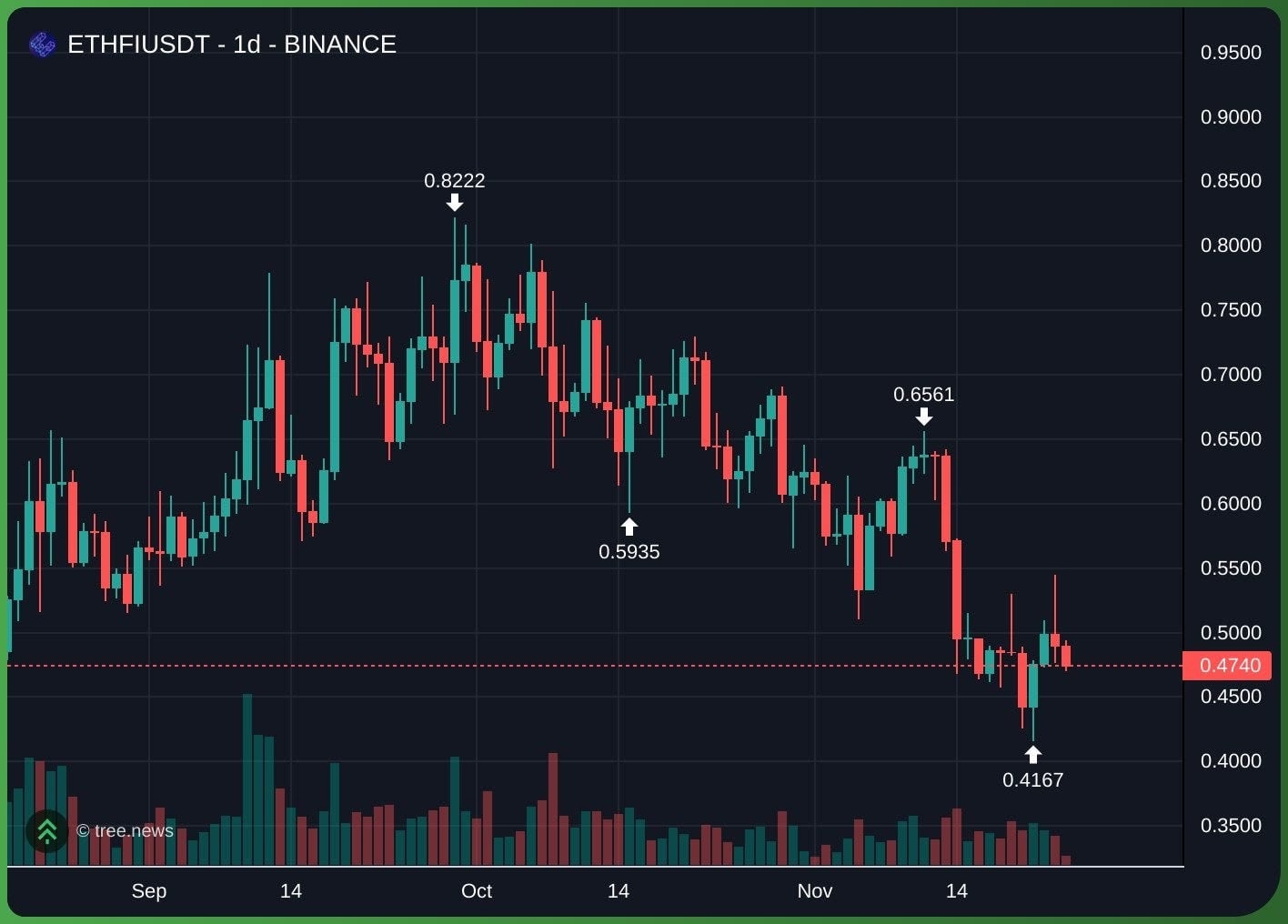
Fig: The on-chain consumer finance ecosystem flywheel built by EtherFi
Earning Provisioning Yields on Metric While Maintaining $PEARL Exposure
If you currently hold $PEARL, consider the high-yield provisioning opportunities emerging on the Metric platform: simply convert and wrap your native PEARL tokens into WPRL to participate in liquidity provisioning.
Through this method, you can fully retain PEARL's price exposure in your portfolio while simultaneously participating in Metric's potential airdrop points mining.
A comprehensive long-form article published by seasoned DeFi researcher DeFi Dad details how to capture trading fee shares as a liquidity provider (LP) in the newly launched WPRL/USDT pool.
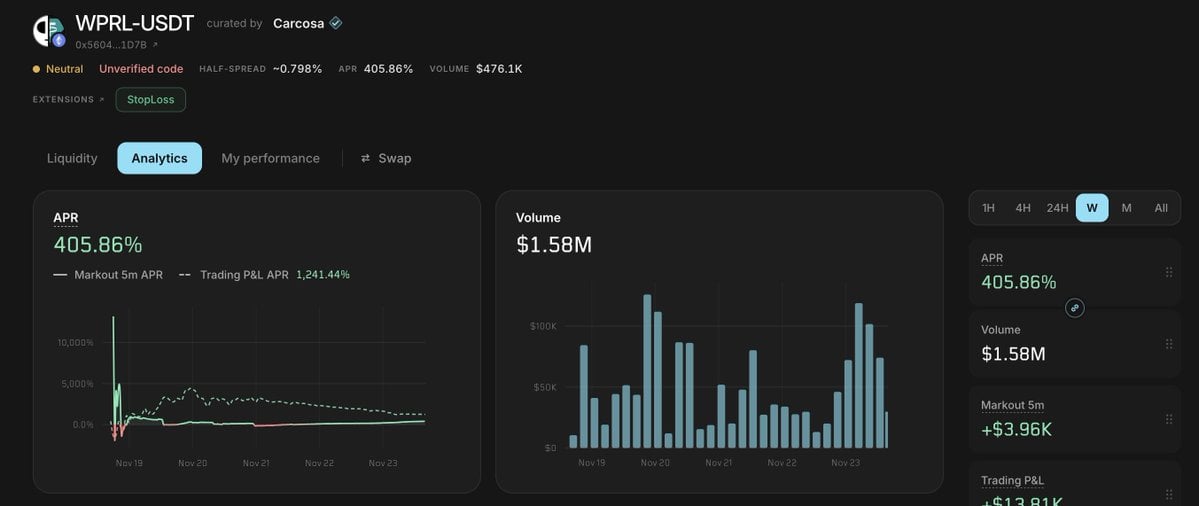
Fig: DeFi Dad's analysis of WPRL/USDT pool provisioning strategies on Metric
Readers can refer to the original tweet for full details; this report provides a brief summary here. There are three primary strategic approaches to providing liquidity on Metric:
Left-side LPs: If your core objective is to DCA into WPRL at lower prices, you can deposit only USDT into discrete bins below the current price. As the WPRL price breaks downward through these bins, the system will automatically place buy orders in batches for you, earning fee shares upon each execution.
Right-side LPs: If you wish to maintain continuous WPRL exposure while gradually taking profits, you can deposit only WPRL into bins above the current market price. As the price rises, the system will automatically sell in batches to buyers and capture fee revenue, eventually settling partial positions as realized USDT profit.
Balanced LPs: Deposit both USDT and WPRL bidirectional assets simultaneously. This way, regardless of whether the price fluctuates up or down within the range, you will automatically buy on dips and sell on rallies, continuously capturing trading fees from two-way volatility.
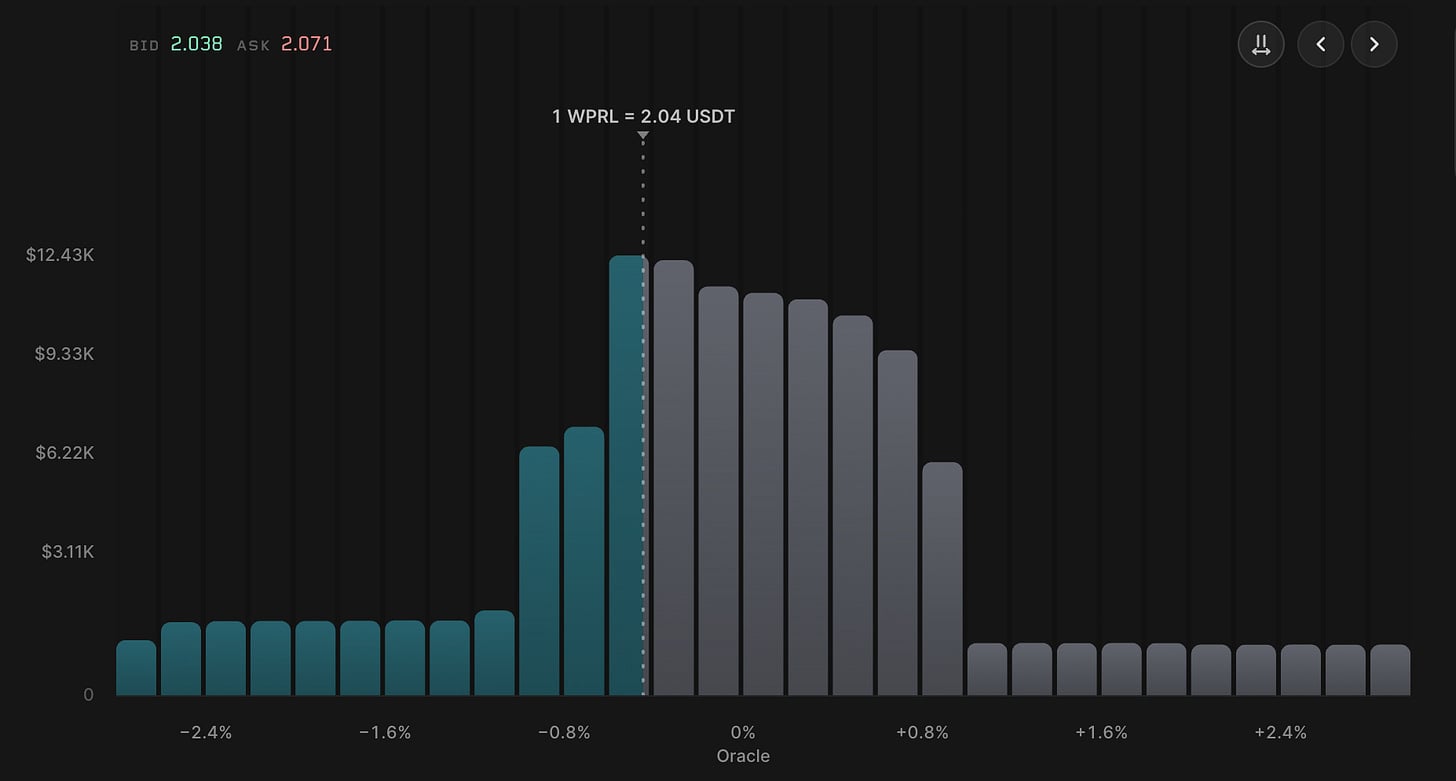
Fig: Specific UI for configuring liquidity price ranges (bins) on Metric
However, while deploying capital for provisioning, investors must maintain a clear awareness of potential risks. Although the pool is operated by Metric's certified curator Carcosa, the underlying code has not yet undergone a complete open-source audit and utilizes a custom oracle pricing mechanism, so Metric officially rates the risk level as "Neutral". Additionally, when wrapping native PEARL cross-chain into WPRL, users also bear corresponding systemic bridge risks.
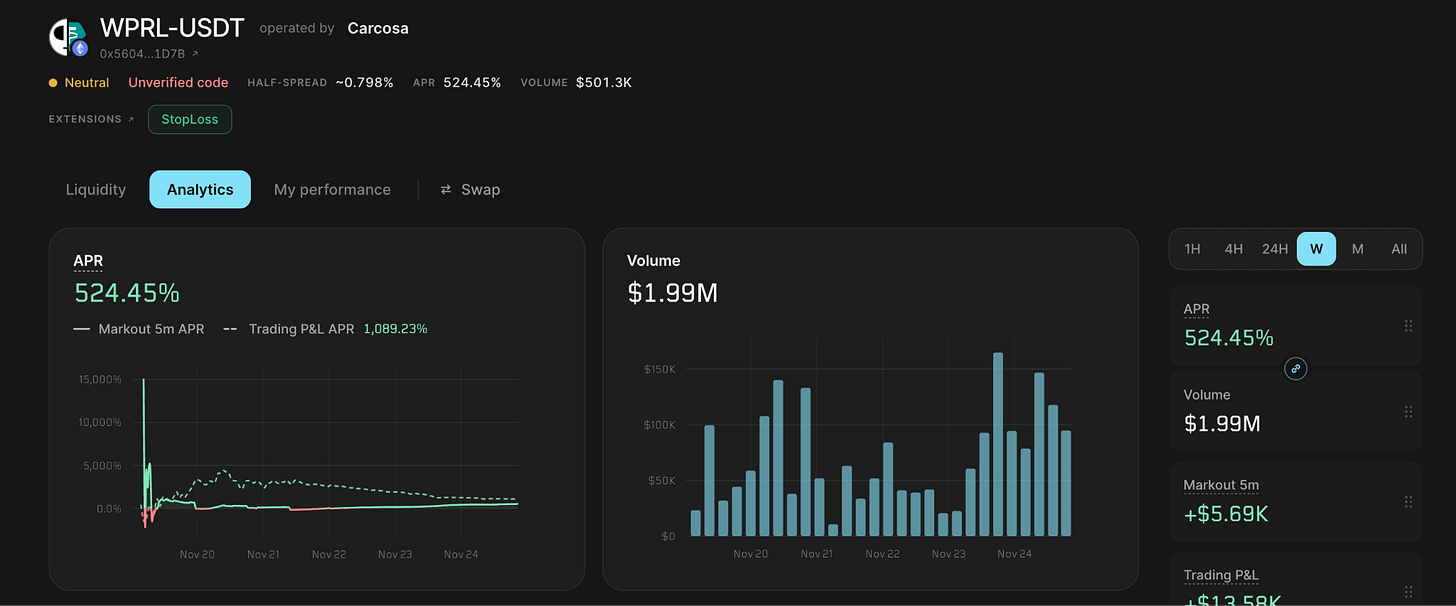
Fig: Risk rating and parameter specifications for the Carcosa curated pool on Metric
$2 Billion USDS Capital Outflow: Where Did the Massive Funds Actually Go?
On November 19, CoinDesk disclosed the latest findings from on-chain analytics firm Inca Digital: approximately $518 million in illicit funds previously flowed through Sky's peg stability module (PSM).
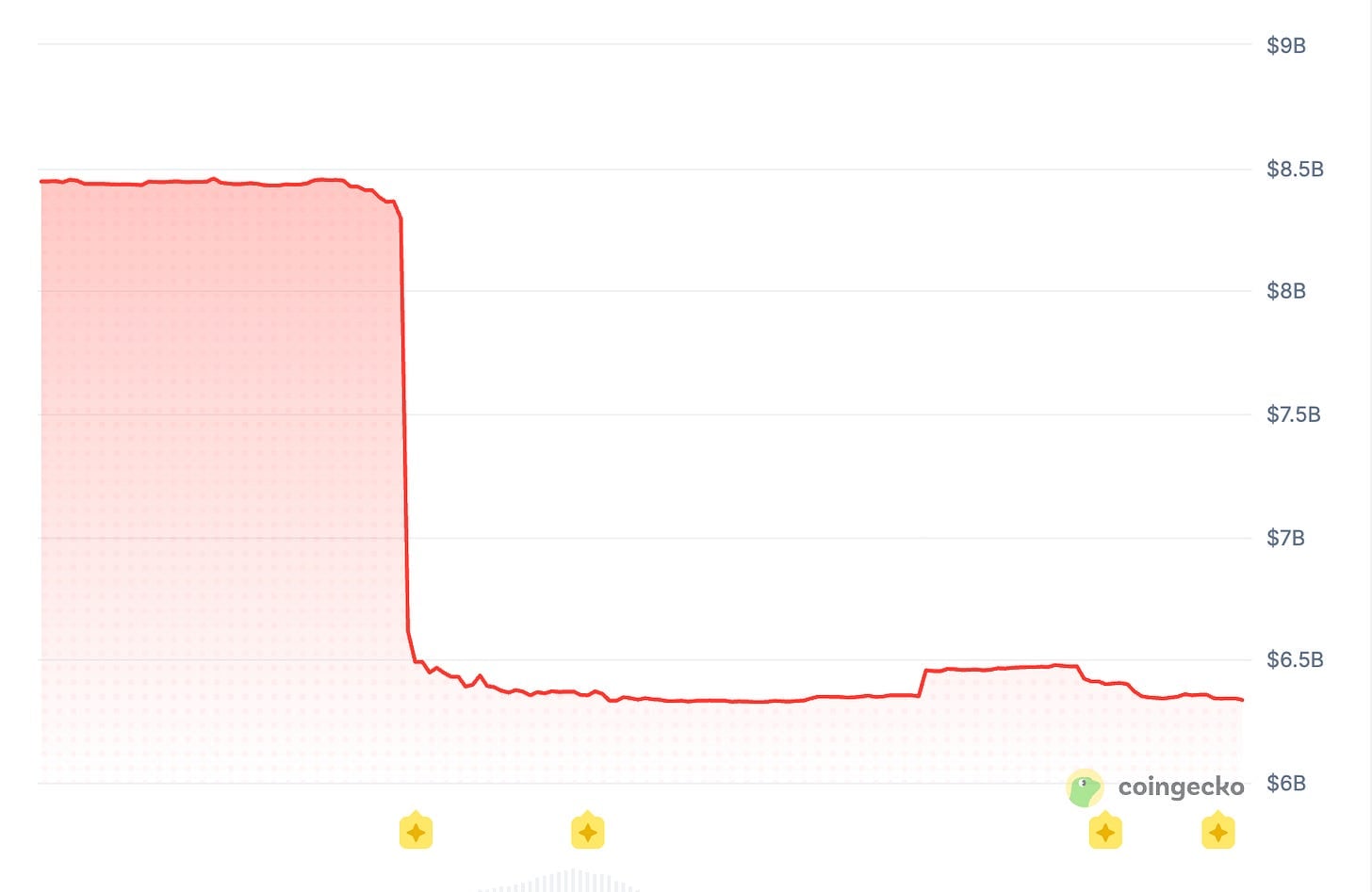
Fig: Abnormal fund flows traced by Inca Digital passing through Sky's PSM module
Impacted by compliance controversies and security concerns, Tron founder Justin Sun swiftly redeemed his massive $119 million position in Sky sUSDS and transferred the entirety to Aave, directly driving Aave's net inflow since November 18 to surge past $2.7 billion.
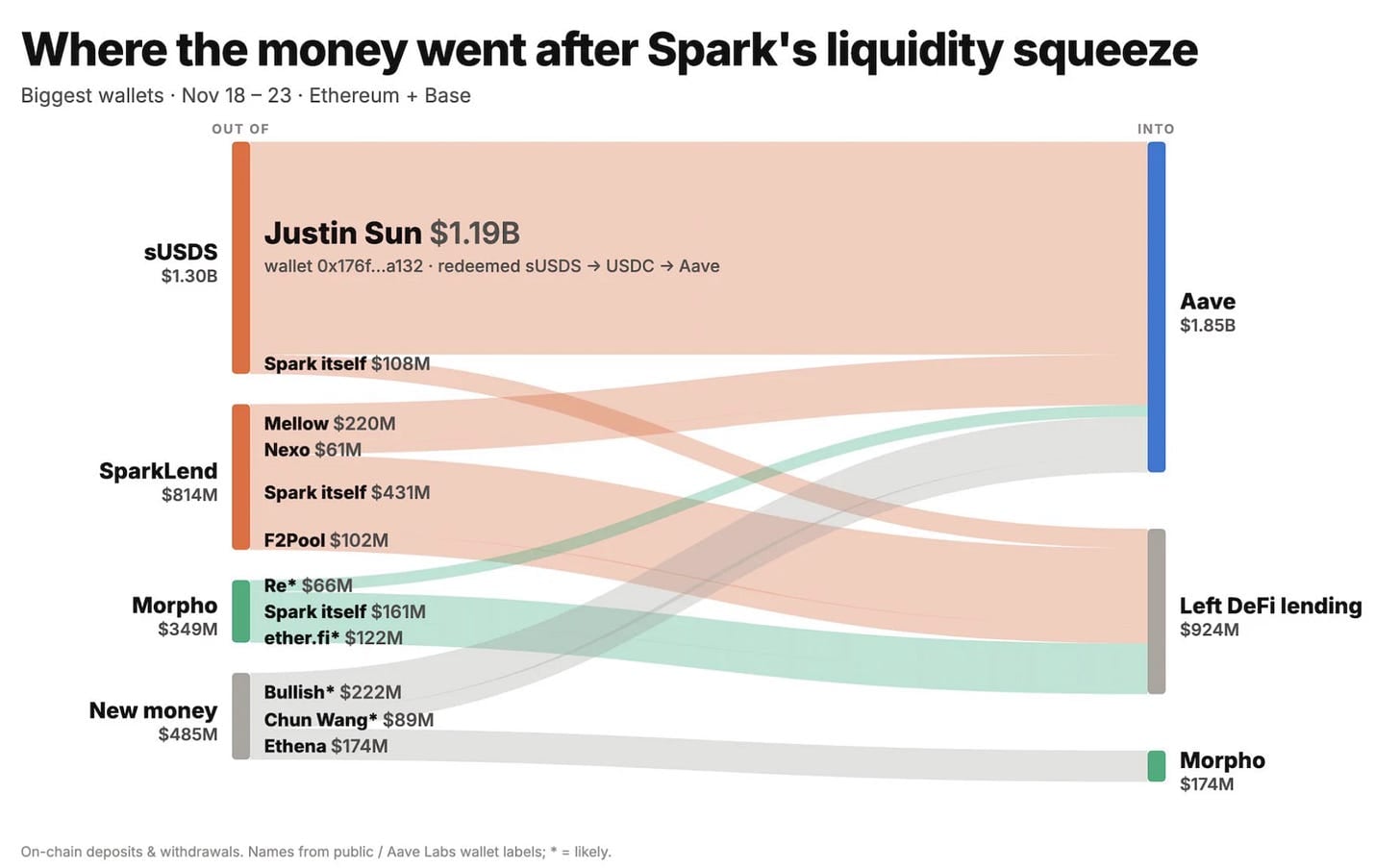
Fig: Justin Sun redeeming Sky sUSDS and transferring to Aave (Source: X @nicoypei)
Despite the massive capital withdrawal, on-chain data indicates USDS remains highly solvent overall, with the reserve vault holding up to $2.3 billion in various compliant stablecoins available for seamless redemption at any time.
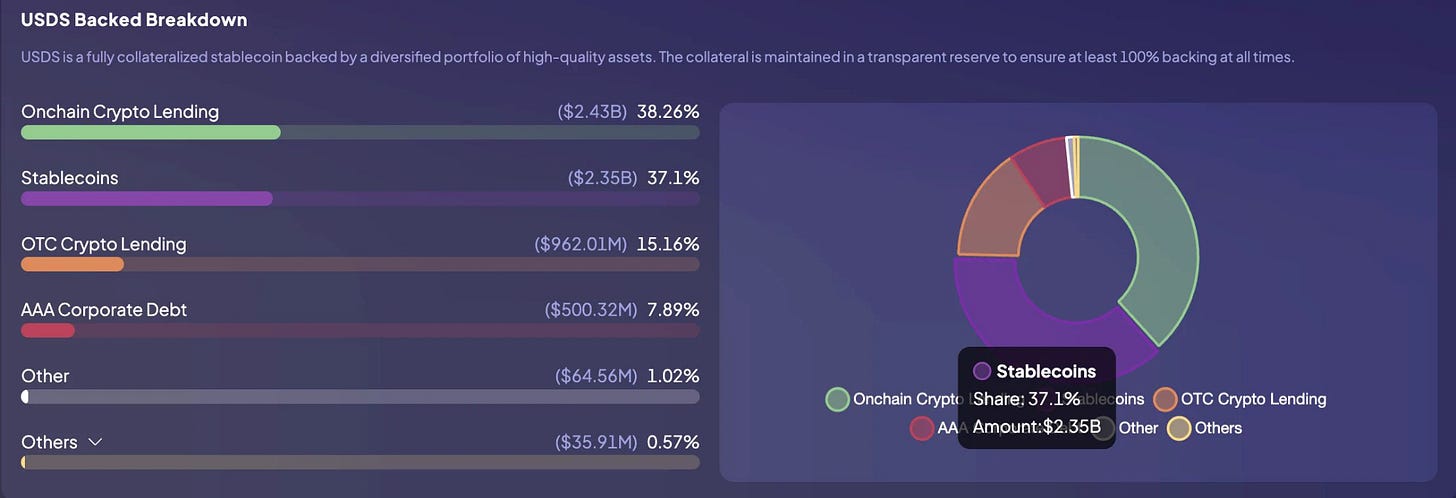
Fig: Stablecoin liquidity available for redemption in Sky protocol reserves (Source: X @nicoypei)
Frontier Radar: Key Developments to Watch
Tether Extreme Scenario Sensitivity Test: If gold and bitcoin were to drop 16% from current levels, Tether's reserves would theoretically face a funding gap of approximately $870 million. The MarketsXYZ team conducted a detailed quantitative simulation for this. In short, although a downturn creates a theoretical accounting shortfall, Tether's parent company currently holds over $20 billion in substantial assets on its balance sheet, giving it full capacity to rapidly plug the gap through capital injection. However, if extreme redemption pressure far outpaces the parent company's asset liquidation pace, Tether could face short-term liquidity strain, though the actual probability of this scenario is extremely low.
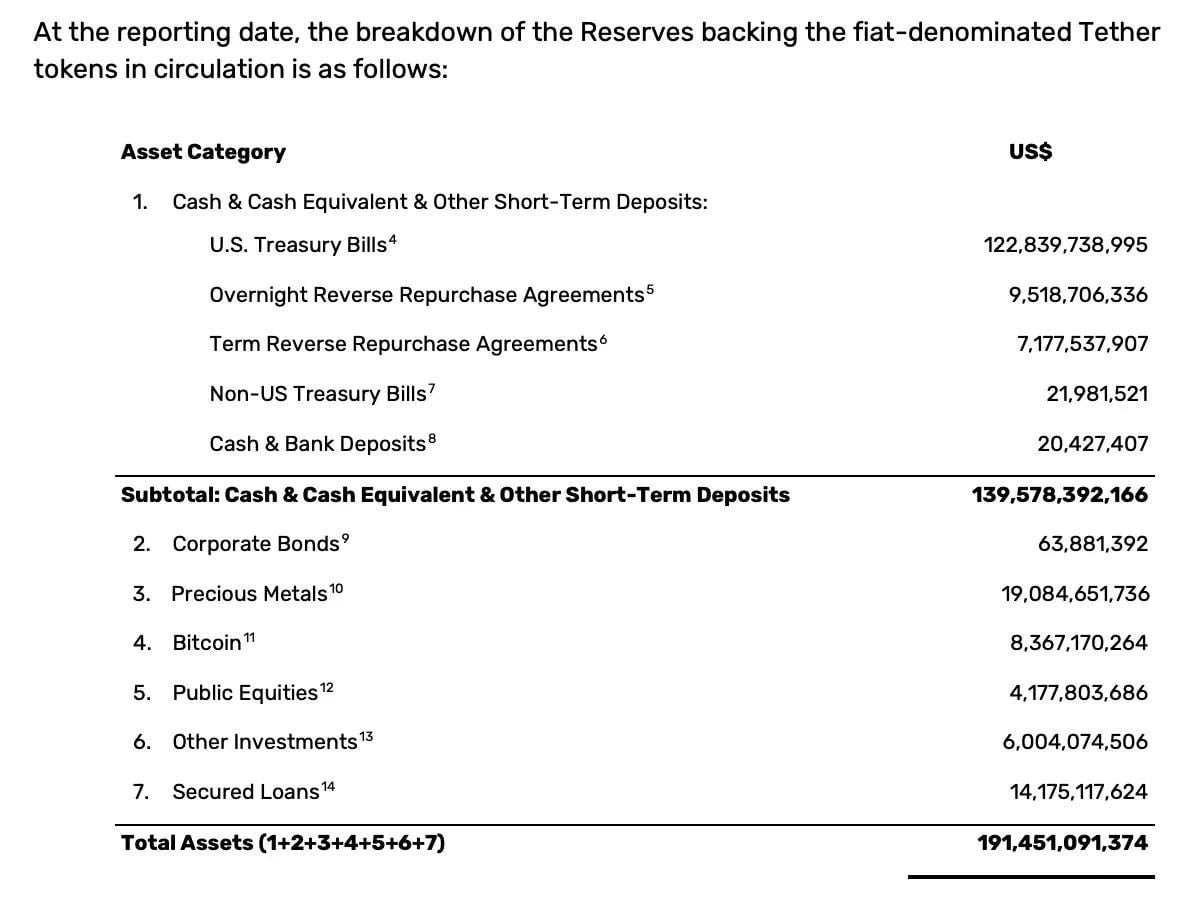
Fig: MarketsXYZ sensitivity analysis on the impact of gold and bitcoin drops on Tether's reserve solvency
Aave Frontend Access Restriction Alert: Some users have recently reported encountering access blocks on the Aave web frontend. To clarify, this blockage does not originate from the Aave protocol itself, but rather stems from an automated compliance screening mechanism implemented by its third-party risk control provider, TRM Labs. If users encounter frontend shielding, they can immediately invoke the underlying smart contracts directly via Etherscan to close positions and withdraw funds, or switch to other decentralized alternative frontends.

Fig: Access restriction prompt displayed on Aave frontend due to TRM Labs compliance screening
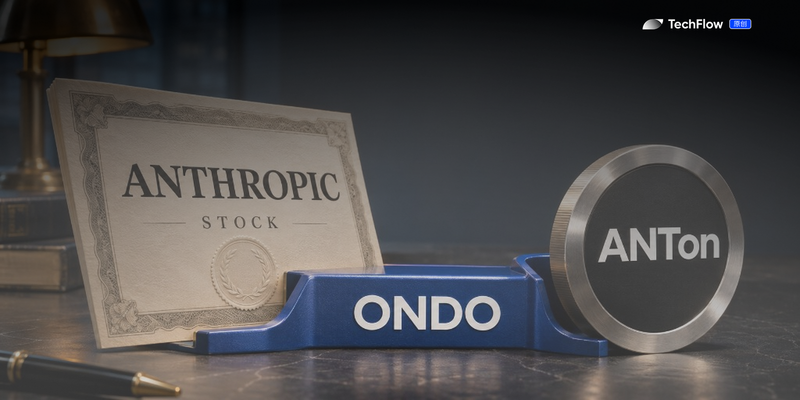
Anthropic Tokenized US Stocks Launch Across Multiple Platforms: Shares of AI giant Anthropic officially hit the Nasdaq exchange last Thursday. Shortly after listing, crypto issuers including Binance, Coinbase, Backpack, xStocks, Robinhood, and Ondo rapidly rolled out corresponding tokenized stock products. Based on distribution maps, nearly every issuer has a deeply bonded core liquidity hub: Binance stocks primarily settle on bStocks, Robinhood trades predominantly on Uniswap, Coinbase is mainly supported by Aerodrome, and Backpack relies chiefly on Raydium for liquidity.
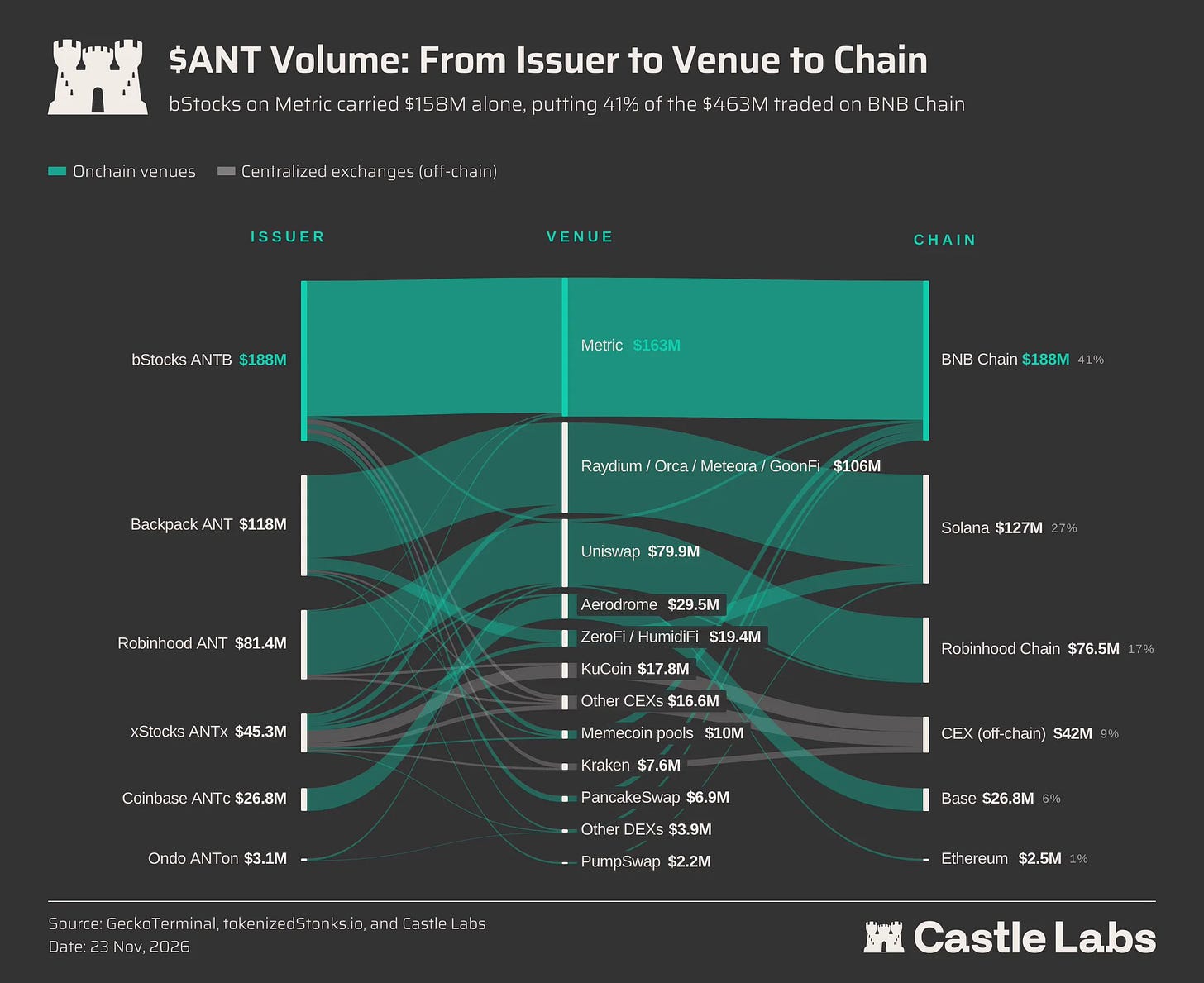
Fig: Liquidity distribution map of Anthropic tokenized US stocks across various trading platforms by issuer
Venice Annualized Revenue Surpasses $200 Million: The decentralized AI platform Venice crossed the $200 million annualized revenue milestone, with 10% (approximately $20 million) directed straight toward secondary market buybacks of the $VVV token. However, on-chain calculations show that even with buyback volumes reaching $20 million annually, it remains difficult to fully offset the inflationary dilution pressure caused by the platform's issuance of 2 million new tokens each year.
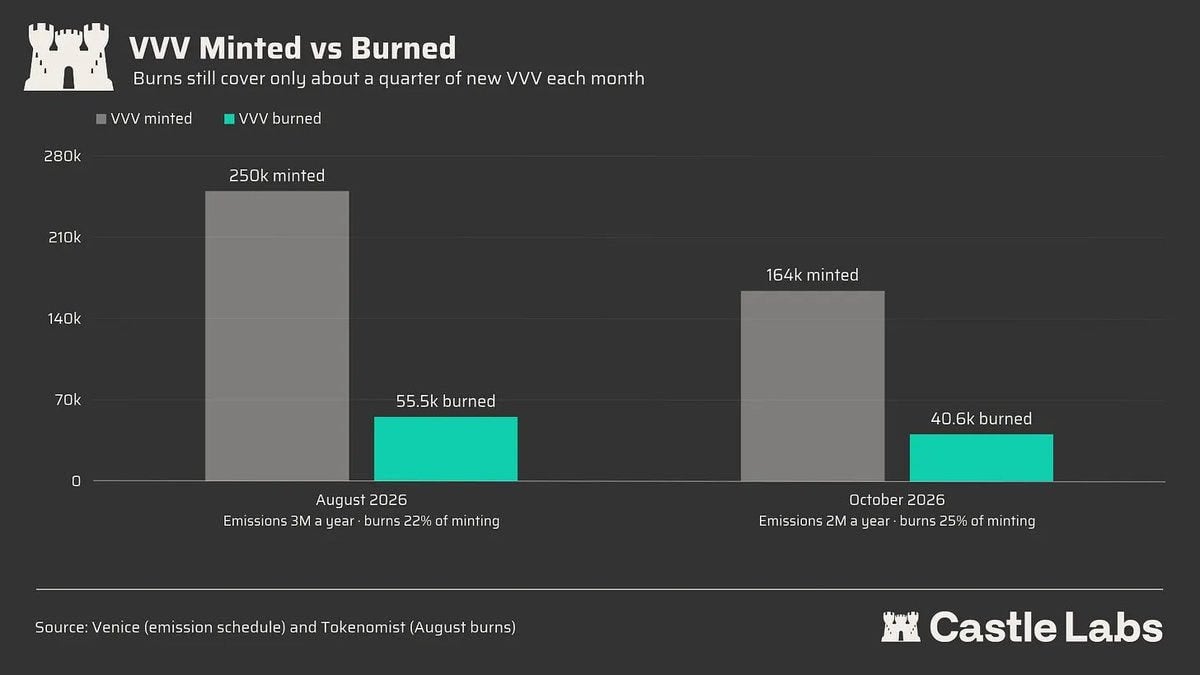
Fig: Venice annualized revenue vs token buyback inflation offset model
PEARL Bullish vs Bearish Live Debate: Castle Labs will host an in-depth online seminar tomorrow, featuring special guests Max Fiege, Brian Breslow, Jake Koch-Gallup, and Castle analyst Noveleader joining forces to comprehensively debate and dissect the core bullish and bearish arguments surrounding $PEARL.

Fig: Castle Labs seminar live stream preview poster
Disclaimer: Positions may be held in projects or tokens discussed in this report. This document is for informational purposes only and does not constitute investment advice. The crypto market is highly volatile; past performance does not guarantee future results. Please conduct independent research and consult professionals before making investment decisions.
Join TechFlow official community to stay tuned
Telegram:https://t.me/TechFlowDaily
X (Twitter):https://x.com/TechFlowPost
X (Twitter) EN:https://x.com/BlockFlow_News
 @castle_labs