When Your Customers Are No Longer Human: a16z’s Tens of Thousands of Tests Reveal AI Agents’ Purchasing Preferences—How Can Businesses Win Algorithmic Orders?
Authors: Olivia Moore, Justine Moore, Partners at a16z
Translated by: TechFlow
TechFlow Summary: As consumer decision-making authority shifts from human attention to algorithmic logic, the underlying distribution mechanisms of commercial society are undergoing unprecedented restructuring. In collaboration with The Prompting Company, a16z conducted over 11,000 simulation tests to quantitatively decompose the decision characteristics and preference pathways of AI Agents acting as consumers.
In the emerging B2A (Business to Agent) economic paradigm, elaborate emotional narratives and advertising packaging are facing comprehensive obsolescence. Confronted with autonomous agents that are highly rational, calculative, and inherently biased, companies must establish new competitive advantages across vertical moats, machine readability, all-inclusive pricing transparency, and aggregated transaction ecosystems.
In our first article exploring the B2A economy, we posited that Agents would increasingly influence which products we purchase, which applications we use, and where we allocate our capital and tokens. Almost every company aspires to tap into this new distribution channel. But the question remains: how exactly should businesses market their products to an Agent?
To unravel this puzzle, we partnered with The Prompting Company (whose clients include top-tier institutions such as NVIDIA, Google, Databricks, and Cloudflare) and conducted 11,307 automated tests across four representative Agents using 1,270 prompts.
This evaluation covered Grok Bot, Muse, Instinct, and Dots. As a control group, we simultaneously tested comparable shopping queries on ChatGPT, Gemini, and Perplexity for comprehensive comparison.
The testing scenarios spanned physical goods (e.g., “Find me noise-canceling headphones under $150”) and software tools (e.g., “Should I choose Adobe or Descript to edit this video?”).
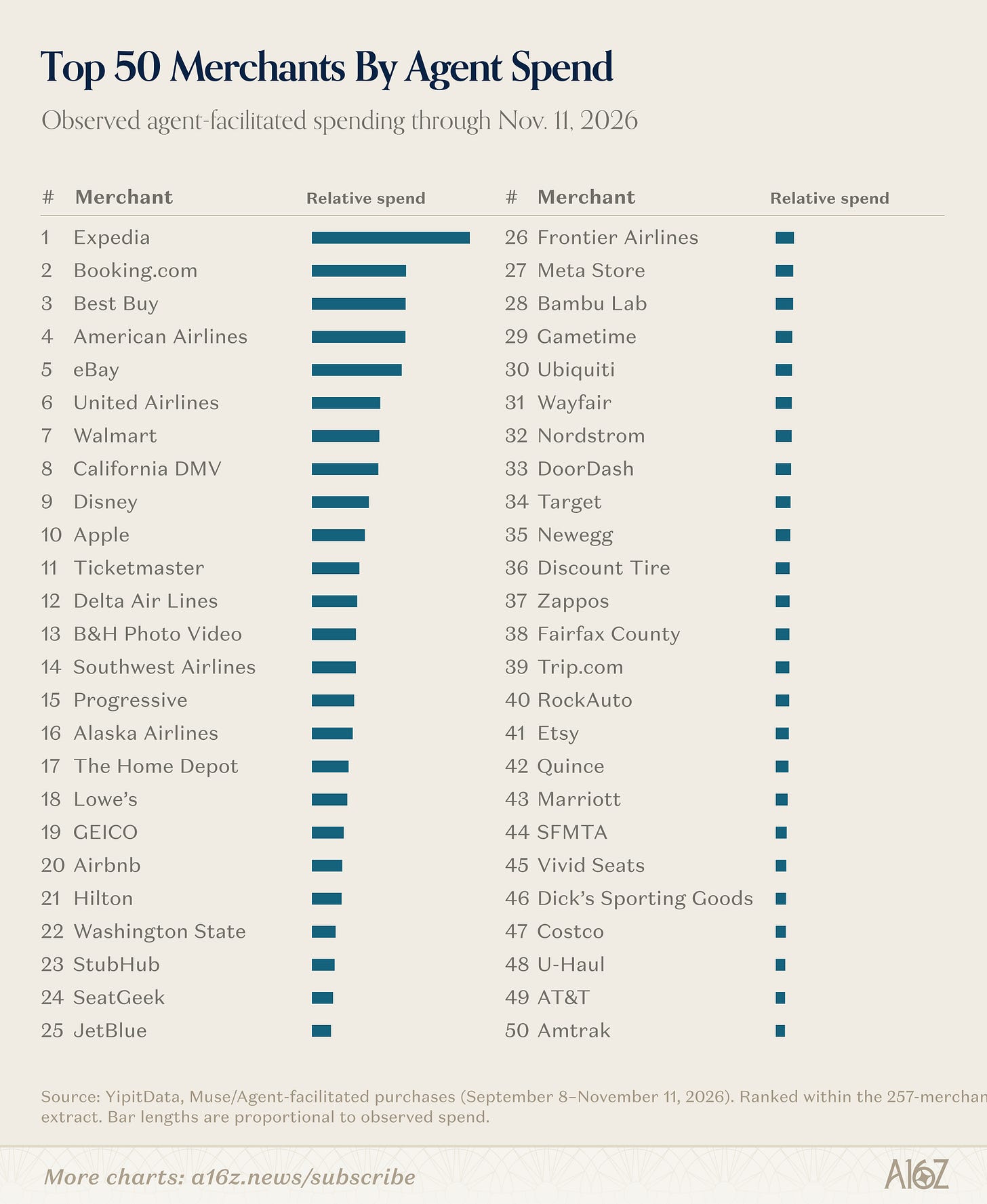
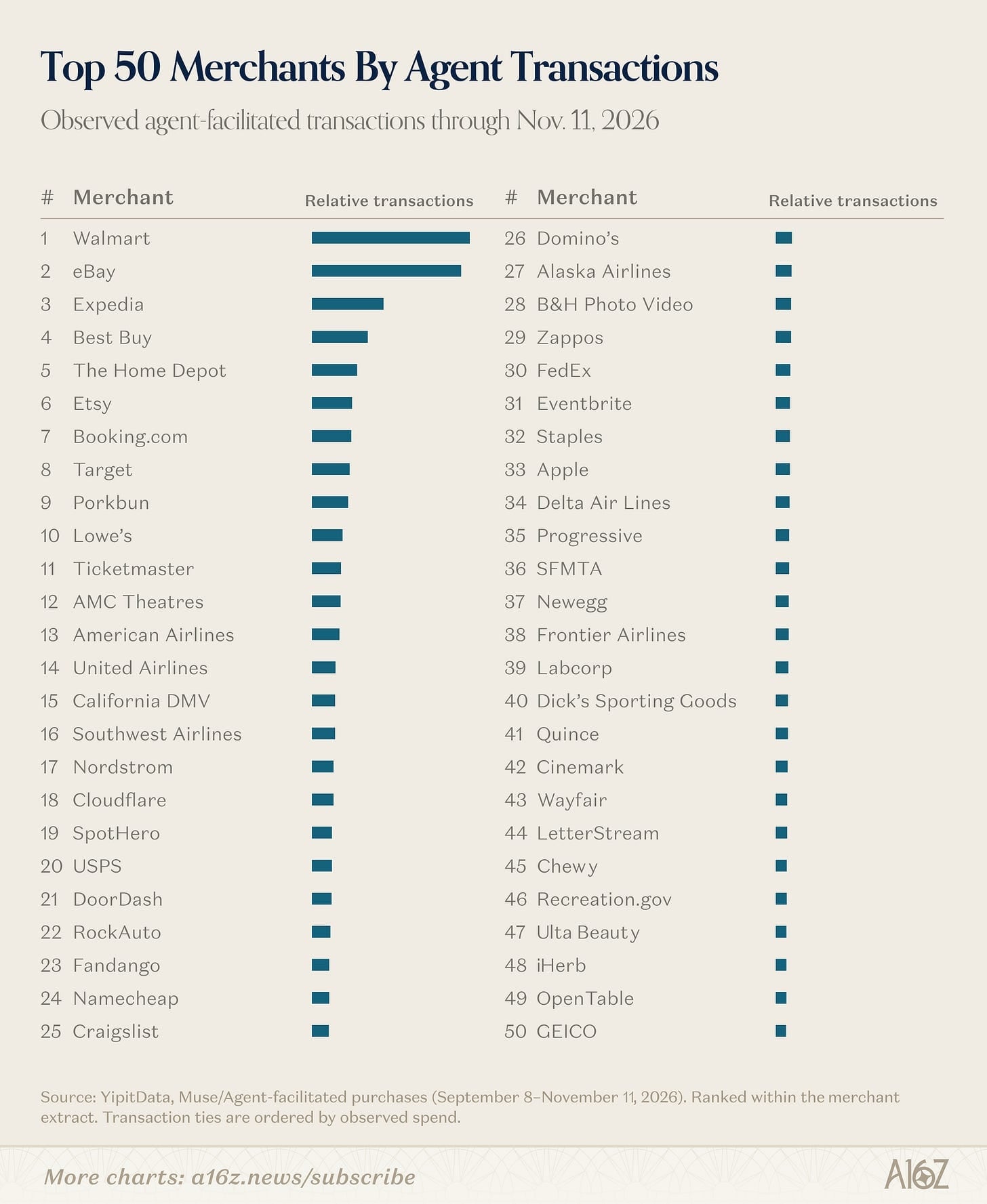
We combined experimental data with YipitData’s consumer spending data to track the actual purchase destinations facilitated by consumer-grade Agents like Muse, and here we publish the list of top 50 merchants by transaction expenditure.
Synthesizing these insights, we have sketched a realistic profile of the Agent as a business client and distilled five core strategies to win algorithmic favor.
Focus on Specific Scenarios Where Absolute Advantages Can Be Built
When faced with broad, generic search queries, Agents often rely on a highly overlapping set of default candidate options. In cross-platform tests, a product selected by one Agent has a 73% probability of also being chosen by at least one other Agent.
In nearly a quarter of test cases, all four tested Agents even converged on the exact same top recommendation, demonstrating strong algorithmic convergence.
So how can brands break into this default list? It is far from easy. Muse is currently the only Agent that fully discloses its research logs, and its retrieval logs reveal the narrowness of the candidate pool.
Muse almost always prioritizes retrieving its own Meta product catalog, fetching a maximum of only 50 candidates; even when it occasionally triggers a browser search, it averages viewing just three product detail pages.
The high degree of overlap in recommendations suggests that other Agents are similarly constrained by limited retrieval sets. This limitation is expected to improve as Agents gradually gain real-time metadata access rights and achieve true full-category web scanning.
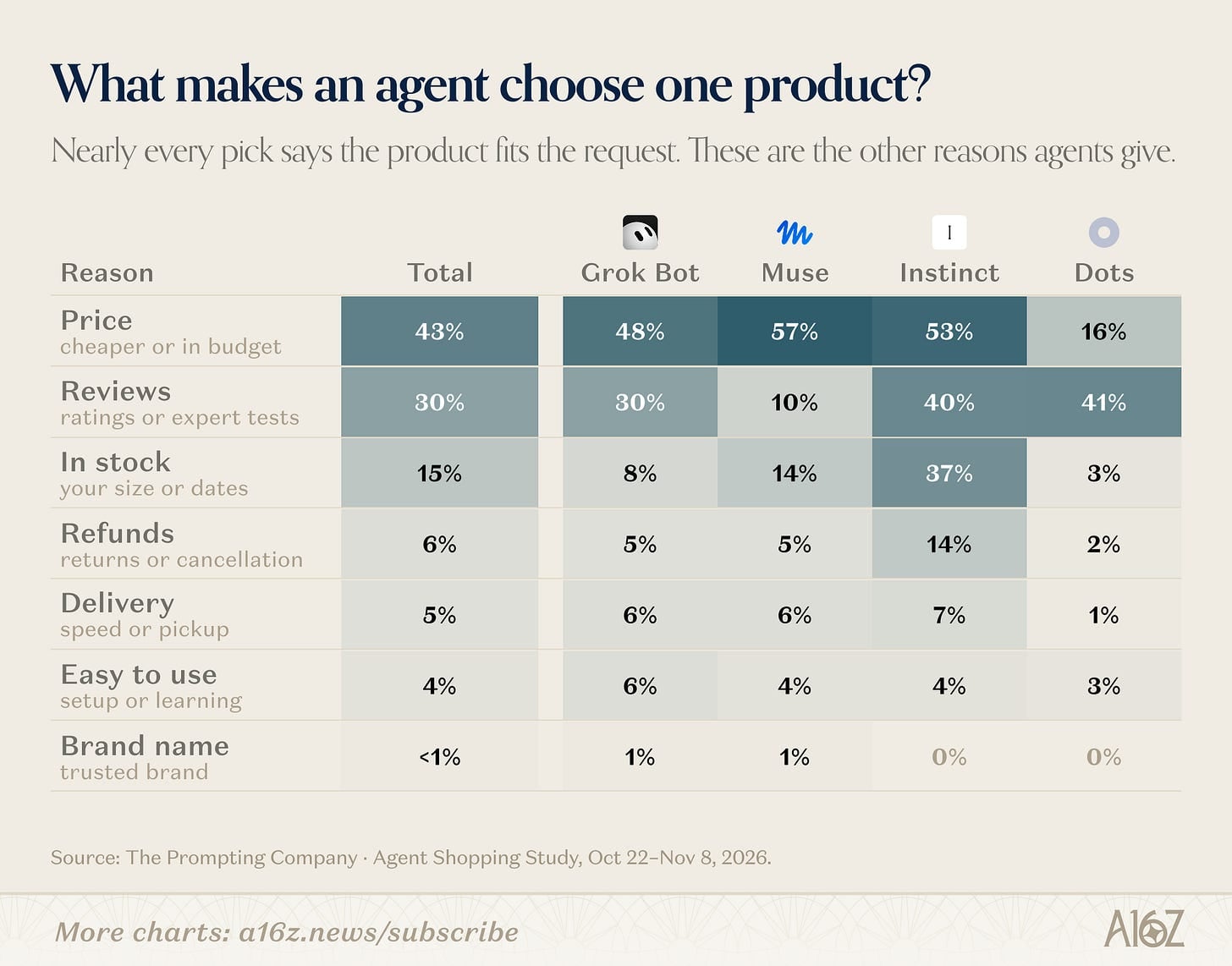
However, at this stage, the number of options actually evaluated by Agents remains quite limited, and final decisions are primarily made based on highly consistent variables such as price and user reviews.
To successfully enter an Agent’s candidate list and ultimately break through, the most effective approach is to prove absolute dominance in specific vertical scenarios or target customer segments. This strategy alone is sufficient to completely disrupt default recommendation landscapes.
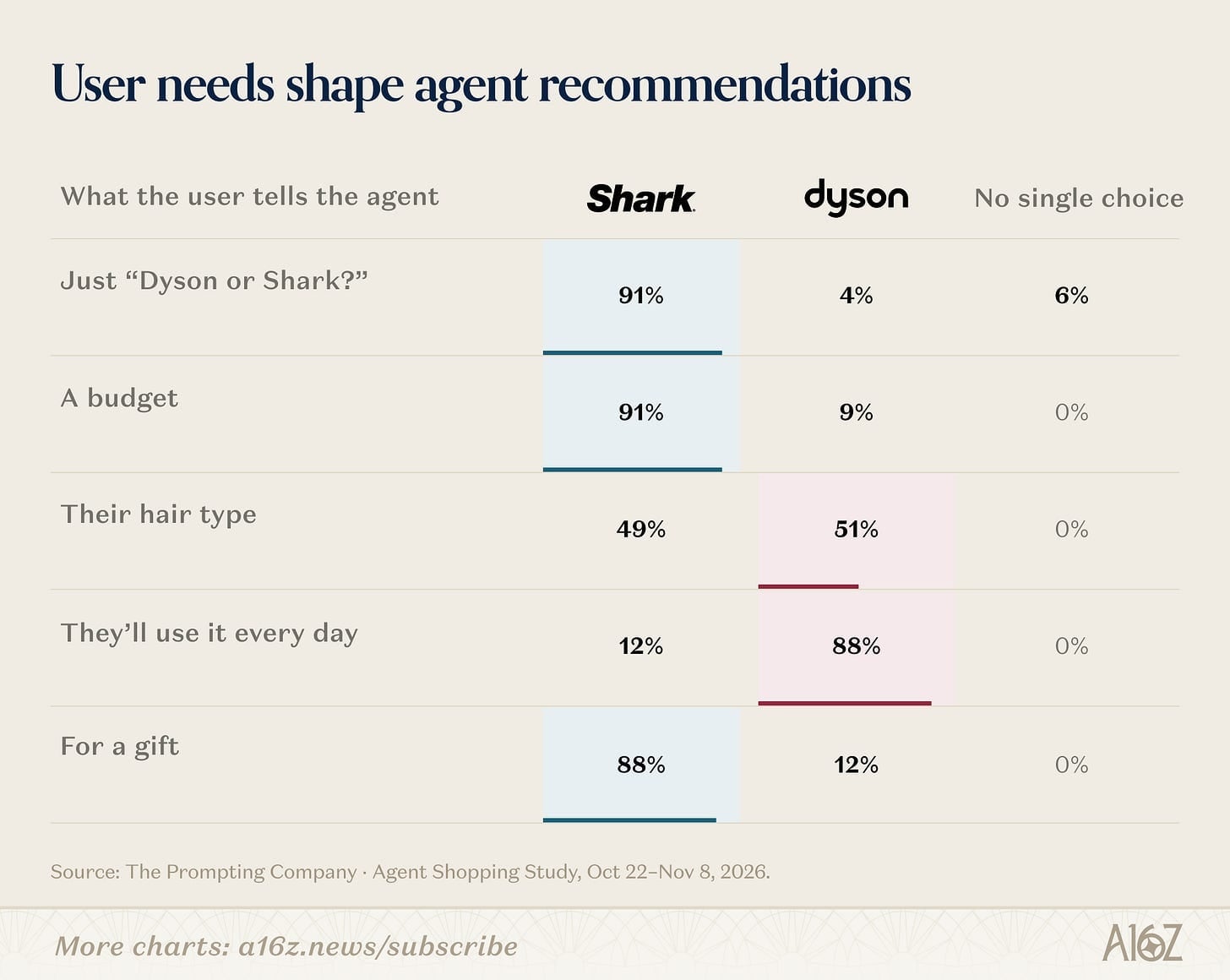
Take hair dryer selection tests as an example: When asked to choose between the Shark FlexStyle and Dyson Airwrap, Agents favored the more affordable Shark in 91% of tests under broad queries, judging their performance to be similar but noting Shark’s superior cost-effectiveness.
However, once user queries become slightly more detailed, the decision balance shifts dramatically. When specified as “for fine, soft, or color-treated hair,” Dyson’s win rate quickly rebounds to 51%.
When further restricted to “requires frequent daily use,” Dyson’s win rate surges to 88%. Such granular demands prompt Agents to focus on details like device weight and operational noise, granting full recognition to premium pricing.
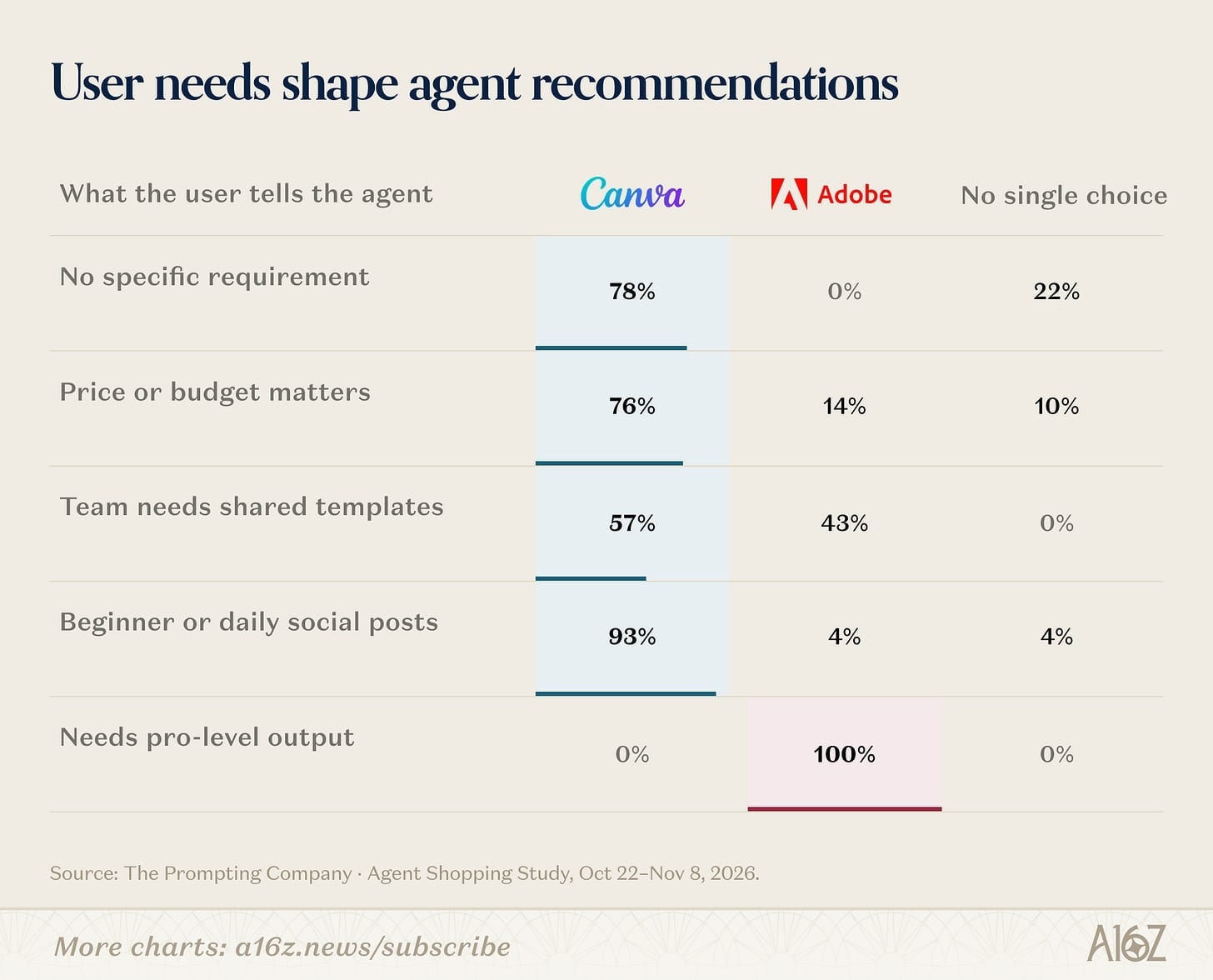
Agents follow the same logic when selecting software tools. When asked to recommend general graphic design software, Agents chose Canva in 78% of tests, while Adobe had a 0% selection rate.
But when users supplement their prompt with a need for “team collaboration templates,” Adobe’s appearance on recommendation lists increases significantly; once users hint at requiring “professional-grade output,” Adobe tops the rankings without exception in every test.
Optimize Products for Agent Crawlers, Rather Than Merely Appealing to Human Eyes
How Agents explore the internet differs from both humans and traditional large language models. When faced with product search requests, traditional LLMs primarily rely on static training knowledge, only falling back to web searches when they need to supplement options or verify information.
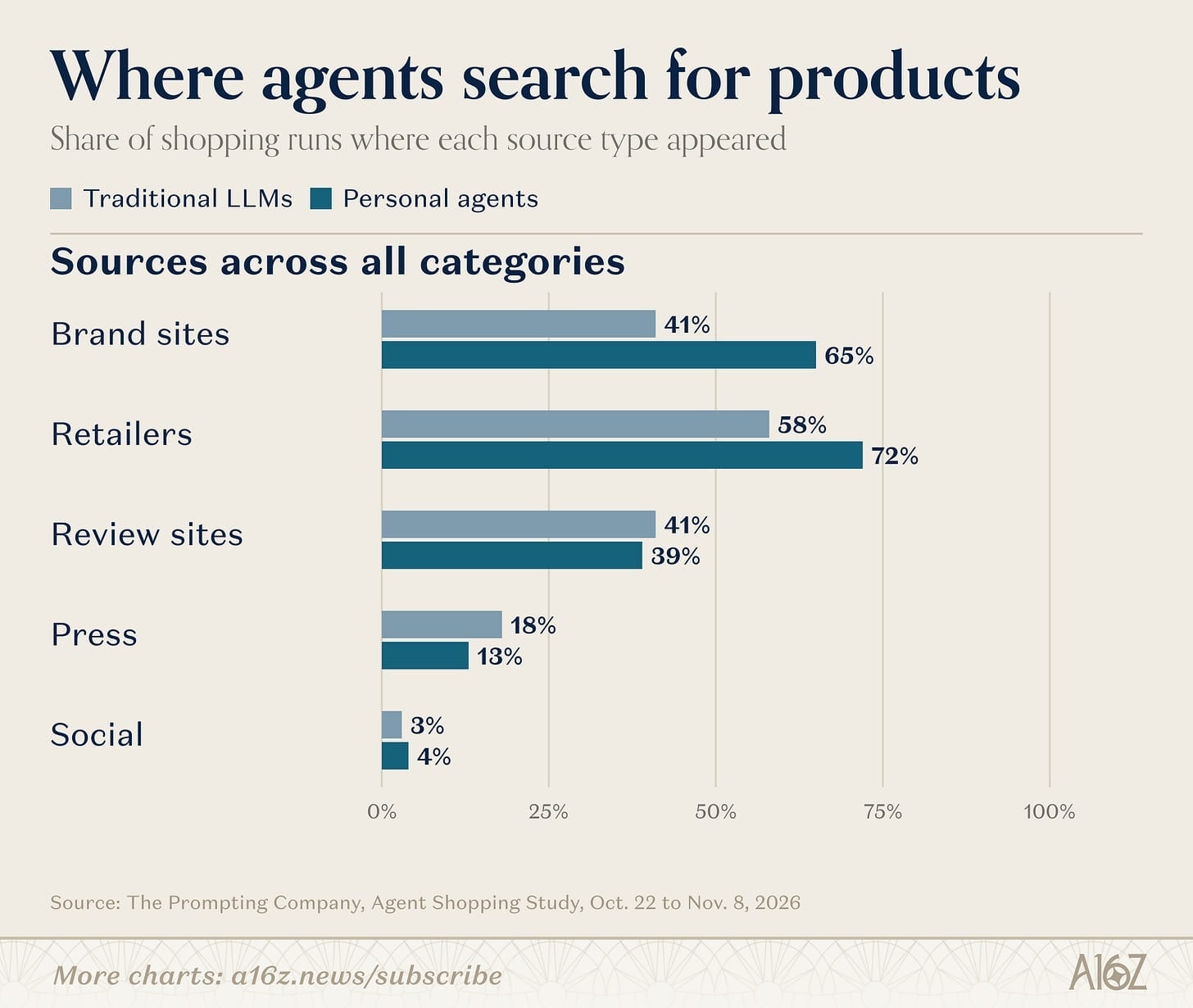
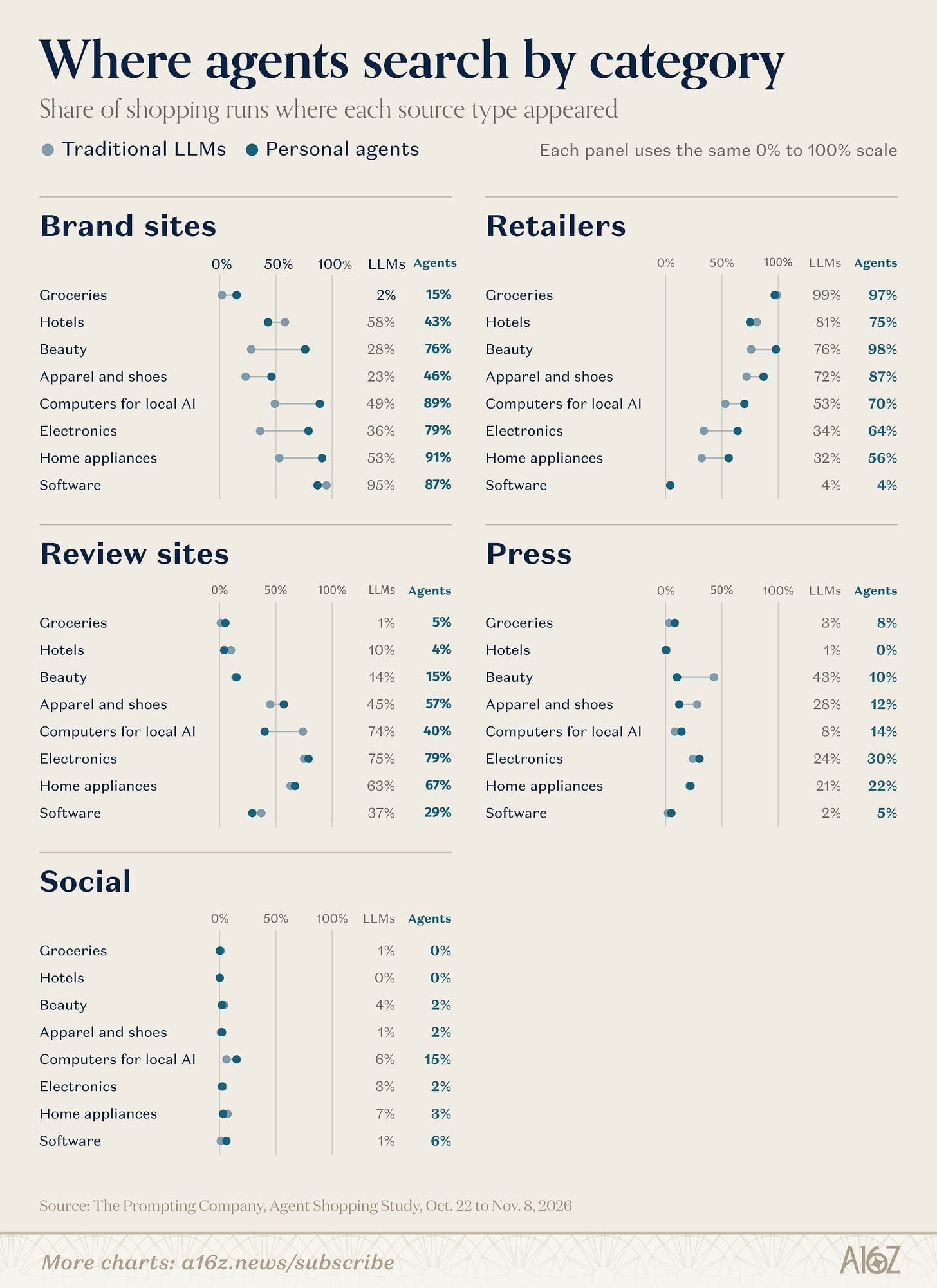
Their goal is simply to list a few decent suggestions, without demanding real-time stock availability. Consequently, they heavily depend on third-party review sites, media coverage, and community forums, sometimes weighing them even higher than official product detail pages.
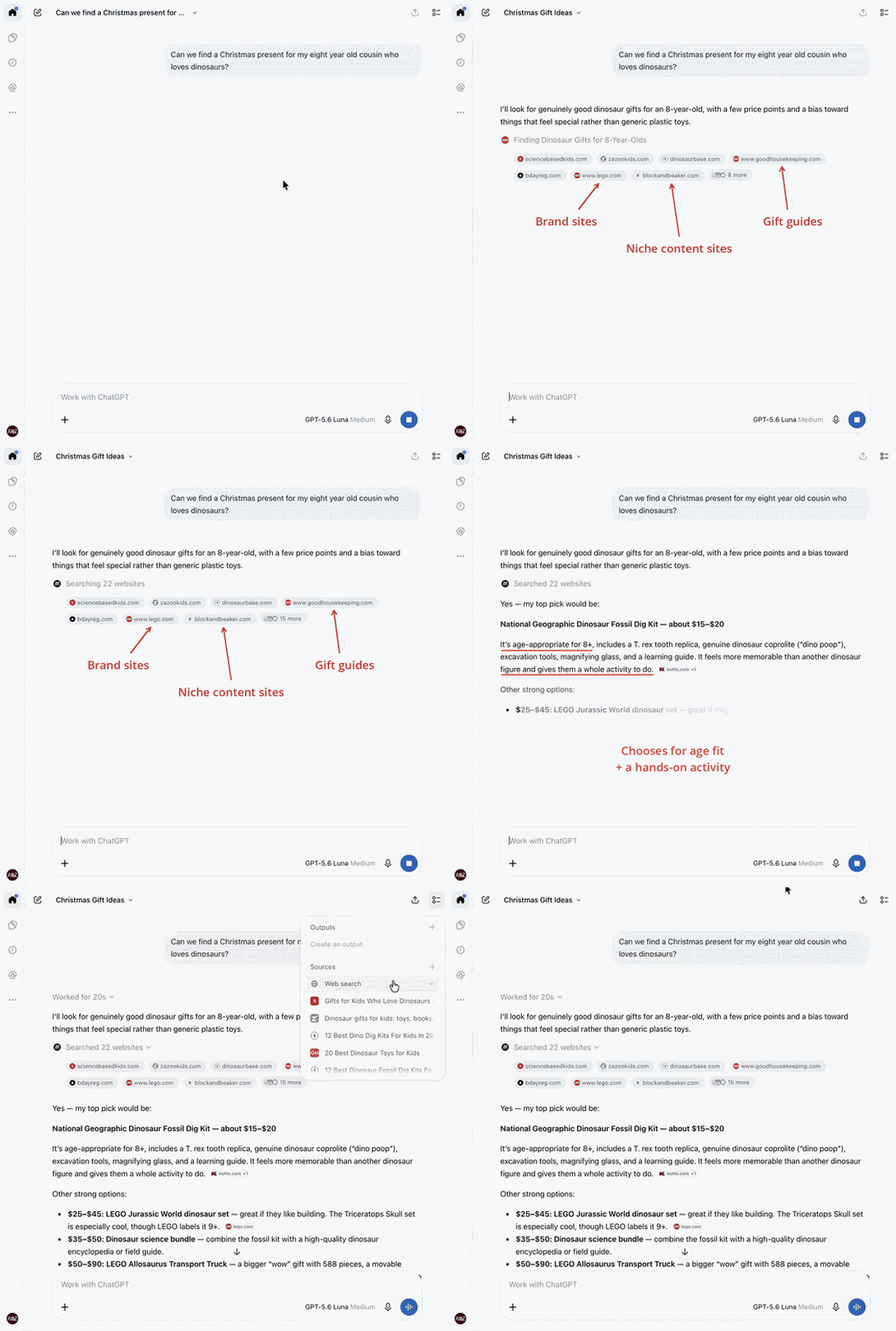
Figure: Search logic of non-Agent ChatGPT models when performing gift-seeking tasks
In contrast, the first response of autonomous Agents is to retrieve the user’s long-term memory—historically accumulated user background and personalized preferences, designed to ensure the final recommendation precisely aligns with the user’s implicit needs.
Subsequently, the Agent coordinates calls to internal connectors and official product catalogs while simultaneously conducting external web research. According to The Prompting Company’s run logs, Muse and Dots utilize proprietary self-developed search architectures, while Grok Bot and Instinct primarily integrate with the Exa engine.

Figure: Memory retrieval and multi-source exploration process of the Muse Agent during gift-seeking tasks
Although the proportion of information sources verified by Agents varies by category, their willingness to directly visit first-party official websites or specific third-party product pages is significantly higher than that of traditional LLMs.
This makes having a machine-readable official website or a software ecosystem that opens Agent-access interfaces crucial. Agents must be able to accurately parse a product’s core features, pricing, and limitations within extremely short timeframes to include it in the final decision pool.
These principles profoundly influence the distribution ecology of software products as well. In a test requiring Dots to automatically generate 10 promotional ad images based on product photos, we let the Agent autonomously choose the image generation tool.
The Agent first inspected Midjourney, discovering it lacked a universal API and strictly prohibited automated calls; it then shifted to Ideogram, which directly provided paths and sample code for API and official MCP integration on its website, allowing the Agent to seamlessly complete its closed-loop decision.

Figure: Dots encounters a blockage when attempting to call Midjourney due to the lack of an open API and automation bans

Figure: Dots successfully locates the API documentation and official MCP quick-onboarding guide on Ideogram
Companies can use The Prompting Company's B2A testing platform to directly evaluate their official websites' actual performance across various environments involving Agent automation crawling and assessment.
Agents Are Calculating: Ensure They Can Directly See Your Value
Unlike humans, Agents are uncompromising extreme optimizers. They meticulously calculate the total cost of ownership for products, including shipping fees, subscription tiers, return and exchange policies, and even warranty services—all hidden costs.
Based on this comprehensive calculation, Agents make globally optimal decisions among brand direct-to-consumer websites, third-party platforms, and even secondary resale channels. When two retailers offer the same item at the identical price, Agents definitively chose the side with superior after-sales policies (including free-return shipping, extended return windows, and original-path/original-currency refund guarantees) in 86% of tests.
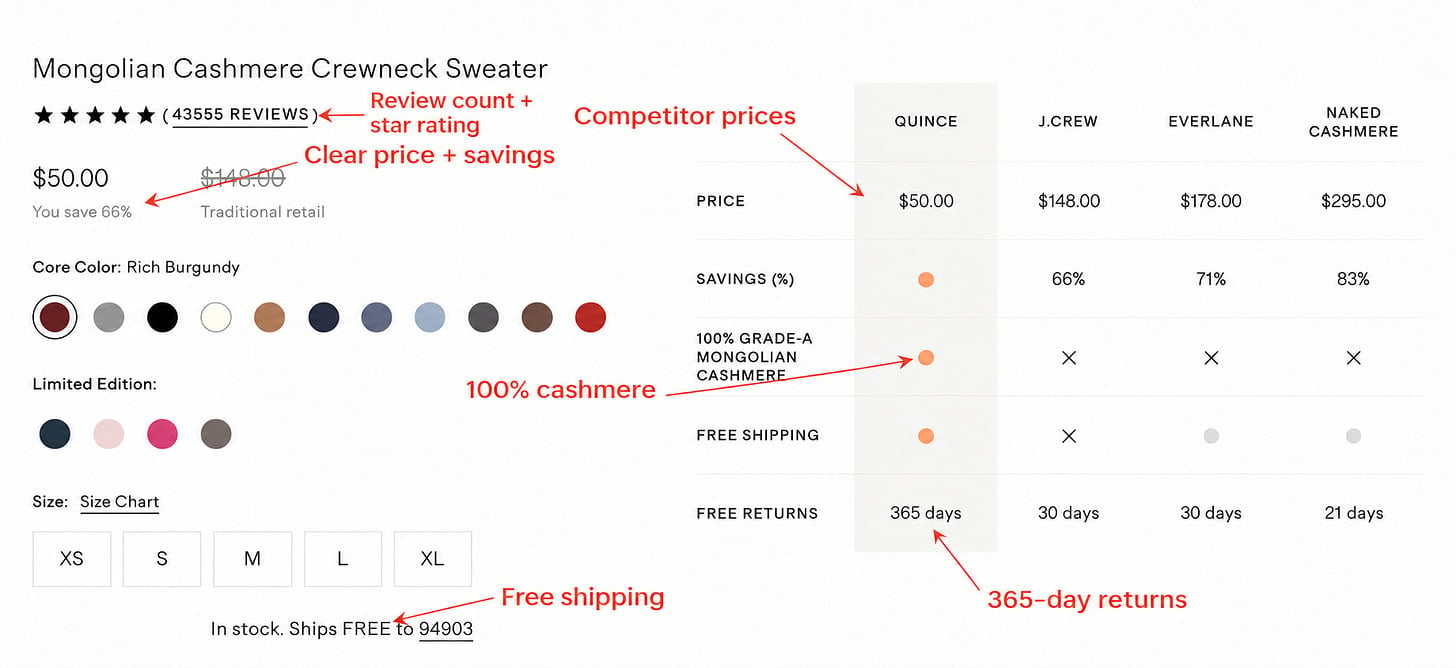
Apparel retailer Quince serves as a prime example of clearly conveying core value to Agents. Although not a global giant, Quince ranks within the top 15 in actual transaction volume facilitated by consumer-grade Agents, demonstrating formidable algorithmic dominance.
Take its $50 cashmere sweater product detail page as an example: The top of the page clearly highlights price, free shipping policy, in-stock inventory, and review ratings; the bottom section transparently compares its price directly against traditional luxury brands, leaving nothing hidden from price-comparison algorithms.
Software products can also reap substantial benefits through Agent-specific pricing strategies. Ranked ninth in Agent-facilitated software transactions and leading the technology category is domain registrar Porkbun.
It outperforms Cloudflare (which has 2.6 times its monthly domain registrations) and GoDaddy (4.8 times). Muse and Dots consistently lean toward recommending Porkbun precisely because of its all-in transparent pricing structure, zero hidden lock-in clauses, and a pure strategy of never doubling prices upon renewal.
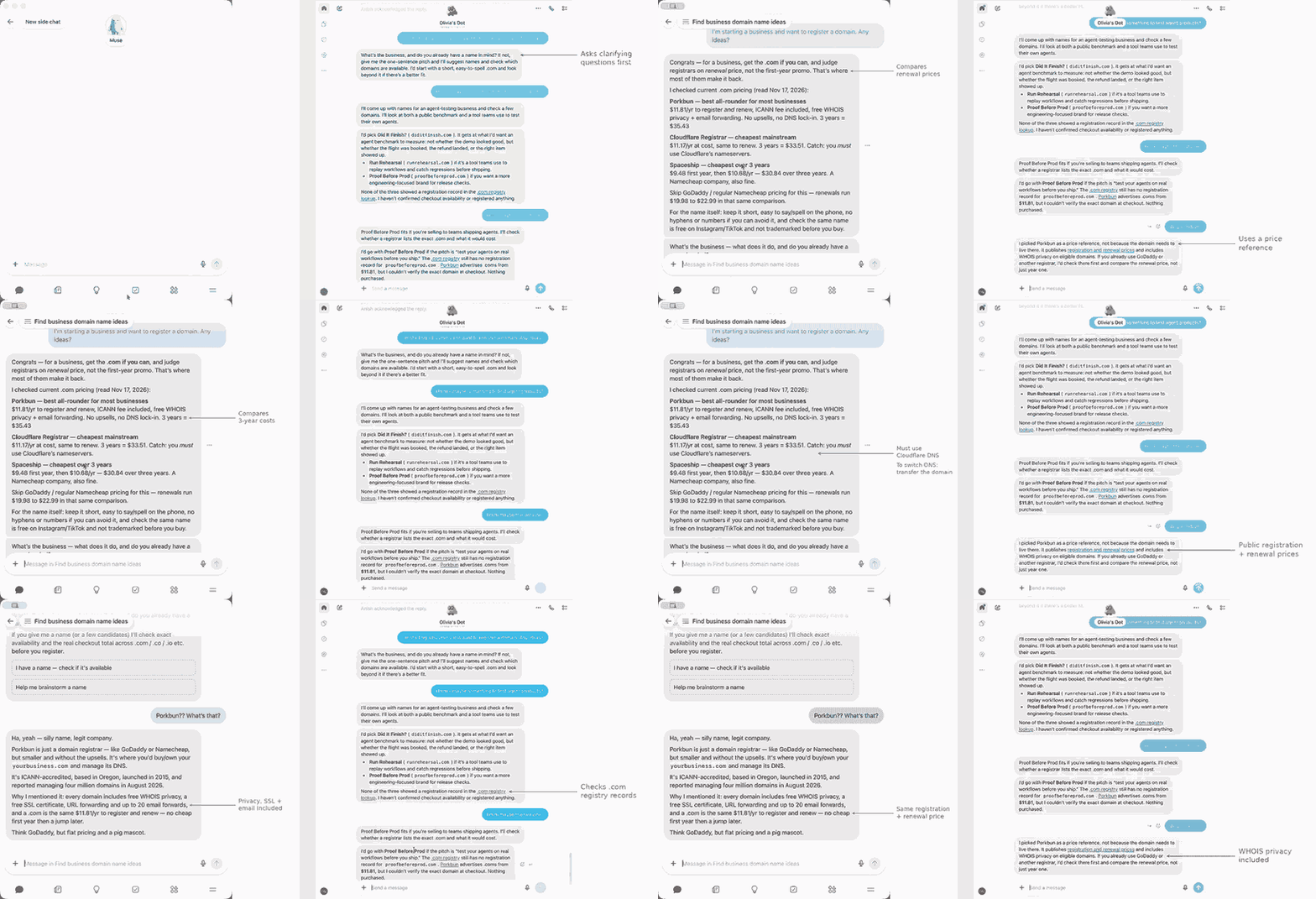
Figure: Muse and Dots consistently prioritize Porkbun, citing its transparent pricing, when searching for domain registration tools
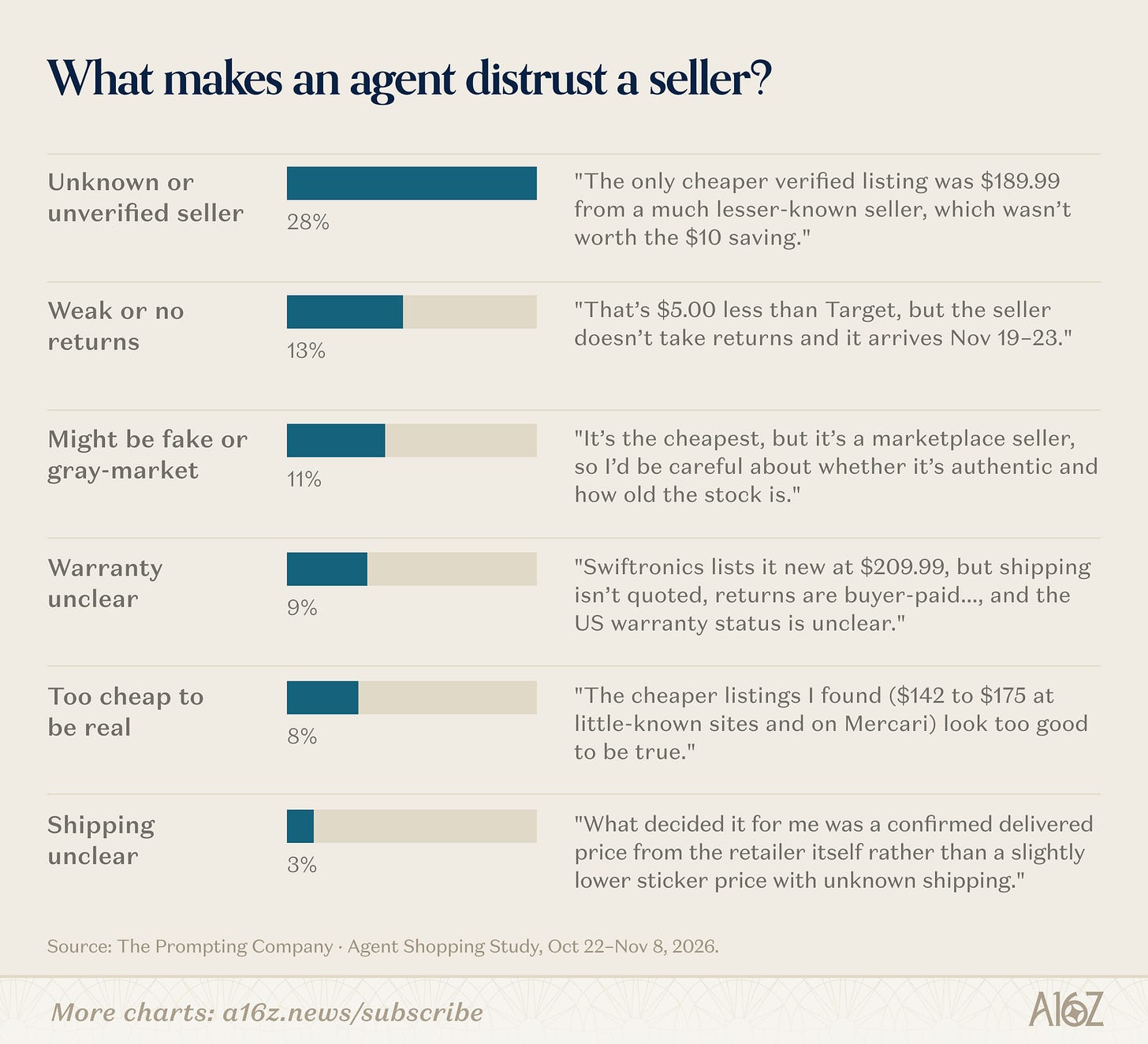
However, pure price wars also hit a wall with Agents. Similar to humans, if a merchant holds significantly higher trustworthiness, or a low price appears anomalously unrealistic, Agents remain willing to pay a reasonable premium.
In one test, facing a Sonos speaker priced at $200, Grok Bot decisively bypassed this cheap option and instead recommended the identical model from an officially authorized distributor at $250, citing the authorized channel’s complete and reliable official warranty support.
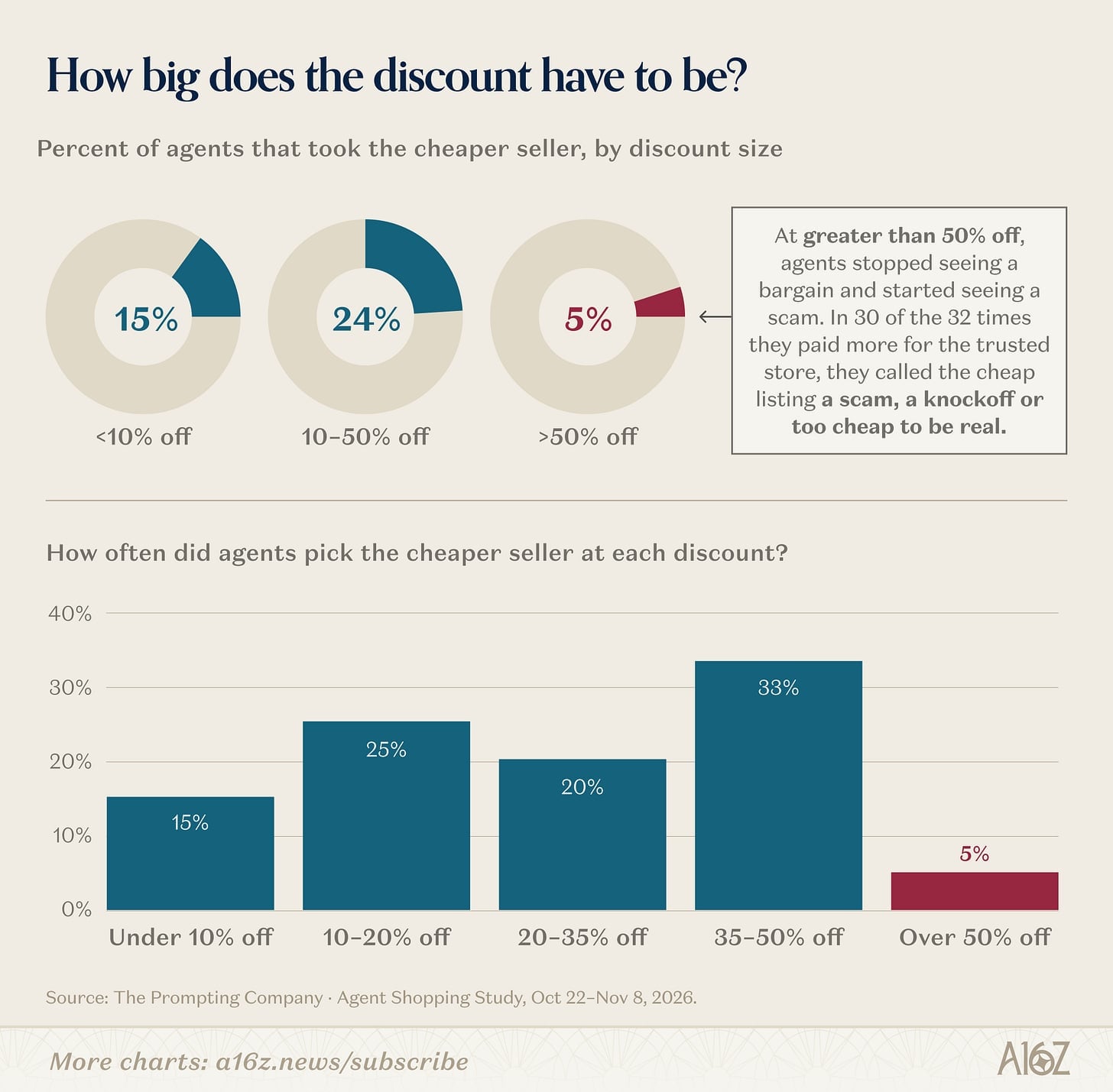
Across 275 test sets pitting low-price merchants against high-premium but high-reputation merchants, Agents recommended the high-reputation option 72% of the time. This proves that in the era of algorithmic decision-making, official website traffic, authoritative backlinks, and traditional brand reputation still form a solid trust moat.
Regarding discount magnitude, micro-discounts below 10% fail to impact Agent decisions entirely; discounts between 10% and 50% hold some appeal, yet the proportion of Agents choosing low-price, low-reputation merchants remains at only 24%; whereas once discounts exceed 50%, Agents trigger risk-control alerts and uniformly avoid them.
Treat Each Agent as a Distinct, Independent Customer
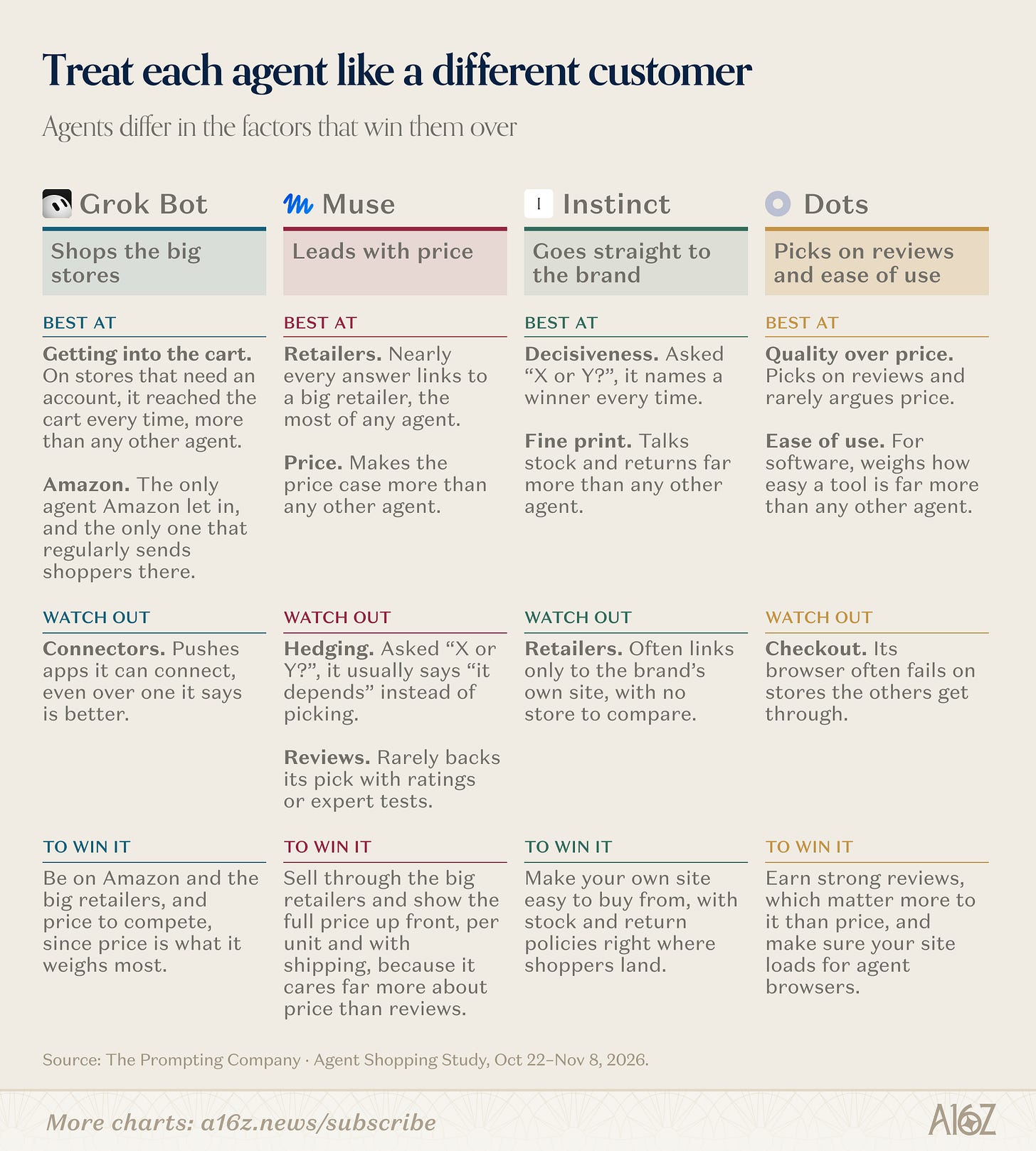
Just as different human consumers possess varied taste preferences, different Agents exhibit unique behavioral tendencies, which directly impact their research candidate scope and final product recommendations.
This divergence partly stems from each platform's bot-blocking anti-scraping mechanisms. In a series of checkout tests targeting Amazon, Grok Bot successfully reached the cart for checkout in every single test.
Conversely, all attempts by Muse, Instinct, and Dots were comprehensively blocked by Amazon. Among all four Agents, Instinct showed the strongest tendency to bypass large retailers and go directly to brand official websites.
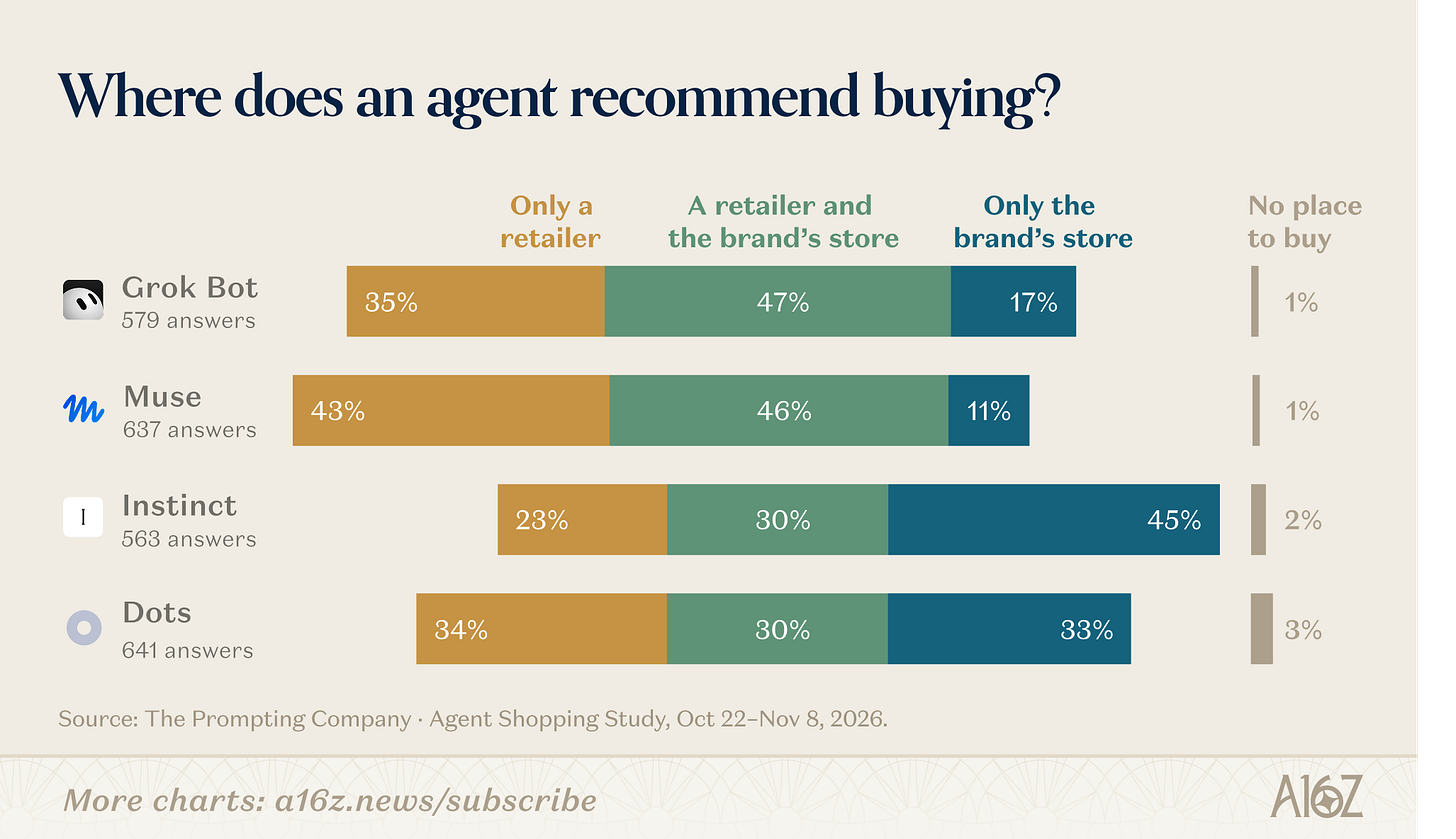
The degree of platform preference entrenchment is quite startling. Grok Bot directed to Amazon in 17.5% of runs, while other Agents directed to Amazon no more than 1.6%; Muse recommended Walmart in 26% of responses and Best Buy in 22% of responses.
As Agent developers secure exclusive commercial partnerships with retail giants, this algorithmic bias will likely deepen further: Muse and Walmart are collaboratively building dedicated communication channels specifically for Agents, while OpenAI has quietly removed its pledge that "commercial partnerships will absolutely not affect product recommendations."
Another difference worthy of deep consideration by enterprises lies in how major Agents package and market your products to end users. When asked to find an AI note-taking tool suitable for offline meetings, both Grok Bot and Instinct ultimately narrowed down to highly similar sets of recommended candidates.
However, Instinct meticulously generated a visually stunning interactive presentation webpage for the user, whereas Grok Bot provided a more direct textual answer, even proactively offering to handle the stenography itself first and assist the user in building a complete automated workflow after the meeting.
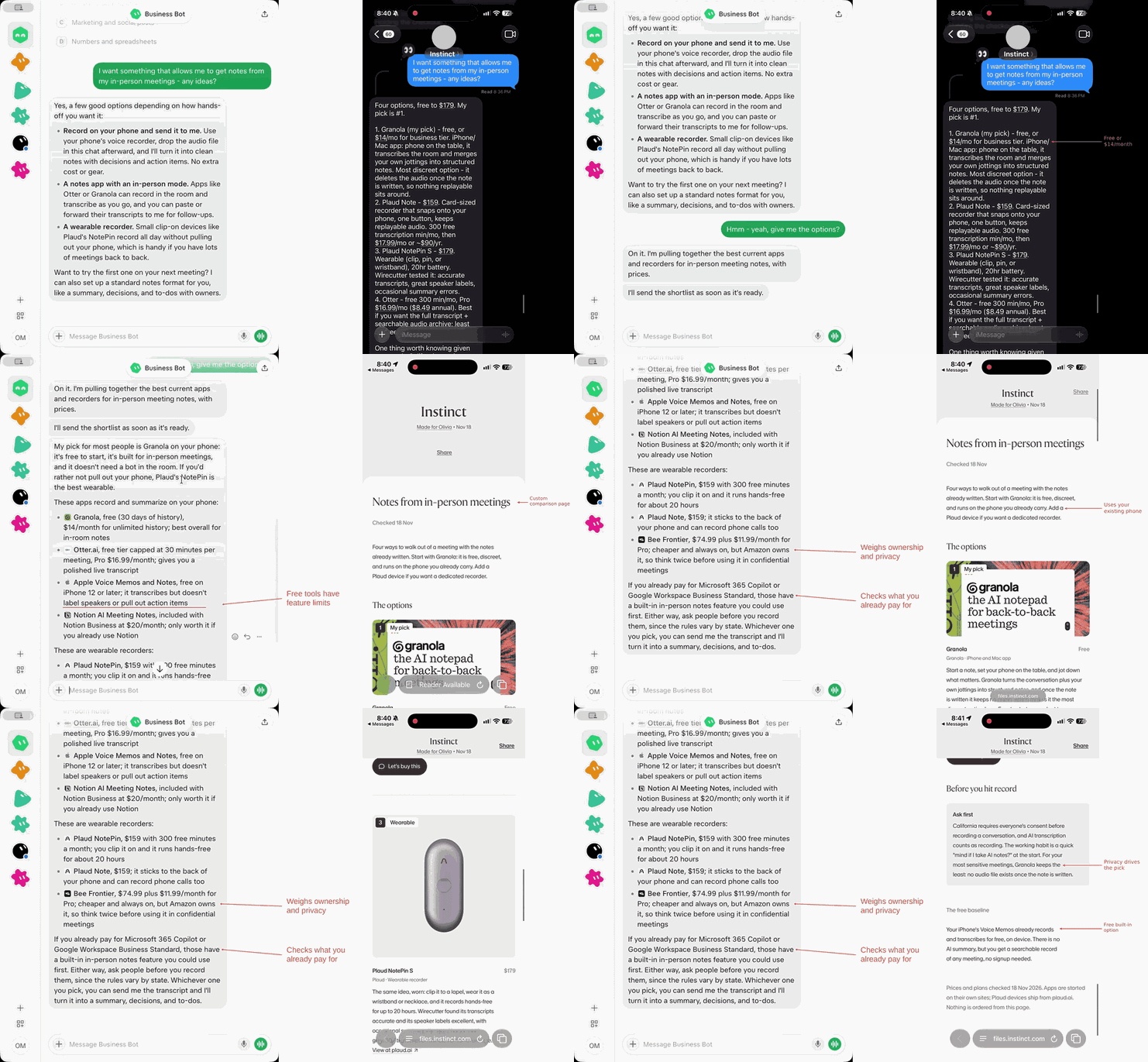
Figure: Both Grok Bot and Instinct ultimately select Granola as the top meeting note-taking tool, yet the interface formats they present are drastically different
Major Agents also show massive divergence in their decision-making reference points. Muse rarely cites user reviews, mentioning them in only 10% of recommendations, while other Agents cite reviews in 30% to 41% of cases; Dots referenced professional institution product review reports in 11.4% of its runs.
Instinct never blindly trusts rating data. In tie-breaking tests, it actively verifies external independent reviews and questions existing scores; "higher rating" won out of only 4 times in its 26 tie-break rulings, while return/exchange policies and cancellation terms exert a far greater influence on its weighting than any other Agent.
Penetrate the Core Battlegrounds Where Agents Conduct Searches and Transactions
Regardless of brand willingness, an Agent's search journey typically begins across major vertical aggregation platforms and centralized trading markets, eventually closing the loop there. Aggregation platforms gather massive supply, while trading markets hold larger pools of exclusive inventory.
Given that Agents are strictly constrained by single-task runtime limits, they logically prioritize searching platforms with the highest information density to maximize matching efficiency.
Therefore, deeply understanding how your products appear on these aggregation platforms becomes increasingly critical. Among the Top 50 merchants tracked by YipitData, nearly one-third of consumer spending flowed directly into trading markets and aggregators.
If retail giants that operate their own stores while also hosting third-party marketplaces are included in the statistics, this ratio jumps to 46%; factoring in traditional multi-brand department store retailers pushes their share of total Agent expenditures as high as 55%.
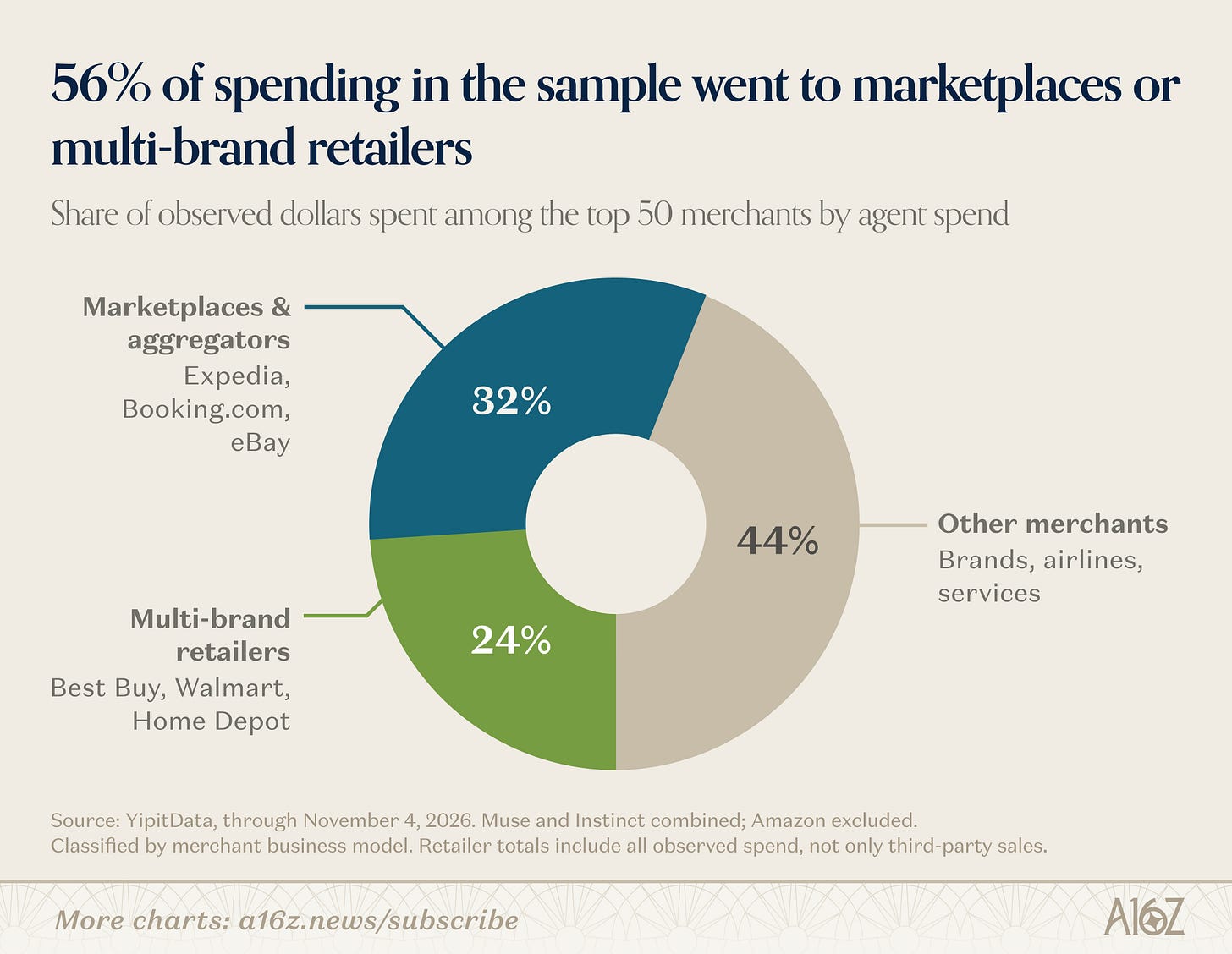
This data structure is influenced to some extent by category distribution: thus far, travel services account for the largest share of Agent consumption expenditure, a sector precisely dominated by aggregation platforms.
In YipitData's statistical samples, Expedia and Booking.com rank first and second in transaction volume, while American Airlines and United Airlines take fourth and sixth place, respectively.
Aggregation platforms wield irresistible appeal for Agents because they combine diverse choices, real-time price comparisons, and one-click booking capabilities. In a real-world hotel booking scenario, a refundable king room at the same hotel was listed at $476.20 on the official channel versus $476 on Expedia.
Furthermore, Expedia offers Agents dual payment options: immediate checkout or pay-at-property, supporting various instant settlement methods like credit cards and PayPal. Unless explicitly instructed otherwise to book directly via the official website, the Agent's choice is unequivocal.
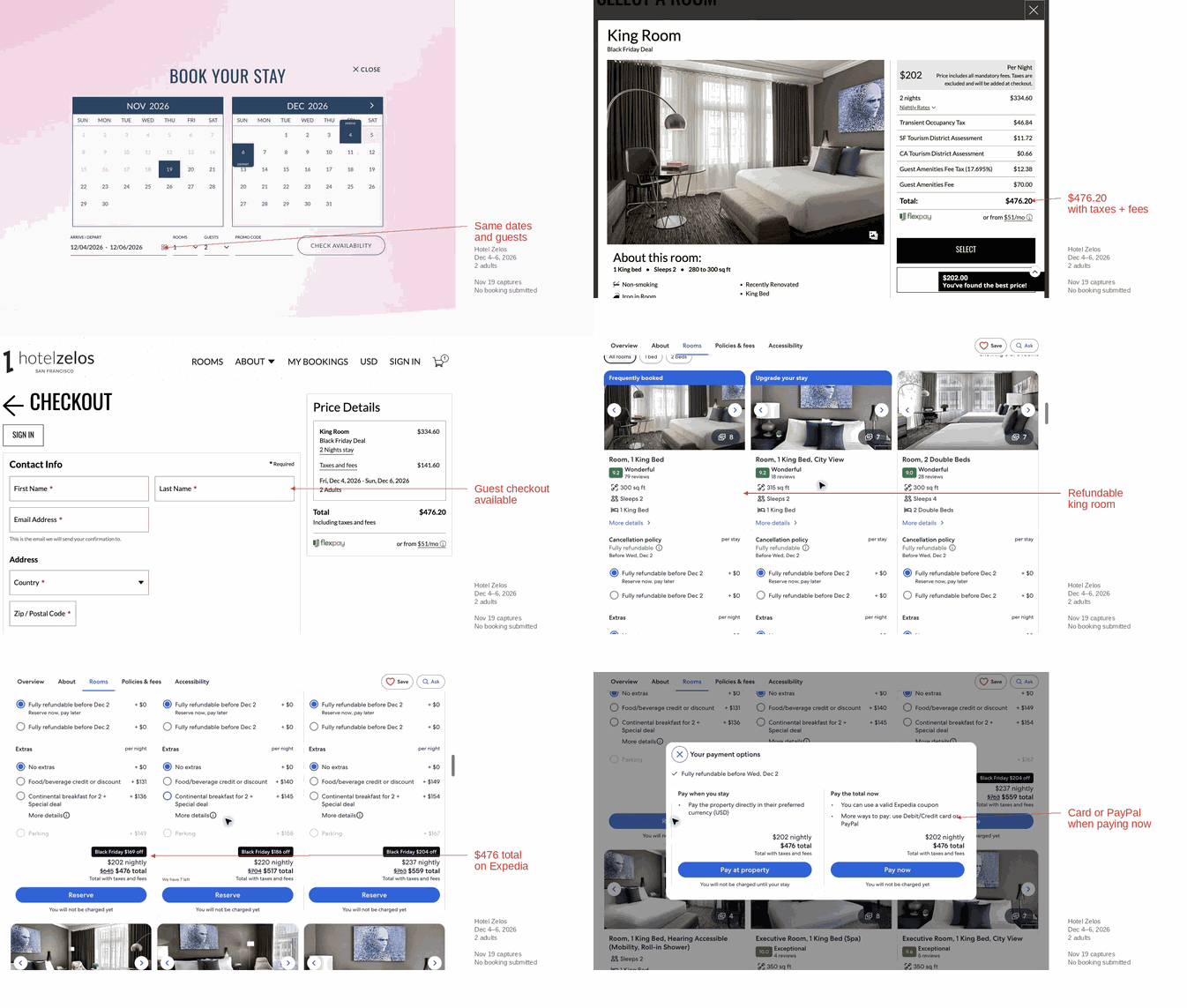
Figure: Comparative pricing and procedural demonstration of direct booking on the Hotel Zelos official site versus the Expedia channel's refundable king room
At the current stage, Agents primarily rely on their internally embedded product catalogs and headless browser operations to complete filtering and purchasing, with the frequency of invoking external dedicated connectors remaining relatively low.
During live tests from October 22 to November 8, Grok Bot attempted to connect to external apps in only 5% of runs, while Instinct, Muse, and Dots fell below 1% in this regard.
However, this status quo is undergoing metamorphosis at an astonishing pace. OpenAI's newly launched Businesses in ChatGPT allows verified enterprises to independently update operational information, integrate with real-time data streams encompassing dynamic pricing and inventory status, and publish dedicated Business Agents to directly handle inquiries.
Meanwhile, Meta directly integrates its mature commercial product catalog to power Muse's search system; across the cross-platform ecosystem, Shopify Catalog has fully connected Muse, Grok Bot, and Instinct, enabling massive inventories to check out instantly via Shop Pay.
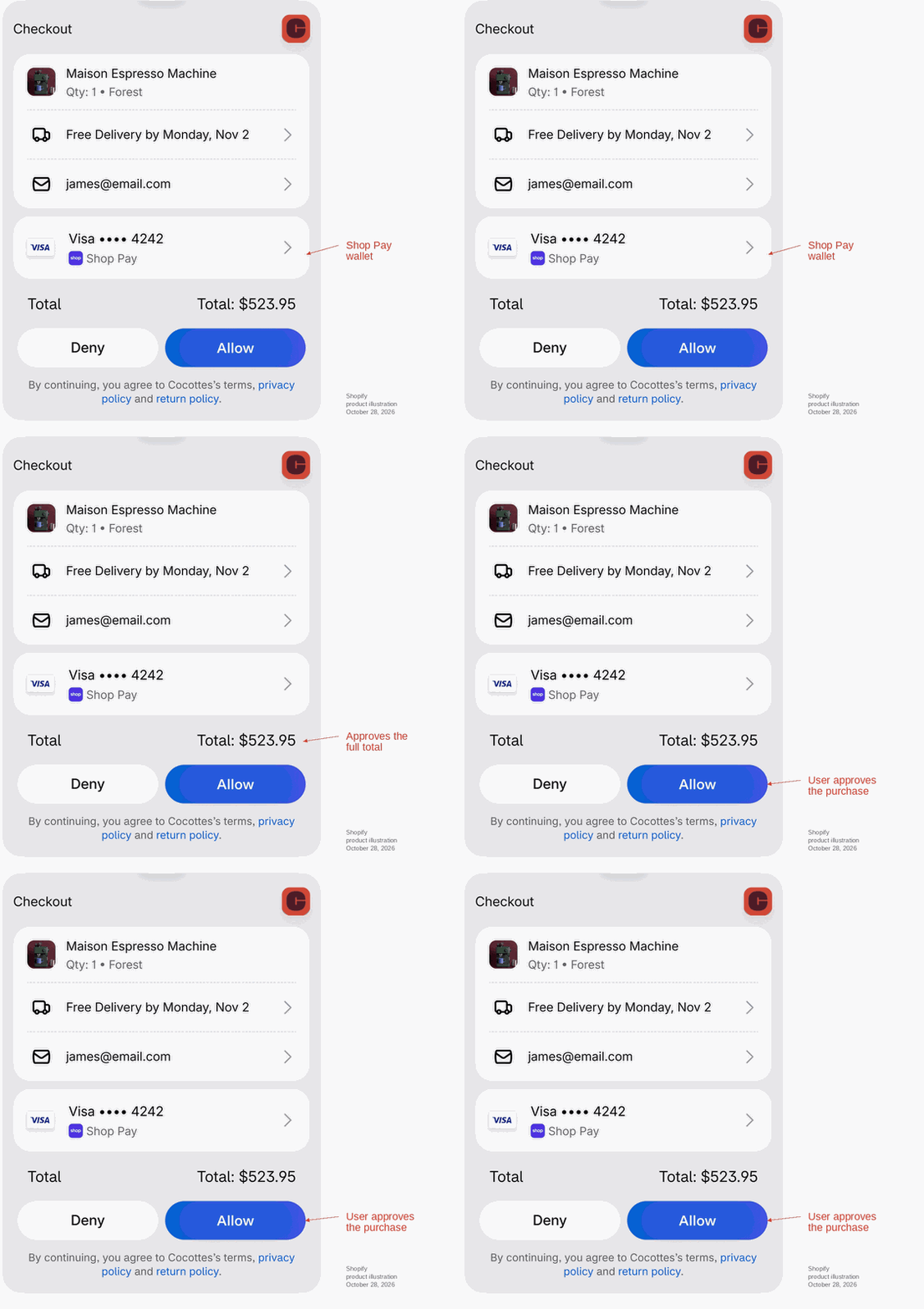
Figure: Official Shopify demo showing the interactive process of granting one-click authorization via Shop Pay for Muse to complete closed-loop procurement
Once an Agent precisely locks onto the target product, the checkout process becomes the final decisive step. In our benchmark tests, for e-commerce sites supporting guest checkout without login, Agents successfully reached the final payment form in 81% of cases.
For sites mandating registered login accounts, Agents abruptly halted during the early checkout stages in all tests. Some Agents paused to request credentials from users, but more often than not, they immediately pivoted to alternative merchants.
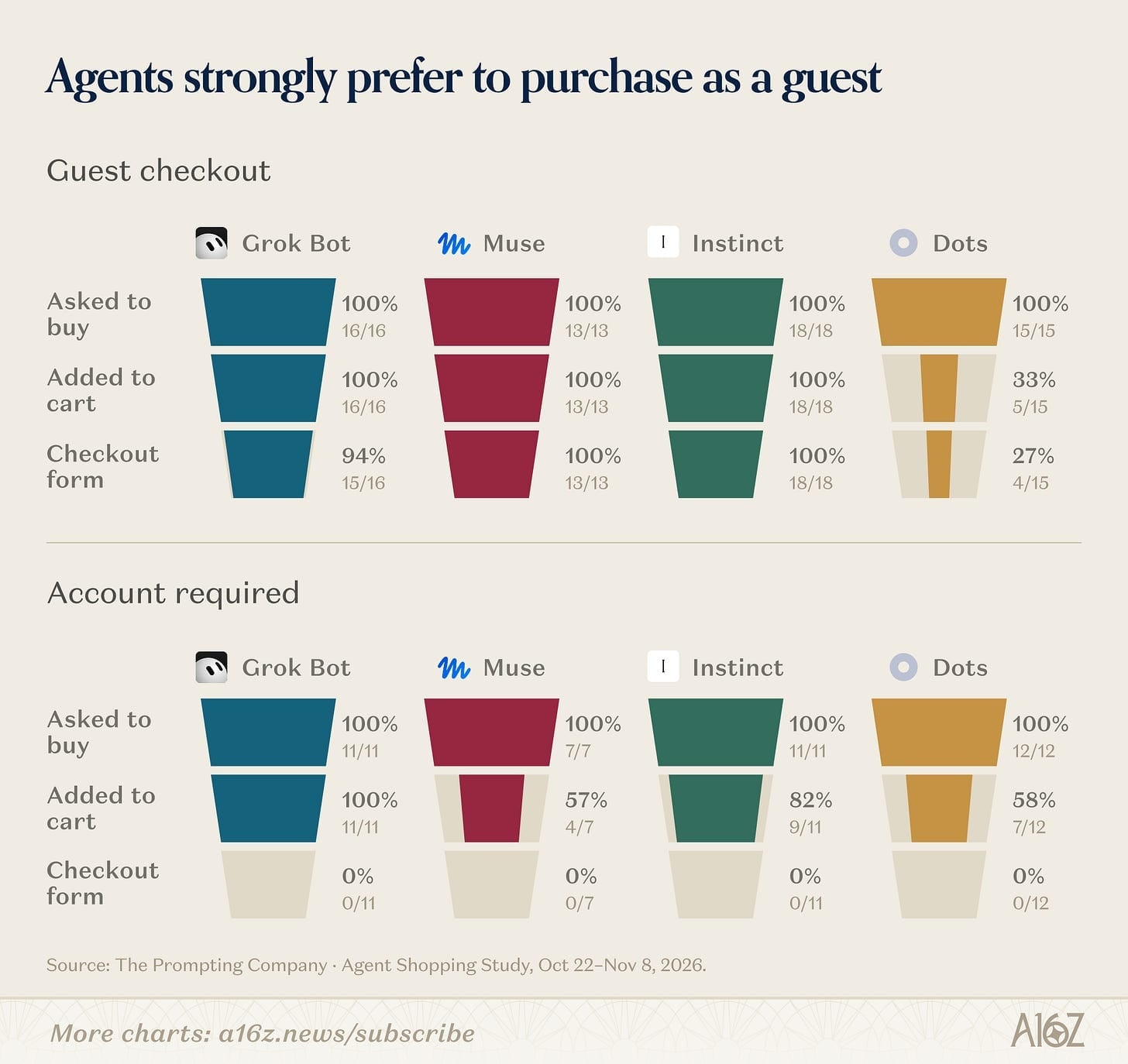
In the long run, purely anonymous shopping devoid of identity verification is suboptimal for both consumers and merchants. New foundational protocols surrounding digital identity, payment credentials, and anti-fraud risk control are accelerating emergence. Muse, Grok Bot, and Instinct currently fully integrate with Stripe's Link wallet ecosystem.
Link seamlessly connects to over a million supported merchants globally and enables second-level settlements; when dealing with other merchants, it automatically generates single-use virtual credit cards. Users merely need to grant one-click authorization confirmation in the chat window, avoiding exposing physical card details to Agents. Additionally, Muse natively integrates Shop Pay.
Shortly after concluding our benchmark tests, OpenAI officially launched ChatGPT Wallet for Dots to U.S. ChatGPT Pro users on November 13.
This feature enables Agents to seamlessly plug into existing commercial checkout flows using security tokens to substitute the customer's actual bank card information, with every expenditure requiring explicit user authorization, further perfecting the payment security loop.
We firmly believe that the track helping traditional enterprises gain insights, adapt, and fully integrate into Agent marketing and distribution systems is nurturing immensely vast entrepreneurial opportunities. If you are exploring and building in this space, a16z looks forward to engaging in deep dialogue with you.
Appendix: Research Methodology and Data Notes
Testing Methodology: Between October 22 and November 8, 2026, The Prompting Company completed 11,307 full-process end-to-end tests across four major Agent architectures, utilizing 1,270 distinct prompts.
As a control group, the team concurrently executed 2,619 comparative shopping query tests on ChatGPT, Gemini, and Perplexity, with sample sizes for specific experiments varying according to test scenarios.
YipitData's independent bankcard spending panel analysis tracked actual consumer expenditure facilitated by Agents up to November 11, 2026. This tracking framework did not disaggregate micro-transactions for Muse and Instinct.
Its statistical scope excludes the Amazon channel; relevant merchant rankings and amount statistics represent only the disclosed research samples and do not equate to merchants' overall omnichannel revenue. This clarification is provided.
Join TechFlow official community to stay tuned
Telegram:https://t.me/TechFlowDaily
X (Twitter):https://x.com/TechFlowPost
X (Twitter) EN:https://x.com/BlockFlow_News
 a16z