Netflix’s SBF series tells a different story.
Author: Ben Weiss, Bloomberg
Translator: Luffy, Foresight News
One of the most striking episodes in the entire FTX saga is a romance. Cryptocurrency tycoon Sam Bankman-Fried (SBF) stole $8 billion from customer deposits, and his extensive private messages with a deputy he dated early in the company’s life were entered as trial evidence. This relationship was not central to the case, as several other key witnesses testified alongside Caroline Ellison.
However, in Netflix’s miniseries *The Altruists*, this romantic entanglement is placed front and center. In eight episodes, it compresses a complex financial crime story into a love affair, crafting a polished retelling. This reimagining appears designed to shift blame away from SBF, who was sentenced to 25 years in prison.
Premiering on November 19, the show is the latest in a recent Hollywood string of productions “targeting the tech industry.” October saw Aaron Sorkin’s *The Social Reckoning*, which covers a Facebook whistleblower; a four-hour documentary criticizing Elon Musk; and Nathan Fielder and Lance Oppenheim’s *You Can See Everything*, about Theranos founder Elizabeth Holmes, who was sentenced to 11 years for defrauding investors.
Among these works, Netflix’s trailer for *The Altruists*, released last month, packages one of the largest frauds in financial history as a “Bonnie and Clyde”-style romance. “FTX’s collapse ruined so many lives, including our own, and Netflix has decided to make it a love story,” former FTX crypto exchange COO Constance Wang wrote on X.
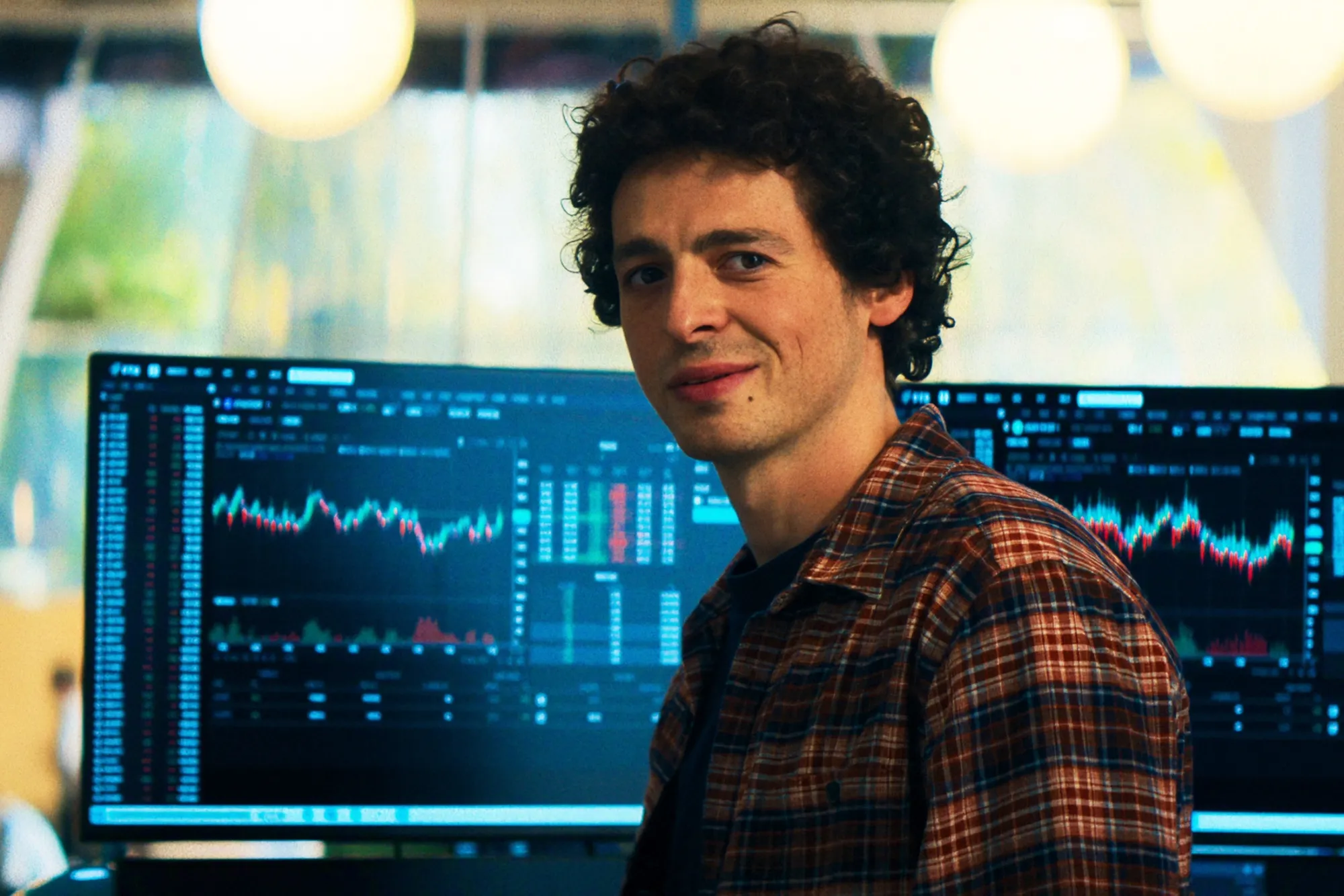
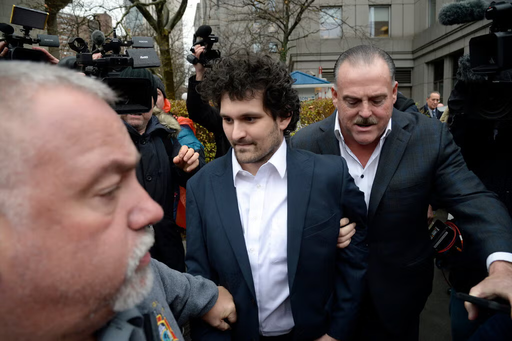
Photo: The series seems to aim at shifting blame away from SBF
I share this skepticism. Having covered cryptocurrency for years, I arrived at court early every day during the SBF trial to grab seats and file reports. After reviewing the evidence and listening to hours of testimony, the implosion of FTX struck me less like a tragic romance and more like a parable about “money coming fast and too much.”
*The Altruists* was created by Graham Moore, who won the Academy Award for Best Adapted Screenplay in 2015 for *The Imitation Game*, a biopic about mathematician Alan Turing. Moore collaborated with writers Kevin T. Dugan and Jen Wieczner, both of whom penned a series of meticulously reported articles for *The New Yorker* following the FTX collapse. Moore told me he conducted extensive research of his own, carefully studying trial transcripts, text messages, and other documents. “In particular, I cultivated my own sources, right inside and around FTX,” he said, but declined to name them specifically.
The title comes from a life philosophy SBF himself espoused: effective altruism, a charitable creed that encourages followers to quantitatively consider “how to maximize their positive impact on the world.” Many effective altruists work high-paying jobs and donate their income to charities.
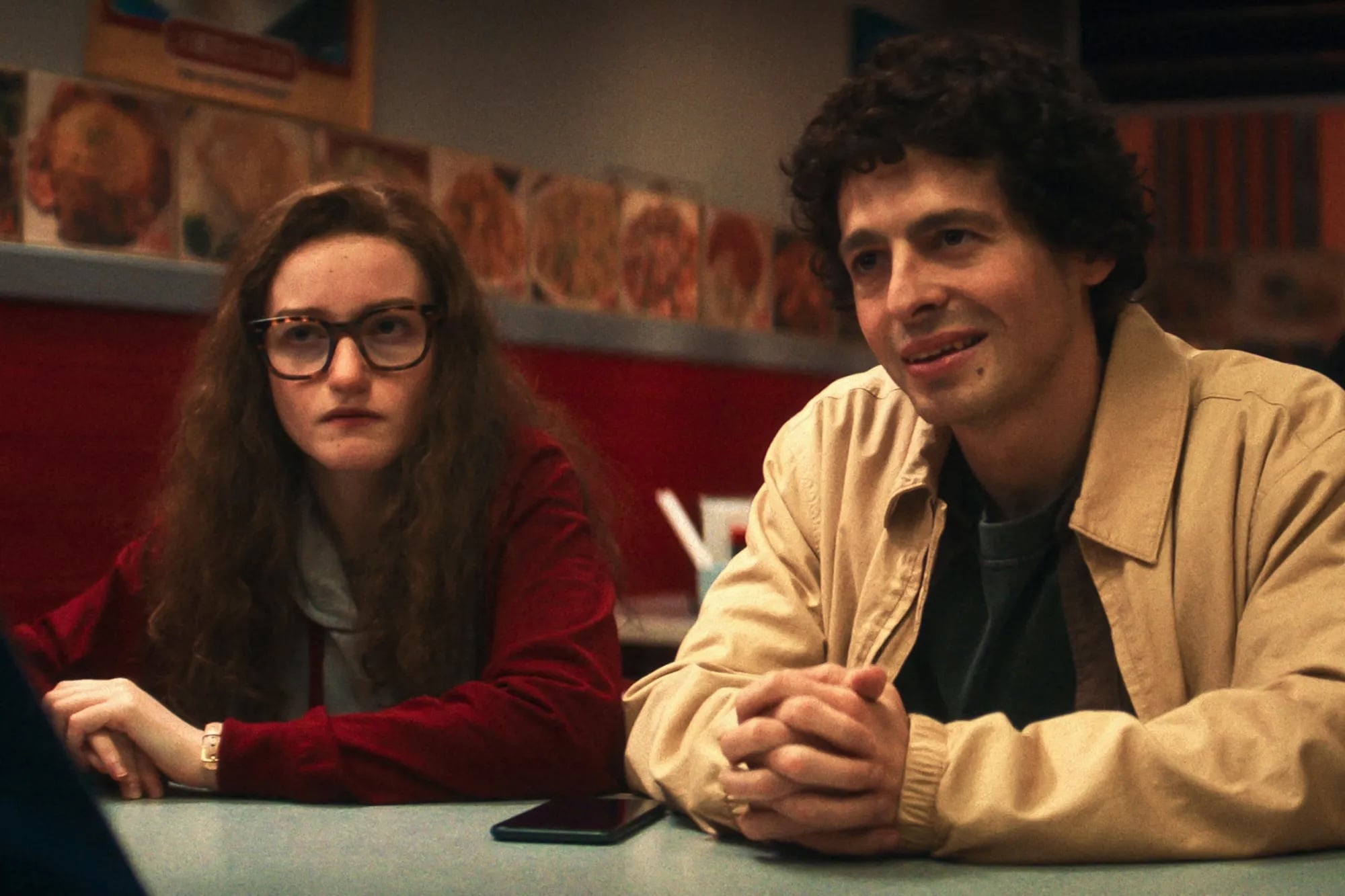
The show’s SBF, played by Anthony Boyle, did exactly that. After graduating from MIT, the mathematical prodigy joined the prominent trading firm Jane Street. There he met his romantic interest Ellison (played by Julia Garner), and the two “fell in love over a math problem.” SBF hosts a training session where she must bet chips on whether she can solve a series of riddles, and they share nervous smiles across the table. Ellison pushes all her chips forward. “Always going all-in is the mathematically optimal strategy,” she says, a line that foreshadows the events to come.

Photo: The relationship between Ellison and SBF is central to The Altruists
E llison and SBF embark on an on-again, off-again relationship as the series traces SBF’s career trajectory. He leaves Jane Street to launch the crypto hedge fund Alameda Research, bringing Ellison onboard and eventually making her co-CEO of the trading firm. He then founds FTX, building a rapidly growing crypto exchange capable of competing with the market’s largest players. In 2022, a wave of customer withdrawals exposes an $8 billion hole on the balance sheet, and his empire suddenly collapses. Facing the threat of prosecution, Ellison flips, cooperating with the U.S. government.
*The Altruists* attempts to simplify the jargon-heavy crypto world, and to some extent, it succeeds. The core crime of the company is theft: customer funds were not where they should have been, and FTX simply didn’t have enough money to cover client withdrawals. That is precisely what happened.
But certain scenes expose blind spots among the actors and writers. An FTX employee imprisoned for campaign finance fraud mispronounces Ethereum’s ticker code (it should have the long ‘E’ sound). In another instance, Ellison claims that in the Prisoner’s Dilemma, the “mathematically optimal solution” is to not confess; in reality, in a single-round Prisoner’s Dilemma, the optimal move is to confess, as the expected sentence is always lower than staying silent.
Moore takes creative liberties with the source material. In a pivotal scene, Ellison tells FTX employees that Alameda Research has been siphoning customer funds from the exchange. According to court records, however, she was actually speaking to Alameda staff, not FTX employees. Other discrepancies exist, such as the show portraying FTX CTO Gary Wang as a foul-mouthed, confrontational programmer; trial transcripts reveal Wang was actually a quiet coder.
The series also casts Binance, the world’s largest crypto exchange, co-founder and early FTX investor Changpeng Zhao (played by Terry Chen) as the primary villain. In the show, after pressuring SBF to feed non-public information about imminent FTX user trades to Alameda, Zhao sells his stake. This setup implies SBF used it to engage in insider-trading-like maneuvers, a form of “front-running” illegal in most jurisdictions. There is no evidence Zhao pressured SBF to do this, but in reality, the Binance co-founder did sell shares back to SBF.
Where the series deviates most forcefully from the public narrative is by portraying Ellison as nearly equal partners with SBF, jointly siphoning customer funds from FTX. “It’s like they’re firing each other up in some kind of manic, psychological frenzy,” Alameda Research former co-CEO Trabucco (played by Alex Lawther) says aboard his yacht (which he named the *Soak My Deck*). (That final detail, unfortunately, is true: Trabucco later surrendered the yacht during the FTX bankruptcy proceedings.)
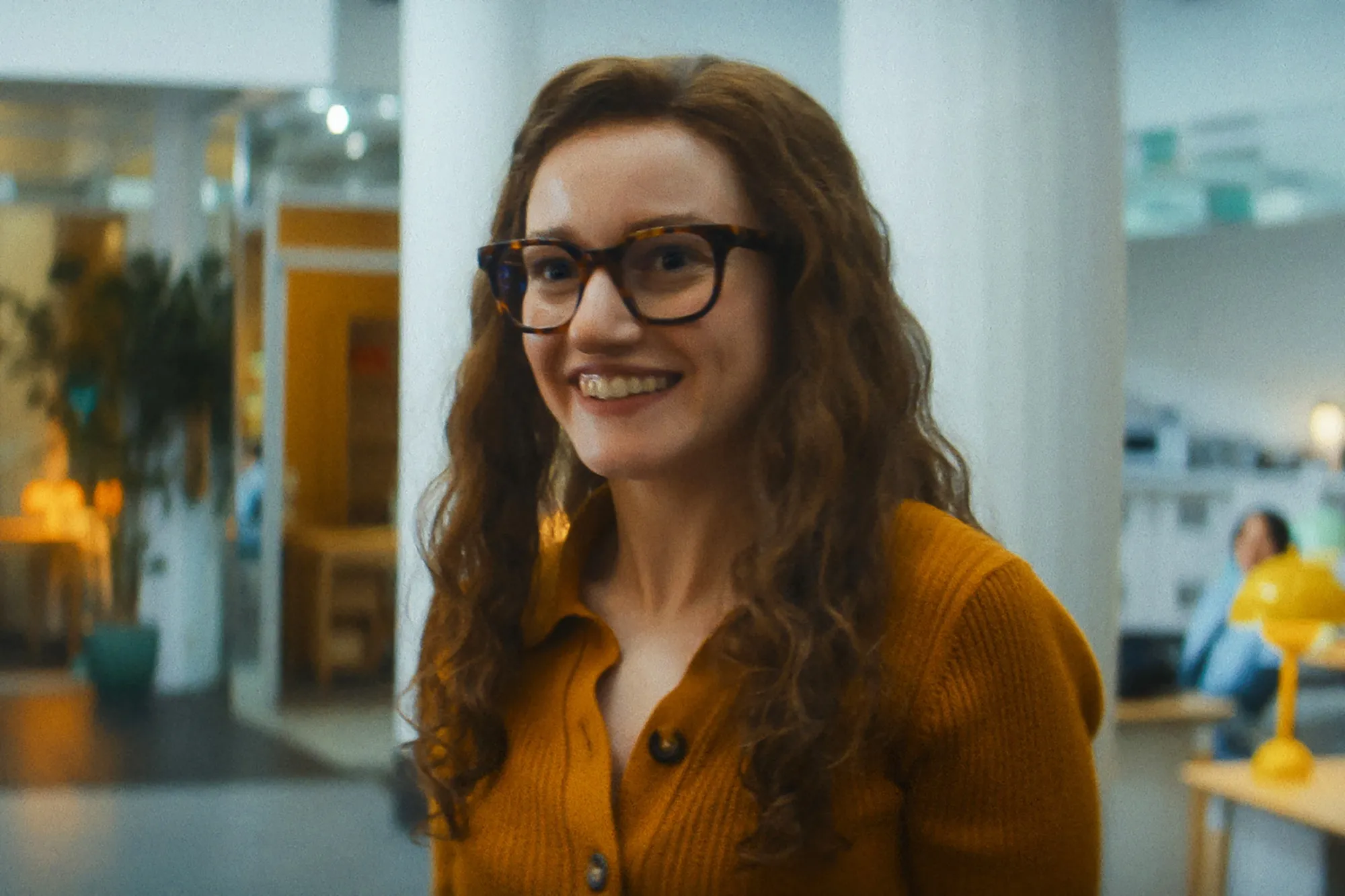
Photo: The series portrays Ellison as a partner nearly equal to SBF
In a scene near the end, an spreadsheet lists FTX’s major shareholders, including Ellison, who is orchestrating a “coup” to overthrow SBF. Court records show, however, that SBF, Gary Wang, and the exchange’s head of engineering all held far greater stakes. Former FTX executive Wang told me in an interview that the usual “final decision-maker” was SBF, not Ellison. The founder and CEO of PR firm M Group said roughly the same thing; the firm worked closely with FTX and SBF for nearly two years until the exchange collapsed: “He was everything.”
Changpeng Zhao hasn’t watched the series yet and expects little of it. “It won’t be an accurate portrayal of what actually happened,” he told me. “I think Sam is a very smart guy, just too aggressive and too eager for success.”
Nevertheless, the writers seem sympathetic to SBF’s defense for “why FTX fell.” Prosecutors alleged the CEO conspired with Ellison and a small group of colleagues to funnel customer funds into a barrage of investments, political donations, sponsorships, and real estate, creating FTX’s $8 billion shortfall. SBF’s lawyers argued, however, that the money still existed but was locked in “illiquid” assets that could eventually be sold off. The largest of these was his investment in AI company Anthropic. In the final episode of *The Altruists*, SBF frantically and futilely tries to sell off this stake. Just before the credits roll, a title card informs viewers of his Anthropic investment’s current worth: $100 billion. (Based on an analysis of FTX bankruptcy filings and the Anthropic IPO price, the actual value tops out at roughly $37 billion.)
The presiding judge ultimately rejected this argument. “It’s like saying, I broke into the Federal Reserve, stole a million dollars, bought lottery tickets with it, and happened to win big, so therefore it’s fine,” he said in court.
*The Altruists* is fictional. Moore stated he set a rule for himself: never depict moments already documented in the public record. He hopes the series fosters a sense of intimacy, allowing audiences to peek into the minds of SBF and Ellison like never before. “When Sam and Caroline put their heads on their pillows at night, lying there half-lit, whispering to each other, what are those whispers?” Moore imagined.
Several days before I started watching the premiere of this series, I went to the cinema to see *You Can See Everything*. The film features actress Amanda Seyfried, who previously played Holmes in a Hulu series about Theranos. In the documentary, Holmes complains that Seyfried’s portrayal is unrealistic, leaving Seyfried visibly upset. She replies, “This isn’t a lie, it’s television.”
No dramatization can achieve photo-realistic accuracy, but *The Altruists* offers an alternative interpretation of a landmark case. Though questions linger regarding the fraudster’s true motives and appeals continue to reach the Supreme Court, the case is largely settled. I’m uncertain whether *The Altruists* constitutes a lie, but it certainly is a drama series.
Join TechFlow official community to stay tuned
Telegram:https://t.me/TechFlowDaily
X (Twitter):https://x.com/TechFlowPost
X (Twitter) EN:https://x.com/BlockFlow_News
 @Bloomberg