When traditional finance cannot reach people in crisis, Bitcoin did.
TechFlow Selected TechFlow Selected
When traditional finance cannot reach people in crisis, Bitcoin did.
From Trusted Intermediaries to Direct Control: Bitcoin Is Reshaping Humanitarian Financing in Crises.
 Navigating Web3 tides with focused insights
Written by: Forbes
Compiled by: AididiaoJP, Foresight News
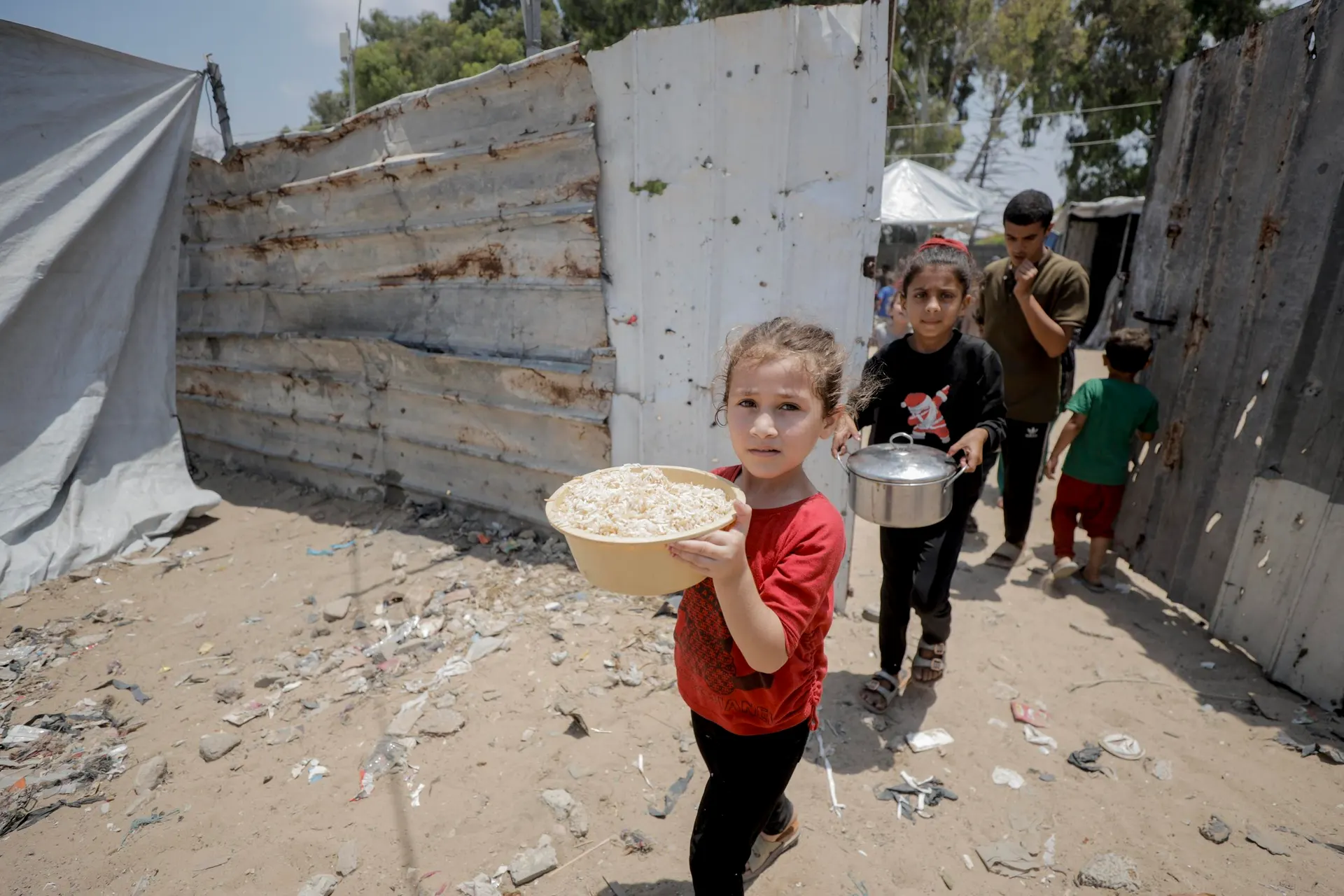
In the Gaza Strip, a crowdfunding campaign meant to bring hope ran into trouble due to restrictions imposed by traditional finance.
Sami Jamal Al-Shannat raised over £55,000 (approximately 500,000 RMB) for his family trapped in the war via GoFundMe, thinking at the time that the hardest part was over.
However, after the platform deducted a 3.9% fee, it did not support direct payments to Gaza.
The remaining funds had to be transferred to a designated beneficiary residing in a supported country, who would then pass them on to the family.
This arrangement complied with platform regulations but placed the final delivery entirely on personal trust.
Sami stated that the arrangement with his brother-in-law, who was the beneficiary, later fell apart; he has yet to receive the full amount, and the dispute remains unresolved.
He described this as not just a financial loss, but something that left his wife and children in an extremely vulnerable position.
"Raising money wasn't the problem," Sami told me from a displacement camp in Gaza, "The problem started when we had to rely on others to collect the funds on our behalf."
What Sami hopes for most now is to recover the funds and hold relevant parties accountable, but finding a lawyer from Gaza is difficult, and he lacks the necessary funds and connections.
He also plans to continue fundraising for his family, as wartime inflation has skyrocketed the prices of basic necessities like food.
GoFundMe did not respond to multiple requests for comment.
The Compliance Trap
Sami's experience exposes a common problem faced by humanitarian crowdfunding platforms: platforms must comply with banking rules, sanction regimes, and anti-money laundering requirements, which strictly limit the regions where funds can be delivered.
When people in crisis cannot receive funds directly, they must go through intermediaries, which not only shifts responsibility onto individuals but may also result in aid originally raised for them failing to arrive.
This compliance bottleneck can even paralyze global human rights organizations.
Lyudmyla Kozlovska, Chair of the Open Dialogue Foundation, recalled that in the early stages of Russia's invasion of Ukraine in 2022, platforms like PayPal, GoFundMe, and Wise blocked their fundraising appeal for Ukraine.
By using Bitcoin, the foundation was able to bypass traditional delays and deliver emergency humanitarian aid on the second day of the war.
Charities, aid organizations, and tech companies have been striving for years to solve how to reach populations unable to access the traditional financial system.
More and more developers believe that the current model relies on too many intermediaries, especially when funds need to cross borders or reach restricted jurisdictions.
Reshaping the Trust Architecture
Michele Morucci, co-founder of the Bitcoin crowdfunding platform Geyser, pointed out that trust is the core issue.
"People think the biggest challenge is moving funds, but it's not. The biggest challenge is deciding who to trust."
Donors usually do not know the recipients; they rely on platforms, charities, journalists, and community leaders to judge the authenticity of projects.
Removing an intermediary only makes sense when there is an equally credible alternative.
Geyser conducts reviews before projects go live, requiring creators to provide proof of work, team information, and necessary documents.
Projects that do not meet credibility standards will not be approved.
Additionally, over 100 Geyser Field Partners are responsible for identifying and supporting projects within communities they are familiar with, forming a chain of trust between local communities and global donors.
Michele stated that these partners have helped deliver 12 million Satoshis (approximately £5,600, equivalent to 0.12 Bitcoin) directly to community projects.
He also admitted that the model is still new and data remains limited.
Far More Than Just One Fundraising Case
The weaknesses exposed by Sami's case are not isolated.
Crowdfunding platforms can raise funds for families facing war, disaster, or oppression within hours, but getting the funds safely into the hands of the target recipients is much more complex.
GoFundMe is not the only platform that restricts payment regions.
Mainstream crowdfunding platforms rely on banks and payment providers and must comply with sanctions, identity verification, and anti-money laundering rules specific to certain jurisdictions.
When direct payments are not supported, organizers may need to designate a beneficiary in another jurisdiction to collect the funds.
While this satisfies the platform's legal and banking requirements, it shifts the responsibility to the collector.
Once the relationship breaks down, recipients have very limited options for accountability through the platform.
Shifting Trust to Verifiers
The Agora platform has taken a different path.
It allows funds to flow directly between donors and recipients, while verification comes from organizations and individuals with first-hand knowledge of the project.
Mary Kate, co-founder of Soapbox (the team behind Agora), explained that donors may not know the person seeking help, but they may know and trust the organization verifying the project.
"This allows us to shift trust from the project itself to the verifiers. You may not know the person seeking help, but you may know and trust the organization verifying it."
This model leaves the final decision to the donors.
Even without verifier support, projects remain visible; while trusted organizations can add context and credibility without needing to be the sole gatekeepers.
Agora also removes the crowdfunding platform from the payment process.
Donations are sent directly to wallets controlled by the recipients, reducing the risk of funds being held by the platform or passed through others.
Bitcoin allows funds to flow across borders without platform custody or beneficiary handover.
Of course, wallet security, access, and exchange rate risks still exist.
For Mary Kate, this control goes far beyond the movement of funds itself.
"We cannot take away your account, cannot shut down your project, cannot take away your money," she said. "For those experiencing trauma and lacking control over their lives, this can be a huge moment of empowerment."
Direct payments cannot solve all problems.
Projects still need auditing, donors still need sufficient information to make informed decisions, and recipients may also misuse funds.
Agora is working to make these risks more transparent while empowering recipients with greater control over funds raised in their name.
Unintended Consequences of Financial Sanctions
Sami's experience is not an isolated case, as the underlying problem is widespread.
Activists, journalists, and humanitarian organizations around the world are finding that legally transferring funds across borders is becoming increasingly difficult as financial regulations become more complex and sanctions affect entire jurisdictions rather than just governments.
Femi Longe, Head of Global Freedom Tech Strategy at the Human Rights Foundation, believes these restrictions often cause unintended harm to those who should be receiving humanitarian funding.
"Traditional crowdfunding platforms are regulated, and cross-border fund transfers must comply with anti-money laundering and sanction regulations.
The problem is that these rules ultimately often affect legitimate opposition groups, non-profit organizations, and ordinary citizens, rather than the governments originally targeted."
Femi mentioned that even organizations operating legally in sanctioned countries find it difficult to receive donations.
Visible financial connections may expose supporters or relatives within the country to retaliation.
Lyudmyla warned that this issue has gone beyond administrative friction, evolving into "transnational financial repression"—where regimes use global AML/CFT rules to deprive dissidents of bank access, even in Western countries.
She cited a landmark resolution passed by the OSCE Parliamentary Assembly in July 2026, which recognized transnational financial repression as a systemic threat and called for strengthened protection of donor privacy and privacy-preserving digital tools.
Lyudmyla stated that Bitcoin payment tools are becoming a necessary lifeline for targeted donors and activists.
Political opposition groups, independent journalists, and civil society organizations often rely on international donations to sustain operations.
When donations are difficult to send or easier to monitor, financial infrastructure becomes another form of pressure.
This does not mean that regulation should be abolished.
Public fundraising requires accountability, transparency, and safeguards to protect donors from fraud.
All interviewees acknowledged this challenge and accepted the fact that there is no perfect solution.
Femi believes the goal should be to remove unnecessary intermediaries while retaining accountability.
"If project operators are allowed to directly control the wallets receiving funds, I think this is better than the status quo," he added, noting that verification and supervision remain an indispensable part of any system handling public donations.
Sami's case highlights the fundamental weaknesses of the humanitarian financial architecture.
Systems built around banks, payment processors, and jurisdictional boundaries often struggle when transferring funds to people in war, political oppression, or humanitarian crises.
No one believes that technology alone can solve the problem of humanitarian fundraising.
Paying recipients directly reduces one layer of risk, but does not guarantee project authenticity, organizer honesty, or that donations are ultimately used for the stated purposes.
Femi said: "I don't think Bitcoin can solve everything.
Systems to verify project creators are still needed, and accountability for how funds are used is still needed.
These challenges will not disappear just because payments become direct."
Michele and Mary Kate's platforms are also working along similar lines: they do not claim to eliminate trust, but rather attempt to redesign where trust lies.
The new generation of humanitarian crowdfunding is not just a temporary patch on a broken traditional model, but a systemic shift.
Open payment networks allow recipients to directly control funds raised in their name, while decentralized trust networks help donors decide who to support.
Although judgment, verification, and accountability remain indispensable, this open architecture is bypassing the legacy financial restrictions and regulatory barriers that hinder traditional platforms from reaching those who need help most.
Join TechFlow official community to stay tuned
Telegram:https://t.me/TechFlowDaily
X (Twitter):https://x.com/TechFlowPost
X (Twitter) EN:https://x.com/BlockFlow_News
 Forbes