Claude Mythos Shut Down Reveals the True Cost of Renting AI
TechFlow Selected TechFlow Selected
Claude Mythos Shut Down Reveals the True Cost of Renting AI
Owning Intelligence vs. Renting Intelligence—Mythos Shuts Down; Founders Need to Wake Up
 Navigating Web3 tides with focused insights
Author: Lin Qiao
Translated and edited by TechFlow
TechFlow Intro: Mythos was abruptly shut down this week—exposing a fatal risk most founders overlook: when your core capabilities rely entirely on someone else’s platform, your survival is no longer in your own hands. Who truly owns the intelligence powering your product?
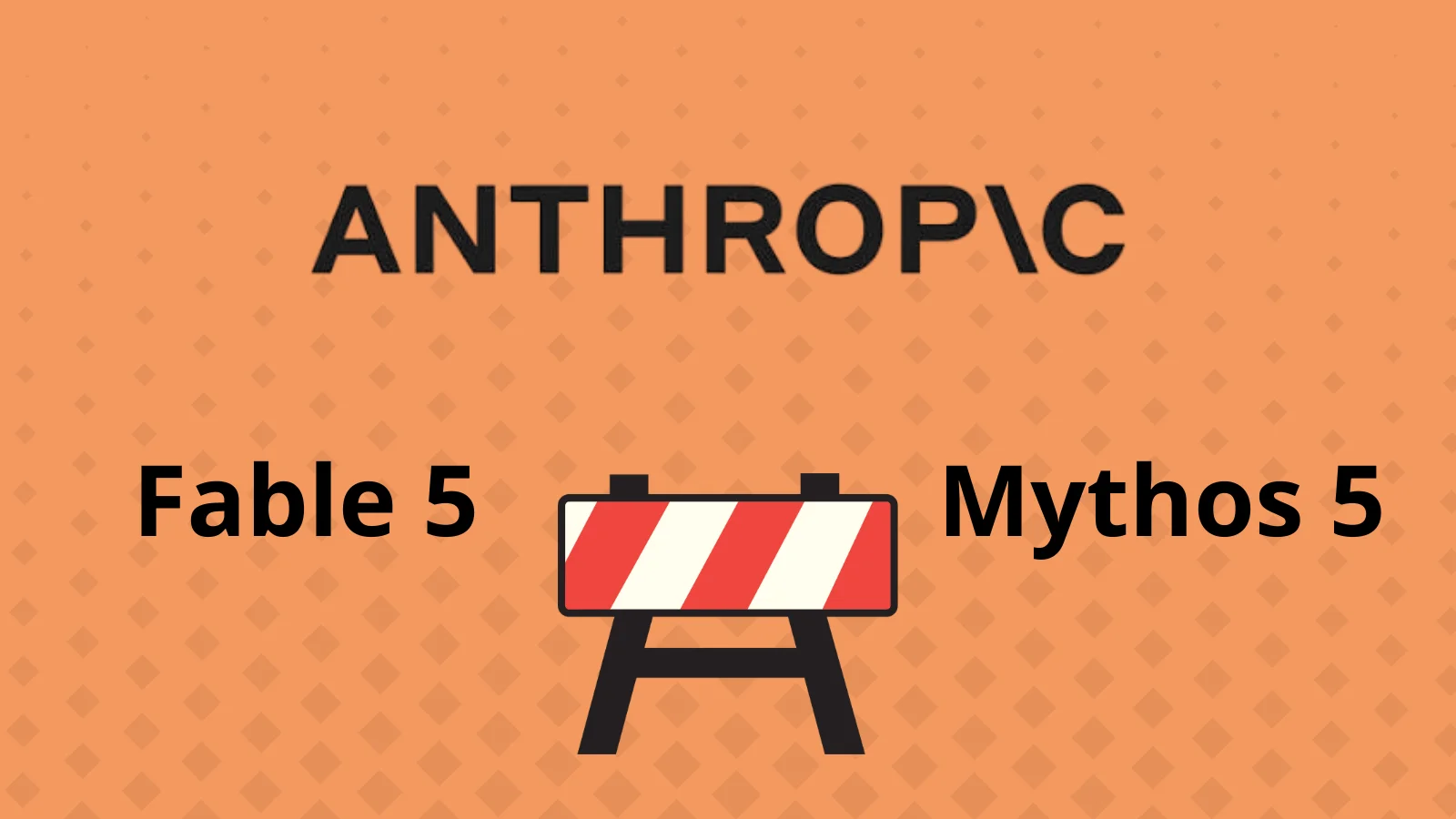
Mythos was shut down this week. Whether or not you agree with that decision is almost beside the point.
A company built on intelligence it cannot control suddenly found itself exposed to decisions it could not influence. Many founders, seeing this unfold, asked themselves the same question: Which parts of my business are actually just rented?
For years, discussions around open-source models centered primarily on cost. Can they really get the job done? If so, how much cheaper are they than calling cutting-edge APIs?
We now have fairly clear answers. Through collaboration with companies like Ramp, Cursor, and Harvey, we’ve adopted the same fundamental approach: start with a powerful open-source model, fine-tune it for the tasks most critical to your business, and rigorously benchmark it against state-of-the-art models.
The results have consistently been astonishing. On their most important tasks, fine-tuned open-source models achieve state-of-the-art quality at extremely low cost. What happened this week makes one thing crystal clear: cost has never been the most important issue.
The deeper issue is control. Who owns the intelligence your product depends on?
Recent discussions have often been framed as “renting vs. owning.” It’s not a perfect analogy—but it’s highly useful.
Renting Intelligence
Renting works well—until it doesn’t. Your apartment comes furnished. The lights turn on. The plumbing flows. Someone handles maintenance. That’s why most companies start here.
Cutting-edge APIs are incredible products. They enable startups to build things that seemed impossible just a few years ago.
But renting comes with limits. The landlord can raise rent. They can restrict what changes you’re allowed to make. They can change the rules. Occasionally—and for reasons entirely unrelated to you—they’ll tell you it’s time to move out.
You didn’t do anything wrong. You’re simply operating on someone else’s land. That’s why Mythos’s story resonated so deeply with so many people. When your core capability relies entirely on another party’s platform, you become vulnerable to decisions outside your control.
Most of the time, that doesn’t matter. Sometimes, it suddenly matters a great deal.
Owning Intelligence
The lesson isn’t that companies should stop using state-of-the-art models. Quite the opposite. Leading AI labs build extraordinary technology—and most products should leverage it. We do too. In many ways, state-of-the-art models are becoming infrastructure. But infrastructure and ownership are two different things.
You can use public infrastructure while still owning what creates value for your business. In AI, ownership means starting from the most advanced open-source models—and shaping them around your company’s uniqueness.
Your data.
Your workflows.
Your domain expertise.
Your edge cases.
Your evaluation criteria.
Your definition of “good.”
Over time, the model becomes less generic—and more reflective of the work your company does every day. That’s where value is created.
Think of a house. Moving furniture is easy. Painting walls is easy. But if your future depends on the layout itself, eventually you’ll want the ability to move walls. Intelligence works the same way.
When intelligence belongs to you, no one can quietly pull the foundation out from under your product.
That’s why we built Fireworks this way.
Training and inference under one roof—so companies can adopt the best open-source models, tailor them to the problems most critical to their business, and deploy them reliably in production.
Not just consuming intelligence. Owning it.
No Single Frontier Exists
An optimistic takeaway from this week is that AI’s future does not hinge on the victory of any single model.
There is no single frontier. There are many frontiers.
A state-of-the-art model is one frontier.
A model fine-tuned on years of proprietary company knowledge is another.
A specialized model excelling at a narrow problem is yet another.
A router mapping requests to an ensemble of models—which collectively outperform any single model across many tasks—is also a frontier.
The most exciting thing about AI isn’t that any one model grows smarter. It’s that intelligence is becoming increasingly customizable. The winning companies won’t necessarily be those with the largest models—but those that transform intelligence into unique, owned assets.
Looking Ahead
While everyone reacted to this week’s news, we were busy shipping products—Kimi Moonshot K2.7 Code, MiniMax M3, Alibaba Qwen 3.7 Plus.
The future I envision isn’t one where a single model quietly consumes everything in its path. It’s one where many teams own the slice of the frontier that matters most to them.
If Mythos’s shutdown has shifted how you think about this tradeoff, we’d love to talk.
Join TechFlow official community to stay tuned
Telegram:https://t.me/TechFlowDaily
X (Twitter):https://x.com/TechFlowPost
X (Twitter) EN:https://x.com/BlockFlow_News
 @lqiao