The U.S. government’s ban on Anthropic’s models has nothing to do with “jailbreaking.”
TechFlow Selected TechFlow Selected
The U.S. government’s ban on Anthropic’s models has nothing to do with “jailbreaking.”
This order issued by the Trump administration appears to be retaliatory.
 Navigating Web3 tides with focused insights
Author: Zack Whittaker
Translated by TechFlow
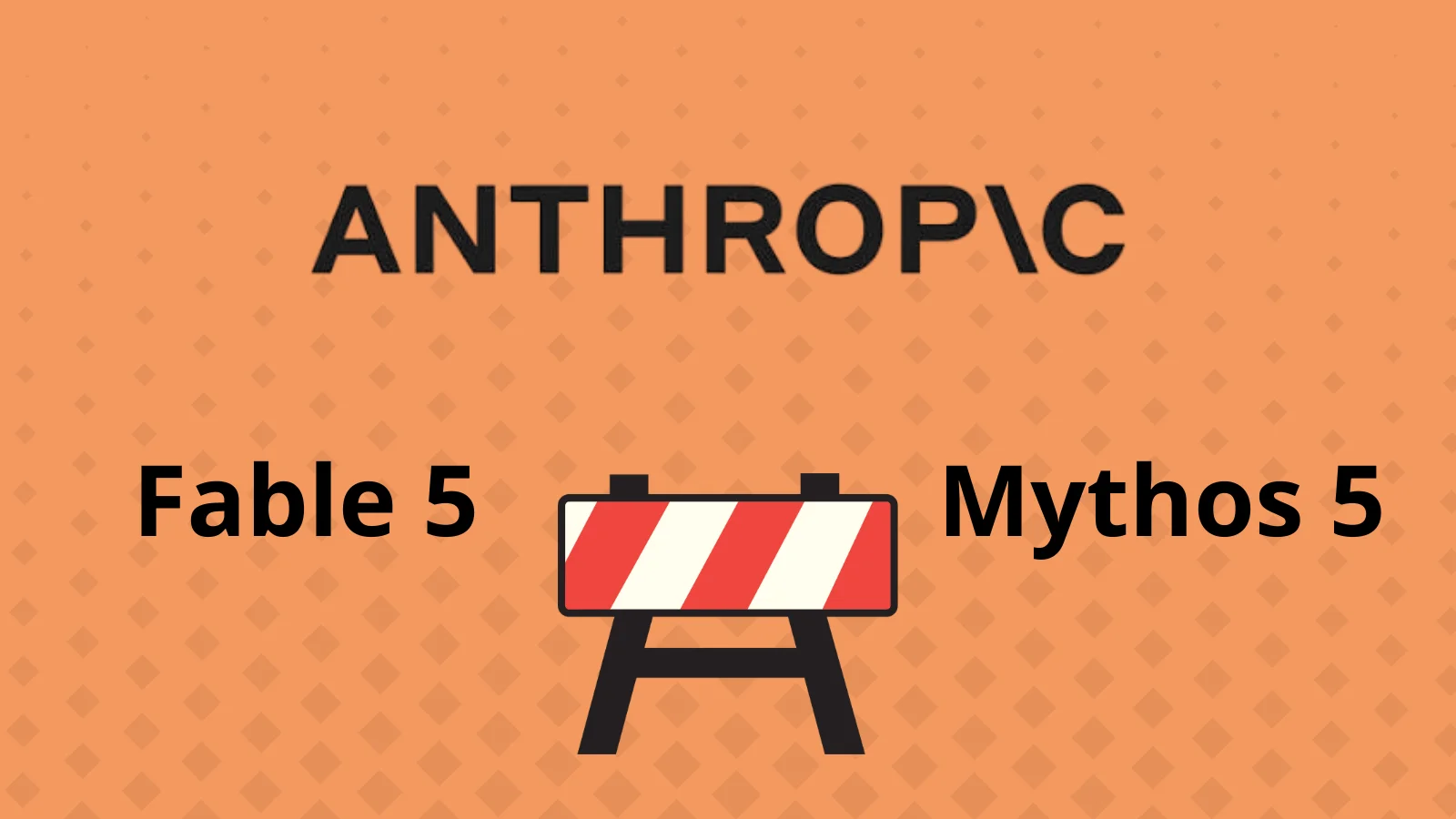
TechFlow Insight: Last Friday, a letter from the U.S. Department of Commerce forced Anthropic to pull offline its two most powerful models—Fable 5 and Mythos 5. The government cited national security as justification; outsiders assumed this related to circumvention of model safeguards. Yet mounting details point to another explanation: this appears more like retaliation following a breakdown in relations between the Trump administration and Anthropic. A technology company shut down its products via a single administrative order—requiring no judicial approval—sends a stark signal to the entire U.S. tech industry.
The enforcement letter issued by the U.S. government to Anthropic compelled the company to take its newest AI models offline just before the weekend. Every U.S. tech firm should treat this incident as a wake-up call—not only AI labs.
Let’s recap recent developments. On Friday afternoon, the U.S. Department of Commerce sent Anthropic a letter invoking an obscure export control regulation, prohibiting non-U.S. persons—including Anthropic’s own employees—from accessing Fable 5 and Mythos 5, citing unspecified national security concerns. Anthropic stated it interpreted the letter as relating to potential circumvention of model safeguards—but admitted uncertainty, since the letter provided no concrete details. To date, the letter remains unpublished.
In response, Anthropic shut down both top-tier models for all customers entirely, ensuring compliance. The result? The U.S. government succeeded—through a swift, unilateral action requiring no court approval—in compelling a tech company to withdraw its models.
This intervention by the Trump administration signals that the AI industry cannot operate immune from governmental oversight. For the broader tech sector, it serves as a warning: comply—or we can shut you—and your products—down.
Axios, citing sources, described the tense weekend standoff between these two major players, stating the export order stemmed not from technical flaws in the AI products themselves but rather from “personality clashes” between Anthropic and the Trump administration.
New details emerging over the weekend further undermined the government’s already shaky rationale.
Katie Moussouris, cybersecurity veteran, researcher, and founder of Luta Security, wrote in a blog post that Anthropic recently shared with her, in confidence, a paper authored by several security researchers describing the alleged safeguard circumvention in Fable 5. (According to The Wall Street Journal, the paper’s authors are Amazon security researchers.) Moussouris said Anthropic sought her opinion on the paper.
In her blog, Moussouris explained how researchers triggered the purported safeguard bypass—but emphasized that such behavior “should not trigger export controls at all.” The distinction is subtle: prompting an AI to “identify security vulnerabilities in code” versus asking it to “fix that code” involves slightly different phrasing—but yields nearly identical outcomes.
“The behavior described in the paper cannot be meaningfully remediated; any attempt would only weaken the model’s defensive capabilities,” Moussouris stated. She criticized the export control order as hasty, blunt, and fundamentally misjudged.
Subsequently, Moussouris joined dozens of top-tier security researchers and experts in urging the Trump administration to rescind the export control order, calling the removal of advanced cybersecurity capabilities from U.S. cyber defenders “dangerous.”
Successive administrations have made blanket decisions amid knowledge gaps. For instance, during the 2010s, when the U.S. government revised export regulations to control dual-use cybersecurity tools—those applicable both defensively and offensively—the language proved overly broad, inadvertently threatening to criminalize legitimate security research and vulnerability analysis as well.
But the Trump administration’s order appears retaliatory.
Justin Hendrix, editor at Tech Policy Press, observed that this move by the Trump administration “could well sound alarm bells among foreign governments regarding the reliability of U.S. AI in critical applications.” The message conveyed is that U.S. AI companies cannot operate free from U.S. government interference.
The Trump administration has not confirmed why it invoked this export control authority. Did officials misread the report and panic? Did Amazon CEO Andy Jassy—out of caution or personal grievance—raise concerns with senior officials, triggering this reaction? Was there a translation error—or was this order itself a pressure tactic, given the already-strained relationship between the two parties as confirmed earlier? Or did the White House simply fail to anticipate the massive ripple effects of this letter—leaving officials scrambling to contain the fallout they created?
In Hendrix’s words: “The current atmosphere is one of suspicion, with senior officials seemingly selecting favored targets based on personal and political factors.” The consequence is a dangerous precedent establishing the extent to which the government intends to assert control over software developed in the United States.
This time, the government targeted Anthropic. Tomorrow, it could be any other company.
Join TechFlow official community to stay tuned
Telegram:https://t.me/TechFlowDaily
X (Twitter):https://x.com/TechFlowPost
X (Twitter) EN:https://x.com/BlockFlow_News
 TechCrunch