








Why Are Traditional Securities Firm Professionals Flowing Toward Crypto Exchanges?
TechFlow Selected TechFlow Selected
Why Are Traditional Securities Firm Professionals Flowing Toward Crypto Exchanges?
As the boundaries of finance shift, talent will also redirect its course.
 Navigating Web3 tides with focused insights
Author: Whiter Runner

For a long time, traditional brokerage firms were viewed by many finance professionals as the safer career choice.
Licensing frameworks were mature, operational processes clear-cut, and career paths relatively well-defined. Working within such a system for years instills a sense of security defined by clear boundaries: what can be done, what cannot, with every step governed by explicit rules.
Yet over the past few years, evolving policies, compliance requirements, and cross-border business environments have gradually reshaped parts of traditional brokers’ operational scope. Client attrition, regional restrictions, and tightened user acquisition—terms once confined to headlines—have increasingly become tangible realities frontline staff face daily. Fewer users, narrower pathways, and shifting growth models.
It was precisely during this period that some traditional finance professionals began looking outward again.
Ethan, Lily, Myooi—they each held different roles at traditional brokerages: growth, operations, creative, product, and performance marketing. Some had only just begun grasping what “the blockchain” meant; others had only followed crypto news peripherally; still others had already sensed the convergence between traditional finance and the crypto industry.
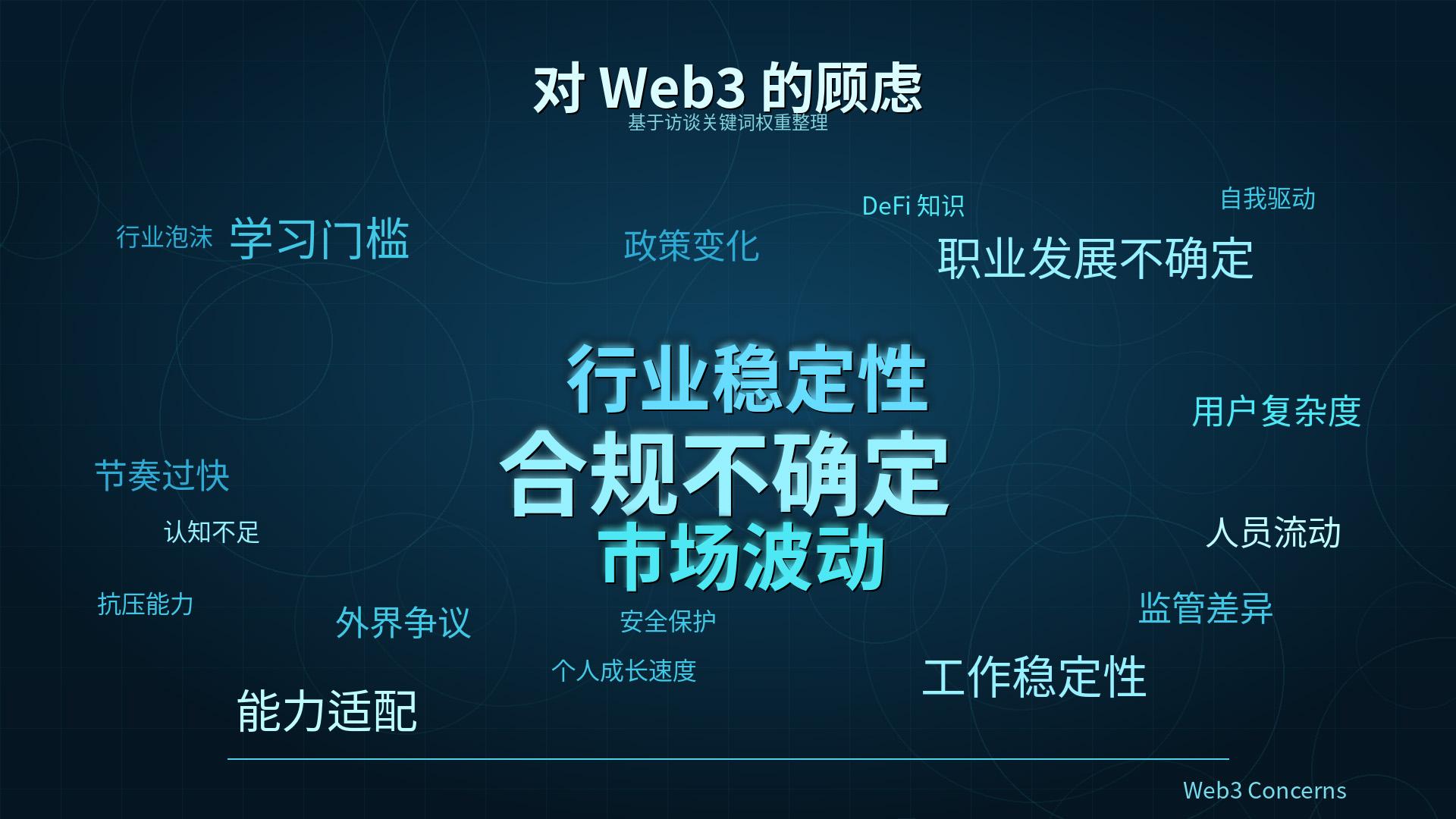
They each harbored concerns: compliance, stability, volatility, career development, personal fit—each question meriting deep reflection.
But as familiar paths narrowed, new markets opened up. For them, Bitget wasn’t merely a new job opportunity—it represented a chance to re-examine the financial industry and, simultaneously, re-validate themselves.
Ethan: Five Years on the Overseas Financial Frontline—First to Feel the Market Shift
Ethan spent nearly five years at Futu, leading regional business team setup, local market expansion, KOL operations, and enterprise partnerships.
This work kept him constantly on the frontline. Where users came from, whether channels remained viable, whether partners were willing to move forward—he felt these shifts daily. Later, traditional brokers’ operational boundaries began changing: cross-border services, client scopes, and acquisition methods grew more cautious. For growth professionals, this change hit hard: actions once executed rapidly now required upfront confirmation—on feasibility, jurisdictional applicability, and permissible scale.
Ethan has always been highly attuned to external market changes. He describes his professional trajectory as spanning industries—“from internet brokers to traditional banks to Web3”—yet consistently focused on overseas finance. Based in Hong Kong, he observed growing Web3 events (e.g., conferences, OSL, HashKey), and increasing discussions among clients and friends about crypto’s current state, regulation, and compliance.
He says that during his years in Hong Kong, he clearly sensed Web3 “entering people’s daily work and lives more deeply.” This shift triggered FOMO—and prompted him to seriously explore the crypto industry starting in 2024.
His first hands-on crypto experience came with the 2024 Trump coin. After downloading an exchange app, his initial reaction was straightforward: “What is a chain? And how do different chains differ?” He didn’t start out deeply knowledgeable—like many, he needed to begin learning from fundamentals.
Yet he saw deeper opportunities. Compared to traditional secondary markets, crypto struck him as more akin to primary markets—potentially “a vehicle capable of transforming settlement layers.”
Over more than a year, he observed, traded, networked, and compared. Only after seeing Bitget’s UEX concept and strategic direction did he feel alignment with his own career aspirations—and decide to apply.
Before making the final decision, he says he “actually had few concerns.” If any existed, it boiled down to one:
“Do I have the courage to go all-in?”
For Ethan, joining Bitget meant applying his market sensitivity, channel expertise, and team-building experience—forged in overseas finance—to a faster-moving, newer, and boundary-pushing market for renewed validation.
Lily: The Longer She Worked at Futu in Operations, the More She Realized Opportunity Wouldn’t Wait
Lily spent over three years at Futu, primarily handling community operations and wealth management-related business.
She managed hot-market campaigns, boosted fund and ETF user engagement and conversion, sourced and nurtured KOLs, and participated in investment strategy forums, official fund institution account onboarding, and content collaborations. These experiences taught her early on that financial operations rely not just on process—but on timing.
When market momentum hits, content must follow. When users engage, conversion must capture it. When trends emerge, operational execution must respond instantly.
A moment’s delay—and user sentiment fades.
Traditional brokerages gave her solid foundational training: standardized processes, mature regulation, and clearly mapped user journeys—all helping her build core understanding of financial users and wealth management. Yet the longer she worked there, the more she sensed another side: operational flexibility often constrained by compliance and organizational boundaries. Ideas weren’t lacking—what mattered was whether they could be implemented, when, and to what extent.
Her interest in crypto also emerged from user and market observation.
She found the industry “highly frontier,” with high-frequency trading, rapid market shifts, and information/opportunity flow significantly faster than traditional finance. Before joining Bitget, her crypto knowledge remained basic—gained through X (formerly Twitter), exchange announcements, industry news, and personal trading experience.
Her biggest concern centered on industry volatility—and whether her personal growth pace could keep up with the company’s and sector’s speed.
Crypto exchanges operate at a faster rhythm, deliver direct user feedback, and demand quicker operational responses and sharper data-driven judgment. At traditional brokers, operations emphasized prudence and standardization; here, trending assets, user behavior, and market sentiment shift faster—requiring quicker decisions and faster action.
Lily didn’t view this shift lightly.
She knew it would be more exhausting—and that she’d need to fill significant knowledge gaps. Yet she also recognized that her accumulated experience in community operations, user conversion, KOL management, and wealth management hadn’t expired. It was simply being placed into a new market—one with faster feedback loops and denser change cycles.
For her, Bitget’s appeal went beyond the novelty of a new industry.
It included faster growth velocity, stronger global perspective, and more frequent knowledge sharing. She later reflected that one of her biggest takeaways was realizing, “I actually *can* adapt to fast-paced work.”
She arrived from traditional finance armed with experience—and discovered her capabilities anew amid this accelerated rhythm.
Joyce: From Three Years in Information Roles to Validating Content Value
Joyce spent 3.5 years at Futu managing stock and financial information content production and curation. Her daily work revolved around user demand for timely information and market rhythm. When market moves occurred, users wanted immediate explanations; when asset prices fluctuated, users sought underlying rationale. She learned how to explain financial information clearly within traditional finance—and grew accustomed to operating within strict compliance and expression boundaries.
Initially, her exposure to crypto remained limited to headlines and social media, accompanied by concerns about volatility, regulatory uncertainty, and industry outlook. “I knew the pace was fast, and personnel turnover high—stability was a real issue,” Joyce recalls. Yet she also saw crypto as a new arena to validate her content value, where user reactions were direct and market feedback instantaneous. “I wanted to see if my content could be re-validated in this new market.”
What ultimately led her to join Bitget wasn’t just industry trends or short-term hype—but a confluence of personal growth opportunity and professional judgment. She says: “Let’s give it a try—see if my professional experience delivers impact here.”
After joining, her most immediate impressions were faster pace, direct feedback, and clearer accountability. Previously at brokerages, content underwent multi-layer approvals—delaying response time; at Bitget, every asset and content piece generated rapid feedback on user engagement, retention, trading activity, and repeat purchases. She realized this wasn’t merely a job change—it was a recalibration of her professional competencies.
To traditional finance peers still observing, she advises: “Don’t focus solely on short-term hype—assess whether the platform embraces long-termism, whether the team is professional, and whether the role genuinely stretches your capabilities.” This statement reflects her own decision-making logic.
Joyce brought her professionally honed capabilities from traditional finance into a faster-feedback, higher-change-density market—re-validating content value and reaffirming her core strengths in financial information and content creation.
Myooi: Creative Lead for Futu’s Japan Market—Refusing to Let Creativity Be Trapped by Process
Myooi worked at Futu for two years, developing social media ad creatives and growth ideas during the Japan market’s POC (proof-of-concept) phase.
This work demanded speed. Whether a trend could be captured—or whether a creative would perform—often hinged on how quickly ideas reached market and how fast data flowed back.
Yet at traditional brokerages, creatives underwent layered local legal and compliance reviews. She says, “By the time approvals finish, timeliness is long gone”—and sometimes revisions still failed entirely.
For growth creatives, this friction was exhausting. You know an idea might resonate, you see users discussing it—but before the creative launches, the opportunity cools.
Prior to joining Bitget, Myooi’s crypto knowledge was shallow. She describes herself as an “outsider” who occasionally tracked industry developments—and worried about Web3’s stability. External discourse remains split between bullish and bearish narratives; she remained uncertain about its long-term viability.
What truly resonated was Bitget’s UEX philosophy—and its integration of traditional Web2 principles. She admits dissatisfaction with existing traditional financial systems, and Bitget’s UEX vision “deeply moved me.”
At Bitget, her most palpable shift was expanded creative space. Bureaucratic approval burdens eased, ideas could be tested faster, and data returned more swiftly.
Of course, it’s no walk in the park. She notes the pace is intense—emphasizing agility and results orientation. Inspiration strikes, and she’ll work so intensely she forgets meals; greater creative freedom also brings sustained pressure to produce breakout assets.
But for Myooi, at least the distance between idea and user shortened.
Her experience building Japan’s market from zero, her grasp of traditional finance user psychology, and her instinct for high-performing growth creatives—all found fresh application at Bitget. In her words, “Bringing those foundational commercial logics into Web3, combined with its high creative freedom, creates powerful chemistry.”
Abby: Years Designing Wealth Management Products—Re-defining “Delivery” at Accelerated Pace
Abby spent years designing wealth management products—and previously worked in crypto.
Her first crypto exposure came around 2018, when she joined Huobi and gained personal investment experience. Compared to traditional finance professionals newly entering crypto, she wasn’t unfamiliar with the industry. Before joining Bitget, she had minimal sector-level concerns—her decision stemmed primarily from “career development considerations” and alignment between “job responsibilities and her own profile.”
What truly shifted her perception was speed.
She notes Bitget operates at a faster pace: “A feature taking six months at Futu might be expected to launch in under two months here.”
For a product manager, this compresses everything.
Requirement assessment accelerates, solution trade-offs tighten, cross-team communication speeds up, and delivery plus post-mortems happen faster. At traditional brokers, wealth management features could evolve over extended timelines; at Bitget, market shifts and business needs push product development forward relentlessly.
This isn’t just increased workload.
For Abby, the bigger challenge lies in re-understanding wealth management products within crypto. She mentions needing to learn Web3 concepts like DeFi—areas she’d previously engaged with minimally.
Yet she embraces this pace.
She highlights Bitget’s “efficient team output” and “rapid product development.” Her biggest takeaway? Understanding how crypto approaches wealth management product design.
Her accumulated product skills and brokerage knowledge weren’t discarded—just placed into a faster system.
For a product manager, this means pressure—and more immediate growth feedback.
Vera: Content Lead at Futu—Seeking to Expand Her Capability Boundaries
Vera worked at Futu for two years, primarily handling investor trading content.
There, her expertise centered on content: explaining market moves clearly; clarifying trading logic when users needed decision support. Traditional brokerages featured clearer role delineation—“more single-thread executors, with well-defined responsibilities.”
Yet she began contemplating pushing her capabilities further.
She seriously considered crypto mainly due to “personal development opportunities.” She states, “I want to broaden my skillset further”—and sought remote work options. Before joining Bitget, her top concern was compliance—gradually alleviated through conversations with friends and industry insiders. She feels Bitget “offers relatively strong employee safety protections.”
At Bitget, her role transformed quickly.
She transitioned into growth operations—managing campaign and product operations for CFD business. Previously focused on content output, she now engages end-to-end: campaign research, planning, cross-functional coordination with product teams, execution, and post-campaign analysis.
This represented a direct shift.
She describes Bitget’s “faster pace,” with small teams per business line enabling mutual backup—and overall openness. By contrast, Futu feels comparatively conservative—“offering less room for employee innovation.”
She appreciates this direct results orientation.
In her view, crypto “prioritizes outcomes—seeking rapid results”—a stark contrast to traditional finance’s slower cadence. She values Bitget’s “growth velocity and innovative culture.”
For Vera, joining Bitget wasn’t merely switching operational roles.
She remains in financial services—but no longer confines herself to content output. Now she engages directly with campaigns, products, users, and results—and pushes her capability boundaries outward within a faster rhythm.
Cecilia: After Years in Advertising—Discovering Work-Life Integration for the First Time
Cecilia previously handled performance advertising at Futu; at Bitget, she works within the advertising platform’s data product group—designing and executing various advertising test initiatives.
She clearly perceives the differences between sectors. Traditional brokerages operate within mature financial systems—“with clear, stable regulatory frameworks”; crypto faces greater policy variance across jurisdictions, remaining in exploratory development stages—with comparatively uncertain compliance pathways.
She also recognizes crypto’s heightened market volatility, accelerated pace, and sharper user segmentation—from novices to high-frequency traders—each differing markedly in awareness and behavior. This necessitates continuous experimentation in targeting, creative development, audience segmentation, and conversion funnels.
Thus, Cecilia’s choice wasn’t driven solely by “new industry” allure.
She weighed crypto seriously both for its “promising outlook” and because remote work suited her deeply. At the time, a family member faced serious illness—requiring frequent travel between her residence and hometown. Remote work enabled her to sustain her career while attending to real-life responsibilities.
Yet what cemented her decision was the role itself—and the team.
She notes Bitget’s interview process was “simple and efficient,” with professional communication; the job description was exceptionally clear—indicating deep thinking around role fit and leadership expertise in business domains.
Post-joining, differences became even more apparent.
Bitget feels “flatter and more open,” with stronger pace and positive team dynamics. Unlike traditional brokerages’ “reporting culture” and “upward management” tendencies, she rarely encounters these at Bitget.
She fully acknowledges freedom carries costs.
She identifies crypto’s appeal to traditional finance professionals as “24/7 global mobility, innovation density, and fairer tools”; necessary adaptations include “no off-hours, self-accountability, high volatility, and emotional resilience.”
This mirrors her own balanced assessment—not glossing over challenges, nor shying from reality.
For Cecilia, Bitget offers not just remote flexibility—but a higher-intensity work environment demanding faster judgment, stronger self-motivation, and re-validation of her traditional advertising expertise—user segmentation, data analytics, and precision conversion—in a faster-changing market.
She knows where the risks lie—and where the opportunities reside.
Ultimately, she chose this space of higher uncertainty—and higher ceiling.
As Finance’s Boundaries Shift, Talent Reorients Its Trajectory

Viewed collectively, these cases reveal diverse motivations.
Some first sensed the movement of overseas markets and financial boundaries; others noticed accelerating opportunity flows; some sought to re-validate content value in new contexts; others needed platforms where creativity reaches users faster; some aimed to expand from content-only roles into full business ownership; others redefined delivery amid accelerated product cycles; still others made complex judgments balancing opportunity, risk, and life realities.
They didn’t enter crypto because traditional finance lost relevance—quite the opposite. Precisely because they understand finance, users, growth, and compliance, they recognized earlier that the industry is entering a new phase.
Traditional brokerages taught them stability, standardization, and boundary awareness. At Bitget, they confront faster feedback loops, stronger outcome orientation, globally distributed users—and markets with higher uncertainty.
This isn’t an easier path.
It demands continuous learning, rapid adaptation—and courage to subject hard-won experience to new environmental validation.
Yet talent mobility is never just job-hopping.
It signals industry evolution—and emerging opportunity. Traditional brokerage talent flowing to Bitget reflects more than simple career migration—it embodies a cohort of finance professionals making an early bet on next-generation finance.
When rules shift, boundaries move, and markets reopen, truly experienced professionals won’t cling only to past certainties. They’ll carry their rigorously developed expertise toward the next worthy frontier.
Finance’s next chapter doesn’t belong to those awaiting certainty—it belongs to those who spot change, assess risk, and willingly re-prove themselves in new markets.
Join TechFlow official community to stay tuned
Telegram:https://t.me/TechFlowDaily
X (Twitter):https://x.com/TechFlowPost
X (Twitter) EN:https://x.com/BlockFlow_News


