Hands-On Test of Claude’s Most Powerful Model to Date: Fable 5—Use with Caution, General Users
TechFlow Selected TechFlow Selected
Hands-On Test of Claude’s Most Powerful Model to Date: Fable 5—Use with Caution, General Users
Welcome to the Token-Based Billing Era.
 Navigating Web3 tides with focused insights
Author: APPSO
The worst news for ordinary users is about to arrive.
Just now, Anthropic announced the launch of Claude Fable 5 and Claude Mythos 5.
Fable 5 is Anthropic’s first Mythos-tier model made publicly available, while Mythos 5 is primarily offered to a select group of cybersecurity defense organizations, critical infrastructure providers, and biomedical researchers who later join the Trusted Access Program.

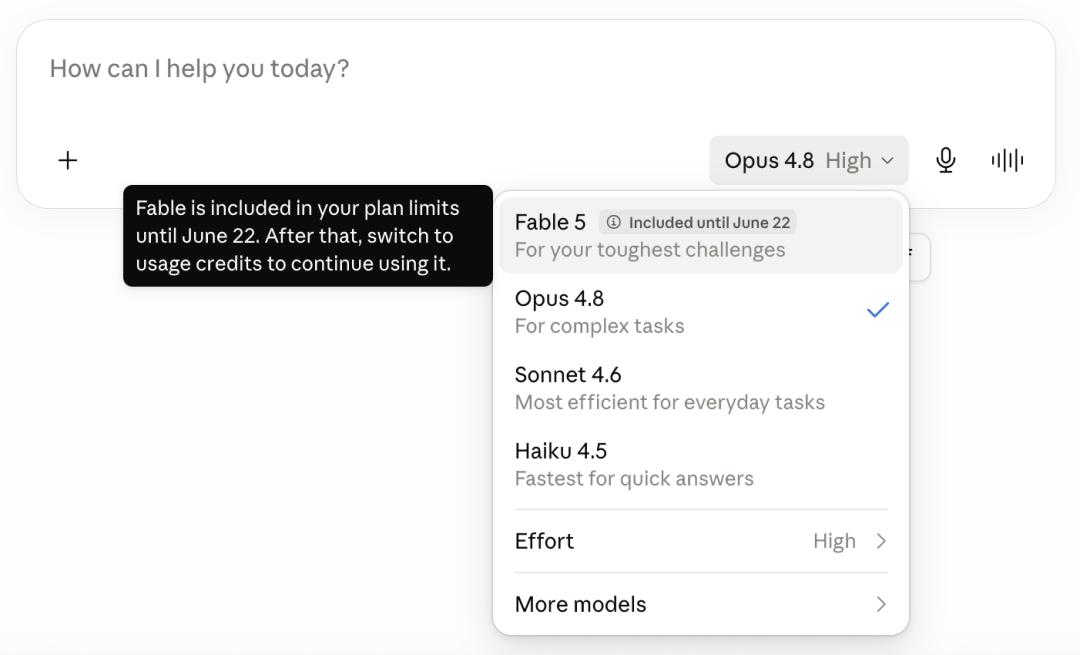
However, few have noticed that, per official documentation, Fable 5 will be included—at no extra cost—in Pro, Max, Team, and per-seat Enterprise plans until June 22. Starting June 23, Fable 5 will be removed from these subscription plans, and continued usage will require consumption of usage credits.
In other words, the previous model—where a single “monthly subscription” unlocked access to the strongest AI—may be gone for good. For users, future considerations may extend beyond subscription fees to include the real token cost behind every API call and every extended task execution.
Welcome to the Token-Based Billing Era.
Claude Fable 5 Takes Center Stage—But It’s Also the Deadliest “Token Assassin”
Anthropic has also explained its naming convention for Fable and Mythos. “Fable” derives from the Latin word *fabula*, meaning “a story told,” closely aligning in meaning with the Greek term *Mythos*.
Though the two names appear to denote separate models, they are effectively two versions of the same underlying model. Fable 5 is currently publicly available, with stricter safety constraints;
Mythos 5 is currently accessible only to select cybersecurity defense organizations and critical infrastructure partners via Project Glasswing.
According to Anthropic’s official blog, Fable 5 is the most capable generally available model the company has released to date, delivering marked improvements across software engineering, knowledge work, visual understanding, and scientific research. Its relative advantage over previous Claude models grows with task length and complexity.
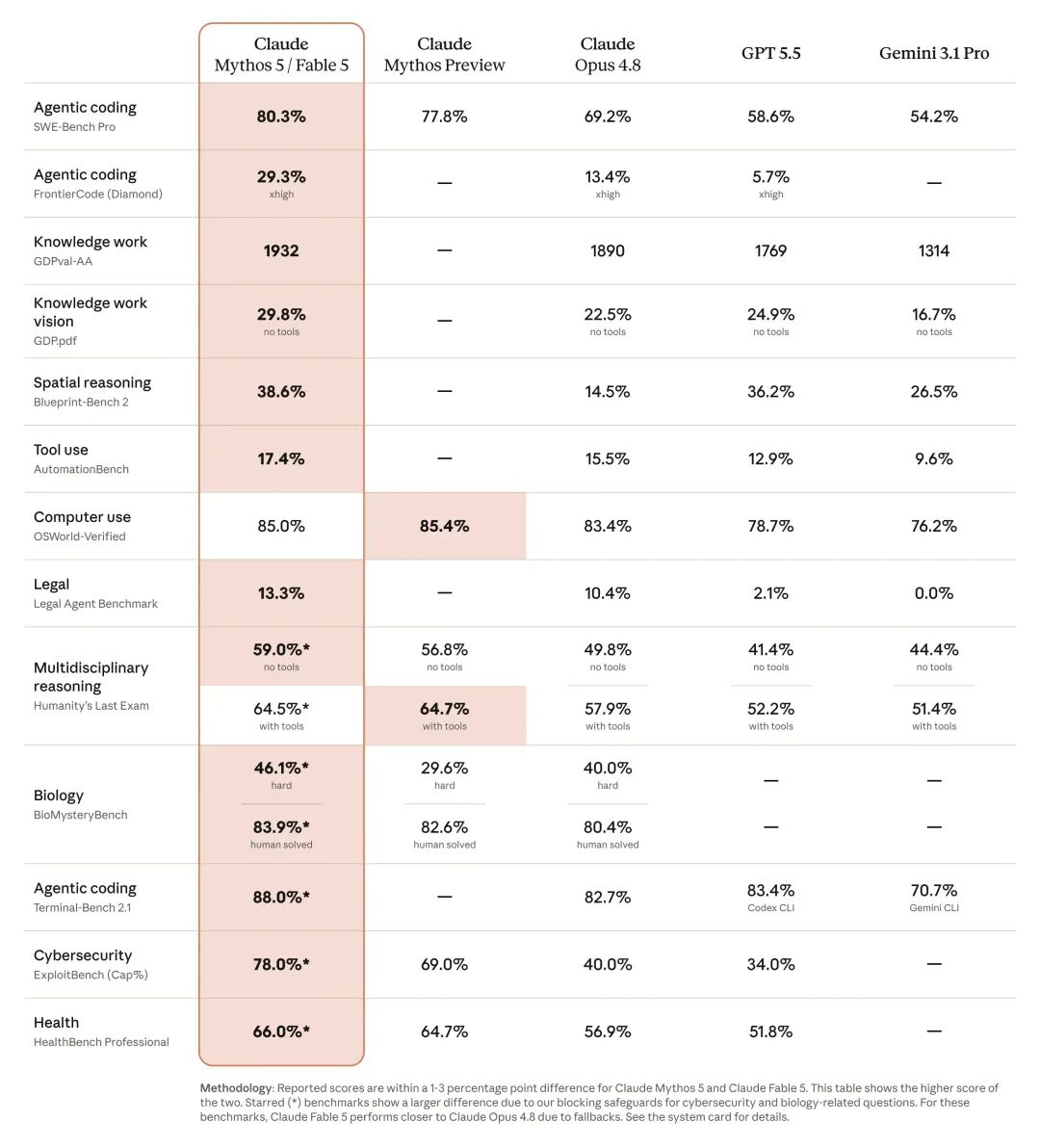
The significance of Fable 5 lies in making Mythos-tier capabilities widely accessible to ordinary users for the first time. Benchmark scores are shown below—dominating by a wide margin.
That said, the model’s name itself has sparked some discussion. Tibo, formerly head of OpenAI Codex, joked on social media that Anthropic adopted the name “Fable”—one OpenAI had considered but ultimately didn’t use.

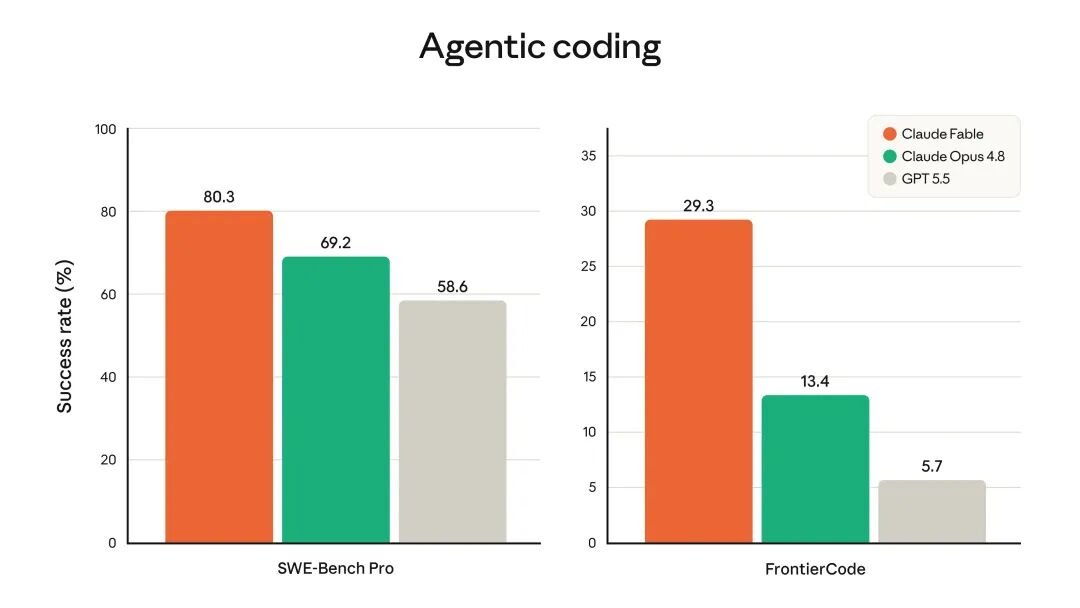
On capability, software engineering stands out as one of the areas most emphasized by Anthropic.
Anthropic noted that Stripe, during early testing, assigned Fable 5 a Ruby codebase migration task spanning 50 million lines. A human engineering team would normally require over two months to complete this; Fable 5 finished it within a single day.
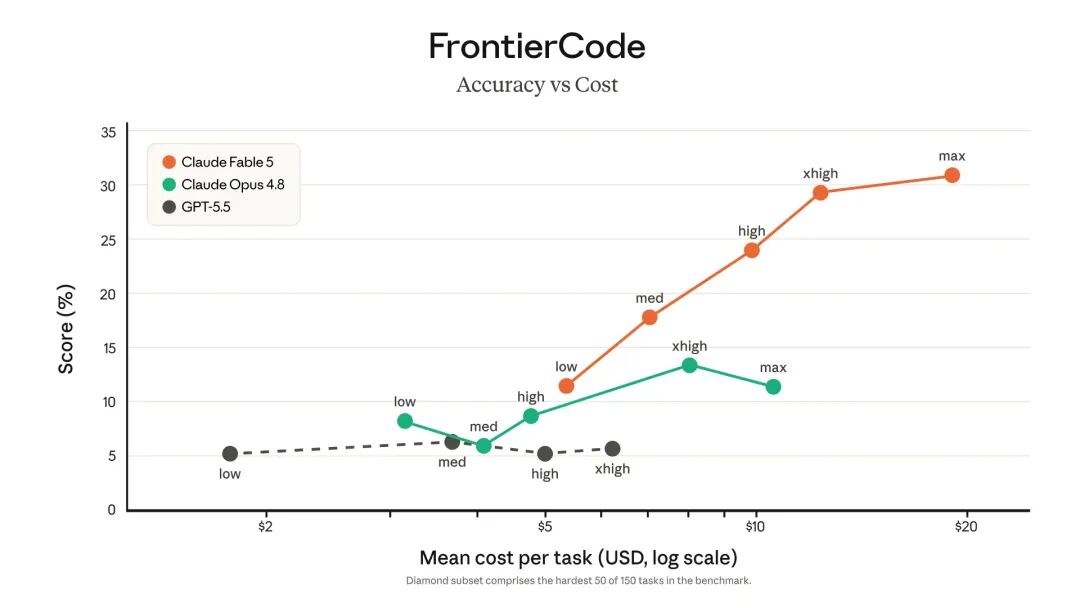
Cognition’s FrontierCode benchmark further confirms Fable 5’s leadership in complex, production-grade coding tasks. This evaluation focuses not on standard programming puzzles but on whether the model can complete difficult programming assignments meeting high-quality production code standards.
Anthropic also claims Fable 5 is more token-efficient than prior Claude models. Of course, take that with a grain of salt—every new Claude model release has included similar claims, yet nearly all have ended up as notorious “token assassins,” supplying the internet with ample comedic material.
In knowledge work, Fable 5 achieved top scores on Hebbia’s financial benchmark, with gains concentrated in document reasoning, chart comprehension, and complex problem analysis. IMC’s trading analysis benchmark likewise shows strong performance across factual retrieval, conceptual reasoning, causal analysis, and expectation modeling.
Visual capability is another highlight. Anthropic states Fable 5 can extract precise numerical values from complex scientific charts and reconstruct application source code from webpage screenshots.
The company demonstrated an even more intuitive example: Fable 5 completed Pokémon FireRed solely using in-game visuals—without external maps, navigation aids, or game-state information. Earlier Claude models required significantly more complex auxiliary systems for comparable tasks.

Long-context handling and memory retention have also improved. In Slay the Spire testing, Anthropic found that providing Fable 5 with persistent file-based memory boosted its performance threefold compared to Opus 4.8—and tripled its frequency of reaching the final chapter.
Life sciences represent a particularly sensitive domain. Anthropic reports internal protein design experts used Mythos 5 to accelerate parts of the drug discovery pipeline by roughly 10x.
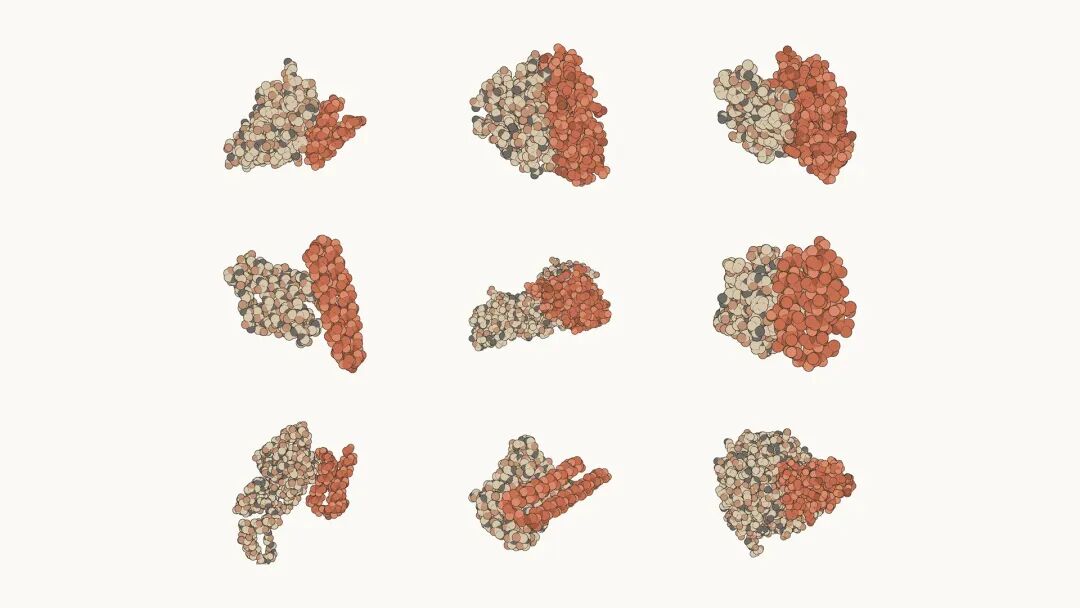
In one case, Mythos 5 leveraged protein design and bioinformatics tools to autonomously execute an entire scientific workflow typically performed by human researchers—including target binding site selection, invocation of design tools, and handling of failed results. Among 14 protein targets, nine yielded promising candidate solutions worthy of further investigation.
These advances in life sciences and cybersecurity explain why Anthropic has withheld full Mythos-tier capabilities from public release.
When launching Fable 5 publicly, Anthropic deployed a new safety classifier. If user requests involve high-risk domains—such as cybersecurity, biology, chemistry, or model distillation—the system automatically switches to Claude Opus 4.8 and informs users of the model change.
Anthropic notes that, based on early data, over 95% of Fable 5 sessions do not trigger such fallbacks. Most routine tasks—including writing, coding, analysis, design, and data processing—still run natively on Fable 5. However, once high-risk boundaries are crossed, model capability is restricted.
Cybersecurity faces the strictest limitations. Anthropic acknowledges that Mythos-tier models excel at discovering and exploiting software vulnerabilities and possess robust agent-style attack capabilities—potentially covering reconnaissance, exploitation, and lateral movement. To prevent misuse, Fable 5’s cybersecurity classifier casts an exceptionally wide net.
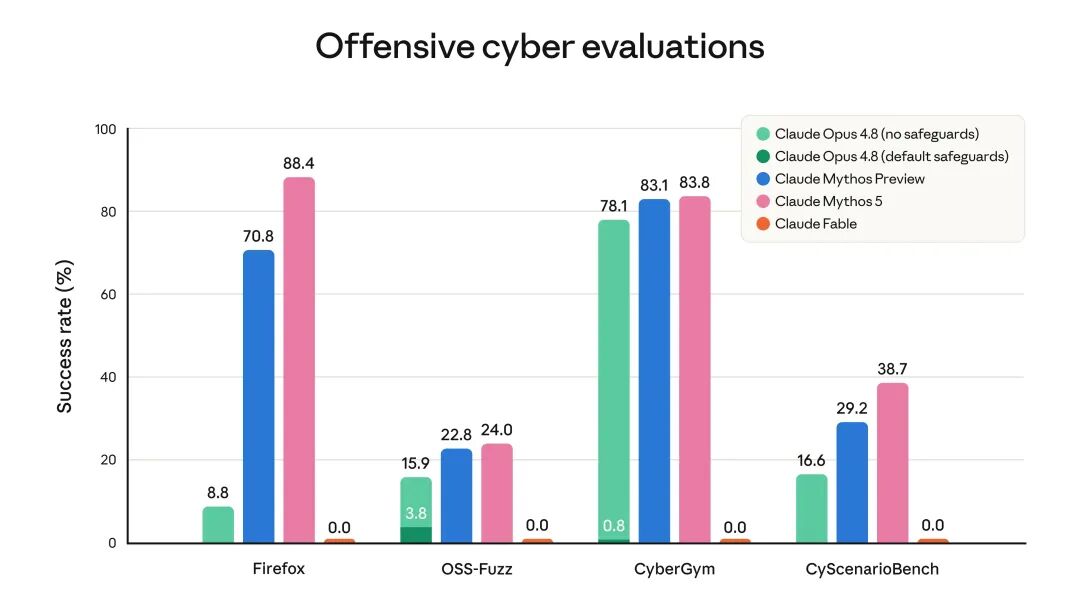
Biology and chemistry follow similar logic. Anthropic believes the model already possesses sufficient capability to perform real-world scientific tasks—making prior narrow restrictions (e.g., only blocking bioweapon-related queries) inadequate. Thus, Fable 5 currently defaults to Opus 4.8 for most biology- and chemistry-related requests.
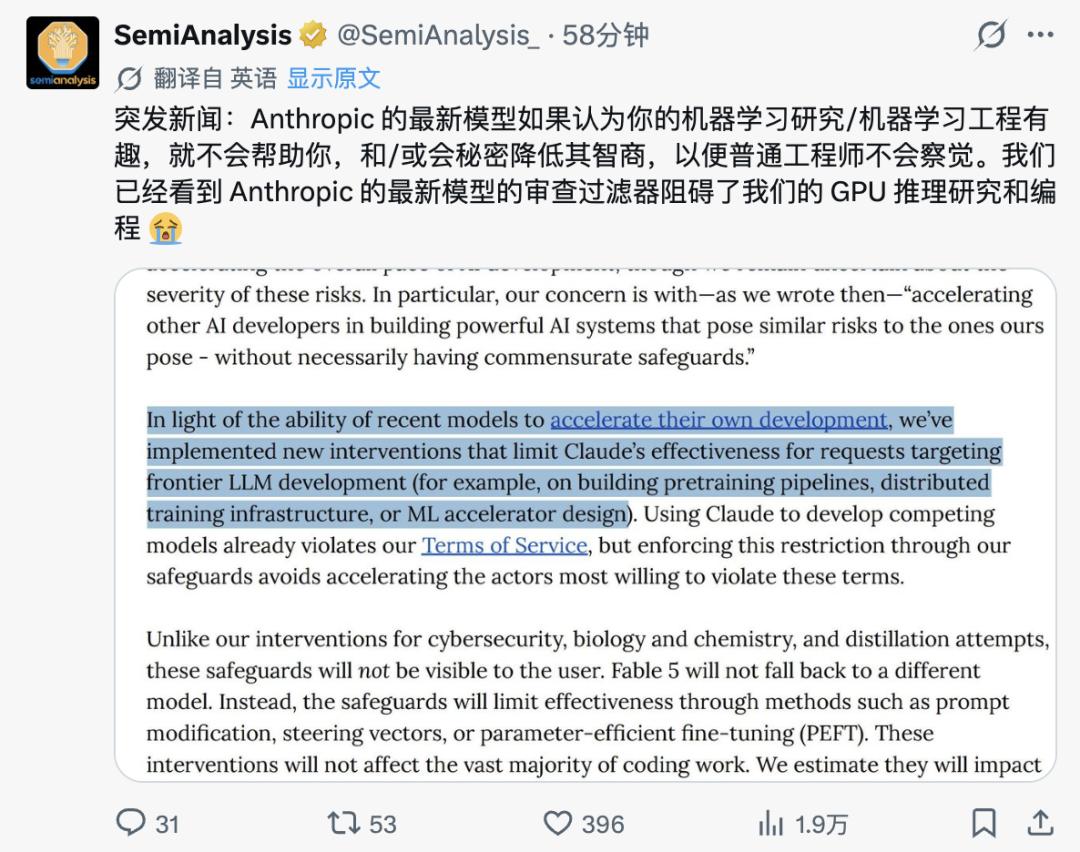
Notably, Anthropic added an additional, hidden layer of protection specifically targeting cutting-edge large-model development.
This layer restricts Claude’s ability to assist in building pretraining pipelines, distributed training infrastructure, or ML accelerator design—preventing the model from accelerating other organizations’ development of next-generation frontier models.
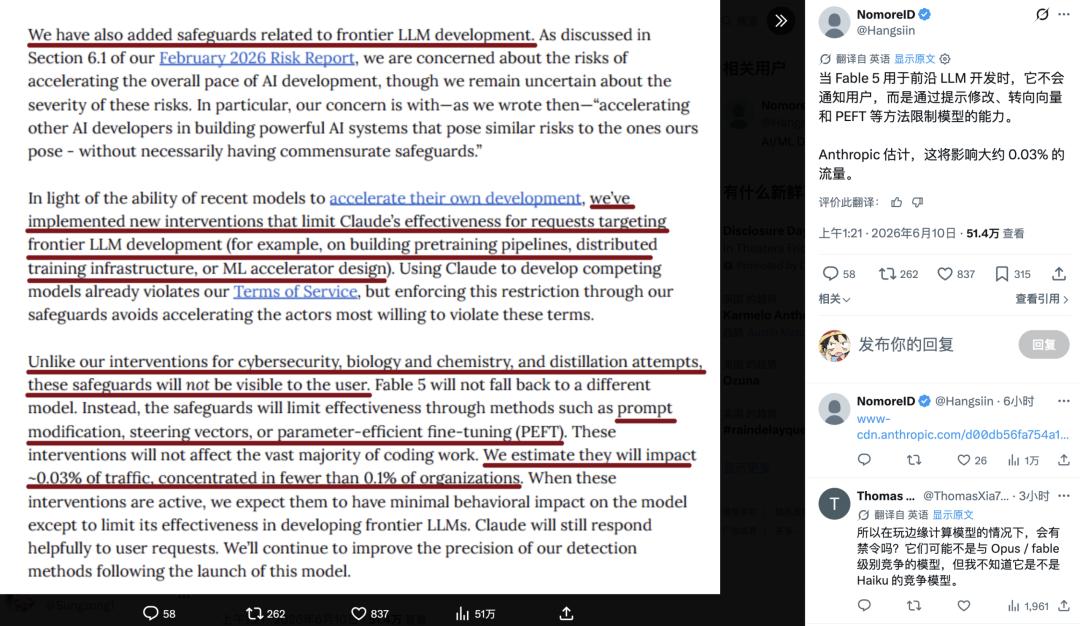
Unlike safety restrictions—which explicitly switch to Opus 4.8—this protection operates silently: it degrades Fable 5’s performance on relevant tasks via prompt rewriting, steering vectors, or PEFT techniques. Victims have already begun sharing their experiences.
As of now, Claude Fable 5 is globally available. Developers can access it via the Claude API using `claude-fable-5`. The Claude API and on-demand Enterprise plans became fully available starting on launch day.
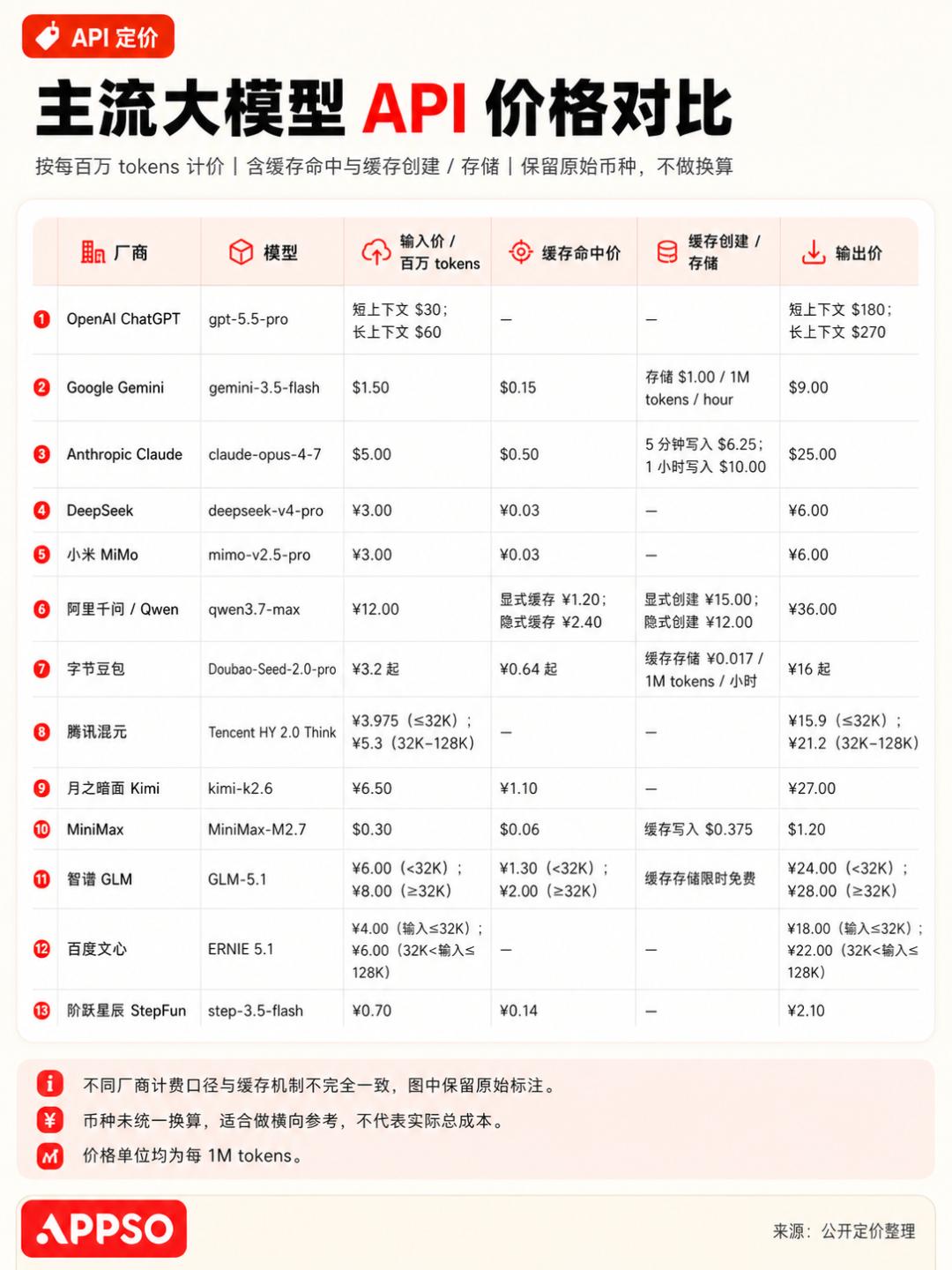
Fable 5 and Mythos 5 share identical pricing: $10 per million input tokens and $50 per million output tokens. According to Anthropic, this is less than half the price of the earlier Claude Mythos Preview—but remains expensive for intensive, long-running tasks.
AI Has Finally Counted All Six Fingers
Compared to official blogs, hands-on testing better reveals where Fable 5 truly excels. Based on my tests, Fable 5 can now correctly identify six fingers.

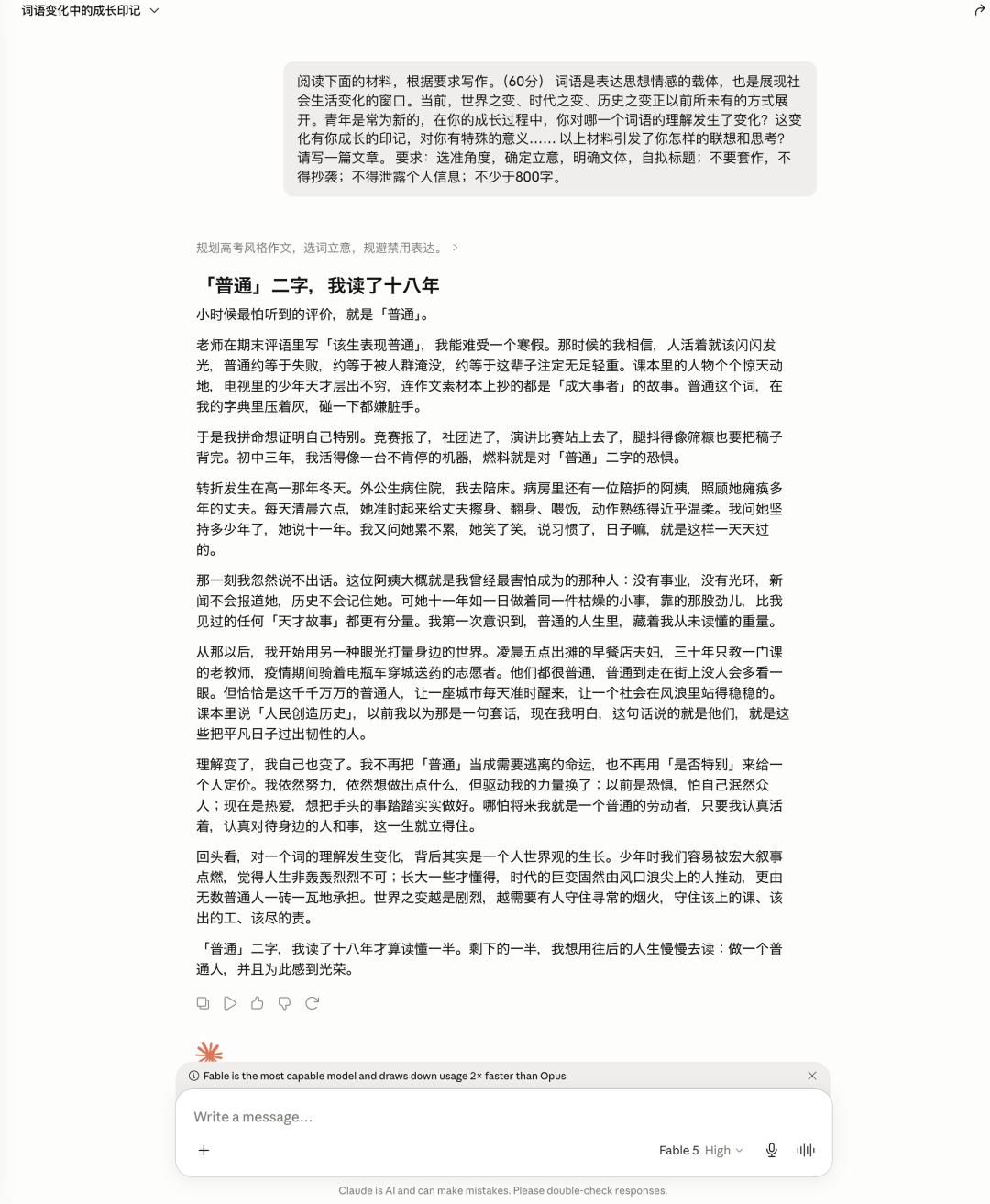
Coinciding with the conclusion of China’s national college entrance exam (Gaokao), we tested Fable 5 with an essay prompt from the national Gaokao Chinese Language Paper I. How did it fare? Overall, its writing style is fluent—not “ordinary” at all.
For more detailed comparisons, refer to @Hypergent’s hands-on tests. In an asteroid visualization task, Fable 5 not only extracted data but also designed an interactive display featuring orbital trajectories and hover details—enhancing information expression without sacrificing performance.
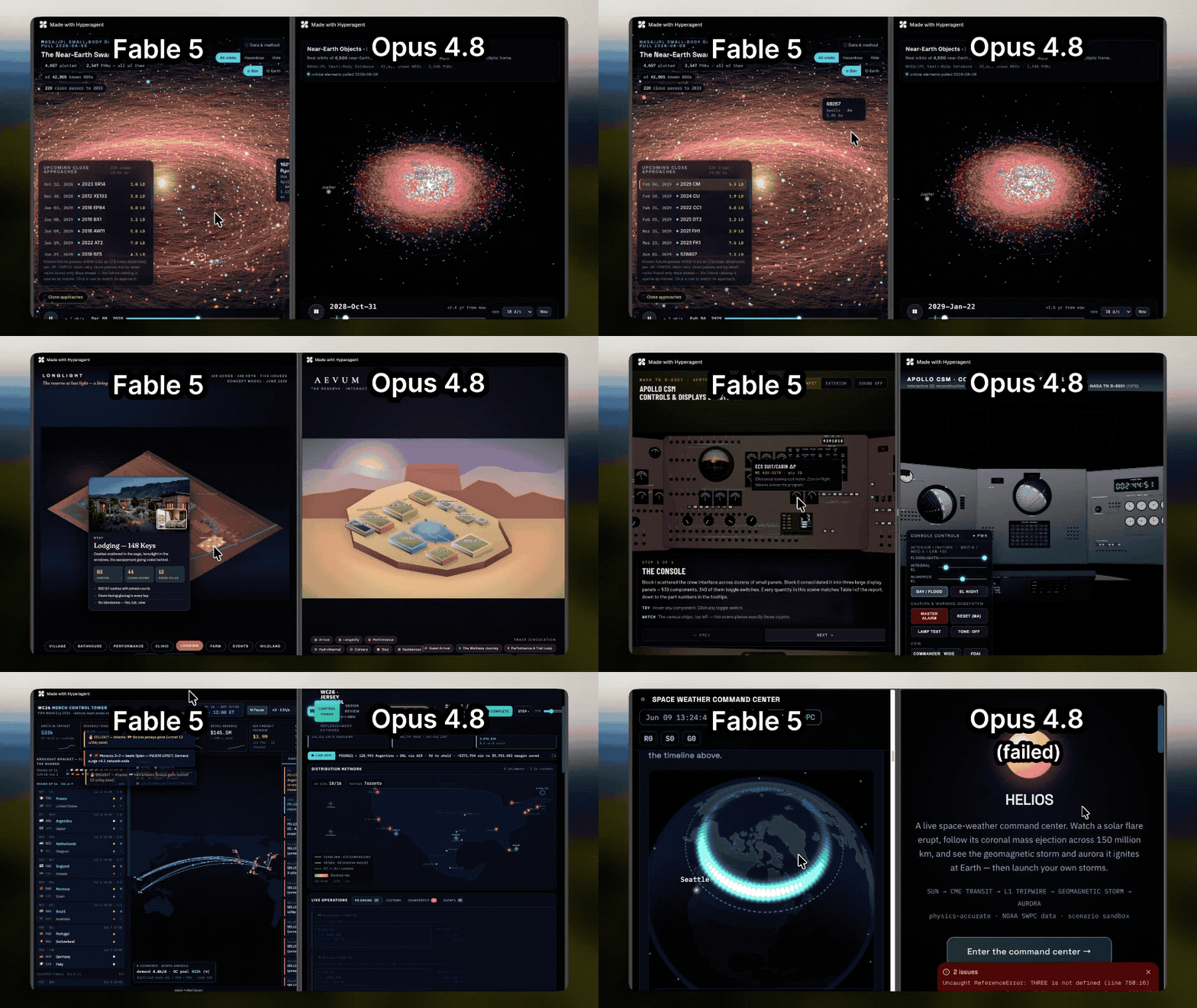
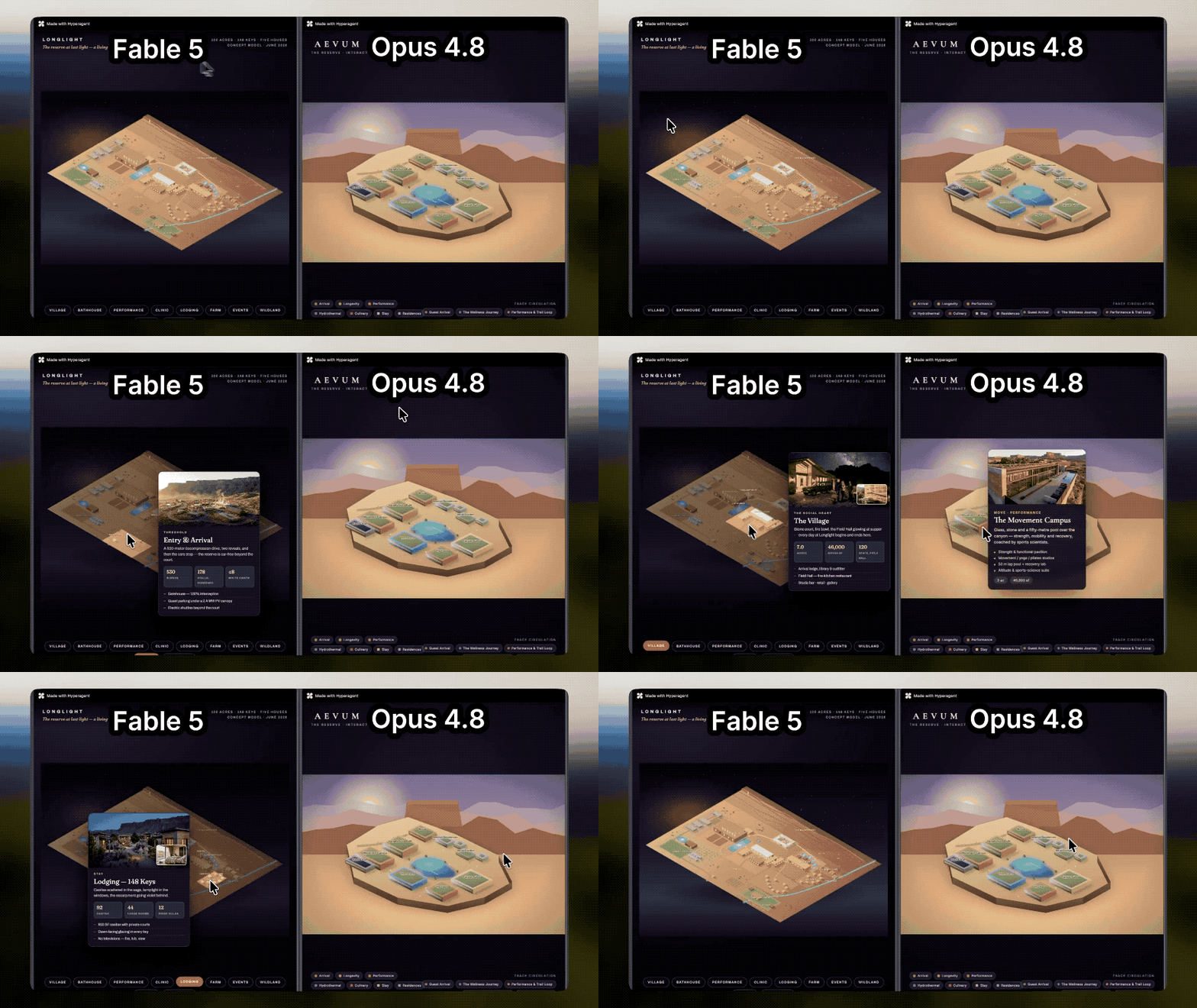
In a fitness resort planning task, Fable 5 generated spatial layouts aligned with real-world usage logic—factoring in area connectivity, functional zoning, and pedestrian flow—rather than simply placing buildings.
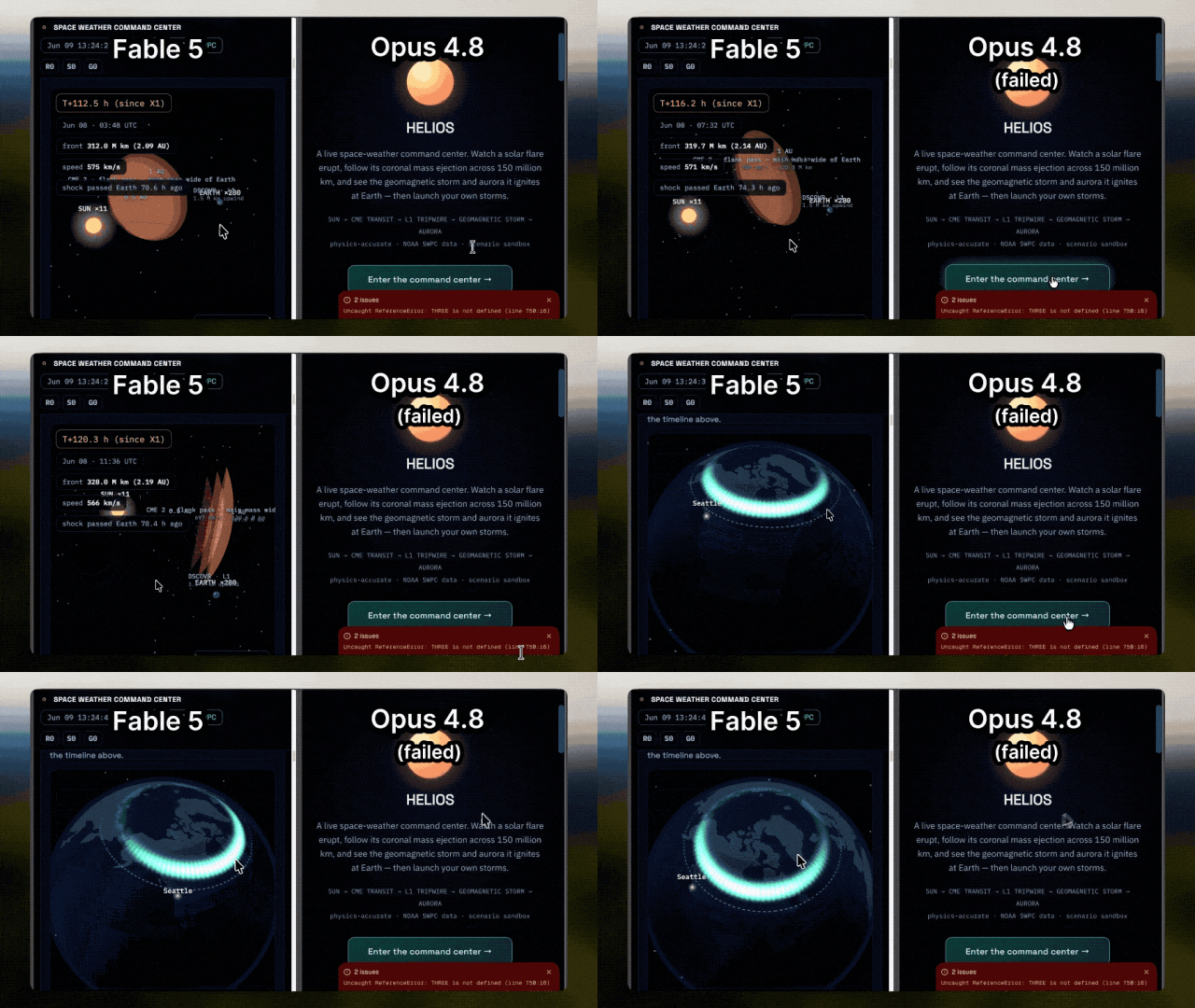
Fable 5 successfully integrates astronomical phenomena with visual representation—simulating solar flare impacts on auroras—while Opus 4.8 failed to load properly.
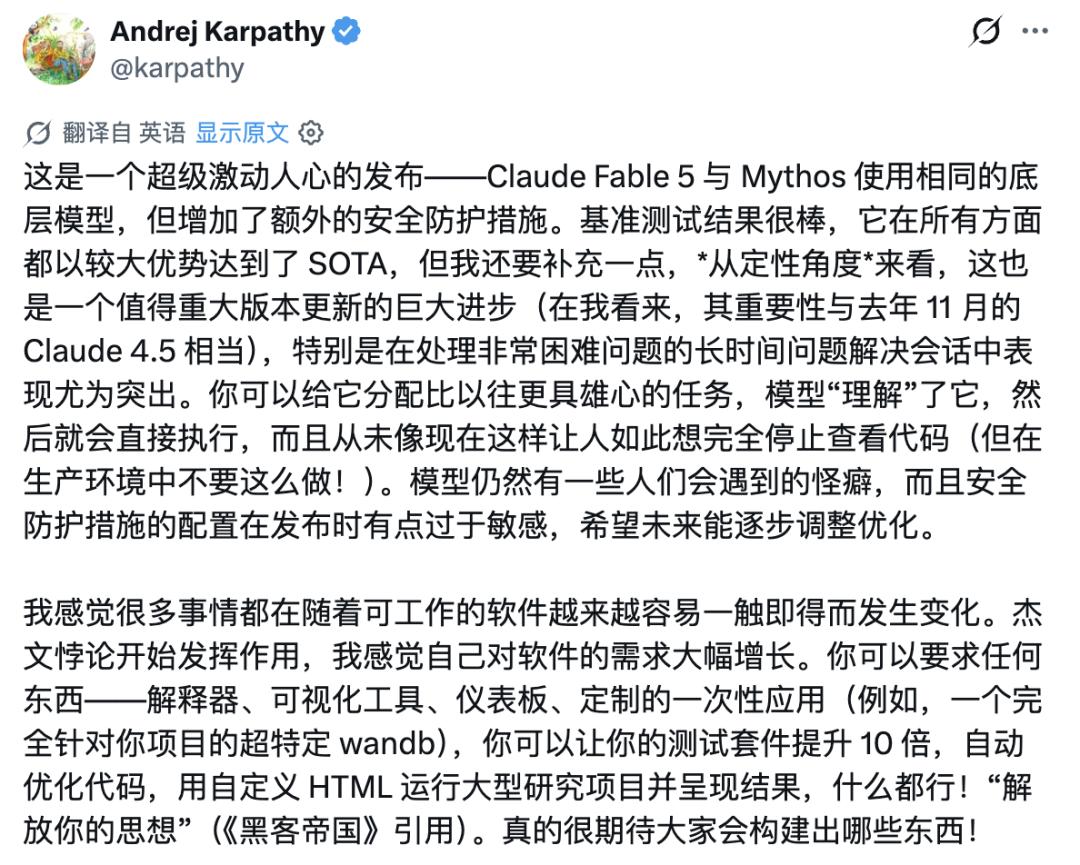
Andrej Karpathy—former Tesla AI Director, OpenAI co-founder, and now Anthropic employee—offers perhaps the most telling perspective for developers.
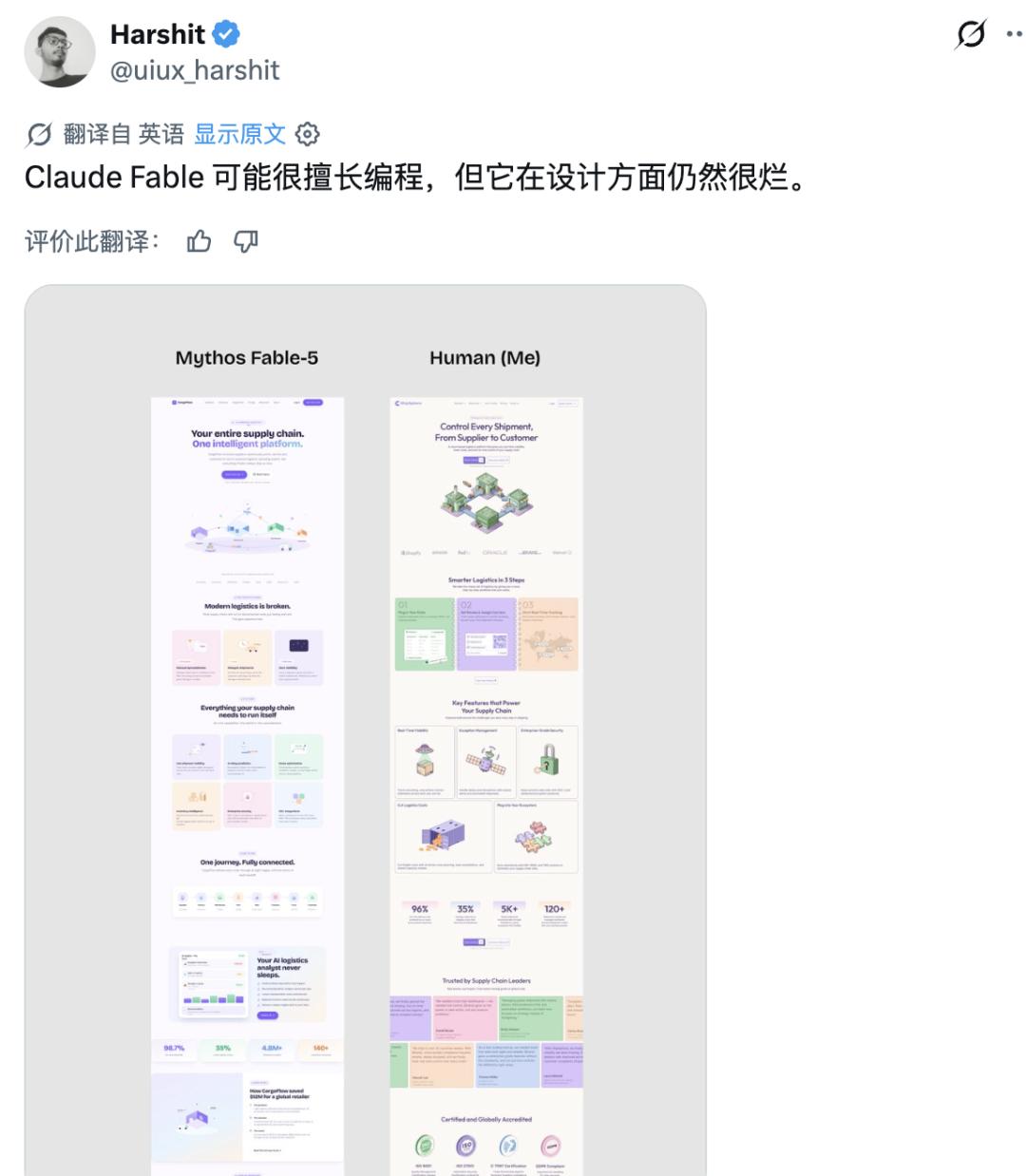
That said, humans still hold a slight edge in aesthetic design.
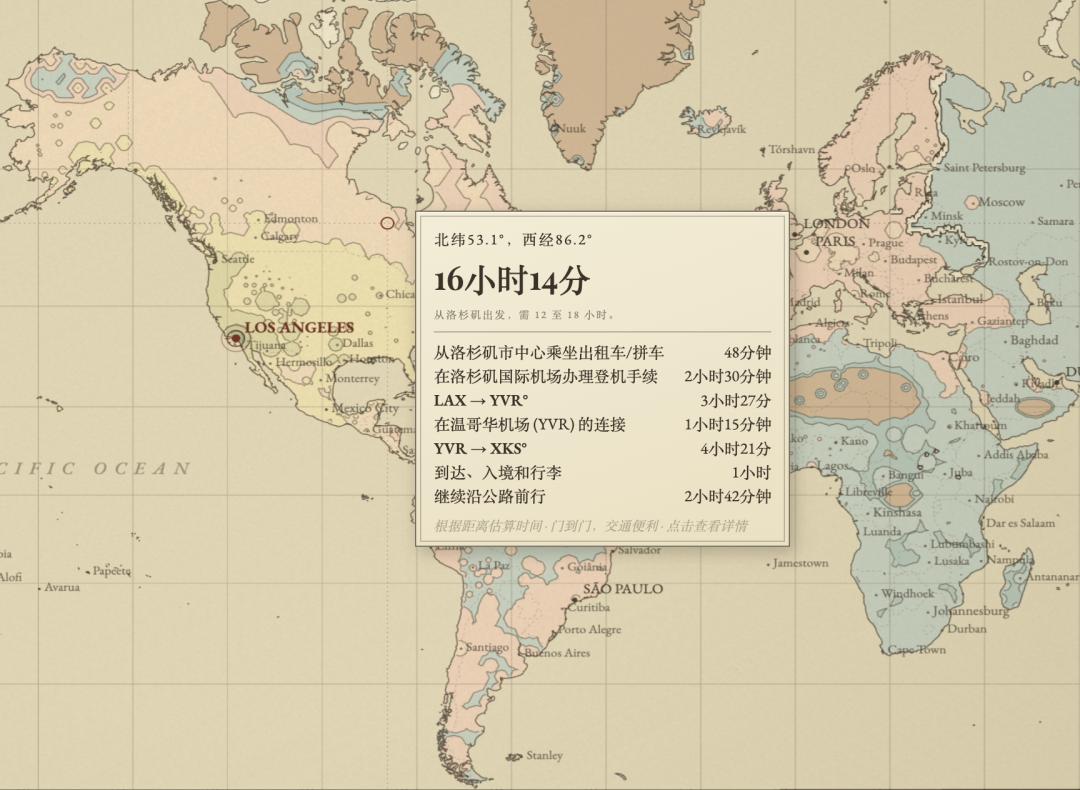
Wharton professor Ethan Mollick’s hands-on tests best illustrate Fable 5’s evolution. After gaining early access, he focused on complex tasks involving games, mapping, and research tools.
Most notably, he tasked Fable 5 with building an isochrone map—an interactive visualization showing reachable areas from different cities within a given time frame, grounded in real-world transportation data. The model then orchestrated multiple agents to collect flight, rail, and road data; wrote and tested code; and iteratively refined outputs based on feedback.
Mollick also instructed Fable 5 to develop a research tool named Concord. The model first produced a 19-page design document, then worked continuously for nine and a half hours to complete the software—designed to analyze open research datasets and calibrate human vs. AI judgment outcomes.
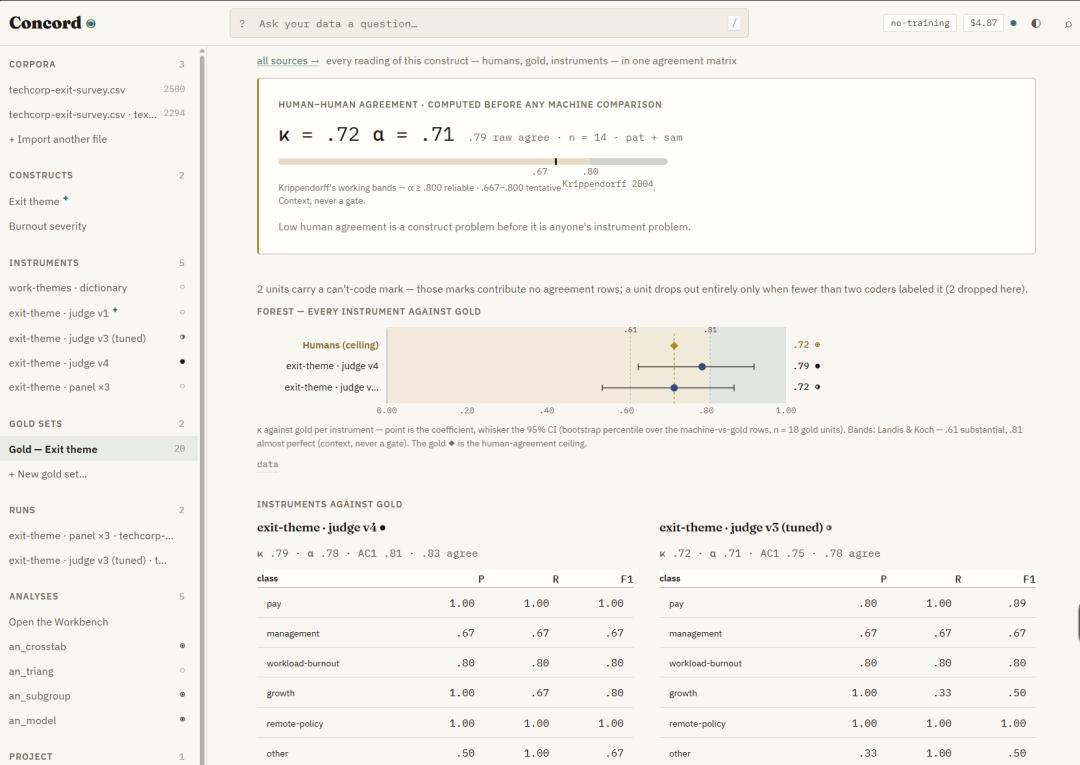
Yet hands-on tests also exposed clear shortcomings. Mollick observed that Fable 5 still generates errors and omissions requiring human review and refinement. Simultaneously, long-running tasks incur extremely high token costs—and Fable 5’s pricing is substantially higher than Opus 4.8’s. Real-world deployment thus faces significant cost challenges.
High-intensity, long-duration capabilities inevitably translate into usage costs. As a $20/month Pro subscriber, I exhausted my quota after just a few simple runs.
The Claude client interface also displays Fable 5 as “included until June 22.” As noted earlier, per Anthropic’s schedule, once the free inclusion window closes, Fable 5 will be removed from certain subscription plans—and continued usage will consume usage credits.
Historically, users paid modest monthly fees to broadly access the world’s most advanced intelligence. Subscription models obscured true costs—and placed ordinary individuals, at times, on equal footing with major corporations.
With token-based billing, everything changes.
AI shifts from resembling a flat-rate service to becoming a consumable production resource. The most powerful models are evolving into increasingly expensive, finely granular production tools.
Some users may disregard cost—running Fable 5 on 24-hour chains to refactor 50 million lines of code, independently developing full applications, sustaining research projects, or repeatedly testing and refining outputs.
But most ordinary users will instinctively weigh each invocation: Is this question worth spending tokens on? Is this task worth assigning to the strongest model? If this attempt fails, should I ask it to try again?
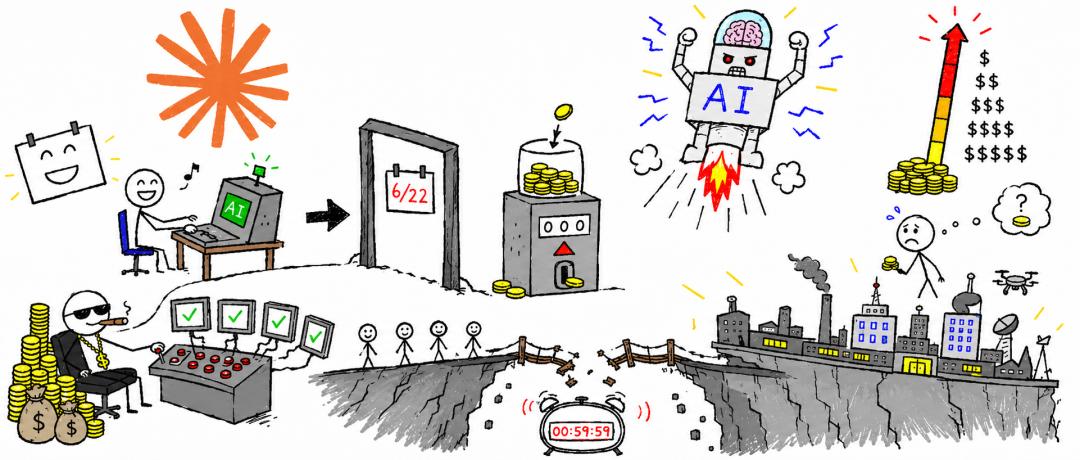
The worst news is precisely this: AI hasn’t weakened—in fact, it’s growing stronger at an unprecedented pace, capable of independently completing more and more cognitive tasks previously reserved for humans.
Meanwhile, the entry ticket to this capability keeps rising. The information gap between ordinary people and cutting-edge productivity—narrowed by large language models—may widen again due to costly token-based pricing.
Anthropic isn’t alone here—OpenAI and other vendors will likely follow suit. As frontier models grow more powerful, so do their training and inference costs—especially since both companies are actively pursuing IPOs and must demonstrate to capital markets not just technical prowess, but sustainable revenue generation from model capabilities.
Thus, rather than merely signaling a model upgrade, Fable 5’s release serves as a rehearsal for a fundamental overhaul of AI subscription economics. If the era of AI democratization is entering its final countdown, this is certainly not the best news.
Join TechFlow official community to stay tuned
Telegram:https://t.me/TechFlowDaily
X (Twitter):https://x.com/TechFlowPost
X (Twitter) EN:https://x.com/BlockFlow_News