55 TB Reduced to 28 TB? Rumors and Panic Behind Rubin’s Memory Reduction
TechFlow Selected TechFlow Selected
55 TB Reduced to 28 TB? Rumors and Panic Behind Rubin’s Memory Reduction
Panic is real—but the question is, is it heading in the right direction?
 Navigating Web3 tides with focused insights
By: Tide Research
In the early hours of June 4, SemiAnalysis—the semiconductor industry’s most influential independent research firm—released its morning newsletter.
The core message was just one sentence: The SOCAMM DRAM capacity per rack for NVIDIA’s next-generation Vera Rubin NVL72 AI supercomputing system may drop from the previously expected ~55 TB to ~28 TB. Most Rubin systems will adopt 96 GB SOCAMM modules—not the 192 GB modules widely anticipated by the market.
Once the news spread, the market reacted bluntly and directly: memory demand cut in half—bearish for Micron. MU plunged over 10% intraday, tumbling sharply from its all-time high of $1,089 set the previous day to $971—a single-day loss of over $100 billion in market cap.
The panic was real—but was it directed at the right target?
Let’s Do the Math First
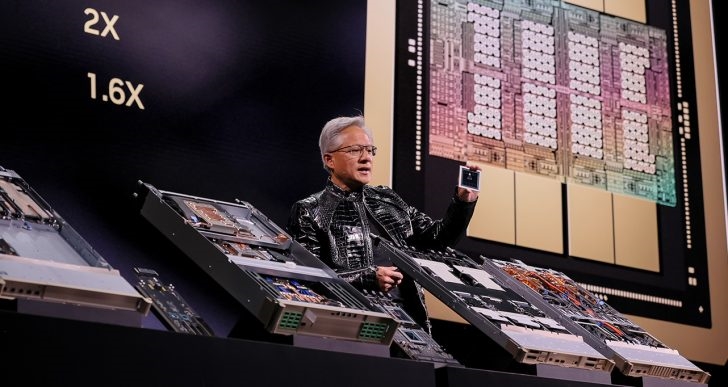
The Vera Rubin NVL72 is NVIDIA’s next-generation flagship AI supercomputing rack. Each rack packs 72 Rubin GPUs and 36 Vera CPUs. On the GPU side, the system uses HBM4—288 GB per chip—for a total of ~20.7 TB per rack. That part remains unchanged. What’s changing is the CPU side.
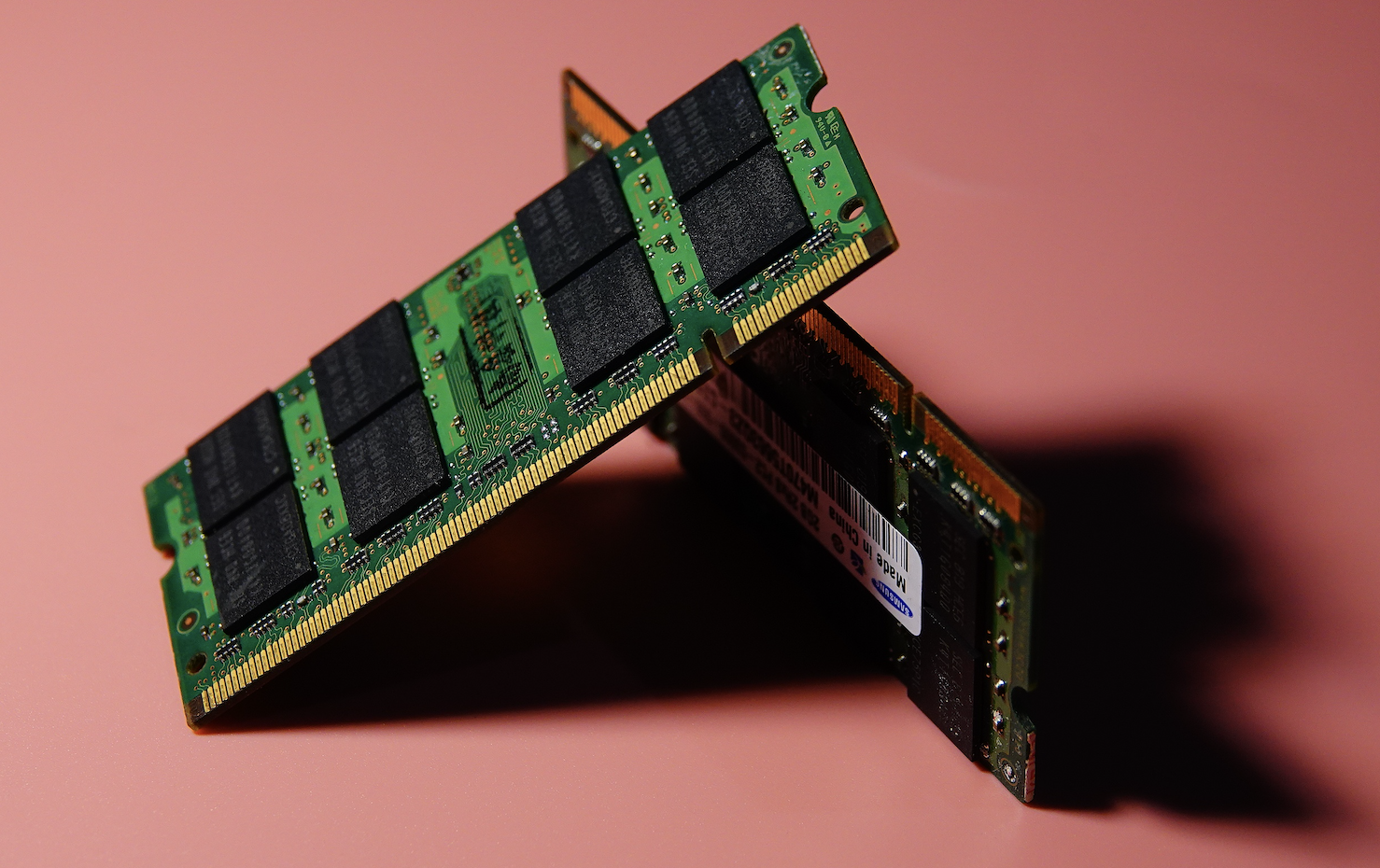
Each Vera CPU has eight SOCAMM slots, each accommodating modules of varying capacities. At CES 2026, NVIDIA officially specified that “each Vera CPU supports up to 1.5 TB of LPDDR5X,” corresponding to the full configuration of eight 192 GB modules. With 36 CPUs, that totals 54 TB.
SemiAnalysis’s latest report states: “In practice, most systems shipped will likely not be fully populated. Instead, most will use 96 GB modules—8 × 96 GB = 768 GB per CPU—and thus ~28 TB across 36 CPUs.”
Going from 55 TB to 28 TB represents nearly a 50% reduction in capacity—hence the clickbait headline: “Memory demand slashed in half.”
Yet the market miscalculated one critical variable.
The Logical Flaw Behind the Panic
First, SOCAMM is slot-based—not soldered.
This is the easiest-to-overlook technical detail in the entire story. Unlike the LPDDR soldered directly onto the motherboard in the GB300 Blackwell Ultra, the Vera Rubin platform adopts JEDEC-standardized SOCAMM2 modules—hot-pluggable, field-replaceable, and upgradeable. Today you plug in 96 GB; tomorrow, if customers demand more, you simply swap in 192 GB or even 256 GB modules—just like replacing a DIMM.
NVIDIA explicitly highlighted this design at CES 2026: the time required to assemble an entire compute tray dropped from two hours to five minutes. Modularity, serviceability, and upgradability represent one of Vera Rubin’s biggest architectural advances over Blackwell.
Reducing the initial shipping configuration does not mean permanent demand disappearance—it’s more akin to a “get on board first, pay later” strategy.
Second, the reason for lower capacity isn’t “less need”—it’s “not enough supply.”
Dylan Patel, founder of SemiAnalysis, posted a telling comment on X (formerly Twitter): “One thing I love is how people who retweet our reports often omit most of what’s actually in them. This happens all the time.”
Reader comments on Digg further illustrate the point: 77.8% of respondents described secondary coverage as misleading, headline-driven cherry-picking.
What got omitted? Context.
Global LPDDR5X supply is extremely tight in 2026. At its late-May Wolfe Research conference, Micron explicitly stated that memory demand significantly exceeds supply capacity—and this imbalance is expected to persist beyond 2026. Micron’s entire HBM production capacity for FY2026 has already been sold out; DRAM average selling prices rose over 110% year-on-year, with gross margins soaring to 74%. Samsung and SK hynix are likewise running at full capacity and full utilization.
Against this backdrop, NVIDIA’s challenge isn’t that customers don’t want more memory—it’s that “we can’t source enough LPDDR5X chips to populate every slot.”
Lowering the default SOCAMM configuration per rack is fundamentally an engineering-level supply-chain management decision: “Rather than delay entire rack deliveries due to memory shortages, ship at a lower configuration first—so compute goes live faster.”
This is not a signal of shrinking demand. Quite the opposite—it’s a signal of demand overwhelming supply.
Third, less memory per rack ≠ fewer racks.
The market performed a simple multiplication: half memory per rack → half total demand. But there’s another variable in the equation: shipment volume.
If SOCAMM per rack drops from 55 TB to 28 TB, NVIDIA can—as constrained by the same LPDDR5X supply—assemble more racks. Where one batch of memory previously built only 100 racks, it now builds nearly 200.
Total LPDDR5X consumption hasn’t declined—it’s just distributed across more racks. For NVIDIA, this is a pragmatic move to accelerate Rubin’s market rollout. For memory vendors, total order volume may remain unchanged—or even increase.
Beyond that, memory demand elasticity on the CPU side is high in inference workloads. Not all workloads require 1.5 TB of LPDDR5X. While large-model training is memory-hungry, many inference tasks—including agentic AI and long-context inference—can flexibly allocate KV cache across HBM and LPDDR via NVLink-C2C. For many customers, 768 GB of CPU-side memory is already sufficient.
So Why Did Micron Still Drop 10%?
Because SemiAnalysis was merely the second straw that broke the camel’s back.
The first straw was Broadcom. Ahead of the U.S. market open on June 4, Broadcom released its Q2 earnings. The numbers themselves weren’t bad: $22.19 billion in revenue, up 48% YoY; non-GAAP EPS of $2.44—above consensus. Yet CEO Hock Tan did not raise his full-year AI chip revenue guidance of $100 billion—and the market deemed that “insufficient.” Broadcom’s stock plunged 15%, dragging down the entire semiconductor sector.
Micron had no company-specific negative news that day. Multiple outlets—including TipRanks, Motley Fool, and 24/7 Wall St.—explicitly labeled the move a “collateral damage” selloff. As a core beneficiary of AI memory demand, Micron’s valuation is tightly coupled to AI capital-expenditure sentiment. Broadcom’s guidance prompted the market to reassess growth expectations across the entire AI chip supply chain.
SemiAnalysis’s report circulated the same day, giving traders—who were already looking for an excuse to sell—a perfect narrative: “It’s not just weakening AI sentiment overall—the actual memory demand numbers are shrinking too.”
A $1 trillion market-cap stock that surged 900% over the past year—and just hit an all-time high the day before—is extremely vulnerable. At that level, any negative headline becomes a catalyst for profit-taking. Panic doesn’t need to be rational—it just needs an excuse.
Tide Research Takeaways
Three key conclusions:
First, SemiAnalysis’s report itself is accurate—but the market’s interpretation is wrong. It’s highly likely that the default SOCAMM configuration for the Rubin NVL72 will indeed fall short of its theoretical maximum. This reflects both supply-chain realities and customer demand elasticity. But “lower default configuration” and “shrinking memory demand” are separated by two crucial facts: a hot-pluggable, modular architecture—and an industry-wide reality where demand vastly exceeds supply.
Second, Micron’s core risk today lies not in SOCAMM—but in HBM4. As SemiAnalysis reported back in February, Micron holds zero share of NVIDIA’s Rubin-platform HBM4 orders: SK hynix takes 70%, Samsung 30%. Although Micron announced volume shipments of HBM4 in March, its projected market share remains just 18%. By contrast, Micron’s position in SOCAMM is rock-solid: it was the first vendor to launch 256 GB SOCAMM2 modules and has served as NVIDIA’s core SOCAMM partner for five years. The real impact on Micron from reduced SOCAMM configurations pales in comparison to its marginalization in the HBM4 market.
Third, this selloff is fundamentally a profit-taking correction for a $1 trillion stock hitting an all-time high—amplified by two independent catalysts. Broadcom delivered the emotional shock; SemiAnalysis supplied the narrative ammunition. Together, they triggered a 10% pullback in a stock that had risen ninefold over the past 12 months. From a trading perspective, this isn’t “panic”—it’s normal.
Dylan Patel’s tweet was spot-on: most people retweeting his report truly did miss its most important parts.
The greatest danger in semiconductor investing isn’t getting the direction wrong—it’s reading the headline correctly but misapplying the formula.
Join TechFlow official community to stay tuned
Telegram:https://t.me/TechFlowDaily
X (Twitter):https://x.com/TechFlowPost
X (Twitter) EN:https://x.com/BlockFlow_News
 @BlockFlow_News