HTX Live “Hot Topics Spotlight” Latest Episode: Cryptocurrencies as a “Safe Haven” Amid the Super Central Bank Week — Discussing How to Let Idle Funds Weather Macroeconomic Storms
TechFlow Selected TechFlow Selected
HTX Live “Hot Topics Spotlight” Latest Episode: Cryptocurrencies as a “Safe Haven” Amid the Super Central Bank Week — Discussing How to Let Idle Funds Weather Macroeconomic Storms
Huobi Earn offers precisely this capability: enabling idle assets to grow steadily, even amid uncertainty.
 Navigating Web3 tides with focused insights
At one of the most critical macro windows in 2026—the “Super Central Bank Week”—overlapping with the Bitcoin Conference, the crypto market stands at a crossroads of sentiment and liquidity.
On one side lie密集 releases of data and policy decisions from the U.S. Federal Reserve, the Bank of Japan, the European Central Bank, and the U.S. core PCE index; on the other, a concentrated burst of industry narratives—leaving markets oscillating repeatedly between “expectation” and “panic.”
Last night, HTX Live’s latest “Hot Topics Live” Space focused on the theme: “With Super Central Bank Week approaching, where should you park your idle funds?”
Rain, Huobi Earn Advisor, joined seasoned industry KOLs including Bull King, Amber, Sniper, and Sister Maomao for an in-depth discussion spanning macro analysis, asset allocation, and stablecoin yield strategies—systematically unpacking pathways to achieve steady asset growth amid uncertainty.
1. Macro fundamentals drive direction; markets enter a high-uncertainty phase: “Safety” becomes the first principle
A key consensus emerged among multiple speakers in this livestream: macro liquidity determines asset direction, while industry events determine volatility magnitude.
As speaker Sniper put it directly: “Super Central Bank Week impacts global wallets, whereas the Bitcoin Conference acts more like an emotional amplifier.” This means that even the strongest industry narratives struggle to counteract macro pressures from liquidity contraction. More alarmingly, when rate-cut expectations are dashed and hawkish signals emerge, crypto assets—especially BTC and ETH—often bear the brunt first. Under such conditions, directional trading strategies carry significantly heightened risk.
Recent frequent on-chain blow-ups, fund thefts, and liquidity drain have once again pushed safety to the forefront. Rain, Huobi Earn Advisor, stated bluntly: “High on-chain yields don’t fall from the sky—they’re earned by taking on risk.” DeFi innovation is undoubtedly worthy of encouragement, yet it still faces three major uncertainties: smart contract vulnerabilities, asymmetry in audits and endorsements, and irreversible black-swan risks.
In contrast, centralized platforms are undergoing revaluation. Huobi HTX has maintained “zero security incidents” for over 30 consecutive months—effectively delivering certainty around principal protection. During macro turbulence, rational choice lies not in chasing maximum returns, but in prioritizing asset survival.
2. The greatest enemy of idle assets: not losses, but “ineffective holding”
In this discussion, Rain offered a provocative insight: “Idle assets may be one of the costliest mistakes in investing.” Many users opt to “HODL BTC and wait for price appreciation,” overlooking two critical costs: time cost and capital efficiency. During market consolidation—or even decline—mere HODLing forfeits compounding power and liquidity opportunities.
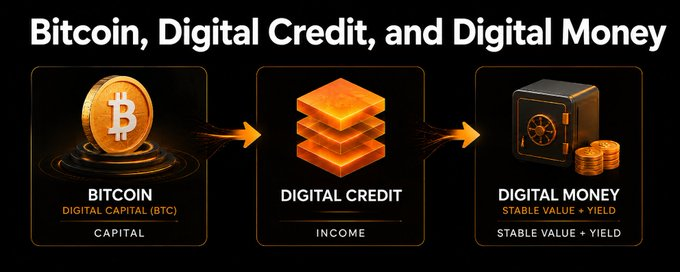
Rain noted institutions do precisely the opposite: “Capital never sleeps”—profiting from price gains during rallies and earning interest during dips, continuously lowering average entry cost via coin-denominated compounding. This reflects a structural shift now underway: BTC is evolving from a trading instrument into an “asset allocation tool.”
Building on this understanding, Rain presented a clearer strategic breakdown: mainstream assets (BTC/ETH), validated across cycles, can be held long-term—but ideally paired with yield-generating strategies. For altcoins, however, increasing integration between TradFi and RWA is further diluting capital flow and attention within crypto, necessitating strict stop-loss and exit mechanisms. Otherwise, blind HODLing often equates to near-zero risk.
3. From trading to asset allocation: position management is the core capability for surviving cycles
In highly volatile environments, market prediction grows increasingly difficult—while asset management becomes ever more critical.
Sniper offered direct advice from a trading perspective: avoid betting on macro data; instead, reduce positions and deleverage ahead of pivotal events to avoid being “shaken out” by volatility.
Rain, from an asset management lens, proposed a deeper structural rethinking: a truly mature investment framework centers on evolving from “single-position” to “multi-layered asset structure.” This entails classifying assets by function into core long-term holdings, cash management vaults (for yield generation), and tactical trading vaults (for flexible leveraged trades), each governed by fully independent risk management logic.
Bull King supplemented with practical insights: after enduring multiple market cycles, current strategy has clearly shifted toward “stability-first”—building a foundational yield base via stablecoin staking, then allocating a small portion of capital to trading for enhanced return elasticity. In his view, the essence of staking isn’t outsized profits, but keeping capital perpetually “in motion” rather than idle.
Collectively, these perspectives point to one conclusion: staking isn’t merely a yield tool—it’s a position management tool.
4. Stablecoin yield as a “safe harbor”: dissecting staking selection logic
When markets enter consolidation or downtrends, stablecoin staking gains prominence. On specific product strategies, Rain provided actionable guidance.
First: trade when there’s momentum; stake when there isn’t. In sideways markets, flexible (on-demand) staking outperforms fixed-term staking. Its core advantage lies in liquidity: it delivers continuous interest income while simultaneously serving as dry powder for opportunistic buying during market dips—enabling investors to capture both yield and price upside when timing is right.
Second, on product selection, Rain emphasized focusing on “real yield” rather than marketed APY. Many platforms lure users with small-balance high-yield offers, yet deliver negligible returns for large deposits. Truly valuable staking products must combine long-term yield stability with robust capacity for large-scale capital. Additionally, Rain pointed out that some platforms run “pulse high-yield” campaigns—essentially short-term subsidies—that attract user attention. Huobi HTX is currently scheduling similar “Deposit A, Get A+B” pulse-high-yield products to reward loyal platform users on a time-limited basis. Still, long-term stable yield remains the decisive factor for ultimate capital returns. As Rain sees it, the endgame of staking isn’t about outperforming others—it’s about remaining at the table with more chips once the storm passes.
According to Huobi HTX platform data, Huobi Earnholds structural advantages in stablecoin (USDT/USDC) and mainstream crypto (e.g., ETH) staking, including: higher baseline stablecoin yields; stronger large-balance scalability—with VIP yields for Prime5+ clients currently reaching up to 9% APY, delivering genuine “long-term value”; and a comprehensive product suite covering low-, medium-, and high-risk preferences. This positions Huobi Earn closer to a “safe harbor” in today’s “stability-first” market environment.
5. Final reflection: surviving cycles hinges not on judgment—but on structure
Returning to the original question: Where should idle funds go during Super Central Bank Week?
This livestream didn’t offer a single-product answer—but rather a holistic methodology: safeguarding principal at the safety layer, countering time decay via yield generation at the return layer, and managing volatility through position structuring at the strategy layer.
As summarized in the livestream’s closing remark: “Staking isn’t just about parking money—it’s a tool for hedging macro risk.” In periods of macro turbulence, true winners aren’t those who guessed direction correctly—but those whose assets keep running, compounding, and surviving. And what Huobi Earn delivers is precisely this capability: enabling idle assets to grow with certainty—even amid uncertainty.
About Huobi HTX
Founded in 2013, Huobi HTX has evolved over 13 years from a cryptocurrency exchange into a comprehensive blockchain business ecosystem encompassing digital asset trading, financial derivatives, research, investment, incubation, and more.
As a globally leading Web3 gateway, Huobi HTX pursues a development strategy centered on global expansion, ecosystem prosperity, wealth creation, and security compliance—providing comprehensive, secure, and reliable value and services to cryptocurrency enthusiasts worldwide.
To learn more about Huobi HTX, visit https://www.htx.com/ or HTX Square, and follow us on X, Telegram, and Discord. For further inquiries, contact glo-media@htx-inc.com.
Join TechFlow official community to stay tuned
Telegram:https://t.me/TechFlowDaily
X (Twitter):https://x.com/TechFlowPost
X (Twitter) EN:https://x.com/BlockFlow_News
 @HTX_Global