JUST Ecosystem Breaks Through Against the Odds: $60 million Invested to Burn 1.35 Billion JST Tokens; Buyback-and-Burn Mechanism Set for Diversified Upgrade
TechFlow Selected TechFlow Selected
JUST Ecosystem Breaks Through Against the Odds: $60 million Invested to Burn 1.35 Billion JST Tokens; Buyback-and-Burn Mechanism Set for Diversified Upgrade
After the buyback and burning of existing funds in Phase 1.0 is completed, the JST buyback-and-burn mechanism will officially enter its Phase 2.0 upgrade, enabling diversified mechanism iteration and comprehensive expansion of funding sources.
 Navigating Web3 tides with focused insights
Since JUST, the core DeFi infrastructure of the TRON ecosystem, successfully completed its third large-scale buyback and burn of its native token JST on April 15, JST’s market performance has remained robust and impressive—making it one of the most closely watched assets in the crypto market recently.
According to Binance exchange data, after hitting a short-term low of $0.057 on April 16, JST began a steady upward trajectory, climbing to approximately $0.085 by April 23. Over this seven-day period, its cumulative gain reached nearly 49%, significantly outperforming most tokens in the broader crypto market during the same timeframe. This counter-cyclical strength enabled JST to stand out prominently, drawing widespread attention and discussion from global investors.
JST’s standout performance is no coincidence. Amidst an overall downturn across the crypto market and frequent security incidents plaguing the DeFi lending sector, the JUST ecosystem has achieved counter-cyclical breakthroughs through a series of positive developments—demonstrating a steadfast commitment to long-termism and setting a benchmark for long-term value creation in DeFi.
In fact, JST’s market resilience was evident earlier. As early as March this year, amid general market sluggishness, JST repeatedly posted strong single-day gains against the trend—showcasing remarkable downside resistance and already attracting significant market attention. Entering April, the JUST ecosystem continued releasing positive signals: On April 15, JST completed its scheduled third large-scale buyback, allocating over $21 million in a single round—further bolstering market confidence. Shortly thereafter, on April 27, JUST officially released its “JST Q1 2026 Financial Report,” outlining a clear plan to expand funding for future JST buybacks and burns—injecting stronger momentum into JST’s long-term deflationary trajectory.
Per the report, once the existing funds under Phase 1 (Version 1.0) are fully deployed, the new buyback-and-burn rules will be formally activated, marking the official launch of the upgraded Phase 2 (Version 2.0). At that point, funding sources for buybacks and burns will be significantly expanded beyond current ones. Specifically, in addition to the already confirmed revenue streams—including JustLend DAO’s sTRX staking income, SBM income, and over $10 million in net earnings generated by USDD—revenue from JustLend DAO’s GasFree business and historical USDJ earnings will also be gradually integrated into the buyback-and-burn funding framework per the planned roadmap.
This strategic plan signifies a comprehensive upgrade of JST’s diversified buyback mechanism and a meaningful broadening of its funding sources for buybacks and burns. It not only effectively converts the fruits of JUST ecosystem development—ensuring earnings generated across various business lines are reasonably reinvested at the JST token level—but also serves as a firm commitment to global ecosystem contributors. By continuously strengthening the deflationary value support for JST, it enhances contributors’ confidence and engagement—ultimately unlocking broader long-term value appreciation potential for JST.
JST Buyback-and-Burn Achievements Are Remarkable: Three Rounds Total $60 Million Invested, Over 1.35 Billion JST Tokens Burned—Deflationary Effect Drives Substantial Price Appreciation
Since launching its buyback-and-burn program in October 2025, JST has efficiently executed three large-scale buybacks within just six months—burning a total of 1.356 billion JST tokens, representing approximately 13.70% of the total token supply. Cumulatively, over $60 million has been invested. Based on JST’s recent market price of ~$0.085, the total market value of burned tokens exceeds $115 million—marking an outstanding milestone in JST’s ecosystem development.
Per prior rules, JST buyback-and-burn funding primarily originates from two core pillars of the JUST ecosystem: (1) existing and newly generated net earnings from JustLend DAO—the DeFi lending hub; and (2) over $10 million in net earnings from the multi-chain USDD stablecoin ecosystem. Currently, USDD earnings have yet to meet the activation threshold, so all funds deployed in the third JST buyback-and-burn round came exclusively from JustLend DAO.
Examining execution details across each round reveals steadily increasing investment amounts—and all operations were strictly conducted on-chain by the decentralized governance body Grants DAO. Users can conveniently verify detailed data via JustLend DAO’s official Transparency (financial transparency) page and the Grants DAO official website, as follows:
- Round 1 Buyback-and-Burn (October 2025): ~559 million JST tokens burned (~5.66% of total supply), with ~$17.72 million invested—initially activating JST’s deflationary effect.
- Round 2 Buyback-and-Burn (January 2026): ~525 million JST tokens burned (~5.30% of total supply), with investment increased to ~$21 million—exceeding expectations.
- Round 3 Buyback-and-Burn (April 15, 2026): ~271 million JST tokens burned (~2.74% of total supply), with investment reaching ~$21.3 million—continuing a modest upward trend.
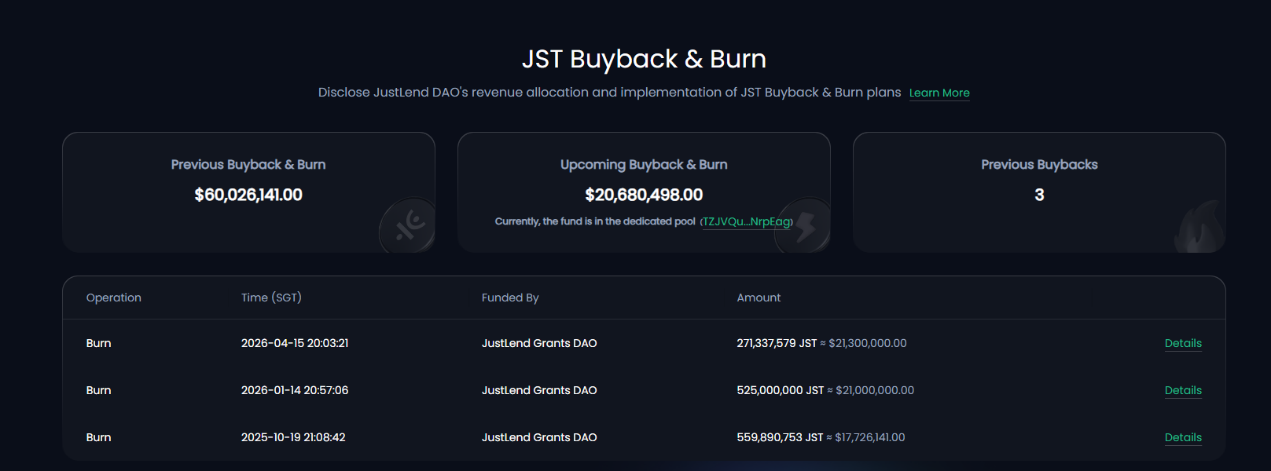
Compared to certain projects conducting symbolic buybacks-and-burns involving only tens of thousands of dollars—largely for marketing purposes—JST’s buyback-and-burn program is deeply rooted in real business operations and sustainable profit models. Its tangible scale and rigorous execution highlight three distinct advantages: First, massive capital scale—cumulative investment across three rounds exceeds $60 million, with each round reaching the multi-million-dollar range, reflecting genuine “hard cash” commitment and rejecting speculative hype. Second, consistent execution timing—strictly adhering to quarterly schedules without delay or interruption, demonstrating exceptional execution capability and accountability. Third, powerful burn intensity—each round burns hundreds of millions of tokens, cumulatively exceeding 1.35 billion tokens, resulting in significant reductions in token supply and transforming theoretical deflation into concrete reality. The ever-increasing burn volumes and robust capital reserves both reflect JUST ecosystem’s solid foundation and reinforce the bedrock of JST’s long-term value.
From a value-logic perspective, each completed buyback-and-burn represents a substantive reduction in JST’s circulating supply. As successive burns proceed steadily, JST’s total supply contracts continuously, deepening the deflationary effect and increasingly highlighting token scarcity. This enhanced scarcity directly translates into the trading layer—driving price and market cap upward in tandem.
The validity of this value logic has been fully corroborated by JST’s market performance. Per CoinGecko data, since the completion of Round 1 in October 2025, JST climbed from a short-term low of ~$0.03 to $0.084 as of April 29, achieving a market cap of ~$720 million and ranking #83 globally among cryptocurrencies. Its six-month cumulative gain exceeded 170%, delivering a qualitative leap in both price and market cap versus pre-buyback levels—providing empirical validation of the deflationary thesis.
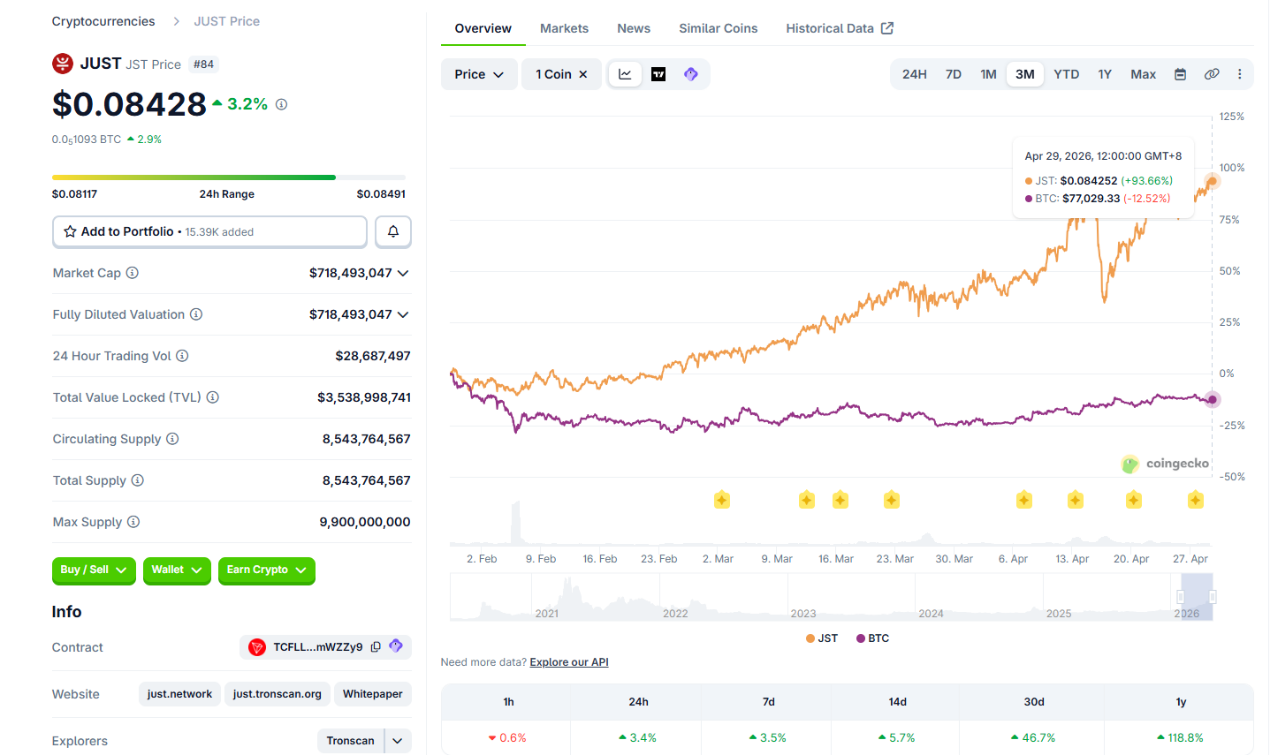
Notably, JST’s price appreciation has not relied on favorable overall market conditions but instead demonstrated exceptional resilience and growth amid adverse macro trends. In Q1 2026, the global crypto market experienced a sharp decline, with most tokens correcting downward—yet JST broke out against the trend, accelerating from an initial low of $0.04 to $0.086 on April 12—reaching a new short-term high not seen since 2022.
It bears emphasis that JST’s stellar price performance is not fleeting speculation driven by short-term capital flows, but rather rational market recognition and firm endorsement of its deflationary value logic. Through regular, large-scale token burns, JST demonstrably reduces supply and increases scarcity—a sustainable, verifiable value-enabling model now validated by both institutional capital and the broader market. This has cemented a solid foundation for JST’s long-term value growth and ensured its continued upward trajectory through industry cycles.
JST Buyback-and-Burn Accelerates: Mechanism Set for Diversified Upgrade, Funding Sources Broadened Across the Board
Having successfully completed three large-scale buyback-and-burn rounds, JST’s buyback-and-burn program has entered a常态化 phase. Going forward, JST buybacks-and-burns will intensify further—transitioning comprehensively from Phase 1.0 to a new Phase 2.0. Specifically, upon full deployment of Phase 1.0 (Version 1.0) legacy earnings, the ecosystem will fully transition into Phase 2.0. At that stage, JUST will deepen its buyback-and-burn strategy, implementing a diversified upgrade of the existing mechanism. By broadly expanding funding sources, it will inject stronger, more diversified financial momentum into JST buybacks—building a more robust and sustainable deflationary growth flywheel, reinforcing the deflationary foundation, and enhancing JST’s long-term holding value.
Reviewing past buyback-and-burn execution, JustLend DAO has been the undisputed engine behind JST’s buybacks-and-burns. All over $60 million invested across JST’s three buyback-and-burn rounds originated solely from JustLend DAO’s legacy and newly generated net earnings—providing solid assurance for smooth program implementation.
As TRON’s core financial infrastructure, JustLend DAO has built a comprehensive DeFi product matrix covering SBM lending, sTRX liquid staking, Energy Rental, and the GasFree smart wallet—spanning the full spectrum of use cases. Leveraging mature product mechanisms, a vast user base, and a diversified, high-growth core business portfolio, JustLend DAO achieves sustained profitability—not only securing its own development but also providing a continuous stream of “ammunition” to fund JST buybacks-and-burns.
Currently, JST buyback-and-burn funding relies primarily on JustLend DAO’s two core business lines—SBM lending and sTRX liquid staking—with stable and robust funding supply. Specifically, per JustLend DAO’s latest financial dashboard as of April 16, the platform’s cumulative net earnings exceed $83.64 million, including $80.75 million already withdrawn—comprising $79.52 million from sTRX and ~$3.22 million from SBM. Of the withdrawn earnings, $80.7 million has been allocated to JST buybacks-and-burns—including $60.02 million actually burned across the three rounds—with $20.68 million in remaining legacy earnings earmarked for upcoming buyback-and-burn activities over the next two quarters.
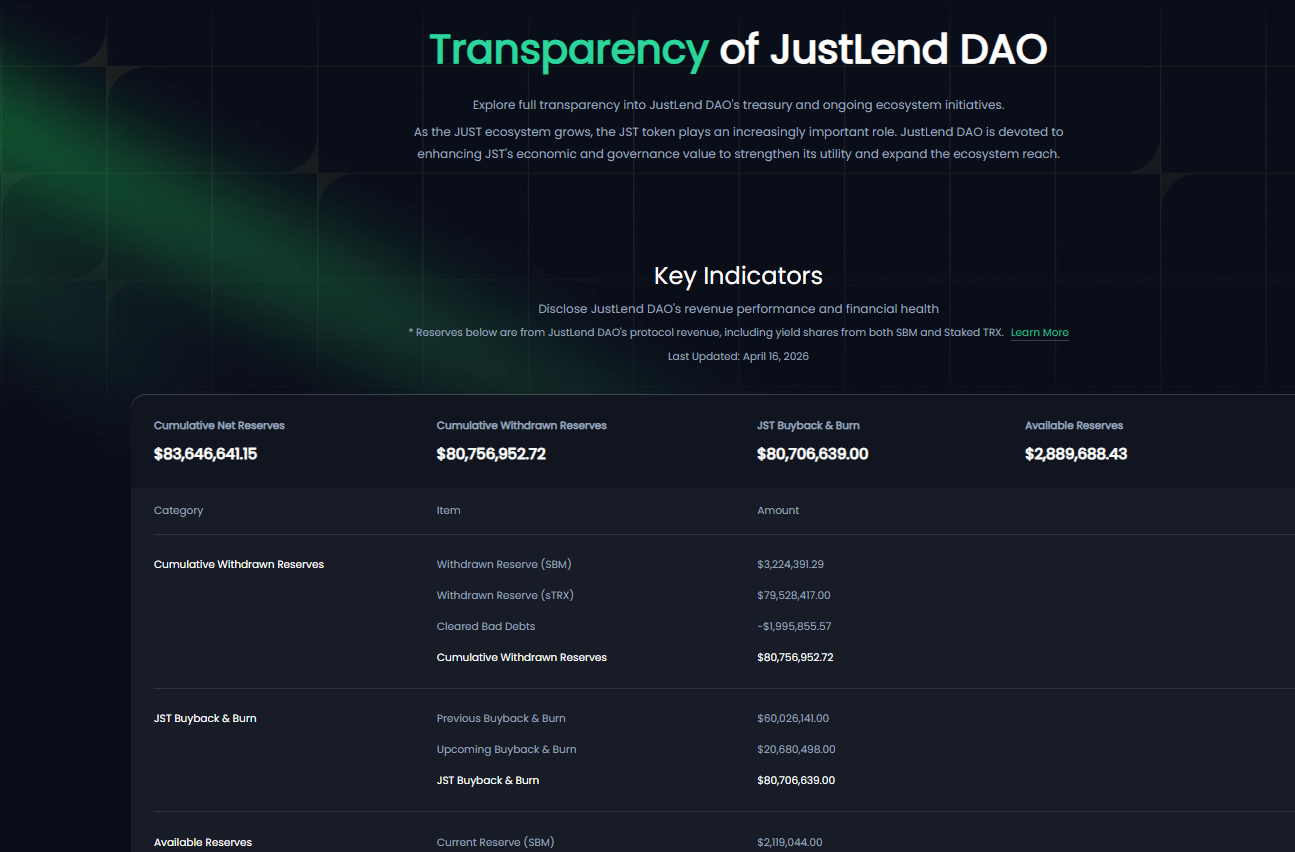
Based on this, JustLend DAO’s legacy earnings alone can guarantee a minimum of $10.34 million per quarter for future buybacks over the next two quarters. Coupled with JustLend DAO’s quarterly net earnings growth, actual buyback-and-burn investment amounts will only increase going forward. This financial assurance is further corroborated in the official financial report: According to the “JST Q1 2026 Financial Report” released on April 27, JST’s Q2 2026 buyback-and-burn investment is projected at ~$21.3 million—primarily sourced from sTRX revenue, SBM revenue, legacy earnings, and reserve balances—with final amounts adjusted flexibly based on actual operating conditions.
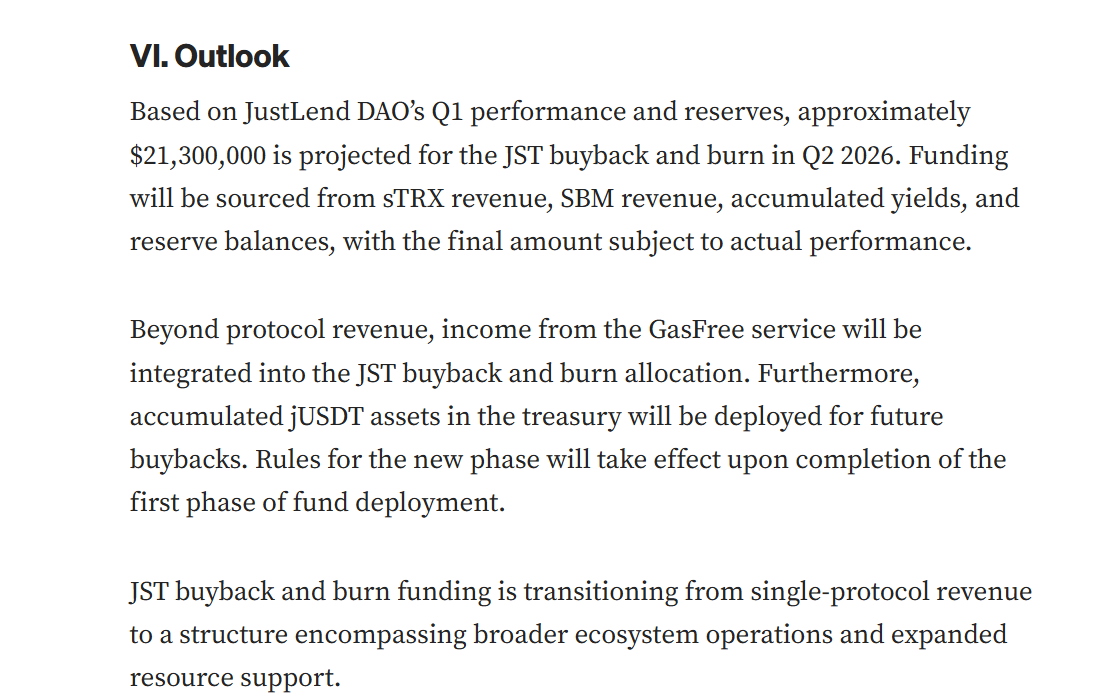
Meanwhile, the report explicitly outlines the strategic direction for JST’s buyback-and-burn mechanism evolution: A comprehensive, diversified iteration to systematically broaden funding sources. Per the official roadmap, upon full execution of Phase 1.0 legacy funds, the new rules will be officially launched—ushering JST buyback-and-burn into the upgraded Phase 2.0 era:
Phase 1 (1.0 Legacy Execution Phase): During this cycle, JST will continue executing buybacks-and-burns under existing rules on a routine basis, steadily implementing its established deflationary plan.
Phase 2 (2.0 Mechanism Upgrade Phase): Once Phase 1.0 legacy funds are fully deployed, the new buyback-and-burn rules will go live, marking JST’s full entry into the upgraded Phase 2.0 era—featuring more diversified and resilient funding sources.
In the new Phase 2.0, JST’s buyback-and-burn funding sources will be further broadened and scaled up—establishing a multi-dimensional, multi-layered financial support system. Beyond the existing sources—including JustLend DAO’s sTRX staking income, SBM business income, and USDD ecosystem earnings exceeding $10 million—new revenue streams such as JustLend DAO’s GasFree business income and historical USDJ earnings will be added to the buyback-and-burn funding framework.
Per the latest official data, JST’s treasury address holds assets totaling over $100 million—including 159 million sTRX, 990 million jUSDT, and 300 million JST. Notably, the 300 million JST represent dedicated capital allocated in a single transfer from JUST DAO to support future community governance and long-term ecosystem initiatives—including 200 million JST for community governance proposals and 100 million JST for long-term ecosystem activities. This robust treasury provides ample assurance for ongoing ecosystem development.
In summary, the JST buybacks-and-burns completed thus far represent only the beginning of ecosystem value feedback—still in their early, formative stage. As the new diversified funding-source framework gradually rolls out, JST’s buyback mechanism will evolve from relying solely on JustLend DAO’s sTRX and SBM business surpluses to becoming a comprehensive deflationary engine integrating the operational results of multiple JustLend DAO core businesses and diverse resource reserves across the JUST ecosystem. This transformation will further strengthen JST’s deflationary flywheel, laying a more solid foundation for its long-term, steady value appreciation.
JUST Ecosystem Growth Continues to Feed JST—Long-Term Value Potential Set to Expand Further
Against a backdrop of intensifying competition and heightened cyclical volatility in the crypto industry, the JUST ecosystem remains unwavering in its commitment to long-termism—grounding itself in real-world business operations and adhering to the core principle of “real money creating real deflation.” Through sustainable value empowerment, JST has evolved from a “single-value anchor” into the “ecosystem’s central value hub”—ensuring the dividends of ecosystem growth directly benefit every JST holder, fueling robust long-term value growth and meaningfully rewarding the trust and support of global ecosystem contributors.
Tracing JST’s value evolution, its positioning and anchoring points have undergone a qualitative leap. In its early days, JST served solely as JUST’s native governance token—its primary utility limited to basic rights like ecosystem proposal voting and community governance. Its value dimension was relatively narrow. With the formal launch of the large-scale buyback-and-burn mechanism, JST’s value logic underwent a fundamental restructuring—deeply linking token value with JUST ecosystem growth and synchronizing them in real time. Real operational earnings from the ecosystem now directly feed back into and empower JST’s intrinsic value—transcending the limitations of a mere governance token.
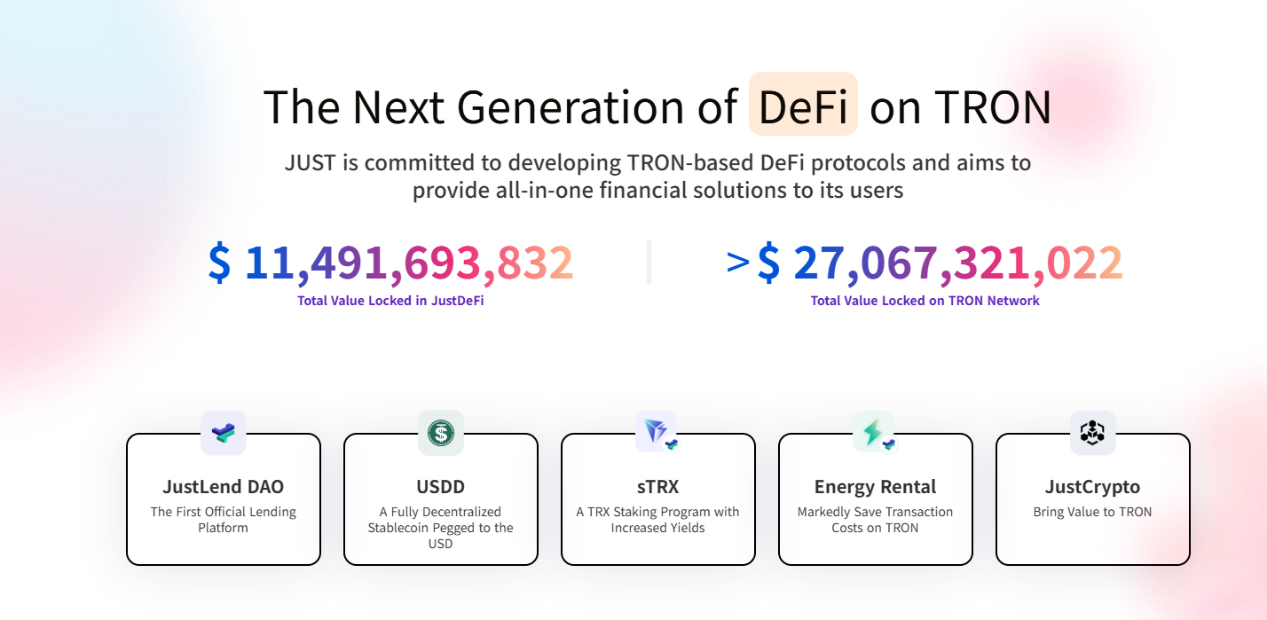
In terms of application scenarios and ecosystem coverage, JUST’s continuous expansion and deepening has cultivated a three-dimensional DeFi ecosystem matrix centered on JustLend DAO—with business reach spanning the SBM lending market, sTRX liquid staking, energy rental, GasFree smart services, and integrated stablecoin solutions like USDD and cross-chain products like JustCrypto. Leveraging its comprehensive business ecosystem and massive user base, JST has undergone an identity upgrade—from a singular governance vehicle to an ecosystem-wide value hub connecting multiple businesses and use cases—serving as the central node for value accumulation and circulation across the entire JUST ecosystem.
Looking ahead, as JST’s buyback-and-burn funding sources continue expanding and its mechanism evolves toward greater diversification, JST’s deflationary value-support system will progressively extend beyond its initial reliance on JustLend DAO’s sTRX staking and SBM lending—radiating across multiple core business lines within the JUST ecosystem to enable synergistic value creation. Ultimately, this will build a “multi-pillar-supported, co-growth” value architecture—significantly enhancing JST’s risk-resilience against market fluctuations while amplifying its long-term growth potential, thereby firmly establishing the foundation for steady token value appreciation and continuous operation of the deflationary flywheel.
This structural transformation has drawn high praise from industry professionals. Prominent KOL RichCoin noted that JST is entering a new era—not defined merely by price appreciation, but by profound structural change: evolving from a token dependent on a single revenue stream into a value carrier jointly powered by multiple ecosystems. This shift is, at its core, a concentrated manifestation of ecosystem value—as JUST’s various business units continue generating sustainable profits, JST will progressively become the direct value reflection of ecosystem growth, with every increment of ecosystem earnings translating into solid, long-term support for JST’s value.
JST’s value leap is underpinned by JUST ecosystem’s solid business foundations and strong self-sustaining revenue capacity. As TRON’s all-in-one DeFi solution, JUST consistently ranks first in total value locked (TVL) across the TRON ecosystem. Per the official data released on April 29, JUST’s TVL stands at ~$11.4 billion—representing 42% of TRON’s total network TVL ($27 billion)—firmly cementing its leadership position and providing a solid base for JST value feedback.
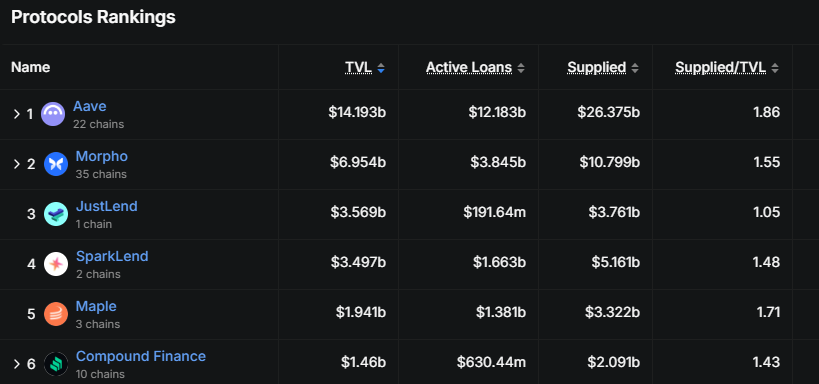
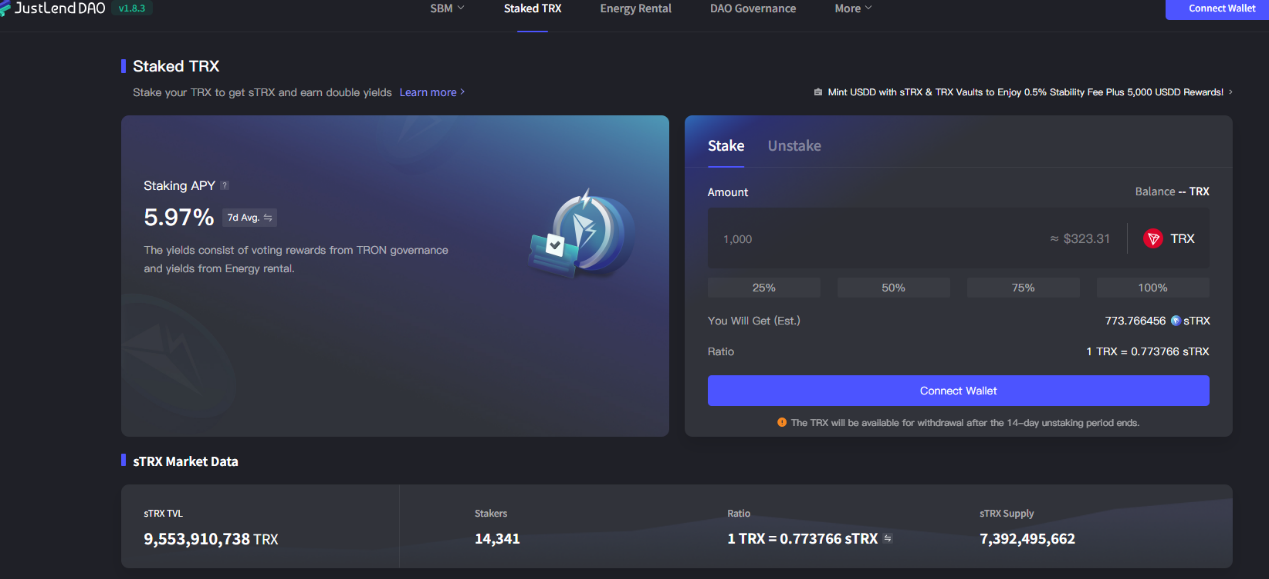
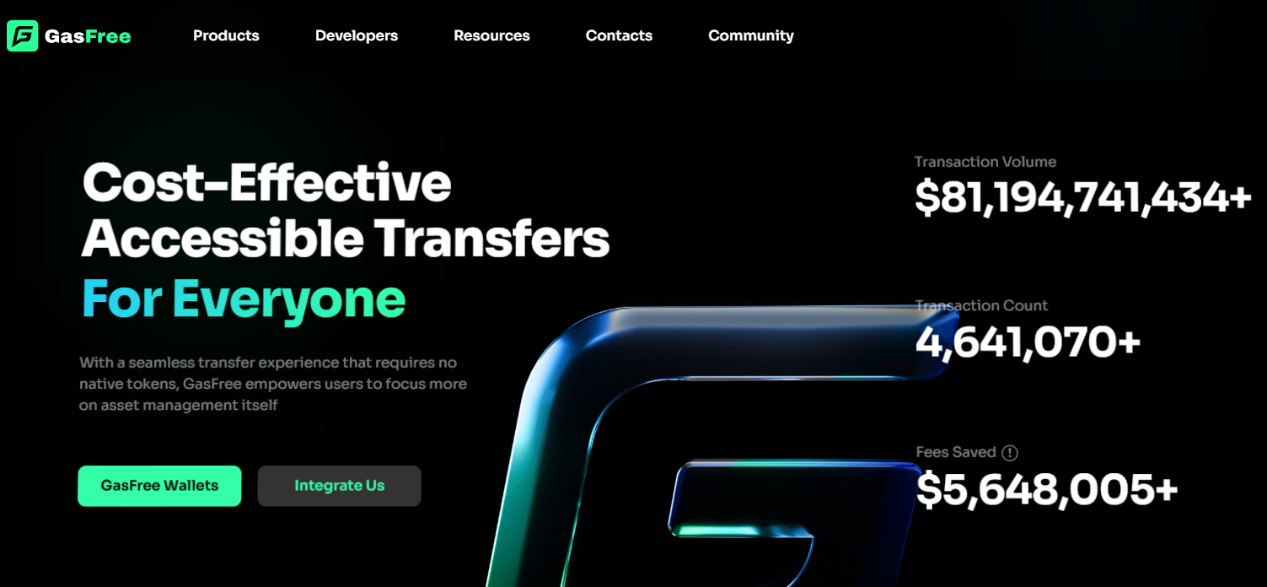
Among JustLend DAO’s core businesses, all show strong growth: Per DeFiLlama data, JustLend DAO’s SBM lending market TVL stands at ~$3.57 billion—consistently ranking top-three globally in the lending sector. Its Staked TRX liquid staking service has surpassed 9.55 billion TRX staked—valued at over $3 billion—with staking volume continuing to accelerate. GasFree enables users to pay gas fees using transfer tokens—solving the pain point of needing native chain tokens for transfers—cutting transaction costs to ~40% of traditional methods. To date, GasFree has processed $81.1 billion in transaction volume across 4.63 million transactions, saving users ~$9.64 million in fees.
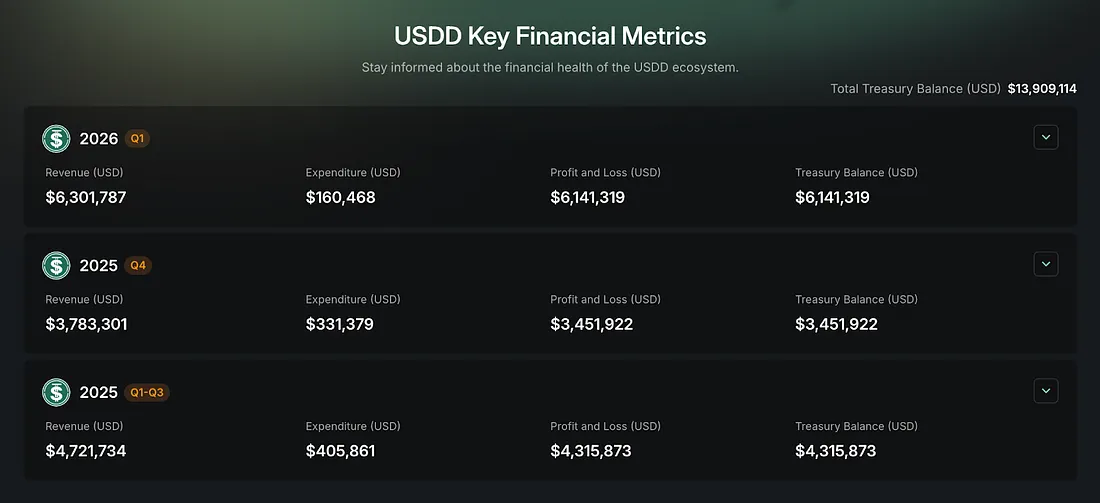
As a key potential funding source for buybacks-and-burns, the stablecoin USDD is also entering a rapid growth phase. In Q1 2026, USDD’s revenue reached $6.3 million—a 66.6% quarter-on-quarter increase—with cumulative revenue exceeding $13.9 million. Per protocol rules, USDD’s ecosystem revenue must first repay subsidies to the TRON DAO before any surplus above $10 million is allocated to the JST buyback-and-burn reserve.
With the steady advancement and maturation of various businesses across the JUST ecosystem—including continued profitability from JustLend DAO’s SBM lending and sTRX liquid staking, the integration of new offerings like GasFree, the value realization of USDD’s multi-chain ecosystem, and the monetization of USDJ’s historical revenue—diverse, scalable, and stable real-business funds will continuously flow into JST’s buyback-and-burn pool. This relentless “blood-generation” capacity provides JST with sustainable deflationary momentum.
Underpinned by the ecosystem’s robust self-sustaining capacity and solid fundamentals, JST’s “ecosystem earnings → token burn → value feedback” deflationary flywheel will spin faster and faster: Growing ecosystem profitability drives increased buyback-and-burn funding; large-scale buybacks-and-burns continuously reduce JST supply and enhance scarcity—pushing price and value higher; and rising JST value attracts more users to participate in ecosystem building and hold JST tokens—further fueling ecosystem expansion and earnings growth, forming a virtuous cycle.
Looking ahead, as the new diversified buyback-and-burn mechanism gradually rolls out, the deflationary effect will deepen further. Under the triple support of a solid ecosystem foundation, strong internal revenue generation, and a sustainably operating deflationary mechanism, JST is well-positioned to transcend short-term market noise and chart a resilient, long-term path of value appreciation. Its long-term upside potential remains wide open—not only promising richer long-term returns for global ecosystem contributors but also injecting fresh, powerful momentum into the high-quality development of the DeFi industry.
Join TechFlow official community to stay tuned
Telegram:https://t.me/TechFlowDaily
X (Twitter):https://x.com/TechFlowPost
X (Twitter) EN:https://x.com/BlockFlow_News