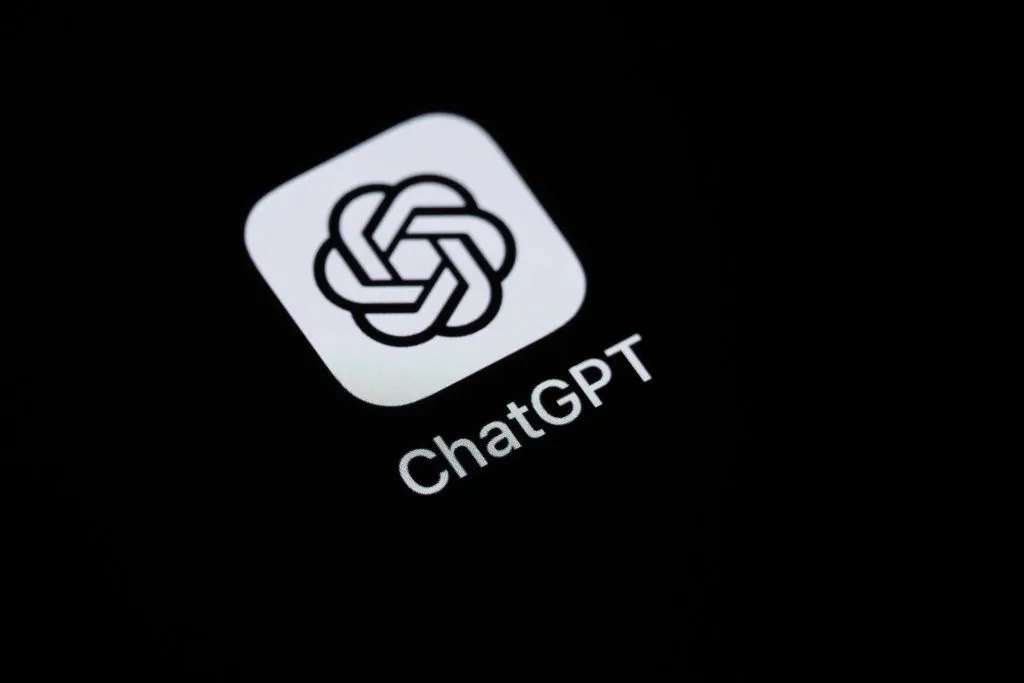
On the day OpenAI signed a contract with the U.S. Department of Defense, ChatGPT’s uninstallation rate in the U.S. surged by 300%.
TechFlow Selected TechFlow Selected
On the day OpenAI signed a contract with the U.S. Department of Defense, ChatGPT’s uninstallation rate in the U.S. surged by 300%.
Compared to ChatGPT’s average daily uninstall rate of 9% over the past 30 days, a single-day surge of 295% represents a significant anomaly.
 Navigating Web3 tides with focused insights
Author: TechCrunch / Sensor Tower
Translated by: TechFlow
TechFlow Intro: News of OpenAI’s partnership with the U.S. Department of Defense (renamed the “Department of War” under the Trump administration) triggered strong backlash among users.
Meanwhile, Anthropic gained user trust by refusing to collaborate, resulting in a sharp one-day surge in Claude downloads—propelling it to the top of the App Store. These figures directly quantify the real-world impact of AI ethics stances on user behavior.
Full article below:
On Saturday, February 28, U.S. users uninstalled the ChatGPT mobile app at a rate 295% higher than the previous day. This reaction followed news of OpenAI’s partnership agreement with the U.S. Department of Defense (DoD)—a department renamed the “Department of War” during the Trump administration.
This data comes from market research firm Sensor Tower. Compared to ChatGPT’s average daily uninstall rate of 9% over the past 30 days, a single-day spike of 295% represents a significant anomaly.
At the same time, Claude—the AI model developed by OpenAI’s competitor Anthropic—saw a reverse trend in U.S. downloads. On Friday, February 27, downloads rose 37% over the prior day; on Saturday, February 28, they rose another 51%. Earlier, Anthropic had announced its refusal to partner with the U.S. Department of Defense, citing an inability to reach agreement on terms—specifically expressing concerns that AI could be used for domestic surveillance of U.S. citizens and deployed in fully autonomous weapons systems lacking adequate safety safeguards.
The data suggests a substantial portion of users support Anthropic’s stance on this issue.
ChatGPT’s download numbers were likewise affected. On the Saturday following the announcement of the partnership, its U.S. downloads dropped 13% compared to the previous day. The decline continued into Sunday, falling another 5%. By contrast, on the Friday before the partnership was announced, the app had recorded a 14% day-over-day increase in downloads.
These rapid shifts were also reflected in Claude’s App Store ranking. On Saturday, Claude topped the U.S. App Store’s free apps chart—and as of Monday, March 2, it remained in first place. That marks a rise of more than 20 positions compared to roughly one week earlier (Saturday, February 22, 2026).
Users also voiced their views on OpenAI’s decision through app ratings. Sensor Tower data shows that on Saturday, one-star reviews for ChatGPT surged 775%; on Sunday, they rose another 100% week-over-week. Meanwhile, five-star reviews dropped by 50% over the same period.
Data from other third-party providers corroborates Sensor Tower’s findings.
For example, Appfigures reported that on Saturday, Claude’s total daily U.S. downloads surpassed ChatGPT’s for the first time. Appfigures also observed rising U.S. downloads for Claude—but estimated a higher growth rate: an 88% day-over-day increase on Saturday.
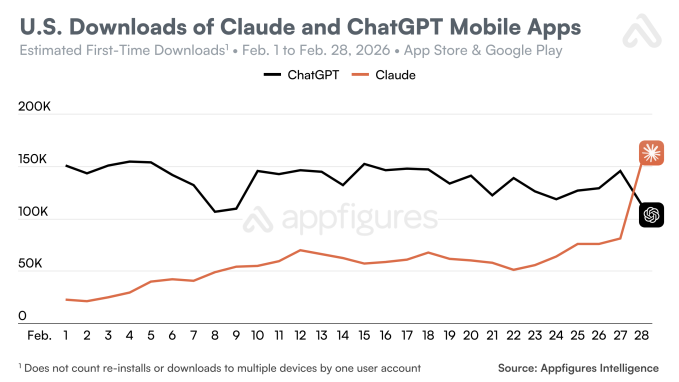
Appfigures also noted that Claude has now reached #1 on the free iPhone app charts in six countries outside the U.S.: Belgium, Canada, Germany, Luxembourg, Norway, and Switzerland.
A third market research firm, Similarweb, stated that Claude’s U.S. downloads over the past week were approximately 20 times higher than its January average—though it cautioned that this surge may not be driven solely by political factors, and other influences may be at play.
Join TechFlow official community to stay tuned
Telegram:https://t.me/TechFlowDaily
X (Twitter):https://x.com/TechFlowPost
X (Twitter) EN:https://x.com/BlockFlow_News
 TechCrunch