








How to Survive a Bitcoin Winter? Investment Strategies, Advice, and Bottom Identification
TechFlow Selected TechFlow Selected
How to Survive a Bitcoin Winter? Investment Strategies, Advice, and Bottom Identification
Bitcoin is an exceptional savings technology for patient investors, but a "wealth destruction" tool for those who lack patience or over-leverage.
 Navigating Web3 tides with focused insights
Author: Dyme
Compiled by: TechFlow
Right now, the crypto market appears to be undergoing a significant "regime shift." The previous market euphoria was exciting, but the reality is that the real challenge has only just begun.
Wait.
All current signals suggest Bitcoin is in "safe-haven" mode, and echoes from the 2021 market are resurfacing: Bitcoin surged well ahead of equity markets topping out, and equities have performed poorly over the past few months.
At the time of writing, Bitcoin is down approximately 30% from its all-time high. We reached the anticipated market peak in early October. Some successfully sold or took profits above $100,000 (well done!), but now the inevitable question arises: "What next?"
Unlike in April this year, I haven’t rushed to establish a long-term position (although I currently hold a long position targeting a rebound to the $95,000–$100,000 range).
I know many readers hold Bitcoin as a core asset and may also dabble in some altcoin trading. You’re likely wondering: "Where’s the bottom?" or "When should I buy?"
The honest answer is nobody knows for sure. But there are strategies that can help maximize returns while ensuring you don’t miss the next wave. My goal is to offer insights to help you form your own market view and understand when market rules might shift again. I’m a "left-brain" trader—I don’t dive deep into complex data like order books.
I'm a "market sentiment" expert and data simplifier—here’s what I’ve learned.
First, the core assumption of this article is that Bitcoin will reach a new all-time high and that the market cycle remains valid. Based on all current information and market reactions, we should treat this as our baseline reality.
This article also acknowledges that Bitcoin is an exceptional savings technology for patient investors, but a "wealth destruction" tool for those lacking patience or using excessive leverage.
The discussion here centers on Bitcoin because, frankly, aside from Solana and a few short-lived hype cycles over the past 36 months, your 90% altcoins have delivered almost nothing. We still have 1–2 years before new altcoin narratives emerge, giving you time to decide whether to bet on those opportunities later.
We’ll explore the following areas:
-
Investment strategy
-
Cyclical expectations and timing
-
Where to park capital while waiting
-
Key indicators of market bottoms
Investment Strategy
When I say "strategy," I mean your approach and mindset toward buying, selling, and holding. There are multiple ways in and out of this market, and ultimately the choice is yours.
Your strategy boils down to one key question: "Are you confident in your ability to time the market accurately?" And can you execute based on your judgment? If not, what alternatives exist?
There are already several time-tested approaches to investing in Bitcoin, with HODLing being the most popular.
HODLing is one of the earliest investment tenets in the Bitcoin community. If you're confident in Bitcoin’s long-term outlook and your daily fiat needs are already met, this strategy could be highly appealing.
Moreover, HODLing is also extremely tax-efficient since no taxes are due as long as you don’t sell.
Some investors can endure 80% drawdowns in their portfolios and tactically add during every downturn. If your fiat requirements are covered and you can stay committed for years, this method can almost guarantee generational wealth accumulation over sufficient time.
This strategy particularly suits those who want to grow wealth through time and steadily increase their Bitcoin holdings. Of course, it demands immense patience—some can do it, others cannot. But if you’re patient enough, it works.
HODLing was my starting point when entering this space, but clearly, my strategy has evolved over time.
Dollar-Cost Averaging (DCA) aligns well with the HODL philosophy but isn't limited to it. Some buy Bitcoin daily regardless of price; others choose weekly, monthly, or buy during volatility.
Goals of DCA:
-
Continuously grow your Bitcoin position while minimizing upward pressure on your average cost;
-
If you previously bought at higher prices, DCA can help lower your average entry cost.
For example, I bought Bitcoin at the 2013 top and then DCA’d all the way down to $200. Ultimately, that strategy proved successful.
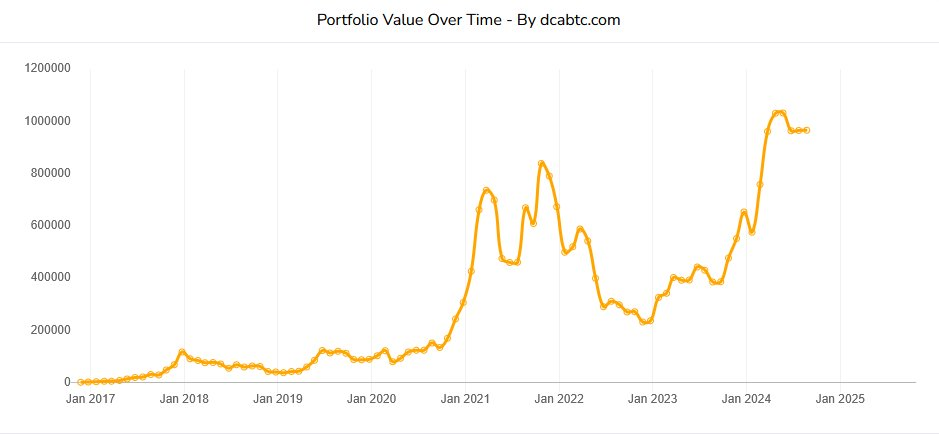
Figure: Investing $1,000 per month reaches a $1 million peak after 9 years
The chart above shows a classic Dollar-Cost Averaging (DCA) case. While the outcome is clearly hindsight-biased, it clearly demonstrates that consistent Bitcoin buyers continue to build wealth despite recent pullbacks—and without paying any taxes.
If you have some market understanding, adjusting your DCA timing can significantly amplify your unrealized fiat gains.
Of course, you don’t need to invest mechanically—you now have more options. But for investors wanting a “set and forget” approach, simple tools can help achieve that.
Platforms like Coinbase, Cash App, and Strike offer automatic purchase options, which you can turn on or off anytime. However, each service comes with different trade-offs, fees, and limitations, so thorough research is recommended before setup. Especially fees—if you run auto-purchases for months or years, they can accumulate into a meaningful expense.
You can set up a low-frequency small-scale plan or a short-duration aggressive large-scale one. If you're skilled at market timing and believe a bottom is approaching but unsure exactly when, I’d lean toward the latter.
You can also skip third-party platforms and manually DCA yourself. Through your preferred exchange, place orders when you think Bitcoin is “on sale,” or even set tiered buy orders based on your own analysis and technical indicators. It’s entirely up to your preference.
Whether automated or manual, as long as consistency is maintained, the end result is the same.
The core idea behind DCA is that "time in the market" beats "timing the market", and data usually supports this view.
Both HODLing and DCA can be scaled flexibly according to your financial situation. Markets may fall deeper than expected or bottom sooner, so finding your personal balance is crucial.
Not everyone fits neatly into HODL or DCA boxes. Many investors prefer a hybrid approach between the two:
-
You don’t try to perfectly time the market, but you don’t buy blindly either.
-
Your purchases are triggered by liquidity conditions, spikes in volatility, or when market sentiment completely collapses.
This method is effective and often outperforms extreme approaches because it respects both patience and opportunity. Think of it as rule-based accumulation, not blind guessing.
Another rarely discussed angle is the choice between lump-sum investing and staged entry.
Purely from an expected return perspective, lump-sum investing tends to win in long-term uptrends. Yet most people can't handle the emotional impact of going "all-in" at once.
Staged entry reduces regret and makes the process easier to stick with. If you have a substantial cash reserve, using part for initial entry and gradually deploying the rest is a more realistic path for most investors.
You must take liquidity discipline seriously. One major reason people are forced to sell is mixing operational expenses, emergency savings, and Bitcoin investments into the same "mental account."
When life inevitably throws financial surprises, Bitcoin may become an "ATM" you never intended. To avoid this, separate your cash into distinct buckets so you won’t have to sell assets during vulnerable or desperate moments. This alone is a competitive advantage.
Beyond that, your investment strategy needs proportionality. People don’t get wrecked because Bitcoin falls—they do so because they:
-
Emotionally increase position sizes;
-
Chase short-term thrills by switching to alts;
-
Use leverage trying to "double back."
Bear markets punish overconfidence most harshly. Keep positions rational, beware of seductive narratives, and always stay grounded.
Bitcoin Cycles and Timing: Will the Cycle Shorten?
I've discussed Bitcoin's "cyclicality" many times, but now it's slightly concerning that seemingly everyone understands these cycles. So, will this cycle be shorter? Don't know.
A quick primer for the unfamiliar:
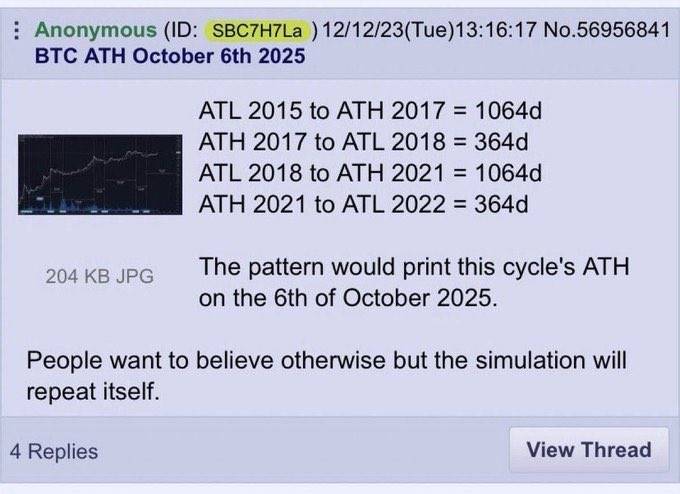
Bitcoin, for better or worse, is a time-based cyclical asset, with its price movements closely tied to the halving cycle.
So far, Bitcoin’s price action has followed these patterns. As previously mentioned, we should temporarily assume this regularity continues. If cycles persist, we might see a macro bottom around **early Q4 2026**.
But this doesn’t mean you should wait until the first day of Q4 2026 to start buying—it simply suggests it may still be too early now. Of course, cycles could already be over, and a bottom could arrive as early as this summer, at which point other technical analysis (TA) and signals would need reconsideration.
Overall, I don’t expect Bitcoin to re-enter a long-term bull market before **late 2026 or 2027**. That said, I’d be happy to be proven wrong.
Where to Park Capital While Waiting?
With interest rates falling, "safe but boring" yields are losing appeal. Still, we have several months of over 3% yield to enjoy before Fed Chair Jerome Powell "acts." Below are some options worth considering for those who’ve taken partial profits and are waiting. Always do your own research.
SGOV and WEEK offer the simplest monthly and weekly dividend options, holding unexciting but stable U.S. Treasuries.
Other choices include ultra-short Treasury ETFs, such as SHV and pure short-term Treasury funds, or slightly longer-duration bond ETFs like ICSH or ULST. SHV offers exposure nearly identical to SGOV, as it holds very short-dated Treasuries, behaving like a cash substitute with a slight yield bump.
WEEK falls into the same category but distributes dividends weekly, suitable for investors needing more frequent cash flow. The trade-off is that weekly payouts may fluctuate with interest rate changes.
If you're comfortable with on-chain operations, DeFi still offers options despite lower yields:
AAVE
-
Currently offers about 3.2% yield on USDT.
Kamino
-
Kamino provides higher-risk, higher-return options, typically exceeding "risk-free" rates but with added risk factors.
Note that while these on-chain platforms are viable, they aren’t suitable for full allocation. If choosing DeFi, diversify to reduce risk.
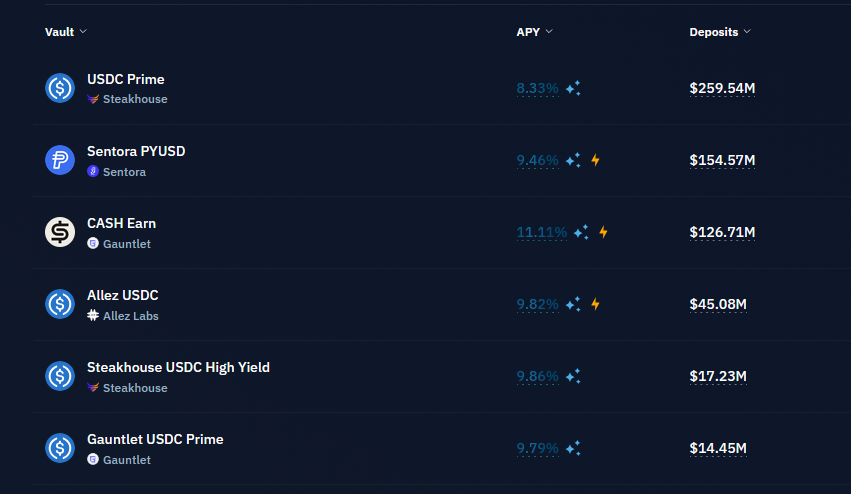
Figure: Higher yield means higher risk
Many exchanges (e.g., Coinbase) offer rewards for keeping USDC on-platform. Robinhood, with Gold membership, can provide 3%-4% yield.
In a downtrend economy, the objective is clear: protect purchasing power while fighting inflation.
How to Identify Market Bottoms?
Suppose it’s nine months from now, the market has weathered multiple headwinds, and Bitcoin is near $50,000. How do you determine if a bottom is near?
Note that market bottoms are never signaled by a single indicator. Building a confluent thesis using multiple signals increases confidence in your entry and subsequent returns.
1. Time
-
How long has it been since the all-time high (ATH)? If it’s been over 9 months, it may be time to consider buying.
2. Momentum
-
Bitcoin typically tops out when momentum fades—and vice versa. Buying Bitcoin when the weekly RSI (Relative Strength Index) drops below 40 is often a solid strategy.
-
Zoom out and combine momentum indicators you trust to develop your own framework.
3. Sentiment
-
Cycles often coincide with catastrophic events that trigger extreme fear—like the FTX collapse, pandemic outbreak, or Terra Luna crash.
-
When darkness prevails and no one wants to buy Bitcoin, that’s your moment to act boldly—especially if multiple signals align.
-
For example, at the last cycle’s bottom, we saw an obscure influencer promoting mattresses. If you bought Bitcoin then, you’re probably very happy now.
4. You Don’t Need to Catch the Exact Bottom
You don’t have to buy at the absolute lowest price. For a safer approach, wait for Bitcoin to reclaim the 50-week EMA (Exponential Moving Average) or the 365-day Volume-Weighted Average Price (VWAP)—both strong confirmation signals.
5. Bitcoin Beta Indicator
-
If Bitcoin-linked stocks like MSTR (MicroStrategy) move back above their 200-day Simple Moving Average (SMA), it may signal renewed interest and premium in Bitcoin.
My aim was to help some lock in profits at the top—hopefully this piece helps you prepare for what’s ahead.
Disclaimer: This article is for informational and educational purposes only and does not constitute any financial, investment, or legal advice. Always conduct your own research and consult licensed professionals before making any financial decisions. Markets are risky—invest responsibly. Remember, "there are no tears in the casino."
Join TechFlow official community to stay tuned
Telegram:https://t.me/TechFlowDaily
X (Twitter):https://x.com/TechFlowPost
X (Twitter) EN:https://x.com/BlockFlow_News
 @CryptoParadyme


