








Can Aster Challenge Hyperliquid in the Perpetual DEX Differentiation Competition?
TechFlow Selected TechFlow Selected
Can Aster Challenge Hyperliquid in the Perpetual DEX Differentiation Competition?
Aster's opportunity lies in not trying to become the "next Hyperliquid," but in becoming the first Aster.
 Navigating Web3 tides with focused insights
Author: TechFlow
On September 17, Aster completed its TGE, and the $ASTER token outperformed market expectations on its first day.
Data shows that within less than 24 hours of listing, the token's total trading volume exceeded $310 million, with over 330,000 new unique wallet addresses added. It opened at $0.03015, reached a high of $0.528 during the day, and surged approximately 1650% in a single day. The platform's TVL also skyrocketed from $350 million to $1 billion.
This kind of start is indeed remarkable.
Having a good product and real users is the fundamental foundation for DEXs after airdrops, and determines whether a project can generate revenue for buybacks, thereby further increasing token value.
A more fundamental question deserves discussion: when Hyperliquid has already captured half the perpetual DEX market with its "performance is justice" approach, with monthly trading volume surpassing $330 billion, do similar projects in this space still have alternative paths?
Certain product details of Aster are answering this very question.
In June, Binance founder CZ posed an intriguing question on social media: "If you're buying $1 billion worth of tokens, you don't want others to see your order before it's filled." He explicitly stated that perpetual DEXs need a "dark pool" feature.
Aster has chosen precisely this "privacy-first" path. As a perpetual DEX formed by the merger of Astherus and APX Finance and backed by YZi Labs (formerly Binance Labs), Aster did not follow Hyperliquid's performance race but instead focused on solving another pain point:
In the transparent world of blockchain, how can large traders avoid paying the price of being "seen"?
When the leader in a sector is already so strong, should followers keep chasing on the same track or forge an entirely new path?
Aster's choice may offer some insights.
Aster's Product Strategy: Finding Its Own Position in the Perpetual DEX Space
-
Product Feature Overview: Designed for Different Types of Traders
To understand Aster's product design, we must begin with its dual-mode architecture. The platform precisely serves two completely different user groups.
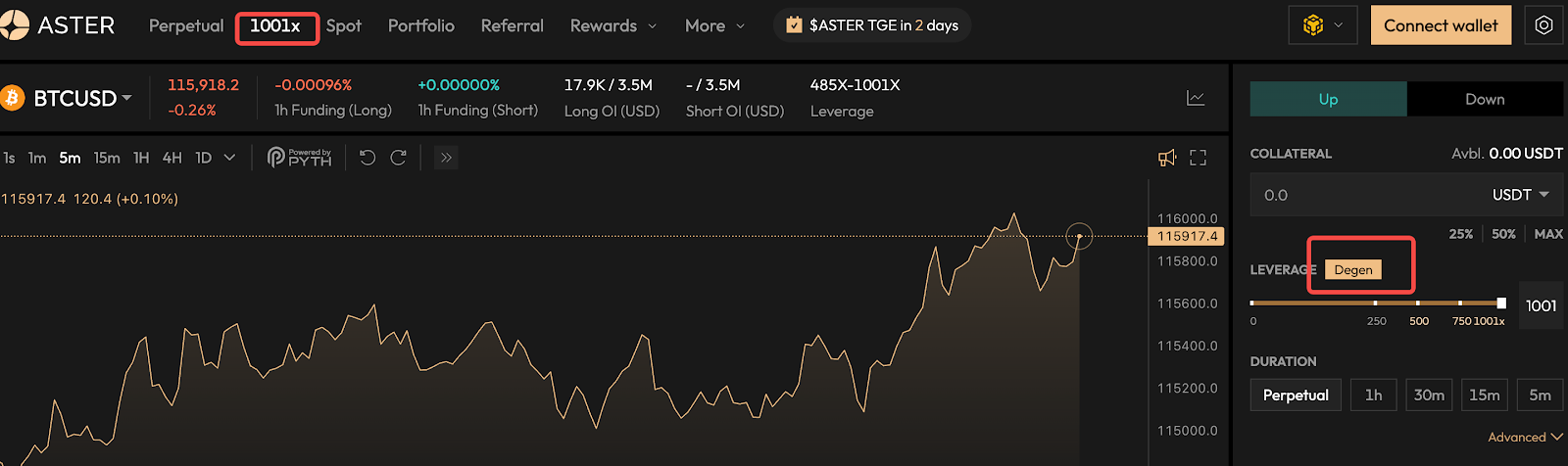
Simple Mode targets traders who prioritize speed and more degen-oriented strategies.
One-click trading, automatic MEV protection, and the hard-to-ignore 1001x leverage. While Hyperliquid offers 50x and most CEXs offer 100-125x leverage, Aster pushes the number into four digits. This may seem aggressive, but it clearly targets a specific user segment.
On the other hand, Pro Mode is the domain of professional traders.
It features full order book depth, professional charting tools, grid trading, and of course, the aforementioned Hidden Orders. Meanwhile, the platform's fee structure is also highly competitive:
According to public information, Aster charges 0.010% maker fees and 0.035% taker fees, compared to Hyperliquid's 0.015%/0.045%. Though the difference seems small, for high-frequency traders, these basis points can accumulate into significant cost savings over time.
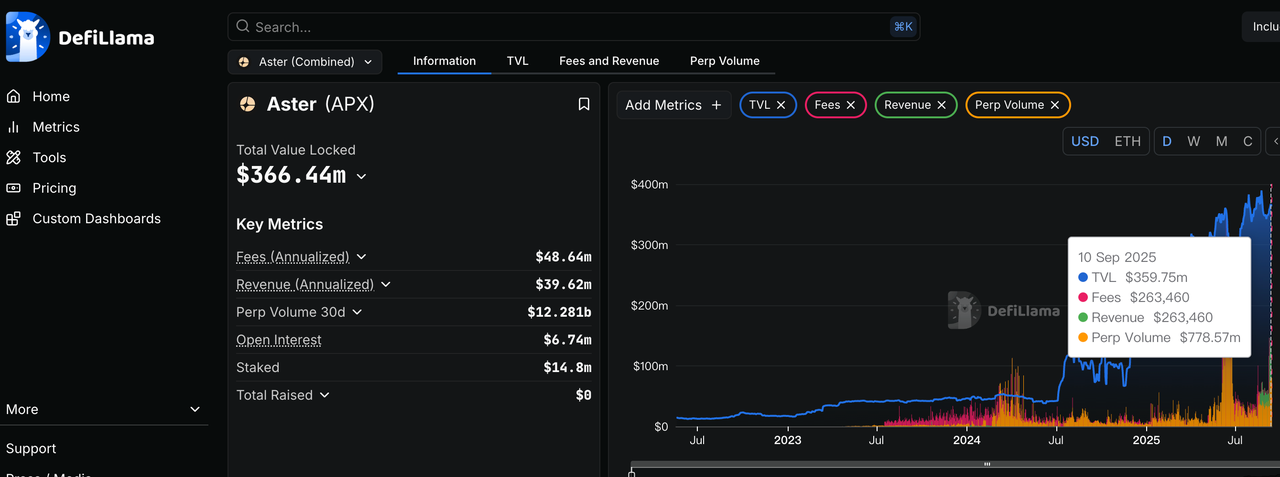
Cross-chain capability is another notable feature. Aster supports over seven chains including BNB Chain, Ethereum, Solana, and Arbitrum, allowing users to switch seamlessly without needing cross-chain bridges. As of September, the platform's TVL reached $360 million, indicating a certain level of market acceptance.
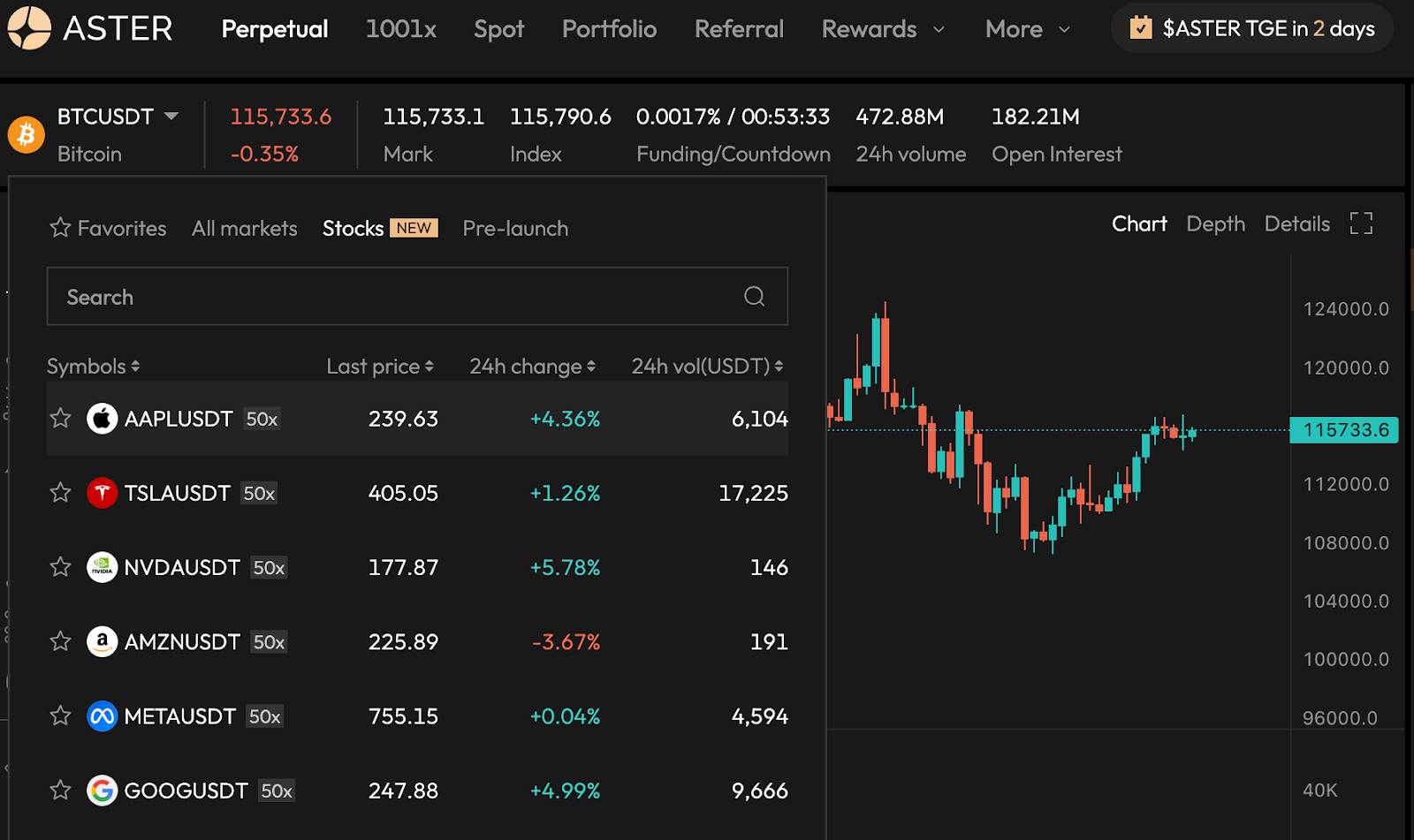
Particularly noteworthy is the stock perpetual contracts feature. Aster offers 24/7 trading on major U.S. blue-chip stocks like Apple, Microsoft, and NVIDIA, settled entirely in cryptocurrency.
-
USDF: Earning Yield on Idle Margin
Beyond trading innovations, Aster's capital efficiency innovation is equally noteworthy. In traditional perpetual trading, USDT or USDC used as margin simply sits idle in accounts, generating no returns. On Aster, however, users can choose to use USDF as margin.
What is USDF? Simply put, it's a delta-neutral yield-bearing stablecoin issued by Lista DAO, which generates yield by deploying underlying assets into low-risk DeFi protocols.
As a key component of the BNB Chain ecosystem, USDF not only provides users with stable returns but also strengthens the stability of on-chain TVL.
According to the latest platform data, depositing USDF currently yields an APY of 4.5%, while using USDF achieves an APY of around 12.2%, which is quite substantial in today's market environment.
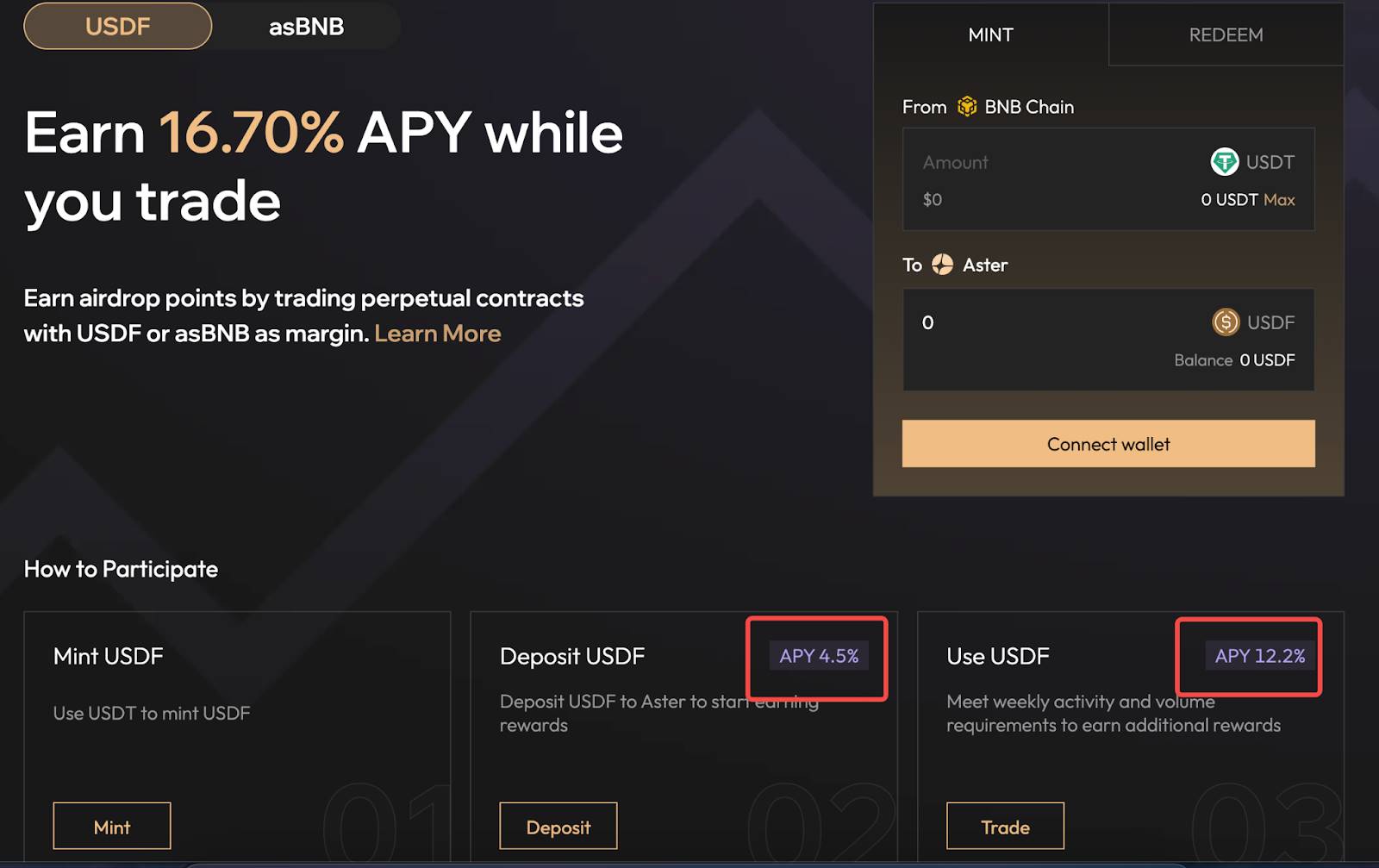
Notably, to encourage USDF adoption, Aster grants USDF holders a 20x bonus in its airdrop points system. Additionally, under the Trade & Earn program, up to 100,000 USDF per account can count toward trading rewards, encouraging broad participation while preventing whales from monopolizing the reward pool.
-
Hidden Orders: A Privacy Option for Large Traders
After reviewing Aster's overall product layout and capital efficiency innovations, let's examine another differentiating feature: Hidden Orders.
Last November, well-known trader James Wynn established a long position exceeding $100 million on Hyperliquid, a massive position fully exposed on the public order book.
Other traders quickly spotted this "whale" and began targeting his position. By coordinating price manipulation, they successfully triggered a cascade of liquidations, causing Wynn to lose over $20 million in unrealized profits.
For institutions and whales executing large trades, being "seen" often means incurring additional costs.
Aster's Hidden Orders feature, based on zero-knowledge proof technology, offers a solution. When a trader selects hidden orders in Aster Pro mode, the order information is encrypted via ZK circuits. Only the matching engine can verify the order's validity without knowing its specifics. Orders maintain price-time priority but remain completely invisible until execution.
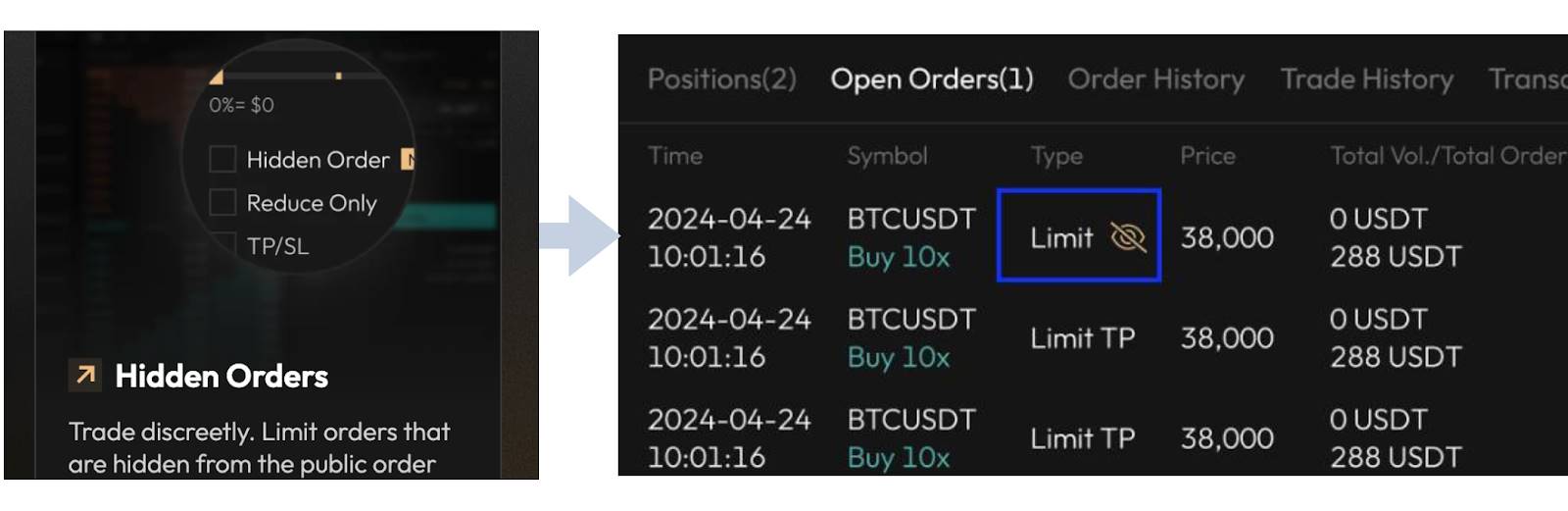
This means users can execute large trading strategies on a DEX without fear of front-running or malicious targeting. Privacy-conscious traders now have a new option.
The DEX Market: One Dominant Player, Multiple Strong Challengers — Differentiation Matters
If 2024 was the breakout year for perpetual DEXs, then 2025 is the critical moment when the landscape begins to solidify.
According to dYdX's previous annual report, DEX derivatives trading volume grew 132% in 2024, reaching $1.5 trillion, and is projected to hit $3.48 trillion in 2025. This growth rate far exceeds that of spot DEXs and is forcing CEXs to take this emerging force seriously.
Within this rapidly growing market, different platforms have chosen divergent development paths.
Hyperliquid is undoubtedly the brightest star. Aster, however, chose a completely different route—addressing another pain point: trading privacy.
This choice reflects clear market insight. Perpetual DEX users can be roughly divided into three categories: retail speculators care about leverage and fees, professional traders prioritize execution quality and tools, while institutions and whales value privacy and market depth above all. Hyperliquid serves the first two groups well, but the needs of the third group appear largely unmet so far.
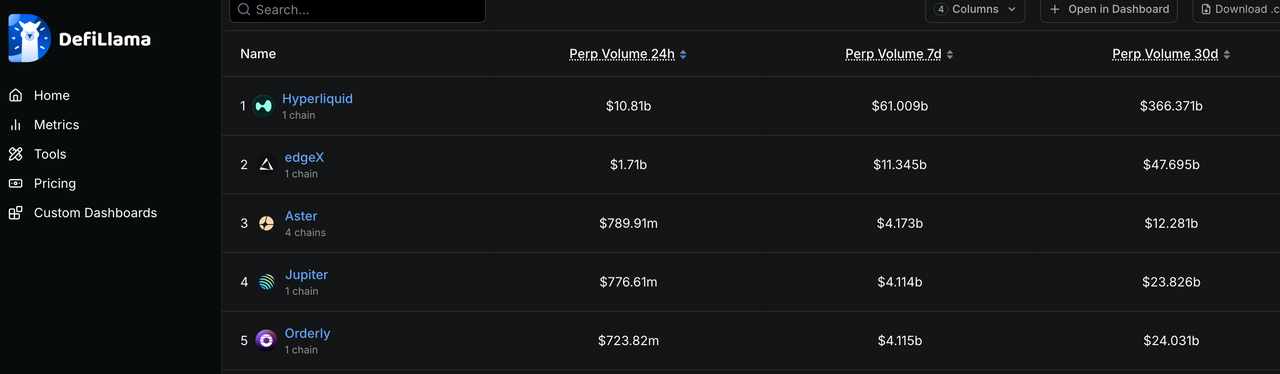
According to DefiLlama data, Aster's trading volume over the past 30 days was approximately $16.7 billion, with an even more important upward trend.
In June 2025, Aster set a record monthly trading volume of $34 billion, with cumulative trading volume exceeding $517 billion. This volume firmly places Aster in the top tier of perpetual DEXs. Considering it only completed its rebranding in March this year, this growth rate is impressive.
From this perspective, Aster's privacy-focused strategy isn't about replacing Hyperliquid but about creating a new niche market. When the market is large enough, platforms with different positioning can each find their own place based on their unique features. Just like today's CEX market, where Binance, Coinbase, and OKX each excel in different areas and serve distinct user segments.
BNB Chain Ecosystem Synergy: Aster Is Not Going Alone
In the crypto world, "who invested in you" is often as important as "what you do."
For Aster, support from YZi Labs (formerly Binance Labs) is not just a vote of confidence—it could shape its future trajectory.
In March, when Astherus and APX Finance announced their merger into Aster, YZi Labs' endorsement helped the market quickly embrace this "new" brand. After all, in a DeFi world flooded with various "innovations," projects with strong backing gain user trust more easily.
The more tangible value may lie in potential access to shared ecosystem resources.
Although YZi Labs now operates independently, its team members mostly come from Binance Labs, so their understanding of and connections within the Binance ecosystem remain intact. This soft linkage could prove crucial—for example, when seeking liquidity support or ecosystem partnerships.
If Hyperliquid chose an independent path, avoiding VC funding and not spreading across multiple chain ecosystems, then Aster has clearly embraced an ecosystem synergy strategy.
According to public information, Aster has already established partnerships with core BNB Chain ecosystem projects such as PancakeSwap, Trust Wallet, and SafePal.

The partnership with PancakeSwap is particularly significant. As the largest DEX on BNB Chain, PancakeSwap holds billions in liquidity. While the exact liquidity-sharing mechanism hasn't been disclosed, this collaboration at least implies potential interoperability between user bases. If PancakeSwap users want to try perpetual trading, Aster becomes a natural choice.
Integration with Trust Wallet and SafePal solves another issue: user access. These two wallets serve tens of millions globally, and direct integration means users can access Aster seamlessly within their wallets. Compared to DEXs requiring separate website visits, this convenience cannot be overstated.
Possibly the most interesting is the collaboration with Four.meme. As a meme coin launchpad on BNB Chain, Four.meme helps Aster capture the highly active meme coin trading community. Given that meme coin traders often favor high-leverage speculation, this user alignment is excellent.

Taken together, the logic behind Aster's alliance strategy is clear: in the DeFi world, liquidity is the scarcest resource. Rather than building from scratch, partnering enables rapid acquisition of initial liquidity and user base. While this means sharing some revenue, it greatly reduces cold-start difficulty.
Another potentially overlooked aspect is Aster's prior merger.
Zero-knowledge proofs are theoretically elegant, but practical implementation—especially in high-frequency trading environments—requires exceptional engineering capability. This is why, despite years of discussion around ZK technology, real-world large-scale applications in DEXs remain extremely rare.
Much of Aster's technical expertise comes from the merger. According to official data, Astherus and APX Finance cumulatively processed over $258 billion in trading volume before merging. Combining this experience with support from YZi Labs (formerly Binance Labs) gives Aster a unique development advantage.
Overall, YZi Labs' backing means not just capital, but access to the broader Binance ecosystem's potential resources. Integrations with platforms like PancakeSwap and Trust Wallet allow Aster to quickly build a liquidity network—precisely one of the biggest challenges most new DEXs face.
It's worth noting that this kind of full ecosystem synergy isn't exclusive to Aster.
Other perpetual DEXs are also seeking their own ecosystem support. Jupiter has the Solana ecosystem, and Vertex previously had Arbitrum's backing. Such ecosystem alignments may become a new dimension in perpetual DEX competition:
Not just a battle of products and technology, but a contest of underlying ecosystem resources.
The Path to Breakthrough
Aster's opportunity lies not in trying to become the "next Hyperliquid," but in becoming the first Aster. The on-chain DEX market is large enough to accommodate players with different positioning.
The key now is execution capability within this limited time window.
First, the Hidden Orders feature must gain real adoption from institutions. This requires not only technical refinement but also market education and trust-building.
Second, synergy with the Binance ecosystem must deliver tangible results. While officials have only confirmed that $ASTER will list on "major exchanges," the market widely expects it to go live on Binance. Given YZi Labs' background, if this actually happens—whether through direct listing or Launchpool—it would be a massive positive catalyst.
First, the actual value of Hidden Orders must be proven in real trading. Increasing numbers of institutional traders are beginning to explore possibilities for on-chain privacy protection. If Aster can provide stable and efficient hidden order execution, these users will naturally be drawn in.
Second, the value of ecosystem synergy must be fully realized.
YZi Labs' portfolio synergies, liquidity sharing with PancakeSwap, and user access integration with Trust Wallet—if these resources can be effectively activated—they will create a powerful network effect.
$ASTER's listing on major exchanges is just the beginning. More importantly, Aster must convert these ecosystem advantages into real user growth and increased trading volume.
Timing also matters. As the crypto market accelerates its institutionalization, demand for professional trading tools is rising. If Aster can establish itself during this window and build a solid user base, it stands a chance to secure a lasting position in the perpetual DEX market.
In the end, Aster's success may lie in proving that the perpetual DEX market can accommodate multiple models.
The market will provide the answer. Amid trade-offs between transparency and privacy, performance and functionality, centralization and decentralization, different choices will attract different users. Hyperliquid proved the viability of the performance path—now it's Aster's turn to validate its own approach.
No matter the outcome, competition itself is a victory. It drives innovation, gives users more choices, and enriches the entire ecosystem. Perhaps this is the most fascinating aspect of DeFi:
There are always new possibilities, and there are always people trying different paths.
Join TechFlow official community to stay tuned
Telegram:https://t.me/TechFlowDaily
X (Twitter):https://x.com/TechFlowPost
X (Twitter) EN:https://x.com/BlockFlow_News
 深潮TechFlow


