Uncovering Hyperliquid's Founder Jeff Yan: Building a Crypto Empire Quietly with a 10-Person Team
TechFlow Selected TechFlow Selected
Uncovering Hyperliquid's Founder Jeff Yan: Building a Crypto Empire Quietly with a 10-Person Team
The physics prodigy built the quiet giant of the cryptocurrency world.
 Navigating Web3 tides with focused insights
Writing: Thejaswini MA
Translation: Luffy, Foresight News
Jeff Yan has a soft spot for chameleons. But not the metaphorical kind that change colors to blend into their surroundings—he genuinely likes the animal itself. His Twitter handle is @chameleon_jeff (note: "chameleon" is the English word for the reptile), and in a recent podcast, he explained his fascination: chameleons can independently swivel their eyes in different directions, have two toes pointing forward and three backward, which shows “a very interesting evolutionary path,” and possess powerful tongue projection. "They're kind of like aliens on Earth," he said.
This odd opening helps you understand the man. With just a 10-person team and zero venture capital funding, he built one of the world’s largest trading platforms.
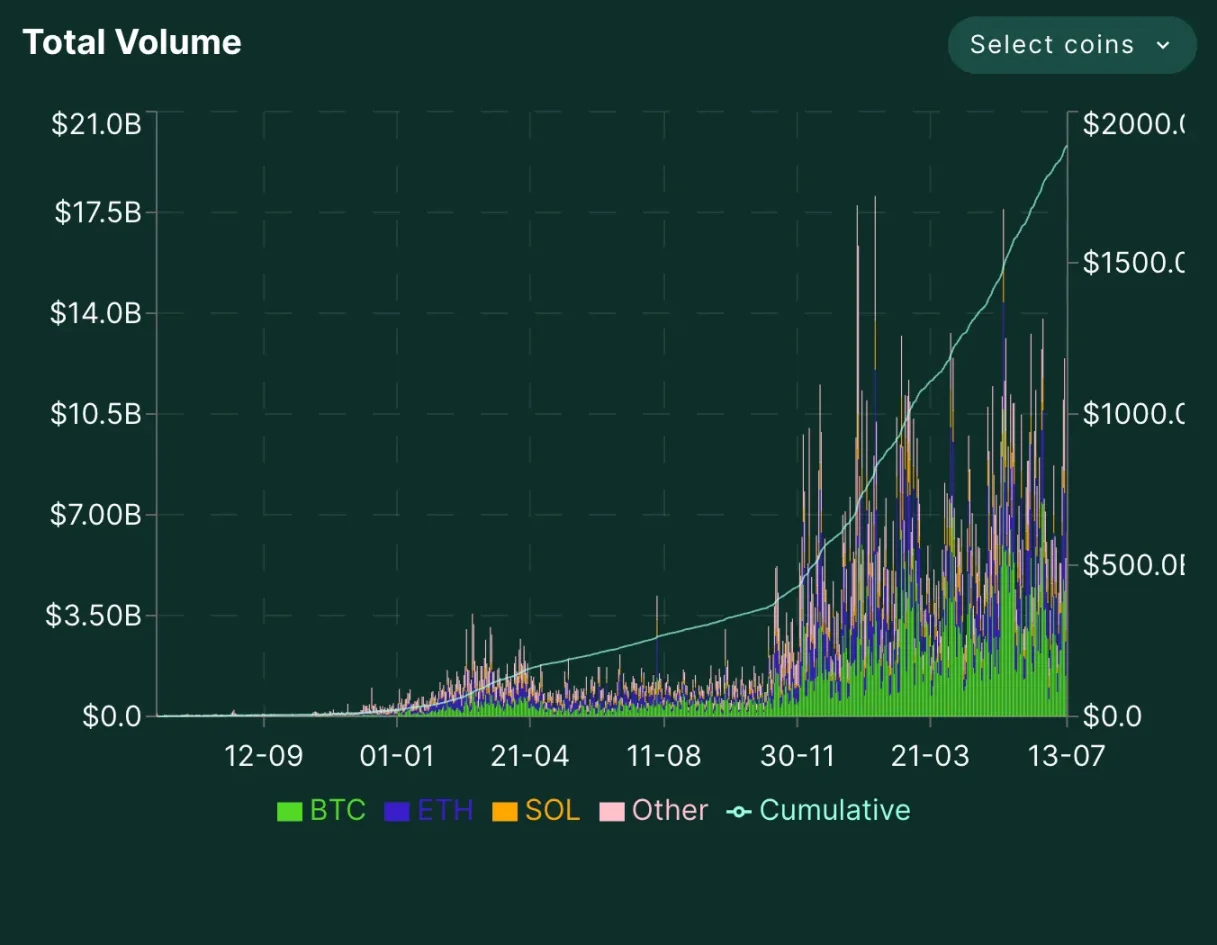
In the past 12 months, Hyperliquid has processed $1.8 trillion in trading volume. The platform holds over 10% of the global perpetual futures market share and accounts for more than 70% of perpetual contract volume on decentralized exchanges (DEXs). Over 200,000 active users trade daily, generating hundreds of millions in revenue.

Jeff Yan never intended to build one of the world’s largest decentralized exchanges. Yet, in less than two years, he did exactly that. Jeff identified problems others overlooked—and solved them.
Systems Thinker
Jeff Yan’s journey into cryptocurrency began in Palo Alto, California, where he grew up at the heart of Silicon Valley. Unlike many peers focused on consumer internet startups, Jeff was drawn to the intersection of mathematics, physics, and complex systems.
In 2013, while most high schoolers were stressing over prom, Jeff represented the U.S. at the International Physics Olympiad and won a gold medal. That achievement alone could secure admission to any top university—or even job offers before graduation.
Naturally, he enrolled at Harvard University to study mathematics and computer science, then immediately joined Hudson River Trading after graduation. This highly secretive high-frequency trading firm is where people make millions by being faster than others by mere microseconds.
"I learned a lot about markets and how to think rigorously about them," Jeff said. At HRT, Jeff worked on complex problems blending engineering and math. He learned how to build low-latency systems capable of executing thousands of trades per second. He understood how market makers provide liquidity and how different trading mechanisms affect market efficiency.
After several years at HRT, he sensed an opportunity and turned toward crypto.
In 2018, he attempted to build a Layer 2 prediction market platform, raised some funds, and moved to San Francisco to assemble a team. But the project ultimately failed due to regulatory uncertainty and weak user adoption. Still, it taught Jeff valuable lessons about what crypto users truly want.
Between 2018 and 2022, after his prediction market venture collapsed, Jeff refocused on trading. Initially treating crypto trading as a side activity, he quickly noticed severe market inefficiencies. Recognizing the opportunity, he scaled up operations and founded Chameleon Trading, a crypto market-making firm, in early 2020. During the bull run, it rapidly grew into one of the largest market makers on centralized exchanges, cementing Jeff’s reputation in quantitative trading.
Then came the FTX collapse.
In November 2022, Sam Bankman-Fried’s empire imploded, bringing down what was once seen as the future of crypto. Remember FTX’s $135 million stadium naming rights deal? Their celebrity endorsements from Tom Brady and Larry David?
"We saw firsthand what went wrong with FTX," Jeff recalled. "People realized crypto was supposed to be a fun game, but when bad things happen, it stops being fun."
Jeff watched billions vanish overnight because users entrusted their funds to a centralized platform. Most would see this as a warning to stay away from crypto—but Jeff saw it as a challenge.
Building a Rocket in the Garage
The obvious solution was to build a decentralized exchange capable of competing with major centralized ones. Simple idea—but nearly impossible to execute.
Every blockchain Jeff examined had flaws. Ethereum was too slow; Layer 2 solutions added latency; Solana was relatively fast but still insufficient for large-scale trading. All options required compromises that would only make the exchange worse than existing platforms.
So Jeff made a logical decision: driven by strict user experience requirements, he decided to build his own blockchain from scratch.
The result was Hyperliquid—a blockchain designed specifically for trading, capable of processing 200,000 transactions per second with near-instant finality. Users can trade across more than 145 markets with up to 125x leverage, all while keeping their funds secure.
Most startup stories revolve around raising $50 million from top-tier VCs and hiring hundreds of engineers to scale. Jeff took a different path. He funded development with profits from his trading firm and kept the team lean—just 10 people.
"We started from nothing," he said. "No fundraising means simple decisions."
Jeff believed that venture capitalists holding large stakes in a decentralized network would become a "scar on the network" and harm its long-term health.
This self-reliant approach allowed Jeff to focus entirely on building a product users love, without catering to investor expectations. It also enabled one of Hyperliquid’s most innovative features: when the platform launched the HYPE token in November 2024, 31% of the supply was directly distributed to users based on trading activity. This is one of the largest user-centric token distributions in crypto history. The rest was allocated to future community rewards (38.88%), core contributors (23.8%), the foundation (6%), community grants (0.3%), and a small amount for protocol upgrades (0.012%).
This distribution model was possible only because Jeff didn’t sell equity to VCs, who would have demanded preferential allocations. By staying independent, he prioritized community ownership over investor returns.
When Hyperliquid launched in 2023, there was no press release, no influencer partnerships, no Times Square billboard. Jeff simply opened the doors and waited.
What followed was explosive growth that caught everyone off guard. Within 100 days, daily trading volume hit $1 billion. By mid-2025, monthly volume reached $2.48 trillion, placing Hyperliquid on par with Binance and Coinbase.
In just two years, Hyperliquid grew from zero to over 545,000 users.
"We don’t have a marketing department," Jeff admitted. "I think our community does an amazing job—better than all those centralized exchanges’ marketing teams combined."
This wasn’t luck. Jeff designed the entire platform around aligning incentives with users instead of extracting value from them.
This approach is so radical that other exchanges—even if they wanted to copy it—likely couldn’t. After all, you can’t give away most of your tokens to users if you’ve already raised hundreds of millions from VCs.
Ecosystem
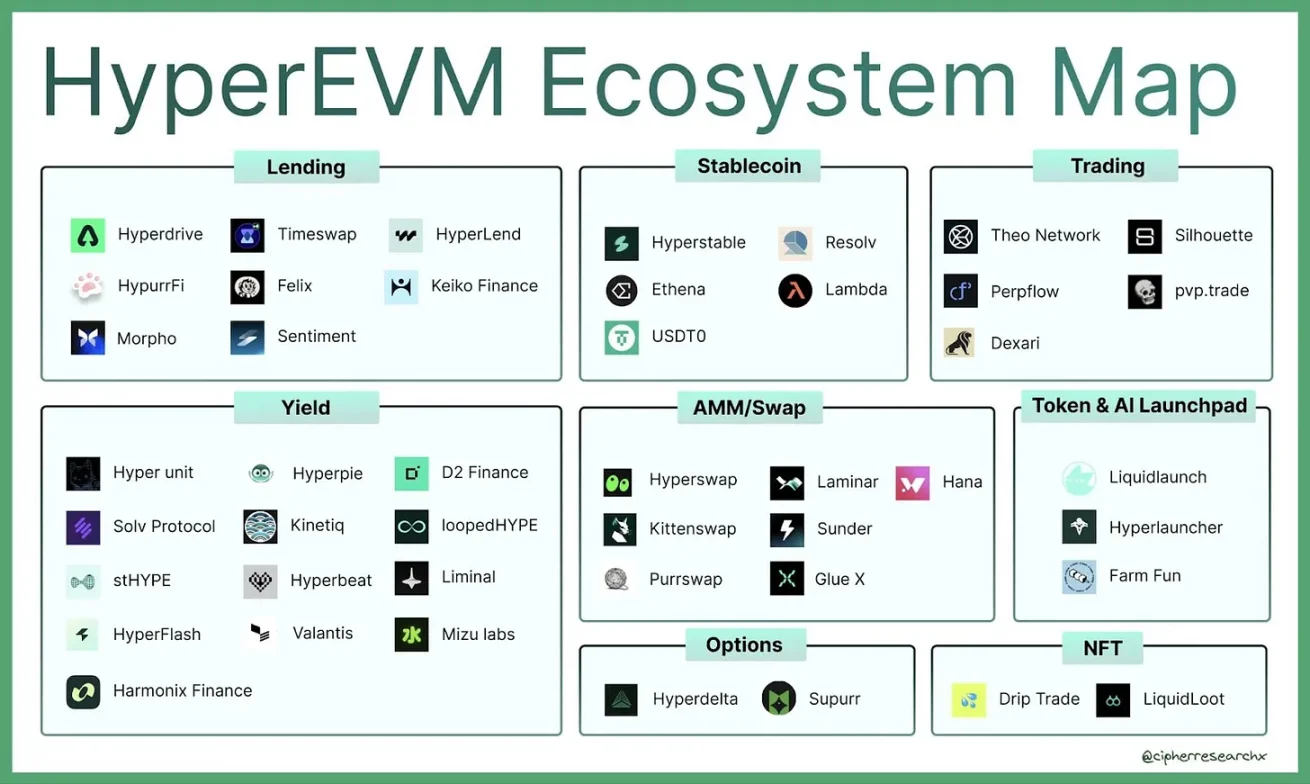
While Hyperliquid began as a perpetual futures exchange, Jeff’s vision always extended beyond basic trading. In early 2025, the platform launched HyperEVM, an Ethereum-compatible virtual machine allowing developers to build financial applications directly on Hyperliquid’s blockchain.
The ecosystem grew rapidly: Felix, a collateralized debt position protocol, now manages over $400 million in assets; lending protocol HyperLend manages $380 million. Jeff says the ultimate goal is to consolidate all financial services on a single platform.
The problem Jeff identified is common across all crypto exchanges: experienced high-frequency traders use bots to buy or sell instantly after market makers post prices—even before prices are updated—front-running the system. As a result, market makers widen spreads to protect themselves, and ordinary traders end up paying higher fees.
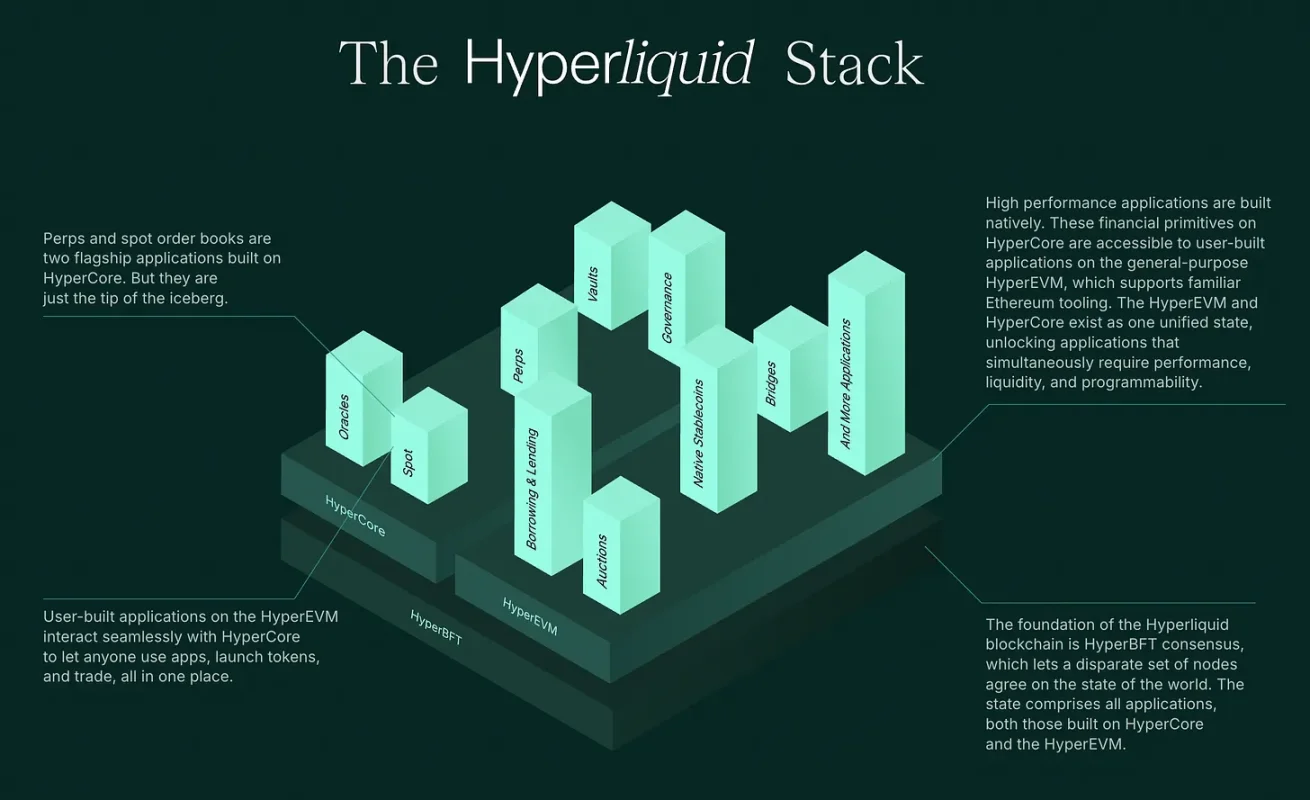
Hyperliquid solves this by deprioritizing fast “taker” orders. Instead, the platform gives market makers fair time to update prices, resulting in tighter spreads and better pricing for all users.
The platform’s order matching engine uses a price-time priority mechanism with additional smoothing rules. Under certain conditions, actions like canceling or placing limit orders can take precedence over standard orders, allowing market makers to react to new information and adjust quotes without being front-run by fast traders.
This subtle change encourages market makers to offer tighter spreads, as they’re less likely to lose money from latency arbitrage. Ultimately, everyone on the platform benefits from better prices and higher liquidity. All of this happens on-chain, making the process transparent and delivering fairer, more consistent outcomes.
This technical depth may explain why professional traders—the most sensitive to execution quality—choose Hyperliquid despite having access to every centralized exchange in the world.
What Comes Next
Yet Jeff faces an interesting challenge: how do you scale a 10-person company handling trillions in trading volume?
His solution, as always, is counterintuitive: don’t hire more people—build tools so others can build on Hyperliquid.
"If something can be done by someone else, it should be done by someone else," Jeff said. "We can do almost nothing ourselves. I actually think that’s a blessing in disguise."
The platform recently introduced permissionless market creation, allowing anyone to launch new trading markets by staking HYPE tokens. However, the requirement of 1 million HYPE tokens (worth tens of millions of dollars) means this isn’t accessible to everyone. For those who meet the threshold, developers retain 100% of fees from their created markets—an offer unmatched by any traditional exchange.
Jeff is also in talks with sovereign wealth funds to build financial infrastructure, though he won’t disclose specific countries. The goal is to prove decentralized systems can handle the scale and complexity of national financial systems.
In July 2025, Sonnet BioTherapeutics, a Nasdaq-listed biotech firm, announced its entry into crypto by forming an $888 million entity focused on holding HYPE tokens. The transaction will make the newly renamed Hyperliquid Strategies Inc. the U.S. public company with the largest HYPE holdings.
In an industry full of grand promises to change everything, Jeff built something simple but effective. No lofty claims about “banking the unbanked,” no sweeping visions of “Web3 changing the world”—just a platform that traders genuinely enjoy using.
"We focus on building products users love," Jeff explained. "Everything else is secondary."
This approach seems to work. Hyperliquid currently handles over 10% of global crypto derivatives trading, operated by a 10-person team with no marketing budget. To Jeff, it’s just another engineering problem to solve.
Join TechFlow official community to stay tuned
Telegram:https://t.me/TechFlowDaily
X (Twitter):https://x.com/TechFlowPost
X (Twitter) EN:https://x.com/BlockFlow_News