
Tether, the issuer of USDT, launches gold token;解读 of Thailand's digital asset regulatory policies
TechFlow Selected TechFlow Selected
Tether, the issuer of USDT, launches gold token;解读 of Thailand's digital asset regulatory policies
Thailand has undergone a shift in its regulatory stance toward crypto assets, evolving from cautious observation to active embrace.
 Navigating Web3 tides with focused insights
Author: Deron, Manqin
On May 13, 2025, Tether, the issuer of the stablecoin USDT, announced that its Tether Gold token (XAU₮) would be listed on Maxbit, a Thai digital asset exchange. According to Tether, each XAU₮ represents one troy ounce of physical gold in the real world.
Prior to this, on March 10, 2025, Thailand's Securities and Exchange Commission (SEC) recognized USDT as an approved cryptocurrency. The Deputy Prime Minister also announced Thailand’s intention to leverage cryptocurrencies and blockchain technology to promote local tourism.
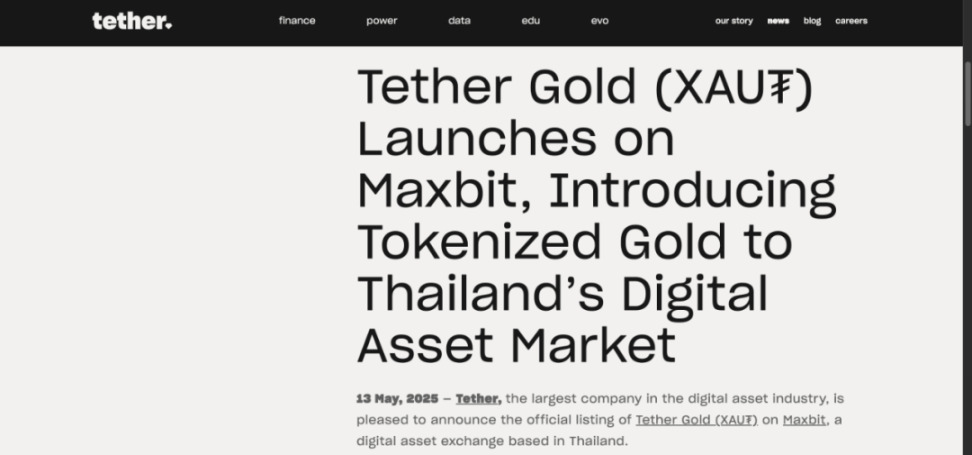
Figure 1: Tether officially launches gold token in Thailand
Earlier, on December 7, 2023, Tether announced a partnership with Bitkub, Thailand’s largest cryptocurrency exchange by trading volume, to launch an educational initiative on stablecoins and blockchain technology in Thailand. The two parties will enhance Thai users’ understanding of digital finance through educational courses, public awareness campaigns, incentive-based learning programs, and Q&A shows. Notably, USDT is also the most widely used stablecoin among Thai users and on the Bitkub exchange.
Tether, the world’s largest issuer of the stablecoin USDT, reported in its latest financial results for the first quarter of 2025 that as of March 31, the market capitalization of its issued stablecoins reached approximately $143.7 billion, with around $120 billion invested in U.S. Treasury securities. During the quarter, USDT added about $7 billion in new supply and 46 million new user wallets.
Despite being the leading stablecoin issuer, Tether has increasingly embraced regulatory compliance in recent years, aiming to gain greater regulatory endorsement and expand its market share. On January 13, 2025, after obtaining a Digital Asset Service Provider (DASP) license from El Salvador, Tether announced it would relocate its headquarters and related entities from the British Virgin Islands (BVI) to the Central American nation of El Salvador. The company’s CEO and COO have also purchased property and obtained residency there.
Thailand, one of Southeast Asia’s most dynamic economies, is a globally renowned tourist destination with an export-oriented economy and frequent cross-border flows of capital and people. Due to multiple factors, the Thai government maintains a relatively friendly policy toward digital assets, attracting numerous industry giants and startups to conduct crypto-related business in the country. In Chainalysis’ 2024 Global Crypto Adoption Index ranking, Thailand ranked 16th worldwide.
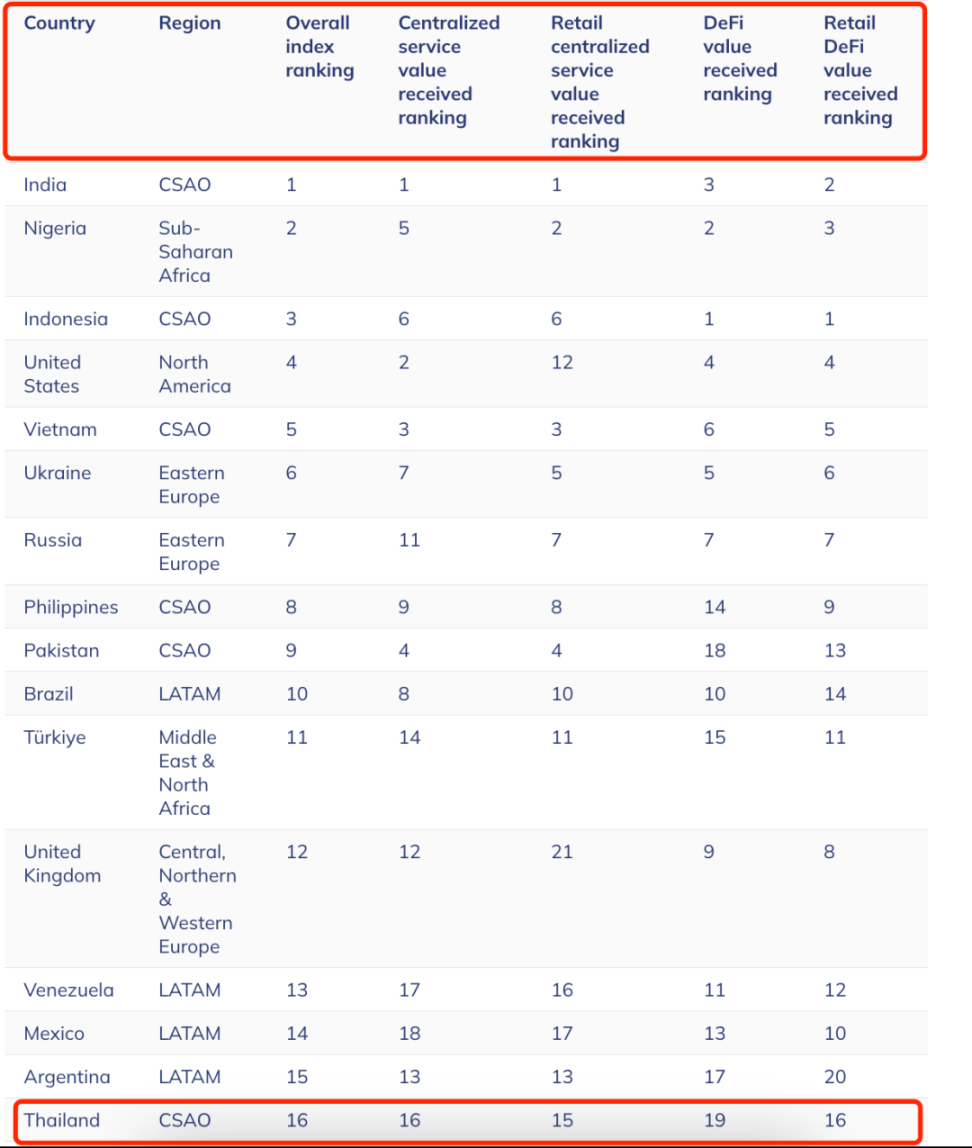
Figure 2: Chainalysis 2024 Global Cryptocurrency Adoption Index
This article examines Tether’s strategic expansion into Thailand as a case study to summarize the characteristics of Thailand’s regulatory approach to digital assets.
Thailand’s Regulatory Stance on Digital Assets
Thailand’s attitude toward regulating crypto assets has evolved from cautious observation to active embrace—a shift closely tied to global trends in digital economic development and adjustments in Thailand’s domestic economic strategy.
On May 14, 2018, Thailand enacted the Digital Asset Business Act, classifying digital assets into two main categories: cryptocurrencies and digital tokens. The key distinction lies in their function—cryptocurrencies serve as mediums of exchange, while digital tokens represent rights or interests. The law regulates digital assets primarily along two dimensions: (1) the issuance of digital tokens, and (2) the operation of digital asset businesses, including exchanges, market makers, service providers, fund managers, investment advisors, and custodial wallet providers.
Regulation of Token Issuance in Thailand
1. Regulated Token Issuance: Investment tokens, utility tokens intended for listing on exchanges, and cryptocurrencies.
Based on revenue sources, Thailand’s SEC categorizes digital tokens into real estate-backed tokens, infrastructure-backed tokens, sustainability-related tokens, debt tokens, etc. In 2022, real estate firm SC Asset raised approximately 300 million THB (about $8 million USD) via a Security Token Offering (STO), becoming the first approved case.
To issue regulated tokens, issuers must meet the following conditions:
-
Obtain approval from Thailand’s SEC;
-
Submit a registration application and a prospectus for the token offering to the SEC;
-
Meet the qualification requirements set by regulators.
2. Exempted Token Issuance: Tokens issued by the Bank of Thailand (BOT), consumer-purpose utility tokens, and limited offerings meeting specific criteria.
Consumer-purpose utility tokens:
Tokens issued for consumption purposes or as digital certificates;
-
Tokens not issued for consumption but restricted to use within a specific distributed ledger system—such as tokens used internally in centralized finance (CeFi) or decentralized finance (DeFi), tokens used as discounts or incentives on licensed digital exchanges, or tokens representing voting rights.
Issuers may conduct limited offerings exempt from full regulation if they satisfy the SEC’s investor disclosure requirements and meet at least one of the following conditions:
-
Offering targeted exclusively at institutional investors or ultra-high-net-worth individuals;
-
Offering to specific investors with a pre-existing relationship to the issuer, with an offering period not exceeding 12 months and no more than 50 such investors;
-
Offering duration not exceeding 12 months, with total value not exceeding 20 million THB.
Regulation of Digital Asset Exchanges in Thailand
Scope of regulated digital asset exchanges: any platform or network providing services for purchasing, selling, or matching trades of digital assets.
Requirements for digital asset exchanges:
1. Must be a legally registered entity in Thailand and hold a license issued by the Ministry of Finance;
2. Exchanges are prohibited from engaging in proprietary trading of digital assets;
3. Minimum paid-in registered capital of no less than 100 million THB;
4. Maintain net assets at levels required by regulators;
5. Comply with anti-money laundering (AML) and counter-terrorist financing (CFT) regulations;
6. Fulfill obligations for KYC (Know Your Customer), CDD (Customer Due Diligence), and timely reporting of suspicious transactions.
Manqin Law Firm Recommendations
1. Entities conducting token issuance in Thailand must establish a locally registered company and assess whether a license from Thailand’s SEC is required based on the nature of the token;
2. Company management, including directors, executive directors, and other key personnel, must not have records of bankruptcy or criminal convictions;
3. The company should have a sound business plan and audited financial statements;
4. The company must ensure timely disclosure of operational and financial data in accordance with SEC requirements.
Join TechFlow official community to stay tuned
Telegram:https://t.me/TechFlowDaily
X (Twitter):https://x.com/TechFlowPost
X (Twitter) EN:https://x.com/BlockFlow_News