Vitalik Points the Way to the Bull Market: Deconstructing the Three Engines Driving Ethereum's Value Flywheel
TechFlow Selected TechFlow Selected
Vitalik Points the Way to the Bull Market: Deconstructing the Three Engines Driving Ethereum's Value Flywheel
In 2025, Ethereum founder Vitalik Buterin used a cartoon "bull" image to symbolize the shift in Ethereum's value paradigm.
 Navigating Web3 tides with focused insights
By Oliver, Mars Finance
On June 19, 2025, when Ethereum's iconic figurehead Vitalik Buterin replaced his social media profile picture—the once symbolic oil barrel representing "digital oil"—with a cartoon "bull," it was no casual doodle. This seemingly minor act felt more like a carefully orchestrated declaration of value, a profound redefinition of Ethereum’s bull thesis. It signaled that, with spot ETFs now rolling out the red carpet for Wall Street, Ethereum’s narrative is evolving beyond the somewhat outdated metaphor of “fuel for the digital world,” into a grander, more robust, and far more complex value paradigm.
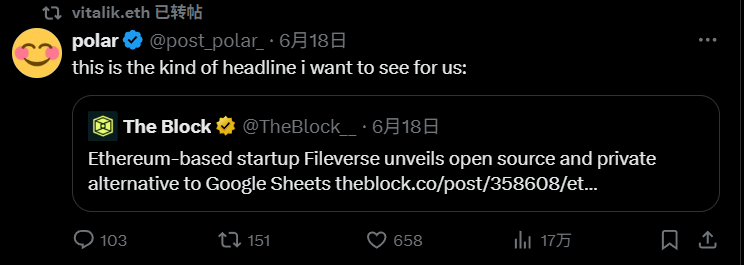
The post Buterin reshared and subtly edited laid out Ethereum’s three core value propositions: “digital oil,” “store of value,” and “global reserve asset.” These concepts have long been familiar refrains within the community, but when reassembled by its founder through a new visual language, their internal tensions and synergies emerged with unprecedented clarity. That “bull” is no longer a symbol of a single narrative—it represents an economic behemoth forged by the combined force of three pillars. This article aims to deconstruct this emerging new paradigm, exploring how Ethereum’s foundational value has undergone a deep and subtle transformation on its journey toward becoming a mainstream asset.
From “Digital Oil” to “Economic Heart”: Value Reassessment in the L2 Era
Ethereum’s “digital oil” narrative was its earliest and most successful value proposition. The analogy clearly explained ETH’s primary utility: serving as gas, the fuel powering the world’s largest smart contract platform. Every transfer, every DeFi interaction, every NFT mint requires ETH consumption. This indispensable utility established a solid base of demand for ETH. In the past, network congestion and high gas fees were even seen as signs of prosperity, directly tied to ETH’s value accrual.
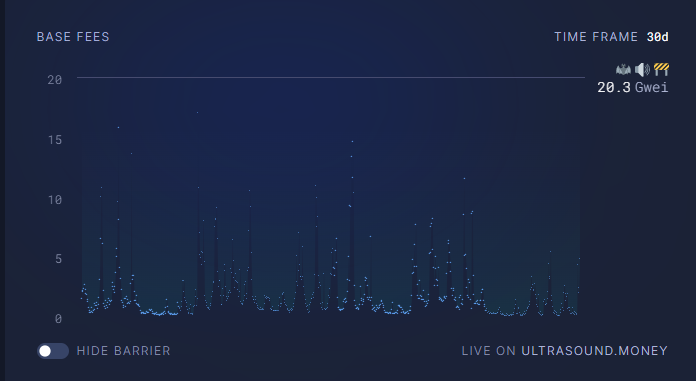
However, by 2025, this classic narrative faces a profound challenge born from Ethereum’s own success. The Dencun upgrade in March 2024—especially the implementation of EIP-4844 (Proto-Danksharding)—changed the game entirely. By providing Layer 2 (L2) networks with a dedicated and low-cost data publishing channel (blobs), Ethereum successfully offloaded vast amounts of transaction activity to scaling solutions like Arbitrum and Optimism. This was a monumental technical achievement, fulfilling the vision of enabling ordinary users to participate in the digital economy at minimal cost. Yet it introduced a sharp economic paradox: as the majority of economic activity migrates to cheaper L2s, congestion on the mainnet (L1) plummets, leading directly to a collapse in gas fees and a dramatic drop in ETH burned.
Data from Dune Analytics shows that since the Dencun upgrade, average Ethereum L1 gas prices have remained persistently in the single-digit Gwei range—an unimaginable scenario in previous years. Lower fees mean fewer ETH destroyed via the EIP-1559 mechanism. This directly undermines the core logic of the “digital oil” narrative—that network usage and value capture (through deflation) are positively correlated. If “oil” consumption is structurally declining, how should we reassess its value?
This marks the crux of the paradigm shift. The new framework argues that ETH’s value no longer lies solely in being “consumed” as fuel on L1, but has evolved into the “economic heart” securing the entire modular ecosystem. Ethereum L1 is transforming from a congested “world computer” into a highly secure “global settlement and data availability layer.” Its primary role is to provide finality and data availability guarantees for hundreds of L2 chains. L2s process massive volumes of transactions and then submit compressed proofs back to L1 for final confirmation.
In this new model, ETH’s value capture becomes more indirect—but potentially more durable. Its value stems less from transaction friction and more from the “rent” it earns as a security provider. While individual L2 payments to L1 are lower, the aggregate fee pool could remain substantial as thousands of future L2s emerge. More importantly, the entire ecosystem’s security depends entirely on the total value of ETH staked on L1. A modular ecosystem supporting trillions of dollars in economic activity must be protected by a security layer of comparable or even greater scale. Thus, ETH’s demand shifts from “transactional demand” to “security demand.” It is no longer gasoline, but the concrete foundation underpinning an entire interstate highway system (all L2s), whose value correlates with the total economic throughput (TVL and activity across all L2s). This transition liberates ETH’s valuation from short-term fee volatility and anchors it instead to the long-term macro growth of the entire ecosystem.
The Rise of the “Internet Bond”: When “Ultrasound” Falls Silent
If the “digital oil” narrative is undergoing a deep evolution, the “store of value” story has been almost completely rewritten. Once, “ultrasound money” was the community’s proudest slogan. After The Merge drastically reduced issuance and EIP-1559 continuously burned fees, ETH briefly entered a net-deflationary state, hailed as even “sounder” than Bitcoin’s “sound money.” The ever-decreasing inflation rate displayed on ultrasound.money became a core belief for many investors convinced ETH would surpass BTC.
Yet, as discussed earlier, the L2 paradox has cast a shadow over this deflationary dream. Reduced L1 fees have significantly weakened the burn mechanism. Data indicates that since Dencun, ETH has reverted to mild inflation during multiple periods. This makes the “ultrasound money” slogan awkward and forces the market to seek a more resilient value foundation.
Enter the “internet bond” narrative—a story that has quickly gained traction among institutional investors. At its core, this concept leverages proof-of-stake (PoS): any ETH holder can stake their assets to participate in network validation and earn a stable yield denominated in ETH. As of mid-2025, Ethereum’s annual percentage rate (APR) from staking hovers steadily around 3%–4%. This yield isn’t created from nothing; it comes from user-paid transaction tips and protocol-issued rewards, compensating validators for securing the network.
This native, protocol-denominated yield transforms ETH into a productive capital asset. It is no longer just a static commodity waiting to appreciate, but an income-generating asset capable of producing ongoing “cash flow” (albeit in ETH terms). For traditional finance investors accustomed to dividends and bond coupons, this is an easily understandable and highly attractive model. Analysts at VanEck have explicitly stated that ETH’s staking yield can be viewed as the “risk-free rate” of the digital world, against which yields from all DeFi protocols built on Ethereum can be priced.
The “internet bond” narrative is further strengthened by the rise of liquid staking tokens (LSTs). Products like Lido’s stETH and Rocket Pool’s rETH allow ordinary users to earn staking rewards while maintaining liquidity. These LSTs are then deeply integrated throughout DeFi—as collateral, trading pairs—giving rise to the so-called “LSTfi” ecosystem. This creates a powerful flywheel effect: ETH is heavily staked due to its yield-bearing nature, increasing network security and decentralization; the resulting LSTs become foundational building blocks in DeFi, further amplifying demand for ETH as the underlying asset.
This narrative shift is crucial. It transforms ETH’s value proposition from a speculative story dependent on network congestion and scarcity expectations into an investment thesis grounded in real economic activity and predictable returns. Even if the deflationary halo of “ultrasound money” fades, as long as the Ethereum ecosystem thrives, its “internet bond” yield characteristics remain intact. This provides ETH with a solid value floor and opens vast possibilities for future ETF products—an ETF that distributes staking yields directly to investors could become a nuclear catalyst for the next wave of institutional demand.
“Anchor of Trust”: The Ultimate Settlement Layer for the Digital Economy
No matter how the “oil” metaphor evolves or how enticing the “bond” yield becomes, Ethereum’s third and strongest value pillar lies in its role as the “anchor of trust” for the global digital economy. This position—being a “global reserve asset”—is built upon decentralization, security, and unmatched network effects, making it the most trusted base settlement layer in the digital realm.
First, in the multi-hundred-billion-dollar DeFi landscape, ETH reigns supreme as the dominant collateral. In core lending protocols like Aave and MakerDAO, ETH and its LST derivatives dominate the collateral pool. According to a report by Galaxy Research, the market trusts ETH due to its deep liquidity, relatively low volatility (compared to other crypto assets), and battle-tested security. Users confidently lend out billions in stablecoins because they trust the underlying ETH collateral. This role as “central bank reserves for DeFi” generates massive, persistent, and sticky demand for ETH.
Second, Ethereum is the epicenter of the global stablecoin ecosystem. While chains like Tron host significant USDT issuance, most innovation and key stablecoins—such as USDC and DAI—settle their ultimate value on Ethereum. With over $100 billion in stablecoin market cap secured on its network, Ethereum hosts the lifeblood of the digital economy, while ETH itself serves as the vascular system ensuring safe circulation.
Even more significantly, traditional financial giants are voting with their feet. When BlackRock launched its first tokenized money market fund, BUIDL, on Ethereum, it wasn’t drawn by transaction speed or low costs. On the contrary, it chose Ethereum for its “diamond-like” trust and security. Consensys CEO Joseph Lubin once said Ethereum offers trust “strong enough to withstand nation-state adversaries.” This “Lindy effect”—the longer something exists, the more likely it is to continue existing—forged over more than a decade, is a moat no emerging blockchain can replicate in the short term. As the wave of real-world asset (RWA) tokenization gathers momentum, Ethereum’s role as the ultimate settlement layer for global value will only grow stronger, further cementing its status as a reserve asset.
Conclusion: Building the Bull Together, Not Alone
Now, looking back at the “bull” image posted by Vitalik, it signifies more than just bullish sentiment—it’s a brilliant synthesis of Ethereum’s evolving value sources. This bull is powered by three converging forces:
It beats with the strong pulse of an “economic heart”: as the security bedrock for the entire modular ecosystem, its value scales with the expanding size of the digital economy. It possesses the steady yield of an “internet bond”: native staking rewards provide a solid value floor and a clear valuation framework, attracting long-term capital seeking stable returns. It carries the immense weight of an “anchor of trust”: as ultimate DeFi collateral and global settlement layer, it embodies the market’s deepest consensus and confidence.
These three pillars do not exist in isolation—they are interdependent and mutually reinforcing. The “anchor of trust” attracts DeFi and RWA innovation, fueling the growth of the “economic heart.” Meanwhile, the “internet bond” yield incentivizes massive capital to stake, delivering unbreakable security for the entire system.
Ethereum’s bull case has moved beyond the era where it could be summarized by a single word like “deflation.” It has matured into a more diverse, resilient, and sophisticated narrative. No longer reliant on a single storyline, it has constructed a self-consistent, shock-resistant value matrix. For institutional investors accustomed to analyzing complex systems, this grand narrative—rich with internal dynamics and synergy—may only now be beginning to reveal its true appeal. The bull that V God unveiled heralds the arrival of precisely such an era.
Join TechFlow official community to stay tuned
Telegram:https://t.me/TechFlowDaily
X (Twitter):https://x.com/TechFlowPost
X (Twitter) EN:https://x.com/BlockFlow_News