
ETH's strong rebound drives renewed interest in the Ethereum staking sector, with leading protocols accelerating market recovery
TechFlow Selected TechFlow Selected
ETH's strong rebound drives renewed interest in the Ethereum staking sector, with leading protocols accelerating market recovery
This strong rally has not only brought a comprehensive recovery to the Ethereum ecosystem, but also further heightened market expectations for staking features in Ethereum spot ETFs.
 Navigating Web3 tides with focused insights
Author: Nancy, PANews
In recent days, Ethereum has surged strongly, boosting the morale of "Ethereum supporters" and rapidly increasing bullish market sentiment. This strong rally has not only revived the entire Ethereum ecosystem but also heightened market expectations for staking functionality in Ethereum spot ETFs, particularly making staking-related projects hotspots for capital inflow.
Ethereum's Strong Rebound Fuels Confidence Amid ETF Staking Expectations
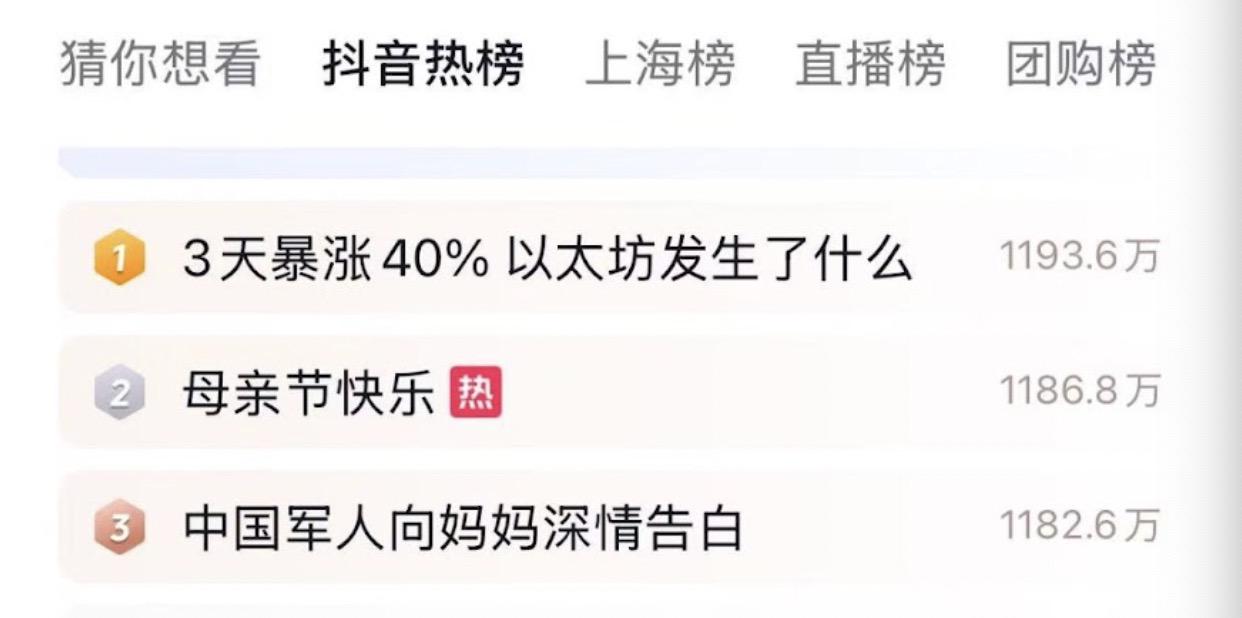
Recently, Ethereum has experienced several consecutive days of strong rebound, with its total market capitalization surpassing Alibaba and ranking 39th among global assets. Related trending topics have even topped Douyin’s hot search list, becoming a major market talking point.
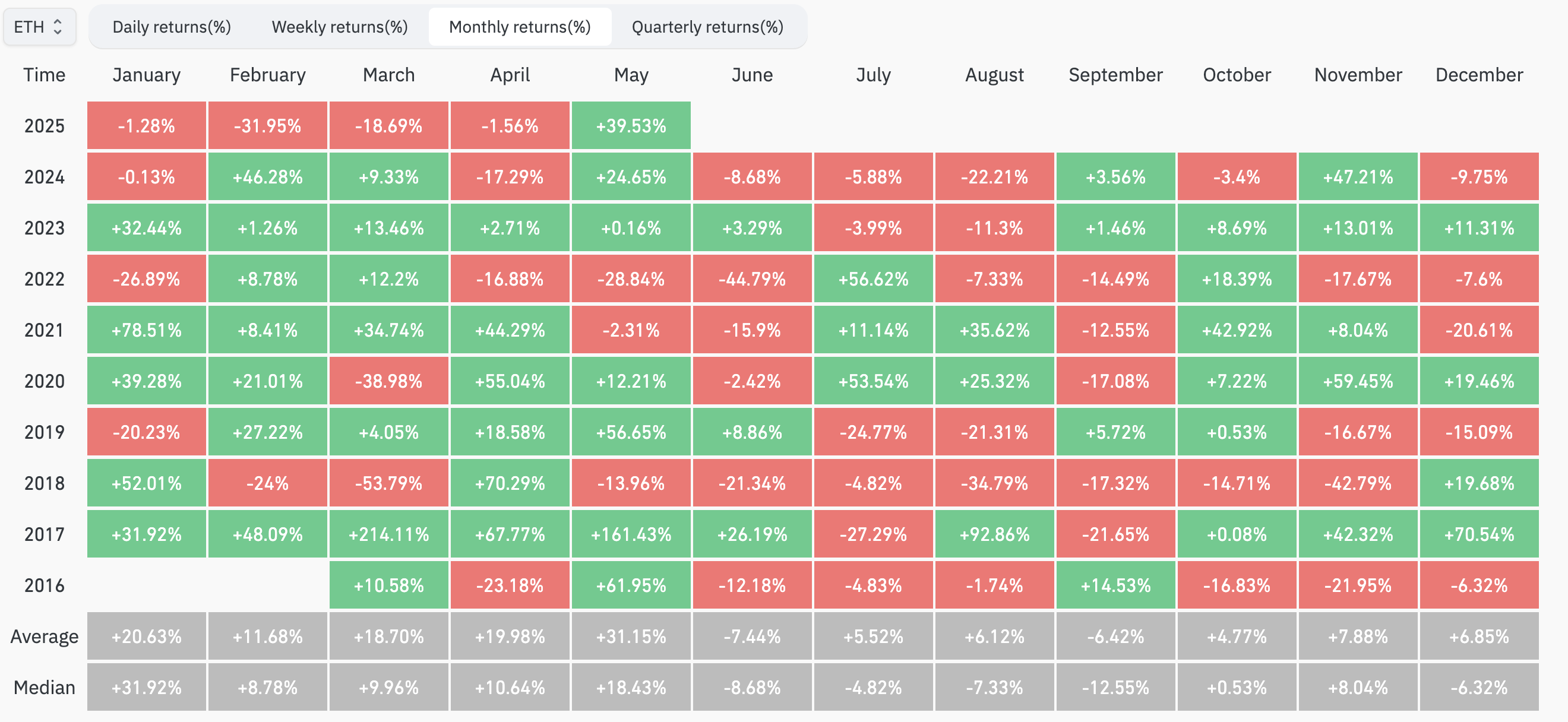
According to CoinGecko data, as of May 12, Ethereum's price rose to $2,521, hitting a nearly two-month high, with a 40.4% gain over the past seven days alone and a weekly market cap increase of over $87.58 billion. Meanwhile, Coinglass data shows that Ethereum’s monthly return so far in May has reached 39.53%, marking the strongest single-month gain since 2025 and significantly exceeding both the historical median (18.43%) and average (31.15%) returns for May. This robust rebound not only ended Ethereum’s three-month consecutive decline but also marked a turning point in market sentiment recovery, reflecting synchronized improvement in capital flows and investor confidence.
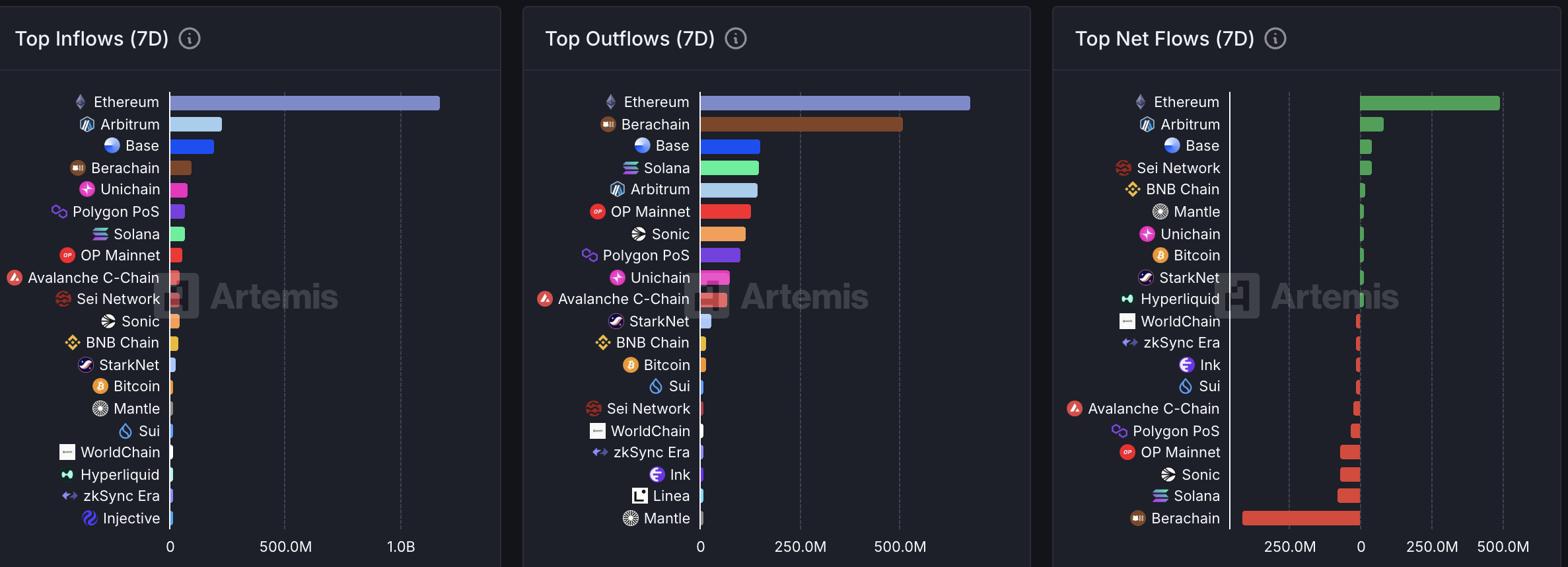
On-chain fund movements further validate this trend. Artemis data indicates that over the past seven days, the Ethereum ecosystem attracted $1.2 billion in inflows—the highest among all blockchains—with net inflows exceeding $490 million, far outpacing other major public chains.
This rebound is seen as the result of multiple converging factors, including marginal improvements in macroeconomic policy, price corrections following excessive bearish sentiment, the upcoming Ethereum Pectra upgrade, expanding real-world narratives, and positive expectations around staking capabilities in Ethereum spot ETFs.
Among these, expectations surrounding ETF staking functionality have emerged as a key catalyst. Over the past few months, multiple institutions have actively sought SEC approval to introduce staking mechanisms into crypto ETF products. Although the SEC recently postponed decisions on applications from Fidelity, Grayscale, and others, discussions are accelerating.
At the end of April, Grayscale met with the U.S. SEC Crypto Task Force in Washington, D.C., discussing regulatory changes regarding staking for Ethereum ETPs. The firm noted that despite managing $8.1 billion in Ethereum ETP assets, it had already foregone approximately $61 million in potential yield from launch through February 2025 due to the inability to stake. It argued that introducing staking would enhance Ethereum network security while delivering additional returns to shareholders.
Another asset management giant, BlackRock, has also recently engaged with the SEC’s crypto working group, discussing topics such as crypto asset regulation, ETF staking, and options products. Documents show the meeting covered “considerations for enabling staking-enabled ETPs,” parameters for determining crypto ETF option positions and exercise limits, and specific criteria for approving crypto ETFs. Notably, Robert Mitchnick, BlackRock’s head of digital assets who attended the meeting, stated in March that adding staking to Ethereum spot ETFs—though involving some “complex challenges”—could be an important way to generate investment returns and might represent a “transformative turning point” for Ethereum.
Notably, Hong Kong regulators have taken an early lead on the issue of crypto ETF staking. In April, the Hong Kong Securities and Futures Commission (SFC) issued new guidelines allowing licensed virtual asset trading platforms (VATPs) to offer staking services, while virtual asset funds (such as Ethereum spot ETFs) may participate in on-chain staking under prudent regulatory oversight. Subsequently, Hong Kong approved two Ethereum spot ETF products featuring staking functionality.
These positive developments in ETF staking have effectively boosted market expectations for Ethereum and accelerated the restoration of investor confidence.
Staking Sector Heats Up, Leading Projects See TVL and Token Prices Surge
The Ethereum staking sector has become one of the focal points for capital and narrative attention. DeFiLlama data shows that as of May 12, the total value locked (TVL) in Ethereum staking reached $34.11 billion, up 60.3% over the past month. Meanwhile, re-staking sector TVL has climbed to nearly $12.85 billion, with a 54.8% increase over the last 30 days.
This article by PANews reviews the latest market dynamics and performance of five leading staking projects within the Ethereum ecosystem. Overall, these projects have made breakthroughs in technical progress, governance mechanisms, and ecosystem development, driving broader market recovery with double-digit growth in both TVL and token prices.
Lido: TVL Nears $23 Billion, Driven by Technology and Governance
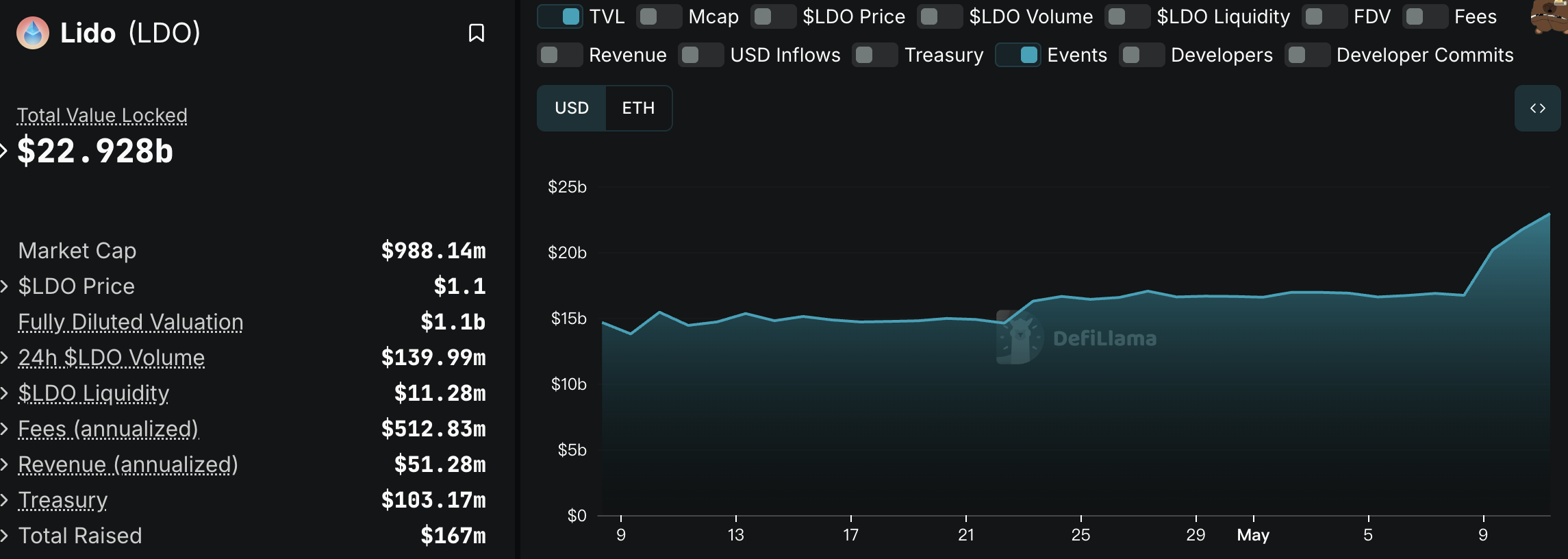
Lido is the largest liquid staking protocol. According to DeFiLlama, Lido’s TVL stood at approximately $22.93 billion as of May 12, representing a 57.5% increase over the past month. At the same time, Coingecko data shows its native token LDO gained about 48.6% during the same period.
Over recent months, Lido has made progress in both governance and technology. In April, Lido DAO initiated several governance votes, including Snapshot and Aragon main stage proposals, covering protocol updates and strategic decisions. That same month, Lido launched its V3 testnet, enabling developers to use Lido stVaults on the Hoodi Ethereum testnet to create customized staking solutions. Lido stVaults are modular primitives that allow stakers, node operators, and protocols to tailor staking setups based on their needs—customizing fee structures, validator settings, risk/reward optimization—while retaining the benefits of stETH. Recently, Lido announced plans to introduce a “dual governance” mechanism—a dynamic time-lock system allowing stETH holders to exit Lido on Ethereum when facing controversial DAO governance proposals.
It is worth noting that although concerns arose recently over a suspected oracle private key leak involving Chorus One, Lido DAO immediately initiated an emergency proposal. No staker funds were affected, and the protocol remained secure and fully operational. Additionally, because Lido’s oracle system uses a 9-of-5 multisig mechanism, a single oracle failure does not compromise the system, and all other nodes continued functioning normally.
EigenLayer: Multi-Front Progress Propels Token Price and TVL Growth
EigenLayer continues to lead the re-staking sector. DeFiLlama data shows EigenLayer’s TVL reached $11.36 billion as of May 12, growing approximately 52% over the past month. Meanwhile, Coingecko reports its native token EIGEN rose 69.7% over the same period.
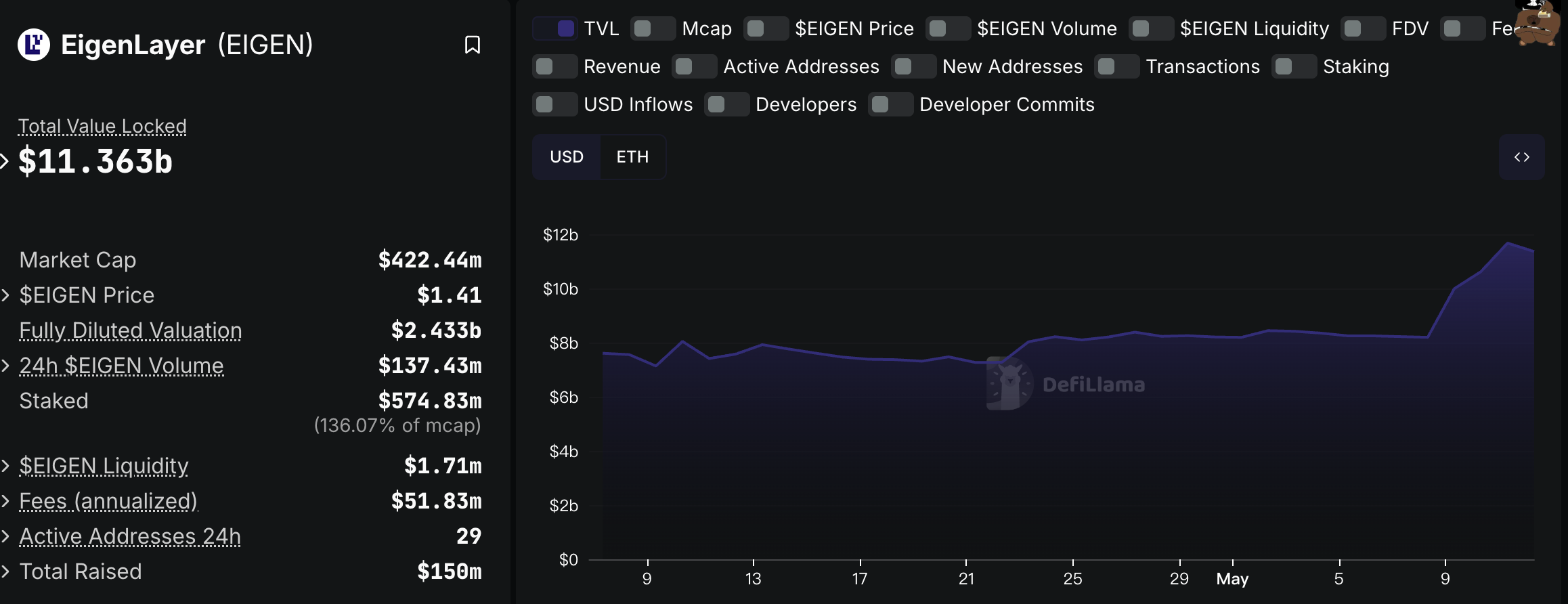
Over the past two months, EigenLayer has advanced steadily in technical upgrades, developer ecosystem growth, and application expansion. Mid-April saw the official mainnet launch of EigenLayer’s slashing (penalty) mechanism, requiring operators and stakers using EigenPod CLI to perform checkpoint upgrades. Now, application-specific validation services (AVS) can directly enforce penalty conditions on mainnet. Shortly after, EigenLayer announced the upcoming rollout of its Redistribution feature, enhancing its slashing capabilities. This function allows decentralized AVSs to redistribute penalized staked funds instead of burning them, supporting more complex use cases like lending and insurance protocols. Initially supporting non-ETH assets (including LSTs, EIGEN, USDC, and AVS tokens), ETH redistribution is planned for mainnet launch in June. Recently, EigenLayer announced participation in Ethereum’s May 7 Pectra upgrade to support network improvements, plans to introduce validator consolidation features for EigenPods, and intends to host a “Berlin Hacker Village” event to attract global developers building next-generation verifiable applications.
Rocket Pool: From Node Incentives to Ecosystem Integration, Driving TVL and Token Growth
Rocket Pool remains one of the most watched Ethereum staking protocols. DeFiLlama data shows Rocket Pool’s TVL reached $1.74 billion, up approximately 56.3% over the past month. Meanwhile, Coingecko data indicates its native token RPL gained about 67.5% during the same period.
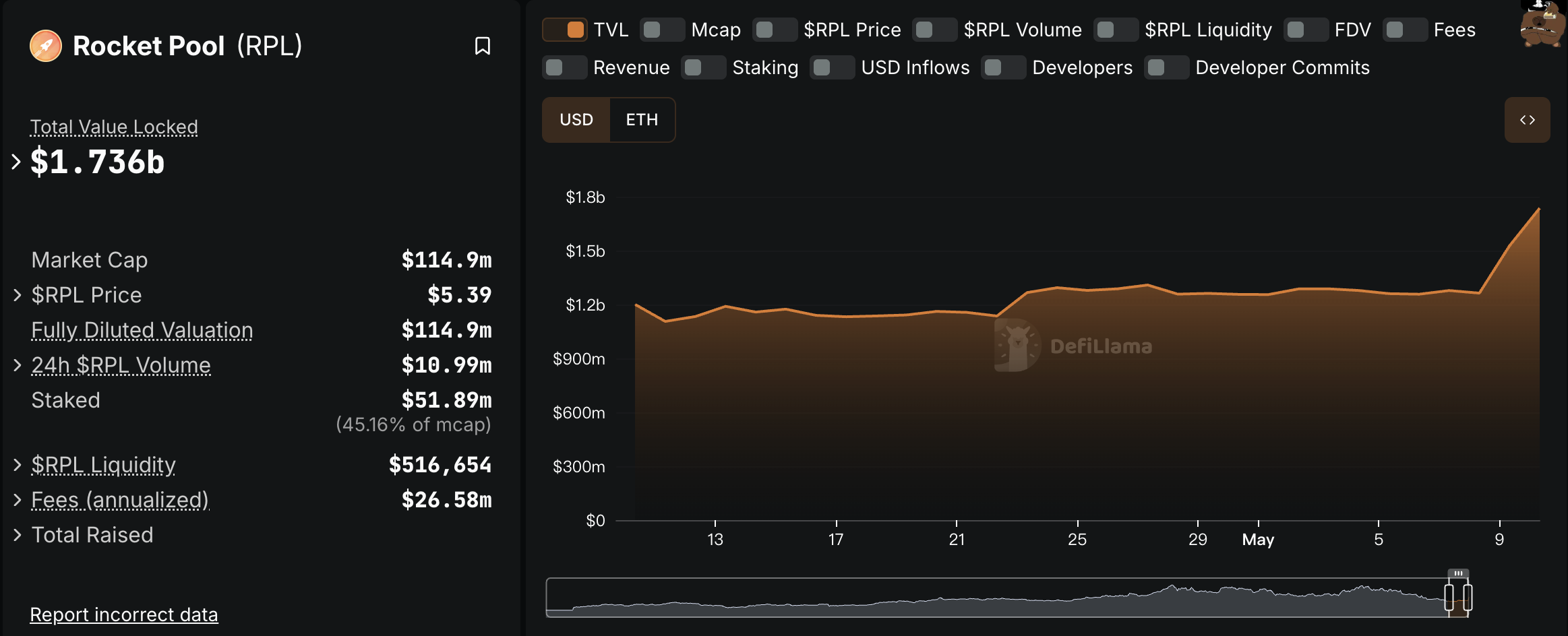
Over the past two months, Rocket Pool has focused on technical upgrades, community governance, and DeFi ecosystem expansion. For example, in March, Rocket Pool distributed 133 ETH to node operators, emphasizing free and feeless access to attract more participants. In April, it released a Smart Node update, held a community call to discuss whether the DAO should raise funds via bridge fees, shared quarterly product roadmap updates, and pushed forward rETH integration across DeFi protocols. In May, Rocket Pool actively promoted node software updates to support the Pectra upgrade rollout.
Symbiotic: TVL Surpasses $1 Billion, Secures Tens of Millions in Funding
Re-staking protocol Symbiotic emphasizes modular security and capital efficiency. DeFiLlama data shows Symbiotic’s TVL has exceeded $1.09 billion, rising approximately 45% over the past month.
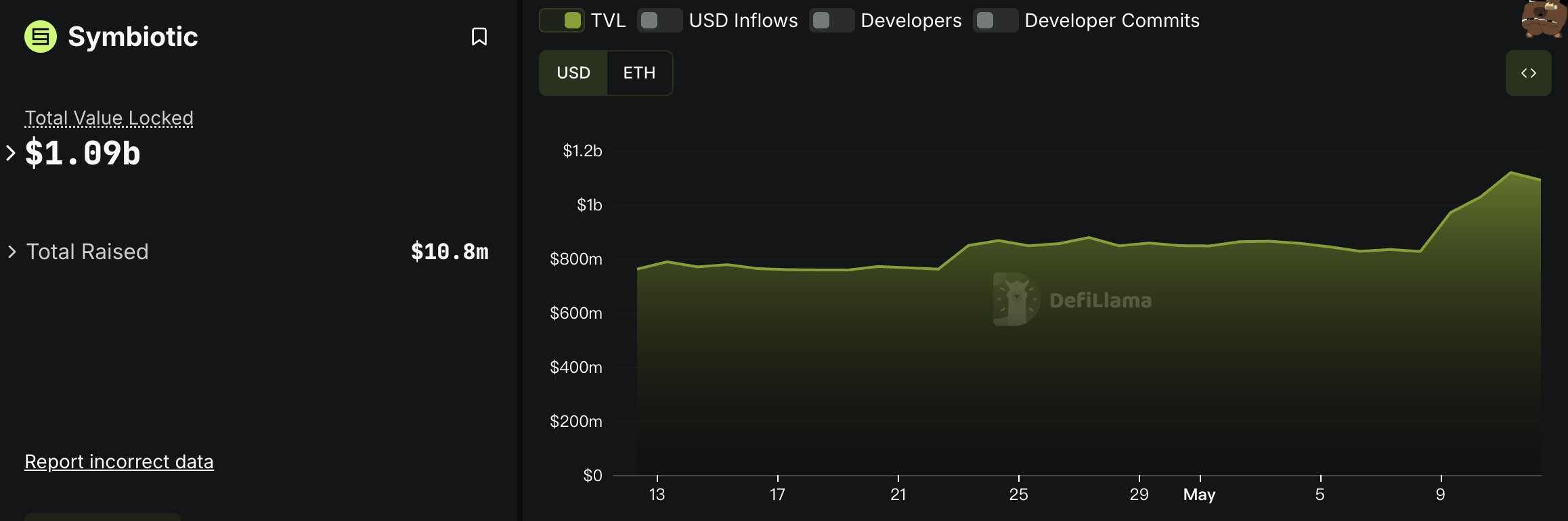
Over the past two months, Symbiotic.fi has steadily advanced its general-purpose re-staking protocol and achieved positive milestones in fundraising. In April, Symbiotic announced the completion of a $29 million Series A round led by Paradigm, CyberFund, Pantera Capital, and Coinbase Ventures. That same month, ether.fi unveiled a $40 million crypto venture fund, naming Symbiotic as one of its first investments.
SSV Network: Monthly Token Gains Exceed 90%, Active Validators Surpass 100,000
As of May 12, SSV Network’s TVL has surpassed $8.9 billion, with nearly 3.467 million ETH staked. Coingecko data shows its token SSV surged 91.6% over the past month.

Recently, SSV Network announced that its number of active validators has surpassed 100,000—accounting for roughly one-tenth of all Ethereum validators. The announcement was widely shared by partners including Lido, Renzo, Kraken, ChainLayer, HashKey Cloud, Nansen, Swell, and Eigenpie. Additionally, on May 6, SSV Network announced the launch of SSV 2.0 testnet on Hoodi, aiming to significantly enhance Ethereum ecosystem security by introducing the concept of “application-based apps” (bApps), reduce developers’ security costs by up to 90%, provide risk-free yields for validators, and unlock greater value across the entire ecosystem.
Join TechFlow official community to stay tuned
Telegram:https://t.me/TechFlowDaily
X (Twitter):https://x.com/TechFlowPost
X (Twitter) EN:https://x.com/BlockFlow_News
 PANews