Leap Over the Ethereum Lunatic Asylum
TechFlow Selected TechFlow Selected
Leap Over the Ethereum Lunatic Asylum
In times of greatest darkness, confidence is more important than gold.
 Navigating Web3 tides with focused insights
By: Yanz & Liam
Edited by: Liam
"This time, I really sold!"
On April 22, the ETH/BTC exchange rate briefly dropped to 0.01766, hitting its lowest level since 2020.
Lin Feng, who had consistently dollar-cost-averaged into and held Ethereum for four years, could no longer endure the pain. He posted a heartbroken declaration on social media. Compared to a simple act of cutting losses, this felt more like a collapse of faith—an emotional farewell to a dream.
On that same day, institutional investors also took action.
Galaxy Digital swapped ETH for SOL, while crypto VC firm Paradigm transferred 5,500 ETH (worth approximately $8.66 million) to brokerage platform Anchorage, likely in preparation for selling.
The most ironic part? Another entity joining the sell-off was an organization closely tied to Ethereum itself—the Ethereum Foundation. A wallet associated with the Ethereum Foundation deposited 1,000 ETH (about $1.58 million) into Kraken.
Ethereum, once hailed as the standard-bearer of blockchain revolution, appears to have entered its darkest hour.
Behind this mass exodus lie countless stories of forced goodbyes to ideals—difficult choices between belief and self-interest.
And all of it has been documented, witnessed, and remembered within a group chat known as the "Ethereum Lunatic Asylum."
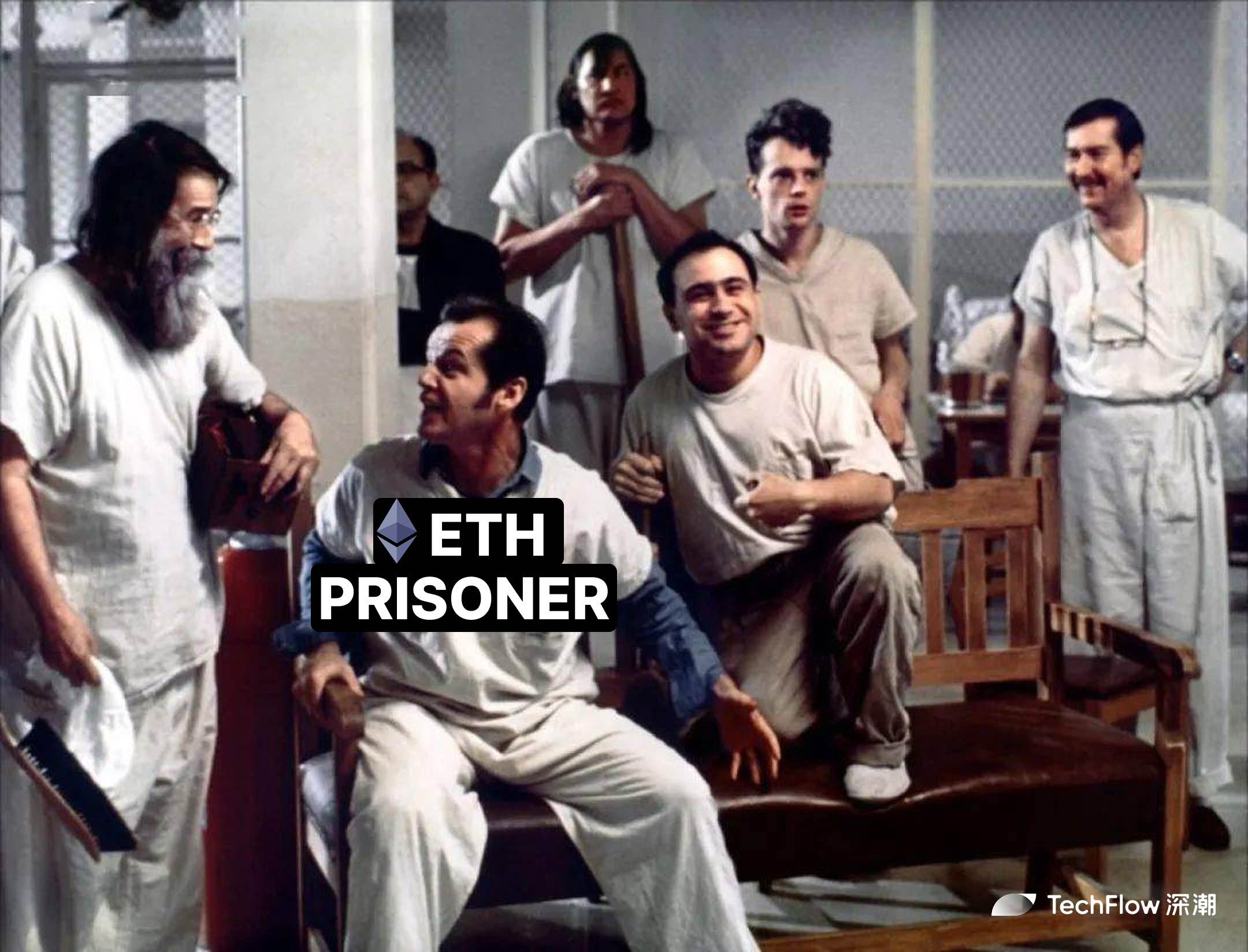
The Ethereum Lunatic Asylum
"Our original group name wasn't 'Ethereum Lunatic Asylum'—it was actually 'I Was Wrong, I Regret Buying Ethereum.'"
On February 3, 2025, the cryptocurrency market crashed collectively. Ethereum plunged as much as 25%, briefly touching a low of $2,080.19 per coin—catching many Ethereum holders off guard, including Ju Zi.
Ju Zi, formerly employed at a venture capital (VC) firm, entered the crypto space in 2021. His deep research into Ethereum's technology laid the foundation for his initial conviction upon entering the ecosystem.
However, when Ethereum’s price fell below $3,300, Ju Zi began to panic. He kept second-guessing himself—and thus, the group chat “I Was Wrong, I Regret Buying Ethereum” was born.
On February 3, he completely lost composure—"If even I can’t escape, what hope do the rest of us have?"
Seeking psychological comfort and mutual support, this originally six-member friend group began welcoming more “people who made mistakes”: from super whales like Big Orange and Du Jun, to senior VC executives—all gathering here to heal wounds and seek reassurance.
As Ethereum continued to decline, the number of “patients” grew daily. Within just one month, the group expanded and stabilized at around 250 members. According to Ju Zi: "Buying Ethereum is being a '250'"—a deliberately controlled number laced with self-deprecating humor.
"At first, people shouted 'buy the dip' when ETH hit $3,000. Then it dropped to $2,500, then $2,100—the voices calling for bottoms got quieter and quieter. Eventually, we started jokingly saying anyone wanting to buy the dip should call Dr. Yang Yongxin for electroshock therapy. So we changed the group name to 'Ethereum Lunatic Asylum,' because we all felt insane."
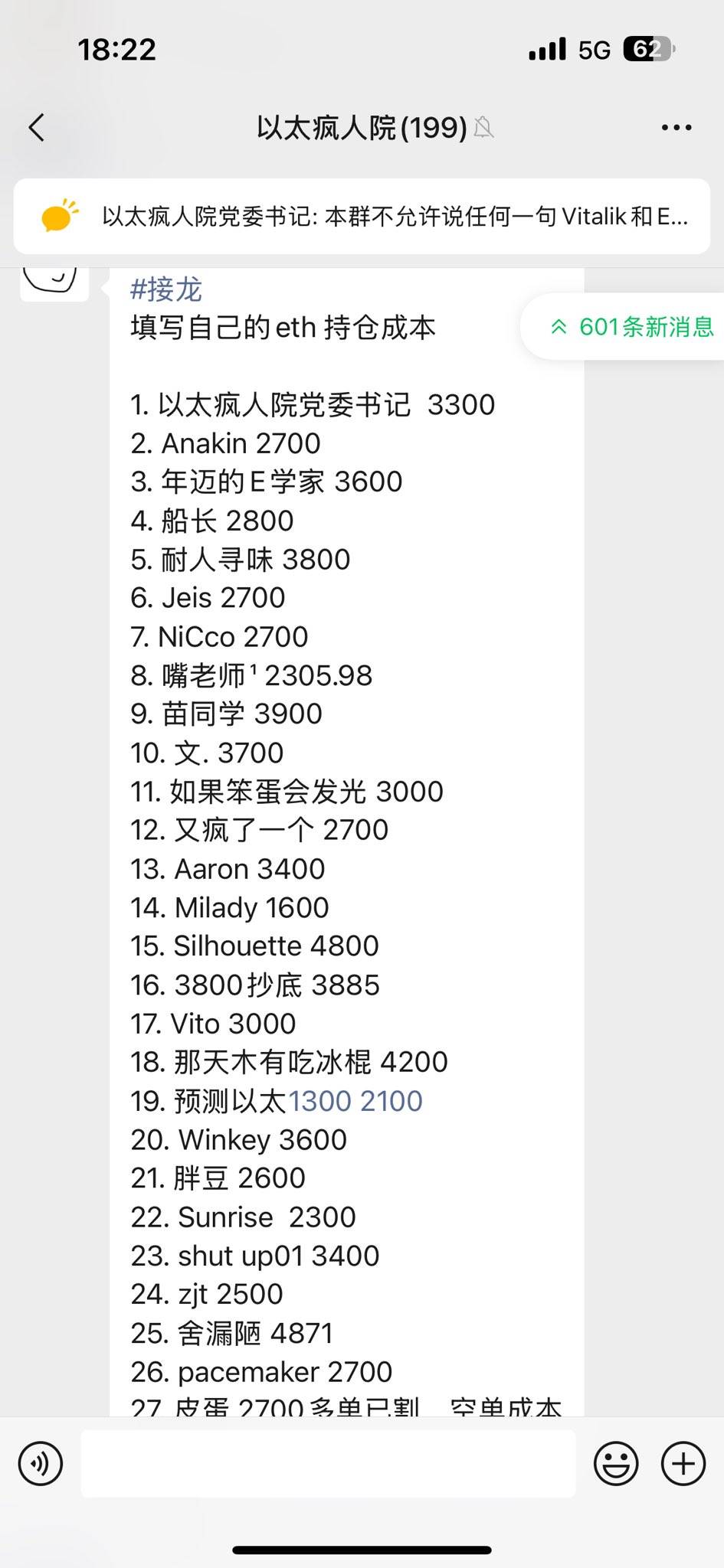
Image source: Big Orange @0xVeryBigOrange
As the group admin, Ju Zi has witnessed it all. He is both an observer and a prisoner locked inside the asylum. But he is powerless—even more so, most people remaining in the group feel utterly helpless.
Ju Zi can't help but reminisce about that summer of 2020.
That summer, Uniswap's trading volume surpassed Coinbase. The liquidity mining craze ignited by Compound made countless people overnight millionaires. Decentralized finance (DeFi) swept through the entire crypto world.
DeFi Summer was like a feverish technological feast. As the star of this banquet, Ethereum captured the attention of countless investors and developers.
For Web2 VCs like Ju Zi, this wasn't merely a profit opportunity—it was an intellectual awakening and baptism.
"We did extensive research back then," Ju Zi recalled. "Vitalik and the Ethereum Foundation (EF) painted many grand visions—like sharding, zero-knowledge proofs (zk)... We truly believed this was the future."
Likewise, Lin Feng bought Ethereum during that vibrant summer of 2020, full of hope and excitement, deeply inspired by Ethereum’s vision of becoming a “world computer.”
"Back then, I was proud to hold Ethereum. This was real value investing—civilization-level innovation."
Beyond individuals like Ju Zi and Lin Feng, numerous traditional VCs entered the emerging Web3 landscape that summer, drawn by curiosity and憧憬 for this new frontier.
As Ethereum’s founder and spiritual leader, Vitalik’s every word drew widespread attention. Everyone followed his guidance in investment decisions. Massive amounts of VC capital poured into Ethereum ecosystem infrastructure. Valuations exploded in ZK and Layer2 sectors favored by Vitalik—Scroll valued at $1.8 billion, zkSync at $2 billion, Starknet at $8 billion... Capital flooded in, betting on Ethereum’s scaling dreams.
Yet after the DeFi Summer hype faded, in the new cycle, technical narratives were abandoned by investors. In their place came the antithesis: MEMEs—a seeming mockery.
"We firmly believed Solana wouldn’t become the 'Ethereum killer,' but now it seems the market doesn’t care about core issues like privacy or security." This divergence left Ju Zi frustrated. But what truly trapped him was his deep emotional attachment to Ethereum.
As a loyal believer, he not only accumulated large holdings during the bull market but also chose to stake his ETH for long-term yield. However, when winter struck and ETH prices plummeted, his staked assets became illiquid—leaving him, like many others in the asylum, stuck in a catch-22 situation.
In reality, these trapped individuals are rarely speculators chasing overnight riches. Instead, they're mostly long-term holders who've weathered multiple market cycles and possess substantial understanding of Ethereum—commonly known as "old lambs."
The irony of this cycle is starkly evident—paper hands win PVP games, while diamond hands are punished, enduring dual torment from reality and cognitive dissonance.
To them, Ethereum is both a symbol of hope and an inescapable chain.
They love Ethereum because it represents technological innovation and future possibilities; they hate Ethereum because the pain and hardship caused by falling prices are very real.
For Lin Feng, selling Ethereum brought not only financial loss but deeper still, a shattered mindset. He entered crypto through Ethereum, priding himself as a value investor. Once proud of his investment, he now finds himself negating his past self. More shamefully, he realizes his proclaimed faith wasn’t strong enough—unable to ignore price charts amid relentless red candles, he ultimately chose to cut and walk away.
Lin Feng sold his Ethereum—and along with it, his former dream.
Yet most patients remain confined in their “hospital rooms.” They’re not just waiting to break even and discharge—they’re also waiting for another scorching summer, for the dreams planted three years ago to bloom again.
Ethereum Has No New Story
"This year, Ethereum hasn’t delivered any paradigm-shifting innovations!"
Da Chengzi, a well-known KOL and fellow inmate of the Ethereum Lunatic Asylum, is widely regarded on Twitter as the "Commander of E Defenders."
On March 21, 2024, Da Chengzi tweeted: "Starting today, I’m an Ethereum maximalist. If Ethereum doesn’t reach a new all-time high by May, I’ll eat shit."
Despite his passionate stance, Da Chengzi admits Ethereum currently lacks innovation.
"Nothing eye-catching has emerged," says Yuanjie, co-founder of public blockchain Conflux, who calls himself the "Web3 Investment Promotion Director"—once aspiring to build an "Ethereum killer," having witnessed both the rise and decline of Ethereum’s ecosystem.
He still vividly remembers the last cycle’s booms in DeFi, NFTs, and GameFi: "Back then, there was always something new to learn every day, and participating brought solid financial returns."
In its "golden age," Ethereum told the best stories. On-chain ecosystems exploded in growth. The Ethereum "cult" reached its peak. Capital, developers, and users focused intensely on specific directions (like Layer 2, DeFi, ZK tech), blindly expanding. Investors swarmed in and out, bustling with activity.
The narratives from three years ago fueled the previous cycle’s prosperity. Now, those stories have ended.
Like soil depleted from over-farming, Yuanjie notes: "Vitalik’s personal charisma has overly influenced industry direction and roadmap setting, resulting in inefficient allocation of resources within Ethereum."
Whether in terms of technological breakthroughs or novel applications, Ethereum has failed to offer enough novelty to recapture market attention.
A frog slowly boiled alive, Ethereum’s mainnet now faces the challenge of “increasingly barren land.”
"On-chain transaction volume and activity are extremely low. The entire ecosystem has cooled down, causing Ethereum’s deflationary mechanism (EIP-1559) to underperform," says Da Chengzi. He likens EIP-1559’s deflationary mechanism to a beautifully designed irrigation system—but without sufficient “water” (liquidity), it remains superficial, unable to nourish the Ethereum ecosystem.
Even more complex: on this barren land bloomed “parasitic flowers.”
Layer 2, bearer of Ethereum’s scalability dream, acts as the supreme ruler. All L2s recognize Ethereum as sovereign, yet each establishes its own kingdom, siphoning value from Ethereum’s mainnet and steadily weakening Ethereum’s control over its own ecosystem.
"Everyone’s racing to bridge Ethereum assets onto their chains—because the more you bridge, the higher your points, and the bigger your airdrop rewards," Yuanjie said emotionally. He attributes these short-term profit-driven “parasitic blooms” and current ecological homogenization to humanity’s “prisoner’s dilemma.”
Yuanjie believes this may not have been Vitalik’s intention, but in pursuing Layer 2 expansion of Ethereum’s ecosystem boundaries, he overlooked “everyone’s desire to get rich quickly and fight over shared inheritance,” ultimately leading to a vicious cycle of internal competition and self-destruction.
Highly fragmented Layer 2 networks fracture user experience and on-chain liquidity. The composability advantage once proudly owned by Ethereum’s mainnet during DeFi Summer has vanished. In contrast, Solana,凭借 its simple attribute of being “fast,” has become a haven for consumer applications.
"Now looking at ETH, I think of ATOM—I truly fear ETH will suffer the same fate as ATOM."
Lin Feng believes ETH’s predicament mirrors that of ATOM, both experiencing a 'value migration upstream.'
In the Cosmos ecosystem, sovereign app-chains (like OSMO, JUNO) interconnect via IBC protocol, capturing value within their own ecosystems. ATOM, as the central hub, fails to effectively extract value from these chains.
After various Ethereum L2s rose, using sequencers, they captured significant MEV and transaction fee revenue, drastically reducing value flowing back to Ethereum’s mainnet—diminishing ETH’s value capture capability.
"Only if Ethereum’s mainnet successfully upgrades and dramatically improves capacity will it truly enter a new phase of development," says Da Chengzi.
How to Reclaim Greatness?
On April 22, while many institutions dumped ETH, WangChun, co-founder of F2Pool, once again swapped 50 WBTC for 2,794 ETH—worth about $4.36 million—offering a glimmer of hope to those still holding ETH.
Ethereum, the land that once bore abundant innovative fruits, seems to require a prolonged “fallow period.”
During this fallow season, some cut their losses, others hold firm.
Da Chengzi chooses to hold. The 2021 bull market brought him immense gains. His relationship with Ethereum has long transcended mere investment. To him, ETH isn't just an asset—it's akin to a faith.
Among the remaining “E Defenders,” everyone has become an unofficial advisor to the Ethereum Foundation, offering suggestions and strategies. Based on their proposed “reforms,” they can roughly be divided into two factions.
The right-wing advocates radical reform, believing Ethereum should prioritize “practicality” and compliance, becoming “friendly to authority.”
For example, Ju Zi believes Ethereum must “stop playing dead” and actively embrace regulation.
"Since the dawn of humanity, certain things have been inevitable. You cannot resist the state machinery. If you want to survive well or fulfill your function, you shouldn't oppose the entire national apparatus."
Between ideals and bread, the Ethereum Foundation must strike a balance. Yuanjie doesn’t deny EF’s purity in focusing on academic discourse and technical innovation, but acknowledges a pragmatic business department is necessary.
"If Trump comes to power, we need Trump to accept Ethereum—so we need someone who doesn’t dislike Trump to handle him. If Vitalik can’t do it himself, he should let others. A good foundation, as a nonprofit, should be able to accommodate diverse strategies."
Lin Feng even argues the Ethereum Foundation has been too ideologically driven, neglecting real creation and construction, and too “weak.” The Ethereum Foundation needs a Trump-like reformer to completely overhaul its culture.
The left-wing believes Ethereum’s greatest value lies precisely in “decentralization”—that it remains, aside from Bitcoin, the last “idealistic sanctuary” in the crypto world.
KOL BlueFox Notes states he evaluates Ethereum based on one thing only: "Will it continue maintaining decentralization, security, and trustlessness in the future? If yes, I’ll keep supporting. If not, no matter how high the price, I’ll exit immediately."
"The crypto world needs an international warrior. Aside from the disappeared Satoshi Nakamoto, no one compares to Vitalik," says investor Jacob. Despite suffering massive financial losses from his Ethereum investments, he still values Ethereum’s refusal to compromise with authority.
"SOL and other emerging high-performance blockchains are essentially capital-driven corporate stock logic—efficient, hence easier to generate market buzz. But Ethereum represents a new form of human civilization."
Underlying this left-right divide is a fundamental difference in blockchain priorities—pragmatism, efficiency, and commercial success, versus upholding decentralization and freedom?
In these darkest hours, confidence is worth more than gold.
Jocy, founder of IOSG, urges: "Ethereum won’t die. It’s the most successful decentralized organization in the Web3 industry. Looking ahead, cherish your Ethereum holdings—evaluate its value and innovation over a ten-year horizon."
Returning to the "Ethereum Lunatic Asylum," this refuge born of panic has now become a corner witnessing history.
Whether it’s the moment Lin Feng pressed the sell button, or Da Chengzi’s unwavering days of holding, or the emotional fluctuations Ju Zi observes in the asylum—each is recording and shaping Ethereum’s history.
No matter what lies ahead, regardless of present departures or perseverance, those who once went crazy for Ethereum will forever remember that scorching summer—and the Ethereum that once made them believe in the future.
Join TechFlow official community to stay tuned
Telegram:https://t.me/TechFlowDaily
X (Twitter):https://x.com/TechFlowPost
X (Twitter) EN:https://x.com/BlockFlow_News
 深潮TechFlow