








The Mad "King": The Tariff Nightmare Sweeping the Globe
TechFlow Selected TechFlow Selected
The Mad "King": The Tariff Nightmare Sweeping the Globe
Tariffs are clearly not a viable economic or political plan, and the person who takes the lead in pushing back against them will become the de facto leader of American economic policy.
 Navigating Web3 tides with focused insights
By Noah Smith
Translation: Block unicorn
U.S. stock markets continue to plummet as investors realize Trump's sky-high tariffs won't be lifted anytime soon:
On Sunday night, U.S. stock index futures dropped sharply after a two-day historic market crash triggered by the White House’s defiant stance following President Trump’s stunningly high tariffs on most major American trading partners… Dow Jones Industrial Average futures fell 1,531 points, or 4%, on Sunday night, signaling another brutal trading day ahead on Monday. S&P 500 futures were down 4%. Nasdaq-100 futures also declined by 4%.
S&P 500 futures have now plunged 15% in just three trading sessions. Calling this a "crash" is no longer hyperbole. In a matter of days, Trump’s policies have erased over $5 trillion in American wealth. If markets perform as expected on Monday, that number could quickly reach $10 trillion. And this is only the first three days. Many investors still expect the tariffs to be temporary:
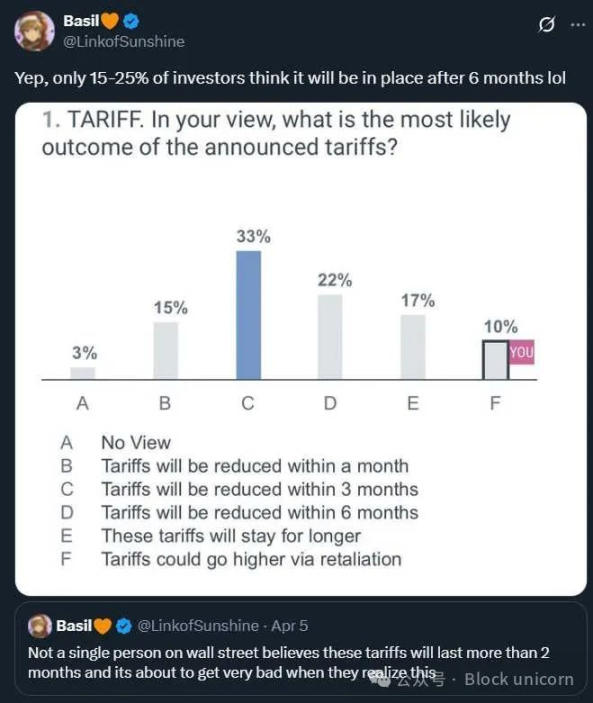
This means the crash we've already experienced may only be the beginning of what’s to come.
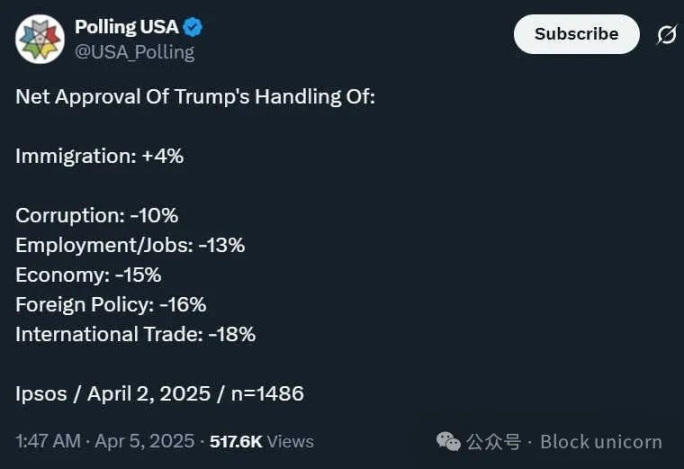
The American public is panicking about this wanton economic destruction—and rightly so. Public support for tariffs has never exceeded 50% and is now plunging to new lows. The economy, jobs, and international trade have become top sources of dissatisfaction with Trump among Americans, as has foreign policy:
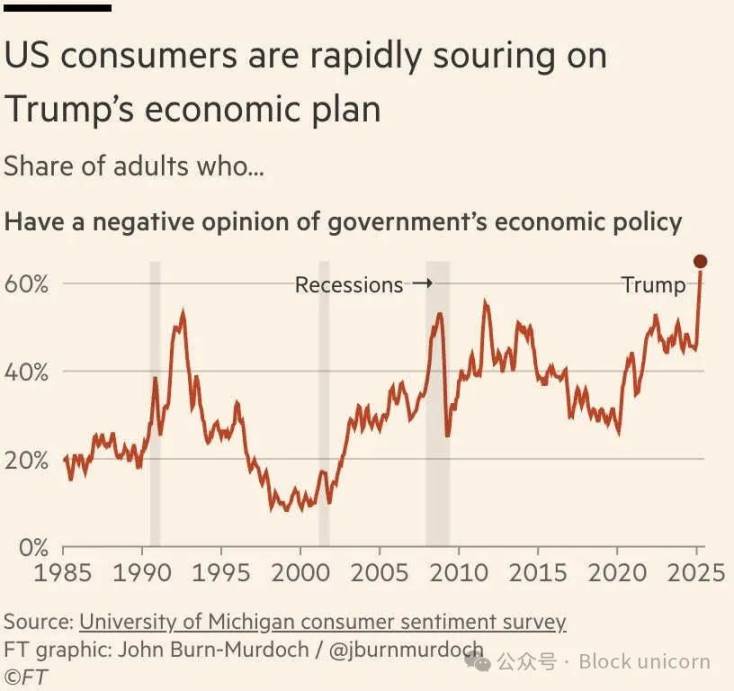
Negative sentiment toward U.S. government economic policy has soared past levels seen even during the Great Depression:
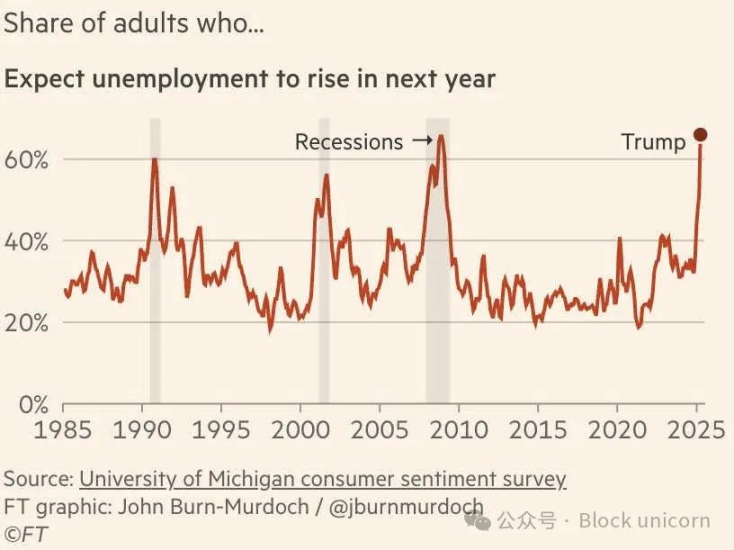
It’s not just the stock market. Most Americans expect the tariffs to hurt the real economy, leading to higher unemployment and falling incomes:
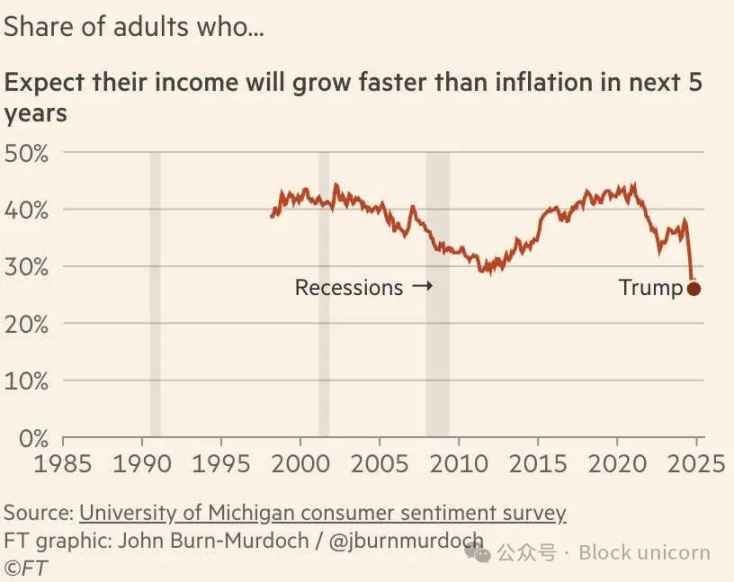
Private forecasting firms are raising the likelihood of a near-term recession. Prediction markets agree.
In the meantime, the deranged Trump "king" continues to boast about crashing the stock market:
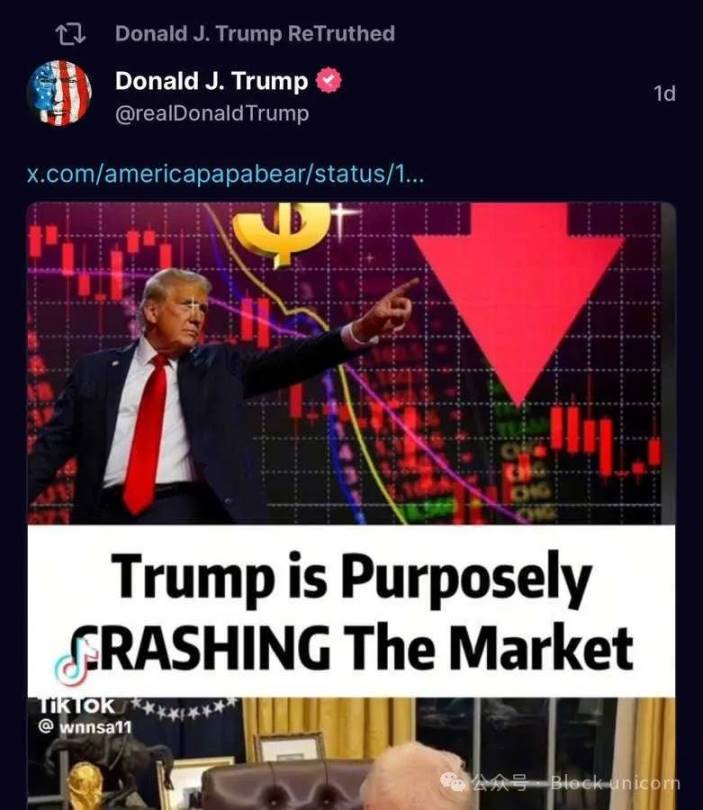
Even some of Trump’s allies and supporters are growing uneasy. Bill Ackman declared, “We’re heading into a self-inflicted economic nuclear winter,” while Elon Musk called for a zero-tariff free trade zone with Europe. Musk also attacked Peter Navarro, Trump’s economic adviser and arguably the most influential advocate behind the tariff policy.
Now, it’s important to remember that Congress can step in at any moment to stop this madness. The Constitution grants Congress the power to set tariffs; the reason Trump can impose them unilaterally is only because Congress delegated that authority through a series of laws. At any time, Congress can pass new legislation to eliminate these tariffs.
In fact, there are already at least two such bills being proposed—one in the Senate by Chuck Grassley and Maria Cantwell, and another in the House by Don Bacon. That’s excellent! I hope they pass, even if Trump vetoes them. If things get bad enough and Trump’s approval ratings fall far enough, Democrats and Republicans could unite to form a two-thirds majority and override the veto, ending this tariff nightmare.
But you’ll immediately notice that two of the three lawmakers leading the charge against tariffs—Bacon and Grassley—are Republicans. Democrats, overall, are not at the forefront of this fight.
This doesn’t mean Democrats are entirely silent. Many have issued statements opposing the tariffs, like this one from Nancy Pelosi:
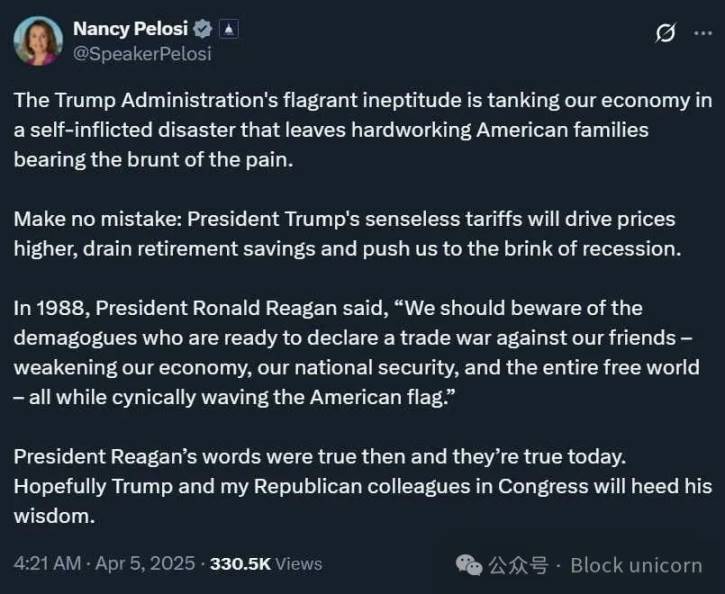
But so far, there has been nothing resembling the kind of fiery rhetoric seen in progressive attacks on Elon Musk’s DOGE. Bernie Sanders responded to DOGE with a “Stop the Oligarchs” tour that drew massive crowds. Yet his response to the tariffs has been cautious and ambiguous:
As someone who helped lead the opposition to certain disastrous, unrestricted free trade agreements with countries in Asia and South America and other low-wage nations, I understand we need trade policies that work for American workers, not just the interests of corporate CEOs. This includes targeted tariffs, which can be a powerful tool to prevent companies from outsourcing American jobs and factories overseas.
But the bottom line is: We need a rational, thoughtful, and fair trade policy. Trump’s blanket tariffs are not the answer. We don’t need sweeping and arbitrary sales taxes on imports that raise prices on goods desperately needed by the American people. We should do everything possible to bring prices down, not make them astronomically high.
Some Democrats are even flirting with defending Trump’s tariffs. Congressman Chris Deluzio of Pennsylvania released a statement criticizing the implementation of Trump’s policy but appearing to support its general direction, calling for price controls to combat tariff-driven inflation:
I support using tariffs as a tool against bad actors and trade cheaters. I support combining tariffs with strong industrial policy and worker-supporting policies, used strategically to protect American jobs and consumers. I support aggressively renegotiating trade deals like USMCA to secure the best possible outcomes for hardworking Americans like those in western Pennsylvania… I don’t support the decades-long Washington consensus on free trade that decimated American industry and jobs and left us with fragile, failure-prone supply chains. That was a raw deal for people in the Rust Belt and beyond. Nor do I support allowing foreign trade cheaters to exploit their own workers to undermine American jobs… The president has the power to stop corporations from price-gouging under the cover of tariffs—why isn’t he using it?
The House Democrats posted a video of Deluzio making similar remarks, adding text implying limited support for Trump’s overall approach:
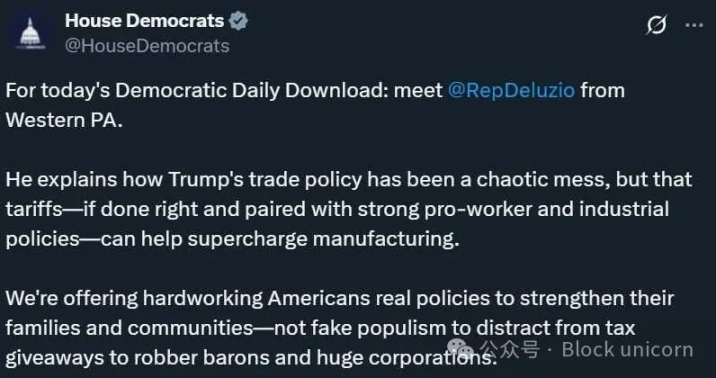
To be frank, this is insane. No president has ever deliberately wrecked the stock market—and soon the broader U.S. economy—with such speed. Among policy blunders of the past century, only the Iraq War comes close, and that disaster unfolded gradually over many years. Democrats now have a golden opportunity to loudly denounce Trump from every rooftop, riding an unprecedented wave of public anger to sweep Congress in the 2026 midterms. Instead, they’re issuing tepid statements, getting bogged down in details, and letting Republicans take the lead in defending American prosperity from their mad “king.”
What’s going on? If this were a strategic, deliberate Democratic maneuver—letting the Republican coalition tear itself apart before stepping in to capitalize—I would expect Democrats to issue more statements like Pelosi’s, rather than the convoluted, half-defensive rhetoric from someone like Deluzio. Instead, the current situation suggests something much clearer: Trump is actually enacting the long-dreamt-of progressive backlash against neoliberalism, and Democrats don’t know how to respond to the fact that it’s rapidly turning into a complete disaster.
Trump’s embrace of tariffs represents a political reversal. For decades, it was Democrats and the labor left who worried that trade agreements were undermining organized labor in the U.S., shipping American jobs to low-wage countries, and damaging the environment. More recently, it was progressives who identified neoliberalism—including free trade as one of its central pillars—as a root cause of America’s problems.
“Anti-neoliberalism” has become the core unifying idea of the modern progressive movement. Socialist commentators throw around the term “neoliberalism” to describe anything they dislike. Progressive think tanks like the Roosevelt Institute and the Hewlett Foundation fund thinkers and initiatives aimed at figuring out what comes after neoliberalism (I’ve participated in several such events myself). The Warren movement—a project of intellectual elites with considerable influence in the Biden administration—has begun putting this concept into practice, adopting key policy tools like antitrust enforcement, price controls, and stronger support for unions. National security-focused liberals like Jake Sullivan and Jennifer Harris emphasize industrial policy (which I strongly support as well). The Sanders movement—a populist force that shaped policy without ever holding full power—calls for more radical measures, including punitive taxation and nationalization of industries.
You’ll notice that tariffs and trade deficits aren’t particularly prominent on these agendas. Anti-neoliberalism is indeed skeptical of free trade; Biden imposed strategic, targeted tariffs on specific Chinese products. But tariffs have never been a central part of anti-neoliberal ideology, and few progressives cite trade deficits as evidence that the U.S. is being taken advantage of by other countries. Even the most ardent Bernie supporters might hesitate at the scale of trade destruction Trump is now attempting (Bernie himself certainly would).
But if the progressive anti-neoliberal movement has been moving slowly along the slow lane, Trump has roared past in his sports car. Trump has now seized the anti-neoliberal banner and driven it much further—and in directions its original leaders never imagined.
Now, progressive leaders fear that if they oppose Trump by championing free trade and succeed, their entire anti-neoliberal agenda will be discarded along with the tariffs. I think this is a reasonable concern. Trump has already made most Americans view free trade more favorably, and as the economic damage from tariffs spreads, the backlash could intensify further:
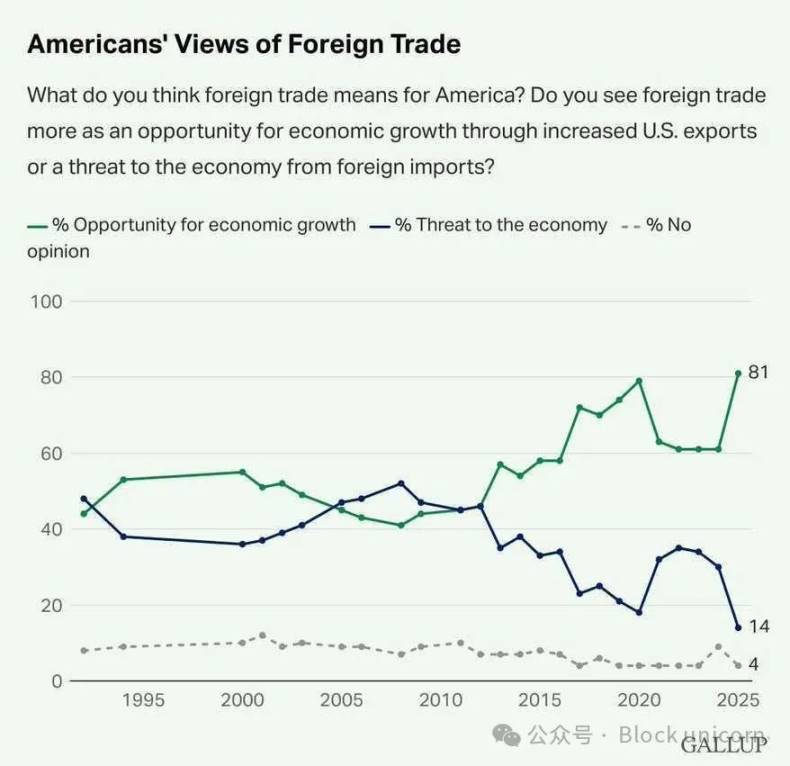
We may indeed be witnessing a generational shift back toward free trade. This would undoubtedly threaten the progressive movement’s decades-long anti-neoliberal project.
This possibility has left anti-neoliberal thinkers and activists somewhat disoriented, hence their muddled responses:
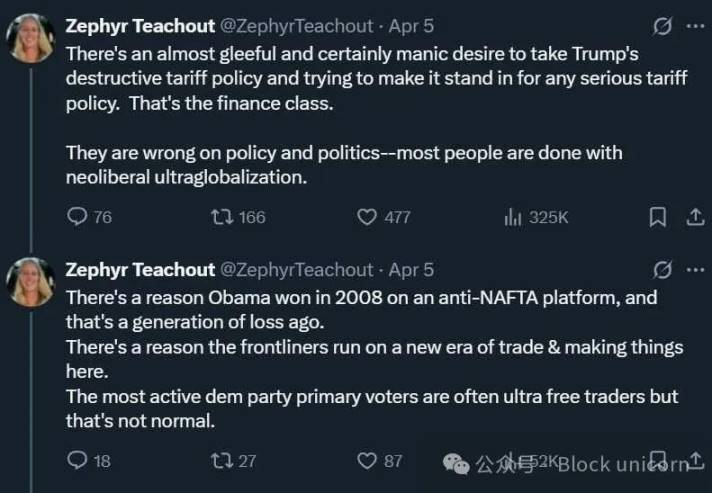
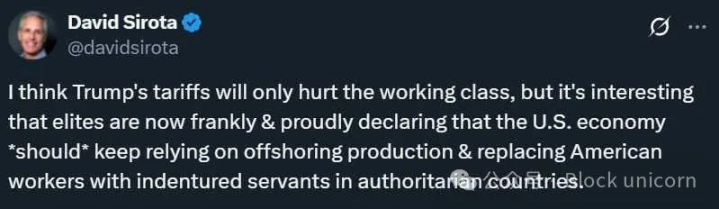
This approach will lead to the total defeat of the progressive movement. Not only because Democrats adopting this stance will let a once-in-a-generation opportunity for power slip through their famously clumsy fingers (though that is true). More importantly, by refusing to clearly condemn and oppose the worst act of economic self-destruction in modern American history, progressives will hand a major ideological victory to their neoliberal opponents within the party and toss their nascent revolution into the dustbin of history.
Perhaps some progressives imagine that after Trump’s destruction, Democrats will regain power but retain some of his tariffs. This has happened before—for example, Biden kept the tariffs Trump imposed during his first term on China. Progressives might comfort themselves thinking that Trump is shifting the Overton window, so after he leaves office, they can quietly return and propose a milder version of anti-neoliberalism as a compromise.
I very much doubt this will happen. The reason Trump’s first-term tariffs were retained is that they didn’t cause much harm. When Americans truly suffer economic pain—such as after the 2008 financial crisis—they tend to turn decisively against anything perceived as causing that pain. After the financial crisis, they turned against Wall Street, resulting in the strictest financial regulation since World War II. After Enron, the Sarbanes-Oxley Act went possibly too far in regulating corporate accounting. And after the Smoot-Hawley Tariff of 1929—which was far smaller in scale than Trump’s current tariffs—free trade became a lasting creed for generations.
After all this is over, if Americans associate “anti-neoliberalism” with tariffs, they’ll build shrines to Milton Friedman in their front yards. If industrial policy, antitrust, and higher taxes become linked with tariffs, those ideas will be thrown out too. Public discourse will be filled with sentiments like this:
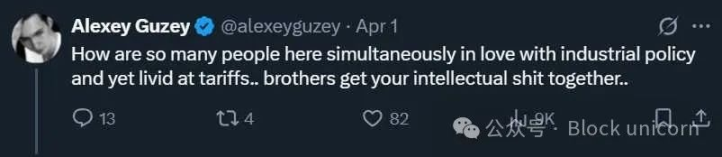
If progressives and the Democrats who listen to them want to salvage anything from their agenda—I agree that some parts are worth saving—they must offer something better than “Well, tariffs can be good if done right, but Trump’s are poorly implemented, blah blah blah.”
Luckily, it should be easy to attack Trump’s tariffs with maximum force without mentioning “neoliberalism” or other grand ideological concepts. They can say: Tariffs will crush the American working class. They can say: Tariffs will dramatically accelerate deindustrialization in the U.S., throwing factory workers out of jobs. They can even say: Tariffs will make the middle class poorer, increase unemployment, destroy retirement savings, and erode purchasing power.
You don’t need to tie any of this to “neoliberalism,” “elites,” or the “financial class.” You don’t need to frame it as part of some broader ideological struggle. That kind of thinking may resonate with the Democratic staffer class managing lawmakers’ Twitter accounts, but ordinary voters really don’t need much more than “tariffs are bad, therefore Trump is bad.” Tariffs were never a major part of the progressive agenda—Franklin D. Roosevelt drastically reduced tariffs through the 1934 Trade Agreements Act.
And you can still say industrial policy and antitrust are good! You don’t need to linguistically link them together, even if in your mind they’re connected via some “neoliberalism” theory. Just leave tariffs behind and spare the American people lectures on ideology.
Also, Democrats really need to stop trying to turn this into a class war. Some Democrats weakly attempt to claim that the rich will benefit from tariffs:
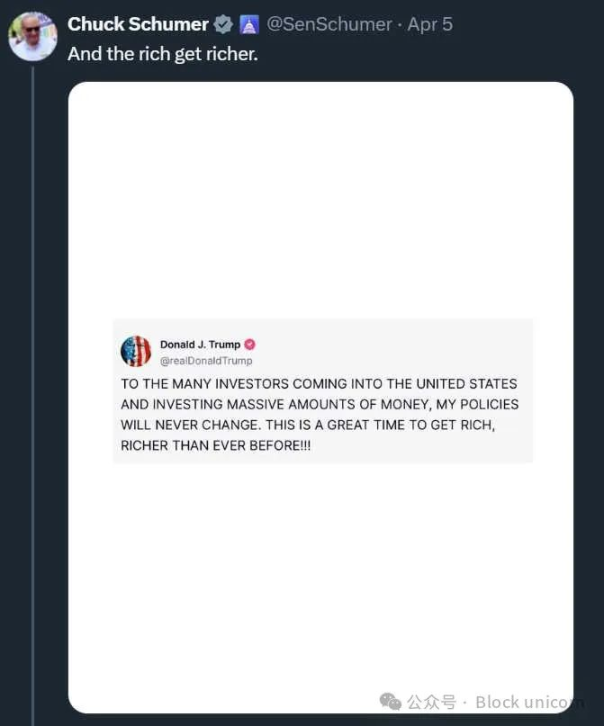
Nobody is dumb enough to believe that. Everyone knows the wealthy own large amounts of stock, and when the market crashes, the rich suffer massive losses.
Class warfare has always been a weak platform for reclaiming national power. But trying to force tariffs into the narrative of “billionaires vs. everyone else” is downright absurd. This is genuinely one of those cases taught in Economics 101—a stupid policy that hurts both billionaires and working-class Americans simultaneously. When you stop a madman from drilling holes in the hull, rising tides really do lift all boats.
In short, Democrats and progressives need to lead the fight against the deranged “king” and his tariff madness. Tariffs are clearly not a viable economic or political program, and whoever leads the charge in rejecting them will become the true leader of American economic policy. Step up and be that leader.
Join TechFlow official community to stay tuned
Telegram:https://t.me/TechFlowDaily
X (Twitter):https://x.com/TechFlowPost
X (Twitter) EN:https://x.com/BlockFlow_News
 @Noahpinion


