








Huobi Growth Academy | In-depth Research Report on the RWA Sector: The Convergence of Traditional Finance and Cryptocurrency Markets
TechFlow Selected TechFlow Selected
Huobi Growth Academy | In-depth Research Report on the RWA Sector: The Convergence of Traditional Finance and Cryptocurrency Markets
The rise of the RWA sector not only signifies the maturity of blockchain technology and the expansion of its application scenarios, but also indicates that the global financial market is entering a new phase of decentralization and efficiency.
 Navigating Web3 tides with focused insights
1. In-Depth Analysis of the RWA Sector: The Growth Engine of the 2025 Crypto Market
In recent years, decentralized finance (DeFi) has rapidly emerged, creating a financial ecosystem that operates without reliance on traditional banking systems. However, a core issue facing DeFi is that its operations remain heavily dependent on crypto assets (such as BTC, ETH, and stablecoins), lacking sufficient backing from real-world assets (RWAs), which limits DeFi's development to the volatility inherent in the crypto market itself. The emergence of the RWA sector is breaking this constraint by integrating real-world financial assets with blockchain technology. This not only enhances the stability of on-chain financial products but also brings significant new liquidity to the entire market. This sector is becoming a key bridge for institutional investors and mainstream financial institutions to enter the crypto industry and may even propel the entire blockchain industry into a new growth cycle.
The core concept of RWA is digitizing various traditional financial assets—such as bonds, real estate, stocks, art, and private equity—and converting them via blockchain technology into tokenized assets that can be traded, collateralized, or borrowed on-chain. This process not only increases asset liquidity but also reduces friction costs prevalent in traditional finance, such as long settlement times, high intermediary fees, and limited liquidity. For example, traditional bond trading often involves multiple financial institutions and regulatory bodies, resulting in complex procedures and high transaction costs. RWA tokenization enables real-time on-chain settlement, greatly improving efficiency and reducing costs. Additionally, due to blockchain’s transparency and traceability, RWA asset management becomes more transparent, effectively reducing fraud and malpractice in the market.
As blockchain technology matures and market demand grows, the RWA sector is attracting increasing institutional participation. For instance, BlackRock, one of the world’s largest asset management firms, recently launched BUIDL, a blockchain-based tokenized fund primarily holding stable assets like U.S. Treasuries, offering a more efficient trading mechanism. Moreover, traditional financial giants such as Franklin Templeton are actively exploring tokenizing portions of their fund offerings to allow easier investor access. These cases indicate that the RWA sector is no longer just a "crypto narrative," but is becoming a core trend in the digital transformation of global financial markets.
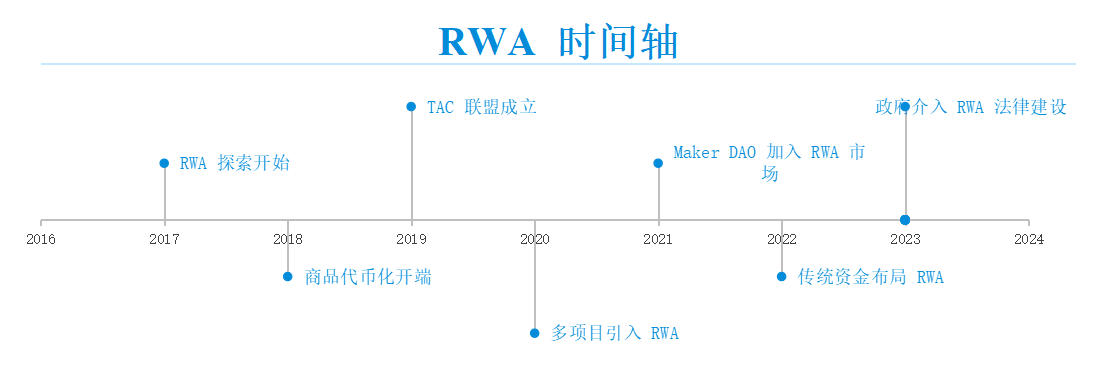
From a technical perspective, the development of RWA relies on several key infrastructures, including underlying blockchain networks, smart contracts, oracles, decentralized identity (DID), and compliance management. First, public blockchains serve as carriers for RWA assets, determining their security and operability. Currently, Ethereum remains the preferred network for RWA tokenization, with many institutions deploying smart contracts on Ethereum to manage RWA assets. Meanwhile, Layer 2 solutions (e.g., Arbitrum, Optimism) are emerging as popular choices for RWA transactions to reduce costs and increase throughput. Additionally, other public chains such as Solana, Avalanche, and Polkadot are exploring RWA applications to capture market share in this space.
In terms of market size, the potential of the RWA sector is enormous. According to research by Boston Consulting Group (BCG), the RWA market could reach $16 trillion by 2030, far exceeding the current total market capitalization of the entire crypto market. Today, the global real estate market is valued at approximately $300 trillion, yet most real estate investments require substantial capital and suffer from low liquidity. If just 1% of these assets were tokenized, it would create a $3 trillion RWA market. Similarly, with the global bond market exceeding $120 trillion, a 1% migration to blockchain would form a $1.2 trillion emerging market.

Institutional capital is accelerating into the RWA sector, indicating it is no longer a pure "crypto experiment" but is becoming an integral part of the global financial system. In 2025, with the Trump administration showing unprecedented support for the crypto industry, this trend will continue to grow. For investors, the RWA sector not only presents a new market opportunity but may also become a crucial bridge between crypto and traditional financial markets. Over the coming years, as infrastructure improves, regulatory frameworks take shape, and mainstream institutions expand their involvement, the RWA sector is poised to become a new growth engine for the blockchain industry and may even drive a broader digital transformation of financial markets.
Overall, the rise of the RWA sector represents not only the maturity of blockchain technology and expansion of its use cases but also signals a shift toward decentralization and greater efficiency in global financial markets. For market participants, seizing opportunities in RWA tokenization and strategically investing in infrastructure and key protocols will be central themes in the evolution of the crypto industry over the next few years.
2. Current Market Environment: Macroeconomic and Catalytic Factors Driving RWA Development
Against a backdrop of rising global economic uncertainty, shifting liquidity cycles, and booming digital asset markets, the RWA (Real-World Assets) sector is becoming one of the most important growth areas in the crypto industry. With adjustments in Federal Reserve monetary policy, persistent inflation, debt market volatility, and increasing institutional participation in crypto, RWA development is gaining unprecedented momentum. At the same time, flaws in the traditional financial system and the maturing DeFi (decentralized finance) ecosystem are accelerating the migration of real-world assets onto the blockchain. This article examines five key drivers of RWA growth: global macroeconomic conditions, liquidity environment, regulatory trends, institutional adoption, and DeFi ecosystem maturity.
2.1 Global Macroeconomic Conditions: Changes in Inflation, Interest Rates, and Risk Aversion
The global macroeconomic environment is one of the most critical factors influencing RWA development. In recent years, weak post-pandemic recovery, escalating geopolitical conflicts, supply chain disruptions, and central bank policy shifts have created significant uncertainty in global economic growth. Among these, changes in inflation and interest rate policies directly affect capital flows and investor asset allocation strategies, indirectly fueling RWA growth.
First, from an inflation standpoint, the Federal Reserve's aggressive rate hikes over the past two years have profoundly impacted global markets. Since 2022, repeated rate hikes aimed at curbing high inflation have tightened global liquidity. In a high-interest-rate environment, investor risk appetite declines, negatively affecting traditional financial markets and driving capital toward lower-risk, higher-yield assets. This has led investors to focus on assets such as government bonds, gold, and real estate—whose tokenization has become a major growth driver for the RWA sector. For example, tokenized U.S. Treasury bonds (such as Ondo Finance’s OUSG token), offering annual yields above 5%, have become essential investment tools in the crypto market, attracting significant DeFi capital. Second, as the global debt crisis intensifies, the RWA sector has become a key safe-haven option. As of 2024, global debt has surpassed $300 trillion, with U.S. national debt exceeding $34 trillion and fiscal deficits reaching record highs. Under these conditions, investor confidence in traditional financial systems is eroding, prompting demand for more transparent and efficient financial infrastructure. The trustless, borderless, and low-cost nature of blockchain technology makes on-chain RWA the optimal solution. Furthermore, in high-inflation environments, demand for gold and commodities surges, making tokenized gold (e.g., PAXG, XAUT) increasingly popular in crypto markets. Overall, global economic uncertainty has heightened demand for safe-haven assets, and RWA innovations enable these assets to seamlessly enter the crypto market, driving explosive sector growth.
2.2 Liquidity Environment: Fed Policy Shifts and Changing Risk Appetite
The rapid development of the RWA sector is closely tied to shifts in the global liquidity environment. From 2022 to 2023, the Federal Reserve's aggressive rate hikes severely tightened market liquidity. However, since 2024, as inflation pressures ease, the Fed has likely reached the end of its hiking cycle and may soon begin cutting rates, changing market expectations around liquidity and providing strong tailwinds for RWA.
First, shifts in Fed policy have increased demand for stable-yield assets. The DeFi ecosystem experienced high volatility and risk during 2021–2022, but today’s investors increasingly favor low-risk, predictable returns—an area where RWA excels. For example, tokenized bonds and private market instruments allow investors to earn stable, compliant yields within DeFi, a key reason behind RWA’s breakout in 2024. Second, from a crypto market perspective, Bitcoin’s spot ETF approval in 2024 has driven continuous inflows of institutional capital, expanding the overall crypto market pool. Beyond BTC, this capital seeks more stable investment options. Due to their deep integration with traditional finance, RWA assets have become a major allocation target. For instance, asset management giants like BlackRock and Fidelity have begun exploring the RWA space and launching related investment products, further boosting sector growth. Additionally, as DeFi yields decline, RWA’s yield advantage becomes more pronounced. While DeFi yields averaged over 10% in 2021–2022, most DeFi stablecoin yields dropped to 2%-4% by 2024. In contrast, RWA-backed U.S. Treasury yields remain above 5%, making RWA assets a new pillar of DeFi returns and attracting massive capital inflows.
2.3 Regulatory Trends: The Compliance Journey of the RWA Sector
Regulation has long been a focal point in the crypto industry, and the rise of the RWA sector stems partly from its stronger compliance profile compared to other DeFi sectors, better meeting institutional investor requirements. Regulators worldwide are gradually accepting asset tokenization and exploring legal frameworks to support RWA ecosystem development.
First, the U.S. SEC (Securities and Exchange Commission) and CFTC (Commodity Futures Trading Commission) have begun studying tokenized securities and bonds, allowing select institutions to issue tokenized assets under compliance frameworks. For example, Securitize has received SEC recognition to issue blockchain-based security tokens, setting a positive precedent for RWA compliance. Second, regions like Europe, Japan, and Singapore maintain relatively open stances toward RWA. Switzerland’s SIX Digital Exchange (SDX) and Germany’s Boerse Stuttgart Digital Exchange (BSDEX) already support tokenized stock trading, while Singapore actively promotes on-chain RWA development. These favorable policies encourage institutional participation and provide a solid foundation for RWA growth.
2.4 Institutional Adoption and Rising Maturity of the DeFi Ecosystem
Beyond macroeconomic and regulatory factors, institutional entry and the maturing DeFi ecosystem are key drivers of RWA growth. Traditional institutions are increasingly focused on the convergence of DeFi and TradFi (traditional finance), with major asset managers, banks, and hedge funds researching how to issue and trade RWA assets on blockchain. Concurrently, the DeFi ecosystem is evolving from “high volatility, high risk” to “stable returns, compliant growth,” positioning RWA as a primary beneficiary. More DeFi protocols—such as MakerDAO, Aave, and Maple Finance—are deeply integrating with RWA assets, enhancing the sustainability of RWA growth.
In summary, the RWA sector’s breakout is not merely driven by market demand but results from the combined impact of global macroeconomic conditions, regulatory developments, liquidity shifts, and DeFi evolution. Fueled by these catalysts, RWA is poised to become one of the most important engines of crypto market growth in 2024–2025.
3. Major Categories and Core Projects in the RWA Sector
Amid a maturing crypto market and accelerating institutional capital inflows, the rise of the RWA sector has become a defining trend. The core goal of RWA is to tokenize traditional financial assets—such as bonds, real estate, commodities, and private equity—for issuance, trading, and management on blockchain, thereby enhancing liquidity, accessibility, and integration with the DeFi ecosystem. This brings the convenience of decentralized finance to traditional assets while providing DeFi with more stable yield sources. With diverse applications, different types of real-world assets manifest uniquely on-chain and can generally be categorized as follows: Bond-based RWA, Commodity & Commodities RWA, Real Estate RWA, Equity & Private Market RWA, and Infrastructure & Supply Chain RWA. This section explores the core logic of each category and analyzes representative projects to deepen understanding of the RWA landscape.
3.1 Bond-Based RWA: On-Chain U.S. Treasuries, Government Bonds, and Corporate Debt
The bond market is one of the most significant asset classes in global finance, with U.S. Treasuries (UST) widely regarded as among the safest assets globally, frequently used for hedging and reserves. As the DeFi ecosystem matures, more institutions are bringing bond assets onto blockchain to achieve transparent yields, enhanced liquidity, and global trading capabilities.
Currently, the global debt market exceeds $300 trillion, with U.S. Treasuries representing a major portion, while the total crypto market cap stands at just $2–3 trillion. Successfully integrating tokenized bond assets into DeFi could dramatically reshape the market. Traditional bond markets face liquidity constraints due to trading hours, access barriers, and settlement delays, whereas on-chain bonds offer 24/7 trading, borderless access, and near-instant settlement, making them a vital complement to DeFi.
Representative Project Analysis: Key players in bond tokenization include Ondo Finance, Maple Finance, and Backed Finance.
Ondo Finance: One of the most active bond tokenization projects, focusing on U.S. Treasury tokenization. It offers OUSG (Ondo Short-Term U.S. Government Bond Fund), enabling DeFi users to earn yields comparable to short-term U.S. Treasury ETFs, with annual returns exceeding 5%. Ondo’s tokenized bonds are custodied by compliant institutions, adhering to U.S. securities laws, while remaining freely tradable on-chain.
Maple Finance: Originally focused on DeFi lending, Maple expanded into RWA by offering on-chain debt financing services. It enables institutional investors to issue bonds within DeFi, providing stable yield sources for the crypto market.
Backed Finance: Offers multiple tokenized bond ETF products, such as $bIB01 (mirroring iShares’ short-term U.S. Treasury ETF), delivering on-chain versions of mainstream bond ETFs from traditional finance, lowering entry barriers and improving accessibility.
The rise of bond-based RWA meets institutional demands and introduces new yield streams to DeFi, further driving RWA asset growth.
3.2 Commodity & Commodities RWA: Tokenization of Gold, Oil, and Other Commodities
The commodity market is another major RWA segment, with gold being one of the earliest assets tokenized on blockchain due to its long-standing role as a store of value. Commodity tokenization enables easier trading and direct integration with DeFi, enhancing liquidity.
Gold has long served as an inflation hedge, and demand rises amid growing global economic uncertainty. However, traditional gold markets involve high transaction costs and complex delivery processes. Tokenized gold assets (e.g., PAXG, XAUT) enable seamless cross-border trading, smart contract management, and DeFi staking, establishing them as key asset classes in crypto.
Representative Project Analysis:
PAXG (Paxos Gold): Issued by Paxos, each PAXG token represents one troy ounce of physical gold stored in London vaults, redeemable at any time. PAXG currently leads in on-chain trading volume and is widely used in DeFi staking and trading.
XAUT (Tether Gold): Issued by Tether, this gold-backed token allows users to conduct frictionless global transactions and participate in DeFi.
Commodities DAO: Explores tokenization of additional commodities—such as oil, copper, and soybeans—to make commodity markets more transparent and efficient.
The tokenization of gold and other commodities is transforming trading practices, making markets more open and introducing stronger inflation-resistant assets to crypto.
3.3 Real Estate RWA: Unlocking Asset Liquidity
The real estate market is one of the world’s largest fixed-asset markets, yet high transaction costs and low liquidity hinder its integration with DeFi. Real estate tokenization within the RWA sector allows global investors to access real estate via blockchain, breaking down geographic and financial barriers.
Representative Project Analysis:
RealT: Tokenizes U.S. real estate assets, with each token representing partial ownership. Investors earn rental income through token holdings.
LABS Group: Focuses on Asian real estate tokenization, enabling individual investors to access premium properties with minimal capital.
The development of real estate RWA significantly boosts liquidity in the property market and provides new collateral assets for DeFi, fostering ecosystem growth.
3.4 Private Equity & Fund RWA: Making VC Investments More Transparent
Traditional venture capital and private equity markets have long suffered from high barriers and low transparency. RWA tokenization enhances liquidity for these assets. For example, prominent asset manager Hamilton Lane has issued tokenized funds via blockchain, enabling lower-barrier access to private markets.
Additionally, compliant tokenization platforms like Securitize are helping more traditional institutions bring equity assets on-chain for secondary market trading, further improving liquidity.
4. Challenges and Potential Breakthroughs in the RWA Sector
In recent years, the RWA sector has drawn increasing attention from the blockchain industry. RWA aims to digitize real-world assets—such as real estate, bonds, stocks, and commodities—and integrate them into the blockchain ecosystem so they can be traded, pledged, or lent on decentralized finance (DeFi) platforms. While the sector holds immense potential, it also faces numerous challenges, and overcoming these will be critical to its sustained development.
First, legal compliance is one of the most significant hurdles. Traditional assets are subject to national laws and regulatory frameworks, and their digitization and integration into blockchain environments may trigger regulatory scrutiny and pose adaptation challenges. Many countries currently lack clear regulations for crypto assets and blockchain technology, especially regarding cross-border asset transfers, increasing legal uncertainty and business risks. For instance, legally transferring traditional assets like real estate or bonds onto blockchain across jurisdictions requires deep legal expertise and potentially legislative reforms. Moreover, managing and transferring ownership of digital assets raises complex regulatory questions about verifying asset authenticity and owner legitimacy.
Technical challenges are also substantial. Despite blockchain’s strengths in immutability and decentralization, efficiently converting real-world assets into digital forms remains complex. This involves not only tokenizing physical assets but also ensuring tokens accurately reflect their value and liquidity. Currently, asset digitization often relies on traditional third-party intermediaries—such as banks or legal entities—for valuation and endorsement, creating tension between decentralization ideals and centralized institutions. Additionally, asset custody and management present major technical obstacles. While blockchain offers transparency and automation, ensuring asset security and compliance—especially without centralized intermediaries—remains a critical challenge. Smart contracts can streamline transactions, but vulnerabilities or bugs could lead to significant losses, making smart contract security and auditing paramount.
For RWA innovators, effectively combining blockchain advantages with real-world needs is key. Particularly regarding liquidity, blockchain’s decentralization can enhance asset fluidity, yet real-world assets often suffer from illiquidity. For example, high-value assets like real estate have long transaction cycles and limited market participation. Leveraging blockchain to overcome traditional liquidity bottlenecks—enabling these assets to circulate globally as liquid assets on DeFi platforms—is a key potential breakthrough. Tokenization allows slicing large assets like real estate or bonds into smaller shares, lowering entry barriers, attracting more investors, and improving liquidity. Additionally, tokenization increases market transparency, allowing investors to track asset movements via public blockchain records, reducing information asymmetry.
Beyond legal and technical challenges, market acceptance remains a major barrier. While blockchain has achieved notable success in crypto and DeFi, it remains unfamiliar to traditional investors. Especially for those accustomed to traditional finance, digital assets may not immediately inspire trust. To overcome this, the RWA sector must build closer ties with traditional financial institutions. A promising breakthrough lies in growing adoption of blockchain by traditional institutions exploring collaboration with crypto assets. RWA can leverage these institutions’ resources and credibility to gain broader acceptance. For example, banks and asset managers can endorse digital assets or partner with blockchain platforms to boost RWA adoption.
Other potential breakthroughs include multi-chain interoperability and liquidity innovation. Currently, many RWA projects rely on Ethereum or other major public chains, yet cross-chain interoperability remains challenging. Achieving seamless multi-chain RWA integration would facilitate smoother cross-chain asset transfers and significantly enhance value circulation. Cross-chain protocols and bridging technologies will thus be crucial breakthrough points, improving liquidity and expanding RWA’s market reach to attract more investors and users.
5. Future Outlook and Investment Strategies for RWA
As blockchain technology continues to mature, the RWA sector is undergoing a quiet yet profound transformation. The integration of traditional assets with the crypto world will go beyond supplementing digital assets—it may fundamentally reshape the global financial system. The future of RWA promises vast market opportunities, albeit alongside complex challenges. To succeed in this field, investors need deep insights into industry trends and well-designed investment strategies.
The future of RWA is full of promise, particularly as its role as a bridge between blockchain and traditional finance becomes increasingly evident. As financial institutions embrace blockchain, asset tokenization is expected to become mainstream, especially in real estate, bonds, equities, and commodities. Growing openness of traditional finance to digital assets will accelerate RWA growth. Banks, insurers, and asset managers are exploring how blockchain can automate and transparentize asset management while reducing operational costs and improving efficiency. In capital-intensive industries, RWA’s market potential will be especially pronounced, with digitized assets transcending geographic boundaries to offer unprecedented investment opportunities to global investors.
RWA’s future is closely tied to the broader digitization of financial systems. As markets evolve toward digital and automated models, RWA will become an essential component of global capital markets. With technological progress and market maturation, the RWA sector may see increased consolidation and mergers, with leading platforms emerging as blockchain “unicorns.” Throughout this process, investors can benefit not only from direct asset returns but also from the broader “dividends” of blockchain financial innovation. Therefore, investment opportunities in RWA will continue to grow, and investors must stay alert to market dynamics and adapt strategies flexibly to maximize returns in this innovative space.
Join TechFlow official community to stay tuned
Telegram:https://t.me/TechFlowDaily
X (Twitter):https://x.com/TechFlowPost
X (Twitter) EN:https://x.com/BlockFlow_News
 @HTXAcademy






