








Casualties of Power Struggles: A 20,000-Word Exposé Reveals Details of Binance Executive's Arrest
TechFlow Selected TechFlow Selected
Casualties of Power Struggles: A 20,000-Word Exposé Reveals Details of Binance Executive's Arrest
Revealing the behind-the-scenes details of Nigerian authorities' arrest of Binance executives.
 Navigating Web3 tides with focused insights
Author: Andy Greenberg
Translation: BitpushNews Tracy, Alvin
As a U.S. federal agent, Tigran Gambaryan pioneered modern cryptocurrency investigations. Later at Binance, he became trapped between the world’s largest crypto exchange and a government determined to make it pay.
At 8 a.m. on March 23, 2024, Tigran Gambaryan woke up on a sofa in Abuja, Nigeria, where he’d been dozing since pre-dawn prayers. The house around him, usually buzzing with nearby generators, was unusually quiet. In that silence, the brutal reality of his situation flooded back each morning for nearly a month: he and his Binance colleague Nadeem Anjarwalla were being held hostage, unable to access their passports. They were confined within a compound owned by the Nigerian government, surrounded by barbed wire and guarded by military personnel.
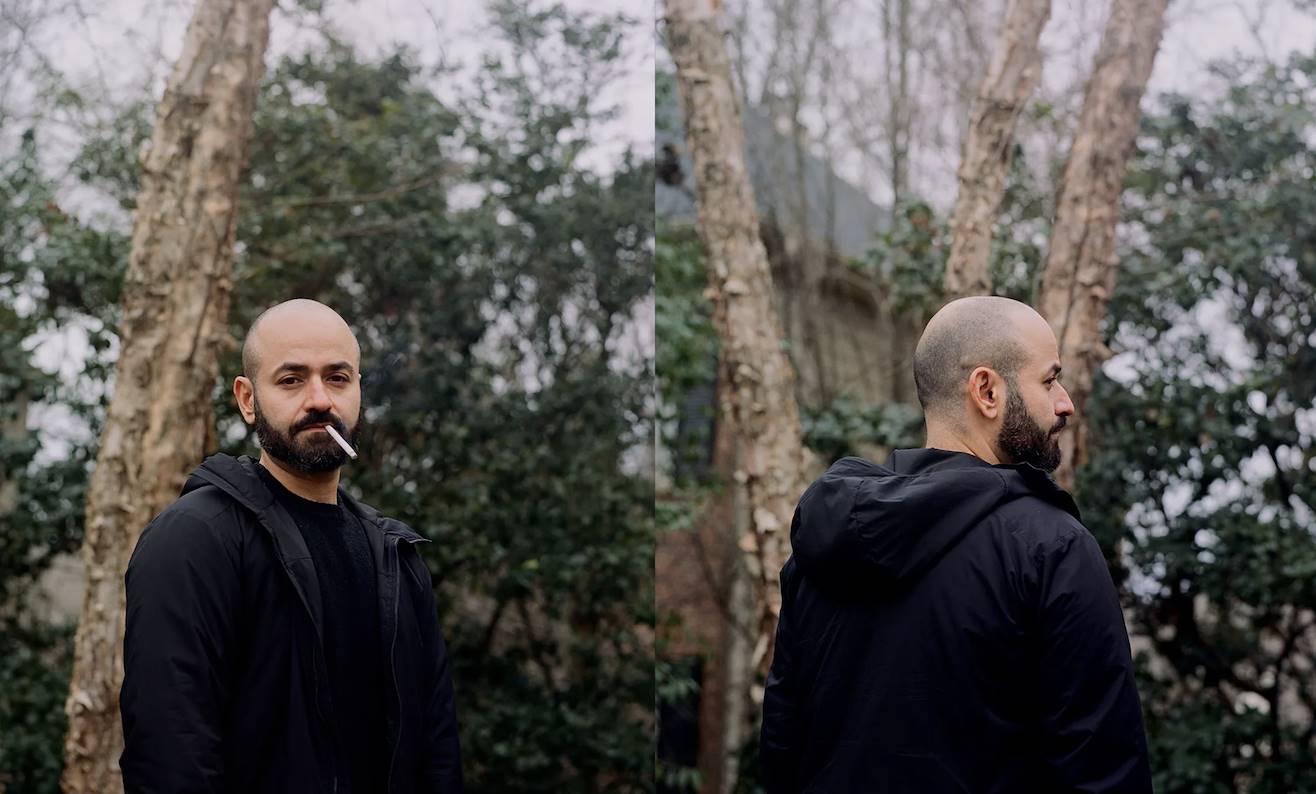
Gambaryan stood up. The 39-year-old Armenian-American, solidly built and muscular in a white T-shirt, bore Orthodox tattoos across his right arm. His head was normally shaved, but after a month without shaving, his neatly trimmed black beard had grown into a scruffy stubble. Gambaryan found the compound’s cook and asked if she could buy him cigarettes. Then he walked into the inner courtyard of the house, pacing anxiously as he began his daily effort—what he called “fixing this fucking mess”—by calling his lawyers and other Binance contacts.
The day before, these two Binance employees and their crypto-giant employer had been told they would soon be charged with tax evasion. The pair seemed caught in the middle of a bureaucratic clash between an unaccountable foreign government and one of the most controversial players in the cryptocurrency economy. Now, not only were they forcibly detained with no end in sight, but also formally accused of crimes.
Gambaryan spent over two hours on the phone as the courtyard began to bake under the rising sun. When he finally hung up and returned inside, he still saw no sign of Anjarwalla. Earlier that morning, before dawn, Anjarwalla had gone to a local mosque to pray, closely watched by his guards. When Anjarwalla came back, he told Gambaryan he was going upstairs to sleep.
Several hours had passed since then, so Gambaryan went up to the second-floor bedroom to check on his colleague. He pushed open the door and saw Anjarwalla seemingly asleep, his feet sticking out from under the sheets. Gambaryan called out from the doorway, but got no response. For a moment, he worried Anjarwalla might be having another panic attack—the young British-Kenyan Binance executive had already slept in Gambaryan’s bed for several nights, too anxious to spend the night alone.
Gambaryan crossed the dark room—he’d heard the government custodians of the house were behind on electricity bills, and the generator lacked diesel, making power outages common throughout the day—and placed his hand on the blanket. Strangely, it sank down, as if there were no real body beneath.
Gambaryan pulled back the sheet. He found a T-shirt stuffed with a pillow. He looked closer at the feet protruding from under the blanket and realized they were actually a sock filled with a water bottle.
Gambaryan didn’t call out for Anjarwalla again or search the house. He already knew his Binance colleague and cellmate had escaped. He immediately realized his own situation would now become worse. What he didn’t yet know was just how much worse—it would include being sent to a Nigerian prison, charged with money laundering carrying a potential 20-year sentence, denied medical care even as his health deteriorated to near-death, and used as a pawn in a multibillion-dollar cryptocurrency extortion scheme.
In that moment, he simply sat silently on the bed, in darkness thousands of miles from home, confronting the fact that he was now completely alone.
TIGRAN GAMBARYAN’S worsening nightmare in Nigeria stems at least partly from a conflict that has lasted fifteen years. Since the mysterious Satoshi Nakamoto revealed Bitcoin to the world in 2009, cryptocurrencies have promised a libertarian holy grail: digital money free from government control, immune to inflation, able to cross borders unchecked, as if existing in a separate dimension. Yet today’s reality is that cryptocurrency has become a multi-trillion-dollar industry largely run by companies with lavish offices and high-paid executives—entities subject to the laws and law enforcement of nations, just like any other real-world industry.
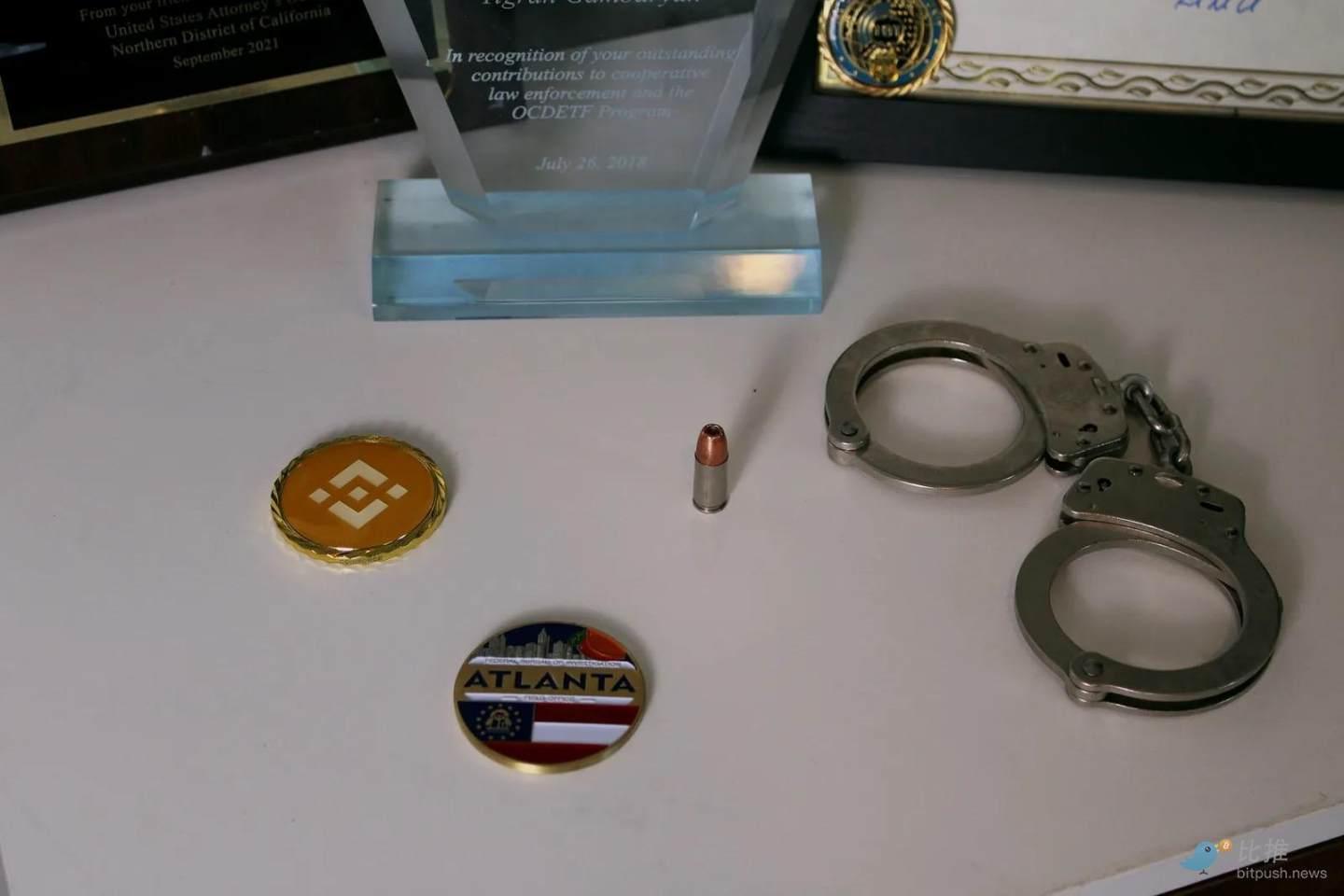
Prior to becoming one of the most prominent victims of the collision between chaotic fintech and global law enforcement, Gambaryan embodied this conflict in another way: as one of the most effective and innovative full-time cryptocurrency law enforcers in the world. In the decade before joining Binance in 2021, Gambaryan served as a special agent with the IRS Criminal Investigation division (IRS-CI), enforcing the tax agency’s legal authority. During his time at IRS-CI, Gambaryan pioneered techniques for tracing cryptocurrency and identifying suspects through analysis of the Bitcoin blockchain. Using this “follow-the-money” tactic, he dismantled one cybercrime conspiracy after another, shattering the myth of Bitcoin’s anonymity.
Starting in 2014, shortly after the FBI seized the Silk Road darknet drug market, it was Gambaryan who traced the Bitcoins to expose two corrupt federal agents who stole over $1 million during their investigation of the marketplace—the first time blockchain evidence was included in a criminal indictment. In the following years, Gambaryan helped track down $500 million worth of Bitcoin stolen from the first major cryptocurrency exchange, Mt. Gox, ultimately identifying a group of Russian hackers as the culprits.
In 2017, Gambaryan partnered with blockchain analytics startup Chainalysis to create a secret Bitcoin tracking method that successfully located and helped the FBI seize the servers hosting AlphaBay, a darknet crime market estimated to be ten times larger than Silk Road. Months later, Gambaryan played a key role in dismantling Welcome to Video, a child sexual abuse video network funded by cryptocurrency—the largest such operation ever uncovered. That operation led to the arrest of 337 users worldwide and the rescue of 23 children.
Ultimately, in 2020, Gambaryan and another IRS-CI agent tracked down and seized nearly 70,000 Bitcoins, which had been stolen from Silk Road years earlier. Valued at $7 billion today, it became the largest criminal forfeiture of any currency type in history, flowing into the U.S. Treasury.
“He was involved in nearly all the biggest cryptocurrency cases at the time,” said former U.S. prosecutor Will Frentzen, who worked closely with Gambaryan and prosecuted the criminals he exposed. “He was incredibly innovative in his investigations, using methods many hadn’t thought of, and very selfless when it came to receiving credit.” On the fight against cryptocurrency crime, Frentzen said: “I don’t think anyone had a greater impact on this field.”
After that legendary career, Gambaryan moved into the private sector, making a decision that shocked many of his former government colleagues. He became the head of Binance’s investigation team. Binance was a massive cryptocurrency exchange processing billions of dollars in daily transactions and known for its apparent indifference to whether its users broke the law.
When Gambaryan joined Binance in the fall of 2021, the company was already under investigation by the U.S. Department of Justice. The eventual findings showed that Binance processed billions of dollars in transactions violating anti-money-laundering laws and circumventing international sanctions on Iran, Cuba, Syria, and Russian-occupied regions of Ukraine. The DOJ also found the company directly handled over $100 million in cryptocurrency transactions from Hydra, a Russian darknet crime market, including funds from the sale of child sexual abuse material and financing designated terrorist organizations.
Some of Gambaryan’s former colleagues privately expressed disapproval of his move, even accusing him of “selling out.” Yet Gambaryan firmly believed he was taking on the most important role of his career. As part of Binance’s attempt to clean up its image after years of rapid expansion, Gambaryan built a new internal investigation team, recruiting top agents from IRS-CI and other law enforcement agencies around the world, and helping Binance engage in unprecedented cooperation with authorities.
Gambaryan said that by analyzing transaction volumes exceeding the combined totals of the New York Stock Exchange, London Stock Exchange, and Tokyo Stock Exchange, his team helped crack cases globally involving child exploitation, terrorism, and organized crime. “We’ve assisted in thousands of cases worldwide. My impact at Binance may have been greater than during my law enforcement days,” Gambaryan once told me. “I’m extremely proud of what we did. If anyone questions my decision to join Binance, I’m ready to debate them.”
Despite Gambaryan’s efforts to make Binance appear more compliant, this transformation couldn’t erase the company’s past as a lax exchange or shield it from consequences for prior crimes. In November 2023, U.S. Attorney General Merrick Garland announced at a press conference that Binance agreed to pay $4.3 billion in fines and forfeitures—one of the largest corporate penalties in U.S. criminal justice history. The company’s founder and CEO, Changpeng Zhao, personally paid a $150 million fine and received a four-month prison sentence.
The U.S. wasn’t the only country upset with Binance. By early 2024, Nigeria had also begun blaming the company—not only for compliance violations admitted in its U.S. plea agreement but also for allegedly exacerbating the depreciation of Nigeria’s currency, the naira. From late 2023 to early 2024, the naira lost nearly 70% of its value, prompting Nigerians to convert their local currency into cryptocurrencies, especially dollar-pegged “stablecoins.”
Amaka Anku, Eurasia Group’s Africa regional director, said the real reasons for the naira’s decline were President Bola Tinubu’s government lifting exchange rate restrictions between the naira and the dollar, along with unexpectedly low foreign exchange reserves at the Central Bank of Nigeria. However, as the naira began to depreciate, cryptocurrencies offered an unregulated way to dump the currency, further intensifying downward pressure. “You can’t say Binance or any crypto exchange directly caused this devaluation,” Anku said, “but they certainly worsened the process.”
For years, cryptocurrency advocates have imagined that Satoshi’s invention would offer citizens in inflation-stricken countries a safe haven. That moment had arrived—and Nigeria, Africa’s largest economy, was furious. In December 2023, a committee of Nigeria’s Congress summoned senior Binance executives to a hearing in Abuja to explain how they would correct their alleged wrongs. In response, Binance assembled a Nigerian delegation. Symbolizing the company’s commitment to cooperating with global law enforcement and governments, Tigran Gambaryan—the former federal agent and star investigator—was naturally included.
Yet before resorting to coercion and hostage-taking, the perpetrators first demanded bribes.
In January 2023, just days after Gambaryan arrived in Abuja, things initially went smoothly. In a gesture of goodwill, he met with investigators from Nigeria’s Economic and Financial Crimes Commission (EFCC). The EFCC was essentially Gambaryan’s counterpart agency to the IRS where he previously worked, tasked with fighting fraud and investigating government corruption, and they discussed the possibility of providing cryptocurrency investigation training to its staff. Then, he attended a roundtable meeting with Binance executives and members of Nigeria’s House of Representatives, where everyone amiably pledged to resolve their differences together.
When Gambaryan arrived in Nigeria, he was greeted at the airport by EFCC detective Olalekan Ogunjobi. Ogunjobi had read about Gambaryan’s career and expressed deep admiration for his legendary achievements as a federal agent. Throughout the trip, Ogunjobi shared dinner almost every night with Gambaryan at their hotel—the Transcorp Hilton in Abuja. Gambaryan shared insights on crypto crime investigations, case handling, and building task forces. They exchanged extensive investigative knowledge. When Gambaryan gave Ogunjobi a signed copy of his book Tracers in the Dark, Ogunjobi asked for a personal inscription.
One evening, as Gambaryan, Ogunjobi, and a group of Binance colleagues were dining, one Binance employee received a call from the company’s lawyer. After pleasantries, the lawyer informed Gambaryan that the meeting with Nigerian officials wasn’t as friendly as it appeared. Officials now demanded $150 million to resolve Binance’s issues in Nigeria—and wanted it paid in cryptocurrency, transferred directly into their crypto wallets. Even more shockingly, the officials implied that the Binance team wouldn’t be allowed to leave Nigeria until the payment was made.
Gambaryan was stunned. Without time to explain or say goodbye to Ogunjobi, he quickly gathered the Binance staff, rushed back to the Transcorp Hilton’s meeting room, and began strategizing their next steps. Paying the obvious bribe would violate the U.S. Foreign Corrupt Practices Act. Refusing could result in indefinite detention. Ultimately, the team chose a third option: immediate departure from Nigeria. They spent the entire night urgently planning how to get all Binance employees onto flights, changing schedules to depart the next morning.
The next morning, the Binance team gathered on the hotel’s second floor, bags packed, carefully avoiding the lobby in case Nigerian officials waited there to block their exit. They took taxis to the airport, nervously passed security, boarded their flight, and returned home without incident. Everyone felt as though they’d narrowly escaped disaster.
Shortly after returning to suburban Atlanta, Gambaryan received a call from Ogunjobi. Gambaryan said Ogunjobi expressed disappointment over the bribery demand faced by the Binance team and was shocked by the behavior of his fellow countrymen. Ogunjobi suggested Gambaryan report the bribery incident to Nigerian authorities and request an anti-corruption investigation.
Eventually, Ogunjobi arranged a call between Gambaryan and EFCC official Ahmad Sa’ad Abubakar, described as a close aide to Nigeria’s National Security Advisor, Nuhu Ribadu. Ogunjobi told Gambaryan that Ribadu was an anti-corruption fighter who had even given a TEDx talk. Now, Ribadu invited Gambaryan to meet in person to resolve Binance’s issues in Nigeria and investigate the truth behind the bribery allegations.
Gambaryan relayed the conversation to his Binance colleagues, which sounded like an opportunity to resolve the company’s growing complications in Nigeria. So Binance executives and Gambaryan began considering whether he could use this invitation to return to Nigeria and untangle the company’s increasingly complex relationship with the Nigerian government. Though the idea sounded extremely risky—after all, they had just fled the country weeks earlier—Gambaryan believed he had received a friendly invitation from a powerful official, backed by the personal assurance of his friend Ogunjobi. Local Binance staff also told Gambaryan they had verified the solution and deemed it reliable.
Gambaryan told his wife Yuki about the bribery incident and the invitation to return to Nigeria. To her, the proposal clearly seemed dangerous. She repeatedly urged Gambaryan not to go.
Gambaryan now admits he may have still been thinking like a U.S. federal agent—a mindset shaped by duty and a sense of protection. “I guess that part remained: when duty calls, you go,” he said. “I was asked to go.”
So, in what he now considers one of the worst decisions of his life, Gambaryan packed his bags, kissed Yuki and their two children, and departed on a flight to Abuja on the morning of February 25.
The second trip began with Ogunjobi picking him up at the airport, reassuring him repeatedly during the drive to the Transcorp Hilton and over dinner. This time, accompanying Gambaryan was only Nadeem Anjarwalla, Binance’s East Africa regional manager—a recently graduated Stanford alumnus of British-Kenyan descent, with a baby waiting for him in Nairobi.
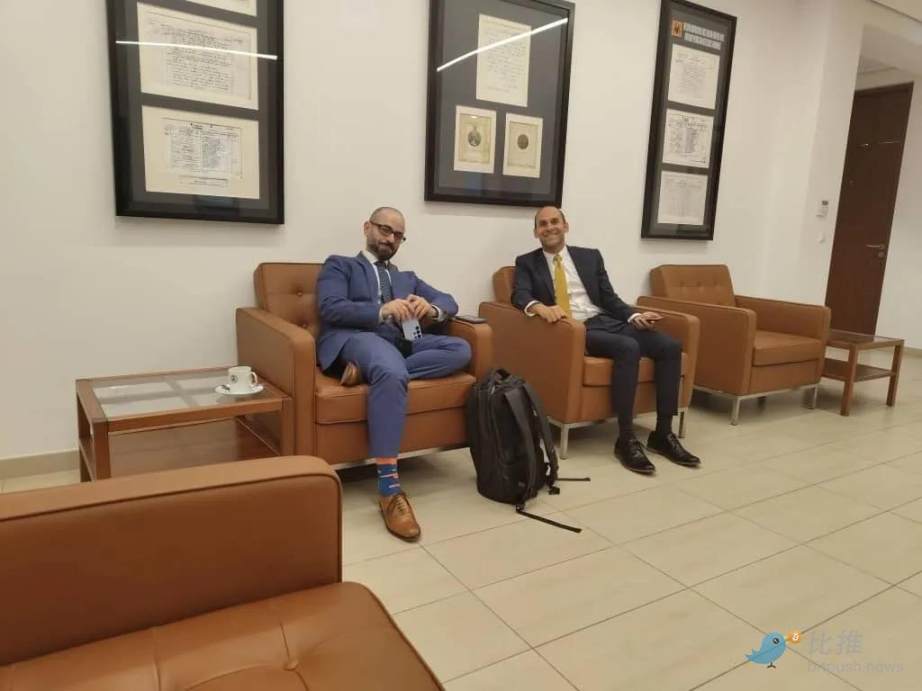
However, when Gambaryan and Anjarwalla entered their meeting with Nigerian officials the next day, they were surprised to find Abubakar attending alongside staff from both the EFCC and the Central Bank of Nigeria. Quickly, the meeting’s focus became clear: this wasn’t about discussing corruption in Nigeria. It began with Abubakar asking about Binance’s cooperation with Nigerian law enforcement, then swiftly shifted to demanding Binance hand over transaction data of all Nigerian users. Abubakar stated that Binance had provided only the past year’s data, not everything he requested. Gambaryan felt ambushed. He explained it was an oversight due to last-minute requests and promised to deliver all required data as soon as possible. Although Abubakar appeared somewhat dissatisfied, the meeting concluded with everyone exchanging business cards amicably.
Gambaryan and Anjarwalla were left in the hallway, waiting for their next appointment. A while later, Anjarwalla went to the restroom. When he returned, he said he had overheard angry voices from officials they’d just met, coming from a nearby conference room—Gambaryan remembered him saying exactly that.
After nearly two hours, Ogunjobi returned and escorted them into another conference room. Gambaryan recalled the officials inside looking grim, the atmosphere unusually serious, all sitting silently as if waiting for someone—someone Gambaryan didn’t know. He noticed Ogunjobi wore a shocked expression and avoided eye contact. “What the hell is going on?” he wondered.
Then, a middle-aged man named Hamma Adama Bello entered the room. An EFCC official in a gray suit with a scruffy beard, he looked about forty. He didn’t greet them or ask questions. Placing a folder on the table, he immediately began berating them. Gambaryan remembered him saying Binance was “destroying our economy” and funding terrorism.
Then, he told Gambaryan and Anjarwalla what would happen: they would return to the hotel to pack, then be transferred elsewhere, where more EFCC officials and some Central Bank personnel awaited, until Binance handed over transaction data involving every Nigerian who had ever used the platform.
Gambaryan’s heart raced. He immediately stated he had no authority or ability to provide such vast amounts of data—his purpose here, in fact, was to report the bribery incident to Bello’s agency.
Bello seemed momentarily surprised upon hearing about the bribe, as if learning of it for the first time, but quickly dismissed it. The meeting ended. Gambaryan quickly texted Noah Perlman, Binance’s chief compliance officer, warning they might be detained. Then, officials confiscated their phones.
The two were taken outside to a black Land Cruiser with heavily tinted windows. The SUV returned them to the Transcorp Hilton, escorting them to their rooms—Anjarwalla followed Bello and another official, Gambaryan accompanied by Ogunjobi. They were told to pack. Gambaryan remembered telling Ogunjobi: “You know how bad this is, right?”
Ogunjobi barely looked at him, replying: “I know, I know.”
Then, the Land Cruiser took them to a large two-story house within a walled compound, featuring marble floors, bedrooms sufficient for two Binance employees and several EFCC officers, and a private chef. Gambaryan later learned the house was the government-assigned residence of National Security Advisor Ribadu, who chose to live at home, leaving this property for official use—in this case, as a temporary holding facility for them.
That night, Bello made no further demands. After eating Nigerian stew prepared by the house chef, Gambaryan and Anjarwalla were told they could rest. Gambaryan lay in bed, anxious and nearly panicked, unable to contact the outside world or even tell his family where he was.
He finally fell asleep around 2 a.m., waking hours later to the pre-dawn call to prayer. Too anxious to stay in bed, he walked into the yard, smoked, and pondered his current predicament: he had become a hostage, ensnared in the very financial crimes he’d spent his life fighting.
Beyond the irony, what overwhelmed him more was a complete sense of uncertainty. “What will happen to me? What will Yuki go through?” he thought of his wife, consumed by anxiety. “How long will we be stuck here?”
Gambaryan stood smoking in the yard until sunrise.
Then came interrogations.
Breakfast was prepared by the chef, but Gambaryan, stressed beyond appetite, couldn’t eat. Bello sat down with them, stating that to secure their release, Binance must hand over all data on Nigerian users and ban peer-to-peer transactions. Peer-to-peer trading was a Binance feature allowing traders to post crypto sale ads based on partially controlled exchange rates, which Nigerian officials believed contributed to the naira’s depreciation.
Beyond these demands, an unspoken requirement lingered in the room: Binance needed to pay a large sum. While Gambaryan and Anjarwalla were detained, Nigerian officials communicated secretly with Binance executives, demanding billions of dollars. According to people involved in negotiations, government officials even publicly told the BBC the penalty would be at least $10 billion—more than double Binance’s historic settlement with the U.S. (According to several sources, Binance did propose a “down payment” based on its estimated tax liability in Nigeria, but none were accepted.) Meanwhile, the day after Gambaryan and Anjarwalla were detained, the U.S. Embassy received a strange letter from EFCC claiming Gambaryan was detained “solely for constructive dialogue” and “voluntarily participating in these strategic discussions.”
Gambaryan repeatedly explained to Bello that he had no actual power in Binance’s business decisions and couldn’t fulfill these demands. Bello didn’t change tone, continuing lengthy tirades about Binance’s damage to Nigeria and declaring Nigeria deserved compensation. Gambaryan recalled Bello sometimes flashing his gun and showing photos of himself training with the FBI in Quantico, Virginia, apparently asserting his authority and U.S. connections.
Ogunjobi also participated in the interrogations. Gambaryan said he was quieter and more respectful than Bello, but no longer the admiring student. When Gambaryan mentioned helping Nigerian law enforcement, Ogunjobi responded that he’d seen LinkedIn comments suggesting Binance hired him only to create a façade of legitimacy—something that shocked Gambaryan, especially after their previous conversations.
Furious and unable to meet Nigeria’s demands, Gambaryan demanded to see a lawyer, contact the U.S. Embassy, and have his phone returned—all refused, though he was allowed brief calls to his wife under guard supervision.
Stuck in a standoff with EFCC officials, Gambaryan declared he would stop eating unless allowed to see a lawyer and contact the embassy. He began a hunger strike, confined in the house under government and guard surveillance, spending days sitting on the sofa watching Nigerian TV. After five days, officials finally relented.
He and Anjarwalla had their phones returned, though warned not to contact media; their passports remained confiscated. They were then allowed to meet with local lawyers hired by Binance. After a week of detention, Gambaryan was taken to a Nigerian government building to meet diplomats. They said they’d monitor his case, but couldn’t secure his freedom yet.
Then, they settled into a Groundhog Day routine, as Gambaryan later described to his wife—going in circles. The house was spacious and clean but dilapidated, with a leaking roof and frequent power outages. Gambaryan befriended the cook and some guards, watching pirated episodes of Avatar: The Last Airbender together. Anjarwalla started doing yoga daily and drinking smoothies the chef made for him.
Anjarwalla seemed less able than Gambaryan to endure the anxiety of captivity, distressed about missing his son’s first birthday. Nigerian authorities had confiscated his British passport but didn’t realize he also held a Kenyan one. He joked with Gambaryan about escaping, but Gambaryan said he never seriously considered it. He reminded himself of Yuki’s warning: “Don’t do anything stupid,” and he had no intention of risking it.
One day, Anjarwalla lay on the sofa telling Gambaryan he felt unwell, cold all over. Gambaryan covered him with multiple blankets, but he kept shivering. Eventually, Nigerians took Anjarwalla and Gambaryan to a hospital in another black Land Cruiser for a malaria test. Results were negative; doctors told Anjarwalla he was having a panic attack. After that, Gambaryan said, Anjarwalla slept beside him every night, too afraid to sleep alone.
In the second week of their captivity, Binance agreed to demands, shutting down its Nigerian peer-to-peer trading and removing all naira trading pairs. EFCC officials told Gambaryan and Anjarwalla to pack, preparing for release. Hearing the good news, they took it seriously—Gambaryan even filmed the house on his phone as a memento of this bizarre experience.
But just before release, custodial staff took them to EFCC headquarters. The agency’s chairman demanded confirmation that Binance had handed over all Nigerian user data. Upon learning Binance hadn’t, he immediately revoked the release order and sent them back to the house.
Soon, cryptocurrency website DLNews reported two Binance executives were detained in Nigeria, though unnamed. Days later, The Wall Street Journal and WIRED confirmed the detainees were Anjarwalla and Gambaryan.
Bello was furious about the news leak. Gambaryan recalled Bello blaming him and Anjarwalla. Bello told them they’d be freed if they handed over the demanded data. Losing patience, Gambaryan snapped back: “Do you want me to pull it out of my right pocket or my left?” He remembered standing up, theatrically pulling imaginary items from one pocket, then the other. “I simply can’t produce this data.”
Weeks passed with no negotiation progress. Ramadan began, and Gambaryan rose each morning with Anjarwalla for prayers, fasting during the day in a gesture of solidarity.
Yet after nearly a month of hardship, things suddenly changed. One morning, Gambaryan woke to find Anjarwalla had returned from the mosque. When he went to find his companion, he discovered only a shirt stuffed with a pillow and a water bottle inside a sock—Anjarwalla had escaped.
Later, Gambaryan learned Anjarwalla managed to flee Nigeria by plane. He guessed Anjarwalla might have somehow climbed over the compound wall, evading guards—who often slept in the mornings—then paid a taxi to the airport and boarded a flight using his second passport.
Gambaryan realized his situation in Nigeria was about to drastically worsen. He walked into the yard and recorded a selfie video to send to his wife Yuki and Binance colleagues, speaking into the camera as he paced.
“I’ve been detained by the Nigerian government for a month. I don’t know what happens after today,” he said calmly and controlled. “I haven’t done anything wrong. I’ve been a cop my whole life. I only ask the Nigerian government to let me go, and I ask the U.S. government for help. I need your help, everyone. I don’t know if I can survive without your help. Please help me.”
When Nigerians learned of Anjarwalla’s escape, guards and custodians seized Gambaryan’s phone and frantically searched the house. Soon, they disappeared, replaced by new personnel.
Sensing worse things ahead, Gambaryan convinced a Nigerian to secretly lend him a phone, then called his wife from the bathroom, reaching Yuki late at night. Gambaryan said it was the first time in their 17-year relationship that he told her he was afraid. Yuki cried, stepping into a closet to speak so as not to wake the children. Then, Gambaryan abruptly hung up—someone had arrived.
A military officer told Gambaryan to pack, saying he’d be released. Though knowing it couldn’t be true, he packed anyway, walked outside to the car, and saw Ogunjobi sitting inside. When Gambaryan asked Ogunjobi where they were going, Ogunjobi vaguely replied he might be going home—but not today—then silently stared at his phone.
The car eventually entered the EFCC compound, not stopping near headquarters but driving straight to the detention facility. Gambaryan cursed at the guards, no longer caring about offending them.
Inside the EFCC detention building, he saw several former guards who had watched over him now locked in cells, under investigation for possibly allowing Anjarwalla’s escape or even suspected collusion. Then, Gambaryan was placed alone in his own cell.
As Gambaryan described it, the cell was like a windowless “box,” with only a timed cold-water shower and an oddly inappropriate Posturepedic mattress. Up to half a dozen cockroaches of various sizes crawled around. Despite Abuja’s suffocating heat, there was no air conditioning or ventilation, only what Gambaryan recalled as “the loudest fucking fan in the world” running day and night. “I can still hear that damn fan,” he said.
Alone in that cell, Gambaryan said he began detaching from his body, environment, and the hellish reality around him. The first night, he didn’t think of his family at all—his mind blank, unaware of the cockroaches.
By the next morning, Gambaryan hadn’t eaten in over 24 hours. Another detainee gave him some crackers. He quickly realized his survival depended on Ogunjobi, who brought him food every few days and occasionally let him use a phone during brief periods out of solitary confinement. Soon, his former guards began sharing meals sent by their families, while Ogunjobi visited less and less, sometimes refusing phone access. The young man who once idolized Gambaryan’s work now seemed entirely transformed. “Almost like he enjoyed having power over me,” Gambaryan said.
Nigerians who were once his jailers became Gambaryan’s only friends. He taught a young EFCC officer chess, and they played during brief moments before being locked back in cells.
Days after arriving at the detention center, Gambaryan’s lawyer visited and told him that beyond the original tax evasion charges, he was now also charged with money laundering. These new charges meant he could face 20 years in prison.
In the second week at the detention center, Gambaryan’s son turned five. On his birthday, Gambaryan was allowed to use an EFCC phone to call home and smoke a few cigarettes—normally forbidden. He spoke with his wife for 20 minutes—she was “breaking down” from anxiety, he said—then chatted briefly with the kids. His son still didn’t understand why he wasn’t home. Yuki told Gambaryan his son had started crying for him unexpectedly and often sat in his chair in their home office. Gambaryan explained to his daughter that he was still resolving legal issues with the Nigerian government. Later, he learned his daughter, two weeks after his detention, had looked up his name online, read the news, and knew far more than he’d told her.
Beyond occasional meetings with fellow inmates, Gambaryan had only two books to pass the time—one a Dan Brown novel given by an EFCC staff member, the other a young-adult Percy Jackson book brought by his lawyer. He had almost nothing else to occupy his mind. His thoughts cycled between angry curses, self-blame, and emptiness.
“It was pure torture,” Gambaryan said. “I knew if I stayed there, I’d definitely go insane.”

Though Gambaryan felt profoundly isolated, he wasn’t forgotten. While in EFCC custody, a loose network of friends and supporters began responding to his video plea. Yet he soon realized that real help wouldn’t come from the Biden administration.
Inside Binance, Gambaryan’s first text about his detention triggered endless crisis meetings, hiring lawyers and consultants, contacting any government officials in Nigeria who might have influence. Former U.S. prosecutor Will Frentzen, who had handled many of Gambaryan’s major cases, switched to private practice at Morrison Foerster and took on Gambaryan’s case as his personal defense attorney. Gambaryan’s former colleague Patrick Hillman, who had worked crisis response with former Florida Congressman Connie Mack, knew of Mack’s experience handling hostage situations. Mack agreed to lobby his legislative contacts for Gambaryan. Gambaryan’s old FBI colleagues immediately began pressuring the FBI to push for his release.
Yet at the highest levels of the U.S. government, supporters said their appeals were met with caution. “From the first day Gambaryan was detained, State Department staff worked tirelessly to ensure his safety, health, and legal assistance, and pushed for his release after criminal charges,” said a senior State Department official interviewed by WIRED, speaking anonymously per department policy. However, according to several people involved, the Biden administration initially seemed ambivalent toward Gambaryan. After all, Binance had just agreed to pay massive fines to the DOJ, the government viewed the crypto industry unfavorably, and Binance’s reputation was poor, “toxic”—as one supporter put it.
“They thought maybe Nigeria really had a case,” Frentzen said. “They weren’t sure what Tigran was doing there. So they all stepped back.”
Gambaryan happened to be trapped in Nigeria at an extremely dangerous geopolitical moment. The U.S. ambassador to Nigeria retired in 2023, and the new ambassador wouldn’t officially take office until May 2024. Meanwhile, Niger and Chad requested the U.S. withdraw troops, as both nations strengthened ties with Russia, leaving Nigeria as America’s key military ally in the region. This made negotiating Gambaryan’s release far more complicated than with other nations that wrongfully detain Americans, like Russia or Iran. “Nigeria is the only option left, and they know it,” Frentzen said. “So the timing was really terrible. Tigran is truly one of the unluckiest people in the world.”
Had Gambaryan been held in guest quarters, diplomatic channels might have clearer labeled him a hostage, said former Congressman Mack, who lobbied for his release. But criminal charges complicated the narrative. “The U.S. government went along with that story,” Mack said. “They wanted the legal process to play out.”
Frentzen and his senior colleague Robert Litt, former general counsel of the Office of the Director of National Intelligence at Morrison Foerster, began contacting the White House, explaining how weak Gambaryan’s criminal case was. Of the 300+ pages of “evidence” submitted by Nigerian prosecutors, only two mentioned Gambaryan: one email showing he worked at Binance, and one scanned business card.
Still, in the following months, the U.S. government refrained from intervening in Gambaryan’s criminal prosecution. To Frentzen, this was shocking: a former IRS agent with years of federal service, who handled many of the biggest cryptocurrency criminal cases and asset seizures in history, was now getting only silent support from the government during what appeared to be a crypto extortion scheme.
“This guy helped the U.S. recover billions,” Frentzen recalled. “And we can’t get him out of Nigeria?”
In early April, Gambaryan was brought to court for an arraignment. Dressed in a black T-shirt and dark green pants, he was paraded publicly as a symbol of evil forces destroying Nigeria’s economy. As he sat on a red sofa chair listening to charges, local and international media swarmed, cameras sometimes mere feet from his face, making it hard to conceal his anger and humiliation. “I felt like a circus animal,” he said.
During this hearing, the next hearing, and subsequent court filings, prosecutors argued that releasing Gambaryan on bail would risk him fleeing, citing Anjarwalla’s escape. They oddly emphasized that Gambaryan was born in Armenia, despite leaving the country at age nine. More absurdly, they claimed Gambaryan conspired with other prisoners at the EFCC detention center to escape using a body double—a claim Gambaryan said was utterly ridiculous.
At one point, prosecutors explicitly stated that detaining Gambaryan was crucial for Nigeria’s leverage over Binance. “The first defendant, Binance, operates virtually,” prosecutors told the judge. “The only defendant we can actually hold is this one.”
The judge denied Gambaryan’s bail application, deciding to keep him detained. After two weeks in solitary confinement, he was transferred to an actual prison—Kuje Prison.
Guards—including the ever-present Ogunjobi—took Gambaryan to a minivan. Ogunjobi returned his cigarettes, and Gambaryan chain-smoked nearly the entire hour-long drive from central Abuja, passing through what looked like urban slums. During the journey, he was allowed to call Yuki and some Binance executives, some of whom hadn’t heard from him in weeks.
This ride to Kuje Prison passed notorious facilities known for terrible conditions and housing Boko Haram suspects. Gambaryan said he felt numb, “cut off from the world,” having fully surrendered control over his fate. “I lived minute by minute,” he said.
Upon arrival and passing through the prison gates, Gambaryan first saw the low buildings painted light yellow, many still damaged from an ISIS attack nearly two years earlier that allowed over 800 prisoners to escape. Gambaryan’s EFCC guards took him inside and to the warden’s office. He later learned the warden was instructed by National Security Advisor Ribadu to monitor him closely.
Then, Gambaryan was taken to the “isolation unit,” a section reserved for high-risk inmates and VIP prisoners willing to pay extra for special treatment. The 6×10-foot room had a toilet, a metal bed frame with what Gambaryan called a “simple blanket” for a mattress, and a window with metal bars. Compared to the EFCC dungeon, this was an “upgrade”: he had sunlight and fresh air—though polluted by garbage fires hundreds of meters away—and could see trees, which at night swarmed with bats.
On Gambaryan’s first night in prison, it rained, bringing a cool breeze through the window. “Even though conditions were terrible,” Gambaryan said, “I felt like I was in heaven.”
Soon, Gambaryan met his neighbors. One was the cousin of Nigeria’s vice president, another a suspect in a $100 million fraud case awaiting extradition to the U.S., and the third was Abba Kyari, Nigeria’s former deputy police chief, indicted by the U.S. for bribery, though Nigeria rejected the extradition request. Gambaryan believed Kyari’s case stemmed more from得罪ing corrupt Nigerian officials.
Gambaryan said Kyari wielded great influence in prison, with other inmates mostly working for him. Kyari’s wife brought homemade meals for everyone, even the guards. Gambaryan particularly liked a dumpling dish from northern Nigeria that she made extra for him. In return, he shared fast-food takeout from Kilimanjaro that his lawyer brought, especially the Scotch eggs that Kyari loved.
His neighbors taught him prison’s unwritten rules: how to get a phone, avoid conflicts with staff, and evade violence from other inmates. Gambaryan insisted he never bribed guards—despite their sometimes astronomical demands of tens of thousands of dollars—but thanks to his close relationship with Kyari, he remained protected. “He was like my Red,” Gambaryan said, comparing Kyari to Morgan Freeman’s character in The Shawshank Redemption. “He was key to my survival.”
In the following weeks, Gambaryan’s case proceeded, regularly shuttled back to Abuja for hearings where judges consistently favored prosecutors. On May 17—his 40th birthday—he attended another hearing, and his bail request was again denied. That evening, lawyers brought a large cake paid for by Binance to Kuje Prison, which he shared with neighbors and guards.
Every night, Gambaryan was locked in his cell early, often as early as 7 p.m., hours before other inmates, constantly watched by a guard recording every move in a notebook—all under orders from the National Security Advisor. He found he could do pull-ups on a windowsill at the entrance to the isolation yard, exercising his body. Despite giant cockroaches, geckos, and even scorpions in the cell—he learned to shake out small beige scorpions from his shoes before wearing them—he slowly adapted to prison life.
Sometimes he’d wake from dreams believing he was still outside, suddenly realizing he was in this small, filthy cell, then get up and pace anxiously in the cramped space until guards let him out around 6 a.m. But eventually, Gambaryan said, even his dreams filled with prison imagery.
One afternoon in May, Gambaryan began feeling ill during a meeting with his lawyer. Back in his cell, he lay down and vomited throughout the night. He suspected food poisoning, but guards ran blood tests showing he had malaria. Guards demanded cash, used it to buy IV fluids hung from a nail on the cell wall, and administered anti-malarial injections.
The next morning, Gambaryan had a court hearing. He told guards he was too weak to walk, but they removed the IV and forcibly put him in the car, citing official orders. Arriving at court, he barely climbed the long stairs, but once inside, his vision blurred and the room spun. Then he dropped to his knees. Guards helped him up, and he collapsed into a chair. His lawyers demanded the court
Join TechFlow official community to stay tuned
Telegram:https://t.me/TechFlowDaily
X (Twitter):https://x.com/TechFlowPost
X (Twitter) EN:https://x.com/BlockFlow_News
 @WIRED






