









Cryptocurrency market sees "Black Monday" again—Is this the final drop or the beginning of a bear market?
TechFlow Selected TechFlow Selected
Cryptocurrency market sees "Black Monday" again—Is this the final drop or the beginning of a bear market?
A week ago, due to DeepSeek causing investors to anticipate a potential decline in future demand for the artificial intelligence chip industry chain, U.S. stocks including Nvidia and AMD began falling in after-hours trading, and Bitcoin, which has recently been following the trend of U.S. markets, was also dragged down.
 Navigating Web3 tides with focused insights
Author: Babywhale, Techub News
A week ago, due to DeepSeek causing investors to anticipate reduced future demand for the artificial intelligence chip industry chain, U.S. stocks including Nvidia and AMD began falling during night trading. Bitcoin, which has recently been following U.S. market trends, was also dragged down. This morning during Asian trading hours and U.S. night session, possibly influenced by the U.S. government's Saturday announcement of imposing a 25% tariff on imports from Mexico and Canada and a 10% tariff on Chinese imports, Bitcoin continued its downward trend after a slight weekend drop, falling to around $91,000 near Hong Kong time at 10 a.m.
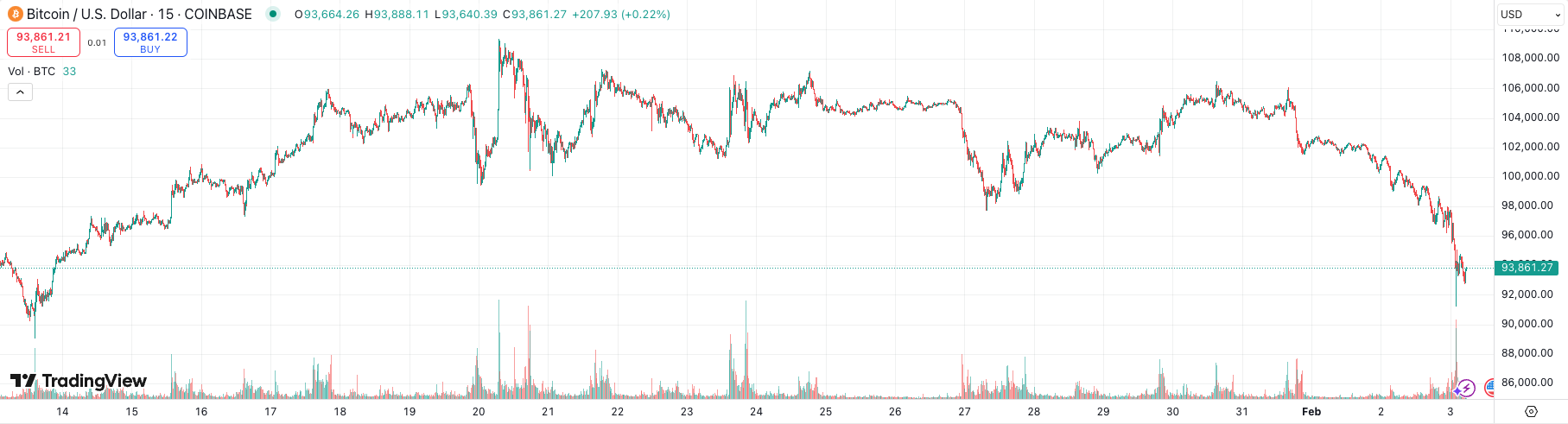
Actually, Bitcoin's decline this morning wasn't particularly large, but most tokens including Ethereum experienced cliff-like drops. Ethereum has fallen approximately 40% over the past three days, dropping as low as around $2,100 this morning, while many altcoins hit new lows not seen since the 2022 bear market.
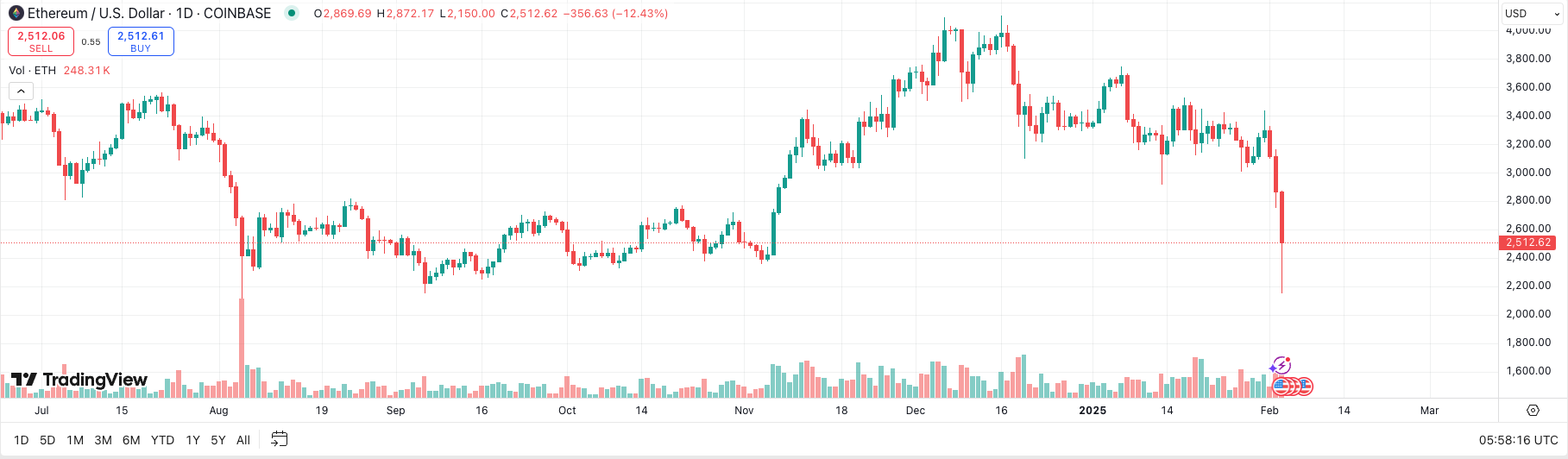
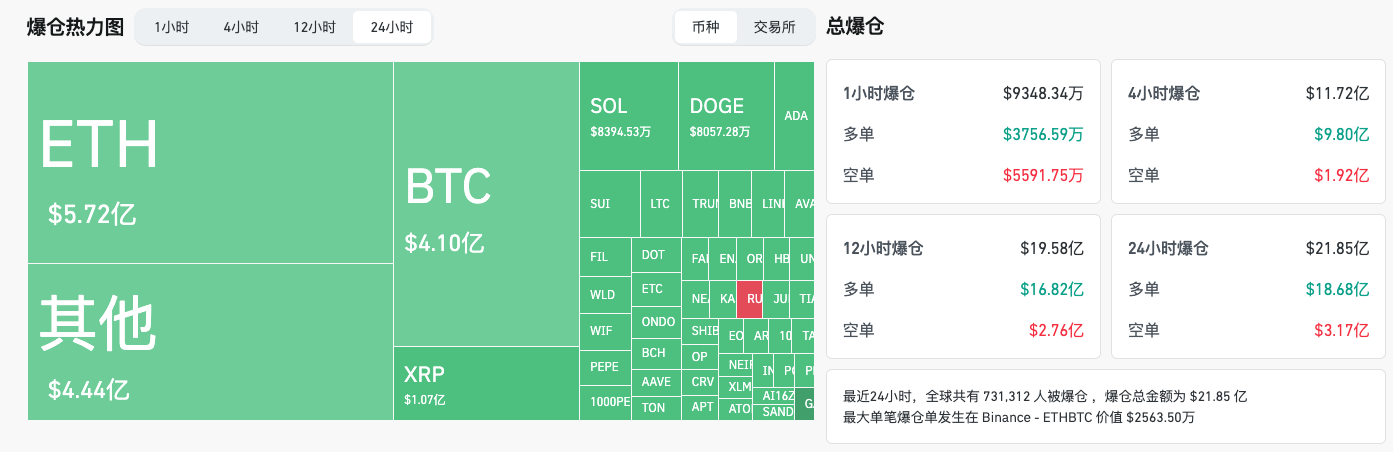
The futures market was even more brutal. According to Coinglass data, calculated from today's midday low point, the crypto futures market saw over $2 billion in liquidations within 24 hours, affecting more than 700,000 traders. This figure even exceeded the liquidation volume triggered by market panic after the Bank of Japan unexpectedly raised interest rates last year, marking at least the highest 24-hour liquidation amount in nearly two years.
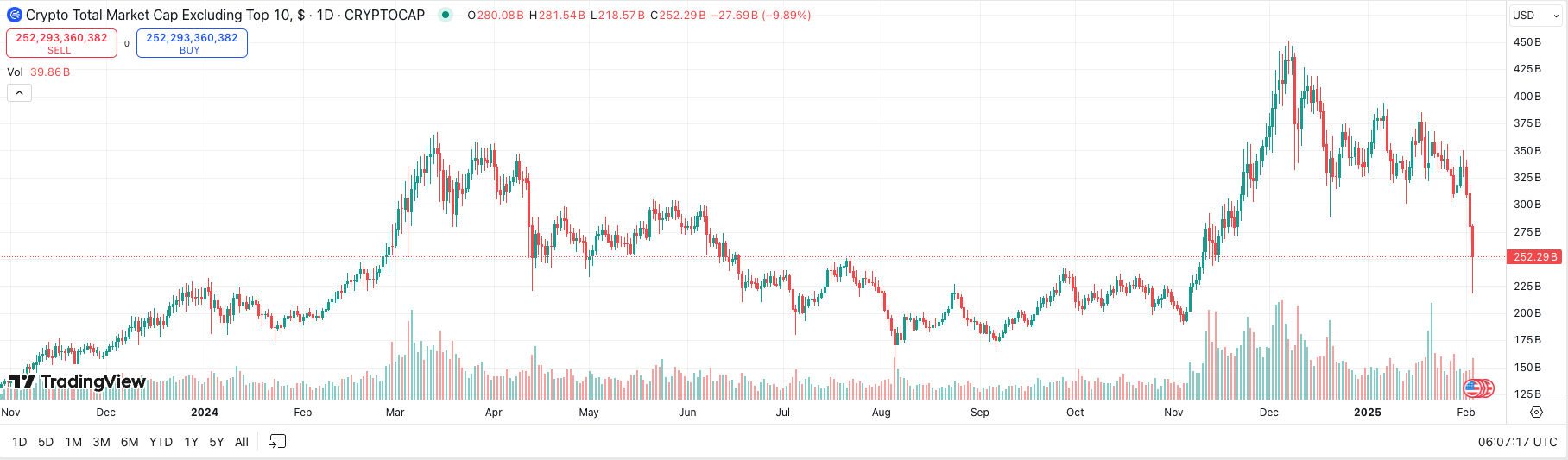
The total market capitalization of cryptocurrencies excluding the top ten, as tracked by TradingView, fell to around $220 billion this morning—the lowest level since August to October last year.
"Final dip" or "start of a bear market"?
In last Monday’s analysis article, I pointed out that after Bitcoin failed multiple times to break through the $106,000–$107,000 range, we had reason to guard against short-term correction risks. After dipping to around $98,000 last Monday, Bitcoin quickly rebounded and once again approached the $106,000 level, leading many investors to hope for the much-anticipated "Chinese New Year rally" that has historically occurred for several consecutive years.
But just like how Bitcoin rebounded to $70,000 in late July and early August last year before rapidly retreating, repeated failure to break through a key resistance level could very likely trigger a sharp decline.
Midweek last week, the Federal Reserve announced it would hold rates steady and removed language stating that progress on inflation reduction had been sustained, leading markets to expect no rate cuts in the first half of the year. Upon this news, risk asset markets rose rather than fell. To some extent, this provided a solid explanation for Monday's earlier drop:
Many investors were confused by Monday's sharp decline triggered by DeepSeek's breakout moment, believing instead that DeepSeek's emergence allows companies to train models with less computing power, thereby helping promote and advance AI development. In the long run, this should benefit chip designers like Nvidia. However, financial markets often aren't afraid of definite bad news, but rather fear uncertain information. This is one reason why Bitcoin was able to quickly recover its losses last week. The brief drop stemmed from uncertainty, while the subsequent reversal resembled more of a sentiment that "even if it's bad news, at least it's predictable."
But this time, I want to emphasize that the path of future Fed policy and the impact of Trump's aggressive strategy on the global economy have entered a state of high uncertainty. Trump's team originally stated he wouldn't initiate tariff hikes early in his term, but now these measures are expected to be implemented significantly sooner than anticipated. The economic impact of increased tariffs on the U.S. remains unknown, making the Fed's next moves unpredictable.
With two potentially market-defining events now highly unpredictable, the market has become extremely fragile. Any minor shock going forward could trigger volatility beyond expectations. While I still believe it's too early to definitively call the end of the bull market or the beginning of a bear market, short-term risk factors are accumulating rapidly. Even if numerous policies supporting Web3 development emerge in the coming period, or even if multiple U.S. states quickly move to support government investment in Bitcoin, they may still fail to offset the impact of macro-level uncertainties.
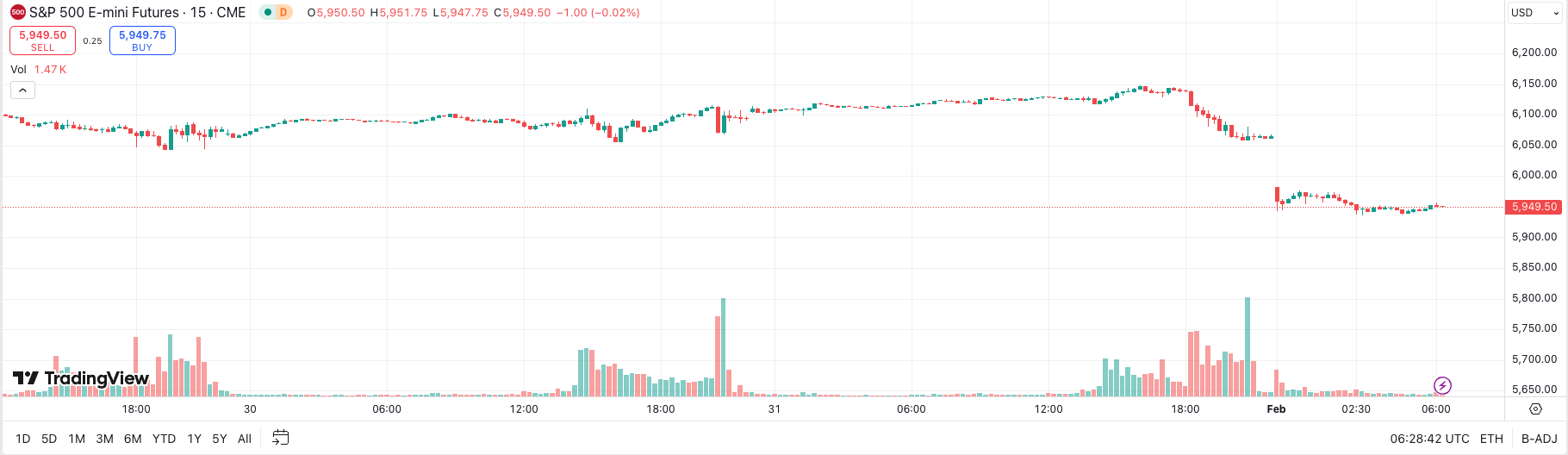
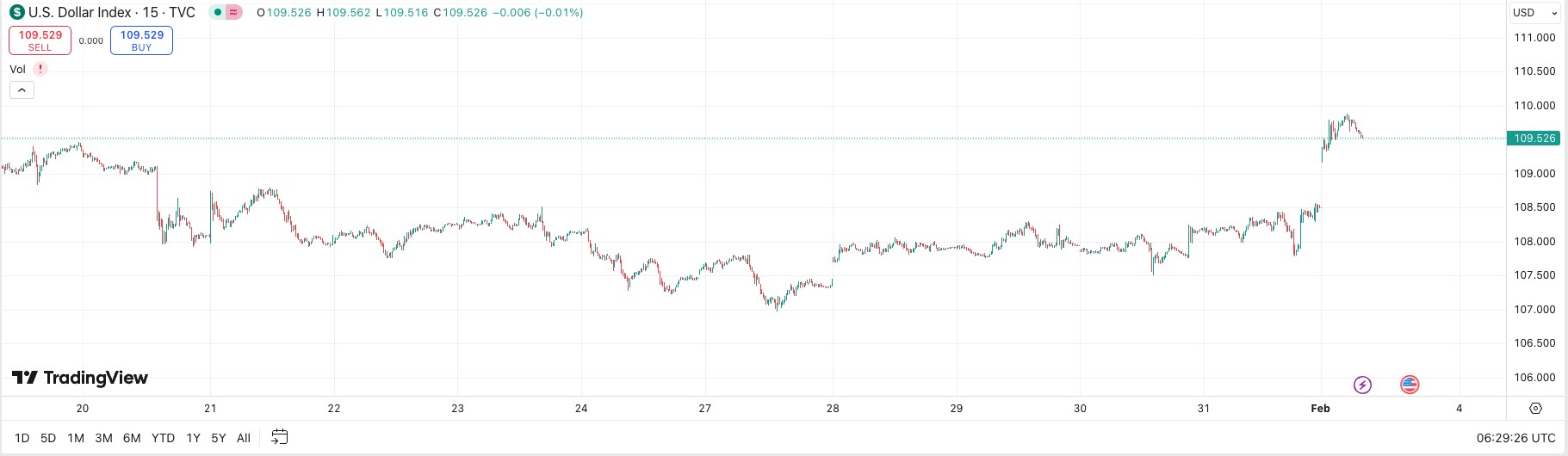
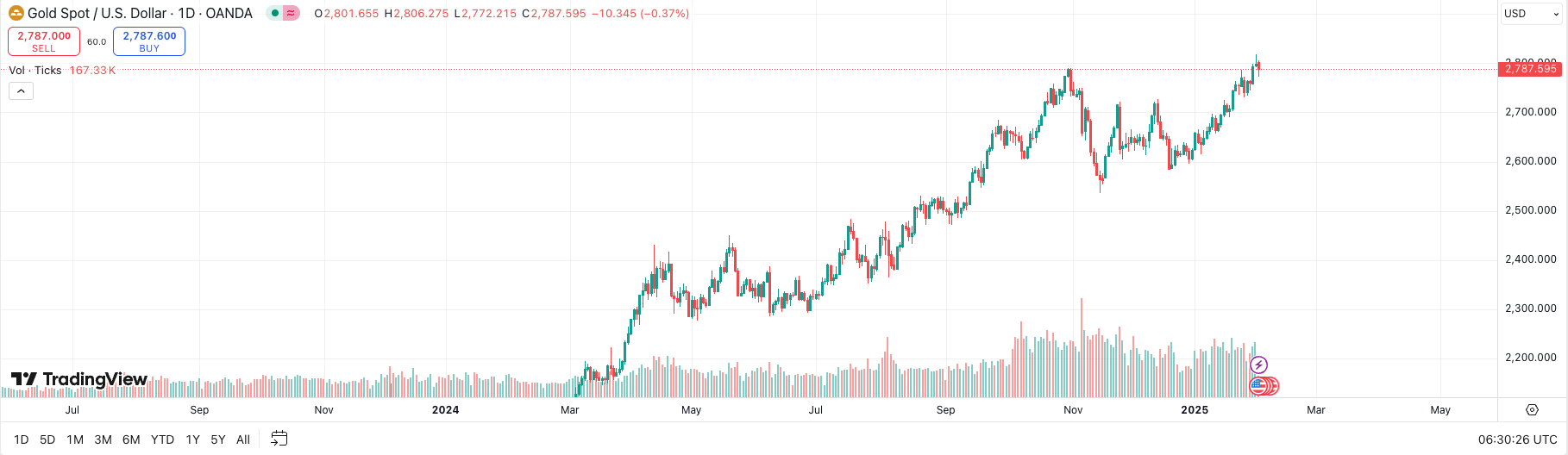
Whether it's the S&P 500 futures gapping lower this morning at Hong Kong time, the dollar index gapping higher, or gold prices recently hitting new highs, all signal that substantial capital is moving into safe-haven assets. On one hand, crypto offers the potential for outsized returns; on the other, it brings losses that many cannot afford. I recommend adopting a cautious stance—observe more, act less—in such a highly uncertain market environment.
Join TechFlow official community to stay tuned
Telegram:https://t.me/TechFlowDaily
X (Twitter):https://x.com/TechFlowPost
X (Twitter) EN:https://x.com/BlockFlow_News
 @News_Techub









