








What is the impact of Virtuals' large-scale buyback?
TechFlow Selected TechFlow Selected
What is the impact of Virtuals' large-scale buyback?
VIRTUAL's value capture has been upgraded again.
 Navigating Web3 tides with focused insights
Author: Ismay
This morning, Virtuals announced that 12,990,427.85 $VIRTUAL tokens accumulated from post-bonding transaction revenues will be used to repurchase and burn relevant agent tokens within the ecosystem over the next 30 days, based on a time-weighted average price (TWAP). Agent tokens with significant buybacks—including GAME, CANVO, and AIXBT—have already seen gains exceeding 20%.

At the same time, Virtuals has updated its value accrual mechanism, with key changes including:
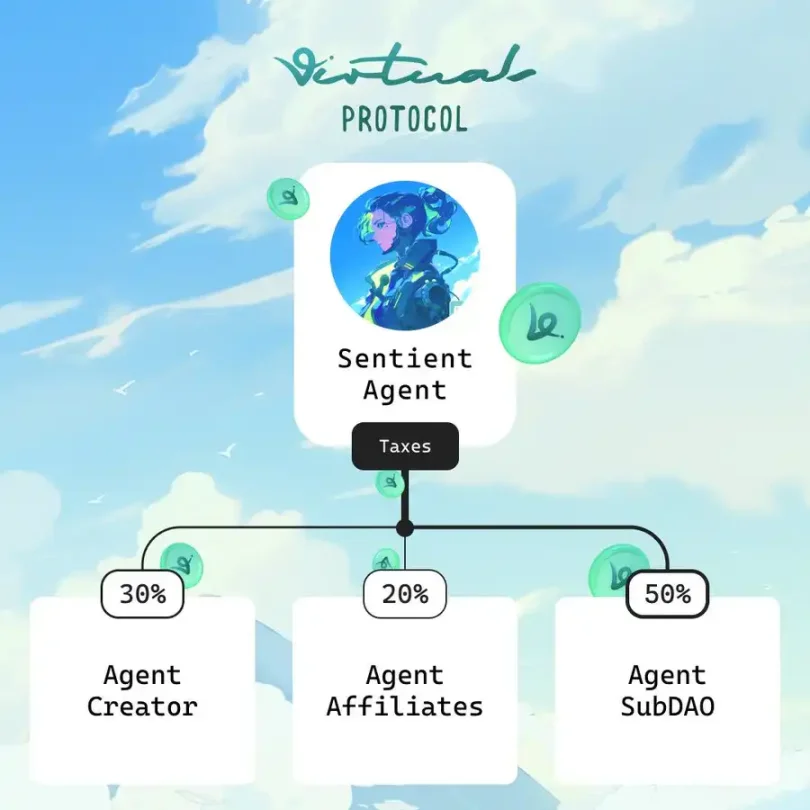
Post-bonding tax distribution: 30% allocated to Agent Creators, 20% to Agent Affiliates, and 50% to the Agent subDAO as a funding reserve for future governance decisions;
Reward disbursement for creators: Rewards will now be sent directly to the wallets of agent deployers.
Agent Affiliates mechanism: Designed to enable revenue sharing between Virtuals and various trading platforms or interfaces (e.g., Telegram Bots). Platforms that become Agent Affiliates will receive 20% of the post-bonding taxes generated through their facilitated trades, incentivizing community growth and project development.
Why This Upgrade Matters and Its Implications
Each Virtual token creates a liquidity pool paired with $VIRTUAL (e.g., AIXBT/VIRTUAL), allowing the platform to accumulate substantial $VIRTUAL through trading fees.
However, these accumulated tokens cannot be directly sold without risking market panic and ecosystem instability, as a drop in $VIRTUAL’s price would negatively impact all linked agent tokens. Additionally, if left unmanaged, this idle income could expose the platform to significant tax liabilities.
To address this, the platform is instead using the revenue to repurchase and burn ecosystem tokens.
Two Categories of Benefiting Tokens
1. Tokens with high trading fees relative to market cap
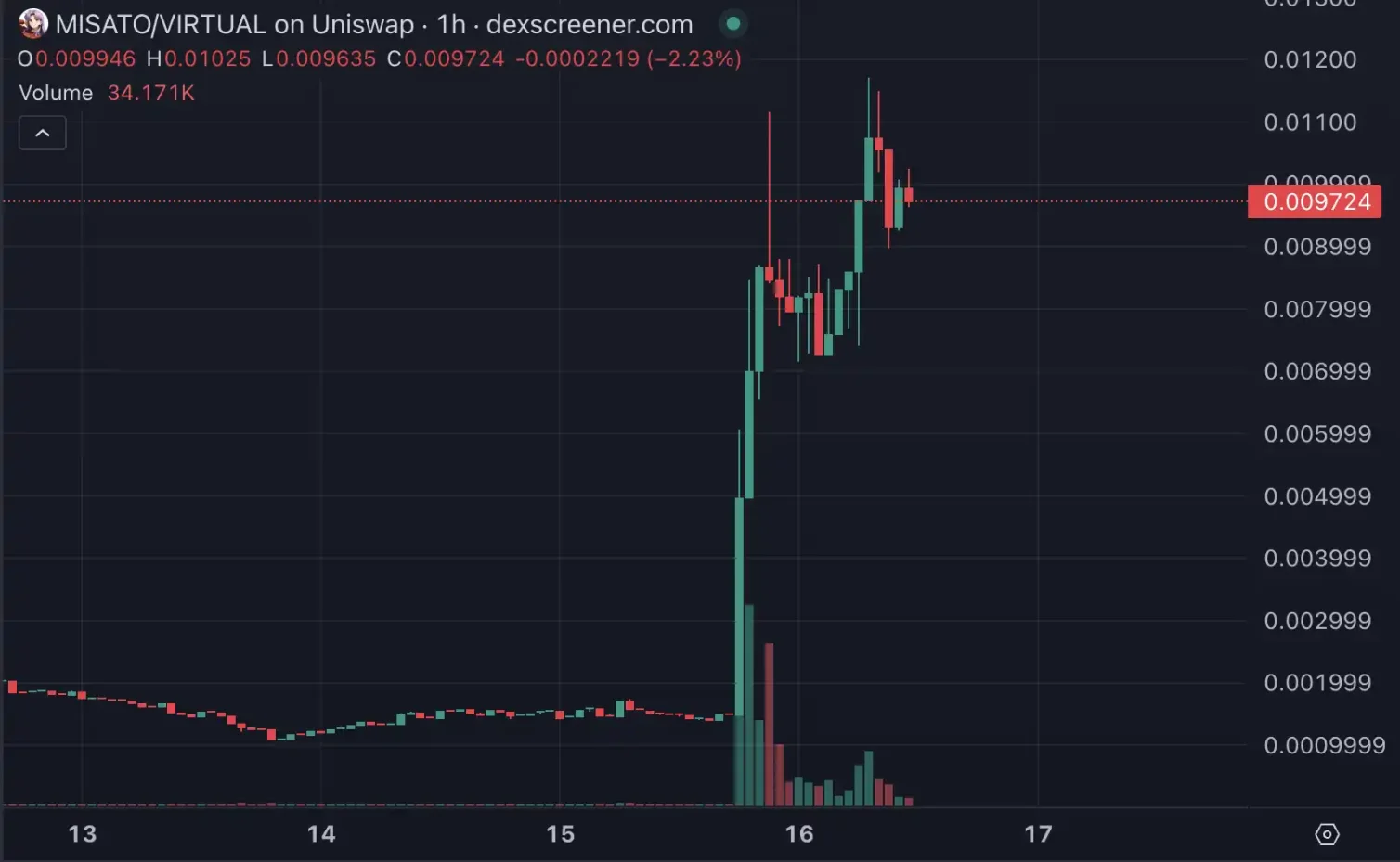
The amount repurchased depends on cumulative trading fees, meaning tokens with relatively high volume but lower market caps receive proportionally larger incentives.
For example, tokens like MISATO surged significantly following the buyback announcement.
2. Tokens whose liquidity is primarily in non-VIRTUAL pools
These tokens are less exposed to downward pressure on the $VIRTUAL pricing unit, yet still benefit from the buyback incentives. For instance, $AIXBT received approximately $2.5 million in buyback support, but since most of its liquidity resides outside $VIRTUAL pools, it experiences minimal impact from $VIRTUAL sell-side pressure.
Groups That May Be Negatively Affected
1. $VIRTUAL Holders
A $48 million sell-off is substantial. Previously, $VIRTUAL's price benefited from the continuous accumulation of fees—effectively a $48 million value sink.
Now, those fees will be converted into cBTC, introducing market sell pressure. The positive feedback loop that drove $VIRTUAL appreciation has reversed into a negative one.
2. Tokens with only VIRTUAL-paired pools or low trading volumes
These tokens receive smaller incentives while still bearing the brunt of $VIRTUAL sell pressure. Newly issued tokens are especially vulnerable, as they have accumulated minimal fee income.
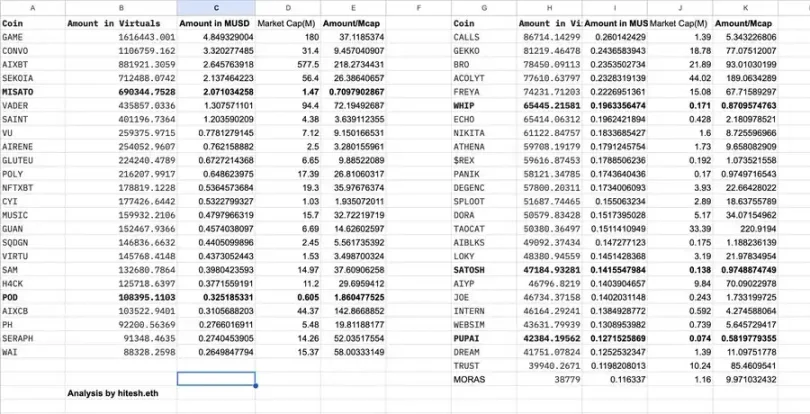
On-chain analyst hitesh.eth analyzed the top 50 tokens set to receive buybacks and burns based on 30-day TWAP, finding that for some, the implied sell pressure exceeds their current market capitalization.
How Is the Community Reacting to the Buyback?
This upgrade arguably strengthens the long-term value foundation of the Virtuals ecosystem. However, the community has expressed concerns about the new buyback and distribution model. Some argue that Virtuals should have burned the $VIRTUAL directly rather than selling it. "This move contradicts the best interests of holders and the team, as the platform is actively creating $48 million in sell pressure. Part of the incentive flows to agent tokens whose liquidity is largely external, leading to capital outflows from the ecosystem."
Crypto KOL Liam commented that while Virtuals' shift to convert fees into cBTC is a correct strategic direction, the platform should significantly reduce trading fees to avoid over-extraction from the ecosystem. He also suggested standardizing fee distribution based on token launch timing, ensuring fair treatment for both new and established tokens.
However, claims that the buyback will create massive direct sell pressure have been challenged. Since agent tokens are paired with $VIRTUAL, purchasing them using $VIRTUAL does not involve selling any $VIRTUAL—it simply adds $VIRTUAL to the liquidity pool. If the pool were priced in WETH, $VIRTUAL would first need to be swapped, but that is not the case here.
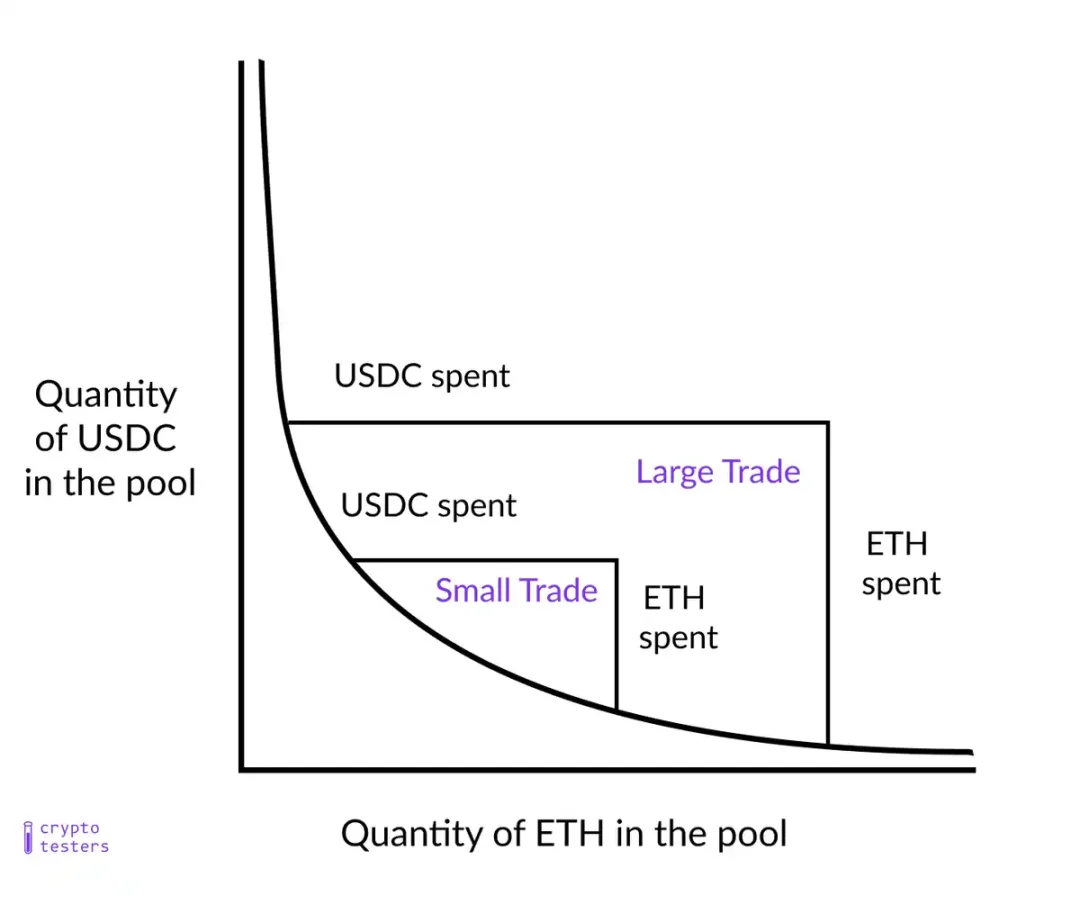
That said, indirect sell pressure does exist. As more $VIRTUAL enters liquidity pools, token values may rise, potentially prompting holders to sell. However, due to the nature of liquidity pools and price impact—and because many of these tokens have inherently low liquidity—it's unlikely that all tokens could be dumped at once.
mcSleuth, a member of Leftcurve DAO, believes the announcement will not cause immediate sell pressure, and any indirect pressure is negligible—especially considering $VIRTUAL’s $3.6 billion market cap and extremely high liquidity.
Join TechFlow official community to stay tuned
Telegram:https://t.me/TechFlowDaily
X (Twitter):https://x.com/TechFlowPost
X (Twitter) EN:https://x.com/BlockFlow_News
 BlockBeats






