A Letter to the Hyperliquid Team: Issues Observed by a Validator
TechFlow Selected TechFlow Selected
A Letter to the Hyperliquid Team: Issues Observed by a Validator
The team still needs to improve several aspects of its infrastructure to truly compete with mainstream L1 blockchains.
 Navigating Web3 tides with focused insights
Author: Kam
Translation: Luffy, Foresight News
This letter is addressed to the Hyperliquid development team, in the hope that they will take the time to review this feedback regarding the governance of the Hyperliquid blockchain.
Key Points:
-
Validators face significant challenges due to closed-source code, lack of documentation, and reliance on a centralized application programming interface (API), resulting in frequent jailing and unstable performance.
-
Incentives on the testnet have fostered a black market for HYPE tokens, favoring deals with large holders rather than enabling fair validator selection.
-
Staking rewards on mainnet are too low to justify high self-staking requirements, and decentralization remains limited, as 81% of staked share is controlled by foundation nodes.
-
To compete with mainstream Layer 1 blockchains, Hyperliquid must improve transparency, reduce staking centralization, implement a fair validator selection process, and strengthen engagement with external validators.
I first encountered Hyperliquid in December 2023—an impressive crypto application with excellent usability, user experience, and unique features such as vaults and the well-known HLP. Currently, HLP manages over $350 million in assets, allowing anyone to passively participate in Hyperliquid.
Impressed by the platform’s quality and learning that Hyperliquid operates as its own Layer 1 blockchain, I hoped Chorus One (a staking solutions provider) could join as an operator on the Hyperliquid chain. I am part of Chorus One, one of the largest node operators in the industry. Since 2018, Chorus One has been actively involved in the proof-of-stake ecosystem.
After being whitelisted on October 17 last year, Chorus One joined the Hyperliquid testnet. I would like to share our overall experience from the testnet with the Hyperliquid engineering team—especially since, despite nearly three months of participation, we still haven’t had any direct communication with them.
During this period, we witnessed one of the most successful token launches of 2024: the debut of the HYPE token. At the same time, we experienced a testnet environment that was both intriguing and challenging. I’d like to highlight several observations, hoping these issues will be addressed in the coming days, weeks, or months.
Testnet Experience
So far, the testnet experience has been highly challenging. Operators have almost no guidance on how to run nodes, and available resources are extremely limited. Essentially operating in the dark, we’ve encountered multiple problems, including the following:
Frequent Jailing With No Clear Explanation
Initially, we were jailed multiple times without understanding why. Because the code is not open source, it's impossible to accurately diagnose the root causes. Our only recourse was to communicate with other validators on Discord and speculate together. After speaking with several validators, we found that frequent jailing was common—and no one fully understood the reasons behind it.
Node Location Matters
Later, we discovered that jailing might have been due to not running our node in Tokyo. Moving our node there may have helped. Unfortunately, the team never clearly communicated this requirement; we only realized it after encountering repeated issues.
After relocating the node to Tokyo, performance improved somewhat. This is likely because many top stakers on the testnet also operate their nodes in Tokyo, allowing us to miss fewer blocks and stay in sync. However, even after the move, we continued to face jailing incidents—still without clear explanations. This ongoing uncertainty stems largely from the closed-source nature of the code.
Reliance on Automated Unjail Scripts
We realized that maintaining good uptime on the Hyperliquid testnet depended heavily on how quickly scripts could automatically unjail our node. The only way to improve uptime was to rely on fast, automated unjail scripts. Validators cannot fully understand or resolve underlying issues—they can only automatically unjail without deep insight into what went wrong.
The Centralized Hyperliquid API as a Single Point of Failure
On several occasions, our unjail attempts failed because the Hyperliquid API itself went down. If the API fails, validators cannot unjail themselves, as they must send a request to Hyperliquid’s servers to regain access.
The team may be aware of this, but the design should be reconsidered, as it makes the API a critical single point of failure for the network. In a system aiming to achieve Byzantine fault tolerance, no node should have special privileges—such as dependency on a centralized API.
Mainnet Validator Selection
Recently, Hyperliquid took steps toward decentralizing its validator set by selecting approximately 16 validators. Previously, Hyperliquid was managed by just four core team validators, drawing widespread criticism. The recent expansion from four to sixteen validators marks a significant step forward.
Regarding validator selection, four validators were publicly announced via the following Discord post:
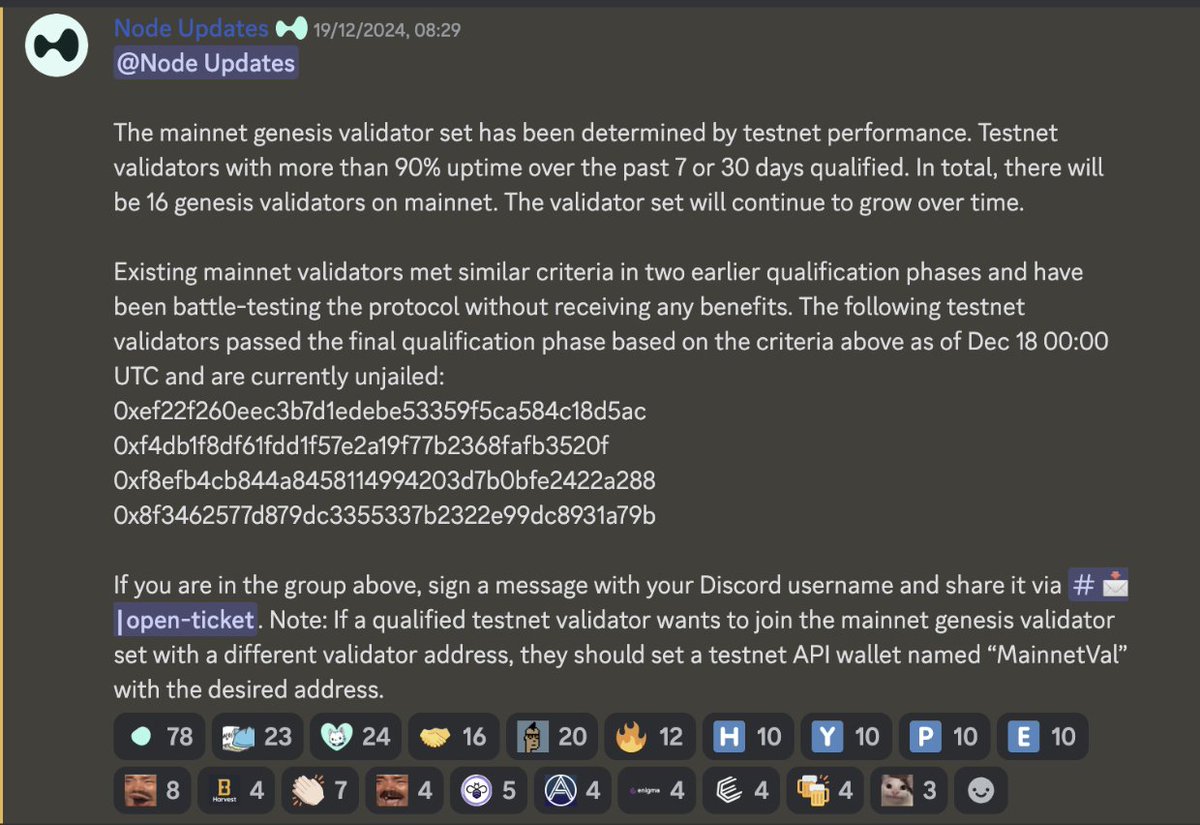
These four—Validao, Bharvest, Hypurrstake, and Prrposefulnode—were selected based on uptime, having maintained over 90% uptime in the past 7 or 30 days.
This is a remarkable achievement for several reasons. Validator performance is significantly affected by external factors such as Hyperliquid API outages, unexplained jailing, and frequent binary crashes—all of which impact performance.
Besides these four validators selected based on testnet performance, five foundation-run validators from the Hyperliquid Foundation are also active on mainnet. Additionally, seven more validators were selected for mainnet, though the rationale for their selection was not disclosed.
Then, a black market for HYPE testnet tokens emerged.
The Hyperliquid testnet initially had 50 validators. Initially, specific entities were whitelisted to join, but on December 12, validator access was fully opened.
The condition was simple: one needed 10,000 HYPE testnet tokens to register as a validator. However, to become an active validator, one had to rank among the top 50; otherwise, the validator remained inactive.
This caused HYPE testnet token prices to surge. Initially, the price rose to over 3,000 testnet USDC, then jumped to over 28,000 testnet USDC within days. At the time of writing, the price is around 700 testnet USDC.
Unfortunately, the faucet only dispenses 100 testnet USDC every four hours. To enter the top 50 active validators on the testnet currently requires over 528,747 HYPE testnet tokens. Assuming a token price of 700 testnet USDC and relying solely on faucet-disbursed USDC, the calculation is as follows:
Days required = (528,747 × 700) ÷ (100 × 6) = 616,871.5 days
This means it would take approximately 616,871.5 days—or about 1,690 years—to accumulate enough HYPE testnet tokens through the faucet alone to become an active validator on Hyperliquid.
However, those who received HYPE airdrops on mainnet also obtained equivalent amounts on the testnet. This created opportunities for validators to collaborate with these community members, who could stake their testnet HYPE tokens with validators to help them secure a spot in the active set.
At the same time, this situation gave rise to alternative motives among holders of testnet HYPE tokens. Given the intense competition to join the testnet validator set, many validators were eager to acquire as many HYPE testnet tokens as possible. As a result, a black market emerged where large holders of testnet HYPE began selling tokens to validators in exchange for real USDC on mainnet.
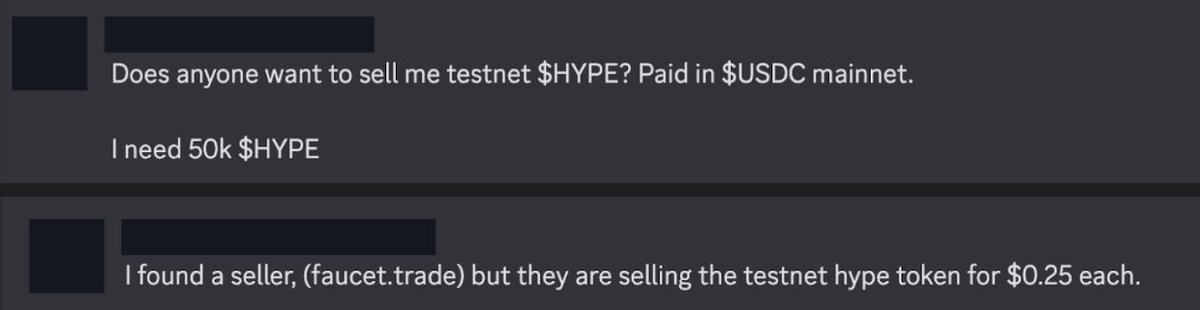
I have never seen such chaos. While the Hyperliquid team clearly disapproves of these practices, they have full capability to address the issue. A potential solution would be implementing a proper validator selection process on the testnet.
In most other proof-of-stake networks, core teams typically share a form that any validator can fill out to express interest in running the chain. The team then reviews applications and conducts initial screening based on various criteria—such as prior node operation experience, past contributions, community involvement, or other factors.
This preliminary group of selected validators could contribute to the testnet while working closely with the engineering team to provide feedback and ensure smooth operations. We’ve attempted multiple times to offer feedback, but so far without success.
Mainnet and Decentralization
As mentioned earlier, the current validator set on Hyperliquid mainnet consists of 16 validators, viewable here: https://app.hyperliquid.xyz/staking.
Of these, five are operated by the Hyperliquid Foundation. Four were selected based on testnet performance, maintaining over 90% uptime. Seven were chosen directly by the Hyperliquid team.
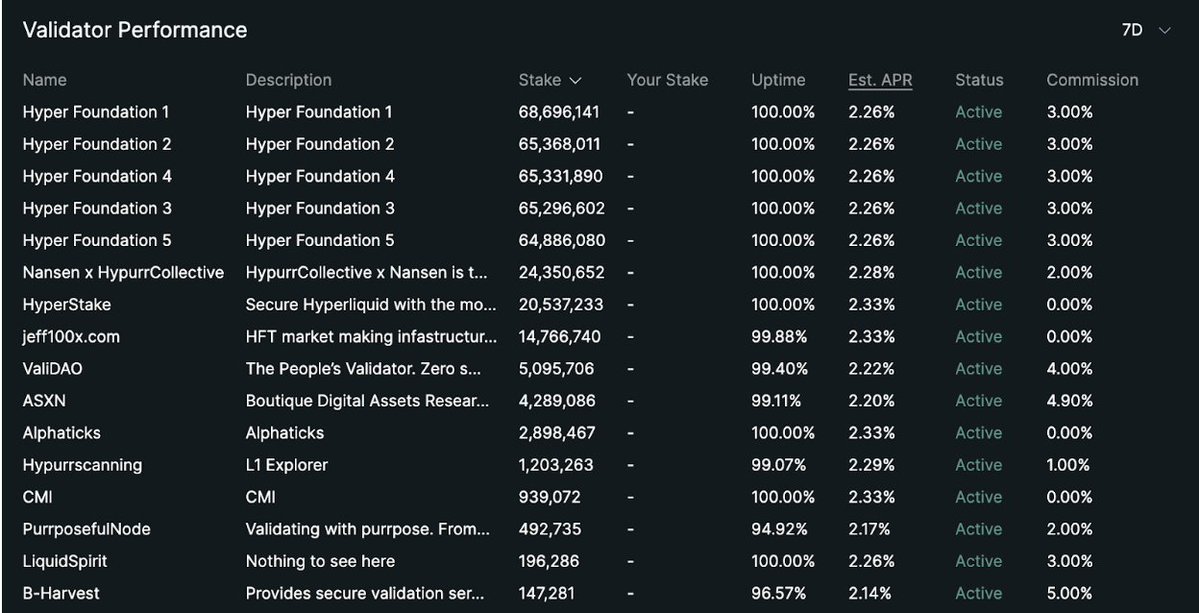
Out of 404,495,250 HYPE tokens currently staked, approximately 329,578,724 HYPE tokens are staked with foundation nodes—about 81.4% of total staked supply. We know little about HyperBFT, but assuming it operates as a Byzantine fault-tolerant system, the core assumption in most BFT systems is that no more than 33% of voting power behaves maliciously. If a single entity controls one-third of the staked share, it can halt the blockchain. If it controls two-thirds, it gains full control over the network.
The Hyperliquid Foundation initially staked 60 million HYPE tokens per foundation node. However, many HYPE holders have also chosen to stake with foundation nodes—a trend detrimental to decentralization. The team should engage more with the community to encourage a more distributed staking landscape.
Three potential solutions include:
-
Educate the community on the importance of staking with external validators to enhance chain security and decentralization.
-
Set a 100% commission rate on foundation nodes to incentivize users to stake with external validators, promoting decentralization.
-
Redistribute foundation staking shares to external validators—a common practice among most chains.
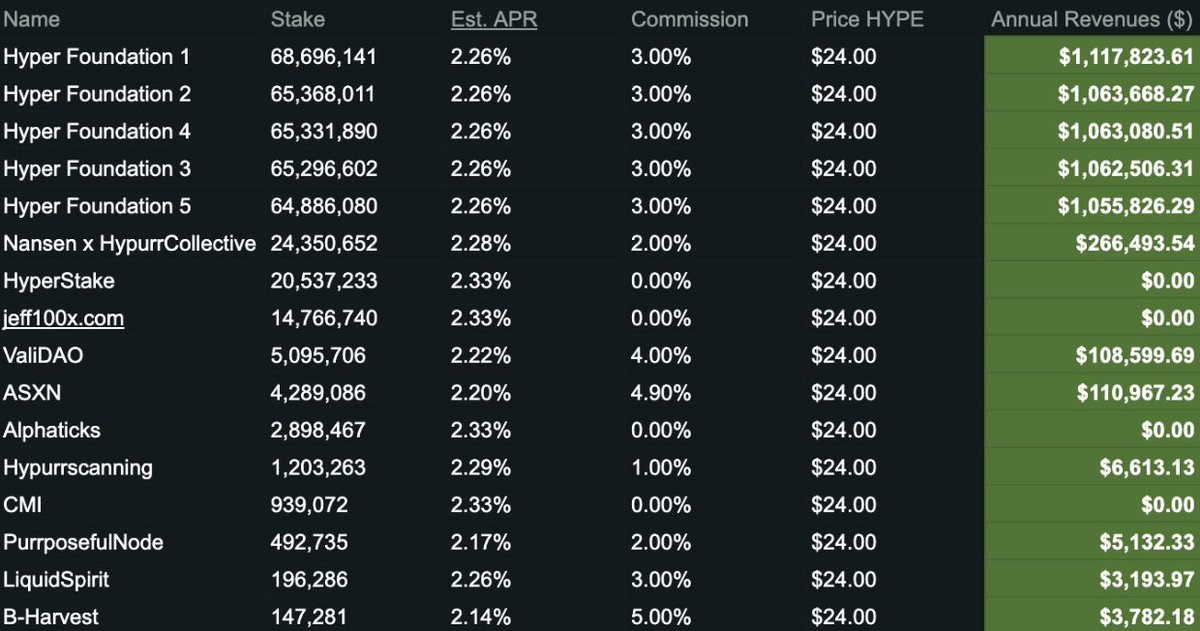
Distributing staking shares to external validators would also improve their economic sustainability. Hyperliquid is a blockchain focused on high throughput, and infrastructure costs for running nodes—especially in Tokyo—can be substantial. Currently, bottom-tier validators earn between $3,000 and $5,000 annually, which is insufficient to cover operational costs. Particularly challenging is the requirement to self-stake 10,000 HYPE tokens on mainnet (worth approximately $250,000 at current prices) to become a validator.
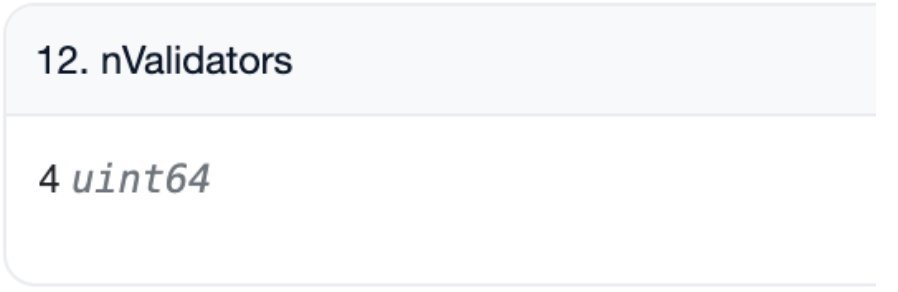
Currently, users interact with Hyperliquid by bridging USDC from Arbitrum to the Hyperliquid chain. Upon reviewing the bridge contract, it appears the bridge is still managed by four validators. These validators seem unrelated to the chain’s consensus mechanism or the 16 validators on mainnet.
Hyperliquid has a great product, but the team still needs to improve several aspects of its infrastructure to truly compete with mainstream Layer 1 blockchains.
Potential improvements include:
-
Listen to validators. While the team’s current approach—working independently with minimal external interaction—has worked well for building their Perp product, validators are the backbone of a Layer 1 blockchain. Their input is equally crucial to ensuring smooth operations.
-
Open-source the code. This would help validators better understand the challenges of running nodes on Hyperliquid, increase user trust, and provide deeper insights into the architecture and consensus algorithm. Currently, information about HyperBFT is extremely limited. Open-sourcing would bring much-needed transparency and understanding.
-
Create a proper validator selection process to eliminate the HYPE testnet token black market. Selecting validators based on uptime is a fair method—but achieving good uptime should also be fair. It shouldn’t depend on connections to obtain testnet tokens, the ability to buy them, or external factors like the reliability of the Hyperliquid API.
Overall, Hyperliquid is already well-positioned to compete with mainstream Layer 1 blockchains without needing drastic changes. The key focus should be greater engagement with external parties and incorporating their feedback. I look forward to seeing how things evolve in the coming weeks and months, and our team stands ready to assist and provide further input. Best wishes to the Hyperliquid team!
Join TechFlow official community to stay tuned
Telegram:https://t.me/TechFlowDaily
X (Twitter):https://x.com/TechFlowPost
X (Twitter) EN:https://x.com/BlockFlow_News
 @KamBenbrik