









How can enterprises within China legally allocate cryptocurrency assets?
TechFlow Selected TechFlow Selected
How can enterprises within China legally allocate cryptocurrency assets?
Compliantly allocating overseas crypto assets not only enables enterprises to diversify investment portfolios and hedge risks, but also allows them to seize growth opportunities in the Web3 industry and drive their own innovation and development.
 Navigating Web3 tides with focused insights
By: Attorney Liu Honglin
As a key component of the Web3 industry, crypto assets have attracted significant global investor attention. According to data from CoinGecko, a cryptocurrency data analytics and aggregation platform, the total market capitalization of global crypto assets exceeded $3.5 trillion as of January 3, 2025—growing at a pace far surpassing traditional financial markets. As a frontier domain where emerging technologies and innovative concepts converge, Web3 is reshaping the global economic ecosystem at an unimaginable speed.
Image source: Official website of CoinGecko
For enterprises within China, participating in this transformation presents both challenges—such as disruption to traditional business models—and historic opportunities to leapfrog into the Web3 ecosystem through cross-industry integration. However, allocating overseas crypto assets remains difficult for Chinese companies. China's financial regulatory system maintains a cautious stance toward crypto assets, with relevant laws, regulations, and policy frameworks still evolving. Only by thoroughly understanding and precisely navigating compliance requirements can domestic Chinese enterprises identify legitimate pathways for overseas crypto asset allocation and steadily ride the Web3 wave.
This article by ManQin Law aims to provide a framework guide for Chinese domestic enterprises seeking to understand how to compliantly allocate overseas crypto assets while adhering to applicable laws and regulations, thus enabling them to benefit early from the growth of the Web3 industry.
Benefits of Overseas Crypto Asset Allocation for Chinese Domestic Enterprises
With increasing integration of global financial markets and accelerating technological innovation, crypto assets have gradually become a focal point for global investors as an emerging investment instrument. For enterprises based in mainland China, allocating overseas crypto assets offers several key advantages:
1. Diversification of Investment Portfolio
Allocating overseas crypto assets allows enterprises to effectively diversify their investment portfolios and reduce risks associated with volatility in any single market. Moreover, crypto assets exhibit low correlation with traditional asset classes such as stocks and bonds, helping further optimize the risk-return profile of investment portfolios.
2. Risk Hedging
Although the crypto market is highly volatile, it also provides strong hedging potential. Enterprises can hedge against downside risks in traditional assets by allocating across different types of cryptocurrencies, such as Bitcoin and Ethereum. Additionally, with the continuous development of derivatives markets, businesses can use financial instruments like futures and options to manage risk more precisely and achieve finer control over exposure.
3. Capturing Growth Opportunities in the Web3 Industry
The Web3 sector, representing the next generation of the internet, is experiencing explosive growth. As a core component of Web3, demand and real-world applications for crypto assets continue to expand. By investing in overseas crypto assets, enterprises can directly participate in the evolution of this emerging industry and share in its long-term growth dividends.
4. Enhancing International Competitiveness
Investing in overseas crypto assets not only helps enterprises better understand and adapt to changes in global financial markets but also enhances their image and influence on the international stage. Furthermore, collaboration and exchanges with international partners can provide access to additional information and resources, supporting internal innovation and development.
In summary, allocating overseas crypto assets is not only a strategic response to current economic conditions but also a vital pathway for Chinese domestic enterprises to seize future trends and strengthen competitiveness. Many traditional enterprises are eager to participate rather than remain passive observers amid the rapid rise of the crypto industry.
Prerequisites for Compliant Overseas Crypto Asset Allocation
This article begins by discussing how to allocate overseas crypto assets—not because such assets exist only abroad (in fact, public blockchain-based crypto assets transcend physical geography or national borders)—but because there is currently no legal framework within China that supports safe corporate purchases of crypto assets. According to official documents such as the “Notice on Further Preventing and Managing Risks Related to Virtual Currency Trading and Speculation” issued by the People’s Bank of China and other regulators, civil acts related to investing in virtual currencies and derivative products are deemed invalid. Financial institutions and non-bank payment providers are also prohibited from offering services related to virtual currency activities.
Therefore, enterprises operating within China face two major obstacles when attempting domestic crypto asset allocation: lack of legal protection for transactions and absence of financial service support. A viable approach for Chinese companies is to pursue offshore allocation—using overseas subsidiaries established in jurisdictions with favorable crypto policies to legally and compliantly acquire crypto assets under foreign legal frameworks.
If your enterprise already has a legal entity and funding in a crypto-friendly overseas jurisdiction, the process will be relatively straightforward. Otherwise, the first step is establishing an overseas company via ODI (Outward Direct Investment). In today’s competitive landscape where “go global or exit,” setting up an overseas subsidiary through ODI not only serves as a platform for international expansion but also creates a natural opportunity to allocate a portion of capital into crypto assets—a synergistic move aligned with broader strategic goals.
1. What is ODI?
ODI stands for "Outward Direct Investment," referring to investment activities conducted by enterprises within China—either directly or through controlled overseas entities—to establish or gain control over foreign enterprises via new establishment, acquisition, equity participation, or capital increase, thereby obtaining ownership, control rights, or management authority. In short, ODI refers to direct foreign investments made by Chinese companies, including setting up subsidiaries abroad or purchasing shares/assets of foreign firms. ODI registration is the filing procedure required by domestic enterprises when making overseas investments, submitted to relevant government departments to ensure legality and compliance.
2. ODI Registration Process
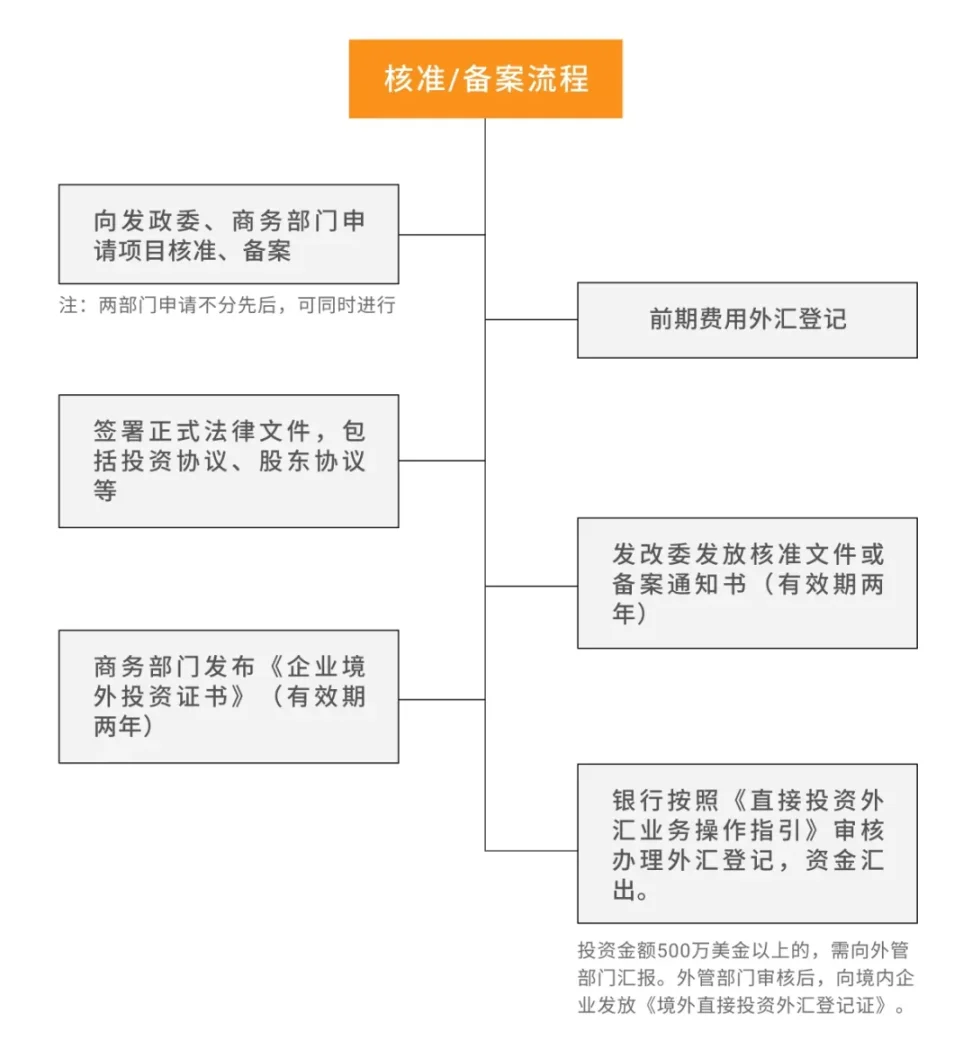
(1) Filing (or Approval) with Development and Reform Commission
The enterprise must submit a project application report and supporting documents to the local Development and Reform Commission. The commission reviews the materials. For general projects meeting regulatory criteria, the commission issues a “Record-filing Notice for Overseas Investment Projects” within the prescribed timeframe. Major projects may require formal approval and issuance of an approval document.
(2) Filing (or Approval) with Commerce Department
The enterprise prepares an overseas investment application form and related documentation. Upon receipt, the commerce department conducts a compliance review of the proposed overseas investment. For qualifying filings, the department completes the registration within the stipulated time and issues an “Enterprise Overseas Investment Certificate.” Approved projects receive formal approval documents upon clearance.
(3) Foreign Exchange Registration
Foreign exchange registration is completed at a designated bank, which acts as an agent for the State Administration of Foreign Exchange (SAFE). Projects exceeding USD 5 million in investment amount must be reported to SAFE. After review, SAFE issues the “Foreign Exchange Registration Certificate for Overseas Direct Investment” to the domestic enterprise.
It should be emphasized that during the ODI process, enterprises must provide genuine information about overseas investment projects. Funds must be used solely for lawful overseas investment purposes and must not be involved in money laundering, tax evasion, or other illegal activities. Enterprises must also ensure that the use of ODI funds complies with local laws and regulations to avoid penalties due to non-compliance.
Four Main Methods of Overseas Crypto Asset Allocation
Once an enterprise has established an overseas legal entity and secured offshore funding, it can proceed to allocate crypto assets appropriately in overseas jurisdictions. The following are four primary approaches:
1. Direct Purchase of Crypto Assets
In crypto-friendly overseas jurisdictions, enterprises can directly purchase crypto assets through various compliant channels, including licensed cryptocurrency exchanges, crypto-supportive banks, crypto-enabled brokers, and over-the-counter (OTC) markets.
To utilize these methods, enterprises must first select the most suitable channel based on their needs and qualifications.
-
If using a crypto exchange, the enterprise must complete registration, submit required corporate documents, and pass verification. Once approved, funds are deposited into the exchange account, allowing the enterprise to place buy orders for target crypto assets based on market conditions and investment strategy. All transaction records should be properly maintained.
-
When purchasing through a bank, the enterprise must provide detailed financial and operational background information as required. After activating crypto trading services, purchases are executed according to the bank’s specified procedures and transaction limits.
-
Through a broker, the enterprise opens an account, completes a risk assessment, becomes familiar with the platform interface and rules, then transfers funds to the designated brokerage account to execute crypto trades.
-
In the OTC market, the enterprise must carefully vet reliable counterparties. Whether through online platforms or offline arrangements, once price, quantity, and other terms are agreed upon, the transaction is settled via pre-agreed payment and asset transfer mechanisms. Throughout the process, strict adherence to compliance and robust security measures are essential to protect assets.
Advantages: This method is relatively straightforward, allowing enterprises full autonomy in selecting types and quantities of crypto assets. It enables flexible responses to market movements, timely buying and selling, and rapid value appreciation during favorable market conditions. There are no additional fund management fees, reducing overall costs.
Risks: The main risks stem from the high volatility of the crypto market, which can lead to sharp increases or declines in asset value. Security is another critical concern; enterprises must implement adequate safeguards to protect assets from hacking or theft.
2. Investing in Crypto ETFs
A crypto ETF (Exchange-Traded Fund) is a specialized type of exchange-traded fund that allows investors to indirectly access cryptocurrencies through regulated traditional financial markets. These ETFs typically hold a basket of crypto assets—such as Bitcoin, Ethereum, and other popular digital currencies—to represent either the broader crypto market or a specific crypto index. Currently, spot Bitcoin ETFs and/or spot Ethereum ETFs have been launched in securities markets in countries and regions including the U.S., Hong Kong, Brazil, Australia, Thailand, and Malaysia.
General Procedure: The overseas subsidiary of the enterprise must open a trading account with a stock exchange that lists crypto ETFs, completing all necessary account opening procedures and risk assessments. Then, using trading software or through a broker, the enterprise buys or sells crypto ETF shares on the open market—similar to regular stock trading—following standard securities market rules and processes.
Advantages: Compared to direct crypto purchases, crypto ETFs offer diversified exposure, reducing portfolio impact from fluctuations in any single asset. Their trading mechanism mirrors that of stocks, simplifying portfolio management for enterprises, while generally involving lower transaction costs.
Risks: The price of a crypto ETF may deviate from the underlying index due to tracking error, affecting return expectations. Additionally, ETF markets may suffer from insufficient liquidity, especially during periods of market turmoil, potentially making it difficult for enterprises to trade at desired prices.
3. Subscribing to Crypto Funds
Crypto funds are private investment funds specifically focused on cryptocurrencies, blockchain projects, digital assets, and related technologies. Typically managed by professional fund managers, these funds leverage expertise and research capabilities to select, evaluate, and manage investment portfolios aimed at generating returns.
General Procedure: Enterprises should conduct research and screening of available crypto funds, evaluating performance history, investment strategies, and management teams. After selecting a fund, they follow the fund manager’s subscription process, which usually includes KYC (Know Your Customer) and AML (Anti-Money Laundering) checks, signing subscription or partnership agreements, and transferring fiat or stablecoin funds.
Advantages: Enterprises benefit from the professional judgment and research resources of experienced fund managers, improving their ability to navigate the complex and fast-changing crypto market. They also save time and manpower otherwise needed for direct market analysis and trading operations.
Risks: Fund performance depends heavily on the skill and decisions of the management team. Poor investment choices or adverse market conditions could result in losses. As the crypto fund industry is still developing, some funds may suffer from inadequate governance, lack of transparency, or operational irregularities, increasing uncertainty for investors.
4. Purchasing Stocks of Web3-Concept Public Companies
This is an indirect way to gain exposure to crypto assets. Web3-concept public companies fall into two categories: First, companies deeply integrating core Web3 technologies—such as blockchain and cryptography—into their operations, including those building crypto infrastructure or developing decentralized applications (e.g., Coinbase, Riot Blockchain, Block, Inc.). Second, publicly traded companies holding large reserves of mainstream cryptocurrencies like Bitcoin (e.g., MicroStrategy, Marathon Digital, Boyaa Interactive). By investing in these companies’ stocks, enterprises can indirectly participate in Web3 growth and benefit from crypto market appreciation.
General Procedure: Enterprises begin by researching and identifying listed companies engaged in Web3 or crypto-related businesses, assessing their financial health, business models, and market outlook. Then, the overseas subsidiary opens a securities account in the relevant foreign exchange and purchases shares of the target company (if the stock is included in the Stock Connect program, mainland enterprises may also purchase it via domestic accounts).
For acquisitions, a more complex process applies, involving comprehensive due diligence, negotiations, and M&A procedures—including valuation assessment, structuring the acquisition, and securing regulatory approvals.
Advantages: Beyond potential stock appreciation driven by Web3 growth, enterprises may gain strategic benefits through business collaborations or synergies with these companies, accessing technology, distribution channels, and other resources that enhance their own competitiveness and innovation capacity in the Web3 space.
Risks: Stock prices are influenced by multiple factors, and market volatility can affect investment value. Moreover, the Web3 industry evolves rapidly, subjecting these companies to intense competition. Failure to continuously innovate or adapt may lead to declining stock performance.
The above represent the four most common methods for direct or indirect overseas crypto asset allocation. Given varying crypto regulations across jurisdictions, enterprises must fully understand local laws, regulations, and market risks before making investment decisions. Professional legal and financial advisory support should be sought when necessary.
ManQin Law Summary
In conclusion, compliant overseas crypto asset allocation enables enterprises to diversify portfolios, hedge risks, capture growth opportunities in the Web3 era, and drive internal innovation. However, compliance and security must be treated with utmost seriousness. Enterprises should choose jurisdictions with supportive crypto policies as the foundation for legal and secure asset allocation. When selecting an investment method, careful consideration must be given to internal needs and risk tolerance. Each approach carries distinct advantages and risks, requiring enterprises to make informed decisions based on thorough market understanding and self-assessment.
We at ManQin Law particularly emphasize that crypto asset allocation involves complex legal and financial issues. Enterprises undertaking overseas crypto investments must seek professional legal counsel. As one of the earliest law firms in the Chinese-speaking world dedicated to the Web3.0 space, ManQin Law boasts a cross-border service team with deep knowledge of global crypto regulations and extensive practical experience. We offer end-to-end legal services worldwide, including but not limited to selecting crypto-friendly jurisdictions, ODI applications, compliance reviews, risk assessments, and transaction structure design. Our goal is to help enterprises securely and legally allocate overseas crypto assets, achieve global asset deployment, and strengthen risk management. ManQin Law is committed to being your trusted legal partner in cross-sector integration and innovation during the Web3 era. We look forward to working with you to explore and seize the vast opportunities brought by the Web3 revolution.
Join TechFlow official community to stay tuned
Telegram:https://t.me/TechFlowDaily
X (Twitter):https://x.com/TechFlowPost
X (Twitter) EN:https://x.com/BlockFlow_News










