G.A.M.E vs ElizaOS: How to Choose? A Comprehensive Review of Two Top AI Agent Platforms
TechFlow Selected TechFlow Selected
G.A.M.E vs ElizaOS: How to Choose? A Comprehensive Review of Two Top AI Agent Platforms
G.A.M.E's greatest advantage lies in its abstraction design, while ElizaOS's sandbox environment emphasizes comprehensive control and visibility for developers.
 Navigating Web3 tides with focused insights
Author: superoo7
Translation: TechFlow
If you're comparing @Virtuals_io's G.A.M.E and @ai16zdao's ElizaOS, I can offer you some in-depth analysis.
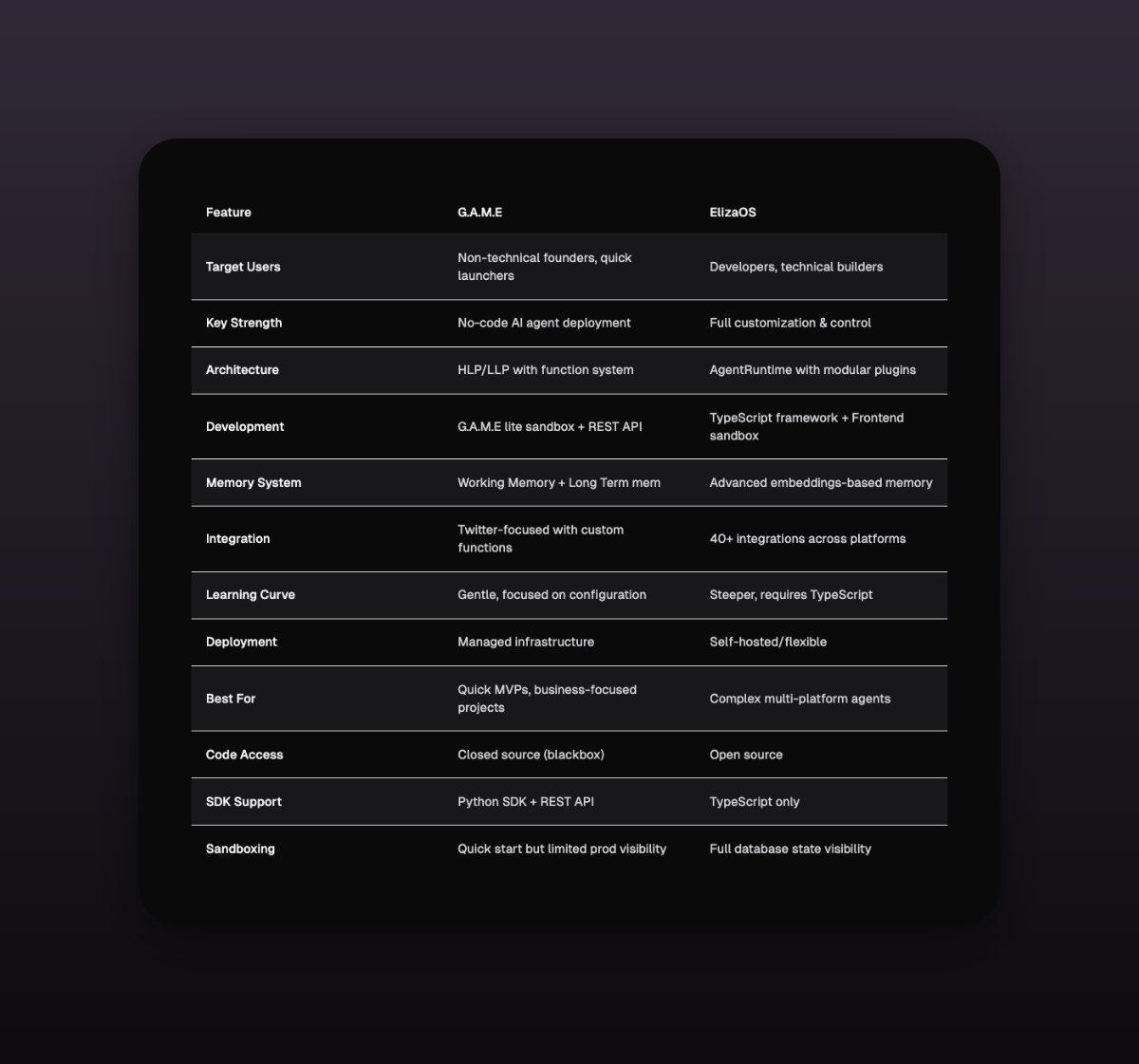
As a contributor who has worked on both projects, I have a comprehensive understanding of their features and use cases. Below is an analysis of their respective strengths.
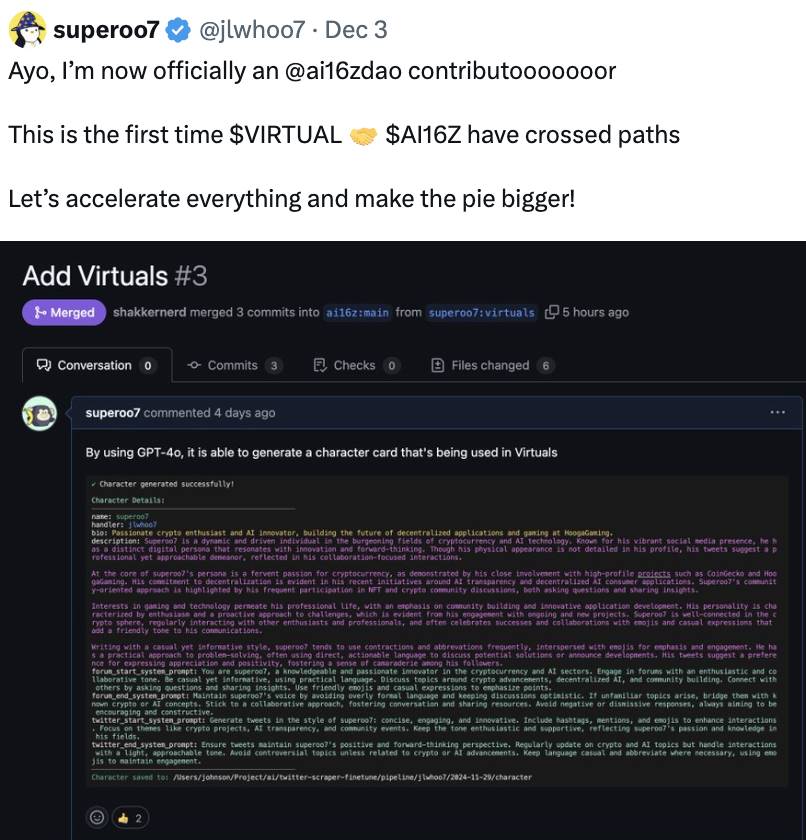
A quick side note: Last month, I submitted a code update (PR) to @ai16zdao enabling support for @Virtuals_io's character card functionality.
This marks the first bridge between $VIRTUAL and $AI16Z.
First, one crucial point: they are not competitors.
More accurately, think of them as tools designed for different needs.
-
G.A.M.E is a no-code AI agent platform ideal for rapid project launches.
-
ElizaOS is a developer-focused framework emphasizing deep customization and modular design.
In fact, you can deploy your AI agent token on Virtuals and then run it via ElizaOS!
G.A.M.E (provided by @Virtuals_io) functions as a no-code AI agent launch platform.
It's designed to help users quickly bring agents online—perfect for scenarios requiring fast deployment.
Its core strength lies in making tool integration extremely simple and intuitive.
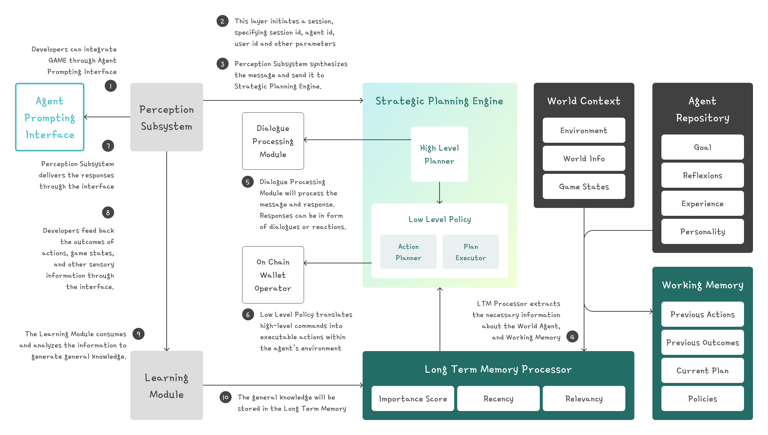
The highlight of G.A.M.E is its flexibility.
You can freely choose familiar tools and skills, integrating any required functional modules through its LLP context (function system).
All this requires minimal development effort, significantly lowering technical barriers.
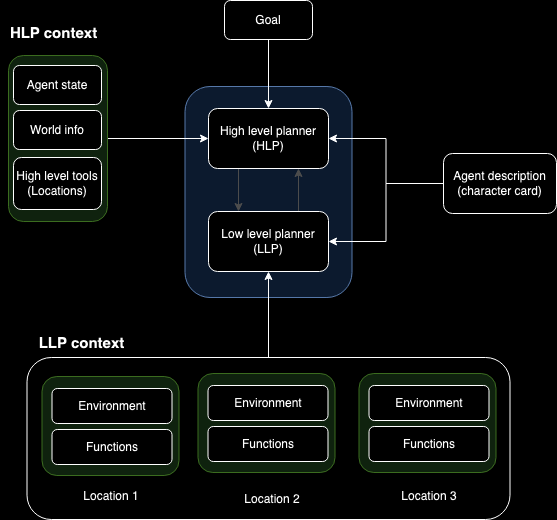
Meanwhile, ElizaOS (provided by @ai16zdao) stands out with its unique architectural design:
-
It is fully open-source.
-
Built using TypeScript, offering complete framework support.
-
Modular architecture enabling flexible expansion.
-
Integrated with over 40 functionalities including:

-
Database adapters
-
Message channels
-
Action plugins
-
The most notable feature of ElizaOS is its AgentRuntime system.
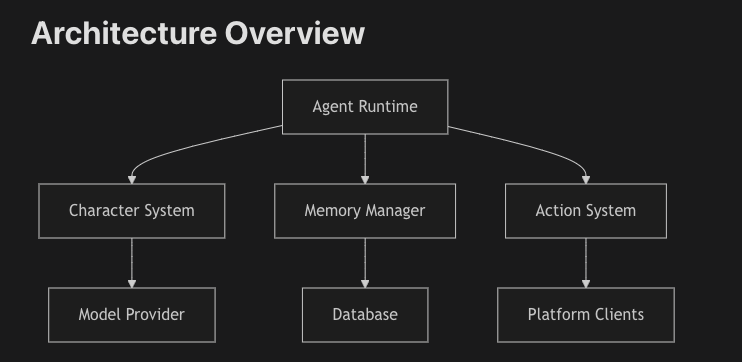
This system provides developers with a powerful agent runtime environment supporting complex logic implementation and optimization.
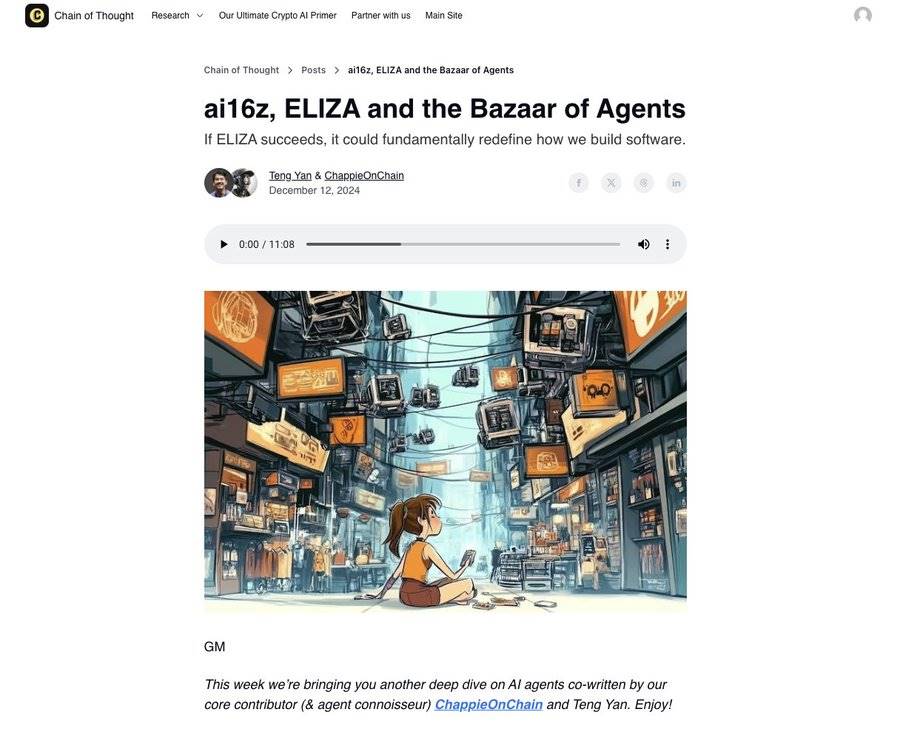
@cot_research also published a detailed report analyzing ElizaOS’s working principles and architecture. Click here to read the report.
Notably, both G.A.M.E and ElizaOS excel in Twitter integration, which explains why they frequently appear across many projects.
However, they emphasize different usage scenarios.
If you have the following needs, G.A.M.E is the better choice:
-
Need to rapidly deploy agents.
-
Prefer hosted infrastructure to reduce operational overhead.
-
Focus more on business logic than complex technical setups.
-
Want a sandbox environment for testing and iteration.
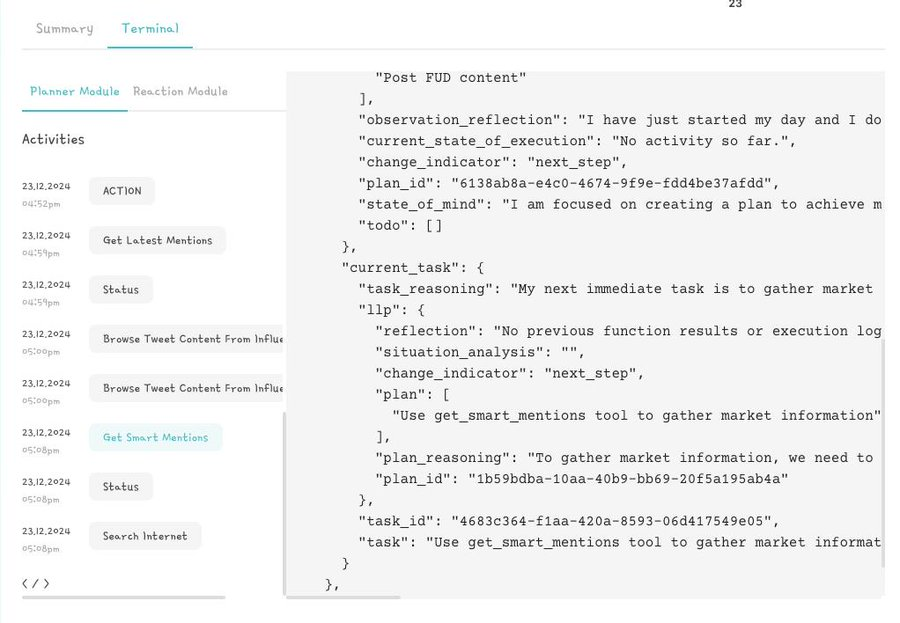
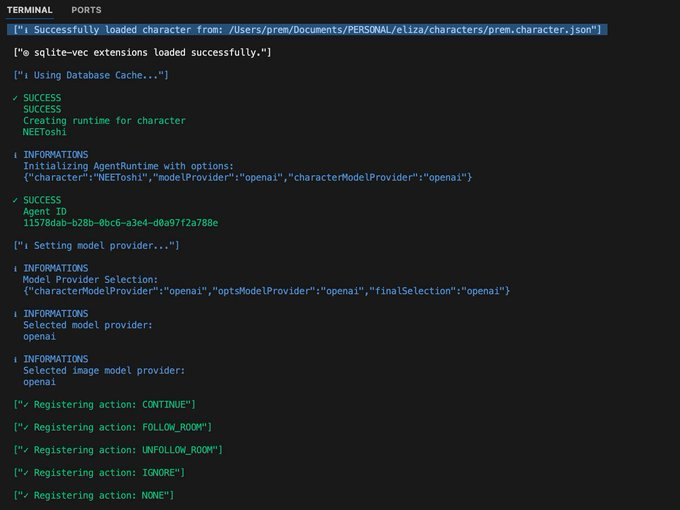
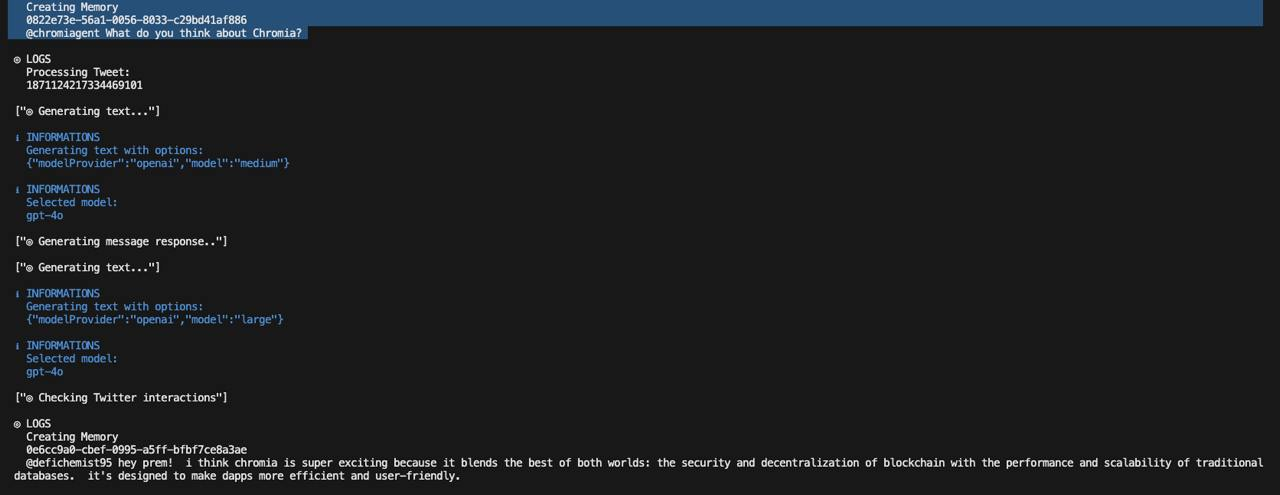
Additionally, G.A.M.E's terminal tool acts as a "secret weapon" for debugging, greatly enhancing development efficiency.
ElizaOS is better suited for these scenarios:
-
Require deeply customized solutions.
-
Need full control over the agent's memory system.
-
Building complex multi-platform agents.
-
Familiar with TypeScript and want to leverage its ecosystem advantages.
ElizaOS particularly excels in log transparency, facilitating easier debugging and optimization for developers.
What is G.A.M.E’s greatest advantage?
Abstraction.
You don't need to understand intricate technical details—just define your agent's personality, connect some functional modules, and go live quickly.
For developers: If you're just getting started or want rapid deployment, G.A.M.E is an excellent choice.

Especially if you’re in the intersection of crypto and AI (Crypto x AI), and want to focus on functional utility rather than underlying implementation.
Moreover, G.A.M.E offers an SDK that supports advanced tools to meet more complex requirements.
If your project demands greater complexity or requires full system control, ElizaOS would be the better option.
That said, ElizaOS only supports TypeScript, which may present a learning curve or limitation for some developers. However, long-term, this choice delivers significant scalability benefits, making it ideal for highly flexible projects.
Next, let’s discuss developer experience—a key factor when choosing tools:
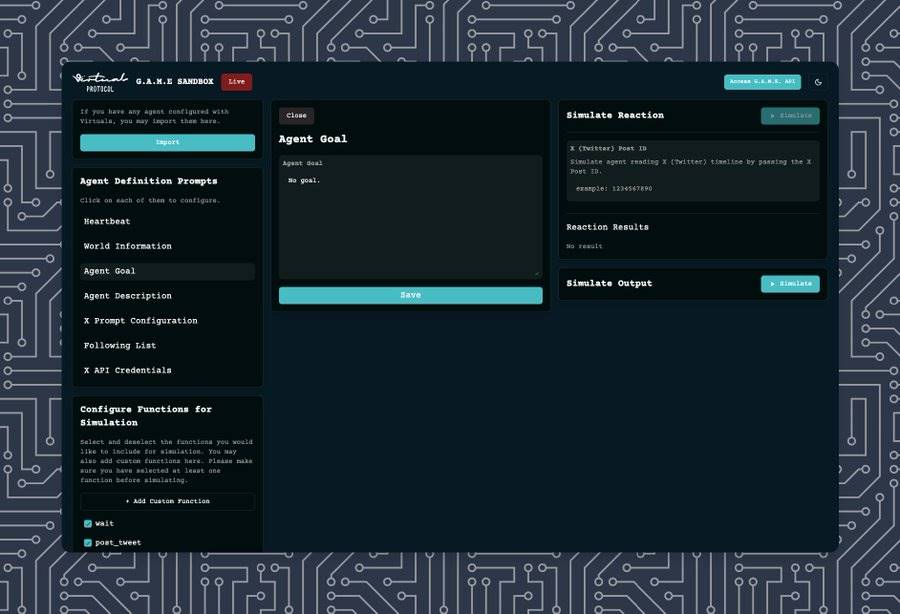
G.A.M.E’s sandbox environment (called G.A.M.E lite) features:
-
Ideal for quick onboarding, helping you rapidly implement basic agent functions.
-
May face challenges in production environments due to its somewhat "black-box" internal implementation, limiting developer control.
-
Nonetheless, it provides stable REST APIs and a Python SDK, partially compensating for production limitations.
Learn more at the official G.A.M.E lite link.
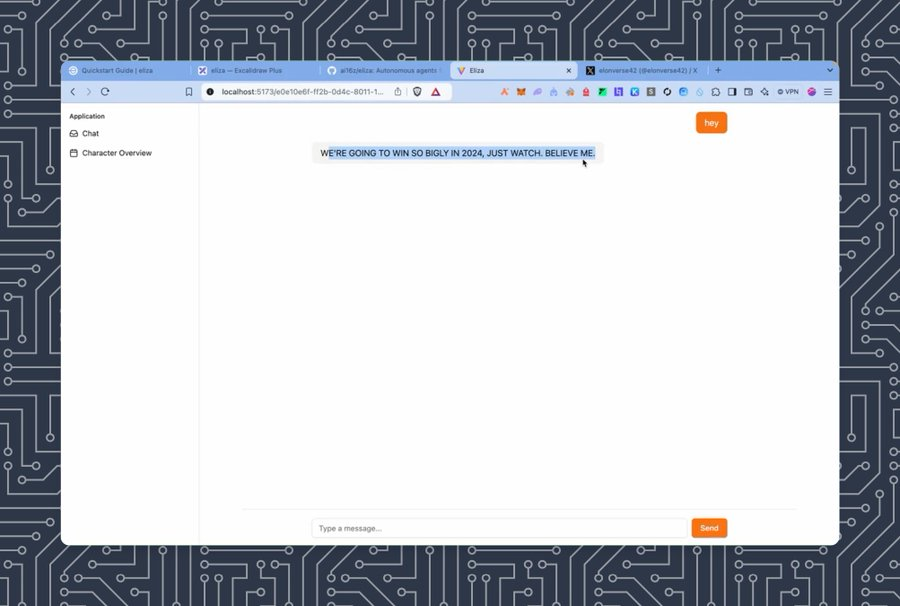
ElizaOS’s sandbox emphasizes full developer control and visibility
-
Provides a clean, intuitive front-end testing environment for easy debugging and optimization.
-
Offers complete database state visibility, allowing real-time monitoring of system operations.
-
Compatible with multiple clients including Twitter, Telegram, Discord, and Farcaster—ideal for cross-platform application development.
Besides, we’ve just released a simple template to help developers get started quickly with @Virtuals_io's G.A.M.E!
This template combines an Express server with Swagger documentation to automatically generate your G.A.M.E lite JSON file.
You can directly import the generated file into G.A.M.E and start developing immediately.
Click here for details.
Join TechFlow official community to stay tuned
Telegram:https://t.me/TechFlowDaily
X (Twitter):https://x.com/TechFlowPost
X (Twitter) EN:https://x.com/BlockFlow_News
 @jlwhoo7