Top 10 Web3 Buzzwords in Hong Kong 2024
TechFlow Selected TechFlow Selected
Top 10 Web3 Buzzwords in Hong Kong 2024
Gained insight into the industry's rise and development over the year.
 Navigating Web3 tides with focused insights
By Riley
2024 is destined to be extraordinary. After three years of dormancy, Web3 has finally entered the beginning of a new bull cycle. With fresh narratives and innovations emerging, where are the new vital signs pulsing beneath the surface? Let’s turn our attention to Asia's financial hub—and the beating heart of Asian Web3—Hong Kong. Over the past year, regulation, innovation, and capital have surged forward here, enabling the entire industry to strike a delicate balance between innovation and compliance.
New narratives are deeply intertwined, with hotspots constantly emerging. This article reviews the top ten buzzwords in Hong Kong's Web3 space in 2024, offering a glimpse into the sector’s rise and evolution over the past year.
1. Native Compliance—"No gray routes, only clear paths"
In 2024, the world is embracing Web3 compliance. The era of "regulatory arbitrage" is gone for good.
Unlike the “build first, fix later” approach seen in the U.S. and other regions, Hong Kong has charted a new course: “rules first, innovation follows.” From VASP licensing and CBDCs to HKD-pegged stablecoins, spot virtual asset ETFs, and the Ensemble sandbox initiative, each piece of legislation and pilot project reflects the phased achievements of Hong Kong regulators working hand-in-hand with local financial institutions.

More importantly, Hong Kong’s traditionally cautious regulators decisively shifted into high gear in 2024. Whether it was the SFC issuing four VASP licenses at once in December or launching the world’s first ETH spot ETF, this pace—steady yet swift—reveals that Hong Kong has successfully balanced prudence with openness.
If Web3 is a game, then in 2024 Hong Kong not only defined the upgrade path but also compiled a comprehensive “beginner’s guide,” warmly welcoming new players to join.
2. BTC Asset Allocation—"Nations and corporations rush to 'HODL'"
What virtual asset should you invest in during 2024? Bitcoin (BTC), up 150% for the year, is undoubtedly one of the answers. In the second half of 2024, the U.S. kicked off a BTC accumulation race, with Trump’s strategic Bitcoin reserve plan elevating Bitcoin to the status of “national strategic asset,” prompting emulation by countries including Brazil, Poland, and Japan.
With policy direction set, capital markets quickly followed. Throughout 2024, institutional investors purchased a total of 859,454 BTC. Among them, MicroStrategy, a long-term BTC holder, led the pack by adding nearly 250,000 BTC this year alone, generating $20 billion in unrealized gains and solidifying its position as a top BTC whale.
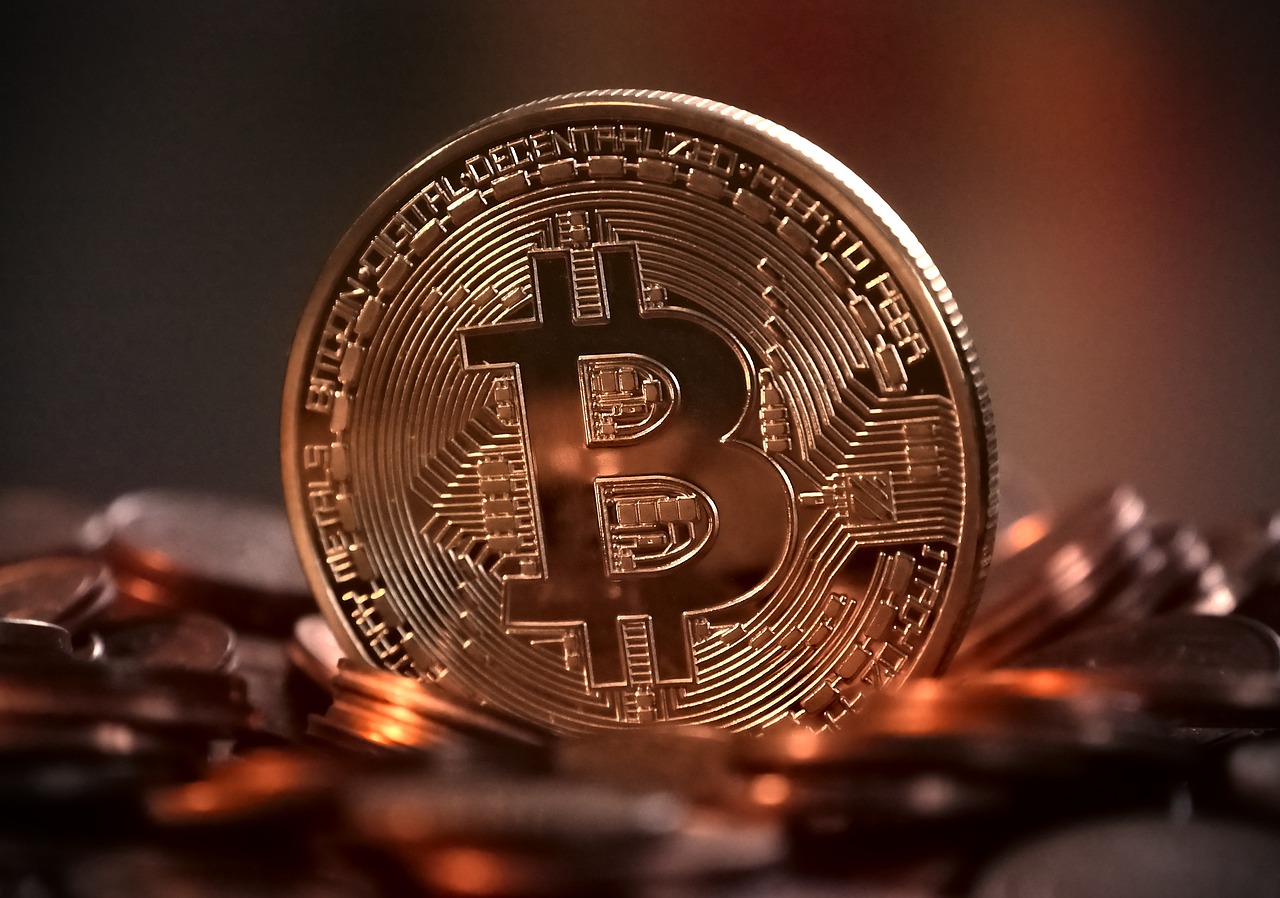
As a global “HODL wave” emerged, corporations were not far behind. Hong Kong-listed company Boyaa Interactive (HK.0403) announced holdings of 2,641 BTC and 15,445 ETH, swiftly converting 14,200 ETH into 515 BTC in a seamless move. Nano Labs (Nasdaq: NA) partnered with HashKey Exchange to deploy $50 million into BTC assets. As of writing, Nano Labs holds $5.5 million worth of BTC—a textbook example of corporate BTC adoption. Additionally, GF Innovation, Coolpad Group, and others are quietly entering the BTC reserve arena, positioning themselves early.
3. Spot Virtual Asset ETFs—"Old tool, new tricks"
ETFs are commonplace in traditional finance, but their fusion with virtual assets became a breakthrough catalyst in the Web3 market in 2024. In January 2024, the U.S. approved its first BTC spot ETF, triggering market euphoria. While other nations hesitated or deliberated, Hong Kong responded swiftly—launching BTC spot ETFs and racing ahead to introduce ETH spot ETFs, securing a leading foothold in Asia.
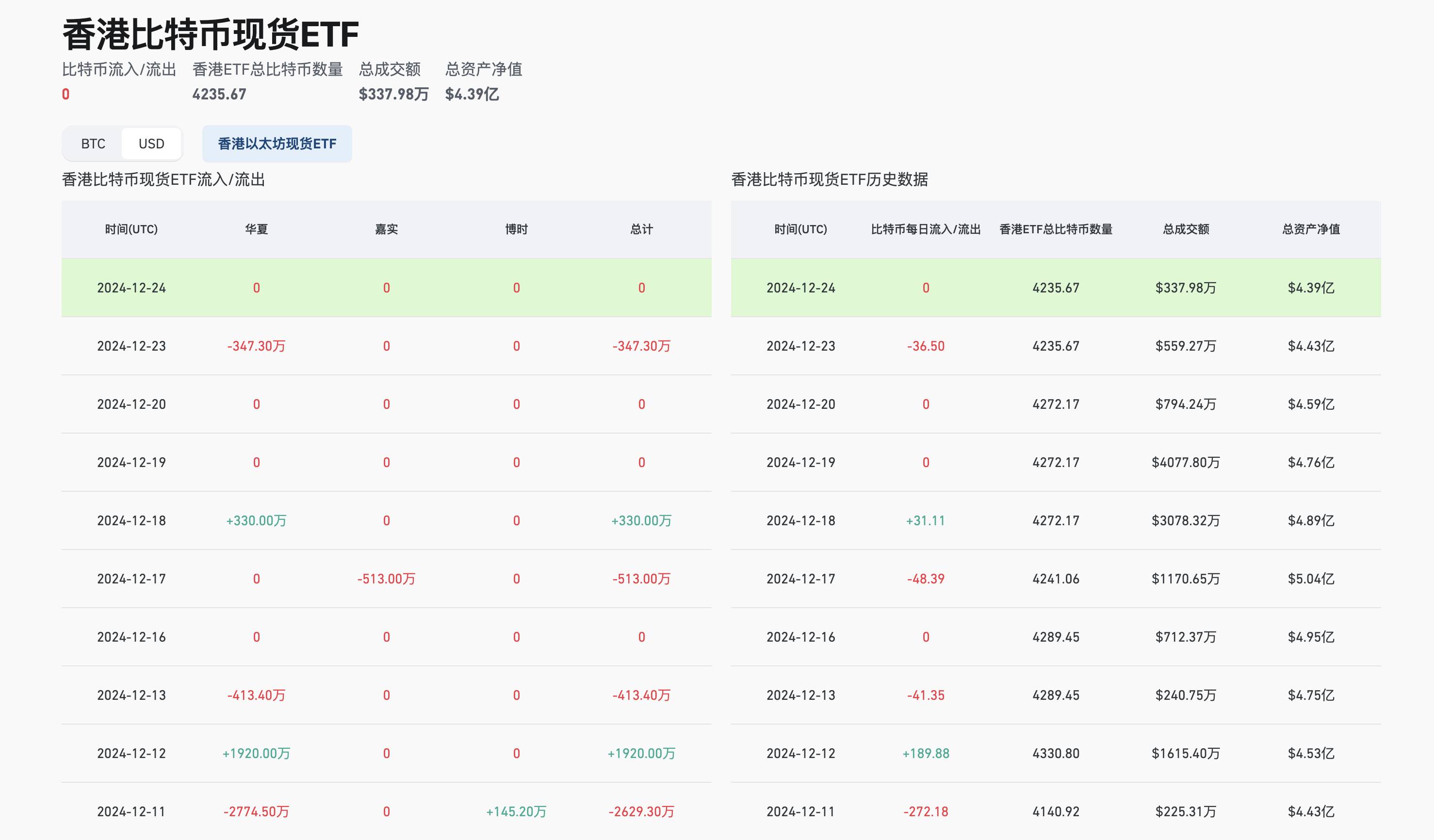
Hong Kong now hosts three BTC spot ETFs and three ETH spot ETFs, launched by top-tier institutions CSOP, Harvest, and Bosera. According to Coinglass, as of writing, Hong Kong’s BTC spot ETFs hold $439 million in net assets, while ETH spot ETFs reach $63.56 million. Though still trailing the U.S. in scale, Hong Kong’s virtual asset ETFs have rapidly claimed market share through innovation and dynamism, paving the way for future capital inflows. In July, Hong Kong launched Asia’s first inverse Bitcoin product—the CSOP Daily (-1x) Inverse Bitcoin Futures Product. In November, HKEX introduced a virtual asset index series, including reference indices and exchange rates for BTC and ETH, expanding the financial toolkit available to the market.
Spot virtual asset ETFs have not only opened the door to Hong Kong’s traditional financial markets but also marked the starting point of its Web3 capital surge.
4. Stablecoins—"The crown jewel of cross-border payments, the darling of regulators"
Mainstream stablecoins like USDT and USDC, backed by their 1:1 peg to the U.S. dollar, have long been the go-to instruments in cross-border payments. Whether for crypto trading, payroll settlements, or goods transactions, stablecoins are everywhere. But as the saying goes, “the higher the profile, the more scrutiny.” Repeated de-pegging incidents have made them prime targets for global regulators.
In June 2024, the EU’s “Stablecoin Act” came into force, setting off a global regulatory sprint. Hong Kong didn’t fall behind—kicking off full throttle from the start: February saw a consultation on fiat-backed stablecoin regulation; March introduced the “Stablecoin Sandbox” program; July published a consultation summary; and by December, the full “Stablecoin Bill” was delivered. The Legislative Council clearly nailed its KPIs.
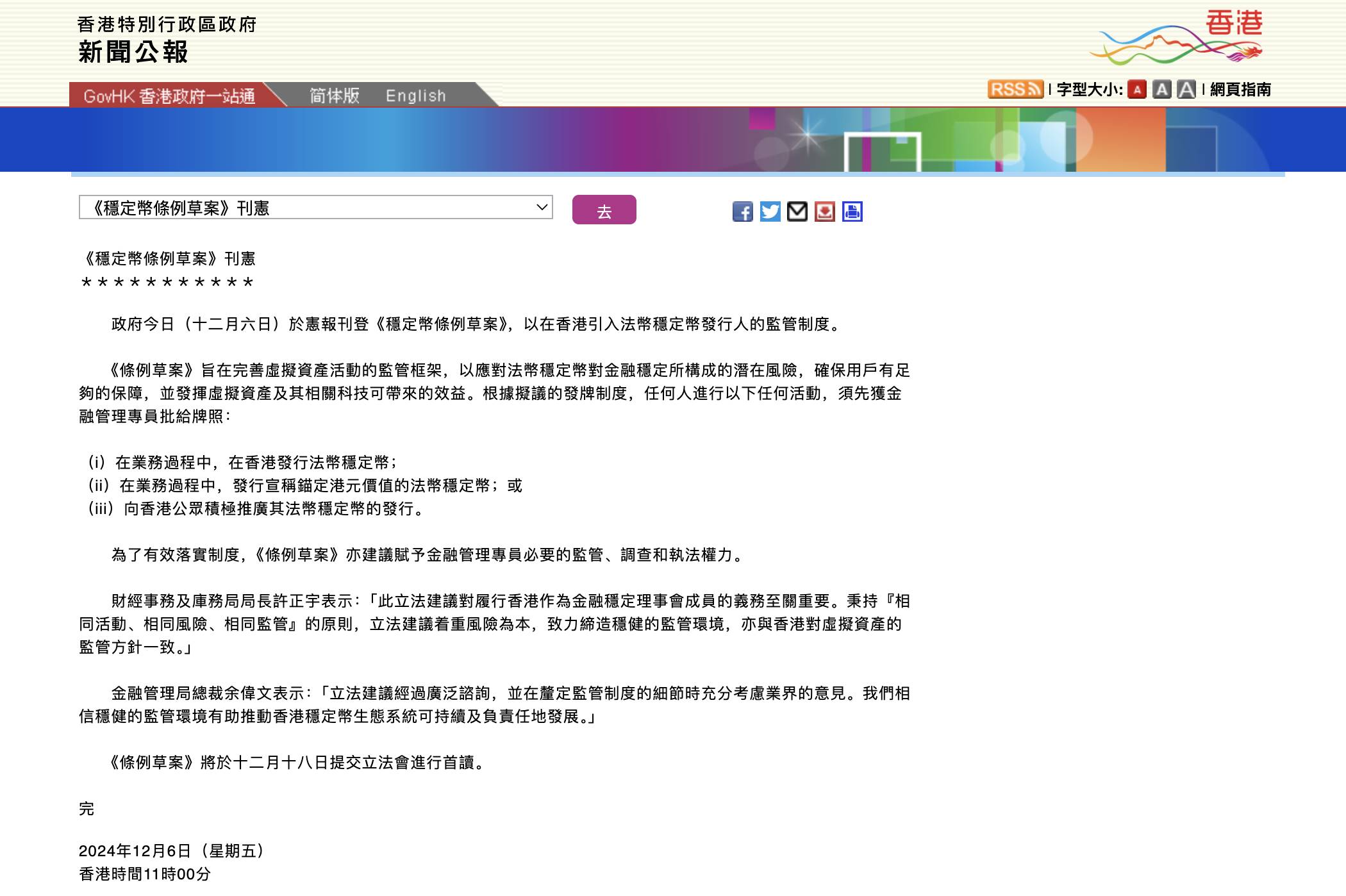
Interestingly, the initial sandbox cohort included big names like JD Blockchain, Oval Pte Ltd, Standard Chartered Hong Kong, Animoca Brands, and Hong Kong Telecom (HKT), instantly turning the stablecoin sandbox into an elite club.
Currently, Hong Kong’s regulatory focus centers on HKD-pegged stablecoins, a move that strengthens market confidence and elevates its digital asset framework. Will Hong Kong eventually open the door to widely used USD stablecoins like USDT and USDC? The story continues.
5. VASP Licenses—"You need a license to open shop"
A VASP (Virtual Asset Service Provider) license is the “entry ticket” to operating in the virtual asset trading market. With precedents in the U.S., Singapore, Dubai, and the EU, licensed operations have become the norm. As Asia’s financial hub, Hong Kong is now fully equipped with its own VASP licensing regime.
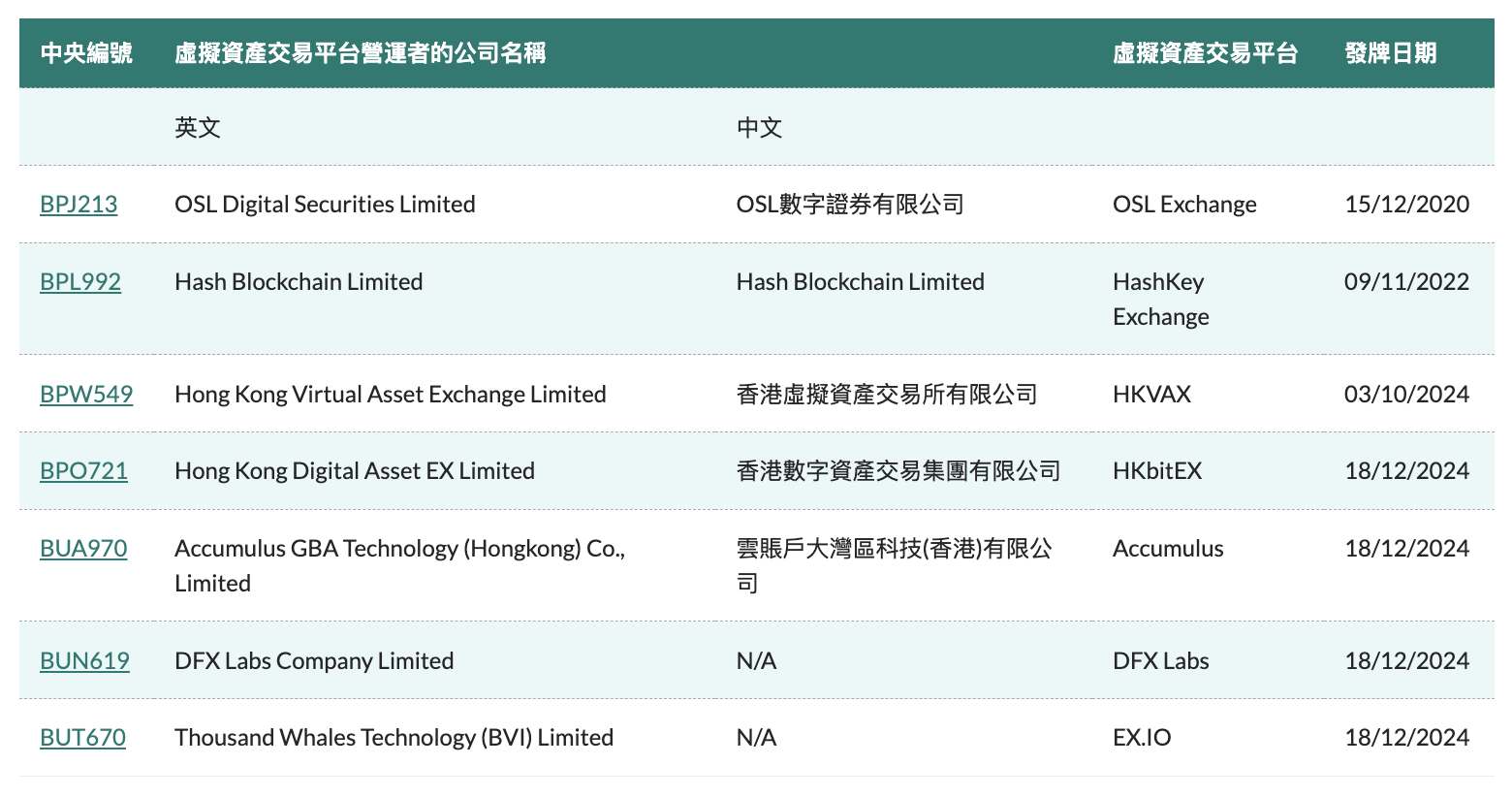
Today, seven platforms are officially licensed and operational: HashKey Exchange, OSL Exchange, HKVAX, HKbitEX, Accumulus, DFXLabs, and EX.IO. These “model students” must strictly comply with the Anti-Money Laundering Ordinance (AMLO) and pass multi-layered reviews by the Securities and Futures Commission (SFC).
Rewards follow effort—licensed platforms enjoy greater market trust. For instance, HashKey Exchange surpassed HK$10 billion in total assets under management in 2024, with cumulative trading volume reaching HK$580 billion, ranking among the global Top 10 centralized exchanges. While many more platforms await review, the SFC has laid out a clear roadmap for licensing. In 2025, we can expect even more licensed entrants.
6. PayFi—"Same old wine in a new bottle, or a new payment revolution?"
In 2024, PayFi (Payment Finance) emerged as the new darling of the Web3 scene. While it may seem like merely moving payments onto blockchain, PayFi dramatically enhances cross-border payment efficiency, transforming traditional “snail-paced transfers” into “instant settlements.”
If there’s one enduring narrative in Web3, it’s mass adoption. PayFi is a key player in making that vision real. Broadly speaking, PayFi falls under the RWA (Real World Assets) category, but its ambitions go much further. Behind it lies blockchain’s power to unlock trillions in real-world assets—just in payments, credit cards, trade finance, and cross-border transactions represent a market exceeding $40 trillion. Currently, PayFi operates mainly in the “long-tail” segments of traditional finance, meaning its growth potential is enormous.
PayFi’s core value lies in connecting blockchain liquidity pools with off-chain financial needs. This integration is no simple task—it requires multiple conditions: operation within relatively relaxed, crypto-friendly regulatory environments, and access to well-capitalized institutions capable of providing full-stack compliant services—from infrastructure and KYC to on/off ramps and liquidity management. Few entities meet these criteria, but licensed players like HashKey Exchange, Hong Kong’s largest licensed virtual asset exchange, do.
Hong Kong could become PayFi’s financial hotspot. As a global financial center, it offers massive cross-border capital flows, mature financial infrastructure, and policy support such as the Ensemble initiative and stablecoin regulations. The red carpet for PayFi industry players is being rolled out.
7. Traditional Institutions Rush In—"Old money becomes new elite"
While spot virtual asset ETFs provided traditional capital a gateway into Web3, indirect investment pales in comparison to direct profits. Watching U.S. financial giants rake in huge returns from BTC spot ETFs amid the early-year crypto rally, Hong Kong brokers found themselves sitting on millions of users while stuck in a frozen stock market—over 1,000 Hong Kong stocks traded less than HK$10,000 daily.
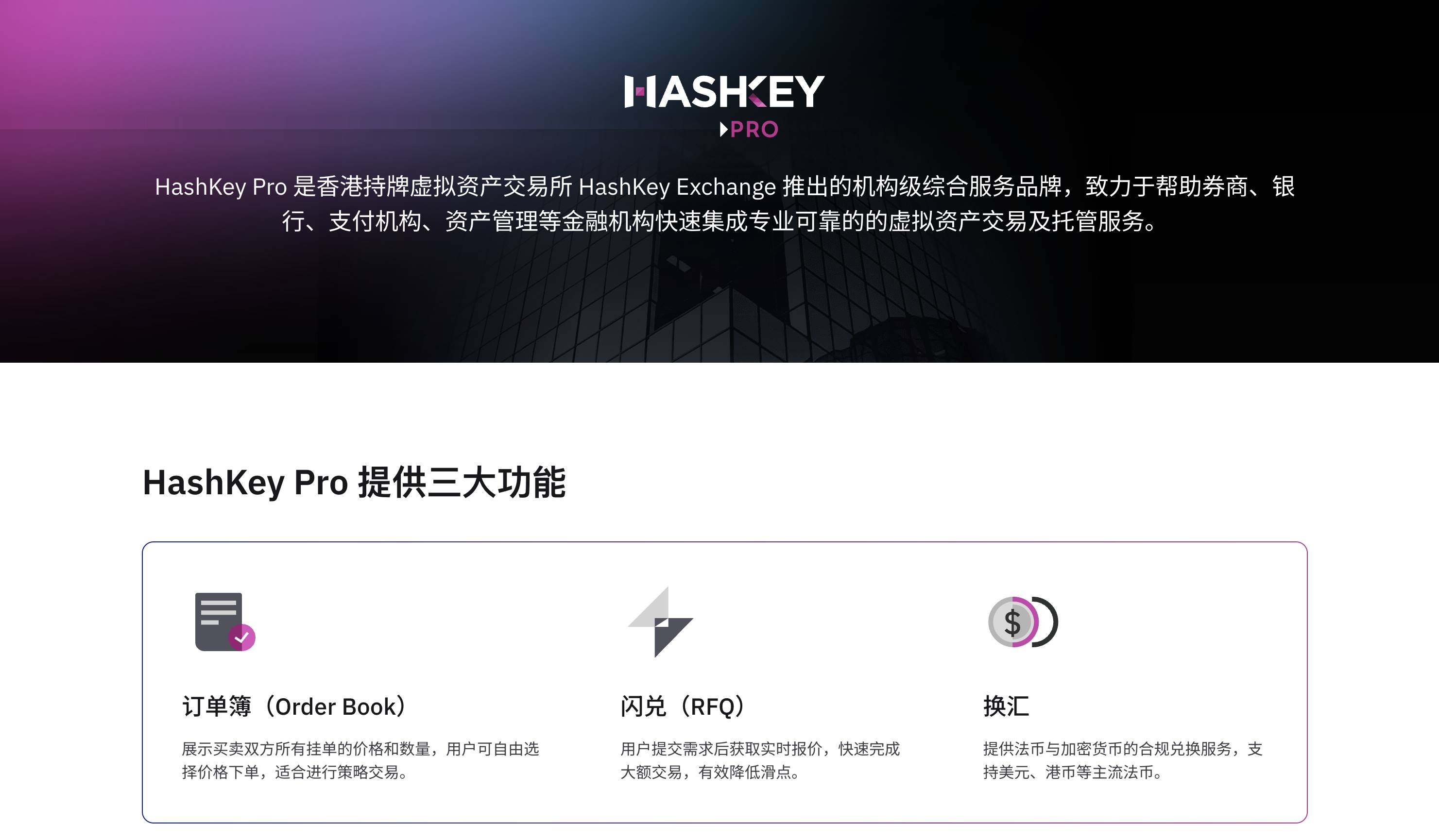
The solution? Bring users into Web3. So Hong Kong’s traditional brokers finally “rushed in.” Firms like Victory Securities and AID Partners, along with online brokers Futu and Tiger Brokers, and even international giant Interactive Brokers, upgraded to SFC Type 1 licenses and swiftly expanded into virtual asset services. To “avoid detours,” they partnered with local licensed exchanges like HashKey Exchange, integrating HashKey Pro’s institutional-grade suite to quickly enable deposit, withdrawal, and trading of BTC and ETH. Within months, they drove HK$5 billion in trading volume.
Their entry brought not just traffic but also expertise—risk control, compliance, and client relationships—pulling traditional investors into the world of virtual assets. Most excitingly, if the Web3 market breaks out further in 2025, Hong Kong brokers could leverage their advantages to bring global “old money” into the ecosystem, fully bridging traditional finance and virtual assets.
8. OTC Regulation—"A $10B market prepares for a tighter leash"
“On/off ramp? Go to Hong Kong.” Hundreds of physical exchange shops have drawn increasing crowds. For institutions and high-net-worth individuals conducting multimillion-dollar trades, OTC offers flexibility, enhanced privacy, and superior liquidity. As a result, Hong Kong’s OTC market has thrived—home to around 200 physical outlets and 250 active online providers, with annual trading volume nearing $10 billion.

Yet beneath the prosperity lie hidden risks. Recent OTC-related robberies and the false marketing by OTC promoters during the JPEX incident exposed serious compliance gaps and potential money laundering threats. In response, Hong Kong moved quickly: in February, it released the “Regulatory Recommendations for Virtual Asset OTC Trading,” aiming to put OTC under stricter oversight. Latest reports indicate consultations and legislation are expected by 2025–2026, with Customs and the SFC collaborating closely.
Industry opinions are split—some fear short-term cooling, while others see long-term trust benefits. After all, without a license, the market remains “wild west”; with regulation, Hong Kong’s OTC market can evolve from a “free-for-all” into a globally trusted, compliant hub, ready for greater growth.
9. Conference Hopping—"The new fitness craze"
Conference hopping has always been Web3’s national sport, and Hong Kong was the epicenter in 2024. Just counting mid-to-large events in Hong Kong, there were over 50 in 2024—covering everything from virtual asset regulation and blockchain implementation to coder hackathons and executive strategy talks.
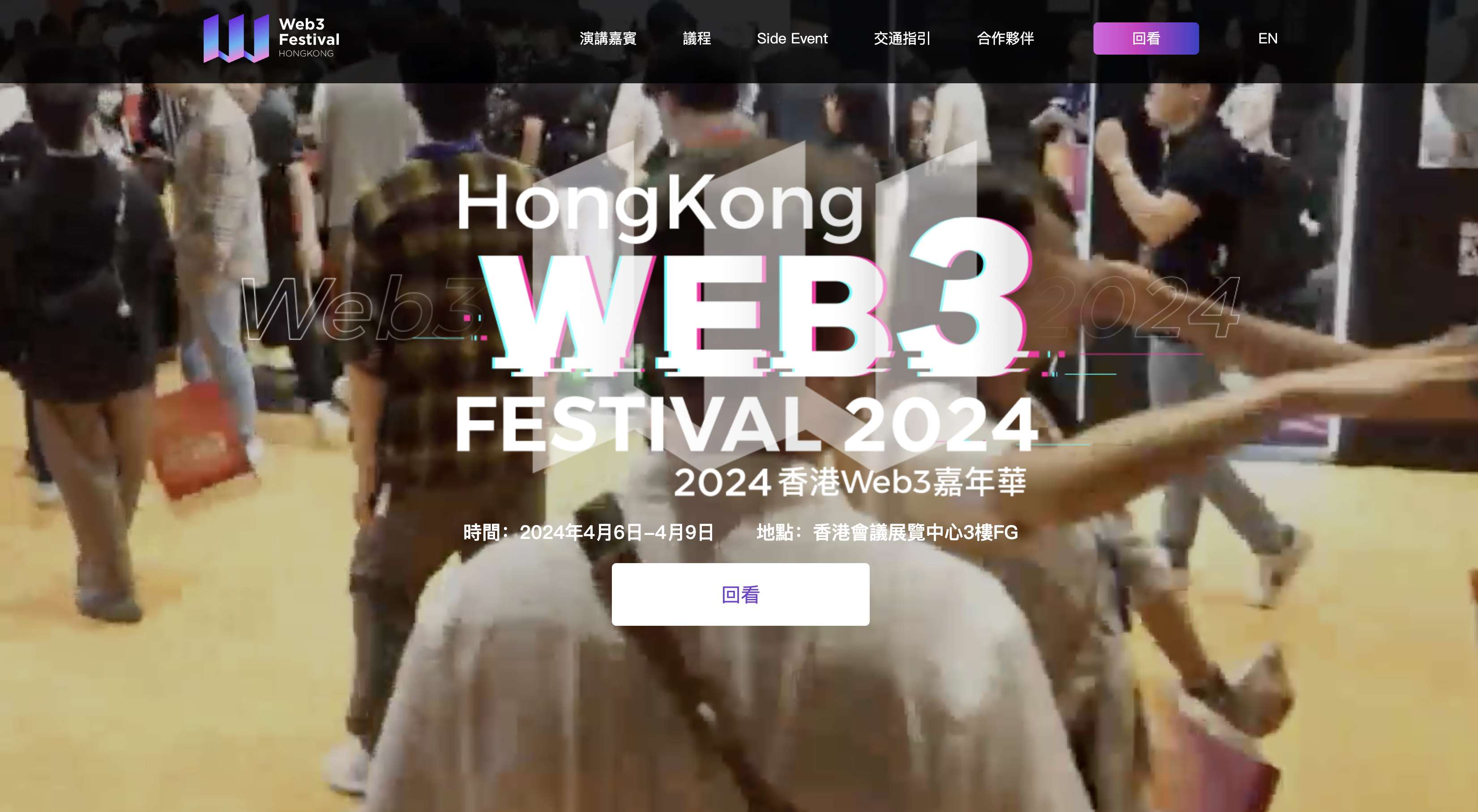
Majors like WOW Summit, FORESIGHT 2024, Hong Kong Web3 Festival, and FinTech Week; tech forums like Solana Hacker House HK and HashKey Hackerhouse Tai Chu; not to mention countless small salons and cocktail events… The Hong Kong Web3 Festival stood out—occupying nearly 9,000 sqm over four days, with nearly 200 side events nearby. Rough estimates suggest over 50,000 offline attendees, 300+ global speakers, and 100+ featured projects. Upcoming: Consensus, making its Hong Kong debut in February 2025, followed by Web3 Festival at the end of April.
The industry never sleeps, and neither does conference hopping—2025 will remain red-hot.
10. Front-Shop, Back-Factory—"The Shenzhen-Hong Kong combo reshapes Web3"
In 2024, the center of gravity for Chinese-speaking Web3 has shifted from Shanghai and Hangzhou to Hong Kong. And the “front-shop, back-factory” model has become Hong Kong and Shenzhen’s unique collaborative advantage. This powerful duo not only amplifies industry strengths but also creates a distinctive Greater Bay Area playbook.
Hong Kong excels as the “front shop.” As a top-tier global financial center, it offers efficient capital markets, an open business environment, and continuously improving virtual asset regulations. From a steady stream of international industry events to clear, localized policy guidance, strong government support—including a HK$10 billion innovation fund and special visa programs—and excellent fundraising opportunities, establishing in Hong Kong means standing at the center of the global stage for Web3 companies.

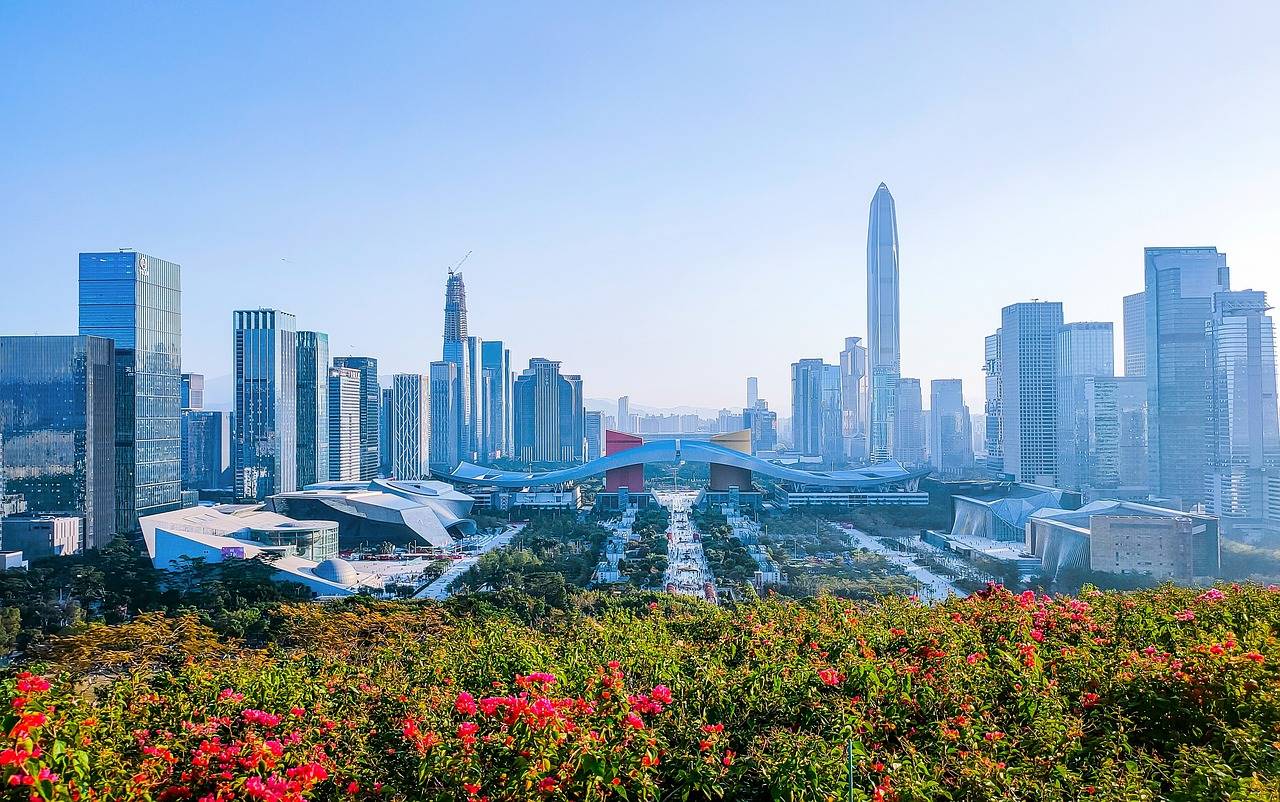
Shenzhen, the “back factory,” brings formidable R&D strength, complete supply chains, and exceptional cost control—ideal conditions for incubating Web3 projects. Many Hong Kong-based Web3 firms choose to base their technical teams in Shenzhen, leveraging its capabilities in blockchain infrastructure development, hardware manufacturing, and rapid iteration. In 2024, Hong Kong’s Cyberport deepened collaboration with multiple tech parks in Shenzhen, smoothing cross-border resource flows.
This “front-shop, back-factory” model creates a closed loop of “brand + technology,” empowering Web3 companies to unlock massive potential and enter global markets. In 2025, Hong Kong is worth watching.
Join TechFlow official community to stay tuned
Telegram:https://t.me/TechFlowDaily
X (Twitter):https://x.com/TechFlowPost
X (Twitter) EN:https://x.com/BlockFlow_News