








Dropping the Anti-Establishment Facade, Joining the Power Game: Cryptocurrency's Cards Begin to Show
TechFlow Selected TechFlow Selected
Dropping the Anti-Establishment Facade, Joining the Power Game: Cryptocurrency's Cards Begin to Show
Cryptocurrency, an innovation in the technological field, has generated a unique cultural atmosphere that far exceeds the scope of a single service.
 Navigating Web3 tides with focused insights
By Charlie Warzel
Translated by Yanan, Bitpush News
For years, skeptics of cryptocurrency have been baffled: What is the point of all this? And crypto enthusiasts have worked tirelessly to find a compelling answer. They believe blockchain—the underlying technology behind cryptocurrencies and many similar applications—is a groundbreaking innovation in its own right. It enables precise tracking of digital ownership and fuels the rise of online communities. Some even argue it's the foundational infrastructure for a new, hyper-financialized internet—what they call Web3—where you can buy a cartoon ape NFT for $3.4 million without any human intermediary.
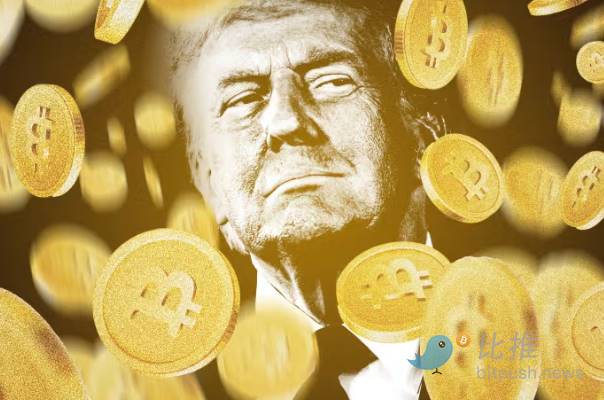
Then there are cryptocurrencies themselves: Bitcoin, Ethereum, and the endless parade of Memecoins and startup tokens. Most are highly volatile, speculative assets—some use them for trading, meme-making, value storage, or striking it rich overnight (or losing everything just as fast). They're also frequently used for illicit purposes: notorious money laundering, funding sketchy startups, and orchestrating complex financial scams. Still, crypto does have real use cases. Yet for a long time, critics argued the technology was overly complicated and didn’t deliver anything modern finance couldn't already do—in other words, crypto felt like a solution in search of a problem for anyone not planning to use it for crime.
I tended to agree with that view. I’ve spent time reporting on NFTs and crypto-based decentralized autonomous organizations (DAOs), like the one that tried to buy an original copy of the U.S. Constitution in 2021. I've read the dense white papers of Web3 startups and decentralized finance (DeFi) protocols—systems using smart contracts to offer financial services without big banks. But I never found the so-called "killer app."
That said, after the presidential election, I started thinking differently about crypto’s influence.
Cryptocurrency, as a technological movement, has transcended any single service to become a distinct cultural force. This culture is inherently distrustful of traditional institutions and sympathizes with those who challenge or dismantle them. The recent election outcome, in part, reflected skepticism toward established authorities—like the federal government, public health systems, and media—and the crypto industry played a role in amplifying that sentiment. The sector formed a super PAC called “Fairshake,” raising over $200 million to support pro-crypto politicians across both Democratic and Republican parties.
Notably, Donald Trump has shown strong enthusiasm for crypto technology. During his campaign, he heavily promoted a new DeFi-focused platform called “World Liberty Financial” and vowed to remove Gary Gensler, the SEC chair known for aggressively regulating the crypto industry. Gensler is indeed expected to step down in January—a routine transition under incoming administrations.
Trump also promised to ease regulations to “make America the global center of crypto and a superpower in Bitcoin.” He bluntly told supporters: “If you’re in favor of cryptocurrency, voting for Trump is your best bet.”
In the short term, crypto appears to have fostered a lasting and complex cultural phenomenon—one populated by true believers, tech utopians, speculators, criminals, victims, investors, and politicians eager to court voters. The influx of money from this technology has made many people instant millionaires, and they’re now using their wealth to build a world aligned with their vision.
While Bitcoin’s founding manifesto—the white paper that laid the foundation for the entire crypto space—didn’t directly address politics, the technology quickly gained favor among cyber-libertarians. Their core belief traces back to John Perry Barlow’s 1996 “Declaration of the Independence of Cyberspace,” which declared that governments should not interfere in internet governance.
Bitcoin and other cryptocurrencies run on blockchain, whose decentralized nature gives it an inherent anti-establishment character. They operate without central authorities or intermediaries. As the late digital culture scholar David Golumbia argued in his 2016 book *The Politics of Bitcoin: Software as Right-Wing Extremism*: “Among Bitcoin’s most fervent advocates, the Federal Reserve is often portrayed as fundamentally corrupt—an instrument manipulated by shadowy bankers intent on ‘total control over people’s lives.’”
To early true believers, crypto was a beacon of technological utopianism, offering a way to fight back against a broken, exclusionary, and exploitative financial system. They believed this innovation would either remake or completely replace the existing order.
But today, the crypto ecosystem has grown far more diverse. Platforms like Coinbase and Robinhood have opened access to anyone with a bank account and smartphone. Yes, there remain hardcore “true believers” deeply committed to the technology. But we also see celebrities and meme kings launching new coins through viral marketing, alongside legions of day traders chasing quick riches on speculative tokens.
Profits in crypto are often tied to hype and marketing, creating a unique digital subculture. It attracts those seeking belonging, investors lured by dreams of 1000x returns, and others who simply enjoy the thrill of annoying the establishment. Even as crypto goes mainstream, many loyalists still see their investments and communities as countercultural symbols.
So it’s no surprise that right-wing figures like Jordan Peterson and Joe Rogan—who, despite their fame, still identify as outsiders—show deep interest in crypto. Similarly, venture capitalists like Marc Andreessen, whose firms are deeply invested in crypto, are shifting toward more conservative political stances—a trend worth noting.
It’s easy to mock the hype cycles of crypto—you can scoff at the wild price swings of Bored Ape NFTs or dismiss the shameless promotion in Memecoin culture. Take Haliey Welch, better known as “Hawk Tuah girl,” a social media personality turned podcast host who launched her own Memecoin. Its price surged briefly before crashing, leaving many fans furious. If you’re feeling overwhelmed by this description, I apologize—but you probably get my point.
The crypto culture is filled with obscure internet slang and distinctive visual aesthetics, often alienating and even repulsive to outsiders. And the industry’s frequent scandals—Ponzi schemes, fraud against retail investors, bankrupt platforms like FTX and Celsius—only deepen distrust. Yet despite these setbacks—or perhaps because of them—crypto has created millionaires, billionaires, and vast corporate treasuries. Now, they’re wielding that wealth in politics.
This brings us back to Trump. Whether he genuinely understands crypto’s deeper principles—beyond seeing it as a tool for votes and fundraising—remains unclear. But philosophically, the alliance between Trump and crypto supporters makes sense. Trump himself is a figure driven by greed and tainted by corruption. For his base, part of his appeal lies in his promise to weaken federal power, retaliate against political enemies, and overhaul American institutions. It’s easy to see how the “Make America Great Again” (MAGA) vision intersects with a fringe culture that despises the current system as rotten and untrustworthy. This overlap extends to certain tech executives, such as David Sacks, a venture capitalist opposed to “wokeness,” whom Trump appointed to lead AI and crypto policy.
I shared these thoughts with Molly White, a long-time observer of the crypto industry. She pointed out another similarity between crypto advocates and MAGA supporters: both aspire to become the very powerful institutions they claim to despise. “Bitcoin, and to some extent other crypto assets, carry an anti-government, anti-censorship ethos,” she explained. The original idea was that large financial institutions and governments shouldn’t control this space. But “many crypto advocates have accumulated massive wealth and power through these assets. Over time, the mindset has shifted from ‘we don’t want those institutions in charge’ to ‘we want to be in charge.’”
White argues the crypto industry has evolved into a mirror image of the very system it once claimed to oppose. “Look at what companies like Coinbase are doing—they behave much like the financial institutions Satoshi Nakamoto criticized. They cooperate closely with governments and perform identity verification just like traditional banks,” she said. “They’ve rebuilt a financial system that offers consumers even less protection.”
Clearly, if Trump returns to office, the crypto industry and its leaders may finally get what they want. New regulatory frameworks could classify tokens as commodities rather than securities, significantly loosening trading restrictions and enabling deeper integration between major banks and crypto assets. Last week, Trump nominated Paul Atkins, a former SEC commissioner and crypto supporter, to lead the SEC. Upon the announcement, Bitcoin surged past $100,000—a stark contrast to last year’s price, which was less than half that amount.
You don’t need to be cynical to recognize the flywheel effect here: crypto has risen as a political force not because of undisputed technical utility, but because it created a class of ultra-wealthy individuals who attract attention and influence. The industry buys political access; politicians make promises in return. Pro-crypto candidates win elections, Bitcoin prices rise, enriching the same group further, enabling even greater political clout.
Even before Trump officially takes office, signs of this potential chain reaction are already visible. Justin Sun, a Chinese crypto billionaire, recently spent $30 million buying Trump’s “World Liberty Financial” token—an investment that could benefit Trump personally and raises concerns: Could the incoming president’s crypto holdings become a vehicle for bribery? There are rumors Trump might fulfill his earlier pledge to establish a strategic Bitcoin reserve in the U.S., possibly requiring the federal government to purchase up to 200,000 Bitcoins annually over the next five years—perhaps even exchanging gold reserves for Bitcoin. For crypto whales, this is an incredibly attractive scenario: a government-backed wealth transfer from taxpayers to crypto elites. In essence, holders could sell their assets to the government at inflated prices, further driving up valuations. For a technology founded on decentralization, using the state to prop up Bitcoin prices is deeply ironic.
In a second Trump term, crypto might become a lubricant for government operations. But more troubling is what happens if the industry achieves all its goals. My colleague Annie Lowrey recently wrote: “Rules favorable to the industry will unleash waves of capital into crypto markets, enriching existing asset holders while increasing volatility and exposing millions of Americans to scams, fraud, and deception.”
White shares similar concerns, especially as crypto becomes more entangled with the global economy. The collapse of FTX devastated many users but didn’t trigger broader systemic fallout. “At the time, crypto firms weren’t too big to fail, nor did they require government bailouts,” she told me. “But if banks go deeper into this space, and if crypto becomes more tightly linked with traditional finance, I fear the industry will grow large enough that its failure could cause catastrophic damage.”
The future of crypto remains shrouded in uncertainty. But at least in the short term, its impact seems clearer than it did before November 5. One thing is clear: crypto has found a very specific application. As a technology, it has latched onto—and amplified—a culture that celebrates greed and speculation as virtues, embraces volatility, and thrives on disruption. What’s certain is that crypto attracts and shapes a particular kind of person: adventurous, overly optimistic about technology’s benefits, deeply distrustful of institutions. These traits align perfectly with the turbulence and distrust defining the 2020s—and with the nihilism and corruption characteristic of the Trump era.
Join TechFlow official community to stay tuned
Telegram:https://t.me/TechFlowDaily
X (Twitter):https://x.com/TechFlowPost
X (Twitter) EN:https://x.com/BlockFlow_News













