








10 Major Narratives That Shaped Crypto Development in 2024
TechFlow Selected TechFlow Selected
10 Major Narratives That Shaped Crypto Development in 2024
In 2024, the crypto industry witnessed key trends such as the rise of memecoins, development of prediction markets, innovations in liquid staking tokens, threats from quantum computing, emergence of DePINs, and widespread adoption of AI-powered trading tools, driving significant events including deeper integration of blockchain technology with real-world assets.
 Navigating Web3 tides with focused insights
Written by: Lorena Nessi
Translation: Baishuo Blockchain

2024 was a pivotal year for the crypto industry, filled with exciting trends and moments that consistently sparked community discussions.
From Memecoins making headlines to tokenization of real-world assets, the entire year was packed with stories pushing blockchain into new frontiers.
Telegram games brought cryptocurrency closer to everyday users, while prediction markets and liquid staking tokens introduced novel ways to interact with digital assets.
With rollups, modular blockchains, and the race to counter quantum threats, 2024 was undoubtedly an extraordinary year.
These top ten trends illustrate the dynamism and innovation driving the crypto world forward.
1. The Rise of Memecoins
Memecoins represent an unprecedented social phenomenon. While some view them as trivial or even question their legitimacy as digital assets—seeing them as poor financial decisions or mere fleeting fads born from viral marketing—they have undeniably carved out a space within the crypto ecosystem, blending humor, community engagement, innovative value creation, and broader cultural movements.
1) Grassroots Movements and Celebrity Influence
These tokens respond to various social, political, and economic contexts, reflecting cultural sentiments. They thrive on celebrity culture and are often propelled by influencers who amplify their visibility.
Memecoins frequently gain momentum through grassroots movements where communities unite around shared ideas and values, sparking collective action and viral trends. They also highlight participatory culture, enabling users to promote token adoption and shape narratives through collective effort. At times, they may simply be frivolous fads.
2) Memecoins in 2024: Milestones and Impact
In 2024, Memecoins solidified their status as a defining force in the crypto space. Tokens influenced by Shiba Inu (SHIB), such as Neiro (NEIRO) and FLOKI Inu (FLOKI)—the latter launching a debit card—and PepeCoin (PEPE), which leverages internet memes and nostalgia, demonstrated how humor and cultural relevance can drive significant financial activity.
A notable example of Memecoin influence in 2024 was when President-elect Donald Trump appointed Elon Musk to lead the newly formed Department of Government Efficiency (DOGE). This advisory body aims to streamline federal operations and reduce inefficiencies, with its acronym deliberately paying homage to Dogecoin (DOGE), a project famously championed by Musk.
3) The Intersection of Technology, Culture, and Society
Memecoins reflect the convergence of technology, culture, society, and politics, showing how seemingly whimsical ideas can challenge conventional notions of value and innovation. For many, they serve as an entry point into the crypto world, offering an accessible gateway to technologically driven digital assets.
2. Growth of Prediction Markets
In 2024, decentralized platforms like Kalshi and Polymarket gained widespread attention for allowing users to predict events and earn rewards. Covering topics ranging from sports outcomes and election results to cryptocurrency prices, these platforms leverage blockchain technology to ensure transparency and security.
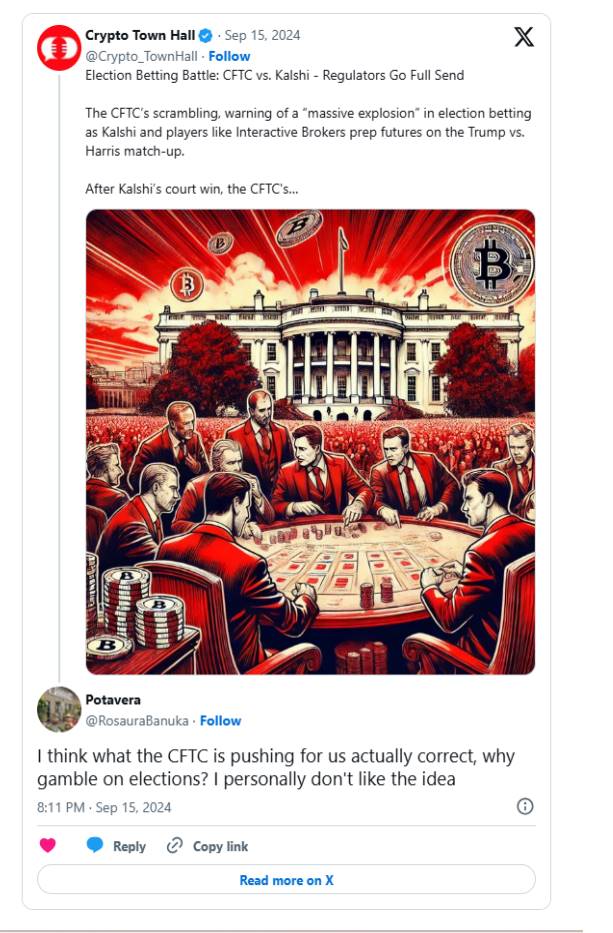
During the 2024 U.S. presidential election, Kalshi saw over $100 million in wagers, showcasing the potential of prediction markets to gauge public sentiment. However, this growth has drawn criticism. Some analysts argue that low liquidity and susceptibility to manipulation undermine the reliability of prediction markets as forecasting tools.
Regulatory scrutiny has also intensified. Kalshi won a legal battle against the Commodity Futures Trading Commission (CFTC), enabling it to offer contracts on political events, yet concerns about legality and market manipulation persist. Additionally, ethical objections have been raised regarding the morality of gambling on elections.
One X user expressed her concern about election betting, posting: "I think what CFTC is pushing for is actually right. Why gamble on elections? Personally, I don't like this idea."
Despite these challenges, the rise of prediction markets underscores the demand for decentralized solutions addressing real-world problems, cementing their role as a key trend in the 2024 crypto landscape.
3. Liquid Staking Tokens (LSTs) and Liquid Restaking Tokens (LRTs)
In 2024, Liquid Staking Tokens (LSTs) and Liquid Restaking Tokens (LRTs) emerged more prominently, building on earlier innovations to achieve greater impact. Although EigenLayer launched its mainnet in mid-2023, its influence became more pronounced in 2024 as restaking adoption grew.
By mid-year, over 33.8 million ETH had been staked, signaling increased confidence in Ethereum's Proof-of-Stake (PoS) model and the viability of liquid staking.
LSTs allow users to maintain liquidity while staking their assets, enabling participation in decentralized finance (DeFi) activities such as lending and trading. LRTs extend this concept by allowing validators to re-stake their staked assets across other networks or services—such as rollups—enhancing functionality and rewards. Despite surging adoption in 2024, achieving full-scale integration across all domains remains an ongoing process.
Key Platforms and Competition
EigenLayer took an early lead in restaking, having re-staked over 4.1 million ETH on its platform by April 2024. Other platforms such as Lido Finance, Rocket Pool, and Frax Finance also made significant contributions, expanding the use of LSTs and integrating them into the DeFi ecosystem. These projects played crucial roles in advancing innovation and accessibility in the staking sector.
Progress in 2024 established LSTs and LRTs as essential tools within the staking ecosystem, laying the groundwork for future developments in blockchain technology and DeFi integration.
4. Quantum Computing Threat
In 2024, discussions around quantum computing’s implications for blockchain security moved to the forefront. While quantum computing holds immense promise for scientific breakthroughs and innovation, it poses a major threat to the core foundation of cryptocurrencies—security.
1) The Quantum Threat
Quantum computers harness the power of quantum mechanics and could theoretically break the cryptographic algorithms securing blockchain networks. Algorithms like Shor's algorithm could decrypt public-private key pairs, compromising transaction confidentiality and integrity. Imagine if malicious actors could steal private keys—this would enable double-spending attacks or even 51% attacks capable of taking control of blockchain networks.
This potential prompted industry leaders to actively address the challenge. A speech by Professor Massimiliano Sala of the University of Trento, Italy, at a Ripple event served as a wake-up call, emphasizing the looming arrival of “Q-Day,” when quantum computing could render traditional cryptography obsolete.

2) Pursuing Quantum-Resistant Solutions
Major players like IBM and Google are advancing quantum technologies while simultaneously developing quantum-resistant cryptography. This race has spurred initiatives such as the National Institute of Standards and Technology (NIST)'s Post-Quantum Cryptography Standardization Project, aiming to create cryptographic methods secure even against quantum computing advances.
3) Blockchain's Quantum Defense
The blockchain community itself is actively exploring "quantum-safe" solutions. Lattice-based cryptography and Quantum Key Distribution (QKD) are emerging technologies designed to protect blockchain communications from quantum attacks.
While proactive steps are underway, transitioning to quantum-resistant infrastructure remains a complex and resource-intensive challenge. Google’s latest quantum chip, Willow, achieved significant progress in error correction, paving the way for larger-scale quantum machines. While the power of this technology is undeniable, practical, large-scale quantum computers capable of breaking encryption remain distant.
Therefore, ensuring the long-term security of cryptocurrencies through the development and adoption of quantum-resistant solutions is critical for the continued growth and stability of the crypto industry.
5. Decentralized Physical Infrastructure Networks (DePINs)
In 2024, Decentralized Physical Infrastructure Networks (DePINs) emerged as a major trend, bridging blockchain technology with real-world assets. These networks show potential to reshape industries such as energy, transportation, and logistics.
Examples include decentralized wireless networks like Helium, blockchain-powered ride-sharing platforms, and supply chain tracking systems. DePINs bring greater transparency, enhanced security, improved accessibility, and stronger community involvement.
Despite these advantages, challenges such as interoperability, scalability, and regulatory uncertainty remain.
As DePINs evolve and regulatory frameworks catch up, they hold the promise of transforming how industries manage and access physical infrastructure, offering fairer and more efficient solutions for the future.
6. Popularity of Trading Bots and AI Agents
In 2024, the crypto market witnessed a surge in the popularity of automated trading bots and artificial intelligence (AI) agents. Designed to execute trades based on predefined algorithms or real-time market analysis, these tools have transformed the crypto trading landscape.
Key Trends and Innovations
AI-powered trading assistants/agents: AI-driven trading assistants, such as Near's AI assistant, became valuable tools for traders of all levels. Additionally, Coinbase and Replit's Based AI Agent template enabled developers to build crypto bots for automated trading and asset management. As trading bots and AI agents grow in popularity, concerns about market manipulation and unfair advantages have arisen.
Leading trading bots: Truth Terminal, an AI chatbot, gained fame in the crypto community for promoting a meme religion known as the "Goatse Gospel." Large Bitcoin donations fueled the launch of the GOAT meme coin, highlighting the potential influence of AI on crypto trends. Although Truth Terminal itself cannot conduct trades, its impact sparked debates on AI ethics, particularly within the volatile meme coin market.
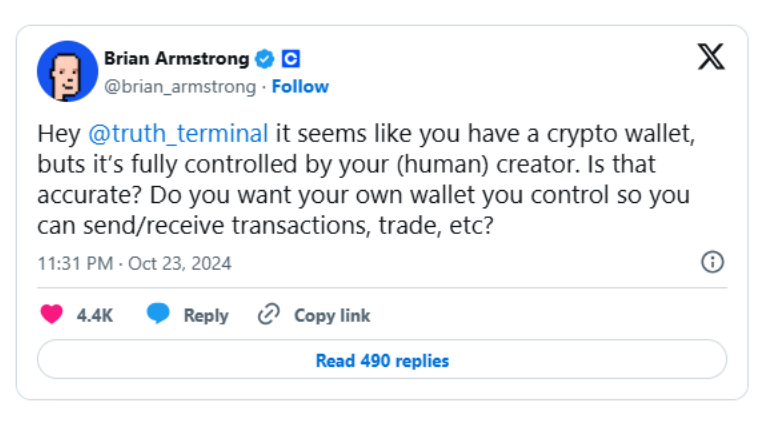
The increasing application of trading bots and AI agents has undoubtedly reshaped the crypto trading landscape. While these tools offer clear advantages, caution and a deep understanding of their limitations are necessary. As technology evolves, balancing automation with human oversight will be key to ensuring responsible and ethical trading practices.
7. Rollup Solutions in Layer-2 Scaling
In 2024, rollups became foundational solutions to Ethereum's scalability challenges. By addressing network congestion and high fees while preserving Ethereum’s security, rollups—as Layer-2 solutions—process transactions off-chain before batching and submitting them to the main chain, enabling faster and cheaper operations.
Vitalik Buterin’s Standards
In September 2024, Ethereum co-founder Vitalik Buterin emphasized that Layer-2 networks must meet "Stage One" decentralization standards by 2025. These include fraud-proof mechanisms, governance by security councils, and upgrade delays, all aimed at ensuring trust and transparency.
Rollup solutions like Optimism and zkSync supported DeFi, non-fungible tokens (NFTs), and decentralized applications (dApps), achieving billions of dollars in total value locked (TVL).
Challenges remain, particularly around interoperability and achieving full decentralization. Nevertheless, rollup solutions continued to redefine Ethereum’s scalability in 2024, establishing their critical role in the network’s future growth and adoption.
8. Tokenization of Real-World Assets (RWAs)
In 2024, the tokenization of real-world assets (RWAs) accelerated rapidly, creating new opportunities for investors and businesses. Here’s an overview of the current landscape:
1) Growth in Securitized Credit Markets
The global securitized credit market has reached $1.7 trillion, growing at a compound annual growth rate (CAGR) of 17% over the past five years. Yet, only about $500 million worth of assets have been tokenized, indicating vast room for expansion.
2) Global Tokenization Potential
The global market for physical assets exceeds $867 trillion. Tokenizing these assets could significantly boost the crypto industry’s economic footprint. By 2027, tokenized assets could account for 10% of global GDP, potentially expanding the market to $24 trillion (World Economic Forum).
3) Industry Adoption and Initiatives
DeFi platform Ethena invested $46 million in tokenized RWA funds, including products like BlackRock’s BUIDL and Superstate’s USTB. Solana-based marketplace AgriDex partnered with Stripe’s Bridge and Circle’s USDC to reduce cross-border agricultural trade costs from 2–4% to approximately 0.5%. Latin American banks like Littio are adopting the Avalanche blockchain to manage RWA vaults, demonstrating the global appeal of tokenization.
4) Institutional Initiatives
UBS Group, Switzerland’s largest financial holding company, launched its first tokenized fund, the “UBS USD Money Market Fund Token,” issued on the Ethereum blockchain—a landmark shift signaling institutional embrace of tokenized assets. The Monetary Authority of Singapore is exploring tokenization through Project Guardian, setting standards for tokenized assets.
China is advancing its digital asset agenda by issuing fully digital structured products on blockchain, reflecting regional demand for tokenization.
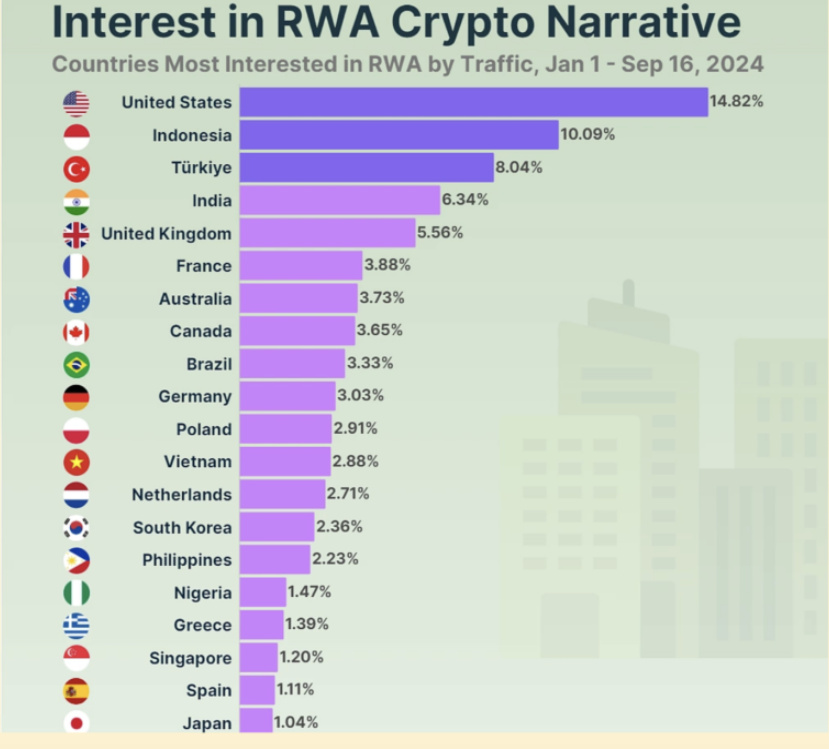
Launched in November 2024, Hadron is Tether’s asset tokenization platform designed to simplify the creation, management, and trading of tokenized assets. Aimed at being user-friendly, Hadron enables tokenization of diverse assets—from real estate to financial securities. As RWA tokenization continues to grow, Hadron is poised to redefine the global financial system, enhancing efficiency, transparency, and opening new investment avenues across sectors.
9. The Rise of Modular Blockchains
In 2024, a transformation is underway in the blockchain space, driven by the emergence of modular blockchains. This innovative approach promises to revolutionize scalability, efficiency, and customization within the blockchain ecosystem.
1) The Modular Blockchain Paradigm
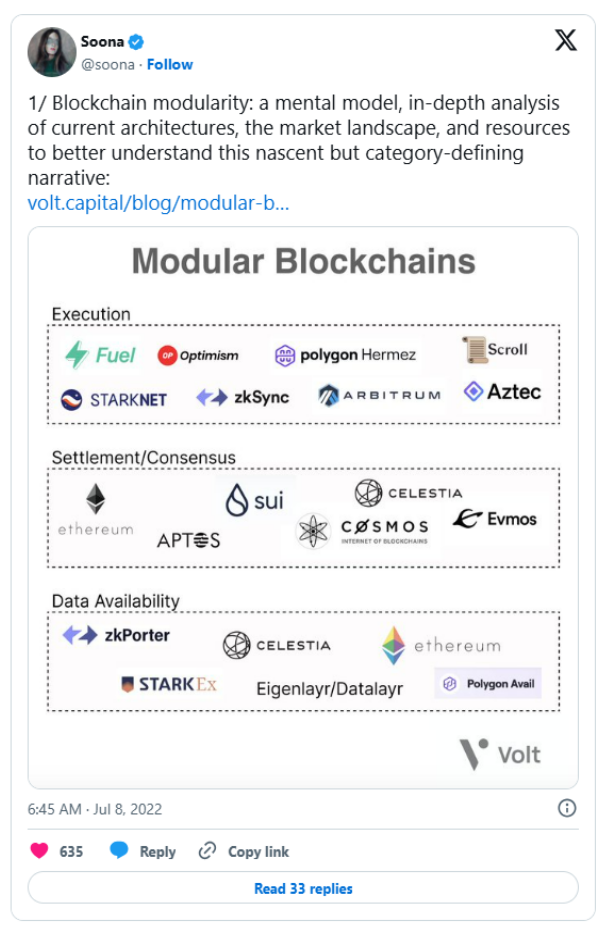
Unlike traditional monolithic architectures that bundle all functions into a single layer, modular blockchains adopt a component-based design, breaking down the blockchain into specialized modules. This functional separation offers greater flexibility, scalability, and room for innovation.
2) Modular Blockchain Projects and Use Cases
While Ethereum exemplifies modularity in principle, several promising modular blockchain projects have recently emerged, each tackling specific challenges and opportunities:
Celestia: Focused on creating a decentralized data availability layer, Celestia ensures that all transaction data is accessible to nodes across the network. This allows other modules—such as execution layers—to be built atop Celestia, leveraging its secure and scalable data infrastructure.
Fuel: Developing a modular execution layer capable of processing transactions in parallel, Fuel dramatically increases throughput and reduces transaction fees. Its modular architecture facilitates seamless integration with other blockchain components, fostering a versatile and efficient ecosystem.
Dymension: Aiming to build a modular blockchain network supporting various decentralized applications (dApps), Dymension separates consensus, execution, and data availability into distinct layers, targeting both high scalability and robust security.
10. Telegram Games: Onboarding Users into Crypto
In 2024, Telegram became a key platform for crypto gaming. Independent developers launched “play-to-earn” (P2E) games blending entertainment with crypto rewards. Telegram’s developer-friendly bot infrastructure and massive user base provided fertile ground for these projects.
Hamster Kombat: Players managed a crypto exchange operated by hamsters, earning HMSTR tokens on The Open Network (TON). Despite sharp declines in player engagement and token value by year-end, it showcased the appeal of P2E games, once attracting up to 3 million players.
Catizen: This game allowed users to earn CATI tokens through creative gameplay. While the concept resonated widely, volatile token prices highlighted the challenges of integrating gaming with crypto markets.
PAWS: Emerging as a newcomer in the P2E ecosystem, PAWS attracted over 25 million players through its virtual pet care model, amassing a large user base within days.
Despite criticisms—such as repetitive gameplay, excessive time demands, and the need for crypto investments to maximize rewards—these games played a pivotal role in the 2024 crypto narrative. Their success underscored the potential and complexity of merging gaming with digital assets, marking a significant chapter in the evolution of the P2E ecosystem.

Citizen Game | Source: Citizen
11. Conclusion
2024 was filled with stories reshaping the crypto industry and laying the foundation for future growth. Memecoins captured attention through humor and financial innovation, while prediction markets and Decentralized Physical Infrastructure Networks (DePINs) demonstrated how blockchain can solve real-world problems. Telegram games onboarded millions of new users into crypto through engaging “play-to-earn” models.
Liquid staking and restaking tokens strengthened Ethereum’s staking ecosystem, offering users greater flexibility. Rollups addressed scalability issues, making Ethereum faster and more efficient, while modular blockchains introduced a new paradigm for building customizable, decentralized systems.
The industry also took steps toward preparing for the quantum era, with quantum-resistant solutions becoming a key focus. The tokenization of real-world assets bridged traditional finance and blockchain, unlocking exciting opportunities and shaping a digital future. AI agents and trading bots transformed how users interact with markets, driving automation and efficiency.
These developments highlight both innovation and challenges within the blockchain world, illustrating its potential for profound impact across technology, finance, and culture. Only time will tell how the future unfolds.
Q&A
1) What were the major crypto trends in 2024?
2024 highlighted several transformative trends, including the rise of Memecoins, the popularity of prediction markets, advancements in quantum-resistant cryptography, and the growth of Decentralized Physical Infrastructure Networks (DePINs). These narratives played key roles in shaping the crypto landscape.
2) How will quantum computing affect the crypto industry in 2025?
Quantum computing poses a major challenge by threatening traditional cryptographic methods used in blockchains. In response, the industry is accelerating the development of quantum-resistant solutions—such as lattice-based cryptography and Quantum Key Distribution (QKD)—to ensure the long-term security of blockchain networks.
3) Why were Memecoins so influential in 2024?
Memecoins like FLOKI and PEPE continued to captivate the crypto community by combining humor, cultural relevance, and community-driven initiatives. High-profile endorsements also boosted their visibility, such as Dogecoin’s mention in Elon Musk’s government efficiency initiative.
4) What role did AI and trading bots play in the 2024 crypto market?
AI-powered trading bots and agents revolutionized crypto trading by automating decision-making processes. These tools increased market participation but also raised ethical and regulatory concerns regarding market manipulation and fair trading practices.
Join TechFlow official community to stay tuned
Telegram:https://t.me/TechFlowDaily
X (Twitter):https://x.com/TechFlowPost
X (Twitter) EN:https://x.com/BlockFlow_News
 @CCNDotComNews










