









Crypto Trader Economic Calendar, Week 50, 2024
TechFlow Selected TechFlow Selected
Crypto Trader Economic Calendar, Week 50, 2024
In a rapidly changing market environment, proactive planning and swift response are key to achieving stable returns.
 Navigating Web3 tides with focused insights
The current global crypto market is closely tied to broader economic trends. Whether it's inflation rates, central bank policies, or trade data, all these factors influence market sentiment and investors' risk appetite.

In week 49, China's Caixin Manufacturing PMI and the U.S. ISM index showed moderate manufacturing performance, while services and consumer sectors appeared weaker. This mixed picture led many traders to favor more stable assets like Bitcoin, while also keeping a close eye on altcoins benefiting from global trade.
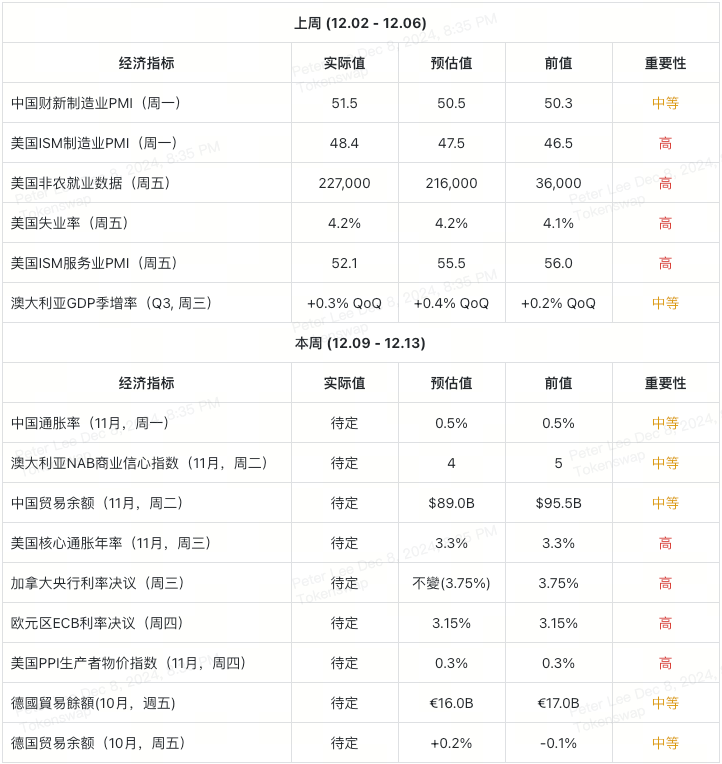
Looking ahead to week 50, inflation reports, trade data, and central bank decisions will set the tone for the market. These developments will impact market liquidity, institutional capital allocation, and price trends for Bitcoin, Ethereum, and other crypto assets.
This report will:
-
Review key events from week 49.
-
Predict major data releases and policy announcements in week 50.
-
Provide trading strategies to navigate this week’s macroeconomic impacts.
Market Recap: Last Week
China Caixin Manufacturing PMI (Nov: 51.5)

Image source: Trading Economics
China's manufacturing growth exceeded expectations, indicating healthy trade flows. This positive signal provided slight support to crypto projects related to supply chains and industrial applications.
U.S. ISM Manufacturing PMI (Nov: 48.4)
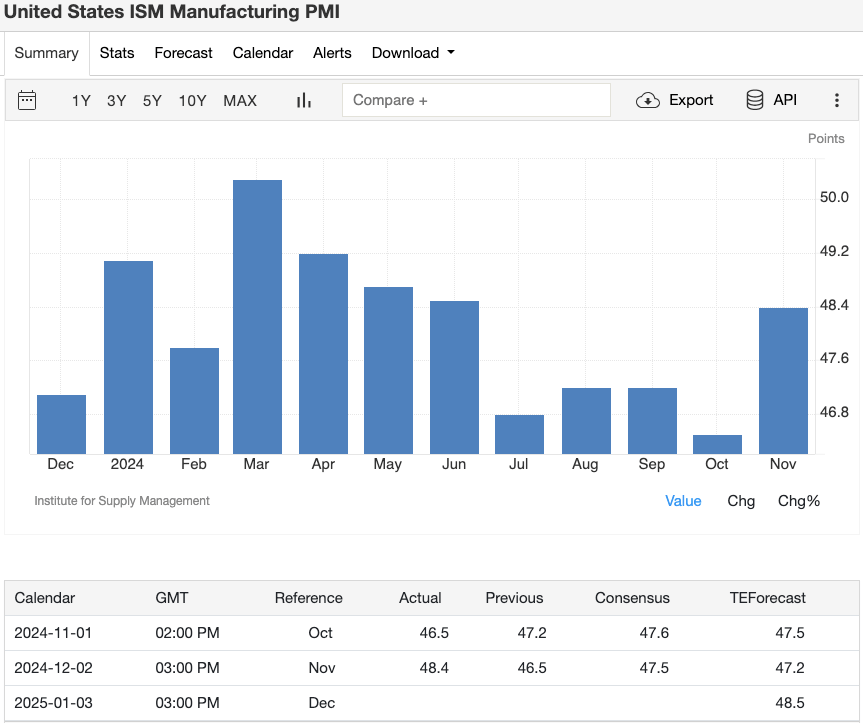
Image source: Trading Economics
Although U.S. manufacturing remains in contraction territory, the pace has slowed, slightly improving market sentiment. Bitcoin and major altcoins saw modest gains, but the Federal Reserve's cautious stance limited upside potential.
U.S. Nonfarm Payrolls & Unemployment Rate (227K new jobs, unemployment at 4.2%)
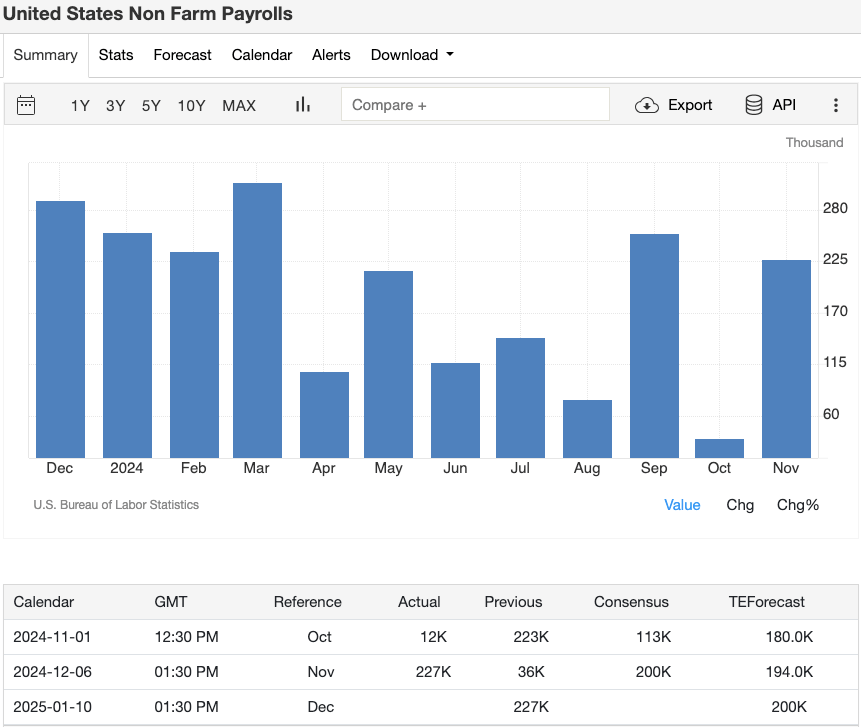
Image source: Trading Economics
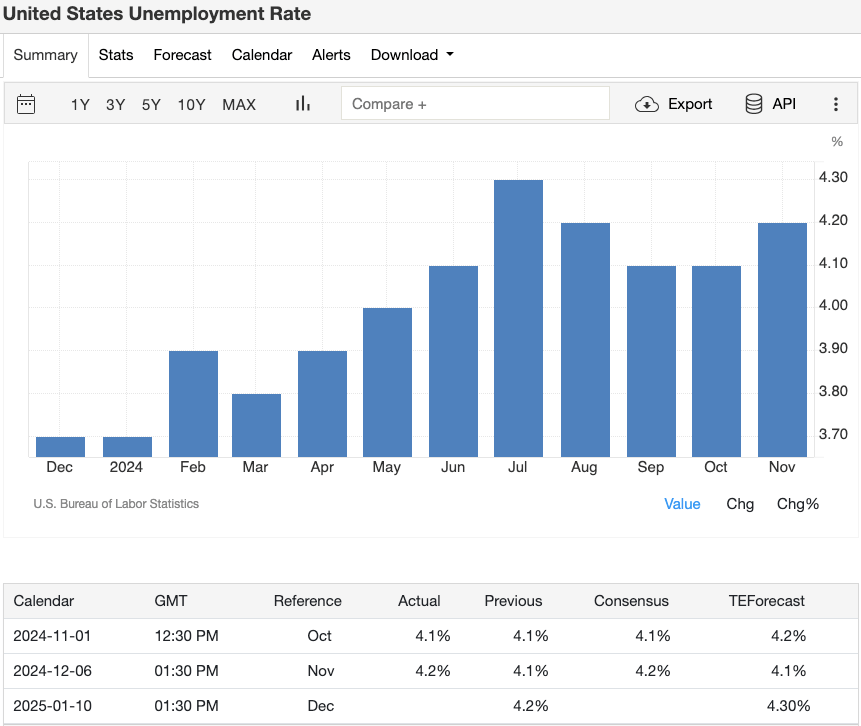
Image source: Trading Economics
Strong employment data supported risk appetite, but the slight rise in the unemployment rate added uncertainty, prompting some investors to turn to Bitcoin as a hedge.
U.S. ISM Services PMI (Nov: 52.1)
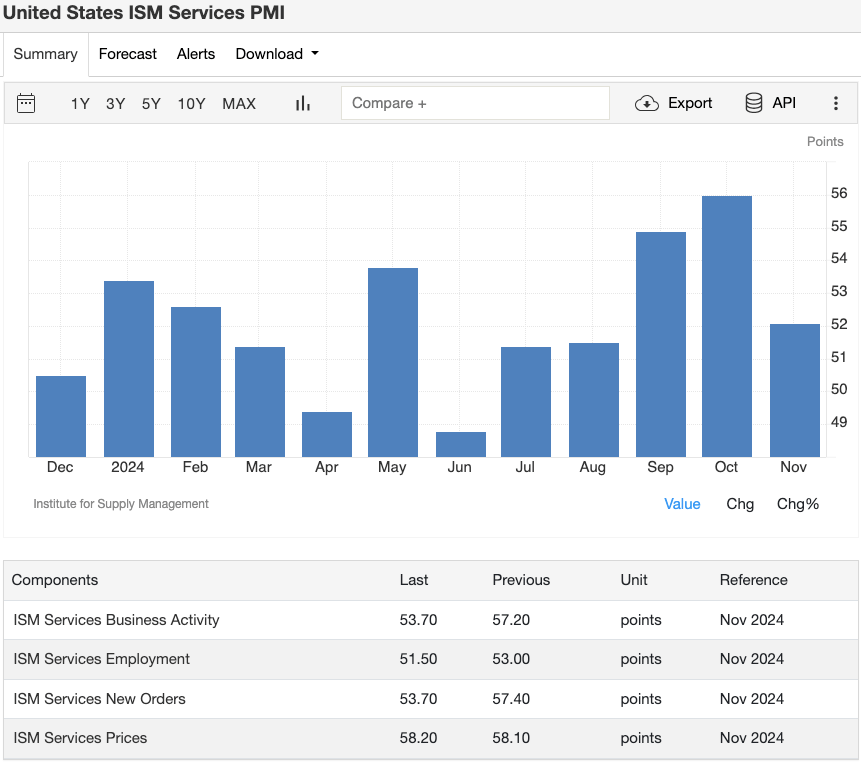
Image source: Trading Economics
Service sector growth fell short of expectations, raising concerns about overall economic slowdown, leading more traders to seek refuge in Bitcoin.
Australia GDP Quarterly Growth (Q3: +0.3%)
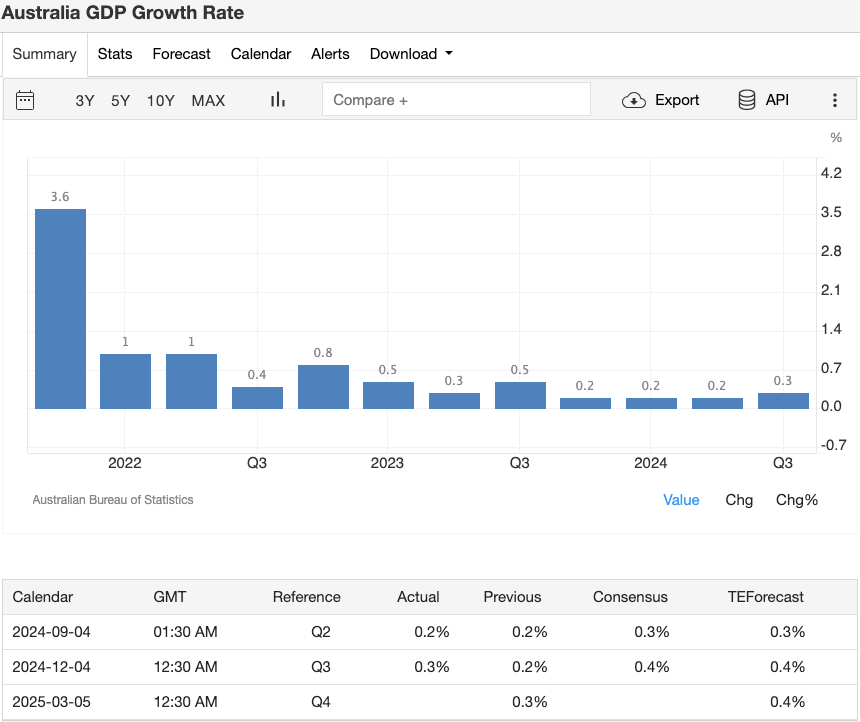
Image source: Trading Economics
Slightly below-expectation economic growth weakened investor interest in high-risk altcoins, with more capital flowing into foundational assets such as Bitcoin and Ethereum.
Key Takeaways
Data from week 49 was mixed. Manufacturing held up reasonably well, but services and consumption-related indicators were weak. Investors responded with a balanced approach—using Bitcoin as a safe haven while selectively investing in altcoins poised to benefit from global trade growth.
Key Economic Events This Week (Week 50) Overview
Market focus this week centers on inflation data, trade balances, and central bank interest rate decisions. These critical inputs will play a decisive role in shaping year-end market sentiment. Inflation dynamics, monetary policy direction, and global demand trends will directly affect market liquidity and risk appetite toward crypto assets.
Key Data Releases:
December 9 (Monday)
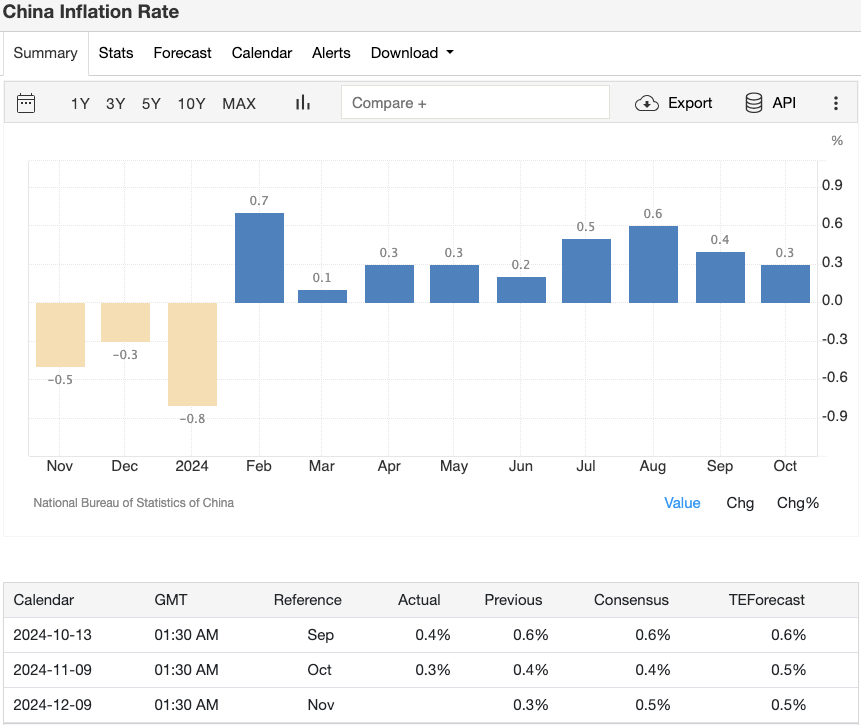
China Inflation Rate (November)
-
Forecast: YoY +0.5% (unchanged from October)
-
Why it matters: Stable or slightly rising inflation indicates resilient domestic demand in China, which could boost global trade sentiment.
-
Impact on crypto markets: Stable inflation may increase demand for Asia-linked tokens.
-
NEO (NEO): Known as the "Chinese Ethereum," NEO could see positive momentum as domestic confidence improves.
-
Conflux (CFX): A Chinese public blockchain focused on cross-border activities, likely to benefit from regional economic improvement.
-
VeChain (VET): Deeply partnered with Asian enterprises; demand may rise if supply chain outlook improves.
-
December 10 (Tuesday)
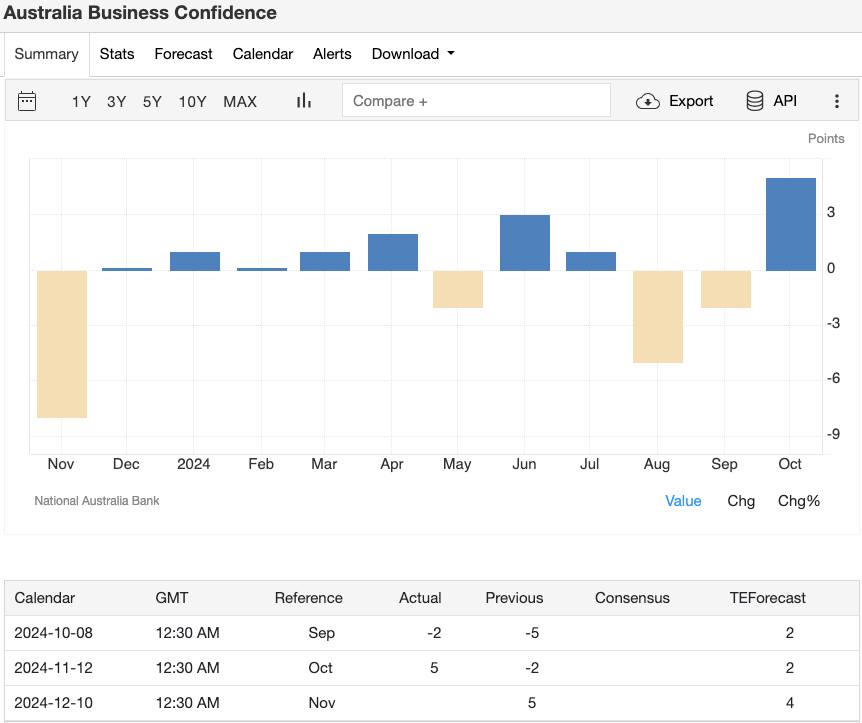
Australia NAB Business Confidence Index (November)
-
Forecast: 4 (slightly down from 5 in October)
-
Why it matters: Despite a possible dip, continued positive readings reflect resilient business confidence, supporting overall risk appetite.
-
Impact on crypto markets: A healthy business environment could support DeFi and SME financing projects.
-
XT.COM Coin (XT): Exchange token with strong Asia-Pacific presence.
-
Synthetix (SNX): An Australian-native DeFi protocol; SNX performance may attract attention if investor interest rises.
-
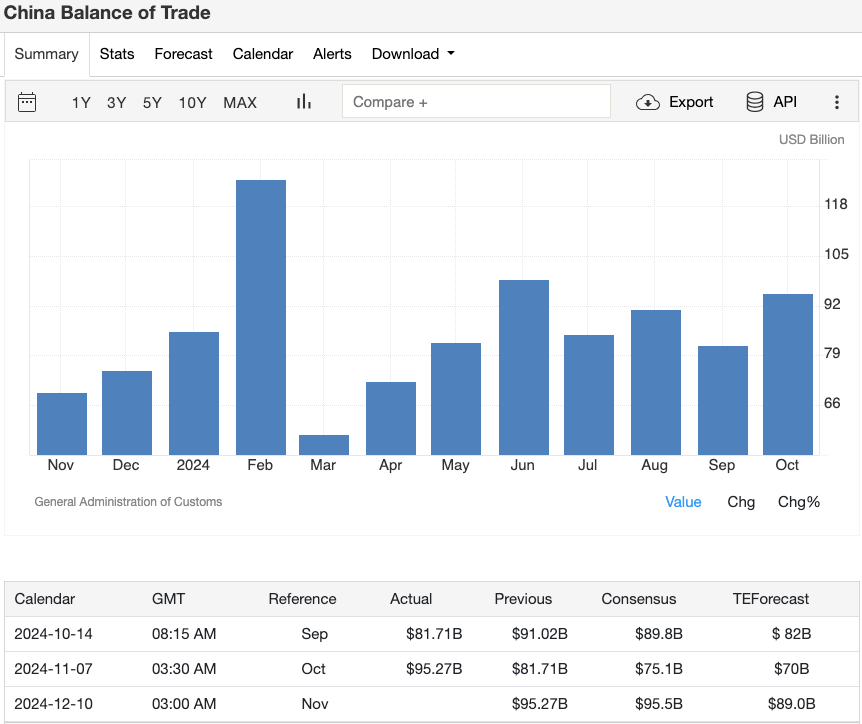
China Trade Balance (November)
-
Forecast: $89 billion surplus (down from $95.5 billion in October)
-
Why it matters: A shrinking trade surplus may signal weakening global demand, affecting market risk appetite.
-
Impact on crypto markets: If data disappoints, demand for safe-haven assets like Bitcoin may rise, while interest in trade-linked tokens may fall.
-
OriginTrail (TRAC): A supply chain data protocol reliant on strong global trade momentum.
-
December 11 (Wednesday)
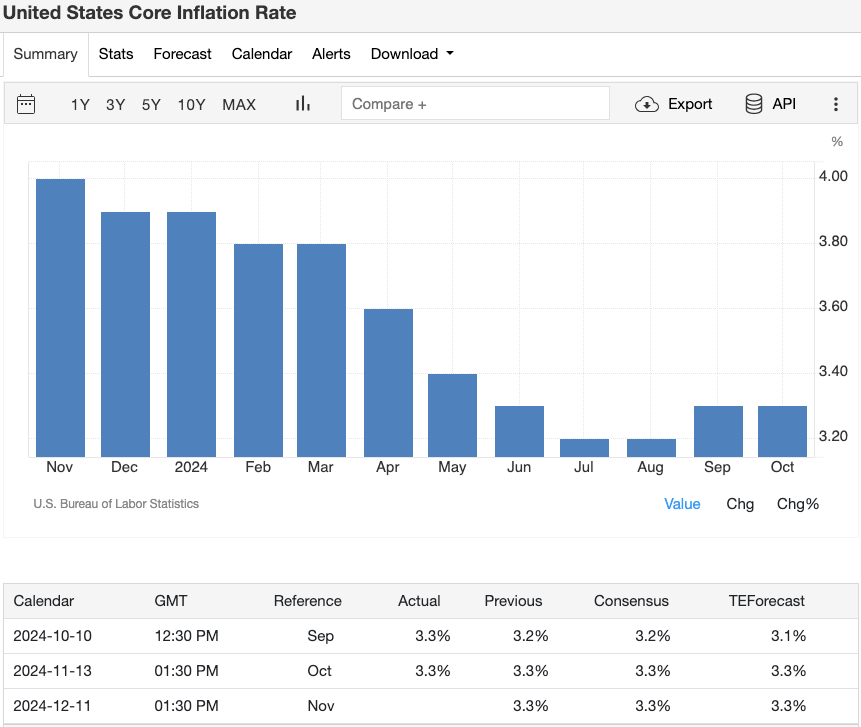
U.S. Core Inflation YoY (November)
-
Forecast: 3.3% (unchanged from October)
-
Why it matters: Core inflation is a key input for Fed policy. A stable reading reduces urgency for further rate cuts.
-
Impact on crypto markets: Stable inflation may lead to sideways movement in Bitcoin and Ethereum as markets await clearer policy signals.
-
Bitcoin (BTC): If inflation surprises to the upside, its role as a hedge may strengthen.
-
Ethereum (ETH): Improved liquidity could drive ETH demand through DeFi ecosystem activity.
-
PAX Gold (PAXG): Tokenized gold may become an alternative if inflation concerns rise.
-
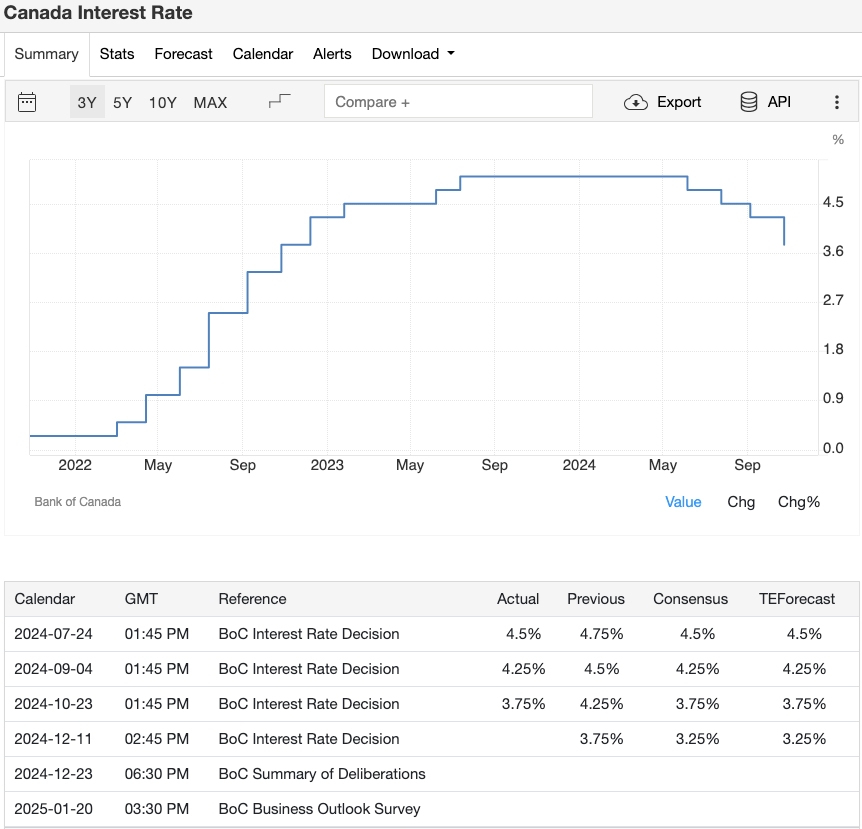
Bank of Canada Interest Rate Decision
-
Forecast: Hold at 3.75%
-
Why it matters: The Bank of Canada's dovish stance could signal potential global monetary easing, favorable for risk assets.
-
Impact on crypto markets: Easing expectations may encourage capital flows into DeFi and high-growth tokens.
-
Aave (AAVE): As a leading lending protocol, increased liquidity enhances its appeal.
-
Maker (MKR): The core protocol behind DAI stablecoin; lower rates can stimulate borrowing demand.
-
December 12 (Thursday)
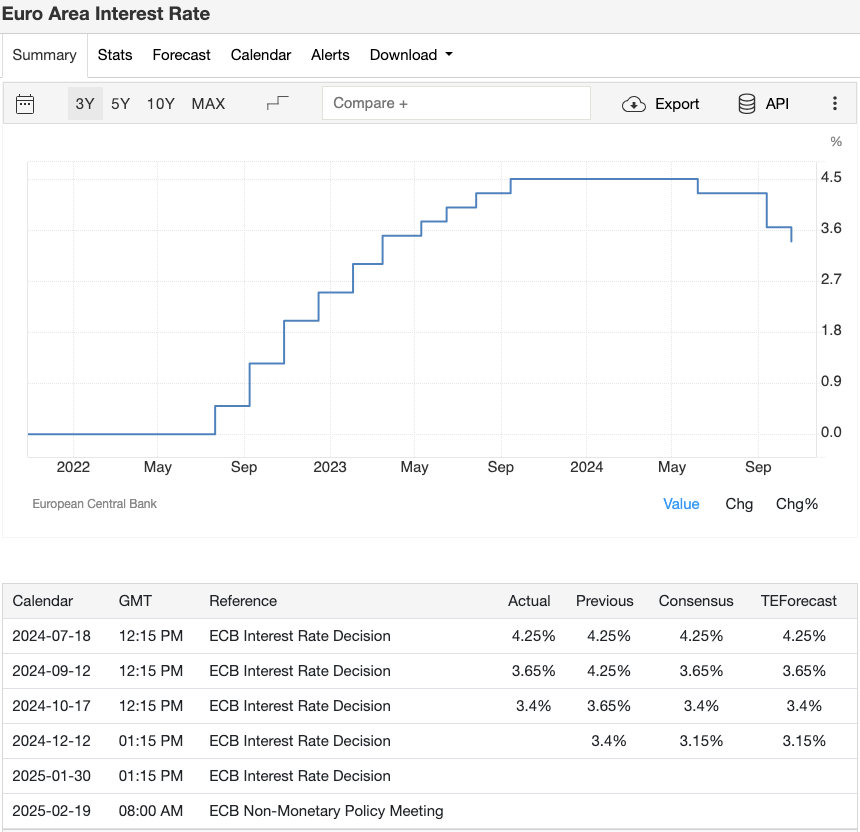
ECB Interest Rate Decision
-
Forecast: Hold at 3.15%
-
Why it matters: The ECB's stance on inflation and growth will shape regional liquidity conditions.
-
Impact on crypto markets: A neutral or dovish ECB could benefit Eurozone-linked DeFi ecosystems and euro-denominated stablecoins.
-
LCX (LCX): A compliant exchange token based in Liechtenstein; demand may rise under looser policy.
-
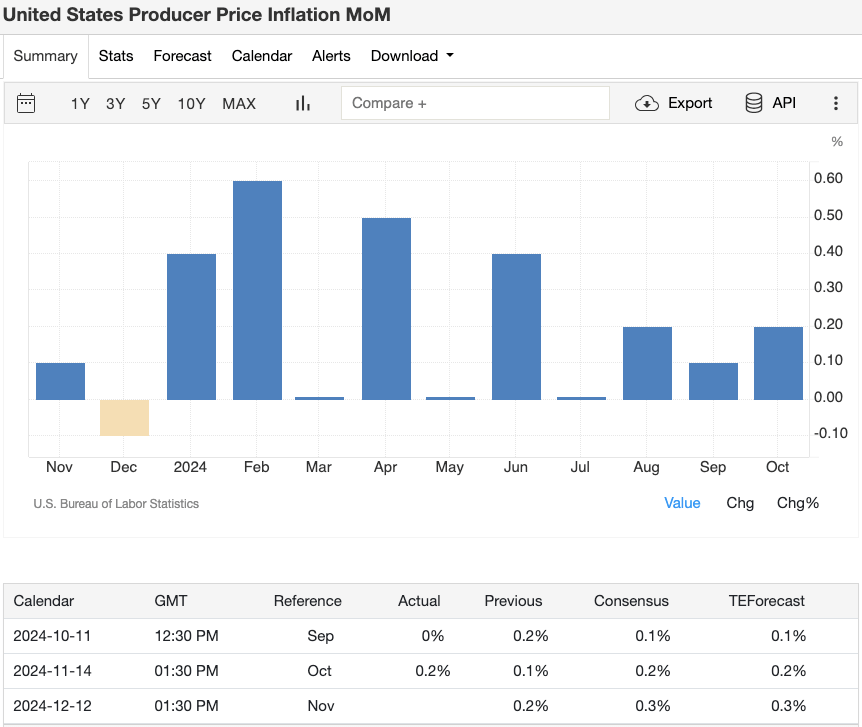
U.S. PPI Producer Price Index (November)
-
Forecast: MoM +0.3% (in line with last month)
-
Why it matters: PPI measures producer costs and foreshadows future consumer prices.
-
Impact on crypto markets: Rising PPI may spark inflation fears, boosting demand for Bitcoin as a hedge. Stable or lower-than-expected PPI could benefit DeFi and growth tokens.
-
Bitcoin (BTC): Its safe-haven status becomes more prominent during inflation worries.
-
Ethereum (ETH) and Polygon (POL): If PPI pressure remains contained, demand for these Layer-2 solutions in DeFi and NFT ecosystems may grow.
-
December 13 (Friday)
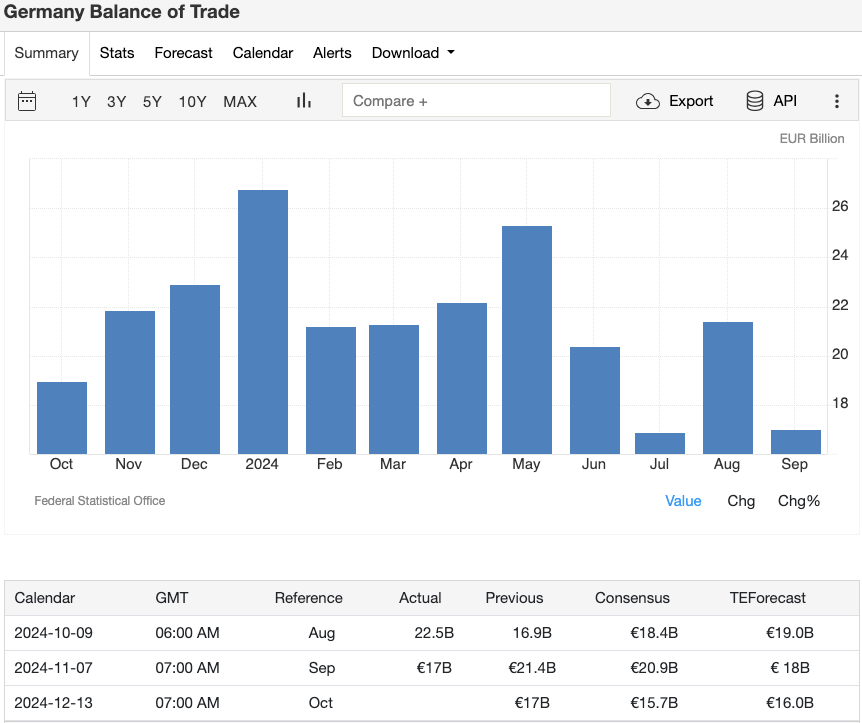
Germany Trade Balance (October)
-
Forecast: €16 billion surplus (down from €17 billion)
-
Why it matters: As Europe’s largest economy, Germany’s trade data is a key barometer of global demand strength.
-
Impact on crypto markets: A shrinking surplus may dampen risk appetite and increase interest in safe-haven assets like Bitcoin.
-
IOTA (MIOTA): Focused on industrial IoT; weak external demand may reduce market expectations for its ecosystem.
-
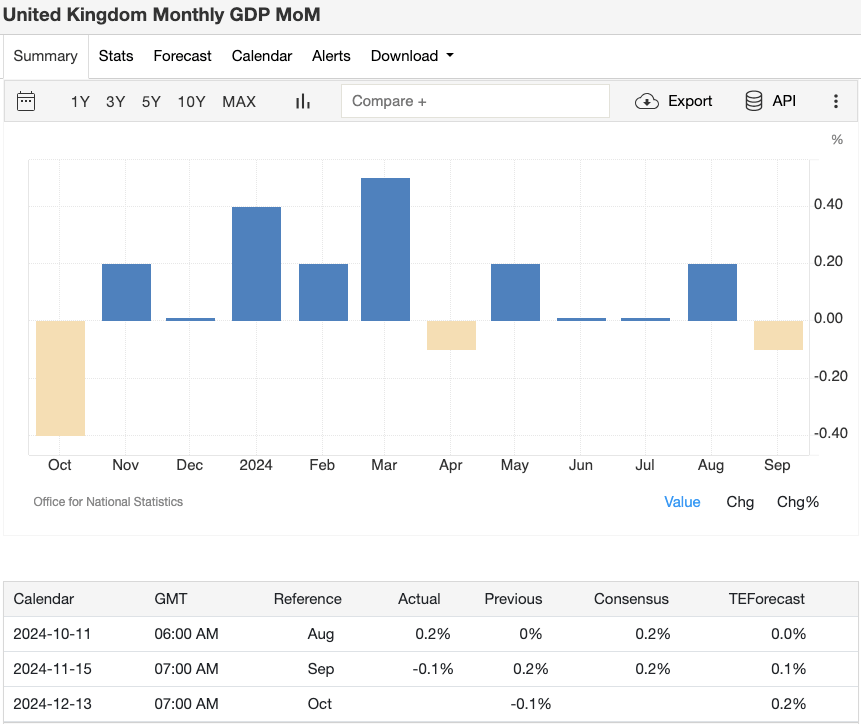
UK GDP Monthly Change (October)
-
Forecast: +0.2% (rebounding from -0.1%)
-
Why it matters: Signs of economic recovery will lift market sentiment, especially for projects linked to European markets.
-
Impact on crypto markets: UK economic revival supports regional token demand.
-
Quant (QNT): A London-based cross-chain project; demand may increase with improved economic confidence.
-
Chiliz (CHZ): Closely tied to European sports and entertainment; improved consumer sentiment could drive growth.
-
Week 50 Market Themes Summary:
-
Inflation Trends: Whether data meets expectations will determine the level of market volatility.
-
Monetary Policy Direction: ECB and BoC decisions will directly affect capital flows and risk asset performance.
-
Global Demand Strength: Trade data (China, Germany) and growth signals (UK GDP) will guide market sentiment.
Crypto Trader Insights Guide
1. Inflation Trends (U.S., China, Europe):
If U.S. inflation remains stable, Bitcoin and Ethereum may trade sideways in the near term without clear direction. If China's inflation shows signs of strong recovery, tokens focused on Asia like VeChain or Conflux could benefit. Should U.S. inflation surprise to the upside, investors may flock to Bitcoin as a hedge.
2. Central Bank Policies (ECB, BoC):
If the Bank of Canada (BoC) remains patient or the ECB adopts a neutral stance, it may signal a friendlier liquidity environment, supporting DeFi and growth tokens. For example, under a dovish BoC scenario, DeFi protocols like Aave or Maker could gain; if ECB policy remains stable, euro stablecoins or Europe-focused projects like LCX may benefit.
3. Trade and Economic Growth Data (China, Germany, UK):
If China's trade data exceeds expectations, supply chain-related tokens such as OriginTrail may react positively. Conversely, weak German trade data may push investors toward Bitcoin as a safe haven. Stronger-than-expected UK GDP could boost tokens focused on European markets, such as Quant or Chiliz.
Trading Opportunities by Asset Class
Bitcoin (BTC): During times of inflation or disappointing trade data, Bitcoin is typically the go-to macro hedge. If U.S. inflation data misses expectations or German trade figures underperform, funds may flow into Bitcoin. Monitor closely the U.S. core inflation on December 11 and the ECB decision on December 12.
Ethereum (ETH): Ethereum benefits from stable liquidity conditions, especially when DeFi activity is strong. If inflation remains steady, liquidity doesn’t contract, and growth data like UK GDP and U.S. PPI show positive signs, ETH could gain additional upward momentum.
Altcoins & DeFi Tokens:
-
If China’s economic and trade data perform well, supply chain and cross-border focused tokens such as VeChain (VET), Conflux (CFX), or OriginTrail (TRAC) may strengthen.
-
If the Bank of Canada (BoC) or ECB sends dovish signals, capital may shift toward DeFi protocols and Eurozone-linked tokens such as Aave (AAVE), Maker (MKR), or LCX.
-
Improved UK GDP data may boost Quant (QNT) and Chiliz (CHZ), given their close ties to European market dynamics.
Stablecoins (USDT, USDC): A neutral strategy before major data releases is to park funds in stablecoins. After the market reacts, redeploy into Bitcoin, Ethereum, or specific altcoins to capture better entry points.
Market Sentiment and Investor Behavior
-
Risk-on vs. Risk-off: When economic performance or central bank signals exceed expectations (e.g., stable inflation, strong UK GDP, dovish central banks), sentiment turns risk-on, lifting altcoins and DeFi tokens. Conversely, weak trade data or unstable inflation may drive investors toward Bitcoin or stablecoins to reduce exposure.
-
Institutional Moves: Watch institutional capital flows after key data releases (e.g., inflation, central bank decisions). These players often adjust first, providing early signals for medium-term trends. Institutional positioning in Bitcoin and Ethereum following inflation or rate news often foreshadows market direction over the coming weeks.
Practical Trading Strategy Recommendations
Short-term (days to weeks):
-
Before major data releases (e.g., U.S. inflation on Dec 11, ECB decision on Dec 12), use stablecoins to hedge against uncertainty and reduce volatility exposure.
-
Capitalize on short-term BTC and ETH price swings around key inflation and PPI reports to generate returns from volatility.
Medium-term (weeks to months):
-
Diversify based on regional strengths. If China’s trade data remains strong, consider supply chain-related tokens; if liquidity expands, position in DeFi platforms.
-
After macro signals stabilize, closely track institutional inflows into BTC and ETH, as these often signal upcoming market trends.
Long-term (months to years):
-
Focus on fundamentally sound projects with real-world use cases and active development, such as Bitcoin, Ethereum, and Layer-2 solutions.
-
Combine staking and yield strategies with your macro outlook, while monitoring regulatory cues from central bank policies and prioritizing regions supportive of crypto innovation.
Comprehensive Analysis and Conclusion
Week 50 brings multiple significant macroeconomic data releases that will challenge not only traditional markets but also deeply influence the crypto market. From inflation metrics and central bank decisions to trade data, each release could reshape market liquidity, investor sentiment, and risk tolerance. Whether it’s stable U.S. inflation, ECB policy signals, China and Germany’s trade conditions, or UK GDP performance—each piece of information has the potential to shift market expectations and narratives.
Key themes to watch:
-
Central Bank Signals: A cautious ECB or patient BoC could inject fresh momentum into high-risk crypto assets by improving liquidity expectations.
-
U.S. Inflation: Stable data keeps sentiment calm; unexpected shifts could significantly increase volatility, with crypto assets reacting swiftly.
-
Global Trade Signals: China and Germany’s trade data reflect global demand strength. Positive results benefit supply chain tokens; weak data may trigger capital flows into safe-haven assets like Bitcoin.
By closely tracking the economic calendar and understanding how each data point may impact the crypto market, you can better control your investment strategy. In a fast-moving environment, proactive planning and swift reaction are key to achieving consistent returns.
Join TechFlow official community to stay tuned
Telegram:https://t.me/TechFlowDaily
X (Twitter):https://x.com/TechFlowPost
X (Twitter) EN:https://x.com/BlockFlow_News
 @XTexchange









