








Flash Cities Emerging
TechFlow Selected TechFlow Selected
Flash Cities Emerging
These cities demonstrate that innovation is not limited by geography, but rather catalyzed when the right people come together at the right time in the right environment.
 Navigating Web3 tides with focused insights
By IOSG Ventures
Preface
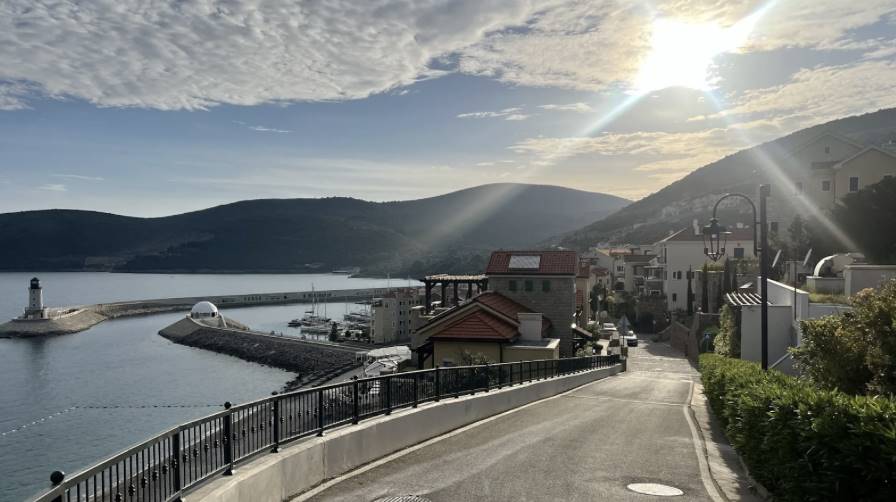
In the realm of human collaboration, we are witnessing an extraordinary transformation. While the world's attention remains fixed on traditional tech hubs, a new model is emerging—one that could fundamentally reshape how we collectively build the future. This model is the "pop-up city": temporary yet purpose-driven communities. These cities demonstrate that innovation is not bound by geography, but rather catalyzed when the right people come together at the right time in the right environment.
1. Beyond Traditional Models: The Next Evolution
Understanding how pop-up cities transcend existing innovation models is the first step toward grasping this concept. As Vitalik noted in his article *Why I Created Zuzalu*:
"We already have hacker homes, which can last months or even years but usually only accommodate ten to twenty people. We also have large conferences that can host thousands, but each event lasts just a week. That’s enough for chance encounters, but not enough to build deep connections."
Pop-up cities represent a leap forward—"a step in both directions"—creating spaces that host hundreds of people over several months. This is more than just an expanded hacker home or an extended conference. Vitalik describes it as a "sweet spot": ambitious and unique enough to yield entirely new insights, yet lightweight enough to remain logistically manageable.
Over the past few years, deeply immersed in the crypto ecosystem, I’ve personally experienced the unique challenges and opportunities of this industry’s remote-first culture. As a venture capitalist, I’ve watched countless teams build revolutionary technologies across distant time zones and continents. This distributed approach brings unprecedented freedom—but also an invisible cost I’ve come to recognize: the loss of the "magic" born from genuine human connection.
I still clearly remember attending my first crypto conference. After months of Zoom calls and Telegram chats, suddenly seeing real faces behind familiar usernames was electrifying. These weren’t just attendees—they were developers whose code I’d reviewed, founders of projects I’d funded, thought leaders whose ideas I’d followed. In hallway conversations and impromptu whiteboard sessions, ideas that had quietly simmered in isolated digital spaces suddenly came alive through face-to-face collaboration.
2. The First Experiment: From Network States to Zuzalu
2.1 The Vision of the Network State
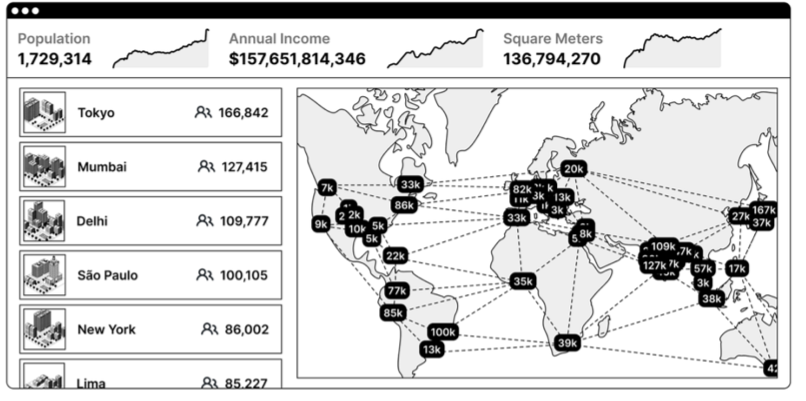
The theoretical foundation of these communities stems from Balaji Srinivasan’s revolutionary idea of the “network state”—a vision where digitally connected communities unified by shared values can materialize in physical space. It points toward a profound future: perhaps human organization no longer needs to be constrained by arbitrary geographical borders, but instead shaped by common goals and visions.
Source: Balaji Srinivasan's vision of the network state
Why are crypto communities ideal pioneers for this new model? Unlike traditional tech industries that tend to centralize around single hubs, the crypto space has always embodied a different ethos. Ethereum’s development team spans the globe—from Switzerland to Singapore, Berlin to Romania. This innate resistance to centralization, combined with years of experience coordinating globally, provides the perfect foundation for this new experiment.
2.2 Zuzalu: From Theory to Reality
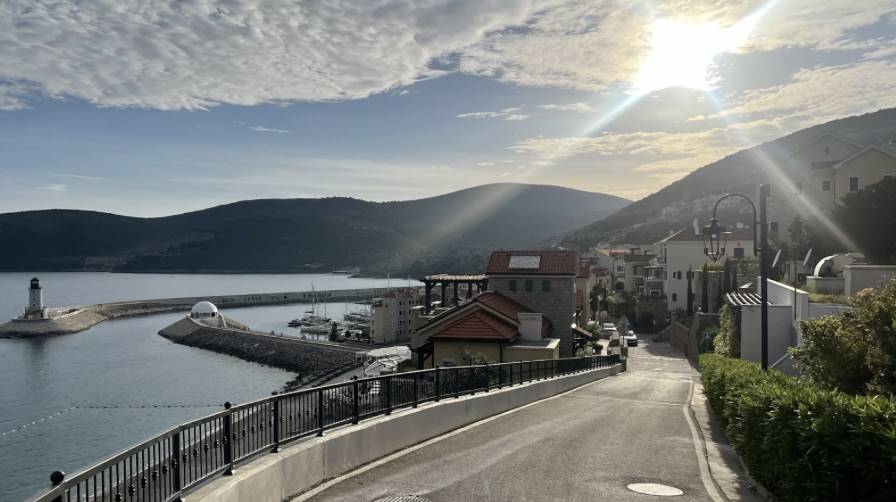
In early 2023, this vision became reality in Montenegro under the playful, meaningless name “Zuzalu.” For two months, Lustica Bay became home to 200 residents—carefully selected Ethereum developers, longevity researchers, and governance experts. This was more than a gathering; it was a living laboratory where new ideas could be tested, refined, and implemented in real time.
Source: Peter Young – Lustica Bay, Montenegro
The impact was immediate and significant. Take Zupass—a prototype identity system initially developed by the 0xPARC team. Through continuous user interaction and rapid iteration, a tool that might have taken months to develop under traditional conditions evolved into a practical solution within weeks. Today, it is widely used across multiple pop-up communities.
3. Decentralizing the Vision: From Zuzalu to Chiang Mai
3.1 Open Boundaries
Then, the movement evolved further in the decentralized way characteristic of crypto. In December 2023, Vitalik proposed "reopening the frontier," backing the vision with two rounds of Gitcoin grants totaling 500 ETH. The goal was clear: remove any central authority and empower anyone who shares the mission to create their own "Zu village."
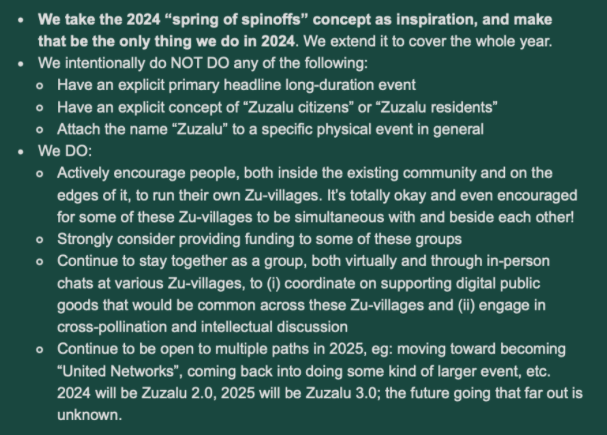
This new approach explicitly abandoned:
-
A single, long-term central event
-
The notion of defined "Zuzalu citizens" or "Zuzalu residents"
-
Binding the name "Zuzalu" to a specific physical event
Instead, it actively encouraged both existing community members and newcomers to launch their own pop-up cities—even if held simultaneously and in close proximity.
3.2 Chiang Mai: The Vision Realized
In October 2024, Chiang Mai, Thailand witnessed the simultaneous emergence of multiple pop-up cities, creating an unprecedented interconnected ecosystem of communities. Notably, many of these projects trace their roots back to the original Zuzalu experiment: Edge City Lanna, ShanhaiWoo, The Mu, MEGAZu, HER DAO, Invisible Garden, Lovepunks, Funding the Commons, and other emerging groups. Each brought its own unique perspective while preserving the distinctive collaborative spirit born in Zuzalu.
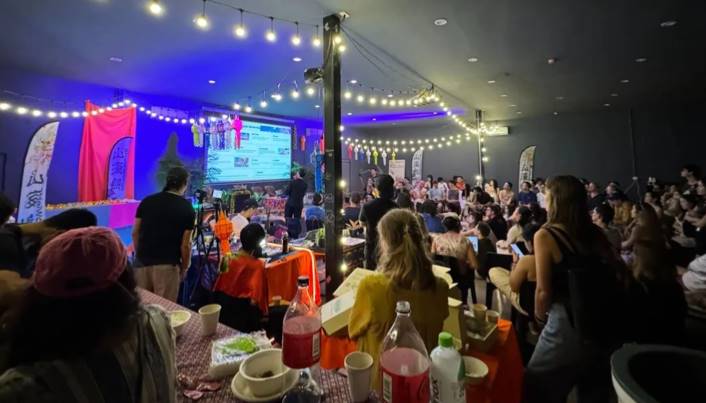
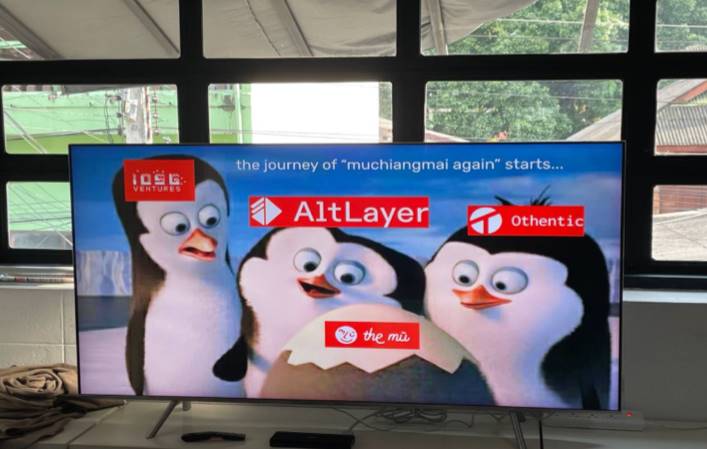
As a venture capitalist at IOSG Ventures, we were honored to sponsor The Mu, giving me the opportunity to personally witness this vibrant ecosystem. The Social Layer platform served as our shared digital "downtown," showcasing the incredible breadth of activities across all communities. Every day offered something new: from demo days (where builders presented their latest projects) to rock climbing, Muay Thai training, meditation workshops, cultural excursions to Thai heritage sites, community dinners, and social gatherings.
What made this experiment truly special was the active encouragement of cross-community collaboration. Everyone was welcome—and not just allowed, but enthusiastically celebrated—to participate in events across communities. Weekly Zuzalu community meetings became a central ritual, where representatives from each pop-up city shared updates, enabling members to form connections across projects and interests. These convergences demonstrated how ideas flow freely and relationships deepen when traditional constraints of time and space are lifted—accelerating innovation in ways previously impossible.
4. A New Silicon Valley Model
The power of pop-up cities lies in redefining the essence of innovation hubs. Traditional centers like Silicon Valley succeeded by concentrating talent in one location, but their limitations are increasingly apparent: exorbitant living costs exclude diverse perspectives, visa restrictions lock out global talent, and perhaps most damagingly, a homogenizing culture may stifle true innovation.
Pop-up cities offer a fundamentally different alternative. They recreate the density of talent and interaction that Silicon Valley relies on—but designed for the global digital age.
In pop-up cities, developers can test collaboration models through short-term projects before committing formally; teams can assess compatibility, and ideas can be validated in real time by a diverse, global community.
The contrast was especially clear when I attended both Devcon and The Mu. While Devcon brimmed with energy and potential, its brief duration meant many promising connections never fully developed. You might share a brilliant conversation about zero-knowledge proofs in a café, exchange contacts, and promise to follow up—only for that momentum to fade once everyone returns to their respective time zones.
Pop-up cities solve this by providing "relational infrastructure"—the sustained time and shared context needed for real collaboration. They occupy a middle ground between the fleeting interactions of conferences and the long-term commitments of traditional tech hubs. This is precisely the missing piece in our industry’s remote-first paradigm: enabling spontaneous, unstructured cooperation that leads to breakthrough innovation.
At IOSG Ventures, we support this vision because we see in pop-up cities the fundamental potential of innovation’s future. The success of multiple coexisting communities in Chiang Mai demonstrates a transformative model—one that combines the best aspects of Silicon Valley’s innovation density with the global, dynamic nature of the crypto ecosystem.
5. The Promise Ahead
During a discussion in Chiang Mai titled "The Promise of Pop-Up Cities," Vitalik painted a compelling vision of the future: specialized communities will emerge to tackle specific challenges, from biotech hubs to self-sustaining infrastructure experiments. This specialization, combined with the global flexibility of pop-up cities, reveals their deeper significance.
Reflecting on my experiences across crypto conferences, hacker homes, and now pop-up cities, I realize this movement is not merely an evolution in how we work—it’s a shift in how we build community in an increasingly digital world. The remote-first nature of crypto has given us unprecedented freedom, but it has also revealed the irreplaceable value of face-to-face connection. Pop-up cities address not just productivity or innovation—they fulfill a deeper need for belonging and purpose within our globally distributed industry.
Perhaps the future won’t emerge in a single "Silicon Valley," but in a series of on-demand, purpose-driven communities that can appear anywhere, anytime innovation calls. Indeed, this iteration has already begun—such as ZuThailand, scheduled for Pattaya from November to December 2024, which we at IOSG Ventures are honored to support. These communities will be more than temporary gatherings—as Janine of Edge City put it, they are "social incubators," where we can test and develop new models of education, healthcare, and human development.
Looking ahead, I believe we’ve only just scratched the surface of what’s possible. Each new pop-up city teaches us valuable lessons about community building, governance, and collaboration. Through these experiments, we are witnessing the early stages of what may be the most significant transformation in human collaboration since the Industrial Revolution. The potential is clear: pop-up cities are not just changing where innovation happens—they are fundamentally reshaping how we build the future, together.
Join TechFlow official community to stay tuned
Telegram:https://t.me/TechFlowDaily
X (Twitter):https://x.com/TechFlowPost
X (Twitter) EN:https://x.com/BlockFlow_News
 IOSG Ventures









